
Knowledge – Fish
Fishing for sprat
You will rarely fish for sprat on purpose: the small shoaling fish is not a target species but food for many predators. Here you can read how to recognise it, where it lives and what to do if one takes your bait anyway.
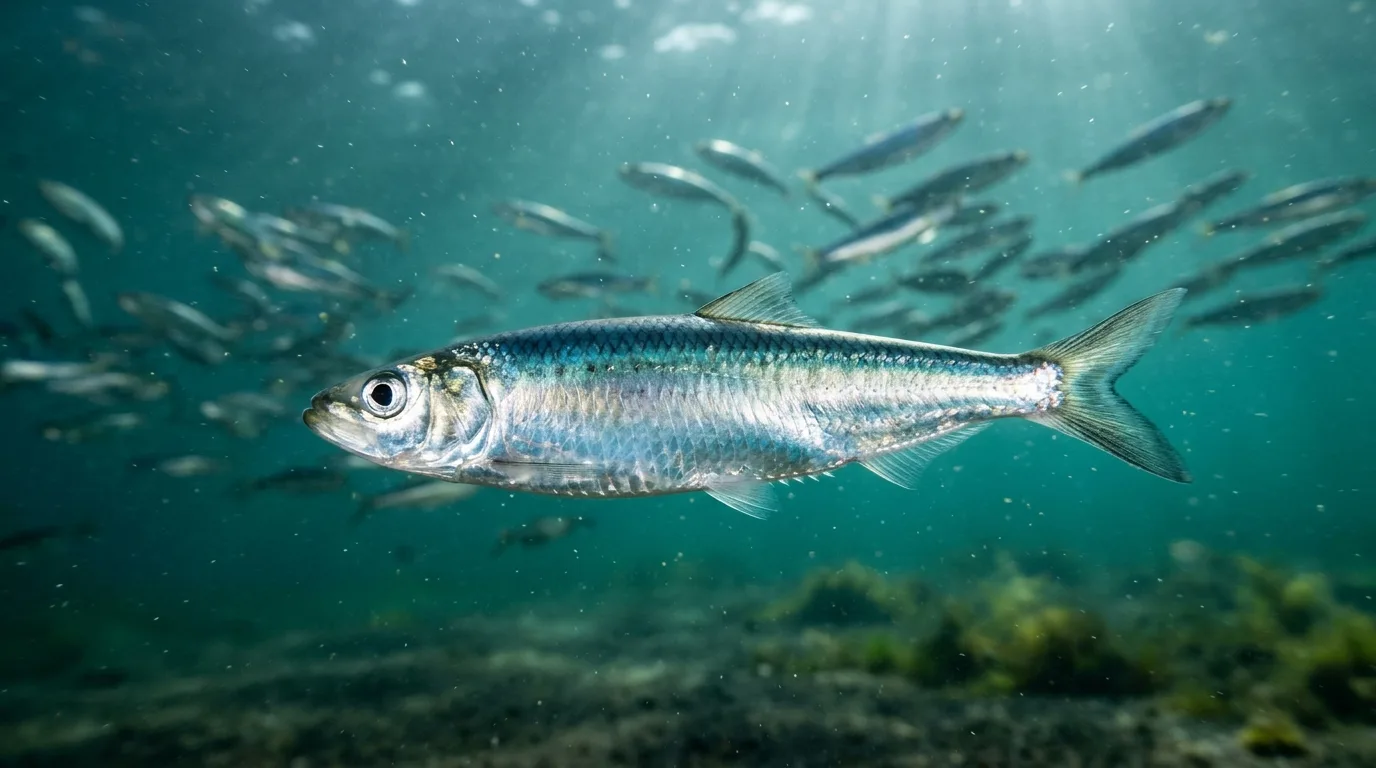
The sprat is not threatened, but it is not a target species either: there is no angling season for it and it is hardly ever fished for on purpose.
Quick to recognise
A small, slender herring-family fish with a blue to blue-grey back, silvery sides and a sharp scute keel on the belly. Around 12 centimetres is usual.
Why it is not a target fish
The sprat is not under threat: the Red List of 2025 classes it as not threatened and very common, and the IUCN as least concern. It is still not a target species, since it is hardly ever fished for on purpose and there is no angling season for it. In the North Sea and the Baltic Sea it is above all food for many predatory fish and seabirds.
Where it lives
On the coast
It travels in shoals through open water, especially in fjords and near the coast, and copes well with low salinity, including the brackish water of the Baltic Sea. By day the shoals tend to stay near the bottom; at night they rise to the top.
| All year round | open water, just below the surface |
|---|
Holding spots in the picture
Choose a season and time of day: the picture shows where the species sits then. Tap a fish or a spot in the list to bring it closer. The picture is schematic and AI-generated, every water is different.
On the coast
Open water, mid-water
Sprat is found here all year round.
Just below the surface
Sprat is found here all year round.
The sprat travels in shoals through open water near the coast and in fjords. It copes well with low salinity, which is why it also lives in the brackish water of the Baltic Sea.
Depth: It usually lives between 10 and 150 metres. By day the shoals stay near the bottom; at night they spread out and rise.
Size comparison: AI-generated drawing, schematic.
Do not confuse
It is mostly confused with young herring. On the sprat the pelvic fin starts before the base of the dorsal fin or directly below it, on the herring only further back; it also looks stockier and has smaller eyes. If you run a finger along the belly from the tail, it catches on the sharp keel scutes.
If one takes your bait anyway
If a sprat is on the hook, remove it quickly, ideally while it is still in the water or with wet hands, and return it at once. The rules on keeping fish are set by the fisheries regulation of your federal state (Bundesland) and by your fishing permit (Erlaubnisschein).
Rules
For the sprat our overview of the states gives no figures for minimum size (Mindestmaß) or closed season (Schonzeit). That does not mean you may catch or keep it: protection is governed by state fisheries law and nature conservation law.
On the coast the rules of the coastal states apply, partly with their own catch restrictions: North Sea coast, Baltic coast of Schleswig-Holstein and Baltic coast of Mecklenburg-Western Pomerania.
The regulation and your fishing permit (Erlaubnisschein) are what count. Lake Constance, the Rhine and the coast, for example, have their own rules: Fishing waters in Germany.
Text AI-assisted, summarised from these pages: Sprat (profile), Releasing a fish.