
Knowledge – Fish
Barramundi fishing
Fishing for barramundi means working a slim plug slowly and erratically in rivers and estuaries, past dead wood, undercut banks and overhanging trees. Here is the way there in nine steps, each with a link to the detailed page.
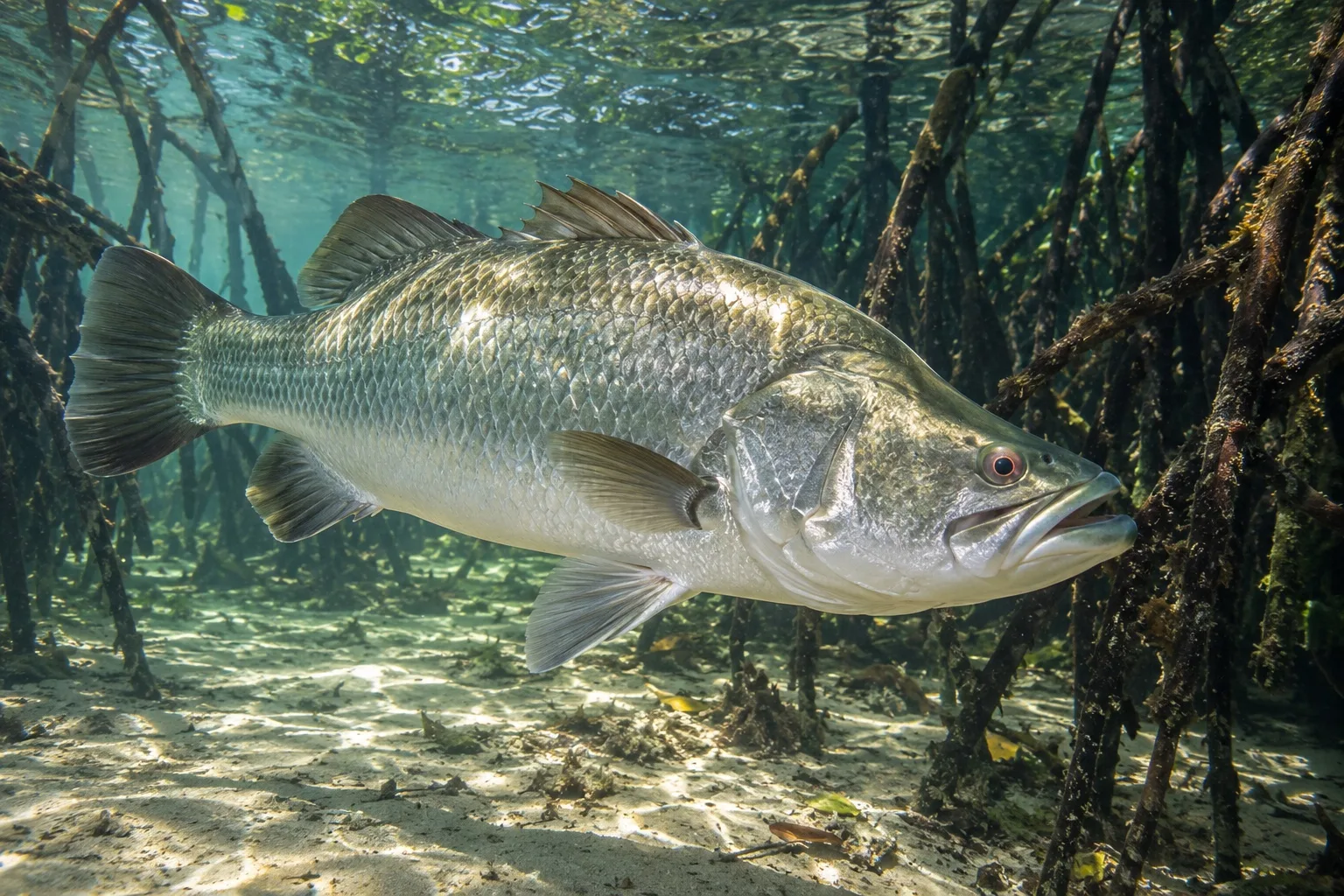
The serrated preoperculum with its strong spine can cut, so do not grip the fish by the gill covers. In Kakadu National Park saltwater crocodiles live in all waters, including at boat ramps and fishing spots, and they snap at hooked fish. Stay at least five metres back from the water’s edge there and never wade in, as the park authority recommends.
 Choose another fish117 fish with guides
 EelOff-peak season
 EelpoutPossible
 IdePossible
 ArapaimaGood
 GraylingPeak season
 Atlantic salmonSpawning time, please spare
 Brown troutSpawning time, please spare
 Brook troutSpawning time, please spare
 BarbelOff-peak season
- BarramundiSpawning season
 Greater amberjackGood
 Topmouth gudgeonOnly as bycatch
 Blue marlinSpawning season
 BonefishSpawning season
 BonitoGood
 BreamOff-peak season
 Dusky grouperOnly as bycatch
 CobiaPossible
 Spiny dogfishOnly as bycatch
 CodPeak season
 ChubPeak season
 MinnowOnly as bycatch
 European sturgeonOnly as bycatch
 FlounderPeak season
 PerchPeak season
 Largemouth bassGood
 Ballan wrasseOnly as bycatch
 Yellowfin tunaSpawning season
 Giant trevallyGood
 Prussian carpPossible
 BrillPossible
 Gilthead breamSpawning time, please spare
 Golden doradoSpawning season
 Golden mahseerOnly as bycatch
 Dolphinfish (mahi-mahi)Good
 Grass carpPossible
 Great barracudaGood
 GudgeonPossible
 White breamPossible
 DaceOff-peak season
 PikePeak season
 HalibutOff-peak season
 HerringPossible
 GarfishOut of season
 Huchen (Danube salmon)Possible
 Crucian carpOnly as bycatch
 CarpOff-peak season
 RuffeOff-peak season
 VendaceOnly as bycatch
 DabPeak season
 GurnardPossible
 Coley (saithe)Peak season
 Chinook salmonHardly any chance
 King mackerelSpawning season
 LingPeak season
 TuskOff-peak season
 MackerelPossible
 Bighead carpOut of season
 WhitefishPossible
 Conger eelOff-peak season
 Sea troutSpawning time, please spare
 Grey mulletPossible
 Murray codSpawning season
 MuskellungeGood
 Common nasePossible
 Nile perchPossible
 PayaraPossible
 Peacock bassPeak season
 PermitGood
 WeeverOnly as bycatch
 PollackOff-peak season
 BurbotOff-peak season
 AspPossible
 Red snapperSpawning season
 Rainbow troutPeak season
 RoosterfishGood
 RoachPeak season
 RedfishOut of season
 Bluefin tunaOnly as bycatch
 RuddPossible
 Russian sturgeonOnly as bycatch
 HaddockOff-peak season
 SnakeheadPossible
 TenchOff-peak season
 SpirlinOnly as bycatch
 PlaiceOff-peak season
 Greenland halibutOnly as bycatch
 Round gobyOnly as bycatch
 SwordfishGood
 Lake troutSpawning time, please spare
 HakeSpawning time, please spare
 Alpine charSpawning time, please spare
 MonkfishPossible
 SoleOff-peak season
 SailfishGood
 Silver carpOut of season
 SnookPeak season
 PumpkinseedOnly as bycatch
 SpratOnly as bycatch
 Atlantic wolffishSpawning time, please spare
 TurbotPeak season
 SterletOnly as bycatch
 SmeltOnly as bycatch
 Horse mackerelPossible
 TaimenGood
 TarponGood
 TigerfishSpawning season
 BleakPossible
 WahooGood
 Wels catfishOff-peak season
 WhitingPeak season
 Sea bassOff-peak season
 ZanderPeak season
 White-eye breamOnly as bycatch
 Blue breamOnly as bycatch
 Brown bullheadPossible
 VimbaOnly as bycatch
Season in October according to the catch calendar, an estimate and not a guarantee of a catch. The fish pictures are reduced natural-history plates and AI-generated.
Best time
From March to May and from September to October.
In January: Possible, spawning seasonIn February: Possible, spawning seasonIn March: GoodIn April: GoodIn May: GoodIn June: PossibleIn July: PossibleIn August: PossibleIn September: GoodIn October: Good, spawning seasonIn November: Possible, spawning seasonIn December: Possible, spawning season
Good spot
- River: undercut bankundercut bankundercut bankundercut bank
- Coast: seagrassseagrassseagrassseagrass
Starter tackle
- Rod: baitcasting or spinning rod that lets you cast accurately at timber and roots
- Line: 7 to 10 kg breaking strain
In short
In short: According to the catch calendar, the best time is from March to May and from September to October. Good spots in the river: undercut banks; on the coast: seagrass. Proven baits: lures worked along cover such as undercut banks, sunken timber and overhanging trees. It starts out male and later becomes female. In Queensland, slot limits and closed seasons (Schonzeit) apply: east coast 1 November to 31 January, Gulf of Carpentaria 7 October to 31 January, and then you may not deliberately target them for release either (as of October 2026).
Quick to recognise
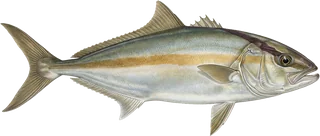
An elongated, laterally flattened predator with a large, slightly oblique mouth whose upper jaw reaches back past the eye. Most fish start out male and later turn female, which is why big barramundi are usually female. FishBase gives up to 200 centimetres, 60 kilograms and 35 years.
When
In Queensland, March to May and September count as good, and in February and from June to August a catch is possible. Because barramundi spawn in the river mouths from October to February, at the start of the wet season, a closed season (Schonzeit) begins there on the east coast on 1 November and lasts until 31 January, in the Gulf of Carpentaria as early as 7 October. You may then not deliberately target them for release either, with the exception of a few reservoirs (as of October 2026). In the Northern Territory, by contrast, they can be caught in every season, which is why the calendar shows November to January as “possible” and October as “good”; these values do not apply to Queensland. There and in Western Australia, the season depends on which water you choose and whether it is reachable in the wet or the dry season.
- JanPossible, spawning season
- FebPossible, spawning season
- MarGood
- AprGood
- MayGood
- JunPossible
- JulPossible
- AugPossible
- SepGood
- OctGood, spawning season
- NovPossible, spawning season
- DecPossible, spawning season
Peak seasonGoodPossibleHardly any chanceSpawning season
Season in the destination
In the Northern Territory you can catch barramundi in all four seasons: the wet from January to mid-March, the run-off in March and April, the dry from May to September, and the build-up before the rains from October to December. In the cool dry season it feeds less often and moves less; it bites best in the warm water just before and after the wet. Wet years with plenty of run-off make it easier to catch and bring more fish later. In Queensland it is protected for much of the spawning season, on the east coast between 1 November and 31 January and in the Gulf of Carpentaria from as early as 7 October (as of October 2026); check the closure dates for your fishery before you travel.
Season and biting time
In January: Spawning seasonIn February: Spawning seasonIn March: GoodIn April: GoodIn May: GoodIn June: PossibleIn July: PossibleIn August: PossibleIn September: GoodIn October: Spawning seasonIn November: Spawning seasonIn December: Spawning season
Where it is now
In the river
In the river, look for it around dead wood, under trees that overhang the water and along undercut bank edges. You find half-grown fish all the way up into the upper reaches; when the wet season begins, mature males swim downstream to the river mouths to spawn.
How to go about it: In the river it holds along undercut banks, sunken logs, rocks and overhanging vegetation, often also in billabongs away from the main current. Older juveniles move far up into the upper reaches.
| All year round | undercut bank |
|---|
On the coast
On the coast you find it in river mouths, lagoons and in the water close to land, clear or murky. Spawning barramundi gather in groups in the river mouths and on the flats in front of them, above all around full and new moon on a rising tide.
How to go about it: On the coast, look for it in tidal rivers, estuaries and lagoons. On a falling tide the prey collects there, and the fish lie in wait by timber and rocks. To spawn they move into the estuaries and onto the tidal flats in front of them.
| All year round | Seagrass |
|---|
Holding spots in the picture
Choose a season and time of day: the picture shows where the species sits then. Tap a fish or a spot in the list to bring it closer. The picture is schematic and AI-generated, every water is different.
Chance of a catch in springgood
Catch chances in summerpossible
Chance of a catch in autumngoodSpawning season, observe the closed seasons
Catch chances in winterpossiblespawning season, observe the closed seasons
- J
- F
- M
- A
- M
- J
- J
- A
- S
- O
- N
- D
Spawning season
In the river
Undercut bank, overhanging branches, timber
Barramundi are found here all year round.
In rivers, barramundi hold up near cover: under undercut banks, by sunken timber and under trees hanging over the water. Older juveniles move right up into the upper reaches, and at the start of the wet season mature males drop downstream to the estuaries.
Spring: catch chances according to the catch calendar are good.
Summer: catch chances according to the catch calendar are possible.
Autumn: chance of a catch according to the catch calendar good in September and October, possible in November. The spawning season falls in this period, so observe the closed seasons.
Winter: catch chances according to the catch calendar are possible. The spawning season falls in this period, so observe the closed seasons.
On the coast
Seagrass, gravel and stones in the shallows
Barramundi are found here all year round.
On the coast it lives in estuaries, lagoons and inshore water, clear or murky. To spawn, the fish gather in the river mouths and on the tidal flats in front of them, in groups around full and new moon on a rising tide.
Spring: catch chances according to the catch calendar are good.
Summer: catch chances according to the catch calendar are possible.
Autumn: chance of a catch according to the catch calendar good in September and October, possible in November. The spawning season falls in this period, so observe the closed seasons.
Winter: catch chances according to the catch calendar are possible. The spawning season falls in this period, so observe the closed seasons.
Depth: FishBase gives a depth of 10 to 40 metres.
Size comparison: AI-generated drawing, schematic.
How
It is caught on a rod or hand line, best on artificial lures that you cast or troll. It often follows a lure for a long way before it grabs, so work it slowly and with an irregular rhythm. In Australia, reservoirs are stocked with barramundi, and releasing fish is especially common there.
Easiest way
The easiest approach is to cast a slim fish-shaped crankbait at sunken trunks, rocks or undercut banks in a tidal river. Fish on a falling tide and retrieve the lure slowly with short pauses. From the bank, keep well back from the water’s edge, because crocodiles live there.
Crankbait by timber and roots
The classic method in the rivers and estuaries of northern Australia: you cast an artificial lure right up to the cover where the barramundi lies in wait for prey, and work it slowly.
- Look for cover
Barramundi lurk right beside cover: by undercut banks, sunken timber, rocks and overhanging trees. That is exactly where you aim your casts.
- Use the falling tide
Many anglers fish on a falling tide. The current then pushes the baitfish together and shows you where the predators are waiting.
- Tie on a stronger leader
A main line of 7 to 10 kilograms breaking strain is usually enough, with a clearly stronger leader in front of it. Many anglers choose a baitcaster outfit because it lets them cast more accurately.
- Close to structure
Cast as close as possible to a trunk, root or rock. The fish sits in the shelter of the cover and shoots out from there at passing prey.
- Work it slowly and unevenly
Retrieve the crankbait slowly and give it irregular twitches with the rod. Barramundi often chase a lure for a long time before they strike. Let soft plastics and vibration lures sink right beside obstacles.
- On the surface at night
In the dark you can try slowly worked surface lures, and poppers also bring bites at times. The fish then hits without any warning.
- Expect jumps
A hooked barramundi often jumps out of the water several times. Expect it and don’t let it catch you off guard.
- Take care on the bank
Crocodiles hang around boat ramps and fishing spots and also snatch hooked fish. When fishing from the bank, stay at least five metres back from the edge and never wade into the water.
What with
Slim fish-shaped crankbaits such as the twitchbait catch both cast and trolled. Around dead timber, soft plastics and lipless crankbaits come into play, and sometimes poppers on the surface too.
- Twitchbaitall year round by timber, roots and rocks, cast or trolled
Slim fish-shaped crankbaits catch both cast and trolled, best worked slowly and irregularly right beside timber and rocks.
- Soft plastic (shad)by sunken timber and dense obstacles
According to Recfishwest, soft plastics dropped right beside obstacles often produce good catches.
- Lipless crankbaitwhen the fish sit deeper by the obstacles
Recfishwest names vibration lures without a diving lip, dropped beside obstacles, as very productive.
Tackle
A spinning rod for casting and trolling artificial lures. Choose the reel and line with the line calculator; the page on fishing line helps with the material.
Crankbait by timber and roots
- Rod
- Baitcasting or spinning rod that lets you cast accurately to timber and roots
- Reel
- Baitcasting reel for casting accuracy, or alternatively a fixed-spool reel
- Line
- 7 to 10 kg breaking strain
- Leader
- clearly stronger than the main line
- Weight, float, lead
- slim fish-shaped crankbaits, soft plastics, vibration lures, surface lures at night
Common mistakes
- Retrieving too fast and too evenly: Barramundi often follow a lure a long way before they grab it. So work the lure slowly with irregular twitches.
- Casting into open water: It lies in wait in the shelter of timber, rocks and roots. Place every cast as close to the cover as you can.
- Fishing without a stronger leader: A main line of 7 to 10 kilograms is usually enough, but the leader should be clearly stronger.
- Standing too close to the water’s edge: Saltwater crocodiles live in the waters of northern Australia, and they also snatch hooked fish. Keep at least five metres back from the edge and never wade into the water.
- Dead baits on catfish spots: Dead baits do catch fish, but catfish often take them first. Artificial lures worked close to cover avoid the problem.
Rules
For barramundi, the rules of the country where you fish apply, not German fisheries law. Each country, and often each water, sets its own licence, closed seasons, minimum sizes and rules on taking fish.
What the species profile says: It starts life as a male and later becomes a female. In Queensland, take windows and closed seasons apply: east coast 1 November to 31 January, Gulf of Carpentaria 7 October to 31 January, and during that time targeted catch and release is not allowed either (as of October 2026). The October to January figures apply to the Northern Territory. Saltwater crocodiles live in many waters.
The fisheries authority (Fischereibehörde) of the country you travel to is what counts. Ask about the current rules before the trip and read in the profile how threatened the species is.
After the catch
Playing and landing
Expect jumps and bring the fish in quickly. Don’t grip it by the gill covers: the preopercle is serrated and carries a strong spine. Support it horizontally with both hands, don’t put it down on hot surfaces and remove the hook, ideally while it is still in the water. If it sits deep, cut the line close to the mouth. Hold a tired fish head into the current until it swims off, ideally close to cover at the bank. Watch out for crocodiles while you do so. The rules, licence and taking of fish are set by the country where you fish.
According to the Australian stock assessment, around 90 per cent of released barramundi survive. In Kakadu National Park the traditional owners ask for gentle fishing, for example by releasing fish. When reporting catches, pay attention to the full name, because the barramundi cod is a grouper and may not be taken in Queensland.
Frequently asked questions
When is the best time for barramundi?
Just before and after the wet season, when the water is warm. In the Northern Territory catch numbers rise with water temperature, and in the cool dry season it feeds less.
Which lures are good for barramundi?
Slim fish-shaped crankbaits, soft plastics and vibration lures at obstacles, and surface lures at night. Dead baits catch too, but often go to catfish.
What line strength for barramundi?
Recfishwest gives 7 to 10 kilograms breaking strain as usually sufficient, plus a clearly stronger leader. Heavy tackle is not needed.
Do barramundi bite at night?
Yes. At night it is worth retrieving surface lures slowly, and the barramundi then hits without warning.
Does a released barramundi survive?
Usually, yes. The Australian stock assessment puts the survival rate of released fish at roughly nine in ten.
How big does a barramundi get?
In the Northern Territory, fish of over 45 kilograms and 150 centimetres have been recorded. Fish over 95 centimetres there are probably females.
Similar species
If you catch barramundi, you can use similar tackle for these species too:
Sources
As of October 2026. The practical knowledge comes from 8 sources, summarised in our own words.
View all 8 sources
- Scott’s Species – barramundi, a wonderful estuarine and inshore sportfish · Recfishwest (Dachverband der Freizeitangler in Western Australia), Text der Redaktion Western Angler
- Barramundi (Fish species) · Northern Territory Government, Fisheries
- Fishing seasons and weather forecasts · Northern Territory Government, Fisheries
- Rules for releasing your catch · Northern Territory Government, Fisheries
- Fishing & boating (Kakadu National Park) · Parks Australia, Australian Government
- Status of Australian Fish Stocks: Barramundi (2023) · Fisheries Research and Development Corporation (FRDC), Australian Government
- Lates calcarifer, Barramundi (Species Summary) · FishBase
- Closed seasons in tidal waters · Queensland Department of Primary Industries
Text AI-assisted, based on the sources named and these pages: Barramundi (profile), Spinning, Twitchbait, Soft plastic (shad), Lipless crankbait, Popper, Releasing fish.