
Knowledge – Fish
Fishing for great barracuda
Fishing for great barracuda means searching by day along reef edges, over seagrass and around mangroves, and offering a bait fish or a shiny artificial lure on a bite-proof leader. Here is the route to it in nine steps, each with a link to the detailed page.
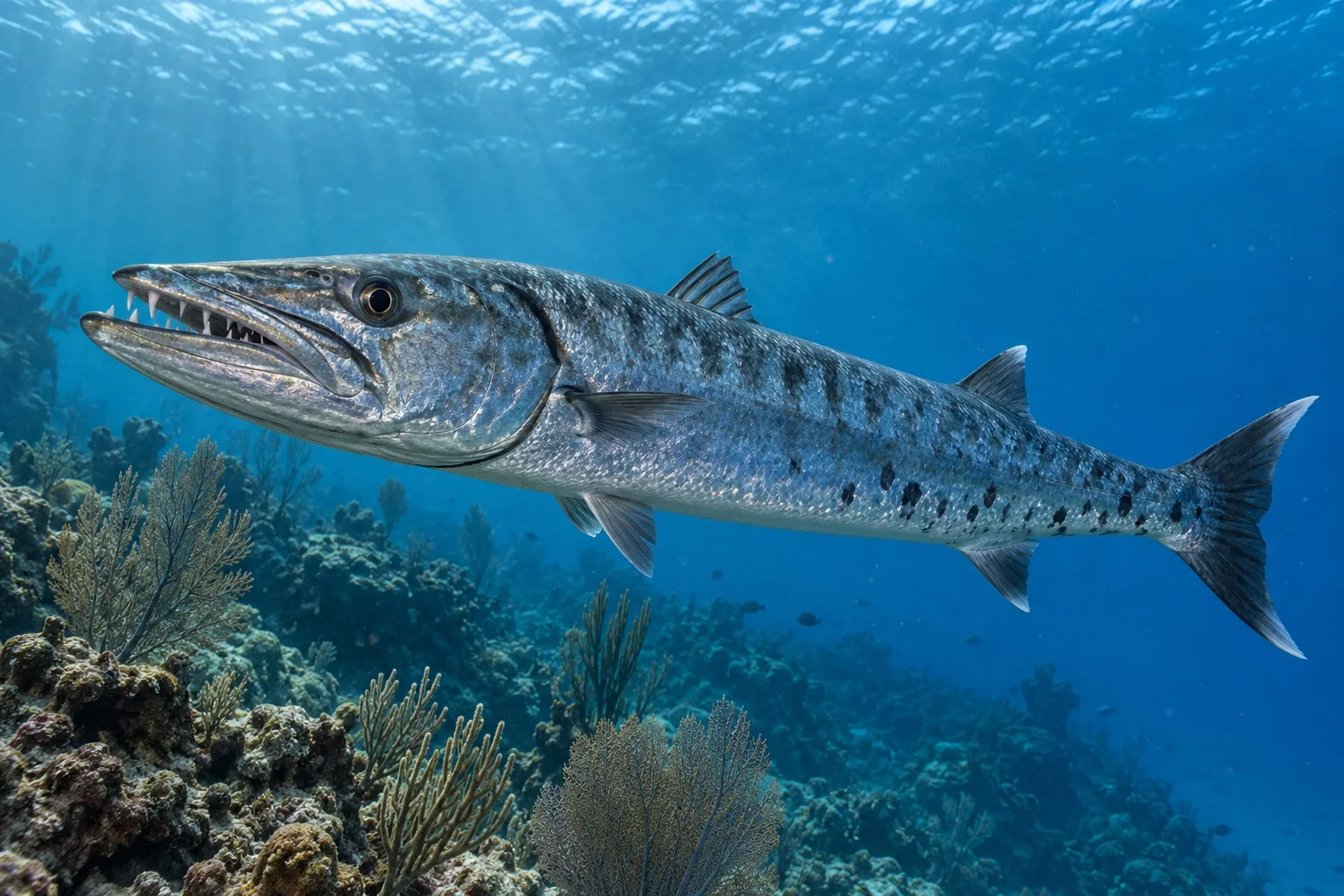
The barracuda has a set of razor-sharp, dagger-like teeth: keep your hands away from the mouth and remove the hook with long pliers. According to the Bundesinstitut für Risikobewertung, barracudas living close inshore are among the species that particularly often carry ciguatera toxin. You cannot tell a contaminated fish by its appearance, smell or taste, and cooking or freezing does not break the toxin down.
 Choose another fish117 fish with guides
 EelOff-peak season
 EelpoutPossible
 IdePossible
 ArapaimaGood
 GraylingPeak season
 Atlantic salmonSpawning time, please spare
 Brown troutSpawning time, please spare
 Brook troutSpawning time, please spare
 BarbelOff-peak season
 BarramundiSpawning season
 Greater amberjackGood
 Topmouth gudgeonOnly as bycatch
 Blue marlinSpawning season
 BonefishSpawning season
 BonitoGood
 BreamOff-peak season
 Dusky grouperOnly as bycatch
 CobiaPossible
 Spiny dogfishOnly as bycatch
 CodPeak season
 ChubPeak season
 MinnowOnly as bycatch
 European sturgeonOnly as bycatch
 FlounderPeak season
 PerchPeak season
 Largemouth bassGood
 Ballan wrasseOnly as bycatch
 Yellowfin tunaSpawning season
 Giant trevallyGood
 Prussian carpPossible
 BrillPossible
 Gilthead breamSpawning time, please spare
 Golden doradoSpawning season
 Golden mahseerOnly as bycatch
 Dolphinfish (mahi-mahi)Good
 Grass carpPossible
- Great barracudaGood
 GudgeonPossible
 White breamPossible
 DaceOff-peak season
 PikePeak season
 HalibutOff-peak season
 HerringPossible
 GarfishOut of season
 Huchen (Danube salmon)Possible
 Crucian carpOnly as bycatch
 CarpOff-peak season
 RuffeOff-peak season
 VendaceOnly as bycatch
 DabPeak season
 GurnardPossible
 Coley (saithe)Peak season
 Chinook salmonHardly any chance
 King mackerelSpawning season
 LingPeak season
 TuskOff-peak season
 MackerelPossible
 Bighead carpOut of season
 WhitefishPossible
 Conger eelOff-peak season
 Sea troutSpawning time, please spare
 Grey mulletPossible
 Murray codSpawning season
 MuskellungeGood
 Common nasePossible
 Nile perchPossible
 PayaraPossible
 Peacock bassPeak season
 PermitGood
 WeeverOnly as bycatch
 PollackOff-peak season
 BurbotOff-peak season
 AspPossible
 Red snapperSpawning season
 Rainbow troutPeak season
 RoosterfishGood
 RoachPeak season
 RedfishOut of season
 Bluefin tunaOnly as bycatch
 RuddPossible
 Russian sturgeonOnly as bycatch
 HaddockOff-peak season
 SnakeheadPossible
 TenchOff-peak season
 SpirlinOnly as bycatch
 PlaiceOff-peak season
 Greenland halibutOnly as bycatch
 Round gobyOnly as bycatch
 SwordfishGood
 Lake troutSpawning time, please spare
 HakeSpawning time, please spare
 Alpine charSpawning time, please spare
 MonkfishPossible
 SoleOff-peak season
 SailfishGood
 Silver carpOut of season
 SnookPeak season
 PumpkinseedOnly as bycatch
 SpratOnly as bycatch
 Atlantic wolffishSpawning time, please spare
 TurbotPeak season
 SterletOnly as bycatch
 SmeltOnly as bycatch
 Horse mackerelPossible
 TaimenGood
 TarponGood
 TigerfishSpawning season
 BleakPossible
 WahooGood
 Wels catfishOff-peak season
 WhitingPeak season
 Sea bassOff-peak season
 ZanderPeak season
 White-eye breamOnly as bycatch
 Blue breamOnly as bycatch
 Brown bullheadPossible
 VimbaOnly as bycatch
Season in October according to the catch calendar, an estimate and not a guarantee of a catch. The fish pictures are reduced natural-history plates and AI-generated.
Best time
All year round, especially during the day.
In January: GoodIn February: GoodIn March: Good, spawningIn April: Good, spawningIn May: Good, spawningIn June: GoodIn July: GoodIn August: GoodIn September: GoodIn October: GoodIn November: GoodIn December: Good
Good spot
- Coast: Wreck, reef, edge and seagrassWreck, reef, edge and seagrassWreck, reef, edge and seagrassWreck, reef, edge and seagrass
Top baits
Starter tackle
- Rod: strong boat rod, in the study heavy recreational tackle
- Line: breaking strain of around 14 kg (30 lb)
- Hook: single hooks rather than trebles where possible
- Rod: spinning rod that casts surface and mid-water lures reliably
- Line: strong main line; the sources give a figure only for trolling (around 14 kg)
- Hook: single hook, where the lure allows it
In short
In short: According to the catch calendar, the best time is all year round. Good spots on the coast: wrecks, reefs, edges and seagrass. Proven baits: fast-worked, shiny artificial lures or bait fish on a steel leader. It can carry ciguatera toxin, according to the Bundesinstitut für Risikobewertung mainly fish living close inshore. In Florida, regional size and catch limits apply.
Quick to recognise
A slender, almost round predator with a large mouth and a protruding lower jaw. The scattered black spots on the lower flank set it apart from other barracudas. Around 1.4 metres is usual; from 1.5 metres a fish counts as very large.
When
In Florida and the Caribbean the barracuda has no fixed season; all months count as good. The time of day matters more than the month, because it hunts by sight and is on the move during the day. Little is known about spawning; in the Florida Keys it probably takes place in spring in deeper water off the coast.
- JanGood
- FebGood
- MarGood, spawning
- AprGood, spawning
- MayGood, spawning
- JunGood
- JulGood
- AugGood
- SepGood
- OctGood
- NovGood
- DecGood
Peak seasonGoodPossibleHardly any chanceSpawning season
Season in the destination
In Florida and the Bahamas you catch barracudas all year round. In a telemetry study off Eleuthera, tagged fish were more often in shallow water close to the shore in the winter half of the year from October to March; in summer many moved for weeks to the deeper edge of the shelf, probably to spawn. The cooler months therefore favour flats and mangroves, while in summer reef edges and deeper water off the coast are worth the effort.
Season and biting time
In January: GoodIn February: GoodIn March: SpawningIn April: SpawningIn May: SpawningIn June: GoodIn July: GoodIn August: GoodIn September: GoodIn October: GoodIn November: GoodIn December: Good
Where it is now
On the coast
Look for coral reefs and their edges, seagrass meadows and mangroves. Out on the open sea it usually hunts just below the surface, sometimes over sandy bottom and around wrecks too. Young barracudas grow up in mangroves and seagrass and later move to deeper reefs.
How to go about it: Small and medium fish hold over sandy, weedy shallows, at mangroves and in tidal creeks, often in groups. The big ones usually hunt alone at reefs and further out, mostly near the surface, typically at 3 to 30 metres depth. In the Bahamas, individual tagged fish covered more than 12 kilometres in a single day.
| All year round | Wreck, reef, edge, seagrass, just below the surface, open water |
|---|
Biting time: mainly during the day. How this looks in the water is shown by the picture of the holding spots just below.
Holding spots in the picture
Choose a season and time of day: the picture shows where the species sits then. Tap a fish or a spot in the list to bring it closer. The picture is schematic and AI-generated, every water is different.
Chance of a catch in springgoodSpawning, observe the closed seasons
Catch chance in summergood
Catch chance in autumngood
Catch chance in wintergood
- J
- F
- M
- A
- M
- J
- J
- A
- S
- O
- N
- D
Spawning season
No main time As a sight hunter, the barracuda is on the move during the day.
Active time As a sight hunter, the barracuda is on the move during the day.
No main time As a sight hunter, the barracuda is on the move during the day.
No main time As a sight hunter, the barracuda is on the move during the day.
On the coast
Seagrass, gravel and stones in the shallows
Great barracuda is found here all year round.
Drop-off
Great barracuda is found here all year round.
Wreck, reef
Great barracuda is found here all year round.
Open water, mid-water
Great barracuda is found here all year round.
Just below the surface
Great barracuda is found here all year round.
The barracuda holds at coral reefs and reef edges, over seagrass meadows and at mangroves. It also hunts in the open sea, usually just below the surface. Young fish grow up in mangroves and seagrass before moving to deeper reefs.
Spring: chance of a catch good according to the catch calendar. This is when spawning falls, so observe the closed seasons.
Summer: catch chance according to the catch calendar good.
Autumn: chance of a catch good according to the catch calendar.
Winter: good chance of a catch according to the catch calendar.
Depth: It usually stays at or near the surface, occasionally going down as far as 100 metres.
Size comparison: AI-generated drawing, schematic.
How
It is caught with a rod or a hand line. In Florida and the Caribbean it often bites when spinning and trolling, because flash attracts it.
Easiest way
The simplest way in is trolling from a boat: an artificial lure runs on a steel or strong monofilament leader just behind the stern while you cruise over patch reefs, seagrass and reef edges. According to the FAO, this is how anglers catch many barracudas.
Trolling with artificial lures
From a boat you cover a lot of ground and find the big fish that stand singly at reefs and off the coast.
- Set the course
Cruise over patch reefs, seagrass meadows and the edge that drops into deeper water. Smaller barracudas tend to hold in the shallows, the big ones usually alone at the reef or further out.
- Lure on the leader
Take a hard lure of 13 to 17 centimetres or a long rubber-tube lure and attach it to steel or thick monofilament. A lure with a single hook can be removed faster later than one with trebles.
- Short lines
Let the lures run only a short distance behind the boat. The researchers of the Bahamas study recommend this because it shortens the fight.
- Troll at a brisk pace
In the study off Eleuthera the boat travelled at 6 to 9 knots. The barracuda hunts by sight and reacts to flash.
- Sudden strike
It lurks and then strikes very fast, so the bite usually comes as a hard jerk on the rod.
- Short and decisive
Bring the fish in without pauses. Off Eleuthera, hooked barracudas were attacked and killed by sharks or their own kind during the fight.
- Unhook at the side of the boat
Guide it into a knotless, rubberised net or a cradle and remove the hook with pliers while the fish stays in the water.
Casting in shallow water
From the shore, while wading or from a small boat, you cast lures to fish in shallow coastal water, mainly in the winter half of the year.
- Shallow water
Look for water close to the shore less than 5 metres deep with tidal creeks, seagrass and small patch reefs. That is where the tagged fish in the Bahamas spent most of their time.
- Bite-proof leader in front
In front of a surface or mid-water lure, fit a piece of steel or strong monofilament. The teeth cut through thin material in an instant.
- Cast to the edges
Cast over seagrass beds, into tidal creeks and to the edges of patch reefs.
- Top or middle
Work the lure at the surface or in mid-water, because that is where the barracuda usually hunts. Shiny lures attract it.
- Attack by sight
It hunts by sight and attacks from ambush at high speed.
- Do not play it out
Play it quickly; an exhausted fish takes longer to find its way back to cover after release.
- Pliers instead of fingers
Remove the hook with pliers or forceps and keep your hands away from the mouth.
What with
Bait fish is the natural bait. According to the FAO, anglers catch many barracudas when trolling with artificial lures over patch reefs, seagrass and reef edges. Because of the teeth, many fit a steel leader in front.
- Baitfishall year round, at reefs, seagrass and mangroves
Fish such as mullet, herring, grunts and jacks are its main prey; it swallows small ones whole and tears larger ones apart with its teeth.
Tackle
A sea rod for the bait fish, with a steel leader in front against the sharp teeth. For unhooking, pack long pliers and a towel.
Trolling with artificial lures
- Rod
- strong boat rod, in the study heavy recreational tackle
- Line
- breaking strain of around 14 kg (30 lb)
- Leader
- Steel or strong monofilament; even with that, some fish break the connection
- Hooks
- single hooks rather than trebles where possible
- Weight, float, lead
- hard lure 13–17 cm, rubber-tube lure 35–36 cm
Casting in shallow water
- Rod
- Spinning rod that casts surface and mid-water lures reliably
- Line
- strong main line; the sources give a figure only for trolling (around 14 kg)
- Leader
- Steel or strong monofilament
- Hooks
- Single hook, where the lure allows it
Common mistakes
- No bite-proof leader: The sharp teeth cut through line with ease. Fit steel or thick monofilament; even with that some fish are lost, so check the leader after every catch.
- Lures with several trebles: In the Bahamas study, unhooking took longer than 30 seconds for more than a quarter of the lures with trebles, and only rarely with single hooks. Choose lures with a single hook and keep pliers ready.
- Long lines and a long fight: Lures trolled far behind prolong the fight, and sharks wait for exhausted fish at the reef. Troll short behind the boat and bring the fish in quickly.
- Lifting the fish aboard: Even 90 seconds in the air slows its escape to cover after release. Unhook it at the side of the boat without taking the fish out of the water.
- Big fish for the kitchen: The FAO advises against eating large barracudas in particular because of the ciguatera risk. Release big fish if the local rules allow it.
Rules
For great barracuda the rules of the country in which you fish apply, not German fisheries law. Licence, closed seasons, minimum sizes and keeping fish are set by each country, often by each water separately.
What the species profile says: It can carry ciguatera toxin, according to the Bundesinstitut für Risikobewertung mainly fish living close inshore. In Florida, regional size and catch limits apply.
The fisheries authority (Fischereibehörde) of the country you travel to is what counts. Ask about the current rules before the trip and read in the profile how threatened the species is.
After the catch
Playing and landing
Bring the barracuda in quickly; in a study in the Bahamas the fight lasted just under three minutes on average. Unhook it at the side of the boat with pliers or forceps while the fish stays in the water, and keep your fingers away from the mouth; if you need a net, take a knotless, rubberised one. Fish that lay in the air after the fight later found cover more slowly. Rules, licence and keeping fish are determined by the country in which you fish; a fish you may keep there, you stun and kill straight away.
When unhooking, keep your distance and work with pliers and a towel; the fish welfare pages show landing and releasing. If you want to keep a barracuda in Florida or the Caribbean, first read the health authorities‘ warnings about ciguatera. If symptoms appear after a fish meal, seek medical help and mention your suspicion.
Frequently asked questions
What leader do you need for barracuda?
Steel or strong monofilament, because it cuts thin line when it bites. In a study in the Bahamas the researchers still lost quite a few fish, so check the leader regularly.
How fast do you troll for barracuda?
In a study off Eleuthera, trolling was done at 6 to 9 knots, with the lures running just behind the boat. That shortens the fight.
Is a barracuda dangerous for anglers?
The main danger is the teeth when unhooking, so always use pliers. Attacks on people are rare and mostly down to shiny objects or harpooned fish.
Does a barracuda survive release?
Usually yes: of 63 fish caught in one study, none died directly; a few briefly lost their balance and recovered within 5 to 10 minutes. A short fight and unhooking in the water reduce the risk of being eaten afterwards.
Can you eat a large barracuda?
Better not. Large predators from the reef accumulate the most ciguatoxin, which is why the FAO advises against large barracudas in particular.
Similar species
If you catch great barracuda, you can fish for these species with similar tackle too:
 Amberjack fishingGood
 Cobia fishingPossible
 Chinook salmon fishingSlim chances
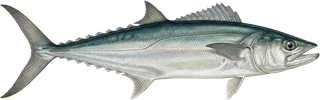 King mackerel fishingSpawning season
Sources
Correct as of October 2026. The practical knowledge comes from 7 sources, summarised in our own words.
View all 7 sources
- Consequences of catch-and-release angling on the physiological status, injury, and immediate mortality of great barracuda (Sphyraena barracuda) in The Bahamas (O'Toole, Danylchuk, Suski, Cooke 2010) · ICES Journal of Marine Science (Oxford University Press); Carleton University, University of Massachusetts, University of Illinois
- Spatial ecology and residency patterns of adult great barracuda (Sphyraena barracuda) in coastal waters of The Bahamas (O'Toole et al. 2011) · Marine Biology (Springer), Autorenkopie im Goldberg Lab der University of Wisconsin–Madison
- Fishing-Related Stressors Inhibit Refuge-Seeking Behavior in Released Subadult Great Barracuda (Brownscombe et al. 2014) · Transactions of the American Fisheries Society (American Fisheries Society / Oxford University Press)
- Sphyraena barracuda (Species Profile) · Florida Museum of Natural History, University of Florida
- Sphyraenidae – Barracudas (The living marine resources of the Western Central Atlantic, Vol. 3) · Food and Agriculture Organization of the United Nations (FAO)
- Great barracuda (Recreational fishing: fish species) · Northern Territory Government of Australia
- Sphyraena barracuda, Great barracuda (Species Summary) · FishBase
Text prepared with AI support, based on the sources named and these pages: Great barracuda (profile), Sea fishing, Bait fish.