
Knowledge – Fish
Murray cod fishing
Fishing for Murray cod means fishing close to submerged wood in the Murray-Darling Basin with a large crankbait or natural bait, mostly from dusk until morning. Here is the way there in nine steps, each with a link to the detailed page.
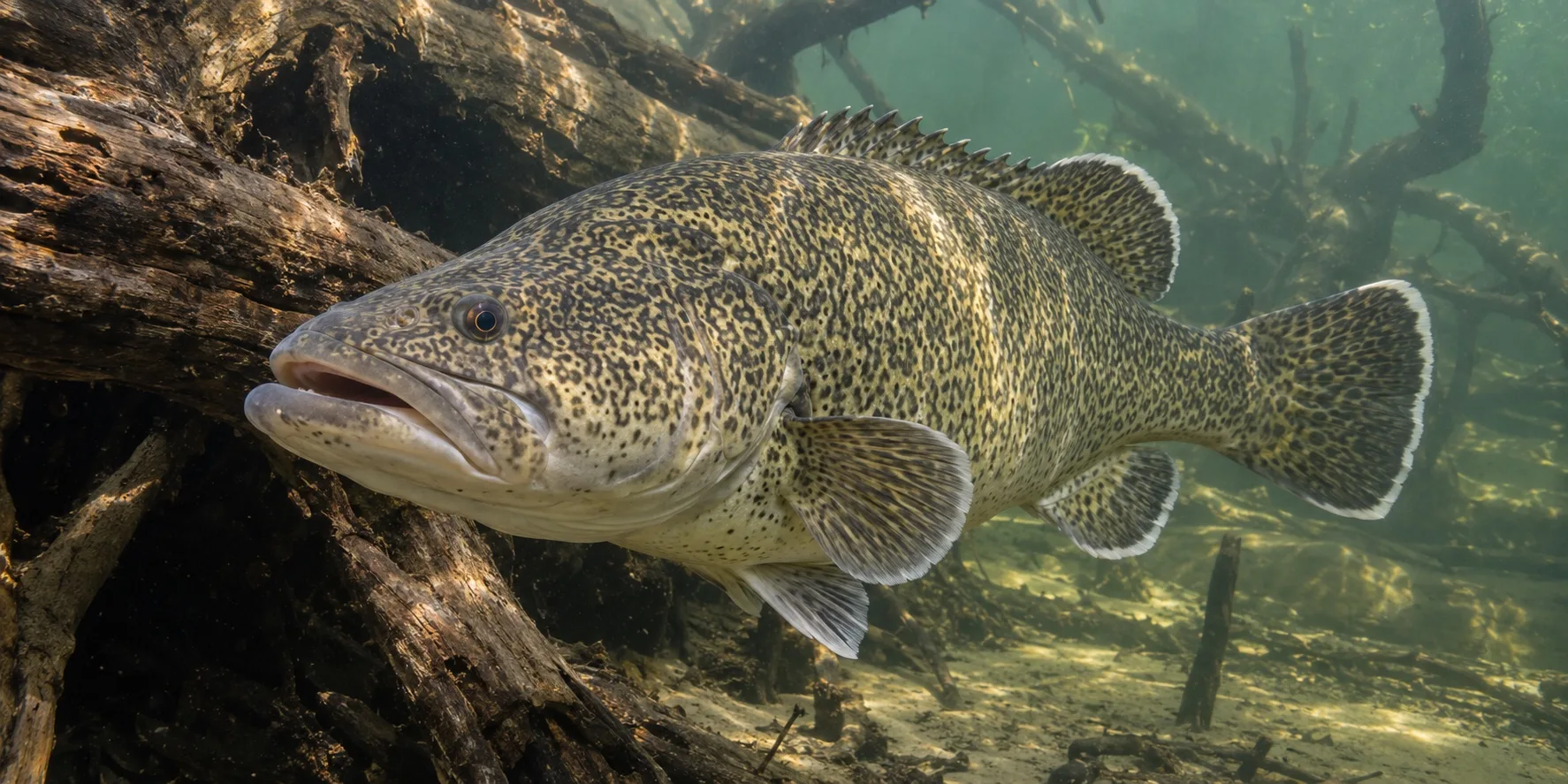
Since 2003 Australia’s environmental law, the EPBC Act, has listed the Murray cod as a threatened species (Vulnerable); Victoria and South Australia list it as endangered. In South Australia any keeping is prohibited. In New South Wales and Victoria it is protected by a closed season (Schonzeit) from 1 September to 30 November, in Queensland from 1 August to 31 October (as of October 2026). The Australian government advises not targeting it at all from June to mid-December, not even for release.
 Choose another fish117 fish with guides
 EelOff-peak season
 EelpoutPossible
 IdePossible
 ArapaimaGood
 GraylingPeak season
 Atlantic salmonSpawning time, please spare
 Brown troutSpawning time, please spare
 Brook troutSpawning time, please spare
 BarbelOff-peak season
 BarramundiSpawning season
 Greater amberjackGood
 Topmouth gudgeonOnly as bycatch
 Blue marlinSpawning season
 BonefishSpawning season
 BonitoGood
 BreamOff-peak season
 Dusky grouperOnly as bycatch
 CobiaPossible
 Spiny dogfishOnly as bycatch
 CodPeak season
 ChubPeak season
 MinnowOnly as bycatch
 European sturgeonOnly as bycatch
 FlounderPeak season
 PerchPeak season
 Largemouth bassGood
 Ballan wrasseOnly as bycatch
 Yellowfin tunaSpawning season
 Giant trevallyGood
 Prussian carpPossible
 BrillPossible
 Gilthead breamSpawning time, please spare
 Golden doradoSpawning season
 Golden mahseerOnly as bycatch
 Dolphinfish (mahi-mahi)Good
 Grass carpPossible
 Great barracudaGood
 GudgeonPossible
 White breamPossible
 DaceOff-peak season
 PikePeak season
 HalibutOff-peak season
 HerringPossible
 GarfishOut of season
 Huchen (Danube salmon)Possible
 Crucian carpOnly as bycatch
 CarpOff-peak season
 RuffeOff-peak season
 VendaceOnly as bycatch
 DabPeak season
 GurnardPossible
 Coley (saithe)Peak season
 Chinook salmonHardly any chance
 King mackerelSpawning season
 LingPeak season
 TuskOff-peak season
 MackerelPossible
 Bighead carpOut of season
 WhitefishPossible
 Conger eelOff-peak season
 Sea troutSpawning time, please spare
 Grey mulletPossible
- Murray codSpawning season
 MuskellungeGood
 Common nasePossible
 Nile perchPossible
 PayaraPossible
 Peacock bassPeak season
 PermitGood
 WeeverOnly as bycatch
 PollackOff-peak season
 BurbotOff-peak season
 AspPossible
 Red snapperSpawning season
 Rainbow troutPeak season
 RoosterfishGood
 RoachPeak season
 RedfishOut of season
 Bluefin tunaOnly as bycatch
 RuddPossible
 Russian sturgeonOnly as bycatch
 HaddockOff-peak season
 SnakeheadPossible
 TenchOff-peak season
 SpirlinOnly as bycatch
 PlaiceOff-peak season
 Greenland halibutOnly as bycatch
 Round gobyOnly as bycatch
 SwordfishGood
 Lake troutSpawning time, please spare
 HakeSpawning time, please spare
 Alpine charSpawning time, please spare
 MonkfishPossible
 SoleOff-peak season
 SailfishGood
 Silver carpOut of season
 SnookPeak season
 PumpkinseedOnly as bycatch
 SpratOnly as bycatch
 Atlantic wolffishSpawning time, please spare
 TurbotPeak season
 SterletOnly as bycatch
 SmeltOnly as bycatch
 Horse mackerelPossible
 TaimenGood
 TarponGood
 TigerfishSpawning season
 BleakPossible
 WahooGood
 Wels catfishOff-peak season
 WhitingPeak season
 Sea bassOff-peak season
 ZanderPeak season
 White-eye breamOnly as bycatch
 Blue breamOnly as bycatch
 Brown bullheadPossible
 VimbaOnly as bycatch
Season in October according to the catch calendar, an estimate and not a guarantee of a catch. The fish pictures are reduced natural-history plates and AI-generated.
Best time
From January to May, especially in the evening and at night.
In January: GoodIn February: GoodIn March: GoodIn April: GoodIn May: GoodIn June: Hardly any chanceIn July: Hardly any chanceIn August: Hardly any chanceIn September: Hardly any chance, spawningIn October: Hardly any chance, spawningIn November: Hardly any chance, spawningIn December: Possible, spawning
Good spot
- River: undercut bank, pools and behind stonesundercut bank, pools and behind stonesundercut bank, pools and behind stonesundercut bank, pools and behind stones
- Lake: sunken tree and deep bottomsunken tree and deep bottomsunken tree and deep bottomsunken tree and deep bottom
Top baits
Starter tackle
- Rod: from boat and bank 2.10–2.40 m (7–8 ft) for long casts; in small mountain rivers short, around 1.80 m (6 ft) or shorter
- Line: braid 50 lb (around 23 kg); in small rivers 40–50 lb
- Rod: heavy baitcaster or spinning rod around 1.80 m (6 ft)
- Line: braid 40–50 lb (around 18–23 kg)
- Rod: medium-heavy spinning rod around 2.10 m (7 ft); from a boat a trolling rod also works
- Line: braid 50 lb (around 23 kg)
- Hook: circle hook matched to the bait; in a study in Victoria no hook of size 5/0 or larger was deeply hooked
In short
In short: According to the catch calendar the best time is January to May. Good spots on a river: undercut bank, pools and behind stones; on a lake: sunken tree and deep bottom. Proven baits: large, slowly worked deep divers, surface lures at night, large flies as well as beetle grubs, yabbies, prawns and worms. Australia’s largest freshwater fish, listed nationally as threatened (Vulnerable). Closed season (Schonzeit) in New South Wales and Victoria from 1 September to 30 November, in Queensland from 1 August to 31 October (as of October 2026).
Quick to recognise
Australia’s largest freshwater fish, called Murray cod in Australia and, despite the name, not a cod. It is massive, marbled green, with a broad head with a dented forehead and a short snout. Fish of around 10 kilograms are most common; up to 1.8 metres have been measured.
When
The best months are January to May, that is summer and autumn in the southern hemisphere. Spawning takes place in spring from above 15 degrees, in the northern part of the basin roughly from September to mid-November, further south and at higher altitudes from October to mid-December. From June the females already carry eggs, and the Australian government advises against catching and releasing Murray cod until mid-December because the stress can disturb egg development.
- JanGood
- FebGood
- MarGood
- AprGood
- MayGood
- JunHardly any chance
- JulHardly any chance
- AugHardly any chance
- SepHardly any chance, spawning
- OctHardly any chance, spawning
- NovHardly any chance, spawning
- DecPossible, spawning season
Peak seasonGoodPossibleHardly any chanceSpawning season
Season in the destination
You catch most from January to May, in December a catch is possible; on summer evenings the cod bites especially willingly. In the Murray, flow and water level determine the catch: in calm or low water the river is clearer and fishes well from a boat, and on some stretches the cod become more active after the level rises. In hot weeks and in warm, shallow water a released fish copes less well with the capture. In spring the cod sit on their nests, and the fisheries authority in Victoria then asks anglers to switch to other species.
Season and biting time
In January: GoodIn February: GoodIn March: GoodIn April: GoodIn May: GoodIn June: Hardly any chanceIn July: Hardly any chanceIn August: Hardly any chanceIn September: SpawningIn October: SpawningIn November: SpawningIn December: Spawning
Where it is now
In the river
You will find it mainly in the main stream and in larger tributaries, whether in clear, stony creeks or in turbid lowland rivers. Look for cover that shelters it from the current: sunken trees and branches, large stones, tree stumps and undercut banks. In a study in the Murray the fish preferred wood near the bank, calm water and depths of more than 2.4 metres.
How to go about it: In the lowlands you look for deep pools, snags at the bank and calm backwaters, in the Murray from a boat also for wood in mid-stream. In clear mountain rivers the cod lies in small, fast water as soon as there is cover or a deeper pool, sometimes also in the run behind a large stone. There it is wary: with natural bait you fish the deep pools, with lures you work from pool to pool.
| All year round | undercut bank, pools, behind stones |
|---|
In the lake
In billabongs, as oxbow lakes are called in Australia, and in stocked lakes and reservoirs it also stays at submerged wood and other structure. For fish that are meant for the kitchen, Native Fish Australia recommends stocked reservoirs instead of the wild stocks in the rivers.
How to go about it: In lakes and reservoirs you cast to standing and fallen wood, weed edges and rocky banks, usually in less than 6 metres of depth; trolling is deeper, between 4 and 10 metres. At dusk and at night the cod move into the shallows at the bank, and then sitting from the shore a few metres beside the wood also catches.
| All year round | sunken tree, deep bottom |
|---|
Biting time: mainly in the evening and at night. What that looks like in the water is shown by the picture of the holding spots just below.
Holding spots in the picture
Choose a season and time of day: the picture shows where the species sits then. Tap a fish or a spot in the list to bring it closer. The picture is schematic and AI-generated, every water is different.
Chance of a catch in springgood
Catch chance in summerhardly any
Catch chance in autumnhardly anySpawning, observe the closed seasons (Schonzeit)
Catch chance in wintergood
- J
- F
- M
- A
- M
- J
- J
- A
- S
- O
- N
- D
Spawning season
Not the main time It hunts mainly between sunset and sunrise; at night surface lures also catch.
Not the main time It hunts mainly between sunset and sunrise; at night surface lures also catch.
Active time It hunts mainly between sunset and sunrise; at night surface lures also catch.
Active time It hunts mainly between sunset and sunrise; at night surface lures also catch.
In the river
Undercut bank, overhanging branches, timber
Murray cod is present here all year round.
Slack water behind rocks
Murray cod is present here all year round.
Pools, deep spot
Murray cod is present here all year round.
The Murray cod lives mainly in the main arm of rivers and larger tributaries, in clear, stony creeks as well as in turbid lowland rivers. Cover is what counts: submerged wood, tree stumps, large stones and undercut banks that shelter it from the current. Outside the spawning period it usually keeps a fixed place in a pool or at a sunken tree.
Spring: catch chances according to the catch calendar are good.
Summer: catch chance according to the catch calendar hardly any.
Autumn: catch chance according to the catch calendar hardly any. This is the spawning period, so observe the closed seasons (Schonzeit).
Winter: catch chance according to the catch calendar possible in December, good in January and February.
In the lake
Sunken tree
Murray cod is present here all year round.
Deep bottom
Murray cod is present here all year round.
In oxbow lakes, the billabongs, and in stocked lakes and reservoirs it also looks for submerged wood and other structure. According to Native Fish Australia, anyone who wants to take a fish home should choose stocked reservoirs and spare the wild stocks in the rivers.
Spring: catch chances according to the catch calendar are good.
Summer: catch chance according to the catch calendar hardly any.
Autumn: catch chance according to the catch calendar hardly any. This is the spawning period, so observe the closed seasons (Schonzeit).
Winter: catch chance according to the catch calendar possible in December, good in January and February.
Depth: Tagged fish in the Murray mostly stayed at depths of more than 2.4 metres, in slow current and not far from the bank.
Size comparison: AI-generated drawing, schematic.
How
With a spinning rod you cast or troll large, deep-diving plugs very slowly along cover; at night, surface lures work too. When bottom fishing you offer natural baits quietly on the bottom. It hunts mainly between sunset and sunrise.
Easiest way
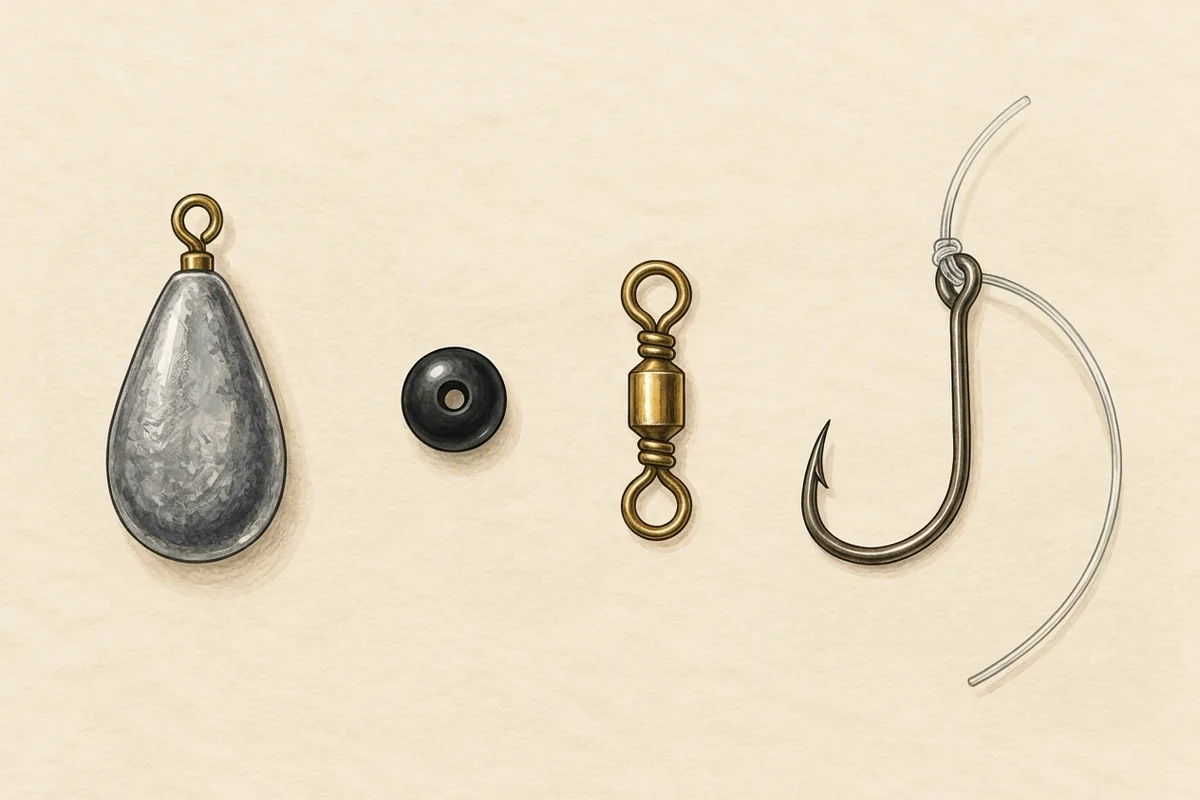
The easiest way to start is on the bank right next to a snag, as Australians call sunken timber. You cast a running-weight rig with a circle hook and a yabby, a prawn or a big earthworm just a few metres out; a medium-weight spinning rod of about 2,10 metres with 50 lb-class braid is enough. Secure the rod well, or a strong cod will pull it into the water.
Casting crankbaits at wood
For cod at visible cover: from a boat or the bank you cast large plugs, spinnerbaits or surface lures right at timber, weed edges and rocky banks.
- Cover in the shallows
Work standing and fallen trees, weed edges and rocky banks. From a boat you mostly stay over less than 6 metres of depth and fish the strip from there to the bank.
- Hooklength and bait
Join the braid to a good 1,5 metres of mono or fluorocarbon in the 40 to 60 lb class. In clear water lifelike, fish-like lures work better; otherwise you choose according to the time of day and the prey in the water.
- Close to cover
Place your casts as close to the timber as you can, and from the bank also far out through gaps between the trees. Plan on plenty of casts; cod are moody and often bite only after hours.
- Slow retrieve
Retrieve the lure slowly. A floating plug with a diving lip rises over branches in every pause, and you let a smaller spinnerbait hop over obstacles.
- Alert to the bank
The cod often strikes only on the last metres before the bank or in the second half of the retrieve, already a little way from the timber. So stay alert right to the end.
- Keep it short
Use strong tackle and bring the fish in quickly. On light line the fight takes long, the cod gets badly tired and has poorer chances afterwards.
- Soft net
Land it in a knotless or rubberised landing net and leave it in the water until the pliers and camera are ready.
Trolling with deep divers
From a boat this is the most reliable way to find big cod in lakes and in the Murray: you troll two deep-diving plugs slowly along the shoreline.
- Deep shoreline
Run along the bank over 4 to 10 metres of water, through standing trees in a lake, past deep snags in the Murray. In a river the boat pays off mainly at steady or low flow, when the water is clearer.
- Two deep divers
Put a large plug with a long diving lip on each rod, in the Murray about 9 to 13 centimetres long, on roughly 1,5 metres of hooklength.
- Setting the lures out
Let one or two lures out behind the slowly moving boat so that they get down to depth.
- Stay near the bottom
Mostly keep the lures one to two metres above the bottom; by day the cod rarely hunts high up. If the plug visibly knocks against the bottom and timber, it is running right.
- Expect snags
A long time often passes between bites, and snags come with the territory. It is easier with two: one steers the boat, the other retrieves the snagged lure.
- Heavy tackle
With a strong rod and strong braid you pull the cod out of the trees fast and keep the fight short.
- Unhook in the water
Net the fish with a soft mesh and remove the hooks with long pliers, ideally without lifting it.
Natural bait at the snag
The method that caught the most cod in a survey on the Murray and on rivers in Victoria: natural bait quietly on the bottom next to timber, from a boat or the bank.
- Next to the snag
From a boat you tie up at a snag or a standing tree; from the bank you sit beside it. If nothing happens after about an hour, try the next spot.
- Running weight and circle hook
Thread on a running weight and tie a circle hook matched to the bait size to the hooklength. In current you use enough lead for the bait to stay put and not spin.
- Crustaceans or worms
Yabbies, prawns and big earthworms are proven; in New South Wales freshwater mussels are also mentioned.
- A few metres out
From the bank cast just a few metres, next to the timber, because active cod like to cruise along the edges at night. A bell or glow stick on the tip shows the bite in the dark.
- React fast
Stay within reach of the rod: a cod that feels the hook quickly spits the bait out again. With circle hooks you keep the line tight, and the hook then usually catches at the front of the mouth.
- Pump it in quickly
Pump the fish in quickly with strong tackle; a short fight spares it.
- Leave a deep hook
If the hook sits deep in the throat, cut the line close to the mouth instead of pulling on the hook.
What with
For spinning, large crankbaits with a wide action; for the bottom, yabbies, prawns, beetle grubs or big earthworms. Even small Murray cod take big lures.
- Crankbaitwhole season, at deep snags and when trolling
In a survey in Victoria artificial lures caught fewer cod than natural baits, but clearly bigger ones: a good one in five was a large fish, against only one in fifty with cheese or prawn.
- Crustaceans & musselswhole season, sit-and-wait at a snag
Crustaceans are part of its natural prey, and prawns were among the three most effective baits in the survey.
- Wormswhole season, especially from the bank
The fisheries authorities (Fischereibehörde) in Victoria and New South Wales name big earthworms as the classic bait for sit-and-wait fishing.
Tackle
For big fish Native Fish Australia recommends heavy tackle: line rated 40 to 50 lb, which is around 18 to 23 kilograms. Add a spinning rod for plugs or a bottom rod for natural baits.
Casting crankbaits at wood
- Rod
- from boat and bank 2,10–2,40 m (7–8 ft) for long casts; in small mountain rivers short, around 1,80 m (6 ft) or less
- Reel
- Baitcaster (multiplier reel)
- Line
- Braid 50 lb (around 23 kg); in small rivers 40–50 lb
- Leader
- Mono or fluorocarbon, about 1,5 m, 40–60 lb (around 18–27 kg); in small rivers 40 lb
- Weight, float, lead
- large plugs with a diving lip, spinnerbaits, swimbaits or surface lures; slightly smaller in small streams
Trolling with deep divers
- Rod
- heavy baitcaster or spinning rod of around 1,80 m (6 ft)
- Reel
- Baitcaster or a strong fixed-spool reel
- Line
- Braid 40–50 lb (around 18–23 kg)
- Leader
- Mono or fluorocarbon, about 1,5 m, 40–60 lb
- Weight, float, lead
- deep divers 90–130 mm, also swimbaits or surface lures
Natural bait at the snag
- Rod
- medium-weight spinning rod of around 2,10 m (7 ft); from a boat a trolling rod also suits
- Reel
- Fixed-spool reel, from a boat also a baitcaster
- Line
- Braid 50 lb (around 23 kg)
- Leader
- about 1,5 m, 60 lb (around 27 kg)
- Hooks
- Circle hook matched to the bait; in a study in Victoria no hook of size 5/0 or larger sat deep
- Weight, float, lead
- Running weight; heavier in a river so that the bait lies still
More on tackle
Common mistakes
- Tackle that is too light: A big cod on thin line fights for a long time, tires badly and copes worse with being released. Use braid of around 50 lb and a hooklength of 40 to 60 lb.
- Small hooks with natural bait: In a study all the larger cod on hooks below 2/0 swallowed them deep. Fish with big circle hooks and a tight line.
- Rod left unsecured: A strong cod pulls a loose rod into the water in seconds. Push it firmly into a rod rest or secure it with a lanyard.
- Trolled lures running too high: By day the cod usually stands close to the bottom. Choose deep divers that knock against the bottom and timber, and accept snags.
- Lifting the fish upright: Hanging by the jaw, gills or line, the spine of a large cod stretches and the throat and gills are injured. Support the whole body horizontally or leave it in the water.
Rules
For the Murray cod the rules of the country where you fish apply, not the German fisheries laws. Licence, closed seasons, minimum sizes and keeping fish are set by each country, often by each water.
What the profile says: Australia’s largest freshwater fish, listed nationally as vulnerable (Vulnerable). Closed season in New South Wales and Victoria from 1 September to 30 November, in Queensland from 1 August to 31 October (as of October 2026). From June to mid-December the Australian government also advises against catch and release.
The fisheries authority (Fischereibehörde) of the country you travel to is what counts. Ask about the current rules before the trip and read in the profile how threatened the species is.
After the catch
Playing and landing
Play the fish with strong tackle so the fight stays short, and land the cod in a knotless or rubberised net. Big fish are often old, and big females carry especially many eggs: leave them in the water, never lift a cod upright by the jaw, gills or line, and do not put it on dry, hot or sharp surfaces. If it flares its gill covers in a spasm after release, hold it upright in the water, close the covers with your hand and move it gently from side to side until it swims again. Rules, licence and keeping fish are set by the country where you fish; if you keep a fish you are allowed to take, stun and kill it at once.
Native Fish Australia expressly recommends releasing especially large Murray cod as spawners. The linked fish welfare pages show how to land, unhook and release a fish gently. Ask the responsible fisheries authority (Fischereibehörde) of the state where you fish about licence, closed season and size limits beforehand.
Frequently asked questions
Which line for Murray cod?
The fisheries authority in Victoria (Fischereibehörde) recommends 50 lb-class braid with a good 1,5 metres of mono or fluorocarbon hooklength rated 40 to 60 lb. In small mountain rivers 40 to 50 lb braid and a 40 lb hooklength are enough.
Which hook size for Murray cod?
Use big circle hooks matched to the bait. In a study in Victoria every larger cod that took a hook below 2/0 swallowed it deep, and not a single one on hooks from 5/0.
When does the Murray cod bite best?
In low light, so at dusk and at night, when it leaves cover and hunts along banks and edges. Over the year summer evenings are especially good.
How deep should you troll for Murray cod?
In lakes and in the Murray, usually over 4 to 10 metres of water. The lure should run one to two metres above the bottom and touch the bottom or timber now and then.
Natural or artificial baits for Murray cod?
In a survey on the Murray and on rivers in Victoria almost nine in ten cod came on natural baits. Artificial lures brought fewer fish, but a much higher share of large specimens.
How do you release a big Murray cod properly?
Best leave it in the water, or lift it out for 30 seconds at most, horizontally and with the whole body supported. To recover, hold it upright with its head into the current until it swims off by itself.
Similar species
Anyone who catches the Murray cod can fish for these species with similar tackle:
 Fishing for largemouth bassGood
 Fishing for peacock bassPeak season
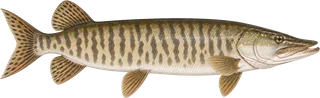 Fishing for muskellungeGood
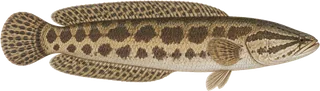 Snakehead fishingPossible
Sources
As of October 2026. The practical knowledge comes from 11 sources, summarised in our own words.
See all 11 sources
- How to catch Murray cod (Lake Eildon) · Victorian Fisheries Authority (Fischereibehörde Victoria)
- How to catch Murray cod (High Country) · Victorian Fisheries Authority (Fischereibehörde Victoria)
- How to catch Murray cod (Burnanga Trail) · Victorian Fisheries Authority (Fischereibehörde Victoria)
- How to catch Murray cod (Trophy Lakes) · Victorian Fisheries Authority (Fischereibehörde Victoria)
- Murray River (Sunset Country, where to fish) · Victorian Fisheries Authority (Fischereibehörde Victoria)
- Better Handling for Murray Cod · Victorian Fisheries Authority (mit Native Fish Australia)
- Lets go fishing card – Murray Cod · Victorian Fisheries Authority (Fischereibehörde Victoria)
- Sustainability of recreational fisheries for Murray cod (Forschungsbericht, P. Brown, 2010) · Fisheries Victoria, Fisheries Research Branch (heute Victorian Fisheries Authority)
- NSW Recreational Fishing Catch and Release Handbook (2013), Abschnitte Big fish und Murray Cod · NSW Department of Primary Industries (Fischereibehörde New South Wales)
- Murray Cod (Artporträt mit Fishing tips) · NSW Department of Primary Industries (Fischereibehörde New South Wales)
- Catch & Release Fishing · Native Fish Australia (gemeinnütziger Verband für heimische Fische)
Text AI-assisted, based on the sources named and these pages: Murray cod (profile), Spinning, Bottom fishing, Crankbait, Crustaceans and mussels, Worms.