
Knowledge – Fish
Murray cod (Murray Cod): Features, spawning, rules in Australia
The Murray cod (Maccullochella peelii), known in Australia as Murray Cod, is the largest freshwater fish on the continent. Despite the name it is not a cod but belongs to the Percichthyidae, a family of perch-like freshwater fish. It lives in the Murray-Darling Basin and is listed nationally as vulnerable.
In short: According to the catch calendar the best time is January to May. Good spots in the river: undercut bank, deep holes and behind rocks; in a lake: sunken tree and deep bottom. Proven baits: large, slowly worked deep divers, surface lures at night, large flies as well as beetle grubs, yabbies, prawns and worms. Australia’s largest freshwater fish, listed nationally as vulnerable. Closed season in New South Wales and Victoria from 1 September to 30 November, in Queensland from 1 August to 31 October (as of October 2026). Step by step: Fishing for Murray cod.
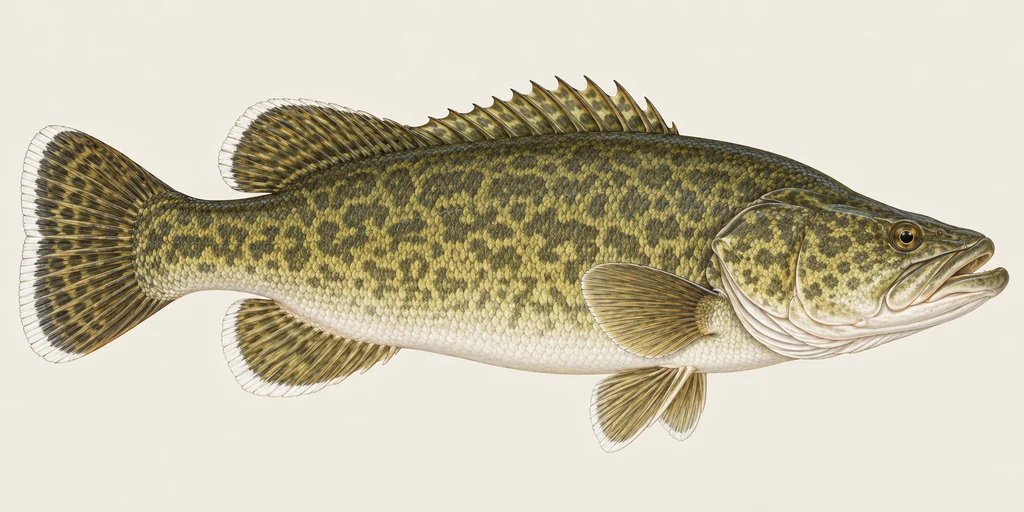
- Broad head with a concave forehead profile and a short, round snout
- Olive-green to dark green marbling, pale belly
- Soft dorsal, anal and tail fins with a distinct white edge
Catch chances through the year
- Hardly any chance
- Possible
- Good
- Peak season
- Spawning (observe the closed season)
Editorial assessment for the home waters (Murray-Darling Basin (south-eastern Australia)), not a measured value and no guarantee. The rules of the country you travel to are binding.
How to recognise it
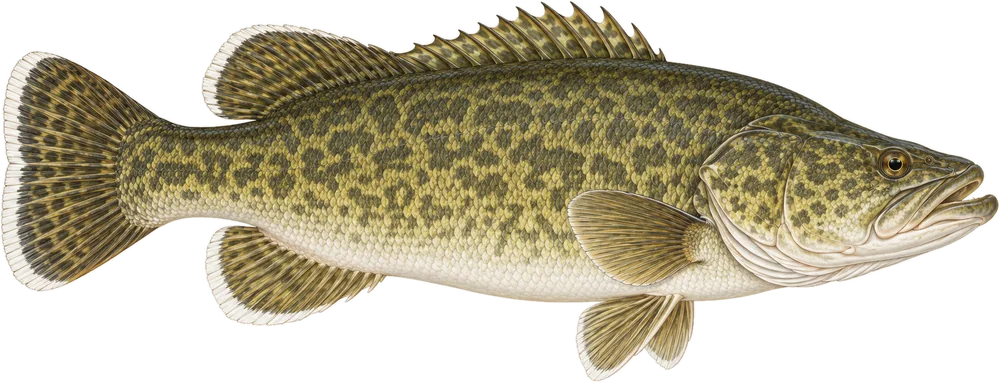
The Murray cod is a massive fish with a broad head, a short, rounded snout and a concave forehead profile. The mouth is large, and the lower jaw is about as long as the upper jaw or protrudes slightly. The colour ranges from light olive to dark green with a marbled pattern, and the underside is white to cream.
The pectoral fins are large and round. The soft dorsal fin, the anal fin and the rounded tail fin usually have a distinct white, sometimes red, edge. Fish up to 1.8 metres and over 100 kilograms have been measured, and the heaviest officially recorded specimen weighed 113.6 kilograms. Fish of around 10 kilograms are the most common. The species reaches an age of 48 years.
Side by side: Murray cod or trout cod?
| Feature | Murray cod | Trout cod |
|---|---|---|
| Forehead profile | concave | straight |
| Snout and jaws | short and round, lower jaw equal in length or slightly protruding | longer, the tip of the upper jaw protrudes slightly |
| Colour | olive green to dark green, marbled | grey, finely speckled |
| Size according to FishBase | up to 180 cm and around 113 kg | up to 85 cm and 16 kg |
It is easily confused with the trout cod (Maccullochella macquariensis), which occurs in the same area and is more endangered. It has a straight forehead profile and a longer snout, and is grey instead of green and finely speckled instead of marbled. In the trout cod the tip of the upper jaw protrudes slightly.
The Murray cod is not related to the cod of the North Sea and Baltic. It belongs to the temperate perches (Percichthyidae), which live in fresh water in Australia and South America.
Where it holds
Originally the Murray cod lives throughout the Murray-Darling Basin, which runs from southern Queensland through New South Wales, the Australian Capital Territory and Victoria to South Australia, up to an altitude of about 1000 metres. Outside it, it has been stocked in many places, for example in lakes and reservoirs.
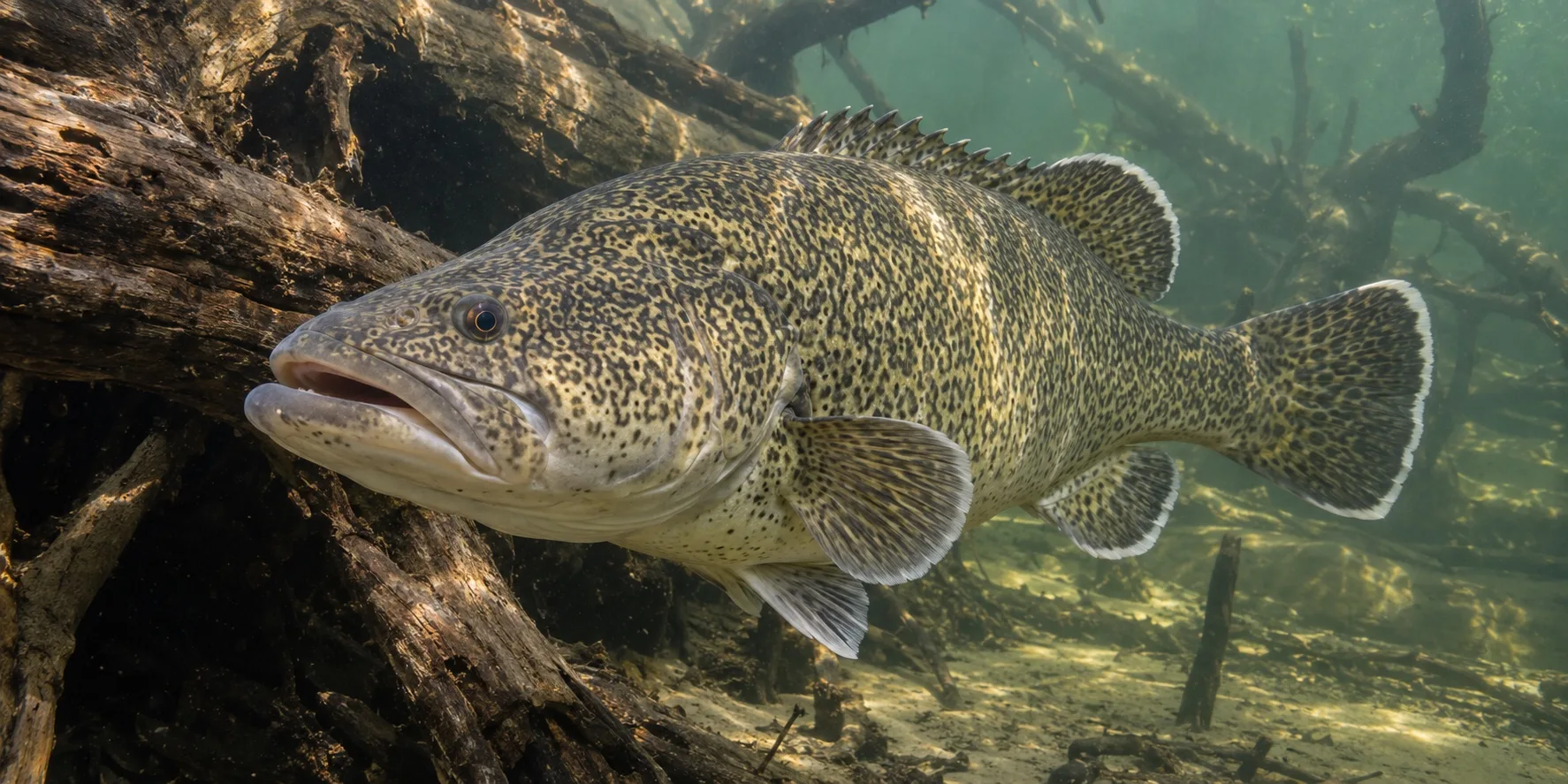
It uses clear, stony streams just as much as slow-flowing, murky lowland rivers and oxbows, which are called billabongs in Australia. It usually holds in the main channel of rivers and large tributaries. Structure is what matters: large rocks, sunken wood, undercut banks, stumps and branches. There it finds shelter from the current and lies in wait for prey. In a telemetry study in the Murray the fish preferred to hold at wood, in more than 2.4 metres of depth, in slow water and close to the bank.
Holding spots in the picture
Choose the time of day: the picture shows where the species holds. We do not show German seasons for travel fish; the bars give the chance of a catch for each month. Tap a fish or a spot in the list to bring it closer. The picture is schematic and AI-generated, and every water is different.
Chance of a catch per month according to the catch calendar
- J
- F
- M
- A
- M
- J
- J
- A
- S
- O
- N
- D
Spawning season
Not the main time It hunts mainly between sunset and sunrise; at night surface lures also catch.
Not the main time It hunts mainly between sunset and sunrise; at night surface lures also catch.
Active time It hunts mainly between sunset and sunrise; at night surface lures also catch.
Active time It hunts mainly between sunset and sunrise; at night surface lures also catch.
In the river
Undercut bank, overhanging branches, timber
Murray cod is present here all year round.
Slack water behind rocks
Murray cod is present here all year round.
Pools, deep spot
Murray cod is present here all year round.
The Murray cod lives mainly in the main arm of rivers and larger tributaries, in clear, stony creeks as well as in turbid lowland rivers. Cover is what counts: submerged wood, tree stumps, large stones and undercut banks that shelter it from the current. Outside the spawning period it usually keeps a fixed place in a pool or at a sunken tree.
In the lake
Sunken tree
Murray cod is present here all year round.
Deep bottom
Murray cod is present here all year round.
In oxbow lakes, the billabongs, and in stocked lakes and reservoirs it also looks for submerged wood and other structure. According to Native Fish Australia, anyone who wants to take a fish home should choose stocked reservoirs and spare the wild stocks in the rivers.
Depth: Tagged fish in the Murray mostly stayed at depths of more than 2.4 metres, in slow current and not far from the bank.
Size comparison: AI-generated drawing, schematic.
How it hunts and spawns
The Murray cod is considered the top predator of its rivers and attacks fish in its territory. It hunts mainly from sunset to sunrise throughout the water column. Adults eat mainly freshwater crayfish, yabbies (freshwater crayfish) and prawns, as well as fish, and more rarely ducks, cormorants, turtles, snakes, mice and frogs. Outside the spawning season it usually stays at its fixed spot, a pool or a sunken tree.
Before spawning many fish migrate far upstream, some several hundred kilometres, and afterwards return to their old spot. The females develop their eggs in winter. Spawning takes place in spring at temperatures above 15 degrees, in the north usually from the beginning of September to mid-November, in the south and in the hill country from the beginning of October to mid-December. Pairs lay the eggs on sunken wood or rocks, and the male guards and fans the clutch and then the larvae. The Murray cod usually becomes sexually mature at five years.
When and where the season is
The season follows the reproductive cycle, and the states protect spawning with closed seasons (as of October 2026). In New South Wales it runs from 1 September to 30 November in all inland waters except Blowering and Copeton reservoirs. Victoria also protects it from 1 September to 30 November, except in individual waters such as Lake Eildon. In the waters of Queensland in the Murray-Darling Basin the closed season runs from 1 August to 31 October, there too with a few exempt reservoirs. In South Australia it may not be kept at all.
Restraint is also called for in winter, when the females carry eggs. In its 2024 Conservation Advice the Australian government advises against catch and release between June and mid-December, because the stress can cause females to reabsorb their eggs. That leaves mainly the southern-hemisphere summer and autumn as the season for travellers, so December to May.
What you catch it with
Step by step: Fishing for Murray cod: tips on bait, rig and tackle – season, spots, bait, tackle and rules on one page.
Native Fish Australia, an association for native fish, describes the Murray cod as Australia’s most important freshwater sport fish. Many specialists fish with large, deep-running crankbaits with a wide action, trolled or cast very slowly. At night surface lures catch fish, and large flies have also been used successfully. As natural baits the association names beetle grubs (bardi grubs), yabbies, prawns and large earthworms.
According to the association, anyone targeting big fish uses heavy tackle with lines rated at 40 to 50 lb, so around 18 to 23 kilograms. Fish close to wood and other structure. Even small Murray cod take large lures.
The association expressly recommends releasing particularly large fish as breeding fish, and for the table fishing in stocked reservoirs rather than in rivers with wild populations.
No spawners in winter: Between June and mid-December the females carry eggs or are spawning. You should not target them then, not even with release.
Check the head profile: A concave forehead profile, short snout and green marbling point to the Murray cod. A straight profile and grey speckles suggest the more strictly protected trout cod.
Suitable lures
Large, slowly worked deep divers, surface lures at night, large flies as well as beetle grubs, yabbies, prawns and worms.
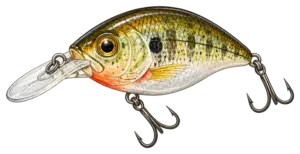
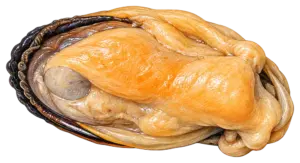
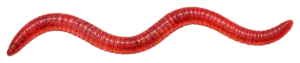
AI-generated illustrations. A click opens the lure’s page.
Fish close to wood; do not target them in winter and during spawning.
Protection, closed seasons and rules
Under the Australian environmental law, the EPBC Act, the Murray cod has been listed as vulnerable since 2003. Victoria and South Australia list it as endangered. The IUCN, by contrast, rates it as not threatened worldwide.
Catch rules are set by the states and territories. According to the 2024 Conservation Advice, slot limits, that is a minimum and a maximum length, apply in the Australian Capital Territory, New South Wales and Victoria, a minimum size (Mindestmaß) in Queensland, and in South Australia the Murray cod may not be kept. In New South Wales the slot is 55 to 75 centimetres, and two fish per person and day are allowed (as of October 2026). Before the trip, ask the fisheries authority (Fischereibehörde) of the state concerned about licence, closed season and size limits. Only its current rules are binding. Commercial fishing for wild Murray cod in the Murray-Darling Basin has been stopped since 2003.
Frequently asked questions (FAQ)
Is the Murray cod a cod?
No. It belongs to the family Percichthyidae, perch-like freshwater fish of Australia and South America. The name cod is historical.
When should you not fish for Murray cod?
The states have closed seasons: New South Wales and Victoria from 1 September to 30 November, Queensland from 1 August to 31 October, in each case with individual exempt reservoirs (as of October 2026). The Australian government also advises not fishing for the species between June and mid-December, not even with release.
How big does a Murray cod get?
Fish up to 1.8 metres and over 100 kilograms have been measured. Fish of around 10 kilograms are the most common.
Sources
The rating of catch chances is an editorial assessment. The facts come from these sources, and the text is worded in our own words. The illustration is an original design by Angel Momente in the style of a natural history plate (AI-generated, see the AI notice).
- FishBase: Maccullochella peelii, Murray cod
- Australian Government (DCCEEW): Species Profile and Threats Database, Maccullochella peelii
- Australian Government (DCCEEW): Conservation Advice for Maccullochella peelii (Murray cod), 2024
- PeerJ 2020: Multi-year pair-bonding in Murray cod (Volltext, Europe PMC)
- Native Fish Australia: Murray cod
- NSW Department of Primary Industries: Freshwater bag and size limits (Murray Cod 55–75 cm, 2 pro Tag, Schonzeit 1.9.–30.11., Blowering und Copeton ganzjährig)
- Victorian Fisheries Authority: Murray cod (Schonzeit 1.9.–30.11. mit Ausnahmen)
- Queensland Department of Agriculture and Fisheries: Closed seasons, fresh waters (Murray Cod 1.8.–31.10. im Murray-Darling-Becken)
- FishBase: Maccullochella macquariensis (Trout Cod, zur Unterscheidung)
Created with AI support from the sources listed. Figures only appear in the text if a source gives them. Last updated: 27 October 2026. Found a mistake? Write to us. Who is behind this site: About me.
More in the lexicon
- All fish species at a glance
- Catch calendar – month, water temperature and profile for 93 species
- Line calculator – breaking strain after the knot, drag guideline, backing
- Angling methods