
Knowledge – Fish
Atlantic wolffish fishing
Fishing for Atlantic wolffish means offering a natural bait right on the bottom from a boat over rock and mussel beds, and striking hard after the bite. Here is the way there in nine steps, each with a link to the detailed page.
 Choose another fish117 fish with guides
 EelOff-peak season
 EelpoutPossible
 IdePossible
 ArapaimaGood
 GraylingPeak season
 Atlantic salmonSpawning time, please spare
 Brown troutSpawning time, please spare
 Brook troutSpawning time, please spare
 BarbelOff-peak season
 BarramundiSpawning season
 Greater amberjackGood
 Topmouth gudgeonOnly as bycatch
 Blue marlinSpawning season
 BonefishSpawning season
 BonitoGood
 BreamOff-peak season
 Dusky grouperOnly as bycatch
 CobiaPossible
 Spiny dogfishOnly as bycatch
 CodPeak season
 ChubPeak season
 MinnowOnly as bycatch
 European sturgeonOnly as bycatch
 FlounderPeak season
 PerchPeak season
 Largemouth bassGood
 Ballan wrasseOnly as bycatch
 Yellowfin tunaSpawning season
 Giant trevallyGood
 Prussian carpPossible
 BrillPossible
 Gilthead breamSpawning time, please spare
 Golden doradoSpawning season
 Golden mahseerOnly as bycatch
 Dolphinfish (mahi-mahi)Good
 Grass carpPossible
 Great barracudaGood
 GudgeonPossible
 White breamPossible
 DaceOff-peak season
 PikePeak season
 HalibutOff-peak season
 HerringPossible
 GarfishOut of season
 Huchen (Danube salmon)Possible
 Crucian carpOnly as bycatch
 CarpOff-peak season
 RuffeOff-peak season
 VendaceOnly as bycatch
 DabPeak season
 GurnardPossible
 Coley (saithe)Peak season
 Chinook salmonHardly any chance
 King mackerelSpawning season
 LingPeak season
 TuskOff-peak season
 MackerelPossible
 Bighead carpOut of season
 WhitefishPossible
 Conger eelOff-peak season
 Sea troutSpawning time, please spare
 Grey mulletPossible
 Murray codSpawning season
 MuskellungeGood
 Common nasePossible
 Nile perchPossible
 PayaraPossible
 Peacock bassPeak season
 PermitGood
 WeeverOnly as bycatch
 PollackOff-peak season
 BurbotOff-peak season
 AspPossible
 Red snapperSpawning season
 Rainbow troutPeak season
 RoosterfishGood
 RoachPeak season
 RedfishOut of season
 Bluefin tunaOnly as bycatch
 RuddPossible
 Russian sturgeonOnly as bycatch
 HaddockOff-peak season
 SnakeheadPossible
 TenchOff-peak season
 SpirlinOnly as bycatch
 PlaiceOff-peak season
 Greenland halibutOnly as bycatch
 Round gobyOnly as bycatch
 SwordfishGood
 Lake troutSpawning time, please spare
 HakeSpawning time, please spare
 Alpine charSpawning time, please spare
 MonkfishPossible
 SoleOff-peak season
 SailfishGood
 Silver carpOut of season
 SnookPeak season
 PumpkinseedOnly as bycatch
 SpratOnly as bycatch
- Atlantic wolffishSpawning time, please spare
 TurbotPeak season
 SterletOnly as bycatch
 SmeltOnly as bycatch
 Horse mackerelPossible
 TaimenGood
 TarponGood
 TigerfishSpawning season
 BleakPossible
 WahooGood
 Wels catfishOff-peak season
 WhitingPeak season
 Sea bassOff-peak season
 ZanderPeak season
 White-eye breamOnly as bycatch
 Blue breamOnly as bycatch
 Brown bullheadPossible
 VimbaOnly as bycatch
Season in October according to the catch calendar, an estimate and not a guarantee of a catch. The fish pictures are reduced natural-history plates and AI-generated.
Best time
From April to June.
In January: Possible, spawningIn February: PossibleIn March: GoodIn April: Peak seasonIn May: Peak seasonIn June: Peak seasonIn July: GoodIn August: PossibleIn September: PossibleIn October: Possible, spawningIn November: Possible, spawningIn December: Possible, spawning
Good spot
- Coast: Wreck, reefWreck, reefWreck, reefWreck, reef
Top baits
Starter tackle
- Rod: boat rod with about 150 g casting weight
- Line: braided sea line so you can feel the bottom well
- Hook: large, needle-sharp single hook 5/0–6/0
- Rod: sturdy boat rod, such as an inliner of the 16 lb class
- Line: braid for direct contact with the bottom
- Hook: strong single hooks 6/0, also 4/0 for pieces of squid
In short
In short: The best time to catch Atlantic wolffish is from April to June. Good spots on the coast: wreck, reef. Proven baits: a pirk or leadhead with strips of mussel or fish, tapped on the bottom. The Swedish Red List classes the Atlantic wolffish as endangered. It matures late, so keep only a few fish and return the rest gently.
Quick to recognise
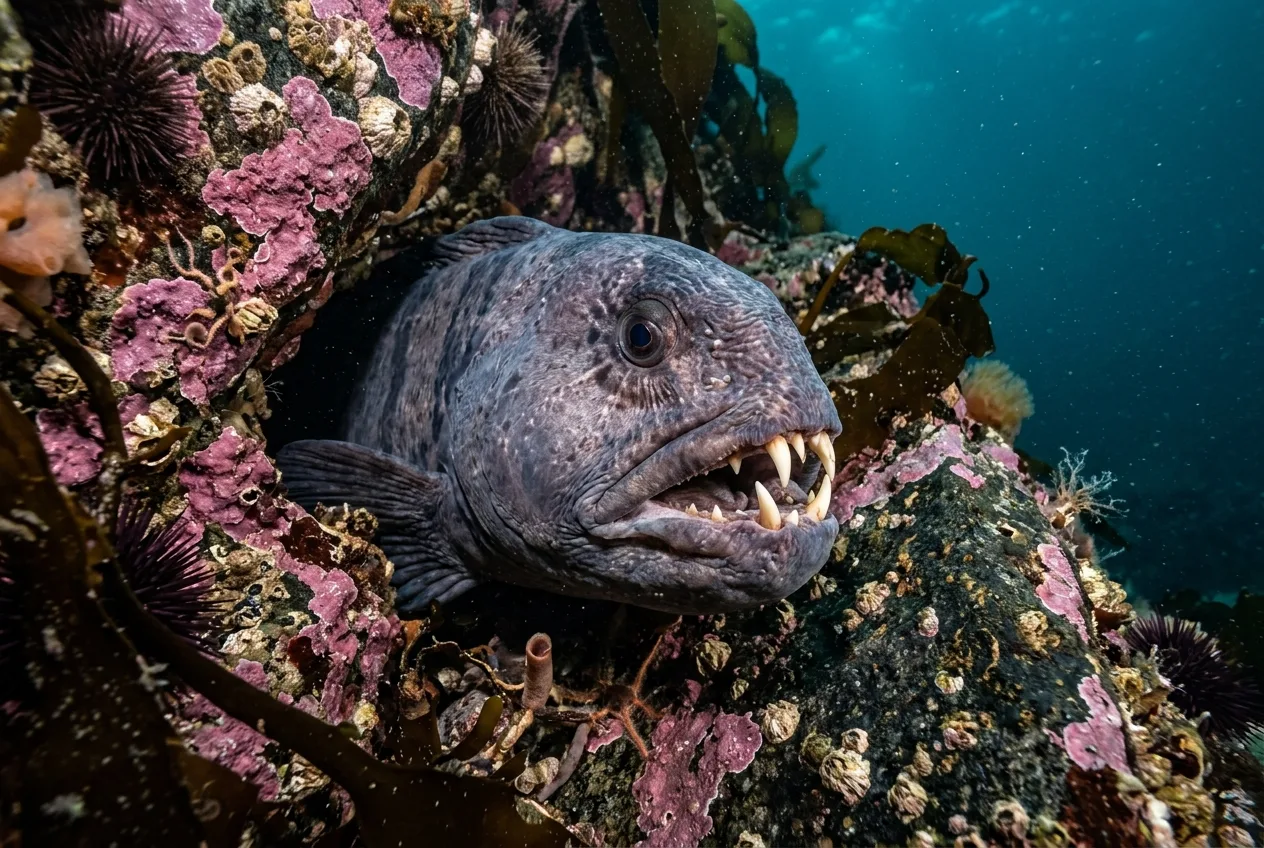
A wolffish with a powerful set of grasping and crushing teeth that lives on the bottom, mostly on rock; several often sit at good spots. It grows to about 1,2 metres long and has nothing to do with the small freshwater loach that has the same name in German.
When
April to June are the best months, with March and July still bringing good catches. In spring it moves into shallower water towards the mussel beds. Depending on the area it spawns from October to January or from November to February.
- JanPossible, spawning season
- FebPossible
- MarGood
- AprPeak season
- MayPeak season
- JunPeak season
- JulGood
- AugPossible
- SepPossible
- OctPossible, spawning
- NovPossible, spawning season
- DecPossible, spawning season
Peak seasonGoodPossibleHardly any chanceSpawning season
Spring tactics
From April into June the fish sit over shallow mussel beds, often from as little as 5 m and mostly down to about 30 m. On a trip in May, spots at 20 to 30 m produced the most bites.
Summer tactics
Experienced Atlantic wolffish anglers fish until mid or late July. In late summer some wolffish on the Norwegian coast move into shallow bays with a soft bottom and have even been caught there from a boat jetty, but that remains the exception.
Autumn tactics
To spawn, the fish migrate into deeper water. Depending on the season, it is then worth trying between 10 and 80 m.
Winter tactics
Over the winter the worn teeth grow back and the fish sit deep. Anyone fishing for them specifically therefore plans trips for the months from April.
Is it biting today?
In January: Spawning, please spare themIn February: PossibleIn March: Off-peak seasonIn April: Peak seasonIn May: Peak seasonIn June: Peak seasonIn July: Off-peak seasonIn August: PossibleIn September: PossibleIn October: Spawning, please spare themIn November: Spawning, please spare themIn December: Spawning, please spare them
Today’s catch index needs JavaScript. Season and spawning time are in the catch calendar.
From the blog: Roach or rudd, bream or silver bream: how to tell these silver fish apart reliably
Where it is now
On the coast
Look for rocky ground overgrown with kelp, and mussel beds, especially at underwater rocks. In summer you find it close to the coast at 20 to 60 metres depth, the biggest fish often shallower than the small ones. Where one has bitten, it is worth fishing the spot further.
How to go about it: Targeting them is worthwhile above all in northern Norway from Nordland northwards, for example at Saltstraumen near Bodø or Malangen near Tromsø, and off Iceland, where there are many fish, though smaller on average. Further south the island of Fedje north-west of Bergen is regarded as a good spot; in central Norway only the occasional one bites.
| All year round | Wreck, reef |
|---|
Holding spots in the picture
Choose a season and time of day: the picture shows where the species sits then. Tap a fish or a spot in the list to bring it closer. The picture is schematic and AI-generated, every water is different.
Catch chance in springPeak season
Catch chance in summergood
Catch chance in autumnpossiblespawning, observe closed seasons
Catch chances in winterpossiblespawning season, observe the closed seasons
- J
- F
- M
- A
- M
- J
- J
- A
- S
- O
- N
- D
Spawning season
Time of day Tagged wolffish off Newfoundland were on the move by day and by night in spring and summer, and only a few hours a day in autumn and winter, often at dawn and dusk.
On the coast
Wreck, reef
Atlantic wolffish are found here all year round.
The Atlantic wolffish always lives on the bottom, never in mid-water. It stays mainly over rocky ground overgrown with kelp, less often over sand or mud. It is faithful to its spot and stays close to the coast. At good spots several fish often sit in small groups.
Spring: catch chances according to the catch calendar good in March, peak season in April and May. The angling press names spring, with April and May, as the favourable time. The fish then sit at mussel beds, often already at 5 to 25 metres, the big ones usually shallower than the small ones.
Summer: catch chances according to the catch calendar peak season in June, good in July, possible in August. In late summer Atlantic wolffish on the Norwegian coast also come into shallow bays with a soft bottom.
Autumn: catch chances according to the catch calendar: possible. Spawning falls in this period, so observe the closed seasons (Schonzeit).
Winter: catch chances according to the catch calendar: possible. Spawning falls in this period, so observe the closed seasons (Schonzeit). In the winter half-year wolffish change their teeth and then temporarily do not feed. They move into deeper water in autumn to spawn.
Depth: The Atlantic wolffish lives from a few metres down to about 500 metres, mostly between 18 and 110 metres according to FishBase. In spring the fish sit at mussel beds, often already at 5 to 25 metres. It sits closer to the coast and shallower than the other wolffish species.
Size comparison: AI-generated drawing, schematic.
How
Fishing is done from a boat with natural baits right on the bottom, because it cannot be found in mid-water. Some use a heavy pirk without a treble hook, with a baited single hook on its short hooklength, and just inch it gently across the bottom.
Easiest way
The easiest start is in May in northern Norway with a tapping rig: a pirk of 100 to 250 g without the lower treble, a single hook above with two or three strips of coley. Start the drift over stony ground with mussels at about 20 m and let the boat drift down to 30 to 35 m.
Tapping rig with bait strips
The most common method from a boat in Norway: a pirk serves as weight and noise source, and the bait strip on the single hook brings the bite.
- Read the sea chart
Look on the chart for gravel, stony or rocky ground. If mussels or sea urchins are also marked there, you have a good spot; on the plotter such plateaus often show up as humps close to the shore.
- Treble off, single hook on
Take the lower treble off the pirk. At the top, a large single hook goes on two split rings or on a short piece of monofilament of about 1 mm, ideally with a rubber octopus as an extra attractor.
- Tough strips
Thread on two or three pieces of coley the size of a two-euro coin; the tough skin holds well. In Bergen, anglers put on mackerel first, pierced twice, and secure it with a piece of coley behind it.
- Tap the bottom
Lower the rig to the bottom and tap the bottom with a calm raising and lowering of the rod. Only when nothing bites or there are just timid plucks do you let the pirk hit the bottom hard.
- Leave it, then lift
Often the bite feels just like a snag on kelp. Leave the pirk on the bottom, give a little line and lift gently after 10 to 20 seconds. If you now feel a tug, strike promptly.
- Pump under tension
Keep the line taut at all times and pump the fish up. Big wolffish from about 7 kg fight back with runs downwards, while smaller ones usually come up quietly to the side of the boat.
- Gaff under the head
A fish you may keep is gaffed by your partner from outside, under the head, and lifted quickly into the boat. Be careful: the wolffish writhes like an eel and can twist out of the gaff.
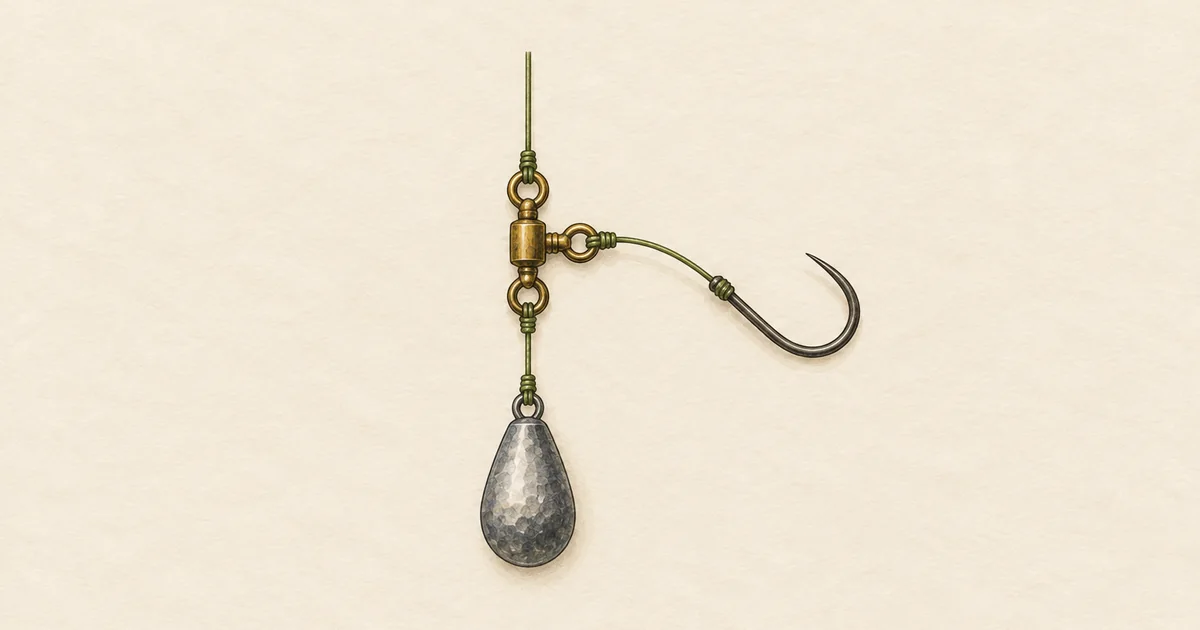
Natural-bait paternoster on the bottom
For mussel beds and a calmer drift: two baited side arms hover just above the bottom while the weight keeps constant contact with the bottom.
- Head for the mussel beds
Head for coastal mussel beds and underwater rocks. When a fish has bitten, save the position and repeat the drift after dealing with the fish; more usually follow.
- Running paternoster
A running boom with a stopper bead carries the weight, and a three-way swivel two side arms of about 60 cm. Luminous tubing and a small white squid imitation above the hook add extra attraction.
- Crab, mussel, liver
Mussel meat in a bait finger-stall, a whole crab fixed with a rubber band, pieces of squid, fish liver and northern prawns all catch well. Offer everything as fresh as possible.
- Keep contact with the bottom
Keep the weight on the bottom at all times so the baits hover just above it. You will not find a wolffish in mid-water.
- Slow bend
First the tip bobs barely perceptibly, then the rod bends slowly and steadily. Many take it for a snag. Give the fish time, then strike with full force so the hook penetrates the hard mouth.
- Absorb the head shakes
Huge wolffish thrash their heads violently to shake off the hook. Keep even pressure and expect it to go wild once more near the surface.
- Stun first, then unhook
Keep the gaffed fish on the gaff until it is stunned, and only then remove the hook. Loose on board it bites at everything that comes in front of its mouth, even boots.
What with
Mussel meat, crabs, prawns and strips of herring or mackerel serve as bait. Pack soft mussel meat into a fine mesh bag, then it holds better. The hook has to be very sharp, because the mouth is hard.
- Crustaceans & musselsin spring over mussel beds, on the paternoster or the inchiku
Mussels, crustaceans and prawns are its main food; anyone fishing for it specifically should have at least northern prawns with them.
- Cut baitall season on the tapping rig
Strips of coley hold on the hook for a long time thanks to their tough skin, and bigger wolffish readily take fish.
- Pilkeras a tapping rig without the lower treble, also with an inchiku
Hitting the bottom draws the attention of the sluggish fish; only together with the natural bait on the single hook does the pirk play to its strengths.
Tackle
A sturdy boat rod with a multiplier reel and braided line. The bottom weight weighs 200 to 500 grams, depending on current and wind. The page on the sea rod shows which rod suits it.
Tapping rig with bait strips
- Rod
- boat rod with about 150 g casting weight
- Reel
- Multiplier reel
- Line
- braided sea line so you can feel the bottom well
- Leader
- Monofilament 0,60–1,0 mm, a short 15–30 cm between pirk and hook
- Hooks
- large, needle-sharp single hook 5/0–6/0
- Weight, float, lead
- pirk 100–250 g, up to 500 g with drift and depth
Natural-bait paternoster on the bottom
- Rod
- sturdy boat rod, such as an inliner of the 16 lb class
- Reel
- Multiplier reel
- Line
- Braid for direct contact with the bottom
- Leader
- two side arms of about 60 cm on a three-way swivel and running boom
- Hooks
- strong single hooks 6/0, also 4/0 for pieces of squid
- Weight, float, lead
- Weight 300–500 g depending on depth
Common mistakes
- Looking for big fish too deep: The strongest wolffish occupy the shallow mussel beds, the weaker ones give way to deeper water. So start at about 20 m rather than in deep water.
- Mistaking a bite for a snag: An Atlantic wolffish often takes hold without a jerk, and the rod bends only slowly. Do not rip free, but wait briefly and then strike hard.
- An ordinary pirk with a treble: With ordinary pirking, wolffish are usually hooked by chance, often in the back. Take off the lower treble and offer a natural bait on the single hook.
- An overly fiddly rig: Whether paternoster, side arm or running rig: keep everything simple so nothing twists. The fewer parts attached, the less often anything tangles.
- Pounding constantly at full force: Wolffish are poor swimmers. Raise and lower the rod slowly and let the pirk hit hard only when the bites fail to come.
Rules
For the Atlantic wolffish, our overview of the federal states gives no figures for minimum size (Mindestmaß) or closed season (Schonzeit). That does not mean there are no rules: individual states and water regulations protect the species or set their own limits.
On the coast the rules of the coastal states apply, partly with their own catch restrictions: North Sea coast, Baltic coast of Schleswig-Holstein and Baltic coast of Mecklenburg-Western Pomerania.
The regulation and your fishing permit (Erlaubnisschein) are what count. Lake Constance, the Rhine and the coast, for example, have their own rules: Fishing waters in Germany.
After the catch
Playing and landing
After the hard strike, pump the fish up under constant tension and expect wild head thrashing at the surface. A legal-sized fish you may keep is gaffed under the head by your partner; on board it stays on the gaff until it is stunned, and you kill it at once. Only then do you remove the hook, never with your hand near the mouth, because the jaws crack mussels with ease.
Never put your hand in an Atlantic wolffish’s mouth; it still bites on board. A legal-sized fish you may take, you stun, then remove the hook and kill it straight afterwards. The species matures late and is therefore vulnerable; the Swedish Red List classes it as endangered. Take only what you need and return the rest gently.
Frequently asked questions
Where can you fish for Atlantic wolffish?
Best in northern Norway from Nordland northwards, for example at Saltstraumen or Malangen, and off Iceland. Near Bergen the island of Fedje is regarded as a good spot; in central Norway a wolffish is more of a chance catch.
Which bait is best for Atlantic wolffish?
Most often named are northern prawns, squid and fish liver, along with mussel meat, crabs and strips of coley, herring or mackerel. Prawns should always be on board when fishing for them specifically.
At what depth do Atlantic wolffish bite?
In spring mostly between 5 and 30 m over mussel beds, the biggest fish often in the shallower part of them. Depending on season and area, deeper water down to about 80 m is also worthwhile.
What hook size for Atlantic wolffish?
Strong single hooks in sizes 5/0 to 6/0 are usual, also 4/0 for pieces of squid. A needle-sharp point is decisive, otherwise the hook will not penetrate the bony mouth.
Can you catch Atlantic wolffish with an inchiku?
Yes. Bait both hooks with a squid strip of about 1,5 by 8 cm and one or two prawns without head and tail. Let the inchiku touch down, wind up half a metre and hold it just above the bottom.
Similar species
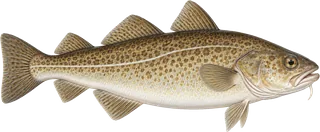
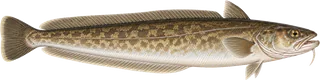
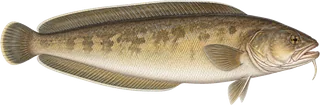
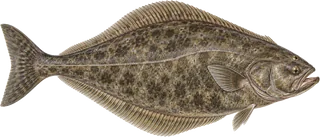
Anyone who catches Atlantic wolffish can fish for these species with similar tackle:
Sources
Status: October 2026. The practical knowledge comes from 5 sources, summarised in our own words.
View all 5 sources
- Angeln auf Steinbeißer: Erfolgreiche Wolfsjagd im Meer · BLINKER (Rainer Korn, mit Leserbeitrag)
- Steckbrief Steinbeißer (auch Seewolf oder Katfisch) · BLINKER (Redaktion)
- Kombiköder Inchiku: Allzweckwaffe für die Norwegenangelei · BLINKER (Rainer Korn)
- Steinbeißer: So fängst Du sie · RUTE & ROLLE (Jesco Peschutter)
- FISCHE&FJORDE: Weck den Seewolf · RUTE & ROLLE (Ares Prien)
Text AI-assisted, based on the sources named and these pages: Atlantic wolffish (profile), Pirking, Crustaceans & mussels, Sea rod.