
Knowledge – Fish
Burbot fishing
Burbot fishing means offering a fresh bunch of worms on the bottom at night in the cold season, and only where the fish is not protected. Here is the way there in nine steps, each with a link to the detailed page.
 Choose another fish117 fish with guides
 EelOff-peak season
 EelpoutPossible
 IdePossible
 ArapaimaGood
 GraylingPeak season
 Atlantic salmonSpawning time, please spare
 Brown troutSpawning time, please spare
 Brook troutSpawning time, please spare
 BarbelOff-peak season
 BarramundiSpawning season
 Greater amberjackGood
 Topmouth gudgeonOnly as bycatch
 Blue marlinSpawning season
 BonefishSpawning season
 BonitoGood
 BreamOff-peak season
 Dusky grouperOnly as bycatch
 CobiaPossible
 Spiny dogfishOnly as bycatch
 CodPeak season
 ChubPeak season
 MinnowOnly as bycatch
 European sturgeonOnly as bycatch
 FlounderPeak season
 PerchPeak season
 Largemouth bassGood
 Ballan wrasseOnly as bycatch
 Yellowfin tunaSpawning season
 Giant trevallyGood
 Prussian carpPossible
 BrillPossible
 Gilthead breamSpawning time, please spare
 Golden doradoSpawning season
 Golden mahseerOnly as bycatch
 Dolphinfish (mahi-mahi)Good
 Grass carpPossible
 Great barracudaGood
 GudgeonPossible
 White breamPossible
 DaceOff-peak season
 PikePeak season
 HalibutOff-peak season
 HerringPossible
 GarfishOut of season
 Huchen (Danube salmon)Possible
 Crucian carpOnly as bycatch
 CarpOff-peak season
 RuffeOff-peak season
 VendaceOnly as bycatch
 DabPeak season
 GurnardPossible
 Coley (saithe)Peak season
 Chinook salmonHardly any chance
 King mackerelSpawning season
 LingPeak season
 TuskOff-peak season
 MackerelPossible
 Bighead carpOut of season
 WhitefishPossible
 Conger eelOff-peak season
 Sea troutSpawning time, please spare
 Grey mulletPossible
 Murray codSpawning season
 MuskellungeGood
 Common nasePossible
 Nile perchPossible
 PayaraPossible
 Peacock bassPeak season
 PermitGood
 WeeverOnly as bycatch
 PollackOff-peak season
- BurbotOff-peak season
 AspPossible
 Red snapperSpawning season
 Rainbow troutPeak season
 RoosterfishGood
 RoachPeak season
 RedfishOut of season
 Bluefin tunaOnly as bycatch
 RuddPossible
 Russian sturgeonOnly as bycatch
 HaddockOff-peak season
 SnakeheadPossible
 TenchOff-peak season
 SpirlinOnly as bycatch
 PlaiceOff-peak season
 Greenland halibutOnly as bycatch
 Round gobyOnly as bycatch
 SwordfishGood
 Lake troutSpawning time, please spare
 HakeSpawning time, please spare
 Alpine charSpawning time, please spare
 MonkfishPossible
 SoleOff-peak season
 SailfishGood
 Silver carpOut of season
 SnookPeak season
 PumpkinseedOnly as bycatch
 SpratOnly as bycatch
 Atlantic wolffishSpawning time, please spare
 TurbotPeak season
 SterletOnly as bycatch
 SmeltOnly as bycatch
 Horse mackerelPossible
 TaimenGood
 TarponGood
 TigerfishSpawning season
 BleakPossible
 WahooGood
 Wels catfishOff-peak season
 WhitingPeak season
 Sea bassOff-peak season
 ZanderPeak season
 White-eye breamOnly as bycatch
 Blue breamOnly as bycatch
 Brown bullheadPossible
 VimbaOnly as bycatch
Season in October according to the catch calendar, an estimate and not a guarantee of a catch. The fish pictures are reduced natural-history plates and AI-generated.
Best time
In October, in the evening, at night and in the morning.
In January: Possible, spawningIn February: Possible, spawningIn March: Possible, spawningIn April: PossibleIn May: Slim chancesIn June: Slim chancesIn July: Slim chancesIn August: Slim chancesIn September: PossibleIn October: GoodIn November: Possible, spawningIn December: Possible, spawning
Good spot
- Lake: drop-off edge and deep bottomdrop-off edge and deep bottomdrop-off edge and deep bottomdrop-off edge and deep bottom
- River: undercut bank, rip-rap and poolsundercut bank, rip-rap and poolsundercut bank, rip-rap and poolsundercut bank, rip-rap and pools
Top baits
Starter tackle
- Rod: around 3 m, sturdy bottom, eel or heavy feeder rod, casting weight 30–130 g depending on the current; in frost, rods with large rings
- Line: monofilament 0,25–0,40 mm, thicker over stones and mussels; braid 0,12–0,14 mm only as long as it is not freezing
- Hook: single hook size 4 to 1/0, large models are swallowed deep less often
In short
In short: You catch burbot best in October, in the evening, at night and in the morning. Good spots on lakes: drop-off edge and deep bottom; on rivers: undercut bank, rip-rap and pools. Proven baits: a bunch of lobworms on a bottom rig and, where permitted, a dead baitfish or fish strips. The burbot is listed as endangered in Germany’s Red List. In Hesse, North Rhine-Westphalia, Rhineland-Palatinate and Saarland it has a closed season (Schonzeit) all year, in Baden-Württemberg from 1 November to 28 February, in Thuringia from 1 November to 31 March and in Schleswig-Holstein from 1 January to 28 February (as of October 2026).
Quick to recognise
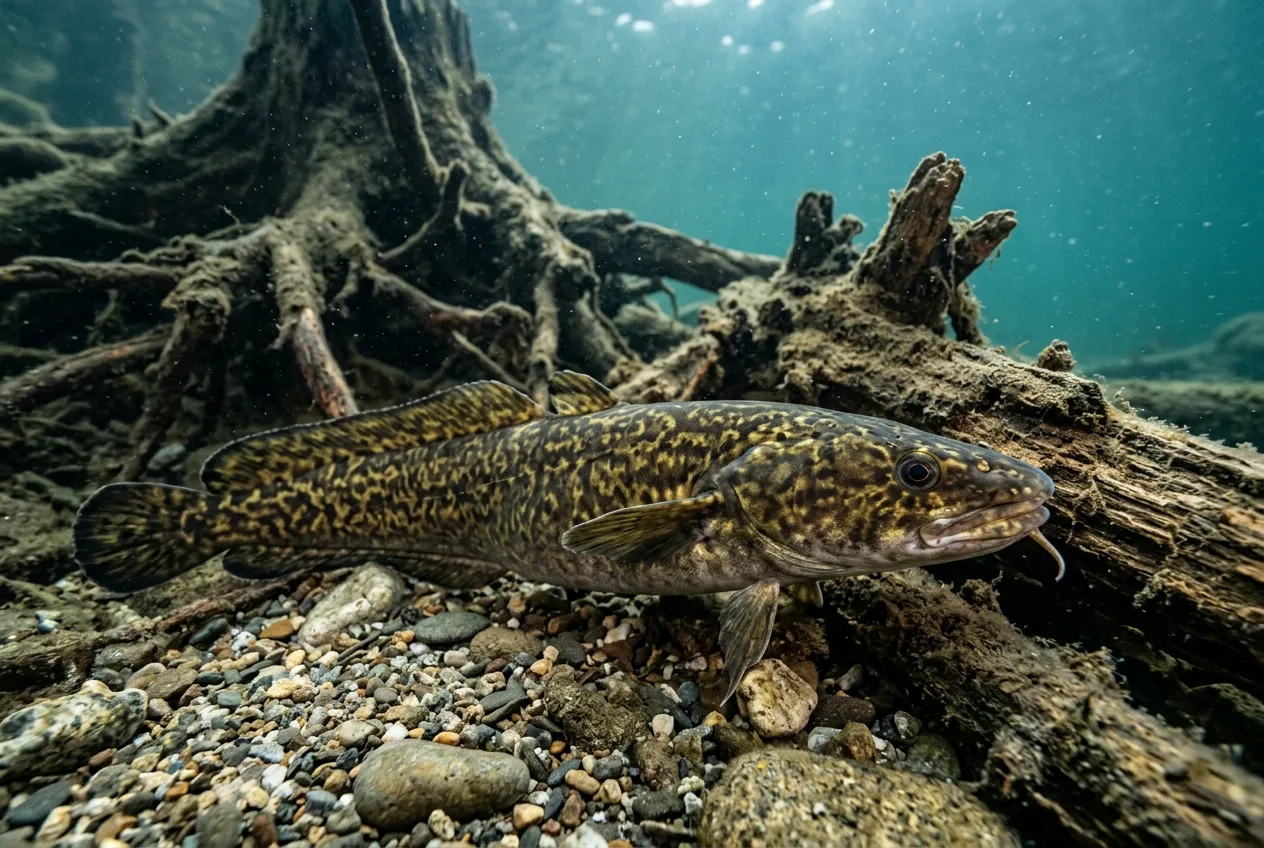
The only cod-like fish that lives solely in fresh and brackish water, also called Rutte or Trüsche in German. You recognise it by the single barbel on the chin and by the pelvic fins, which sit in front of the pectoral fins. Typically it is 30 to 60 centimetres, often only around 40.
When
The best chances come in October; from November to April and in September a catch is possible, and in summer it takes hardly any food and stays deep. Spawning takes place at night from November to March, depending on the region below 4 to 6 °C; that is exactly when it is most active and, in many places, protected. What applies on your water is set by state law, the water rules (Gewässerordnung) and the fishing permit (Erlaubnisschein).
- JanPossible, spawning season
- FebPossible, spawning season
- MarPossible, spawning season
- AprPossible
- MayHardly any chance
- JunHardly any chance
- JulHardly any chance
- AugHardly any chance
- SepPossible
- OctGood
- NovPossible, spawning season
- DecPossible, spawning season
Peak seasonGoodPossibleHardly any chanceSpawning season
Spring tactics
After spawning the burbot are hungry, and shortly afterwards the chances rise again. With warmer water feeding then drops off quickly. Whether a closed season (Schonzeit) applies after spawning is regulated by your federal state (Bundesland).
Summer tactics
In warm water the burbot has hardly any appetite and is rarely caught, so a targeted session is usually not worthwhile. In some rivers it still occasionally ends up on the hook of eel anglers.
Autumn tactics
When eel catches fall off, burbot time begins, on some rivers as early as the end of September. Below about 10 degrees water temperature the fish become much more active, and a high-water spell in autumn can bring the start forward. In a mountain lake the period from mid-September to mid-December is considered the best.
Winter tactics
Only below about 5 degrees does the metabolism really get going; then the fish spawn and are protected in many places. Whether a closed season (Schonzeit) applies then is regulated by your federal state (Bundesland). Overcast skies, light rain or snowfall bring more bites than clear, icy nights.
Are they biting today?
In January: Spawning, please protectIn February: Spawning, please protectIn March: Spawning, please protectIn April: PossibleIn May: Out of seasonIn June: Out of seasonIn July: Out of seasonIn August: Out of seasonIn September: PossibleIn October: Shoulder seasonIn November: Spawning, please protectIn December: Spawning, please protect
Today’s catch index needs JavaScript. Season and spawning time are in the catch calendar.
From the blog: Fishing in November: which fish bite now and where I look for them
Where it sits now
In the lake
On a lake look for steeply shelving banks of large, deep, cool waters with plenty of hiding places. By day the burbot lies under roots and stones or in dense weed; on summer nights it comes into shallower water to feed.
How to go about it: On a deep lake you fish steeply shelving banks, preferably with rocks and near a stream inflow, from the bank with monofilament rather than braid, because sharp stones and mussels chafe the line. The hooklength stays very short at 5 to 15 cm. If there is no bite after about two hours, change spot.
| All year round | Drop-off edge, deep bottom |
|---|
In the river
In the river it avoids strong current and stands in calm zones behind stones and in pools, also at undercut banks, rip-rap, locks, weirs and at the mouths of rivers and ditches. Outside the spawning season many of them stand together in deep holes.
How to go about it: In winter burbot migrate upstream to spawn and pile up below weirs and locks. Fish there over stony or gravelly bottom, such as at rip-rap and edges to deeper water. A rod held high keeps a lot of line out of the current, so a lighter weight is enough.
| All year round | undercut bank, rip-rap, pools |
|---|
Biting time: in the evening, at night and in the morning. What this looks like on the water is shown by the picture of the holding spots just below.
Waters with rules for the burbot
Holding spots in the picture
Choose a season and time of day: the picture shows where the species sits then. Tap a fish or a spot in the list to bring it closer. The picture is schematic and AI-generated, every water is different.
Catch chances in springpossible
Catch chance in summerhardly any
Catch chance in autumnpossible
Catch chances in winterpossiblespawning season, observe the closed seasons
- J
- F
- M
- A
- M
- J
- J
- A
- S
- O
- N
- D
Spawning season
Active time The burbot looks for food at dusk and at night and spends the day resting in hiding.
No main time The burbot looks for food at dusk and at night and spends the day resting in hiding.
Active time The burbot looks for food at dusk and at night and spends the day resting in hiding.
Active time The burbot looks for food at dusk and at night and spends the day resting in hiding.
In the lake
Shelf edge
Burbot are found here all year.
Deep bottom
Burbot are found here all year.
The burbot prefers large, deep lakes with cool, oxygen-rich water. There it holds at steeply shelving stretches of bank where it finds enough hiding places. By day it stays under roots, stones and among dense plants.
Spring: catch chance according to the catch calendar possible in March and April, slim in May.
Summer: catch chance according to the catch calendar slim. In summer the burbot eats little and stays deep. On summer nights it also comes into shallower water to feed.
Autumn: catch chance according to the catch calendar possible in September, good in October, possible in November.
Winter: catch chance according to the catch calendar possible. This is when spawning falls, so observe the closed seasons. At spawning time from November to March it moves into shallower water and spawns at night over sand and gravel. On a lake the spawning shoals are hard to find, and in this period the burbot is protected in many places.
In the river
Undercut bank, overhanging branches, timber
Burbot are found here all year.
Pools, deep spot
Burbot are found here all year.
riprap, sheet piling, harbour
Burbot are found here all year.
In the river the burbot holds at undercut banks and rip-rap, at locks and weirs and in river and ditch mouths. It seeks shelter under stones, in bank crevices and between tree roots. Outside the spawning season river burbot gather in deep holes.
Spring: catch chance according to the catch calendar possible in March and April, slim in May.
Summer: catch chance according to the catch calendar slim. In summer it takes longer rests and prefers deep water.
Autumn: catch chance according to the catch calendar possible in September, good in October, possible in November.
Winter: catch chance according to the catch calendar possible. This is when spawning falls, so observe the closed seasons. During spawning the burbot often migrates upstream and sometimes piles up at structures in the river. It spawns over sandy-gravelly spots, and in this period it is protected in many places.
Depth: It lives on the bottom over gravel or sand and avoids mud. In summer it prefers deep water.
Size comparison: AI-generated drawing, schematic.
How
Where you may fish for burbot, you usually lay a natural bait on a simple running-lead rig on the bottom at night. On a river you can also stalk with a short spinning rod: to fish that stir up small clouds of silt you offer a bait on sight, with a fixed lead and a hooklength of about 20 centimetres.
Easiest way
Take a sturdy bottom or eel rod of around 3 m, monofilament of about 0,30 mm and a running lead that stays put reliably in the current. Sit down on an overcast late-autumn evening below a weir or at rip-rap where burbot fishing is allowed. Offer a thick bunch of lobworms on a large single hook and hang a bell and a glow stick on the rod tip.
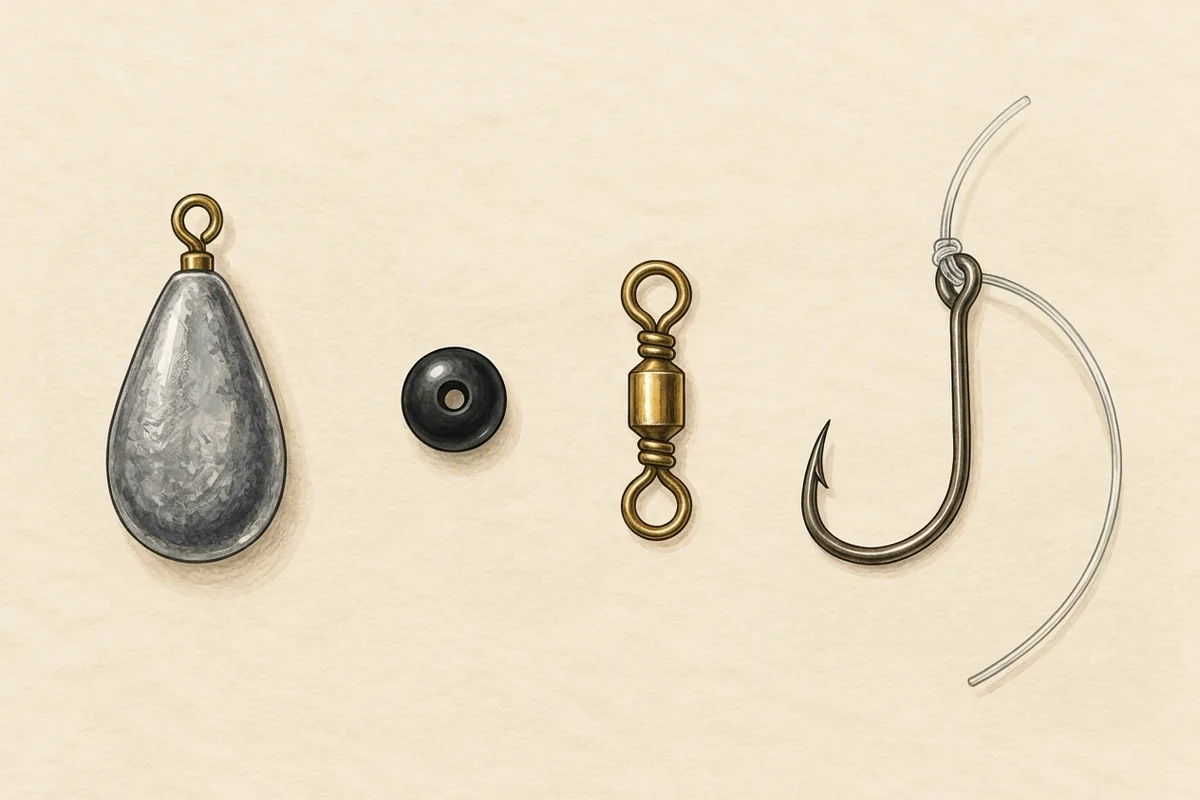
Worm bunch on a running lead
The usual night session on the river from late autumn into winter, anywhere the burbot is not protected.
- Check the stock
Ask beforehand at the club or in the catch records whether burbot are caught in that water at all. Good spots are then weirs, locks, mouths and stony or gravelly ground; on mud you look in vain.
- Adjust the running lead
An anti-tangle tube with a snap link takes the weight, a rubber bead protects the knot at the swivel. You choose the weight according to the current; in winter rivers carry more water, so rather a size heavier.
- Bait generously
Put two or three thick lobworms on the hook, preferably with a few maggots. If there are no worms, take a piece of fish or a small fish up to about 10 cm, provided baitfish are allowed there.
- Before dusk
Set up while it is light and lay out the rig before it gets dark. Most bites come at dusk and in the first hours of the night, often between 18 and 23 hrs.
- Read the tugs
Burbot usually bite hesitantly, and often the bell rings only once. Then take the rod in your hand, feel the line and strike after the third or fourth tug at the latest. A real bite makes the tip tremble, whereas the current only bends it slowly.
- Quickly off the bottom
Do not get into a long fight, or the fish wedges itself between stones. Pump the burbot in steadily with a firm drag; it does not fight for long anyway.
- Check the rods
Reel the rigs in regularly even without a bite indication, because some burbot take the bait and simply lie still. Net the fish and remove the hook with pliers, preferably with the barb pinched down.
What with
A bunch of lobworms or dendrobaenas that you renew regularly catches best, because the burbot reacts to movement. Whether a dead baitfish can keep up, specialist authors see differently; some use it to catch the larger burbot in particular. In winter, when worms are scarce, chicken liver works too.
- Wormsall year, on river and lake alike
A thick bunch of lobworms moves and smells, and that is what the burbot reacts to most in the dark.
- Baitfishlate autumn and winter, where dead baitfish are allowed
A fish strip or a halved small fish gives off a lot of scent into the water, and the burbot finds its prey at night with its fine sense of smell.
- Offal and meatwinter, when worms or baitfish are missing
Chicken liver tied into a piece of fine tights holds even in a long cast and gives off a tempting paste; frozen, it can be baited just the same.
Tackle
A sturdy bottom rod of about three metres with 30 to 70 grams casting weight and an abrasion-resistant monofilament main line of 0,25 to 0,40 millimetres is usual, because there are many snags at the holding spots. The hooklength is usually 30 to 70 centimetres long, the single hook is size 4 to 1/0. The burbot swallows large hooks deep less often.
Worm bunch on a running lead
- Rod
- around 3 m, sturdy bottom, eel or heavy feeder rod, casting weight 30–130 g depending on the current; in frost, rods with large rings
- Reel
- robust fixed-spool reel in size 2000–4000, preferably with a baitrunner
- Line
- Monofilament 0,25–0,40 mm, thicker over stones and mussels; braid 0,12–0,14 mm only as long as it is not freezing
- Leader
- Monofilament, usually 30–70 cm long; where pike bite, 30–40 cm of wire
- Hooks
- Single hook size 4 to 1/0, large models are swallowed deep less often
- Weight, float, lead
- Running lead about 30 g on a small river, 60–120 g on a larger river, up to 150–200 g in fast current
Common mistakes
- Fishing on spec: Many waters no longer hold a notable burbot population. Check catch reports or the club’s catch records before you spend nights at the water.
- Missing fish that lie still: A burbot often takes the bait and then lies motionless. Check the rigs regularly, or it swallows deep or wedges itself.
- Hooks too small: Hooks of sizes 8 to 4 quickly vanish deep in the throat in the large mouth. Take larger models and pinch the barb down, and then even a small burbot can be released cleanly.
- Braid in frost: Braided line ices up quickly, as do the small rings of a feeder tip. In night frost use monofilament and a rod with large rings.
- Arriving too late: The best biting time begins with dusk. Anyone who sets up only in the dark misses it and makes unnecessary noise and light.
Rules
Each federal state (Bundesland) sets its own closed season (Schonzeit) and minimum size (Mindestmaß). Choose your state; the values come from our state pages.
Baden-Württemberg
- Minimum size
- 30 cm
- Closed season
- 1.11.–28.2.
As of October 2026. All rules, exceptions and sources: Fishing in Baden-Württemberg.
Bavaria
- Minimum size
- 40 cm
- Closed season
- none
- Note
- Rutte, Trüsche
As of October 2026. All rules, exceptions and sources: Fishing in Bavaria.
Berlin
- Minimum size
- 30 cm
- Closed season
- none
Correct as of October 2026. All rules, exceptions and sources: Fishing in Berlin.
Brandenburg
- Minimum size
- 30 cm
- Closed season
- none
As of October 2026. All rules, exceptions and sources: Fishing in Brandenburg.
Bremen
- Minimum size
- 35 cm
- Closed season
- none
As of October 2026. All rules, exceptions and sources: Fishing in Bremen.
Hamburg
- Minimum size
- 30 cm
- Closed season
- none
- Catch limit
- 3 per day
- Note
- harvest slot 30–50 cm
As of October 2026. All rules, exceptions and sources: Fishing in Hamburg.
Hesse
- Minimum size
- –
- Closed season
- protected all year round
- Note
- fishing ban, no keeping
As of October 2026. All rules, exceptions and sources: Fishing in Hesse.
Mecklenburg-Western Pomerania
Our overview for Mecklenburg-Western Pomerania does not list the burbot. What applies there is set out on the page Fishing in Mecklenburg-Western Pomerania, with the state’s waters.
Lower Saxony
- Minimum size
- 35 cm
- Closed season
- none
As of October 2026. All rules, exceptions and sources: Fishing in Lower Saxony.
North Rhine-Westphalia
- Minimum size
- –
- Closed season
- protected all year round
As of October 2026. All rules, exceptions and sources: Fishing in North Rhine-Westphalia.
Rhineland-Palatinate
- Minimum size
- –
- Closed season
- protected all year round
As of October 2026. All rules, exceptions and sources: Fishing in Rhineland-Palatinate.
Saarland
- Minimum size
- –
- Closed season
- protected all year round
As of October 2026. All rules, exceptions and sources: Fishing in Saarland.
Saxony
Our overview for Saxony does not list the burbot. What applies there is set out on the page Fishing in Saxony, with the state’s waters.
Saxony-Anhalt
- Minimum size
- 30 cm
- Closed season
- none
As of October 2026. All rules, exceptions and sources: Fishing in Saxony-Anhalt.
Schleswig-Holstein
- Minimum size
- 35 cm
- Closed season
- 1.1.–28.2.
As of October 2026. All rules, exceptions and sources: Fishing in Schleswig-Holstein.
Thuringia
- Minimum size
- 30 cm
- Closed season
- 1.11.–31.3.
As of October 2026. All rules, exceptions and sources: Fishing in Thuringia.
The regulation and your fishing permit (Erlaubnisschein) are what count. Lake Constance, the Rhine and the coast, for example, have their own rules: Fishing waters in Germany.
After the catch
Playing and landing
Strike after the first cautious tugs, before the burbot swallows the bait deep. Bring it quickly off the bottom with a firm drag so that it does not wedge itself between stones. Its smooth, slimy body slips easily out of the hand, so remove the hook with wet hands and pliers, and a protected or undersized burbot if possible in the water.
The burbot is considered endangered in Germany, so check beforehand whether you may keep it at all. A burbot of legal size that you may keep is stunned and killed straight away. Protected or undersized fish you release with wet hands directly in the water, as described on the page about releasing.
Frequently asked questions
When do burbot bite best?
In the cold season mainly at dusk and in the first hours of the night. Murky, rainy nights are better than clear frost, and full-moon nights are considered poor. Night fishing is banned in some states and waters, so check your fishing permit (Erlaubnisschein).
Which bait is best for burbot?
A thick bunch of lobworms is regarded as the first choice. Fish pieces, small dead baitfish and liver catch too, where they are allowed.
What hook size for burbot?
Single hooks from size 4 to 1/0 are named. The larger the hook, the less often the burbot swallows it deep; even small fish have a wide mouth.
How do you recognise a burbot bite?
Often only by a brief ring and a fine trembling of the tip. A bell with a glow stick on the rod tip shows these quiet bites better than many electronic bite alarms.
May you fish for burbot?
Not everywhere. The burbot is endangered in Germany, protected in many places and supported by stocking; some states allow catching only in selected waters. State law and the fishing permit (Erlaubnisschein) are binding.
Can you release burbot?
Burbot caught in a river and hooked at the front can be released well, best in the water and with the barb pinched down. Fish brought up from a depth of more than about 25 m usually do not survive.
Similar species
If you catch burbot, you can fish for these species with similar tackle:
 Brown bullhead fishingPossible
 Eel fishingSecondary season
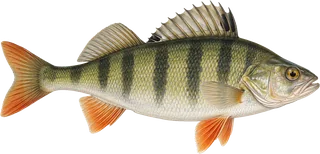 Perch fishingMain season
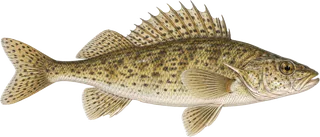 Ruffe fishingShoulder season
Sources
As of: October 2026. The practical knowledge comes from 9 sources, summarised in our own words.
View all 9 sources
- Quappenangeln: 6 Tipps für Deinen Erfolg · BLINKER (Steve Kaufmann)
- Steckbrief Quappe: Wie erkenne ich sie und wie fange ich diesen Fisch? · BLINKER (Redaktion)
- Quappen im Winter: 5 Tipps zum Erfolg · BLINKER (Florian Pippardt)
- Im Fluss gezielt auf Quappe angeln: Ansitz auf Süßwasser-Dorsche · BLINKER (Michael Jackwerth)
- Die besten Tipps zum Quappenangeln mit Leber · BLINKER (Redaktion)
- Auf Quappe im Bergsee: Süße Dorsche aus dem Stillgewässer · BLINKER (Nils Anderson)
- Laichräuber? Der Quappen-Irrtum · BLINKER (Corinna Leppin)
- Artenschutz Quappe · Landesfischereiverband Baden-Württemberg
- Pilotprojekt Quappe: Fischereiliche Nutzung und Artenschutz Hand in Hand · Deutscher Angelfischerverband (DAFV)
Text AI-assisted, based on the sources named and these pages: Burbot (profile), Bottom fishing, Night fishing, Worms, Bottom rod.