
Knowledge – Fish
Sailfish fishing
Sailfish fishing means trolling baits behind the boat where baitfish hold near coasts, islands and reefs, then releasing the fish afterwards. Here is the way there in nine steps, each with a link to the detailed page.
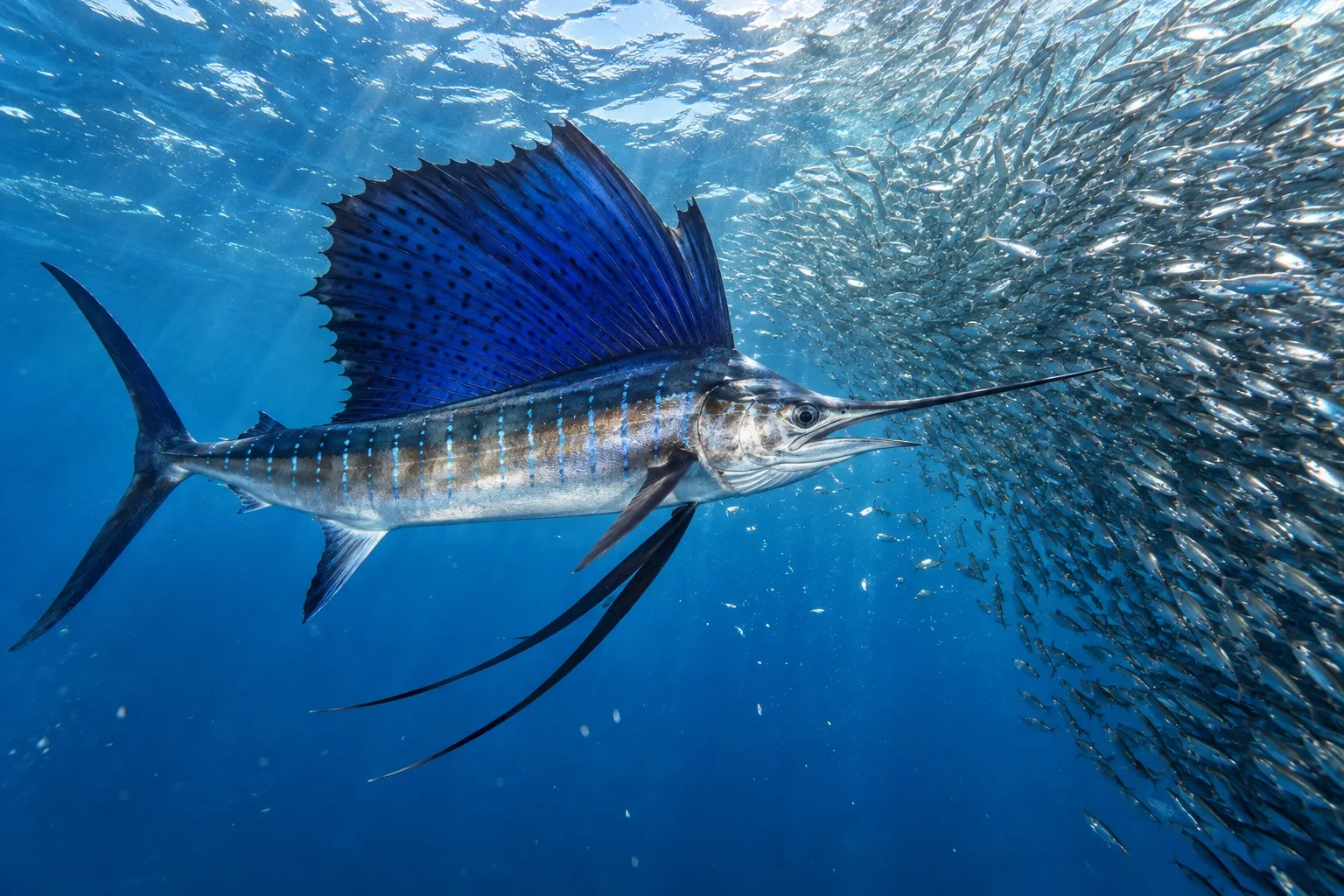
The International Union for Conservation of Nature (IUCN) classes the sailfish as vulnerable. Off Broome, Dampier and Exmouth practically all sailfish caught are released, many of them after tagging.
 Choose another fish117 fish with guides
 EelOff-peak season
 EelpoutPossible
 IdePossible
 ArapaimaGood
 GraylingPeak season
 Atlantic salmonSpawning time, please spare
 Brown troutSpawning time, please spare
 Brook troutSpawning time, please spare
 BarbelOff-peak season
 BarramundiSpawning season
 Greater amberjackGood
 Topmouth gudgeonOnly as bycatch
 Blue marlinSpawning season
 BonefishSpawning season
 BonitoGood
 BreamOff-peak season
 Dusky grouperOnly as bycatch
 CobiaPossible
 Spiny dogfishOnly as bycatch
 CodPeak season
 ChubPeak season
 MinnowOnly as bycatch
 European sturgeonOnly as bycatch
 FlounderPeak season
 PerchPeak season
 Largemouth bassGood
 Ballan wrasseOnly as bycatch
 Yellowfin tunaSpawning season
 Giant trevallyGood
 Prussian carpPossible
 BrillPossible
 Gilthead breamSpawning time, please spare
 Golden doradoSpawning season
 Golden mahseerOnly as bycatch
 Dolphinfish (mahi-mahi)Good
 Grass carpPossible
 Great barracudaGood
 GudgeonPossible
 White breamPossible
 DaceOff-peak season
 PikePeak season
 HalibutOff-peak season
 HerringPossible
 GarfishOut of season
 Huchen (Danube salmon)Possible
 Crucian carpOnly as bycatch
 CarpOff-peak season
 RuffeOff-peak season
 VendaceOnly as bycatch
 DabPeak season
 GurnardPossible
 Coley (saithe)Peak season
 Chinook salmonHardly any chance
 King mackerelSpawning season
 LingPeak season
 TuskOff-peak season
 MackerelPossible
 Bighead carpOut of season
 WhitefishPossible
 Conger eelOff-peak season
 Sea troutSpawning time, please spare
 Grey mulletPossible
 Murray codSpawning season
 MuskellungeGood
 Common nasePossible
 Nile perchPossible
 PayaraPossible
 Peacock bassPeak season
 PermitGood
 WeeverOnly as bycatch
 PollackOff-peak season
 BurbotOff-peak season
 AspPossible
 Red snapperSpawning season
 Rainbow troutPeak season
 RoosterfishGood
 RoachPeak season
 RedfishOut of season
 Bluefin tunaOnly as bycatch
 RuddPossible
 Russian sturgeonOnly as bycatch
 HaddockOff-peak season
 SnakeheadPossible
 TenchOff-peak season
 SpirlinOnly as bycatch
 PlaiceOff-peak season
 Greenland halibutOnly as bycatch
 Round gobyOnly as bycatch
 SwordfishGood
 Lake troutSpawning time, please spare
 HakeSpawning time, please spare
 Alpine charSpawning time, please spare
 MonkfishPossible
 SoleOff-peak season
- SailfishGood
 Silver carpOut of season
 SnookPeak season
 PumpkinseedOnly as bycatch
 SpratOnly as bycatch
 Atlantic wolffishSpawning time, please spare
 TurbotPeak season
 SterletOnly as bycatch
 SmeltOnly as bycatch
 Horse mackerelPossible
 TaimenGood
 TarponGood
 TigerfishSpawning season
 BleakPossible
 WahooGood
 Wels catfishOff-peak season
 WhitingPeak season
 Sea bassOff-peak season
 ZanderPeak season
 White-eye breamOnly as bycatch
 Blue breamOnly as bycatch
 Brown bullheadPossible
 VimbaOnly as bycatch
Season in October according to the catch calendar, an estimate and not a guarantee of a catch. The fish pictures are reduced natural-history plates and AI-generated.
Best time
From July to September, mainly by day.
In January: Possible, spawning seasonIn February: Possible, spawning seasonIn March: PossibleIn April: PossibleIn May: PossibleIn June: GoodIn July: Peak seasonIn August: Peak seasonIn September: Peak seasonIn October: GoodIn November: PossibleIn December: Possible, spawning season
Good spot
- Coast: Open water, just below the surface and wreck, reefOpen water, just below the surface and wreck, reefOpen water, just below the surface and wreck, reefOpen water, just below the surface and wreck, reef
Top baits
Starter tackle
- Rod: boat rod for fish that mostly weigh 11 to 25 kg off Broome
- Line: strong enough to keep the fight short, as NOAA Fisheries advises
- Hook: non-offset circle hook; in the study off Guatemala size 7/0 on the ballyhoo
- Rod: 2,1 to 2,4 m, class 9,1 to 13,6 kg (20 to 30 lb)
- Line: matched to the rod class, with a line clip on the kite or outrigger
- Hook: non-offset circle hook of the classic shape; 7/0 and 8/0 in the study
In short
In short: According to the catch calendar the best time is July to September. Good spots on the coast: open water, just below the surface and wreck, reef. Proven baits: trolled artificial lures and natural baitfish such as mullet or ballyhoo. The IUCN classes the sailfish as vulnerable. Off north-western Australia almost all sailfish caught are released, many of them tagged.
Quick to recognise
A slender, laterally flattened fish with a long, thin bill and a huge dorsal fin that it raises like a sail and can fold flat into a groove. The sail is blue-black with dark spots, and about 20 rows of light blue dots run across the flanks. According to FishBase it grows to 348 centimetres (fork length) and then weighs a good 100 kilograms; off Broome almost nine in ten released fish weighed 11 to 25 kilograms.
When
Off north-western Australia the peak season is July, August and September, with June and October counted as good; that is winter and spring there. In the other months a catch is possible, but from March to May only a few fish bite. In the tropical Pacific it spawns almost all year round, mainly in the local summer, so on the southern hemisphere roughly from December to February.
- JanPossible, spawning season
- FebPossible, spawning season
- MarPossible
- AprPossible
- MayPossible
- JunGood
- JulPeak season
- AugPeak season
- SepPeak season
- OctGood
- NovPossible
- DecPossible, spawning season
Peak seasonGoodPossibleHardly any chanceSpawning season
Season in the destination
Off Broome the sailfish takes the hook in almost every month, but the real season runs from June to October, with most catches from July to September, that is in the southern winter and spring. Between March and May, the local autumn, the boats catch only a few. Over the course of the season the fish off Broome and Dampier get heavier on average, and many seem to stay for several months. If you travel to south-eastern Florida instead, you fish there in winter and early spring, off North Carolina from May to October.
Season and biting time
In January: Spawning seasonIn February: Spawning seasonIn March: PossibleIn April: PossibleIn May: PossibleIn June: GoodIn July: Peak seasonIn August: Peak seasonIn September: Peak seasonIn October: GoodIn November: PossibleIn December: Spawning season
Where it is now
On the coast
It hunts in warm water near the surface and, unlike most marlins, often comes in close to reefs, islands and coasts, preferably into shallow, nutrient-rich water. Look for the places where sardines, anchovies and mackerel are holding, because the sailfish packs herd such shoals together. Off Broome the catches come from a small area of 30 to 40 square nautical miles.
How to go about it: Unlike most billfish, the sailfish gathers in shallow, nutrient-rich coastal water under 150 metres deep. Off Broome the best grounds lie on just 30 to 40 square nautical miles around a conspicuous structure on the bottom. You catch bigger fish at the Rowley Shoals far off Broome and in the Exmouth Gulf. It feeds at the surface, in mid-water and along reef edges.
| All year round | Open water, just below the surface, wreck, reef |
|---|
Biting time: mainly during the day. How this looks in the water is shown by the picture of the holding spots just below.
Holding spots in the picture
Choose a season and time of day: the picture shows where the species sits then. Tap a fish or a spot in the list to bring it closer. The picture is schematic and AI-generated, every water is different.
Catch chances in springpossible
Catch chance in summerPeak season
Catch chance in autumngood
Catch chances in winterpossiblespawning season, observe the closed seasons
- J
- F
- M
- A
- M
- J
- J
- A
- S
- O
- N
- D
Spawning season
Not prime time Along the US Atlantic coast it hunts mainly in daylight.
Active time Along the US Atlantic coast it hunts mainly in daylight.
Not prime time Along the US Atlantic coast it hunts mainly in daylight.
Not prime time Along the US Atlantic coast it hunts mainly in daylight.
On the coast
Wreck, reef
Sailfish are present here all year round.
Open water, mid-water
Sailfish are present here all year round.
Just below the surface
Sailfish are present here all year round.
The sailfish hunts in warm surface water and herds shoals of sardines, anchovies and mackerel there. Unlike most marlins, it comes close to coasts, islands and reefs.
Spring: catch chance according to the catch calendar is possible.
Summer: catch chance according to the catch calendar is good in June and peak season in July and August.
Autumn: catch chance according to the catch calendar is peak season in September, good in October and possible in November.
Winter: catch chances according to the catch calendar are possible. The spawning season falls in this period, so observe the closed seasons.
Depth: It stays in the warm water above the thermocline and often gathers over coastal water less than 150 metres deep.
Size comparison: AI-generated drawing, schematic.
How
It is caught from a boat, mostly by trolling with artificial or natural baits. Along the US Atlantic coast anglers troll baitfish such as mullet, bonito or ballyhoo, plus artificial lures. It hunts there mainly in daylight.
Easiest way
The easiest way off Broome is to troll baitfish or artificial lures behind the boat between July and September. The sailfish sit close inshore there on a few known grounds. Fish with a circle hook, then at the bite you only have to wind the line tight.
Trolling with baitfish and skirt
From the moving boat you pull baitfish such as ballyhoo or mullet and artificial lures through warm water near the coast, and you cast a bait at any fish that shows itself.
- Search close inshore
Sailfish sit closer to land than marlins and swordfish. The North Carolina fisheries authority (Fischereibehörde) gives water depths of about 37 to 91 metres and water temperatures of 25 to 28 °C.
- Rig the baitfish
Mullet, Spanish mackerel, bonito and ballyhoo are trolled, plus artificial lures. In a study off Guatemala the hook sat at the front of the ballyhoo’s head.
- Circle hook without offset
On a natural bait use a non-offset circle hook. Off Guatemala 85 per cent of the fish were hooked in the corner of the mouth on circle hooks, but only 27 per cent on J hooks.
- Troll off the outriggers
The lines run in clips on the outriggers. A bite shows when the fish tears the line out of the clip.
- Offer a bait to following fish
A sailfish often turns up behind the baits and follows them without striking. Then you cast a baitfish at it.
- Do not strike
With a circle hook you do not rip the rod up as you would with a J hook. Simply wind the line tight while the fish swims away from the boat.
- Let it recover and unhook
Sailfish tire quickly and should be revived after a long fight. Leave the fish in the water and take the hook out beside the boat.
Live bait on a kite
Off south-eastern Florida live baitfish hang from a kite or from the outriggers, and at the bite you give the sailfish line for a moment before you wind.
- Close to the Gulf Stream
Off south-eastern Florida the shelf is narrow and the Gulf Stream close, which is why sailfish come right in to the coast there. Most boats in the study fished between West Palm Beach and Miami.
- Live baitfish
Usual are baitfish of just under 9 to 18 cm, such as bigeye scad, threadfin herring and blue runner. The FWC also names mullet, ballyhoo and squid.
- Kite or outriggers
Usually a kite carries the baits out. If there is too little wind, they are trolled slowly on clips on the outriggers. A line clip makes sure the fish feels hardly any resistance at the bite.
- Give line
After the bite you let the fish swim off with the bait without tension, over a light drag or the releasing clip. Off West Palm Beach this often lasts 15 to 30 seconds, off Miami usually less.
- Cast between the baits
If a sailfish swims around between the kite and outrigger baits, cast a live bait straight at it.
- Runs and jumps
Expect fast runs, jumps and violent head shaking with which it tries to get rid of the hook. Keep the line tight and the fight short.
- Release in the water
Tow the fish slowly through the water beside the moving boat until it recovers, then take out the hook without lifting it out of the water.
What with
Among offshore trolling lures, skirted heads and fast plugs come into question, at roughly 4 to 12 knots depending on the lure. As a natural bait you use a baitfish. For all billfish NOAA Fisheries advises circle hooks.
- Offshore trolling lureswhen trolling by day in warm water near the coast, off Broome mainly from July to September
The North Carolina fisheries authority (Fischereibehörde) names trolled artificial lures alongside baitfish for the sailfish, and the Broome study counts every sailfish that follows a bait behind the boat as sighted.
Tackle
A sturdy sea rod, because NOAA Fisheries recommends strong tackle and a short fight for billfish. You choose reel and line with the line calculator and the page on fishing line.
Trolling with baitfish and skirt
- Rod
- boat rod for fish that mostly weigh 11 to 25 kg off Broome
- Line
- strong enough to keep the fight short, as NOAA Fisheries advises
- Hooks
- circle hook without offset; in the study off Guatemala size 7/0 on the ballyhoo
Live bait on a kite
- Rod
- 2,1 to 2,4 m, class 9,1 to 13,6 kg (20 to 30 lb)
- Reel
- multiplier reel or fixed-spool reel
- Line
- matched to the rod class, with a line clip on the kite or outrigger
- Hooks
- circle hook without offset of the classic shape; 7/0 and 8/0 in the study
Common mistakes
- J hook and giving line for a long time: The longer you give line, the more often a J hook sits deep and the fish bleeds. The classic circle hook did well in the Florida study at every waiting time.
- Circle hook with a strong offset: A strongly offset circle hook sat in the throat or stomach on live bait almost as often as a J hook. Use models without offset.
- Striking with the circle hook: With a circle hook, winding the line tight replaces the strike. That is how the researchers fished off Guatemala, and most fish were hooked in the corner of the mouth afterwards.
- Releasing the tired fish at once: Sailfish tire quickly in the fight. Tow it slowly through the water until it moves and its colour comes back.
- Travelling to Broome in the southern autumn: From March to May the boats there catch hardly any sailfish. Plan the trip for July to September.
Rules
For sailfish the rules of the country where you fish apply, not the German fisheries acts (Fischereigesetze). Each country, often each water, sets its own licence, closed seasons (Schonzeiten), minimum sizes (Mindestmaße) and rules on keeping fish.
What the profile says: The IUCN classes the sailfish as vulnerable. Off north-western Australia almost all sailfish caught are released, many of them tagged.
The fisheries authority (Fischereibehörde) of the country you travel to is what counts. Ask about the current rules before the trip and read in the profile how threatened the species is.
After the catch
Playing and landing
With a circle hook you do not strike but wind the line tight. Keep the fight short, because sailfish tire quickly. To unhook, leave the fish in the water and tow it with slow headway until it swims strongly again and looks silver instead of bronze. Off north-western Australia almost all sailfish are released, many of them tagged. The country where you fish decides the rules, licence and keeping of fish.
Leave the fish in the water, as NOAA Fisheries advises for all billfish, and unhook it there. If it is tagged before release, weight, place and date go to the researchers, who use them to follow the season and the stock.
Frequently asked questions
When is the best time for sailfish at Broome?
From July to September, in some years into October. From June catches rise; from March to May they are low.
Which bait for sailfish?
Whole mullet and ballyhoo are trolled, off North Carolina also Spanish mackerel and bonito, plus artificial lures. Off Florida many fish with live small scad, herring or squid.
Circle hook or J hook for sailfish?
Circle hook. In a study by NOAA researchers only 2 per cent of the fish were hooked deep in the throat or stomach on circle hooks, against 46 per cent on J hooks, and hooked fish were landed equally often with both types of hook.
What does drop-back mean in sailfish fishing?
That is the time between the bite and the moment you put tension on the line. The fish should take the bait in peace without feeling resistance.
How heavy do sailfish get off Broome?
Almost nine in ten released fish were estimated at 11 to 25 kg. Further out at the Rowley Shoals and in the Exmouth Gulf they are bigger on average.
Similar species
Anyone who catches sailfish can also fish for these species with similar tackle:
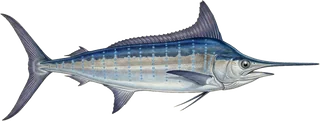 Blue marlin fishingSpawning season
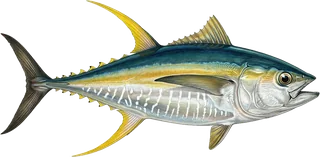 Yellowfin tuna fishingSpawning season
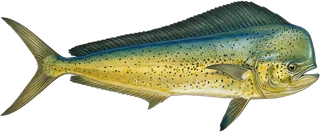 Dolphinfish fishingGood
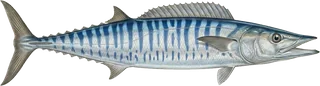 Wahoo fishingGood
Sources
As of October 2026. The practical knowledge comes from 8 sources, summarised in our own words.
View all 8 sources
- Use of historic fisheries data to determine trends in relative abundance and body size of sailfish, Istiophorus platypterus, off northwestern Australia (Journal of the Royal Society of Western Australia 94: 333–344, 2011) · Royal Society of Western Australia (Pepperell, Kopf und Malseed; Daten u. a. von WA Fisheries)
- Circle hooks, ‘J’ hooks and drop-back time: a hook performance study of the south Florida recreational live-bait fishery for sailfish (Fisheries Management and Ecology 14: 173–182, 2007) · NOAA Fisheries Southeast Fisheries Science Center, University of Miami (Prince, Snodgrass, Orbesen u. a.)
- A Comparison of Circle Hook and “J” Hook Performance in Recreational Catch-and-Release Fisheries for Billfish (American Fisheries Society Symposium 30, 2002) · NOAA Fisheries Southeast Fisheries Science Center (Prince, Ortiz und Venizelos), American Fisheries Society
- Sailfish (Species Profile) · North Carolina Division of Marine Fisheries
- Sailfish (Saltwater Fish Profile) · Florida Fish and Wildlife Conservation Commission
- Istiophorus platypterus – Sailfish (Discover Fishes) · Florida Museum of Natural History, University of Florida
- Careful Catch and Release – Atlantic Highly Migratory Species (Brochure, 2025) · NOAA Fisheries, Atlantic Highly Migratory Species Management Division
- Characteristics and trends in the nighttime and daytime United States Atlantic recreational swordfish fishery based on fishery-dependent data (Bulletin of Marine Science 93: 539–555, 2017) · NOAA Fisheries (Davis, Cudney und Blankinship), Bulletin of Marine Science, University of Miami
Text AI-assisted, based on the sources named and these pages: Sailfish (profile), Sea fishing, Offshore trolling lures, Releasing fish.