
Knowledge – Fish
Turbot fishing
Turbot fishing means offering a moving fish bait along edges, gullies and wrecks, and being patient after the bite. Here is the way there in nine steps, each with a link to the detailed page.
 Choose another fish117 fish with guides
 EelOff-peak season
 EelpoutPossible
 IdePossible
 ArapaimaGood
 GraylingPeak season
 Atlantic salmonSpawning time, please spare
 Brown troutSpawning time, please spare
 Brook troutSpawning time, please spare
 BarbelOff-peak season
 BarramundiSpawning season
 Greater amberjackGood
 Topmouth gudgeonOnly as bycatch
 Blue marlinSpawning season
 BonefishSpawning season
 BonitoGood
 BreamOff-peak season
 Dusky grouperOnly as bycatch
 CobiaPossible
 Spiny dogfishOnly as bycatch
 CodPeak season
 ChubPeak season
 MinnowOnly as bycatch
 European sturgeonOnly as bycatch
 FlounderPeak season
 PerchPeak season
 Largemouth bassGood
 Ballan wrasseOnly as bycatch
 Yellowfin tunaSpawning season
 Giant trevallyGood
 Prussian carpPossible
 BrillPossible
 Gilthead breamSpawning time, please spare
 Golden doradoSpawning season
 Golden mahseerOnly as bycatch
 Dolphinfish (mahi-mahi)Good
 Grass carpPossible
 Great barracudaGood
 GudgeonPossible
 White breamPossible
 DaceOff-peak season
 PikePeak season
 HalibutOff-peak season
 HerringPossible
 GarfishOut of season
 Huchen (Danube salmon)Possible
 Crucian carpOnly as bycatch
 CarpOff-peak season
 RuffeOff-peak season
 VendaceOnly as bycatch
 DabPeak season
 GurnardPossible
 Coley (saithe)Peak season
 Chinook salmonHardly any chance
 King mackerelSpawning season
 LingPeak season
 TuskOff-peak season
 MackerelPossible
 Bighead carpOut of season
 WhitefishPossible
 Conger eelOff-peak season
 Sea troutSpawning time, please spare
 Grey mulletPossible
 Murray codSpawning season
 MuskellungeGood
 Common nasePossible
 Nile perchPossible
 PayaraPossible
 Peacock bassPeak season
 PermitGood
 WeeverOnly as bycatch
 PollackOff-peak season
 BurbotOff-peak season
 AspPossible
 Red snapperSpawning season
 Rainbow troutPeak season
 RoosterfishGood
 RoachPeak season
 RedfishOut of season
 Bluefin tunaOnly as bycatch
 RuddPossible
 Russian sturgeonOnly as bycatch
 HaddockOff-peak season
 SnakeheadPossible
 TenchOff-peak season
 SpirlinOnly as bycatch
 PlaiceOff-peak season
 Greenland halibutOnly as bycatch
 Round gobyOnly as bycatch
 SwordfishGood
 Lake troutSpawning time, please spare
 HakeSpawning time, please spare
 Alpine charSpawning time, please spare
 MonkfishPossible
 SoleOff-peak season
 SailfishGood
 Silver carpOut of season
 SnookPeak season
 PumpkinseedOnly as bycatch
 SpratOnly as bycatch
 Atlantic wolffishSpawning time, please spare
- TurbotPeak season
 SterletOnly as bycatch
 SmeltOnly as bycatch
 Horse mackerelPossible
 TaimenGood
 TarponGood
 TigerfishSpawning season
 BleakPossible
 WahooGood
 Wels catfishOff-peak season
 WhitingPeak season
 Sea bassOff-peak season
 ZanderPeak season
 White-eye breamOnly as bycatch
 Blue breamOnly as bycatch
 Brown bullheadPossible
 VimbaOnly as bycatch
Season in October according to the catch calendar, an estimate and not a guarantee of a catch. The fish pictures are reduced natural-history plates and AI-generated.
Best time
From September to October, mostly in the evening and at night.
In January: Hardly any chanceIn February: Hardly any chanceIn March: PossibleIn April: GoodIn May: Good, spawningIn June: Good, spawningIn July: Possible, spawningIn August: PossibleIn September: Peak seasonIn October: Peak seasonIn November: GoodIn December: Possible
Good spot
- Coast: Sandy bottom, stony mixed ground and drop-offsSandy bottom, stony mixed ground and drop-offsSandy bottom, stony mixed ground and drop-offsSandy bottom, stony mixed ground and drop-offs
Top baits
Starter tackle
- Rod: beachcaster or carp rod with a casting weight of around 120 g; on Sylt any rod that casts about 60 g will do
- Line: braid 0,20 mm or mono 0,40 mm, plus 3–6 m of shock leader 0,60 mm
- Hook: sturdy long-shank single hook size 1 to 2/0; in Wales Aberdeen hooks size 2–4
- Rod: solid boat rod 1,80–2,20 m with a line class of 4,5–6,8 kg
- Line: 0,35–0,40 mm
- Hook: two-hook rig size 4 (circle hook at the front, treble at the back) or single hook 1/0–3/0 in the sandeel; large fish baits up to 4/0–6/0
- Rod: spinning rod 3 m with a casting weight of 60 g
- Line: braid 0,16 mm with 1 m of fluorocarbon 0,40 mm as a shock leader
- Hook: sturdy single hook size 1 to 2/0
In short
In short: The best time to catch turbot is from September to October, mostly in the evening and at night. Good spots on the coast: sandy bottom, stony mixed ground and drop-offs. Proven baits: sandeel and mackerel strips moving along the bottom, behind an attractor spoon or spoon, also a pirk with a fish strip. The largest flatfish on German coasts, recognisable by its almost round body and the bony tubercles on the eyed side. In Schleswig-Holstein the minimum size (Mindestmaß) is 30 cm, and the Baltic closed season (Schonzeit) (1.6.–31.7.) is suspended until the end of 2026 (as of October 2026).
Quick to recognise
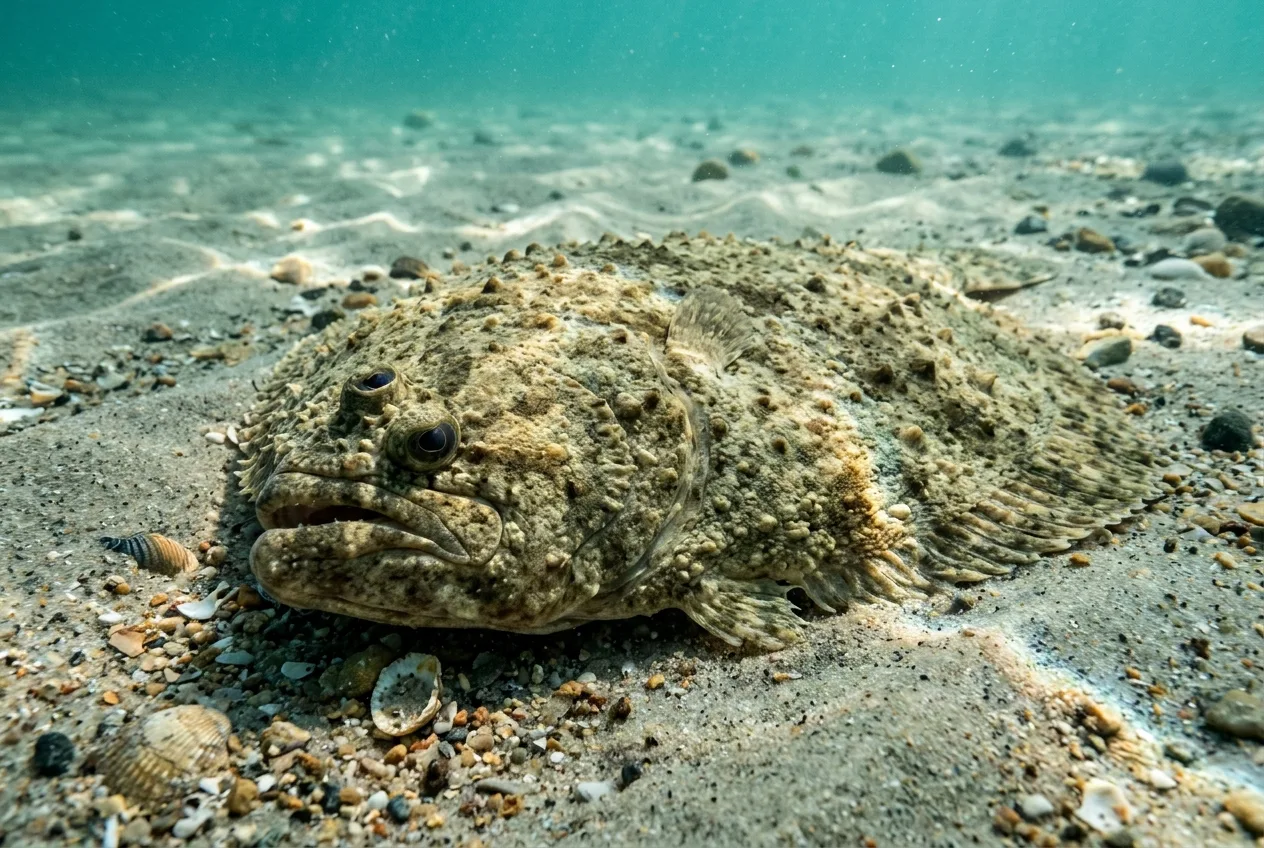
The largest flatfish on German coasts, almost round, with hard tubercles instead of scales on the eyed side. Typically 50 to 70 centimetres; up to 1 metre and 25 kilograms are reported.
When
There is no clearly defined season: the peak is September and October, April to June and November are good, and July and August often fall off. For the North Sea and the Channel Islands a specialist magazine names May and autumn; fishing is targeted at dusk and at night. In the Atlantic spawning mostly takes place from May to July, between April and August overall; for this the fish come into shallower water in spring. In Schleswig-Holstein a minimum size (Mindestmaß) of 30 centimetres applies; the Baltic closed season (Schonzeit) there from 1 June to 31 July is suspended until the end of 2026 by general order (Allgemeinverfügung) (as of October 2026).
- JanHardly any chance
- FebHardly any chance
- MarPossible
- AprGood
- MayGood, spawning
- JunGood, spawning
- JulPossible, spawning season
- AugPossible
- SepPeak season
- OctPeak season
- NovGood
- DecPossible
Peak seasonGoodPossibleHardly any chanceSpawning season
Spring tactics
From April the spawning fish move into shallow water, the best time for shore anglers on the North Sea. On some Welsh beaches turbot come to the shore on big tides from late March to June.
Summer tactics
Over the course of summer the fish move out into deeper, cooler water, and from the beach it gets hard going. From a boat, banks and edges remain a chance; chance catches while cod fishing often come at 9 to 12 m.
Autumn tactics
Autumn is the high season, especially where the water is still warm, for example around the Channel Islands. On a charter boat trip off Langeland in October, 16 turbot came on board, and in Wales a second run towards the shore begins in October.
Winter tactics
Targeted attempts are rarely worthwhile, as the fish stay deep. Only at individual spots such as the breakwater at Alderney do anglers report turbot all year round.
Is it biting today?
In January: Out of seasonIn February: Out of seasonIn March: PossibleIn April: Off-peakIn May: Spawning, please spare the fishIn June: Spawning, please spare the fishIn July: Spawning, please spare the fishIn August: PossibleIn September: Peak seasonIn October: Peak seasonIn November: Off-peakIn December: Possible
Today’s catch index needs JavaScript. Season and spawning time are in the catch calendar.
Where it is now
On the coast
Look for places where the bottom suddenly changes: reef edges, wrecks, gullies and banks over sand, stones or mixed ground; stony ground alternating with sand and plants is especially good. Current at headlands, straits and underwater slopes helps; off Sylt the fish stand so close in April and May that your bait can lie just behind the edge of the surf. In the Baltic it lives mainly in the west and south, but the North Sea and the waters around Great Britain are far more promising.
How to go about it: In the Baltic, turbot are usually bycatch while cod fishing, for example off Fehmarn, in the Kieler Förde or off Als; anyone fishing for them there on purpose needs fish bait and staying power. On the North Sea, island beaches with deep water in front count, and in the Netherlands the mouths of the Scheldt in Zeeland. In Norway big fish also bite close to the coast in bays about 9 m deep.
| All year round | Sandy bottom, stony mixed ground, drop-off, gully in front of the sandbank, wreck, reef |
|---|---|
| Spring extra | Surf |
Biting time: mainly in the evening and at night. What that looks like in the water is shown by the picture of the holding spots just below.
Waters with rules for turbot
Holding spots in the picture
Choose the season and time of day: the picture shows where the species stands then. Spots outlined in red apply only in the chosen season. Tap a fish or a spot in the list to bring it closer. The picture is schematic and AI-generated, every water is different.
Chance of a catch in springgood
Chance of a catch in summerpossibleSpawning, observe closed seasons
Catch chance in autumnPeak season
Catch chance in winterhardly any
- J
- F
- M
- A
- M
- J
- J
- A
- S
- O
- N
- D
Spawning season
Not the main time Turbot are fished for on purpose at dusk and at night.
Not the main time Turbot are fished for on purpose at dusk and at night.
Active time Turbot are fished for on purpose at dusk and at night.
Active time Turbot are fished for on purpose at dusk and at night.
On the coast
Surf close to the shore
Turbot are only found here in spring.
gully in front of the sandbank
Turbot are found here all year round.
Sandy bottom
Turbot are found here all year round.
Stony mixed ground
Turbot are found here all year round.
Drop-off
Turbot are found here all year round.
Wreck, reef
Turbot are found here all year round.
The turbot lies on sand, stones or mixed ground and lurks where the bottom suddenly changes: on reef edges, at wrecks, in gullies and on banks. Stony ground alternating with sand and plants is especially good. Sandy flats right beside deeper gullies it uses as a route for sandeels.
Spring: chances according to the catch calendar are possible in March and good in April and May. In spring the spawning fish move into shallower water. On Sylt they stand from April to the end of May so shallow that the baits lie just behind the edge of the surf.
Summer: chances according to the catch calendar are good in June and possible in July and August. This is when spawning takes place, so observe the closed seasons.
Autumn: catch chance according to the catch calendar is peak season in September and October, good in November.
Winter: according to the catch calendar, catch chances are possible in December, hardly any in January and February.
Depth: The turbot usually lies at 20 to 70 metres. Fish ready to spawn stay deeper, down to about 80 metres, and move into shallower water in spring.
Size comparison: AI-generated drawing, schematic.
How
From a boat you use the running ledger rig that also serves for plaice and flounder, in a sturdier version and with a large attractor spoon or spoon in front of the bait; medium-sized pirks also catch, often with a piece of mackerel on the treble. From the beach the North Sea coast of the Netherlands and Great Britain offers chances, with strips of fish in the current. Do not strike straight after the bite: a specialist magazine advises waiting roughly half a minute and, if necessary, giving line.
Easiest way
The easiest start is an island beach on the North Sea with deep water in front, for example the west side of Sylt in April and May. A rod casting about 60 g, a surf rig with a single hook around 1/0 and a well-secured strip of mackerel or herring are enough. With this, fish the hollows right in front of the beach as the water rises.
Fish strips on an island beach
In spring, when the spawning fish come into the shallows, you can reach turbot on deep North Sea beaches with short casts.
- Find the hollows at ebb
Go to the beach at low water and memorise the dark, scoured hollows and gullies. On Sylt they lie on the deeper west side; the shallow east side in the Wadden Sea dries out and yields nothing.
- Simple hooklength
A ready-made surf rig with a strong single hook is enough. Since you cast leads of up to about 100 g, a thick shock leader several metres long belongs in front of the main line.
- Bind on the fish strip
Cut a strip from mackerel, herring or garfish, thread it on a long-shank hook and secure it with elastic bait thread. On Welsh beaches long strips of mackerel belly or pieces of sandeel also catch fish.
- Short, not far
You do not need long casts. Put one bait in the shallow water just beyond the waves and the second about 40 m out. Locals in Wales advise not casting further than a little under 30 m in winter.
- Back in with the flood
As the water rises, the fish search the freshly flooded sand. As it retreats, draw the rig in a little now and then, and renew the bait often so that the scent trail stays fresh.
- Landing in the shallows
Bring the fish into knee-deep water and slide it onto the sand there instead of lifting it on the line. If it is too small, unhook it straight away in the water and let it swim off.
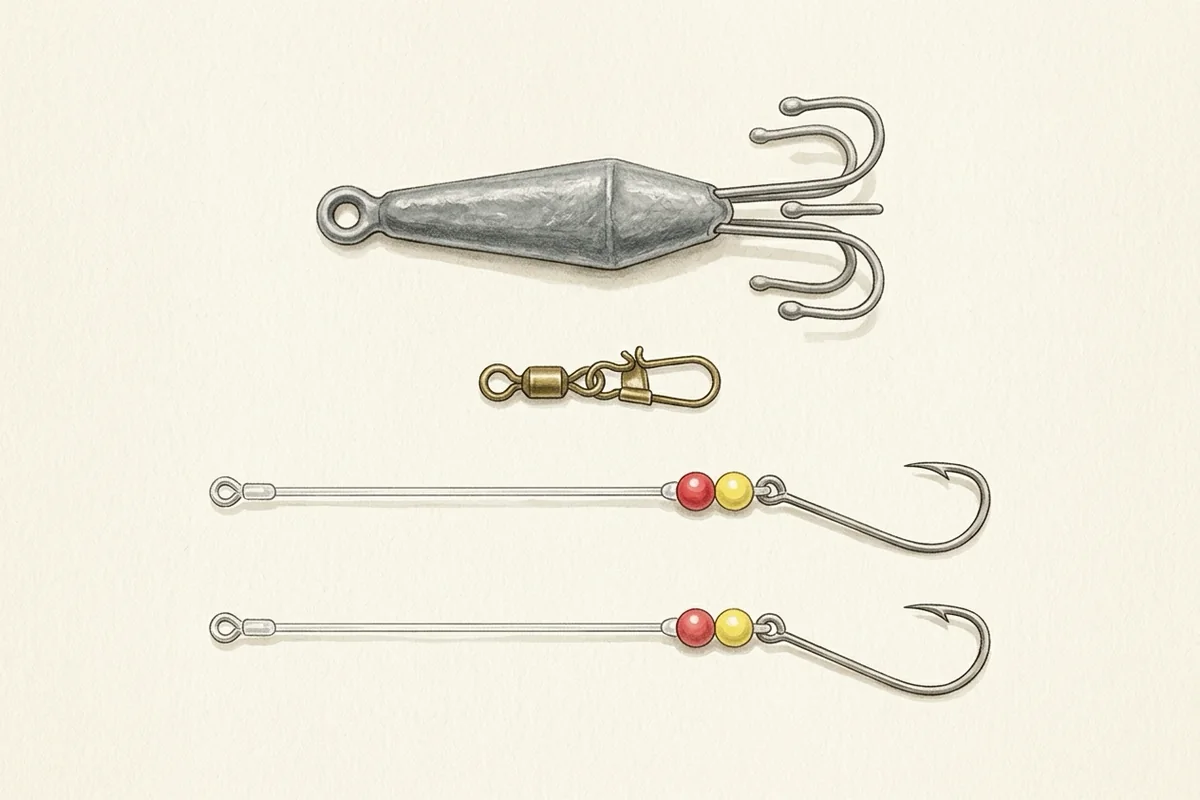
Drifting with sandeel
From a boat or charter boat the most promising way to bigger turbot, especially in autumn over banks with current.
- Read the current
Current edges give themselves away on the surface: strips of differently breaking waves, water of a different colour or bands of drifting seagrass. Charter boat skippers know the banks where big turbot hunt small fish.
- Spoon in front of the bait
Fish a strong running ledger rig with a long boom, or hang the hooklength directly behind a turbot spoon or sea trout spoon. A curved plastic disc in front of the hook makes the dead bait swing lively.
- Sandeel on two hooks
Thread the sandeel onto the hooklength with the baiting needle so that the hook emerges in the rear third, and wrap it with thin thread. A second hook at the tail holds the bait and lands more bites.
- Slowly over sand
Keep your thumb on the line and inch it only gently. Lift the rod slightly, take up the slack and let the bait tumble back to the bottom. The more leisurely it moves over the sand, the better.
- Wait for resistance
A turbot grabs the soft bait and at first just holds on to it. When you feel weight, tighten the line carefully and strike with feel, not with a hard jerk as for cod.
- Pump steadily
Keep constant pressure and pump the fish up calmly. Just below the surface it often tries once more to get back to the bottom; then you let the drag do its work.
- Wide landing net
A large boat landing net is the gentle choice. A gaff only comes into question if the fish is of legal size and you may definitely keep it.
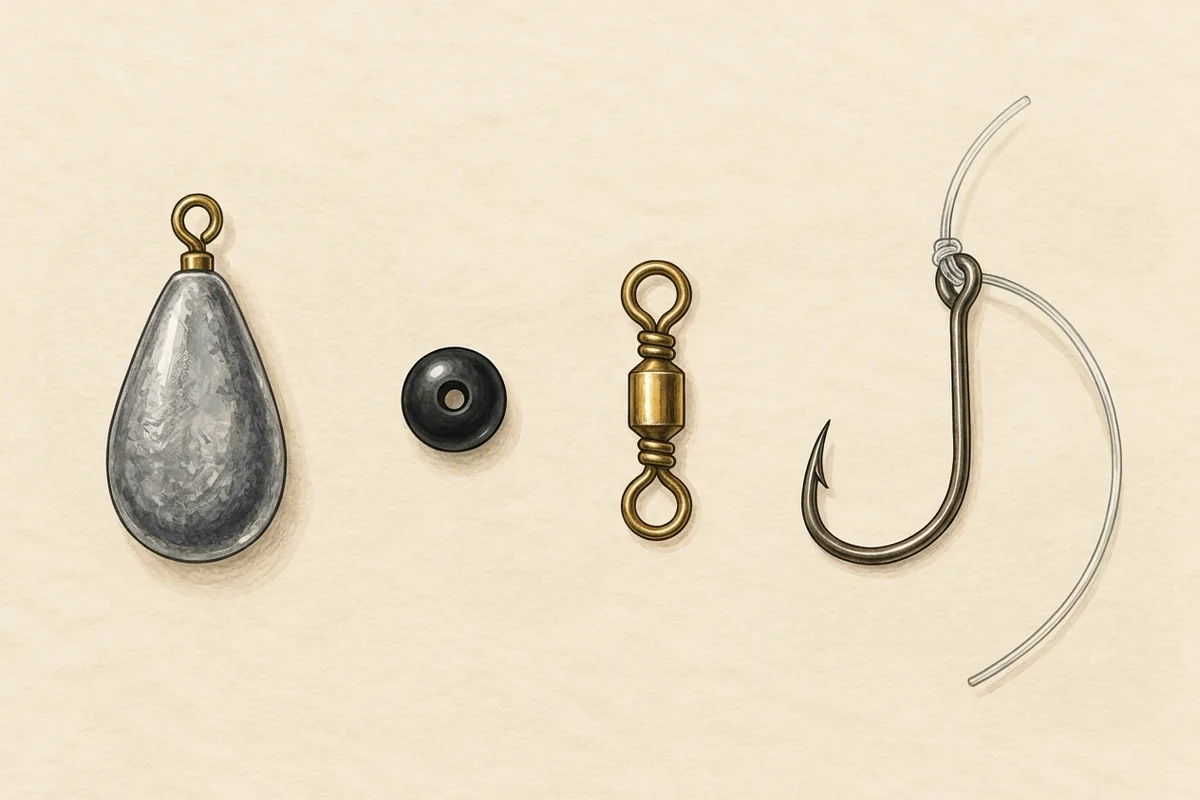
Spoon with a fish strip on the beach
On flat sandy beaches you fish actively this way, cover plenty of ground and still offer a natural bait.
- Sand beside gullies
Look for flat beaches where sand borders directly on deeper gullies. With the flood tide the sandeels come out of the bottom there and move into the shallows, and the predators follow them.
- Spoon as casting weight
A sea trout spoon of about 30 g without a hook serves only as a casting weight. Behind it comes a 30 to 60 cm fluorocarbon hooklength with a long-shank single hook carrying the fish strip.
- Along the waves
Cast on the rising water as parallel as possible to the edge of the surf. That way the bait stays long in the shallow strip where the turbot hunt.
- Leave it, then move it
Let the rig lie on the bottom for a few seconds so that the turbot picks up the scent. If nothing happens, draw it in about a metre and wait again. A soft plastic shaped like a sandeel is dragged slowly and briefly stopped after two metres.
- Bite as it moves off
The turbot often grabs when the bait moves off again after the pause or tumbles just before the bottom. Then tighten the line and set the hook with feel.
- Unhook in the water
Guide the fish into shallow water and land it there. If you may not keep it, unhook it straight away in the water.
What with
The first choice is sandeel, fresh or frozen, and mackerel in strips also catches well. The bait has to move; a turbot leaves a motionless one alone, and with worms you will hardly catch anything. Two hooks hold a fish bait better.
- Cut baitall year round, from the beach and from a boat
A strip of mackerel, herring or garfish screens out the many small flatfish that grab a worm at once.
- Pilkerwhen pirk fishing from a charter boat, preferably with a strip of mackerel on the treble
Turbot take medium-sized pirks, and the bites often come on the retrieve in midwater.
- Soft plastic (shad)in shallow water over sand and when jigging for cod
A slim soft plastic shaped like a sandeel imitates the main prey, and the slowly dragged jig head stirs up small clouds of sand.
Tackle
From a boat you reach for a pilk or boat rod, from the beach for a beachcaster; the page on sea rods shows which is meant for what. For the running ledger rig from a boat, a specialist magazine suggests hooklengths from a little over one to three or four metres, and you lower the long ones slowly, otherwise they twist.
Fish strips on an island beach
- Rod
- Beachcaster or carp rod with a casting weight of around 120 g; on Sylt any rod that casts about 60 g will do
- Line
- Braid 0,20 mm or mono 0,40 mm, plus 3–6 m of shock leader 0,60 mm
- Leader
- ready-made surf rig; in Wales a three-hook rig with standing hooklengths
- Hooks
- sturdy long-shank single hook size 1 to 2/0; in Wales Aberdeen hooks size 2–4
- Weight, float, lead
- Carp lead 60–100 g
Drifting with sandeel
- Rod
- solid boat rod 1,80–2,20 m with a line class of 4,5–6,8 kg
- Reel
- small to medium multiplier reel
- Line
- 0,35–0,40 mm
- Leader
- Fluorocarbon 1,0–1,5 m behind the spoon; on the running ledger rig also 3–4 m
- Hooks
- Two-hook rig size 4 (circle hook at the front, treble at the back) or single hook 1/0–3/0 in the sandeel; large fish baits up to 4/0–6/0
- Weight, float, lead
- Turbot spoon or sea trout spoon 30–60 g
Spoon with a fish strip on the beach
- Rod
- Spinning rod 3 m with a casting weight of 60 g
- Reel
- solid fixed-spool reel
- Line
- Braid 0,16 mm with 1 m of fluorocarbon 0,40 mm as a shock leader
- Leader
- Fluorocarbon 30–60 cm between the spoon and the hook
- Hooks
- sturdy single hook size 1 to 2/0
- Weight, float, lead
- Sea trout spoon 20–50 g
Common mistakes
- With worm for turbot: Dab and flounder bite mostly on lugworm and ragworm. Stay with fish bait even if the bites come less often; it sorts out the bigger predators.
- The sandeel flies off on the cast: Thread it on with the baiting needle and bind it to the hook shank with thin elastic thread. On an ordinary jig hook the slim fish does not hold for long.
- Retrieved too fast: Anyone who winds as for bass pulls the bait past the lurking turbot. Drag soft plastic or sandeel very slowly over the sand and put in a stop after about two metres.
- In a westerly wind on the Danish coast: A stiff westerly is regarded there as unfavourable for turbot. A calm sea and wind from easterly directions are the better choice.
- Fishing the beach at ebb tide: At low water you only pick out the hollows. You fish with the rising water, because that is when sandeels and turbot move into the shallows.
Rules
Each federal state (Bundesland) sets its own closed season (Schonzeit) and minimum size (Mindestmaß). Choose your state; the values come from our state pages.
Baden-Württemberg
Our overview for Baden-Württemberg does not list the turbot. What applies there is covered on the page Fishing in Baden-Württemberg, with spots in the state.
Bavaria
Our overview for Bavaria does not list the turbot. What applies there is covered on the page Fishing in Bavaria, with spots in the state.
Berlin
Our overview for Berlin does not list the turbot. What applies there is covered on the page Fishing in Berlin, with spots in the state.
Brandenburg
Our overview for Brandenburg does not list the turbot. What applies there is covered on the page Fishing in Brandenburg, with spots in the state.
Bremen
Our overview for Bremen does not list the turbot. What applies there is covered on the page Fishing in Bremen, with spots in the state.
Hamburg
Our overview for Hamburg does not list the turbot. What applies there is covered on the page Fishing in Hamburg, with spots in the state.
Hesse
Our overview for Hesse does not list the turbot. What applies there is covered on the page Fishing in Hesse, with spots in the state.
Mecklenburg-Western Pomerania
Our overview for Mecklenburg-Western Pomerania does not list the turbot. What applies there is covered on the page Fishing in Mecklenburg-Western Pomerania, with spots in the state.
Lower Saxony
Our overview for Lower Saxony does not list the turbot. What applies there is covered on the page Fishing in Lower Saxony, with spots in the state.
North Rhine-Westphalia
Our overview for North Rhine-Westphalia does not list the turbot. What applies there is covered on the page Fishing in North Rhine-Westphalia, with spots in the state.
Rhineland-Palatinate
Our overview for Rhineland-Palatinate does not list the turbot. What applies there is covered on the page Fishing in Rhineland-Palatinate, with spots in the state.
Saarland
Our overview for Saarland does not list the turbot. What applies there is covered on the page Fishing in Saarland, with spots in the state.
Saxony
Our overview for Saxony does not list the turbot. What applies there is covered on the page Fishing in Saxony, with spots in the state.
Saxony-Anhalt
Our overview for Saxony-Anhalt does not list the turbot. What applies there is covered on the page Fishing in Saxony-Anhalt, with spots in the state.
Schleswig-Holstein
- Minimum size
- 30 cm
- Closed season
- none
- Note
- coastal waters; Baltic closed season (Schonzeit) 1.6.–31.7. suspended until 31.12.2026 (general order, Allgemeinverfügung); same values for brill
As of October 2026. All rules, exceptions and sources: Fishing in Schleswig-Holstein.
Thuringia
Our overview for Thuringia does not list the turbot. What applies there is covered on the page Fishing in Thuringia, with spots in the state.
The regulation and your fishing permit (Erlaubnisschein) are what count. Lake Constance, the Rhine and the coast, for example, have their own rules: Fishing waters in Germany.
After the catch
Playing and landing
After the bite make contact slowly and strike only when you feel weight. Pump the turbot with even pressure; near the surface it spreads itself wide and wants to go back to the bottom. Land it with a large landing net; a fish of legal size that you may keep you stun and kill immediately, and one that is too small you unhook with wet hands in the water.
Big turbot set their broad side against the pull, so play them with feel, mostly near the surface, and keep a large landing net ready. A fish of legal size that you may take you stun and kill immediately; protected or undersized fish you unhook with wet hands in the water and release. Closed seasons and minimum sizes are set by the federal states (Bundesland) and by the fisheries authorities (Fischereibehörde) of neighbouring countries such as Denmark, Norway or Poland; what binds you is your state regulation and your fishing permit (Erlaubnisschein).
Frequently asked questions
What is the best bait for turbot?
Sandeel, fresh or frozen, is regarded as the first choice. If you have none, strips of mackerel, herring or garfish catch, well secured with thread. Worms usually bring only smaller flatfish.
Can you catch turbot from the shore?
Yes, most likely in spring on North Sea beaches with deep water in front, for example on Sylt, and in Zeeland. On British surf beaches smaller turbot sometimes stand almost at your feet. In the Baltic shore catches are rare; one came off Fehmarn on a sea trout spoon.
What hook size for turbot?
For strips from the shore, sturdy single hooks in sizes 1 to 2/0 are usual, and 1/0 to 3/0 for a whole sandeel. Large fish baits from a boat can take hooks up to 6/0.
Do turbot take artificial lures?
Yes, although it rarely works on purpose. Catches are documented on pirks, on soft plastics while cod fishing, on an 8 cm twister in Norway and on sea trout spoons. A strip of fish on the hook improves the chances.
How deep does the turbot stay?
Adult fish usually live at depths of 20 to 80 m. They come into the shallows to spawn in spring, and on Sylt beach anglers then fish in about a metre of water. Chance catches from a boat often come at 9 to 12 m.
Similar species
If you catch turbot, you can use similar tackle to fish for these species too:
 Cod fishingPeak season
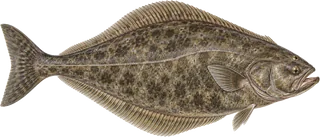 Halibut fishingOff-peak
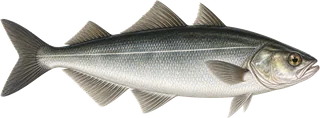 Coley fishingPeak season
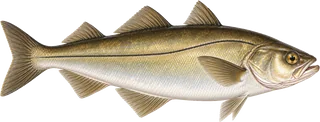 Pollack fishingSecondary season
Sources
As of October 2026. The practical knowledge comes from 16 sources, summarised in our own words.
See all 16 sources
- Steckbrief Steinbutt: Der Plattfisch-König in deutschen Gewässern · BLINKER (Redaktion)
- Steinbutt angeln auf Sylt: Fängt Horst den Plattfisch-König? · BLINKER (Waldemar Krause)
- Jetzt ist die Hochphase zum Angeln auf Steinbutt · BLINKER (Mats Korth / Johannes Müller)
- Sandaal: der beste Köder für Wolfsbarsch und Steinbutt · BLINKER (Michael Werner)
- Steinbutt auf Pilker · BLINKER (Redaktion)
- Ostsee: Steinbutt auf Mefo-Blinker · BLINKER (Redaktion)
- Gezielt auf Steinbutt · BLINKER (Redaktion)
- Überraschung beim Dorschangeln · FISCH & FANG (Redaktion)
- Steinbutt aus dem Bömlofjord · FISCH & FANG (Redaktion)
- Know Your Fish | Turbot · Sea Angler (Redaktion)
- Llandanwg · Sea Angler (Redaktion)
- Llanaber Sea Fishing Mark · Sea Angler (Redaktion)
- Bennar Fawr Sea Fishing Mark · Sea Angler (Redaktion)
- Alderney Breakwater Sea Fishing Mark · Sea Angler (Redaktion)
- Understand how surf beaches work and catch more fish · Sea Angler (Redaktion)
- A Guide to Sea Angling in the Southern Region · Southern Regional Fisheries Board (heute Inland Fisheries Ireland)
Text produced with AI support, based on the sources listed and these pages: Turbot (profile), Pirk fishing, Surf fishing, Pirk, Fish strips.