
Knowledge – Fish
Perch fishing
Catching perch means: offering small baits at jetties, weed and stones and following the shoal when it moves on. Here is the way there in nine steps, each with a link to the detailed page.
 Choose another fish117 fish with guides
 EelOff-peak season
 EelpoutPossible
 IdePossible
 ArapaimaGood
 GraylingPeak season
 Atlantic salmonSpawning time, please spare
 Brown troutSpawning time, please spare
 Brook troutSpawning time, please spare
 BarbelOff-peak season
 BarramundiSpawning season
 Greater amberjackGood
 Topmouth gudgeonOnly as bycatch
 Blue marlinSpawning season
 BonefishSpawning season
 BonitoGood
 BreamOff-peak season
 Dusky grouperOnly as bycatch
 CobiaPossible
 Spiny dogfishOnly as bycatch
 CodPeak season
 ChubPeak season
 MinnowOnly as bycatch
 European sturgeonOnly as bycatch
 FlounderPeak season
- PerchPeak season
 Largemouth bassGood
 Ballan wrasseOnly as bycatch
 Yellowfin tunaSpawning season
 Giant trevallyGood
 Prussian carpPossible
 BrillPossible
 Gilthead breamSpawning time, please spare
 Golden doradoSpawning season
 Golden mahseerOnly as bycatch
 Dolphinfish (mahi-mahi)Good
 Grass carpPossible
 Great barracudaGood
 GudgeonPossible
 White breamPossible
 DaceOff-peak season
 PikePeak season
 HalibutOff-peak season
 HerringPossible
 GarfishOut of season
 Huchen (Danube salmon)Possible
 Crucian carpOnly as bycatch
 CarpOff-peak season
 RuffeOff-peak season
 VendaceOnly as bycatch
 DabPeak season
 GurnardPossible
 Coley (saithe)Peak season
 Chinook salmonHardly any chance
 King mackerelSpawning season
 LingPeak season
 TuskOff-peak season
 MackerelPossible
 Bighead carpOut of season
 WhitefishPossible
 Conger eelOff-peak season
 Sea troutSpawning time, please spare
 Grey mulletPossible
 Murray codSpawning season
 MuskellungeGood
 Common nasePossible
 Nile perchPossible
 PayaraPossible
 Peacock bassPeak season
 PermitGood
 WeeverOnly as bycatch
 PollackOff-peak season
 BurbotOff-peak season
 AspPossible
 Red snapperSpawning season
 Rainbow troutPeak season
 RoosterfishGood
 RoachPeak season
 RedfishOut of season
 Bluefin tunaOnly as bycatch
 RuddPossible
 Russian sturgeonOnly as bycatch
 HaddockOff-peak season
 SnakeheadPossible
 TenchOff-peak season
 SpirlinOnly as bycatch
 PlaiceOff-peak season
 Greenland halibutOnly as bycatch
 Round gobyOnly as bycatch
 SwordfishGood
 Lake troutSpawning time, please spare
 HakeSpawning time, please spare
 Alpine charSpawning time, please spare
 MonkfishPossible
 SoleOff-peak season
 SailfishGood
 Silver carpOut of season
 SnookPeak season
 PumpkinseedOnly as bycatch
 SpratOnly as bycatch
 Atlantic wolffishSpawning time, please spare
 TurbotPeak season
 SterletOnly as bycatch
 SmeltOnly as bycatch
 Horse mackerelPossible
 TaimenGood
 TarponGood
 TigerfishSpawning season
 BleakPossible
 WahooGood
 Wels catfishOff-peak season
 WhitingPeak season
 Sea bassOff-peak season
 ZanderPeak season
 White-eye breamOnly as bycatch
 Blue breamOnly as bycatch
 Brown bullheadPossible
 VimbaOnly as bycatch
Season in October according to the catch calendar, an estimate and not a guarantee of a catch. The fish pictures are reduced natural-history plates and AI-generated.
Best time
From September to October, in the morning, during the day and in the evening.
In January: PossibleIn February: PossibleIn March: Possible, spawning timeIn April: Possible, spawning timeIn May: Possible, spawning timeIn June: Possible, spawning timeIn July: GoodIn August: GoodIn September: Peak seasonIn October: Peak seasonIn November: GoodIn December: Possible
Good spot
- Lake: jetty and weed bedjetty and weed bedjetty, weed bed and surfacejetty, weed bed and deep bottom
- River: rock armouringrock armouringrock armouringrock armouring
Starter tackle
- Rod: 1,80–2,10 m, casting weight up to about 15 g; for long casts and rock armouring 2,40–2,70 m with 30–40 g
- Line: braided, light-coloured, about 4–7 kg breaking strain
- Hook: jig head with a single hook to suit the bait size
- Rod: about 2 m, light, casting weight up to about 10–11 g
- Line: braided, 0,06–0,10 mm
- Hook: worm hook size 6 to 1/0, for whole lobworms 1 or 1/0
- Rod: 3,00–3,60 m, casting weight about 25–40 g, not too stiff
- Line: braided around 0,12 mm
- Hook: worm hook size 4–6
In short
In short: You catch perch best from September to October, in the morning, during the day and in the evening. Good spots on a lake: jetty and weed bed; on a river: rock armouring. Proven baits: small soft plastics, twisters and spinners; also lobworm or a small baitfish.
Quick to recognise
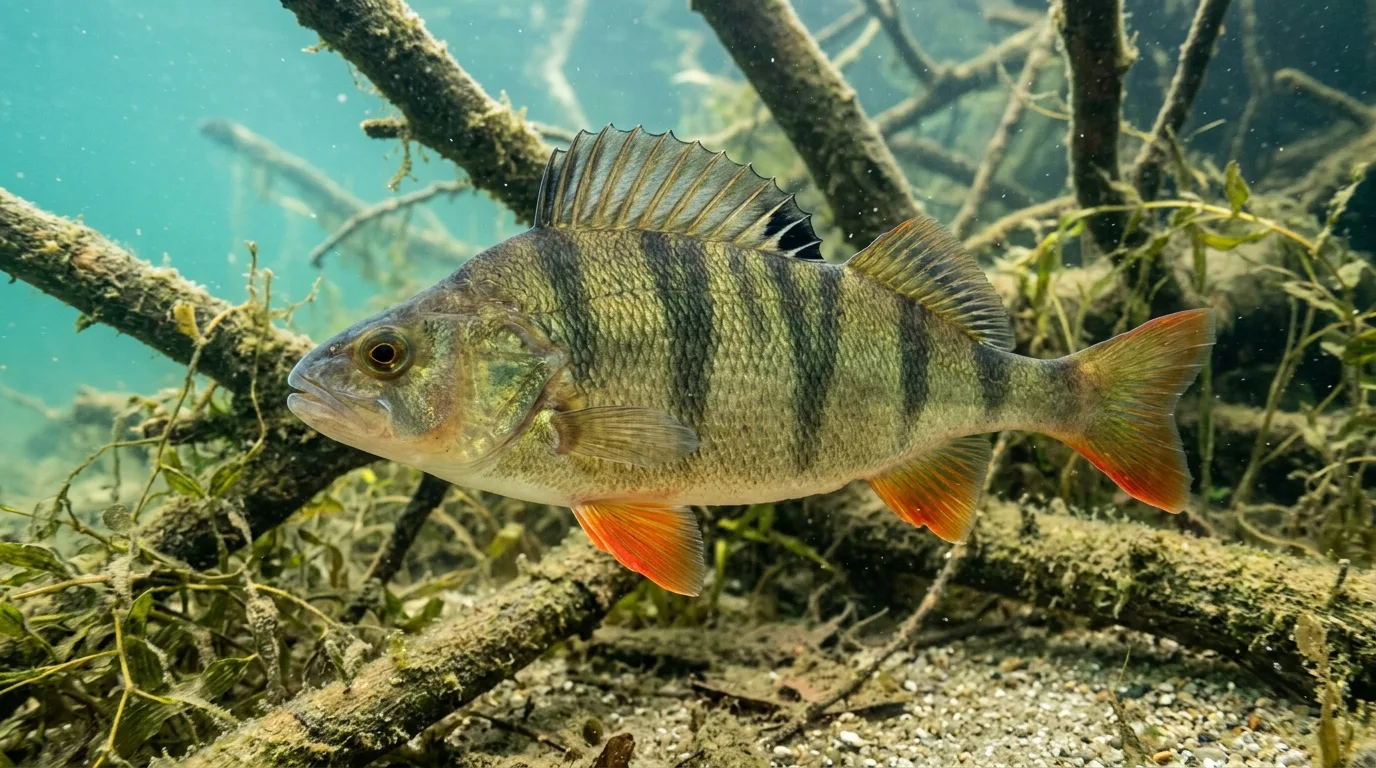
A predator found almost everywhere, from rivers to the slightly salty water of the Baltic Sea. The young travel in shoals, the big ones hunt more on their own or in small groups. 20 to 35 centimetres is usual; from 40 a perch counts as a specimen.
When
The best months are September and October, July, August and November are also good. The perch spawns from March to June. Whether a closed season (Schonzeit) applies then is set by your federal state (Bundesland). Most happens in the early morning and at dusk.
- JanPossible
- FebPossible
- MarPossible, spawning season
- AprPossible, spawning season
- MayPossible, spawning season
- JunPossible, spawning season
- JulGood
- AugGood
- SepPeak season
- OctPeak season
- NovGood
- DecPossible
Peak seasonGoodPossibleHardly any chanceSpawning season
Spring tactics
The perch spawns in spring; whether a closed season or a ban on artificial lures applies then is set by your federal state (Bundesland). In cold spring water many fishing days pass without a perch. Because hardly any fry are about, big perch now also take slim soft plastics of 10 to 14 centimetres.
Summer tactics
In the morning and evening perch hunt in the shallows and at the surface, during the day they sit deeper on the slopes of humps and drop-offs. Small crankbaits and soft plastics of a few centimetres bring the most bites now.
Autumn tactics
The best time: the prey fish become fewer, the water is still warm and the perch feed a lot. Shoals move about with the prey fish, so stay mobile and follow them.
Winter tactics
Now worm and dead baitfish often bring more than lures. Soft plastics of 8 to 12 centimetres are usual. On size the angling press is not agreed: one practical test found neither more nor bigger perch on lures over 10 centimetres. If the soft plastic on a jig head does not work, try drop-shot or a Carolina rig, which present the lure even more slowly.
Is it biting today?
In January: PossibleIn February: PossibleIn March: Spawning time, please spare themIn April: Spawning time, please spare themIn May: Spawning time, please spare themIn June: Spawning time, please spare themIn July: Off-peak seasonIn August: Off-peak seasonIn September: Peak seasonIn October: Peak seasonIn November: Off-peak seasonIn December: Possible
Today’s catch index needs JavaScript. Season and spawning time are in the catch calendar.
From the blog: The first fishing trip with children: plan briefly, set up safely, check the rules · Fishing in November: which fish bite now and where I look for them · Fishing spots in autumn: where I cast the spinning rod first
Where it is now
In the lake
Look for jetties, sheet piling, harbours and plants at the bank, and for big perch above all sunken wood. In autumn on big lakes they often hunt in open water just under the surface, where gulls circle. As the temperature falls the shoals move deeper.
How to go about it: Look for underwater humps, drop-offs, islands and dead wood, in autumn also the open water under circling gulls. In big, clear waters in summer shallow weed plateaus of half a metre to two metres are worth a try, where hardly anyone expects big perch. In reservoirs in winter, from a depth of about 15 metres almost only small perch bite.
| All year round | Jetty, weed bed |
|---|---|
| Autumn extra | surface, open water |
| Winter extra | deep bottom |
In the river
On rivers, rock armouring at the bank, sheet piling and harbour basins are worth fishing. If you catch only small perch there, change spot, because the small ones get out of the big ones‘ way.
How to go about it: On rivers perch hold at rock armouring, especially where trees cast shade and the current is a little weaker. From October they move with the prey fish into harbours and connected gravel pits; if small fish are missing there, they spread out into the stream again. In towns the water is often a little warmer in winter.
| All year round | Riprap |
|---|
Biting time: in the morning, during the day and in the evening. What that looks like on the water is shown by the picture of the swims just below.
Waters with rules for perch
Holding spots in the picture
Choose the season and time of day: the picture shows where the species stands then. Spots outlined in red apply only in the chosen season. Tap a fish or a spot in the list to bring it closer. The picture is schematic and AI-generated, every water is different.
Catch chance in springpossibleSpawning season, observe closed seasons
Catch chance in summergood
Catch chance in autumnPeak season
Catch chance in winterpossible
- J
- F
- M
- A
- M
- J
- J
- A
- S
- O
- N
- D
Spawning season
Active time The perch hunts during the day and at dusk.
Active time The perch hunts during the day and at dusk.
Active time The perch hunts during the day and at dusk.
Not the main time The perch hunts during the day and at dusk.
In the lake
Water lilies and weed bed
Perch are found here all year round.
jetty, sheet piling, harbour
Perch are found here all year round.
Deep bottom
Perch are found here only in winter.
Open water
Perch are found here only in autumn.
Just below the surface
Perch are found here only in autumn.
Perch sit under jetties, at sheet piling and in harbours and like to stay near plant growth. Young perch live in shoals near the bank, big fish mostly alone and deeper.
Spring: catch chance according to the catch calendar possible. This is when the spawning season falls, observe closed seasons.
Summer: catch chance according to the catch calendar possible in June, good in July and August.
Autumn: catch chance according to the catch calendar peak season in September and October, good in November. On big lakes perch often hunt close under the surface in open water in autumn. Circling gulls show where small fish are being pushed up.
Winter: catch chance according to the catch calendar possible. In the cold months many perch withdraw to deeper, calmer areas, though big fish also stay shallow depending on the water. They keep feeding, but are less active.
In the river
riprap, sheet piling, harbour
Perch are found here all year round.
In rivers you find perch at sheet piling, rock armouring and in harbours.
Spring: catch chance according to the catch calendar possible. This is when the spawning season falls, observe closed seasons.
Summer: catch chance according to the catch calendar possible in June, good in July and August.
Autumn: catch chance according to the catch calendar is peak season in September and October, good in November.
Winter: catch chance according to the catch calendar possible.
Size comparison: AI-generated drawing, schematic.
How
With a spinning rod you search jetties, drop-offs and hunting shoals, ideally with small soft lures worked close to the bottom. When legering or float fishing you offer a worm or maggot; in the cold season the worm often catches better than any artificial lure.
Easiest way
The easiest way to catch perch is a bunch of red worms or a lobworm under a finely balanced float. Set the bait mid-water for active fish and just above the bottom for sluggish ones, and fish it at jetties, sheet piling or in front of rock armouring.
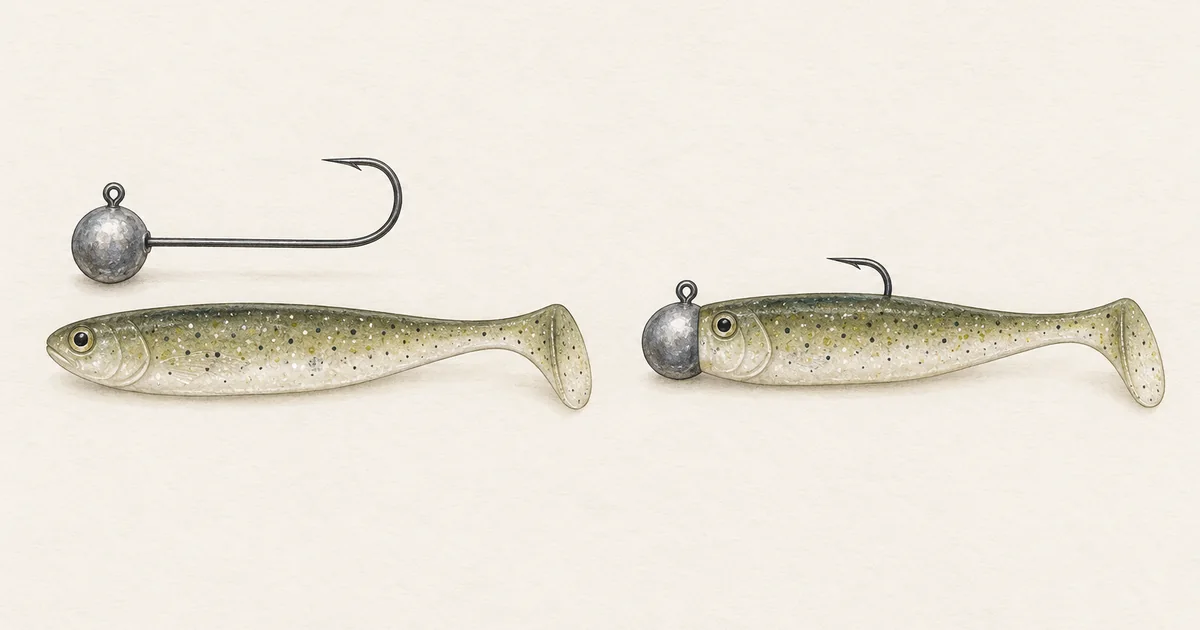
Small soft plastic on a jig head
The searching method from summer to late autumn: you find the shoals at drop-offs and humps and stay with them.
- Look for structure
Start at underwater humps, shelf edges, sunken wood, jetties and sheet piling. An island is often the top of a hump on whose slopes perch hold.
- Fine hooklength
Tie a fluorocarbon leader of 1 to 1.5 metres in front of the pale braid. Attach the jig head with a small clip, large swivels with snaps get in the way.
- Find the depth
First let the lure sink to the bottom and reel in slowly. The first bite tells you at what depth the fish are holding.
- Twitch and sink
Lift the lure with the rod to about 11 o’clock, lower the tip and reel in the slack line as you do so. The line always stays slightly taut so you feel bites on the drop.
- A delicate tap
Perch bites are often just a faint tap in the rod tip or a line that suddenly goes slack. Strike at once, but without yanking.
- Pump with feel
Play the fish briskly but with a soft drag, because the hook easily pulls out of the soft mouth. Big perch like to dive vertically once more just before the boat, so give line then.
- Hand grip or landing net
You lift small perch out of the water with a wet hand, while big ones you land with a rubberised landing net and lay on a damp mat.
Drop-shot at jetty and drop-off
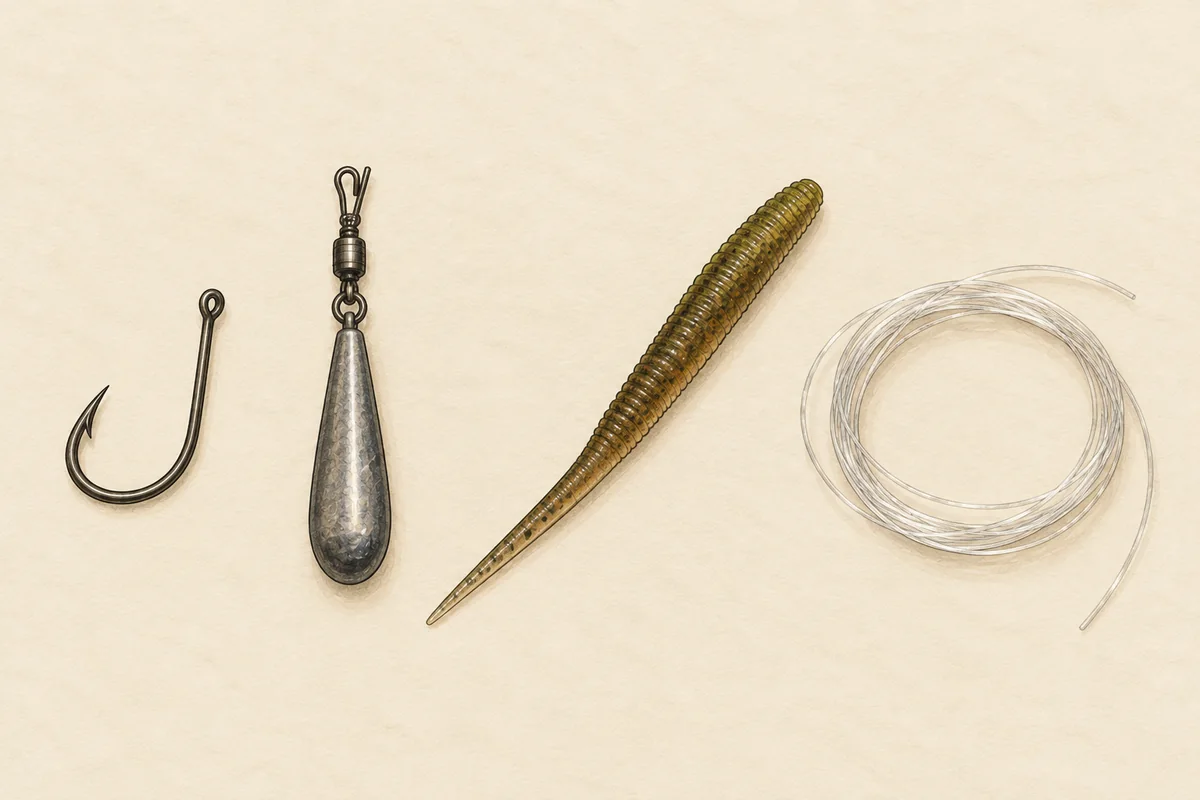
For perch that are off the bite and for cold months: the bait stays in one place for a long time and quivers above the weight.
- Cast to the spot
Pick a tight spot such as the foot of sheet piling, a jetty or a drop-off. From a boat you can also fish vertically beneath the rod tip.
- Hook above the weight
Tie the hook to the leader with a Palomar knot 30 to 50 centimetres above the weight so that it stands out horizontally. For worms use a short side arm of about 5 centimetres.
- Lay down the weight
Cast out and wait until the weight is lying on the bottom. Then tighten the line without moving the weight.
- Quiver and pause
Let the bait dance with small movements of the rod tip and leave long pauses. Then you drag the weight a little further and start again.
- Twitch in the tip
Most bites come during the pause and show as a light twitch. Hold the line between two fingers and you will also feel cautious plucks.
- Stay calm
Play the fish with a soft drag and a bent rod. On a fine leader you give the fish time instead of dragging it over stones or edges.
- Unhook quickly
Unhook quickly and put back at once any fish you are not keeping.
Worm under a float
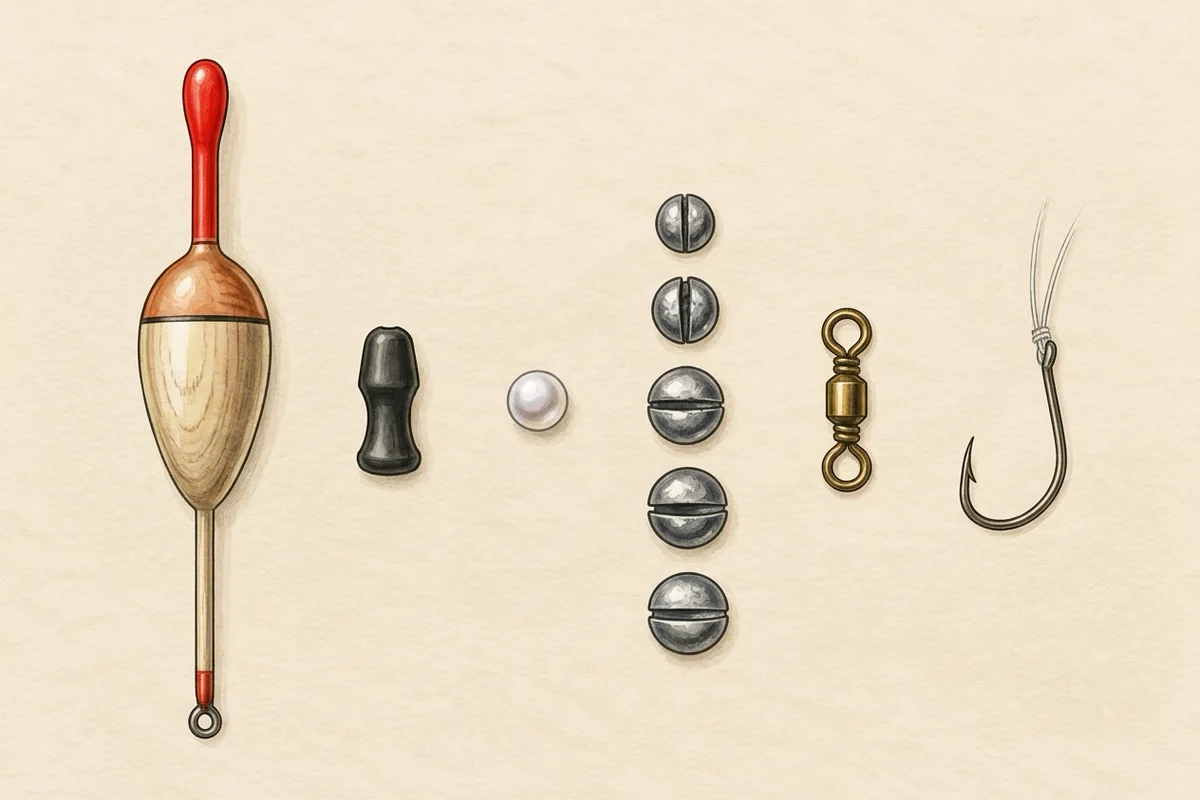
The quiet way to a perch, especially in winter, when worms often do better than any artificial lure.
- Cover near the bank
Sit at jetties, rock armouring, boat moorings or sunken wood. In harbours and along sheet piling perch often hold close to the wall.
- Plumb the depth
Plumb the depth. Active perch take the worm mid-water, sluggish ones more often just above the bottom.
- Balance the float
Shot the float so that only its tip shows. Do not put the weight right at the hook so that the worm can move freely.
- Bait the worm
Thread on a lobworm or a bunch of red worms so that the hook point stays free. Fresh worms stay alive longer in the tub with a little moss or grass.
- Put back
Cast the rig to the cover and now and then inch the worm a little closer. Movement often brings the bite.
- Strike early
Perch suck in the worm greedily and swallow it deep very quickly. So strike as soon as the float pulls away.
- Play it softly
Keep the rod high and the drag loose so that the hook holds in the soft mouth.
- Perch grip
Lay bigger perch on a damp mat and hold them so that the dorsal fin and gill cover cannot prick you, then you unhook.
What with
Soft plastic shads, twisters and soft plastic crayfish on a light jig head or on a drop shot, plus worm and maggot for sitting out. In summer soft plastic shads of 3 to 7 centimetres are enough, in winter they can be 8 to 12 centimetres and fished close to the bottom.
- Soft plastic (shad)Summer to winter, on a jig head
In a comparison in Brandenburg a soft plastic shad of 8,5 centimetres brought rather more fish, and larger ones on average, than a spinner, and with the jig head weight you adapt it to any depth.
- Wormscold months and heavily fished waters
Where perch see a lot of soft lures or become picky in winter, they will often still take the worm.
- Rubber crabwinter, slowly along the bottom
Dragged slowly over the bottom or twitched with long pauses, it hits the big perch’s appetite for crayfish in the cold season.
Tackle
A light, sensitive spinning rod for small lures that must not be too stiff, because otherwise the soft perch mouth costs you fish. For sitting out, a leger rod with a bite indicator. You set the drag rather soft.
Small soft plastic on a jig head
- Rod
- 1,80–2,10 m, casting weight up to about 15 g; for long casts and rock armouring 2,40–2,70 m with 30–40 g
- Reel
- Fixed-spool reel size 2000–2500
- Line
- braid, pale-coloured, breaking strain about 4–7 kg
- Leader
- Fluorocarbon 0,20–0,25 mm, 1–1,5 m; where pike are present a thin wire trace
- Hooks
- Jig head with a single hook matched to the size of the lure
- Weight, float, lead
- in summer soft plastic shad 3–7 cm on 2–7 g, in deeper water heads of about 10 g
Drop-shot at jetty and drop-off
- Rod
- about 2 m, light, casting weight up to about 10–11 g
- Reel
- Fixed-spool reel size 1000–2500
- Line
- braid, 0,06–0,10 mm
- Leader
- Fluorocarbon or nylon 0,20–0,30 mm, 1–1,5 m; up to 0,40 mm with a big lobworm
- Hooks
- Worm hook size 6 to 1/0, size 1 or 1/0 for whole lobworms
- Weight, float, lead
- light drop-shot weight; on a river 25–50 g
Worm under a float
- Rod
- 3,00–3,60 m, casting weight about 25–40 g, not too stiff
- Reel
- Fixed-spool reel size 2000–3000
- Line
- braid around 0,12 mm
- Leader
- monofilament; in waters with pike a thin wire trace
- Hooks
- Worm hook size 4–6
- Weight, float, lead
- Float carrying 6–10 g for a lobworm, depending on current and depth
More on tackle
- Perch rod: light, sensitive and matched to small lures
- Bottom rod: length, casting weight and bite indicator
- Spinning rod: choose length, casting weight and action
- Line calculator
- Fishing line: monofilament, braid or fluorocarbon?
- Spooling a reel properly – without line twist
- Landing net: mesh, size and handle
- Pliers and forceps: removing a hook deep in the mouth
Common mistakes
- Braid straight onto the lure: perch see well and avoid the conspicuous line. Tie a fluorocarbon leader in between, rather longer in clear water.
- Staying put at an empty spot: perch shoals are hardly faithful to a spot and move around during the day. When the bites stop, change the lure first and then the spot.
- Big swivel with snap: coarse tackle in front of a small lure disturbs its action and scares cautious fish. A small, sturdy clip is enough.
- No wire in pike water: pike also go for perch lures and bite off without wire with the lure in their mouth. Then use a thin, braided wire trace.
- Searching only very deep in winter: most perch move deeper in the cold, the big ones often stay shallow. Also check areas one to three metres deep.
Rules
Each federal state (Bundesland) sets its own closed season (Schonzeit) and minimum size (Mindestmaß). Choose your state; the values come from our state pages.
Baden-Württemberg
Our overview for Baden-Württemberg does not list the perch. What applies there is given on the page Fishing in Baden-Württemberg with places in the state.
Bavaria
- Minimum size
- –
- Closed season
- none
As of October 2026. All rules, exceptions and sources: Fishing in Bavaria.
Berlin
- Minimum size
- –
- Closed season
- none
- Note
- bait for predatory fish only from 1.5., artificial lures up to 2 cm all year
Correct as of October 2026. All rules, exceptions and sources: Fishing in Berlin.
Brandenburg
- Minimum size
- –
- Closed season
- none
As of October 2026. All rules, exceptions and sources: Fishing in Brandenburg.
Bremen
- Minimum size
- 15 cm
- Closed season
- 1.2.–15.5.
As of October 2026. All rules, exceptions and sources: Fishing in Bremen.
Hamburg
- Minimum size
- 10 cm
- Closed season
- none
- Note
- slot limit 10–35 cm
As of October 2026. All rules, exceptions and sources: Fishing in Hamburg.
Hesse
Our overview for Hesse does not list the perch. What applies there is given on the page Fishing in Hesse with places in the state.
Mecklenburg-Western Pomerania
- Minimum size
- 17 cm
- Closed season
- none
- Note
- coast: 20 cm, 15 per day
As of October 2026. All rules, exceptions and sources: Fishing in Mecklenburg-Western Pomerania.
Lower Saxony
- Minimum size
- –
- Closed season
- none
As of October 2026. All rules, exceptions and sources: Fishing in Lower Saxony.
North Rhine-Westphalia
Our overview for North Rhine-Westphalia does not list the perch. What applies there is given on the page Fishing in North Rhine-Westphalia with places in the state.
Rhineland-Palatinate
Our overview for Rhineland-Palatinate does not list the perch. What applies there is given on the page Fishing in Rhineland-Palatinate with places in the state.
Saarland
Our overview for Saarland does not list the perch. What applies there is given on the page Fishing in Saarland with places in the state.
Saxony
- Minimum size
- –
- Closed season
- none
- Note
- bait for predatory fish only from 1.5.
Correct as of October 2026. All rules, exceptions and sources: Fishing in Saxony.
Saxony-Anhalt
- Minimum size
- –
- Closed season
- none
- Note
- keeping fish in a keepnet is prohibited
As of October 2026. All rules, exceptions and sources: Fishing in Saxony-Anhalt.
Schleswig-Holstein
- Minimum size
- –
- Closed season
- none
As of October 2026. All rules, exceptions and sources: Fishing in Schleswig-Holstein.
Thuringia
Our overview for Thuringia does not list the perch. What applies there is given on the page Fishing in Thuringia with places in the state.
The regulation and your fishing permit (Erlaubnisschein) are what count. Lake Constance, the Rhine and the coast, for example, have their own rules: Fishing waters in Germany.
After the catch
Playing and landing
Strike briefly as soon as you feel the bite, with a worm rather too early than too late, because perch swallow it deep. Play the fish with a soft drag and a rod that gives, so that the hook stays in the mouth. When handling, protect yourself from the spines of the dorsal fin, and land big fish with a rubberised net onto a damp unhooking mat. A perch of legal size that you may keep you stun and kill at once; all others you return quickly.
Do not fish perch from more than ten metres of depth and make pauses during the fight, because it tolerates the change in pressure poorly. To unhook, you take hold of it with your thumb in the mouth and your index finger under the lower jaw. A perch of legal size that you may keep you stun and kill at once.
Frequently asked questions
Which rod for perch fishing?
For small lures, a fast spinning rod of 1.80 to 2.10 metres with a casting weight of up to 15 grams. For bigger soft plastic shads at distance take 2.40 to 2.70 metres with 30 to 40 grams.
Which line for perch?
A pale braid with a breaking strain of about 4 to 7 kilos and in front of it one to one and a half metres of 0.20 to 0.25 millimetre fluorocarbon. The clearer the water, the longer the leader.
Which hook size for perch with a worm?
Under a float, worm hooks of size 4 to 6 are enough. For a whole lobworm on a drop shot, size 1 or 1/0 is fine so that the worm does not tear.
Do you need a wire trace for perch fishing?
In waters with pike, yes, otherwise pike bite off with the lure in their mouth. A thin, soft wire trace interferes least with the action of small lures.
When do perch bite best?
In summer usually in the morning and evening, when they hunt in the shallows. In winter big perch often feed only in a short window of time during the day, and then perseverance at a good spot pays off.
Similar species
If you catch perch, you can use similar tackle to fish for these species too:
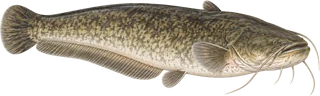 Wels catfish fishingSecondary season
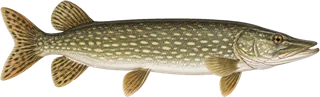 Pike fishingPeak season
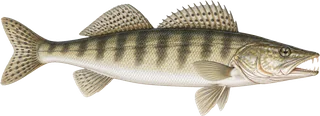 Zander fishingPeak season
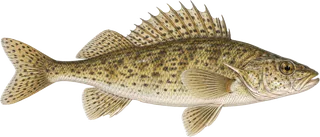 Ruffe fishingShoulder season
Sources
As of October 2026. The practical knowledge comes from 10 sources, summarised in our own words.
See all 10 sources
- Fisch des Jahres 2023: Der Flussbarsch (Broschüre, u. a. Beiträge zu Fangbarkeit und Habitatwahl) · Deutscher Angelfischerverband (DAFV), Beiträge von IGB und Humboldt-Universität zu Berlin
- Grundlagen zum Barschangeln · FISCH & FANG (Redaktion, J. Dietel)
- Jiggen auf Barsche · FISCH & FANG (Redaktion, B. Domeyer)
- Fünf Winter-Barsch-Mythen · FISCH & FANG (Redaktion, B. Domeyer)
- Barschangeln im Sommer: Heiße Fangstrategie für mehr Erfolg · BLINKER (Redaktion)
- Barschangeln: 10 Tipps für Deinen Erfolg · BLINKER (Redaktion, S. Kaufmann)
- Barschangeln mit Wurm: Erfolgstaktiken für beißfaule Fische · BLINKER (Redaktion, A. Pawlitzki)
- Dropshot-Angeln mit Wurm auf Barsch und Zander · BLINKER (Redaktion)
- Große Barsche angeln im Winter: Kapitalen-Alarm im Großstadtrevier · BLINKER (Redaktion)
- Drop-Shot trifft Natur: Superköder Wurm für Barsch · BLINKER (Redaktion, J. Müller)
Text AI-assisted, based on the sources named and these pages: Perch (profile), Spinning, Legering, Perch rod.