
Knowledge – Fish
Halibut fishing
Halibut fishing means fishing from a boat with a big bait and heavy tackle and changing depth again and again, because the halibut also hunts above the bottom. Here is the way there in nine steps, each with a link to the detailed page.
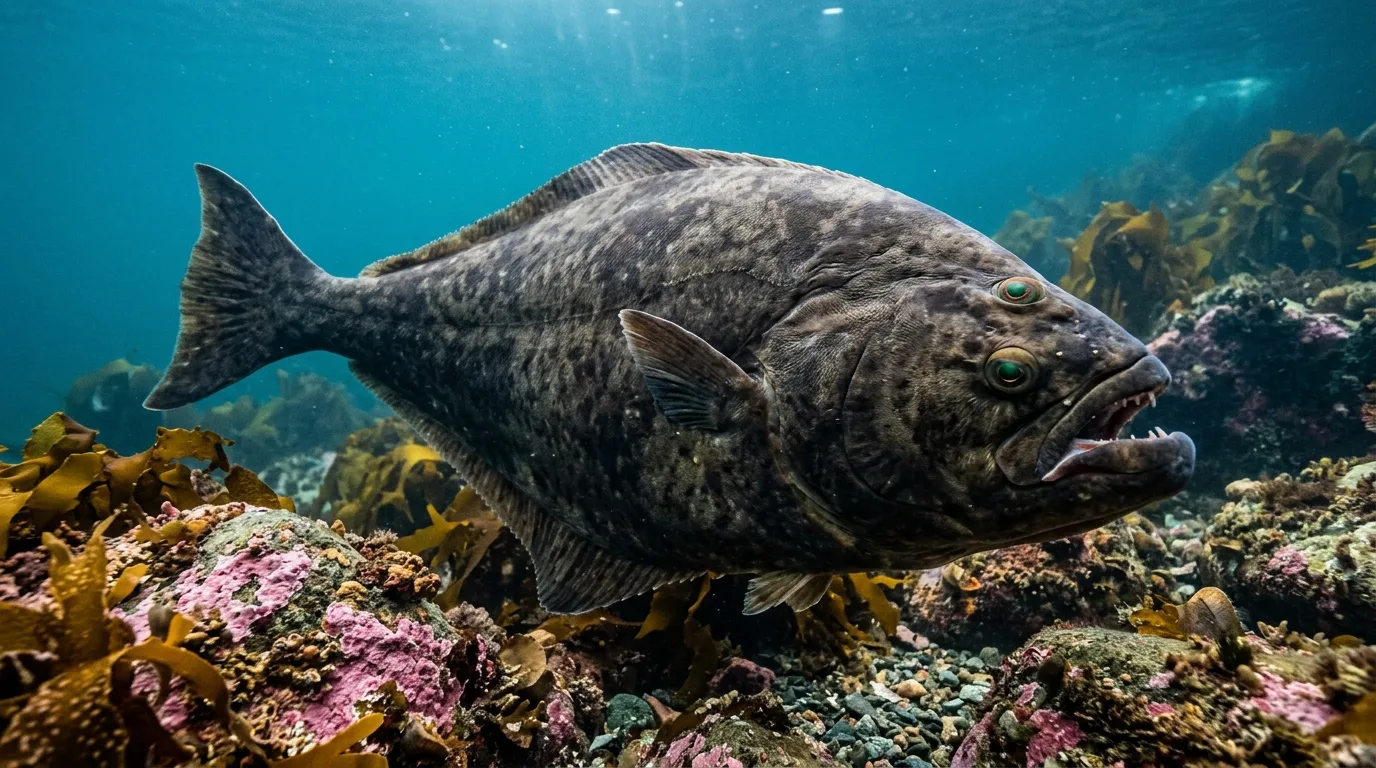
In Norway the halibut is protected all year south of Stad (62° N). North of it you may not fish for it from 20 December to 20 April, and on part of the Sklinnabanken never. The minimum size (Mindestmaß) is 84 cm; fish longer than 2 metres (longer than 1,6 metres without the head) are always released. As of October 2026; the Fiskeridirektoratet is authoritative.
 Choose another fish117 fish with guides
 EelOff-peak season
 EelpoutPossible
 IdePossible
 ArapaimaGood
 GraylingPeak season
 Atlantic salmonSpawning time, please spare
 Brown troutSpawning time, please spare
 Brook troutSpawning time, please spare
 BarbelOff-peak season
 BarramundiSpawning season
 Greater amberjackGood
 Topmouth gudgeonOnly as bycatch
 Blue marlinSpawning season
 BonefishSpawning season
 BonitoGood
 BreamOff-peak season
 Dusky grouperOnly as bycatch
 CobiaPossible
 Spiny dogfishOnly as bycatch
 CodPeak season
 ChubPeak season
 MinnowOnly as bycatch
 European sturgeonOnly as bycatch
 FlounderPeak season
 PerchPeak season
 Largemouth bassGood
 Ballan wrasseOnly as bycatch
 Yellowfin tunaSpawning season
 Giant trevallyGood
 Prussian carpPossible
 BrillPossible
 Gilthead breamSpawning time, please spare
 Golden doradoSpawning season
 Golden mahseerOnly as bycatch
 Dolphinfish (mahi-mahi)Good
 Grass carpPossible
 Great barracudaGood
 GudgeonPossible
 White breamPossible
 DaceOff-peak season
 PikePeak season
- HalibutOff-peak season
 HerringPossible
 GarfishOut of season
 Huchen (Danube salmon)Possible
 Crucian carpOnly as bycatch
 CarpOff-peak season
 RuffeOff-peak season
 VendaceOnly as bycatch
 DabPeak season
 GurnardPossible
 Coley (saithe)Peak season
 Chinook salmonHardly any chance
 King mackerelSpawning season
 LingPeak season
 TuskOff-peak season
 MackerelPossible
 Bighead carpOut of season
 WhitefishPossible
 Conger eelOff-peak season
 Sea troutSpawning time, please spare
 Grey mulletPossible
 Murray codSpawning season
 MuskellungeGood
 Common nasePossible
 Nile perchPossible
 PayaraPossible
 Peacock bassPeak season
 PermitGood
 WeeverOnly as bycatch
 PollackOff-peak season
 BurbotOff-peak season
 AspPossible
 Red snapperSpawning season
 Rainbow troutPeak season
 RoosterfishGood
 RoachPeak season
 RedfishOut of season
 Bluefin tunaOnly as bycatch
 RuddPossible
 Russian sturgeonOnly as bycatch
 HaddockOff-peak season
 SnakeheadPossible
 TenchOff-peak season
 SpirlinOnly as bycatch
 PlaiceOff-peak season
 Greenland halibutOnly as bycatch
 Round gobyOnly as bycatch
 SwordfishGood
 Lake troutSpawning time, please spare
 HakeSpawning time, please spare
 Alpine charSpawning time, please spare
 MonkfishPossible
 SoleOff-peak season
 SailfishGood
 Silver carpOut of season
 SnookPeak season
 PumpkinseedOnly as bycatch
 SpratOnly as bycatch
 Atlantic wolffishSpawning time, please spare
 TurbotPeak season
 SterletOnly as bycatch
 SmeltOnly as bycatch
 Horse mackerelPossible
 TaimenGood
 TarponGood
 TigerfishSpawning season
 BleakPossible
 WahooGood
 Wels catfishOff-peak season
 WhitingPeak season
 Sea bassOff-peak season
 ZanderPeak season
 White-eye breamOnly as bycatch
 Blue breamOnly as bycatch
 Brown bullheadPossible
 VimbaOnly as bycatch
Season in October according to the catch calendar, an estimate and not a guarantee of a catch. The fish pictures are reduced natural-history plates and AI-generated.
Best time
From May to June.
In January: Slim chances, spawningIn February: Slim chances, spawningIn March: Slim chances, spawningIn April: Possible, spawningIn May: Peak seasonIn June: Peak seasonIn July: GoodIn August: GoodIn September: GoodIn October: GoodIn November: PossibleIn December: Possible, spawning
Good spot
- Coast: sandy bottom, edge and open watersandy bottom, edge and open watersandy bottom, edge and open waterdeep water
Top baits
Starter tackle
- Rod: boat rod 1,80–2,10 m with 20–30 lb test curve; for very large fish or great depths 30–50 lb
- Line: braid with 15–25 kg breaking strain (about 30–50 lb), at least 300 m
- Hook: circle hooks 12/0–16/0, no trebles on the baitfish
- Rod: boat rod up to about 30 lb test curve for heavy heads; for casting lures of 100–150 g a strong spinning rod 2,10–2,40 m
- Line: braid 0,17–0,23 mm when casting, otherwise around 25 kg breaking strain
- Hook: two high-quality trebles 5/0 on heads of 300–400 g
In short
In short: You catch halibut best from May to June. Good spots on the coast: sandy bottom, edge and open water. Proven baits: large soft plastics (shads) or a whole baitfish. In Norway the halibut is protected all year south of Stad (62° N), and north of it from 20 December to 20 April; one area on the Sklinnabanken is closed all year. Minimum size (Mindestmaß) 84 cm, fish over 2 m must go back into the sea (as of October 2026).
Quick to recognise
The largest flatfish in the world, with a mostly snow-white blind side, which lies on the bottom and also hunts in open water. Females grow up to 3 metres long and up to 300 kilograms; such fish are very rare today, while males stay at 50 kilograms at most.
When
The main season is May and June, and July to October is good. Spawning runs from December to April, when the fish hold at 300 to 700 metres deep, gathered in pits of the fishing banks and in the fjords. In summer they seek out shallower feeding grounds where you can reach them from a boat.
- JanSlim chances, spawning
- FebHardly any chance, spawning
- MarSlim chances, spawning
- AprPossible, spawning season
- MayPeak season
- JunPeak season
- JulGood
- AugGood
- SepGood
- OctGood
- NovPossible
- DecPossible, spawning season
Peak seasonGoodPossibleHardly any chanceSpawning season
Spring tactics
North of Stad (62° N) you may fish for halibut again in spring after the closed season ends; the exact date is under “Rules”. After that the fish move into shallower areas, and in May and June they often hold at only 10 to 50 m depth.
Summer tactics
Into September good halibut are caught in many places. Fish then especially in strong current and around the change of tide; on days with little current it can stay quite quiet.
Autumn tactics
When the leaves fall, halibut gather near the coast once more, according to observations by commercial fishermen, and feed up before moving into the depths. In October a trip to the north can therefore be worthwhile.
Winter tactics
In winter the fish migrate to deep pits on banks and in fjords to spawn. North of Stad a closed season (Schonzeit) then applies, the dates of which you find under “Rules”; south of it the halibut is protected all year.
Is it biting today?
In January: Spawning, please protectIn February: Spawning, please protectIn March: Spawning, please protectIn April: Spawning, please protectIn May: Peak seasonIn June: Peak seasonIn July: Shoulder seasonIn August: Shoulder seasonIn September: Shoulder seasonIn October: Shoulder seasonIn November: PossibleIn December: Spawning, please protect
Today’s catch index needs JavaScript. Season and spawning time are in the catch calendar.
Where it is now
On the coast
Look for sand and gravel flats, channels, edges and places where different bottoms meet. Current and the time around the change of tide make it especially active. In summer it often bites at shallower depths than you would think, occasionally even large specimens in only a few metres of water.
How to go about it: From the latitude of Kristiansund the chances rise; Lofoten, Tromsø and the North Cape are especially good, plus the northwest of Iceland. Read the sea chart for sandy channels between rocky reefs and flat slopes at the edge of plateaus. You feel a change of bottom when you let a fast-sinking pilker without a treble tap the bottom on braid.
| Spring | Sandy bottom, edge, open water |
|---|---|
| Summer | Sandy bottom, edge, open water |
| Autumn | Sandy bottom, edge, open water |
| Winter | deep water |
Areas with rules for halibut
Holding spots in the picture
Choose the season and time of day: the picture shows where the species stands then. Spots outlined in red apply only in the chosen season. Tap a fish or a spot in the list to bring it closer. The picture is schematic and AI-generated, every water is different.
Catch chance in springpossibleSpawning season, observe closed seasons
Catch chance in summergood
Catch chance in autumngood
Catch chance in winterslimSpawning, observe closed seasons
- J
- F
- M
- A
- M
- J
- J
- A
- S
- O
- N
- D
Spawning season
Time of day There is no uniform day-night pattern in the halibut: tagged fish were partly more active by day, partly at night, and activity by day occurred most often in spring and summer.
On the coast
Sandy bottom
Halibut are found here only in spring, summer and autumn.
Drop-off
Halibut are found here only in spring, summer and autumn.
Deep, colder water
Halibut are found here only in winter.
Open water, mid-water
Halibut are found here only in spring, summer and autumn.
The halibut lives on the bottom, on soft as well as hard ground, and at times hunts in open water. Sand and gravel flats, channels and edges, and places where different bottoms border each other are worthwhile. It is especially active in current and around the change of tide.
Spring: catch chance according to the catch calendar slim in March, possible in April, peak season in May. This is when spawning falls, so observe the closed seasons. May and June are among the productive months in Norway.
Summer: catch chance according to the catch calendar peak season in June, good in July and August. In summer the halibut holds on shallower feeding grounds. It is often caught shallower than expected, individual large fish in only a few metres of depth.
Autumn: catch chance according to the catch calendar good in September and October, possible in November. Fish are caught well into autumn; the warm half of the year ends for anglers at the end of October.
Winter: catch chance according to the catch calendar possible in December, hardly any in January and February. Spawning falls in this period, so observe the closed season (Schonzeit). In winter the big fish move down to spawn, into the hollows on the offshore banks and into the fjords.
Depth: Young halibut live along the coast in fairly shallow water. They are often caught at 10 to 50 metres, and spawning takes place in winter at 300 to 700 metres.
Size comparison: AI-generated drawing, schematic.
How
They are almost always fished from a boat and by trolling, varying the working depth constantly, from the bottom to about twenty metres above it. They also bite when pirking, then on large chrome pirks with a strip of fish on the treble. So the bait does not always have to lie on the bottom.
Easiest way
To start with, an ordinary pirk or soft plastic (shad) is enough from the boat. Lift it only slightly about two metres above the bottom and let it drop back. For this, look for sandy flats and channels at 25 to 60 m in central or northern Norway. If you notice that bites also come higher up in the water, you can later switch to big soft plastics.
Baitfish on a circle hook
From a drifting boat over sand and edges, when you want to target bigger halibut.
- Sand next to rock
Look for sandy tidal channels between skerries, gently sloping slopes at the edge of rocky plateaus and sandy hollows between rocky peaks. Halibut often lie away from the spots where cod and coley bite.
- Boom and thick mono
In front of the braid goes about 1,5 m of mono of around 1 mm as abrasion protection, followed by an anti-tangle boom. The actual hooklength is about 70 cm, also of strong mono, with a large circle hook on the end.
- Not too big
Coley, mackerel, herring or whiting are suitable as dead bait. Rather take a medium-sized piece, because a halibut often only holds a very large bait and lets it go again during the fight. Live baitfish are banned in Norway.
- Extremely slowly upwards
Wind the bait up from the bottom in slow motion and pause again and again. That way it wobbles like a sick fish, and a halibut will often follow it up to 20 m off the bottom. Alternatively, the rod in the rod rest works on the rocking of the boat alone.
- No strike
At first a halibut sometimes just holds the bait. Wait until the pull stays steady and the rod tip points clearly towards the water, and only then start reeling in under control. The circle hook then sets itself in the corner of the mouth.
- Expect runs
Many halibut come along almost without resistance at first and only take off later, often at the surface. Let the reel give line then, instead of holding against it.
- In the net or in the water
You land smaller fish with a large, sturdy landing net: pull the frame vertically against the side of the boat and lift the fish in with two people. A fish you are returning is not lifted over the rail but released in the water.
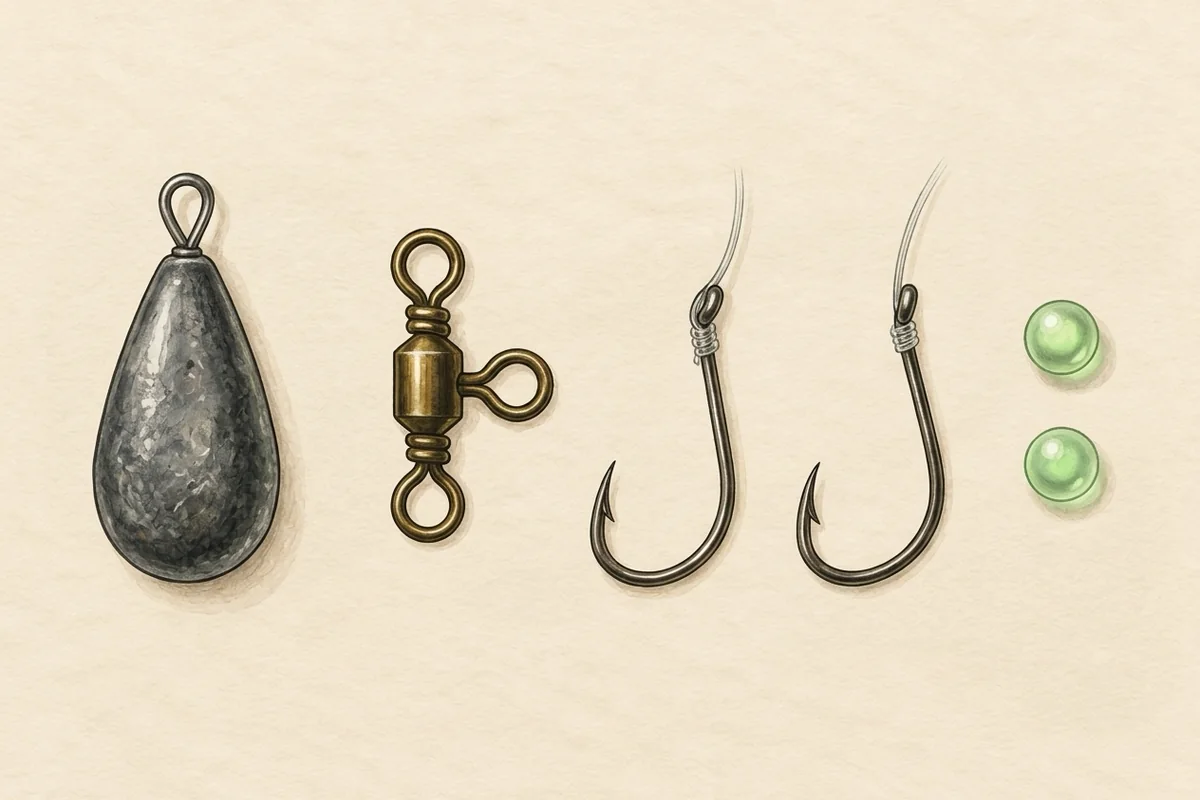
Large soft plastic (shad) on a jig head
Vertically from the boat at 25 to 60 m, when there is a current and you want to sort out bigger fish.
- Drift over sand
Set the drift so that you travel over plateaus with sandy valleys or over sandy areas on the slope. If a halibut has bitten, run the same line again, because good spots often hold several fish.
- Hang the head on the back eye
Put a soft plastic (shad) of around 23 cm or more onto a heavy jig head with two trebles. Hang it on the rear eye, then it sits almost horizontally in the water. A head in a colour that contrasts with the soft plastic makes it more conspicuous.
- Lower to the bottom
Let the bait fall vertically to the bottom and wind it up a few metres. Choose the head so heavy that the line points steeply downwards despite the drift.
- In first gear
Hold the bait about 5 m above the bottom for a few minutes, twitch it lightly and then wind it up a bit higher. In calm water, single turns of the handle with pauses of 5 to 30 seconds help.
- Read the nibbles
Before the actual bite, halibut often pluck at the tail several times. Then keep working the bait very gently and strike firmly as soon as the fish really pulls, because the bony mouth lets hooks slip out easily.
- Keep reeling
If the halibut swims towards the boat, it feels as if it has gone. Then reel quickly so that the line stays tight.
- Not too early
If the fish shows at the surface for the first time, it usually still has plenty of strength. Wait with the landing net or gaff until it lies calmly, and never haul it into the boat by force.
What with
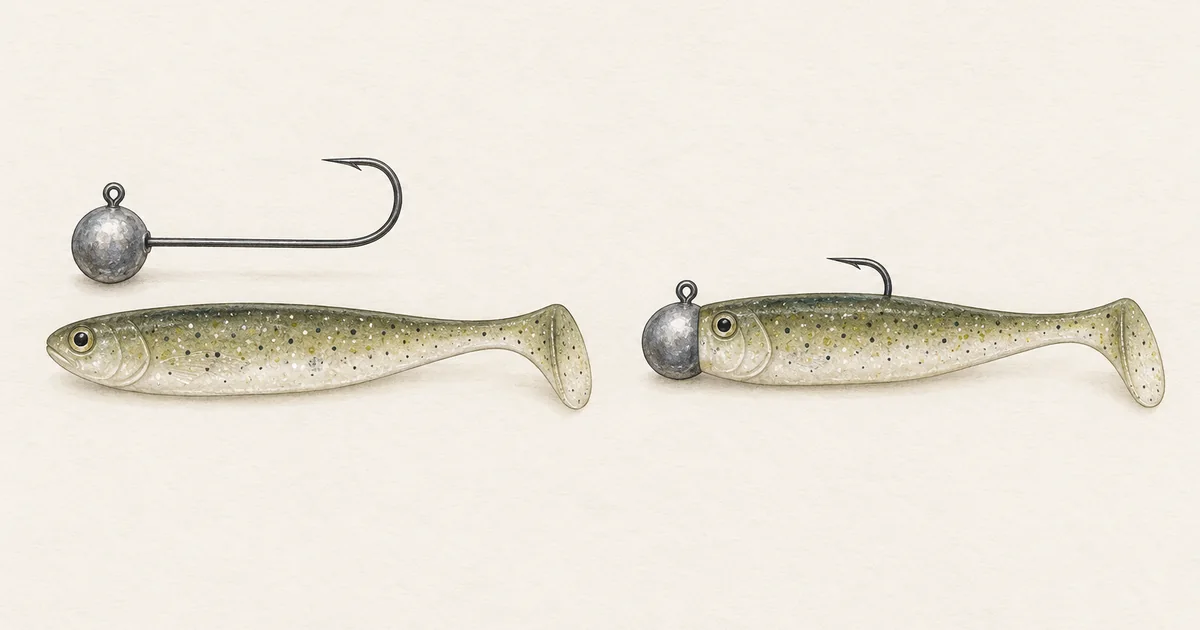
In western Norway a whole mackerel as bait is usual, often on a rig with three hooks at different heights: the mackerel at the bottom, above it a large black rubber worm (Gummimakk) or a big strip of fish. Depending on the weather you need one to two kilograms of lead.
- Soft plastic (shad)from a drifting boat over sand, especially when there is a current
A large soft plastic comes alive even with gentle movements and is easier to suck in than a heavy pirk, which is why it often catches the bigger halibut.
- Twisterwhen casting and jigging with lures of up to about 150 g
The fluttering sickle tail attracts halibut that merely follow a soft plastic with a paddle tail.
- Pilkerto get started and when pirking for cod in halibut areas
A pirk just above the bottom regularly produces halibut, usually rather smaller ones, because big fish have more trouble grabbing the fast bait.
Tackle
Light pirking tackle is no match for a full-grown halibut. Norwegian experts use 50 lb boat rods, braided line of 0,40 millimetres and multiplier reels in 6/0 or 9/0. The drag is set so that the fish can take line, because anyone who screws it down usually has the line snap.
Baitfish on a circle hook
- Rod
- Boat rod 1,80–2,10 m with a 20–30 lb rating; for very big fish or great depths 30–50 lb
- Reel
- robust multiplier reel with lever drag, capacity of at least 300 m
- Line
- Braid with 15–25 kg breaking strain (about 30–50 lb), at least 300 m
- Leader
- about 1,5 m of mono of around 1 mm as abrasion protection with an anti-tangle boom, below it about 70 cm of mono of around 1 mm
- Hooks
- Circle hook 12/0–16/0, no trebles on the baitfish
- Weight, float, lead
- Weight depending on depth and drift 200–700 g
Large soft plastic (shad) on a jig head
- Rod
- Boat rod up to about 30 lb rating for heavy heads; for casting lures of 100–150 g a strong spinning rod 2,10–2,40 m
- Reel
- Multiplier reel with lever drag or a large fixed-spool reel of size 5000–8000
- Line
- Braid 0,17–0,23 mm for casting, otherwise about 25 kg breaking strain
- Hooks
- two high-quality trebles 5/0 on heads of 300–400 g
- Weight, float, lead
- Jig head usually around 300 g, in shallow, calm water 200 g, in strong drift 400–500 g; soft plastic (shad) from about 23 cm
Common mistakes
- Reeling in too early: With a circle hook, patience decides. Only reel when the fish pulls steadily, otherwise the hook slips out before it sits in the corner of the mouth.
- Baitfish too big: A huge bait is often only held and let go again shortly after the strike. A medium-sized fish ends up whole in the mouth faster.
- Fishing only on the bottom: Halibut follow the bait a long way up, and active fish bite even 30 m above the bottom. Search the zone up to about 20 m above the bottom systematically with colour-marked line.
- Going back to the middle of the plateau: If the bites fade as the boat drifts off the plateau, stay in the drift. Big halibut often stand off to the side, on the gently sloping slope.
- Missed bite not checked: After a missed bite, look at the bait: long, deep slits in the skin point to a halibut. Then offer a fresh bait at the same depth straight away.
Rules
Our country overview has no figures on minimum size (Mindestmaß) or closed season (Schonzeit) for halibut. That does not mean there are no rules: individual countries and water regulations protect the species or set their own limits.
On the coast the rules of the coastal states apply, partly with their own catch restrictions: North Sea coast, Baltic coast of Schleswig-Holstein and Baltic coast of Mecklenburg-Western Pomerania.
The regulation and your fishing permit (Erlaubnisschein) are what count. Lake Constance, the Rhine and the coast, for example, have their own rules: Fishing waters in Germany.
After the catch
Playing and landing
With a circle hook you wait until the fish pulls steadily; with a soft plastic you then strike firmly. Keep the line tight throughout the fight and expect runs right to the end, even if the halibut is already lying calmly at the surface. You can land it with a large landing net or a gaff on a rope; a fish of legal size that you may keep is killed immediately, all others are released in the water.
The very biggest ones are mostly females, on which the spawning stock depends; with these you remove the hook in the water with a long disgorger. A fish of legal size that you may keep is stunned and killed immediately. The Norwegian food authority advises against eating halibut longer than about two metres, because large animals accumulate more pollutants.
Frequently asked questions
Where can you fish for halibut in Norway?
It is worth targeting them above all from the latitude of Trondheim and Kristiansund northwards, with the most and the biggest fish from Bodø over the Lofoten to the North Cape. South of Stad the halibut is protected all year round in Norway.
At what depth does halibut bite?
Often shallower than expected: many fish come from 10 to 50 m, especially from 20 to 40 m. For soft plastics on a heavy jig head, 25 to 60 m is a good zone, but individual halibut also take the bait in a few metres.
What hook size for halibut?
For baitfish, circle hooks of 12/0 to 16/0 are usual; they almost always sit in the corner of the mouth. Large jig heads of 300 to 400 g usually carry trebles of size 5/0.
When does halibut bite best?
When there is a current, so above all around full and new moon with a big tidal range and around the turn of the tide. Around the half moon there can be blank days even in good areas.
Can you keep halibut in Norway?
Yes. North of Stad (62° N), however, a closed season (Schonzeit) applies to halibut, and you may only keep fish within a size window: undersized and very large halibut must go back into the sea. You will find the exact dates and sizes under “Rules” and on the Norway country page (as of October 2026). Check the information from the Fiskeridirektoratet before the trip.
Can you release a halibut gently?
Usually well with a circle hook, because the hook sits at the front of the mouth. You leave a big halibut in the water, secure it alongside the boat and remove the hook there as quickly as possible.
Similar species
If you catch halibut, you can also fish for these species with similar tackle:
Sources
As of: October 2026. The practical knowledge comes from 9 sources, summarised in our own words.
View all 9 sources
- Heilbutt angeln: Tipps vom Profi · BLINKER (Rainer Korn)
- Zielfisch Heilbutt: Heilbutts mögen´s weich · FISCH & FANG (Volker Dapoz)
- Zielfisch Heilbutt: Der Butt-Weiser · FISCH & FANG (Volker Dapoz)
- Zack! Warten. Zack! So geht Slow Jigging auf Heilbutt & Co. · BLINKER (Rainer Korn)
- Angelausrüstung für Norwegen: Dieses Gerät brauchst du! · BLINKER (Mathias Arnham mit Erik Axner)
- Angelmontage für Norwegen: Einfach selber bauen! · BLINKER (Johannes Müller)
- Gerätetipps für Norwegen · RUTE & ROLLE (Timo Keibel)
- Kveite for fritidsfiskarar · Fiskeridirektoratet
- Atlantisk kveite · Havforskningsinstituttet
Text AI-assisted, based on the sources named and these pages: Halibut (profile), Pirking, Pirk, Sea rod.