
Knowledge – Fish
Fishing for whitefish
Whitefish fishing means: finding the shoal at depth and working the multi-nymph rig up and down at exactly its level. Here is the way to get there in nine steps, each with a link to the detailed page.
 Choose another fish117 fish with guides
 EelOff-peak season
 EelpoutPossible
 IdePossible
 ArapaimaGood
 GraylingPeak season
 Atlantic salmonSpawning time, please spare
 Brown troutSpawning time, please spare
 Brook troutSpawning time, please spare
 BarbelOff-peak season
 BarramundiSpawning season
 Greater amberjackGood
 Topmouth gudgeonOnly as bycatch
 Blue marlinSpawning season
 BonefishSpawning season
 BonitoGood
 BreamOff-peak season
 Dusky grouperOnly as bycatch
 CobiaPossible
 Spiny dogfishOnly as bycatch
 CodPeak season
 ChubPeak season
 MinnowOnly as bycatch
 European sturgeonOnly as bycatch
 FlounderPeak season
 PerchPeak season
 Largemouth bassGood
 Ballan wrasseOnly as bycatch
 Yellowfin tunaSpawning season
 Giant trevallyGood
 Prussian carpPossible
 BrillPossible
 Gilthead breamSpawning time, please spare
 Golden doradoSpawning season
 Golden mahseerOnly as bycatch
 Dolphinfish (mahi-mahi)Good
 Grass carpPossible
 Great barracudaGood
 GudgeonPossible
 White breamPossible
 DaceOff-peak season
 PikePeak season
 HalibutOff-peak season
 HerringPossible
 GarfishOut of season
 Huchen (Danube salmon)Possible
 Crucian carpOnly as bycatch
 CarpOff-peak season
 RuffeOff-peak season
 VendaceOnly as bycatch
 DabPeak season
 GurnardPossible
 Coley (saithe)Peak season
 Chinook salmonHardly any chance
 King mackerelSpawning season
 LingPeak season
 TuskOff-peak season
 MackerelPossible
 Bighead carpOut of season
- WhitefishPossible
 Conger eelOff-peak season
 Sea troutSpawning time, please spare
 Grey mulletPossible
 Murray codSpawning season
 MuskellungeGood
 Common nasePossible
 Nile perchPossible
 PayaraPossible
 Peacock bassPeak season
 PermitGood
 WeeverOnly as bycatch
 PollackOff-peak season
 BurbotOff-peak season
 AspPossible
 Red snapperSpawning season
 Rainbow troutPeak season
 RoosterfishGood
 RoachPeak season
 RedfishOut of season
 Bluefin tunaOnly as bycatch
 RuddPossible
 Russian sturgeonOnly as bycatch
 HaddockOff-peak season
 SnakeheadPossible
 TenchOff-peak season
 SpirlinOnly as bycatch
 PlaiceOff-peak season
 Greenland halibutOnly as bycatch
 Round gobyOnly as bycatch
 SwordfishGood
 Lake troutSpawning time, please spare
 HakeSpawning time, please spare
 Alpine charSpawning time, please spare
 MonkfishPossible
 SoleOff-peak season
 SailfishGood
 Silver carpOut of season
 SnookPeak season
 PumpkinseedOnly as bycatch
 SpratOnly as bycatch
 Atlantic wolffishSpawning time, please spare
 TurbotPeak season
 SterletOnly as bycatch
 SmeltOnly as bycatch
 Horse mackerelPossible
 TaimenGood
 TarponGood
 TigerfishSpawning season
 BleakPossible
 WahooGood
 Wels catfishOff-peak season
 WhitingPeak season
 Sea bassOff-peak season
 ZanderPeak season
 White-eye breamOnly as bycatch
 Blue breamOnly as bycatch
 Brown bullheadPossible
 VimbaOnly as bycatch
Season in October according to the catch calendar, an estimate and not a guarantee of a catch. The fish pictures are reduced natural-history plates and AI-generated.
Best time
From May to July, above all in the morning and evening.
In January: Slim chances, spawning seasonIn February: PossibleIn March: PossibleIn April: GoodIn May: Peak seasonIn June: Peak seasonIn July: Peak seasonIn August: GoodIn September: GoodIn October: PossibleIn November: Slim chances, spawning seasonIn December: Slim chances, spawning season
Good spot
- Lake: open water, deep bottom and surfaceopen water and deep bottomopen water and deep bottomdeep bottom
Top baits
Starter tackle
- Rod: whitefish rod with a very fine, soft tip, often with interchangeable tips; about 2 m for three side arms, over 3 m for five
- Line: braid 0,04–0,10 mm or monofilament around 0,16 mm
- Hook: nymphs on hooks size 10–16, hook point facing outwards
- Rod: light rod with a soft tip; a very light spinning rod with a casting weight of 5–15 g is enough
- Line: monofilament around 0,16 mm
- Hook: size 14 for maggot or a single nymph
- Rod: fine, light spinning rod with a soft tip
- Line: thin main line as when fishing the multi-nymph rig from a boat
In short
In short: The best time to catch whitefish is May to July, above all in the morning and evening. Good spots in a lake: open water and deep bottom. Proven baits: multi-nymph rig with small nymphs, in spring also maggot or worm on a fine rig. A collective term for many regional forms of the genus Coregonus. They are caught almost only on the multi-nymph rig; pelagic whitefish usually feed at 15 to 22 m depth.
Quick to recognise
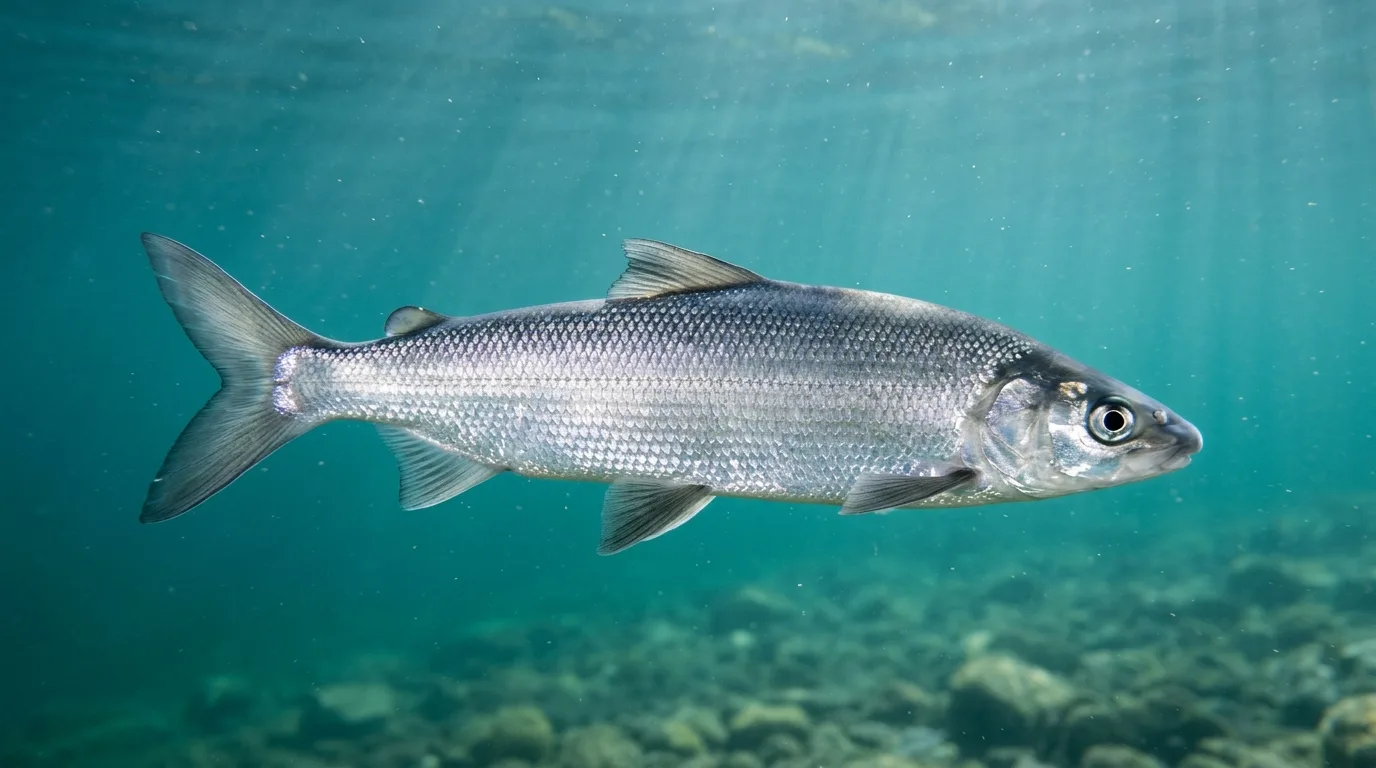
A herring-like shoaling fish with a small adipose fin, regionally also called Renke or Felchen. Typical sizes are 25 to 45 centimetres; individual fish reach about 70 centimetres.
When
Peak season is May to July, when the shoals are easy to find; April, August and September are good too. On some lakes the time just after the ice melts is worth fishing. In the Alpine lakes the fish spawn from November to January. The fishing permit (Erlaubnisschein) tells you which closed season (Schonzeit) applies on your lake.
- JanSlim chances, spawning
- FebPossible
- MarPossible
- AprGood
- MayPeak season
- JunPeak season
- JulPeak season
- AugGood
- SepGood
- OctPossible
- NovHardly any chance, spawning
- DecHardly any chance, spawning
Peak seasonGoodPossibleHardly any chanceSpawning season
Spring tactics
In March and April the whitefish still stand very deep on some reservoirs; as the water temperature rises in May it gets much better. On some lakes you catch well from the shore in spring with the multi-nymph rig under a float. When insects hatch in huge numbers, the fish sometimes come right into the shallows.
Summer tactics
In summer a thermocline forms between about 5 and 20 m, and the whitefish then spread over several metres in mid-water. They are most comfortable at around 12 °C. Take a longer multi-nymph rig and bright, conspicuous nymphs. On some reservoirs the fish rise to just below the surface in the evening.
Autumn tactics
On some lakes September fishes well once more. After that the season ends on many Alpine lakes, before the fish spawn in late autumn.
Winter tactics
If fishing is allowed in late winter, you find the whitefish close to the bottom, because the water is warmest down there. A short multi-nymph rig and dark nymphs in black, brown or dark violet suit then.
Are they biting today?
In January: Spawning season, please spare the fishIn February: PossibleIn March: PossibleIn April: Off-peakIn May: Peak seasonIn June: Peak seasonIn July: Peak seasonIn August: Off-peakIn September: Off-peakIn October: PossibleIn November: Spawning season, please spare the fishIn December: Spawning season, please spare the fish
Today’s catch index needs JavaScript. Season and spawning time are in the catch calendar.
Where it sits now
In the lake
Whitefish travel in shoals through the open water of cool, clear lakes and avoid the warm surface; bottom-dwelling whitefish stand close to the bottom. In spring you find them in some places still just below the surface, in summer lower down at the thermocline. The echo sounder often shows them in several layers one above the other.
How to go about it: You catch whitefish in deep, clear lakes of the Alps and the Alpine foothills, in reservoirs such as those in the Sauerland and in a few lakes in northern Germany. In open water the echo sounder, the nets of professional fishermen and the boats of other whitefish anglers help in the search, even if they do not always lie over the fish. From an anchored boat you change position as soon as the bites slow down.
| All year round | deep bottom |
|---|---|
| Spring extra | open water, surface |
| Summer extra | Open water |
| Autumn extra | Open water |
Biting time: mainly in the morning and in the evening. What that looks like at the water is shown by the picture of the holding spots just below.
Waters with rules for whitefish
Holding spots in the picture
Choose the season and time of day: the picture shows where the species stands then. Spots outlined in red apply only in the chosen season. Tap a fish or a spot in the list to bring it closer. The picture is schematic and AI-generated, every water is different.
Chance of a catch in springgood
Catch chance in summerPeak season
Catch chance in autumnpossible
Catch chance in winterslimSpawning, observe closed seasons
- J
- F
- M
- A
- M
- J
- J
- A
- S
- O
- N
- D
Spawning season
Active time Whitefish of deep lakes rise at evening dusk and sink again at morning dawn. This does not apply to every lake: in Lake Constance the depth changed only slightly between day and night.
Not a prime time Whitefish of deep lakes rise at evening dusk and sink again at morning dawn. This does not apply to every lake: in Lake Constance the depth changed only slightly between day and night.
In the lake
Deep bottom
Whitefish are present here all year.
Open water
Whitefish are present here only in spring, summer and autumn.
Just below the surface
Whitefish are present here only in spring.
Pelagic whitefish travel in shoals through the open water of larger, clear, cool lakes. They avoid the warm surface layer. Bottom-dwelling whitefish live near the bottom and feed on small bottom-living animals.
Spring: according to the catch calendar, chances of a catch are possible in March, good in April and peak season in May. At the start of the warm season the open-water whitefish of Lake Constance stand near the surface, around April and May. On individual lakes fishing is worthwhile just after the ice melts. On the Sauerland reservoirs, by contrast, the whitefish still stood very deep in March and April and only bit well in May as the temperature rose.
Summer: according to the catch calendar, peak season in June and July, good in August. With temperature stratification the shoals move deeper and stay in the thermocline zone, which lies between 5 and 20 metres. June and July are considered good months.
Autumn: according to the catch calendar, chances are good in September, possible in October and slim in November. In Lake Constance the whitefish gathered at depths of 20 to 30 metres in November.
Winter: according to the catch calendar, chances are slim in December and January and possible in February. Spawning falls in this period, so observe the closed seasons (Schonzeiten). In winter the whitefish stand just above the bottom. They spawn from November to January in open water or over sandy and stony ground close to the shore, and the species is protected in many places at that time.
Depth: Pelagic whitefish usually feed at 15 to 22 metres, bottom-dwelling whitefish stand deeper. In Lake Constance the whitefish travel in shoals by day, and at night the shoals break up; the depth changes only slightly.
Size comparison: AI-generated drawing, schematic.
How
From a boat you fish the multi-nymph rig vertically: lead to the bottom, lift and lower the rod steadily and after a few pulls wind up a little higher. From the shore the rig hangs under a sliding float, or you use a fine float or leger rig.
Easiest way
The easiest way in is a ready-made multi-nymph rig fished from an anchored rowing boat. All you need is a fine rod with a soft tip, a small reel and two or three rigs in different colours. Expect many delicate touches before the first fish is on.
Multi-nymph rig from an anchored boat
The classic method on Alpine lakes and reservoirs, vertically under the boat at the depth of the fish.
- Locate the fish
The echo sounder is almost compulsory here. Whitefish often stand loosely scattered, sometimes in a shoal, sometimes singly or in small groups, and their depth depends on temperature and food.
- Hold the depth
Anchor over the fish. A line marked in several colours helps you hit the layer where you had the bite again straight after each fight.
- Adjust the length
In winter, when the fish stand close to the bottom, a rig up to 1,30 m is enough. In summer they spread out in mid-water, and then it can be 2,40 to 2,80 m long.
- In slow motion
Lift the rig very slowly by about a metre, give it short pauses and lower it gently again. That way the nymphs rise like midge pupae.
- Tension gone
Most bites come as you lift. Often you only feel the line go slack for a moment. Then strike at once, because the whitefish quickly spits the nymph out.
- Mind the anchor
Just before the landing net the whitefish likes to jump or dart under the boat. Keep it away from the anchor rope, where the rig easily gets caught.
- Whitefish landing net
A light-coloured landing net with the mesh held open prevents the many small hooks from catching in the netting. That way you do not have to lift the fish out of the water first.
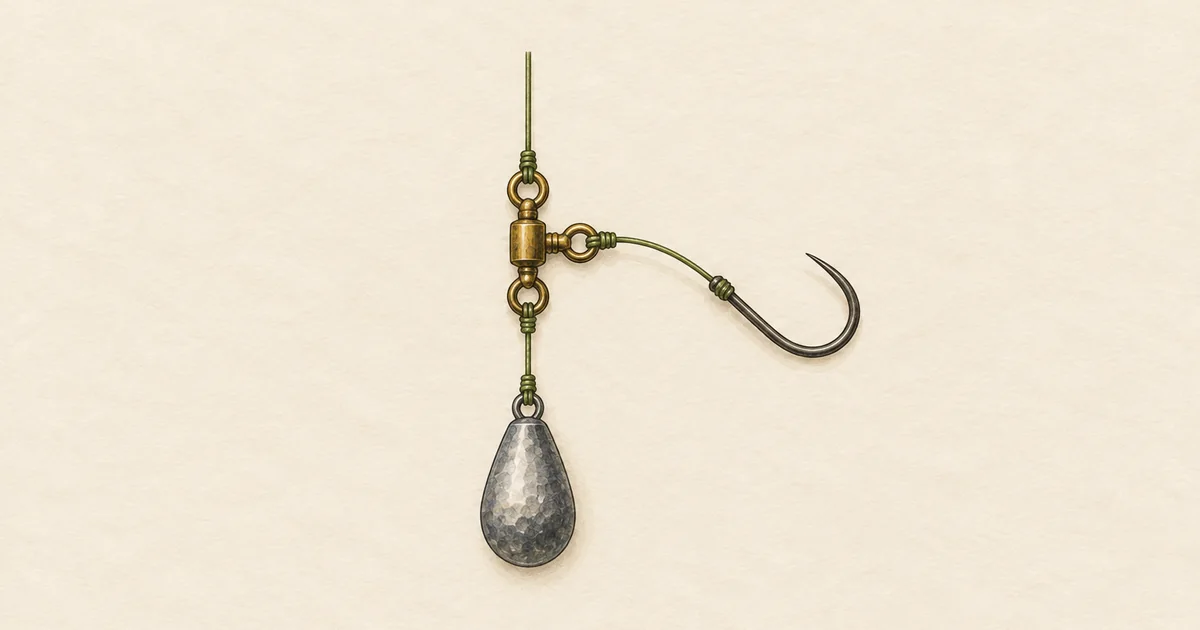
Nymph under a float from the shore
For bank anglers without a boat, especially in spring and on lakes with steeply shelving banks.
- Steep bank
Look for places where deep water lies close to the bank. In spring and during insect hatches the whitefish in some places even come into the shallows.
- Set the depth
Plumb the depth of the spot and set the sliding float so that the nymphs hang at the level of the fish, in spring often close to the bottom.
- Dropper rig or single nymph
Hang a multi-nymph rig under the sliding float or, where only one hook is allowed, a single nymph under a small float. Check beforehand whether casting the multi-nymph rig is allowed on your lake.
- Bait up with a maggot
A maggot on the nymph often makes the bait more effective. In spring whitefish also take a single maggot on a fine hook.
- Present it gently
Cast gently and leave the rig alone. Under a float you can hardly work the nymphs, so expect fewer usable bites than from a boat.
- The smallest signs
The float often twitches only briefly. Strike at the first clear sign; a hesitant strike with whitefish almost always goes nowhere.
- Fish it softly
Play the fish with the drag set softly and without force; the thin mouth can take little.
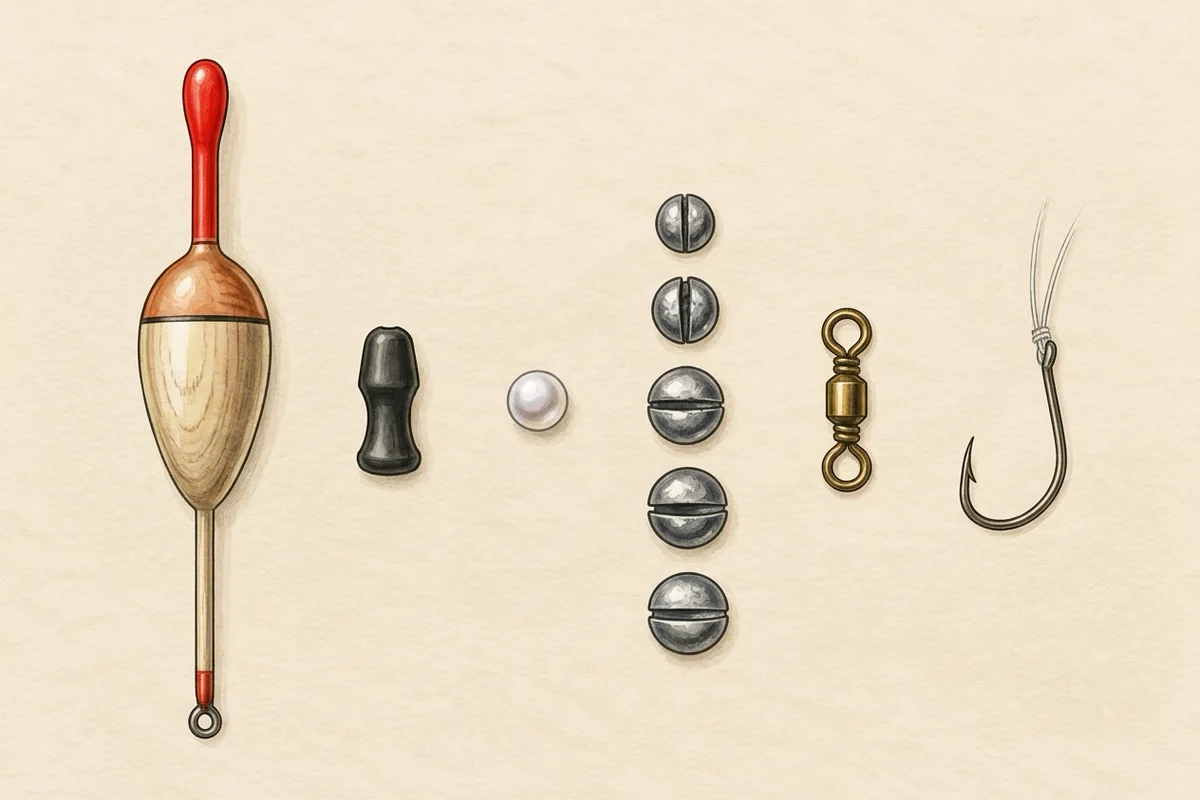
Multi-nymph rig cast and twitched
A variation for days when the whitefish ignore vertical lifting and lowering, only where casting the multi-nymph rig is allowed.
- Anchor in the shallows
If the whitefish stand around the boat in shallower water, around 6 m, you anchor there instead of over great depth.
- Like a drop-shot
Instead of the end lead, a drop-shot weight goes on the multi-nymph rig. On Lake Constance, for example, casting the multi-nymph rig is forbidden, so read the regulations.
- Cover the area
Cast the multi-nymph rig and let it sink to the bottom. That way you reach fish that are not directly under the boat.
- Twitch it lightly
Twitch the slightly slack line so that the nymphs rise at an angle. Worked too frantically, they get no bites.
- A firm bite
When cast, whitefish usually bite more decisively than when fished vertically; some pull line from the drag straight away.
- Don’t rip it through
Do not pull the strike all the way through as you would for perch, or the nymph tears out. Let the whitefish run against the soft drag.
What with
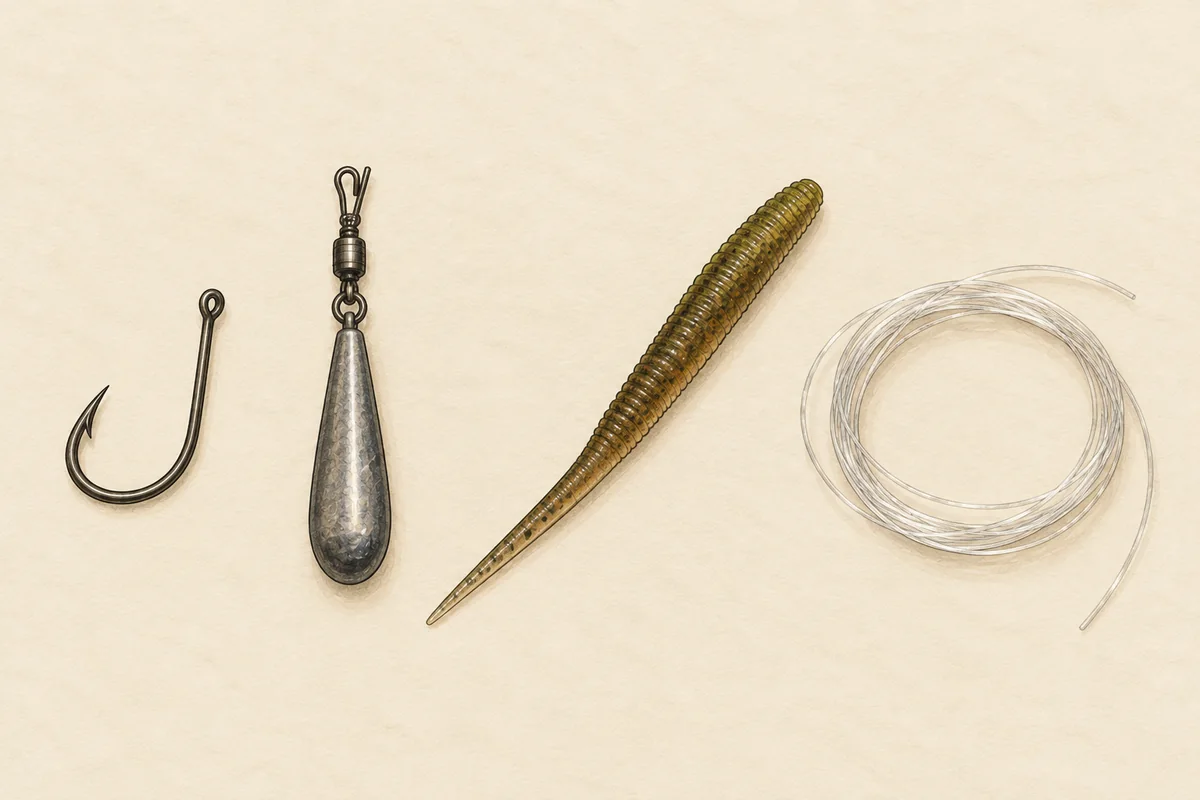
Small nymphs in different colours sit on the multi-nymph rig, the lowest one above the bottom best in red. A maggot added on often brings more bites; in spring whitefish occasionally also take maggots or worms on a float or leger rig.
- Nymphall year on the dropper rig; dark in winter, light in summer
Small nymphs imitate rising midge larvae, the main food of many whitefish; red heads catch in every season.
- Maggots & larvaespring and on days when the fish are hesitant
An extra maggot added to the nymph often catches better, and in spring whitefish take maggots on a single fine hook too.
- Wormsmainly in spring, in summer as an exception
Whitefish occasionally take worms on the bottom; a worm rarely catches on purpose, though, and is more of an addition to the multi-nymph rig.
Tackle
For the multi-nymph rig, a rod with a soft tip, a good two metres long for three side arms and over three metres for five. Line and hooklength stay thin, because a thick hooklength scares the shy fish; on holiday a very light spinning rod will do as well.
Multi-nymph rig from an anchored boat
- Rod
- Whitefish rod with a very fine, soft tip, often with interchangeable tips; about 2 m for three side arms, over 3 m for five
- Reel
- small fixed-spool reel size 1000 or a centrepin reel
- Line
- Braid 0,04–0,10 mm or monofilament around 0,16 mm
- Leader
- Multi-nymph rig made of 0,15–0,20 mm monofilament, side arms standing off
- Hooks
- Nymphs on hooks size 10–16, hook point facing outwards
- Weight, float, lead
- End lead 7–10 g, up to 20 g in great depth
Nymph under a float from the shore
- Rod
- light rod with a soft tip; a very light spinning rod with a casting weight of 5–15 g is enough
- Reel
- small fixed-spool reel size 1000
- Line
- Monofilament around 0,16 mm
- Leader
- 0,15 mm
- Hooks
- Size 14 for maggot or a single nymph
- Weight, float, lead
- Sliding float that already reacts to a light tug
Multi-nymph rig cast and twitched
- Rod
- fine, light spinning rod with a soft tip
- Reel
- small fixed-spool reel with a finely adjustable drag
- Line
- thin main line as when fishing the multi-nymph rig from a boat
- Weight, float, lead
- Drop-shot weight on the multi-nymph rig
Common mistakes
- Striking as for perch: A strike pulled all the way through tears the small nymph out of the soft mouth. A short pull from the wrist and a softly set drag are enough.
- Multi-nymph rig worked too frantically: Whitefish take only slowly rising nymphs. Lift the rod in slow motion by about a metre and otherwise keep still.
- Too long at an empty spot: Often there are only three or four touches per anchoring spot, then it goes quiet. Move on then and find the fish again.
- Multi-nymph rig length does not suit the season: A long rig in winter hangs too far above the fish on the bottom, a short one in summer covers too little water. Set the length according to the stratification.
- Fish played into the anchor rope: If the whitefish bolts under the boat, the rig quickly tangles in the rope. Guide the fish to the net on the other side of the boat.
Rules
Each federal state (Bundesland) sets its own closed season (Schonzeit) and minimum size (Mindestmaß). Choose your state; the values come from our state pages.
Baden-Württemberg
- Minimum size
- 30 cm
- Closed season
- 15.10.–10.1.
- Note
- Lake Constance with its own rules
As of October 2026. All rules, exceptions and sources: Fishing in Baden-Württemberg.
Bavaria
- Minimum size
- 30 cm
- Closed season
- 15.10.–31.12.
- Note
- Renken and Felchen
As of October 2026. All rules, exceptions and sources: Fishing in Bavaria.
Berlin
Our overview for Berlin does not list the whitefish. What applies there is covered by the page Fishing in Berlin, with the waters of the state.
Brandenburg
Our overview for Brandenburg does not list the whitefish. What applies there is covered by the page Fishing in Brandenburg, with the waters of the state.
Bremen
Our overview for Bremen does not list the whitefish. What applies there is covered by the page Fishing in Bremen, with the waters of the state.
Hamburg
Our overview for Hamburg does not list the whitefish. What applies there is covered by the page Fishing in Hamburg, with the waters of the state.
Hesse
Our overview for Hesse does not list the whitefish. What applies there is covered by the page Fishing in Hesse, with the waters of the state.
Mecklenburg-Western Pomerania
- Minimum size
- 30 cm
- Closed season
- 1.10.–31.12.
As of October 2026. All rules, exceptions and sources: Fishing in Mecklenburg-Western Pomerania.
Lower Saxony
Our overview for Lower Saxony does not list the whitefish. What applies there is covered by the page Fishing in Lower Saxony, with the waters of the state.
North Rhine-Westphalia
Our overview for North Rhine-Westphalia does not list the whitefish. What applies there is covered by the page Fishing in North Rhine-Westphalia, with the waters of the state.
Rhineland-Palatinate
Our overview for Rhineland-Palatinate does not list the whitefish. What applies there is covered by the page Fishing in Rhineland-Palatinate, with the waters of the state.
Saarland
Our overview for Saarland does not list the whitefish. What applies there is covered by the page Fishing in Saarland, with the waters of the state.
Saxony
Our overview for Saxony does not list the whitefish. What applies there is covered by the page Fishing in Saxony, with the waters of the state.
Saxony-Anhalt
Our overview for Saxony-Anhalt does not list the whitefish. What applies there is covered by the page Fishing in Saxony-Anhalt, with the waters of the state.
Schleswig-Holstein
Our overview for Schleswig-Holstein does not list the whitefish. The page Fishing in Schleswig-Holstein shows what applies there, with places in the state.
Thuringia
Our overview for Thuringia does not list the whitefish. The page Fishing in Thuringia shows what applies there, with places in the state.
The regulation and your fishing permit (Erlaubnisschein) are what count. Lake Constance, the Rhine and the coast, for example, have their own rules: Fishing waters in Germany.
After the catch
Playing and landing
Strike at the faintest sign, but briefly, and play the whitefish on a soft drag, because the mouth is delicate and the fish fight hard. Just before the net they like to jump or run under the boat, so keep them away from the anchor rope. Land them in a whitefish landing net, handle them only with wet hands and put protected or undersized fish straight back in the water; a whitefish of legal size that you may keep you stun and kill at once.
Play the whitefish calmly and land it safely. If you may keep a fish of legal size, stun and kill it at once; smoked, the firm white flesh has long been regarded as a delicacy. Release protected or undersized fish with wet hands in the water.
Frequently asked questions
What colour should nymphs for whitefish be?
In winter dark shades such as black, brown and dark purple work well, in summer light patterns in green, yellow, purple or red. Red heads catch all year round, and on some reservoirs blue nymphs do well.
How do you spot a bite when fishing for whitefish?
Usually only because the line briefly goes slack as you lift, or the tip trembles slightly. A very soft rod tip makes such bites visible.
Which weight for the dropper rig?
Usually 7 to 10 g is enough. For great depths it can be heavier, up to about 20 g.
Can you catch whitefish from the bank?
Yes, on steeply shelving banks and in spring, usually with the dropper rig or a nymph under a sliding float. From a boat, though, you fish the rig better and make more of your bites.
What hook size for whitefish?
The nymphs on the dropper rig sit on hooks in sizes 10 to 16. Under a float or on the bottom with maggot, size 14 is enough.
Why do you catch no whitefish even though the echo sounder shows fish?
Often the height of the rig is wrong or it is fished too fast. Change depth step by step, slow the movement and try other colours.
Similar species
If you catch whitefish, you can fish for these species with similar tackle:
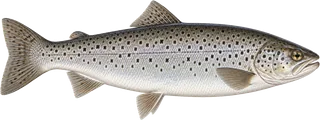 Fishing for lake troutSpawning season, please spare them
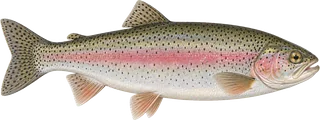 Fishing for rainbow troutPeak season
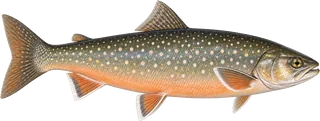 Fishing for Alpine charSpawning season, please spare them
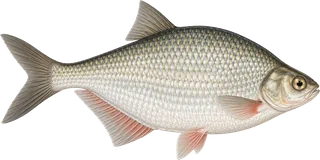 Fishing for silver breamPossible
Sources
As at October 2026. The practical knowledge comes from 13 sources, summarised in our own words.
View all 13 sources
- Renkenangeln mit der Hegene · BLINKER (Redaktion, L. Bammatter)
- Steckbrief Renke · BLINKER (Redaktion)
- Eine feine Sache · BLINKER (W. Hauer)
- Dropshotten auf Renken · FISCH & FANG (B. Domeyer)
- Renkensaison im Sauerland · FISCH & FANG (C. Strehl)
- Der Hering des Sauerlands · FISCH & FANG (C. Strehl)
- Der Möhnesee: Wo die Maräne steht, ist der Hecht nicht weit · FISCH & FANG (M. Kahlstadt)
- Dicke Renken aus Tirol · FISCH & FANG
- Top-Gewässer: Hallstätter See · FISCH & FANG (M. Fuhrmann)
- Bayern: Der Schliersee · FISCH & FANG (H. Kolm)
- Infoblatt Bestimmungen Angelfischerei Bodensee 2020 · Landratsamt Bodenseekreis (Behörde)
- Saisonende am Alpensee · FISCH & FANG (B. Taller)
- Nachhaltig fischen – Tipps für Angler:innen · Umweltbundesamt Österreich (mit österreichischen Landesfischereiverbänden)
AI-assisted text, based on the sources named and these pages: Whitefish (profile), Float fishing, Maggots & larvae, Nymph.