
Knowledge – Fish
Ruffe fishing
Fishing for ruffe means: placing a small animal bait on the bottom exactly where a shoal of these bottom-dwelling fish is searching for small creatures. Here is the way there in nine steps, each with a link to the detailed page.
 Choose another fish117 fish with guides
 EelOff-peak season
 EelpoutPossible
 IdePossible
 ArapaimaGood
 GraylingPeak season
 Atlantic salmonSpawning time, please spare
 Brown troutSpawning time, please spare
 Brook troutSpawning time, please spare
 BarbelOff-peak season
 BarramundiSpawning season
 Greater amberjackGood
 Topmouth gudgeonOnly as bycatch
 Blue marlinSpawning season
 BonefishSpawning season
 BonitoGood
 BreamOff-peak season
 Dusky grouperOnly as bycatch
 CobiaPossible
 Spiny dogfishOnly as bycatch
 CodPeak season
 ChubPeak season
 MinnowOnly as bycatch
 European sturgeonOnly as bycatch
 FlounderPeak season
 PerchPeak season
 Largemouth bassGood
 Ballan wrasseOnly as bycatch
 Yellowfin tunaSpawning season
 Giant trevallyGood
 Prussian carpPossible
 BrillPossible
 Gilthead breamSpawning time, please spare
 Golden doradoSpawning season
 Golden mahseerOnly as bycatch
 Dolphinfish (mahi-mahi)Good
 Grass carpPossible
 Great barracudaGood
 GudgeonPossible
 White breamPossible
 DaceOff-peak season
 PikePeak season
 HalibutOff-peak season
 HerringPossible
 GarfishOut of season
 Huchen (Danube salmon)Possible
 Crucian carpOnly as bycatch
 CarpOff-peak season
- RuffeOff-peak season
 VendaceOnly as bycatch
 DabPeak season
 GurnardPossible
 Coley (saithe)Peak season
 Chinook salmonHardly any chance
 King mackerelSpawning season
 LingPeak season
 TuskOff-peak season
 MackerelPossible
 Bighead carpOut of season
 WhitefishPossible
 Conger eelOff-peak season
 Sea troutSpawning time, please spare
 Grey mulletPossible
 Murray codSpawning season
 MuskellungeGood
 Common nasePossible
 Nile perchPossible
 PayaraPossible
 Peacock bassPeak season
 PermitGood
 WeeverOnly as bycatch
 PollackOff-peak season
 BurbotOff-peak season
 AspPossible
 Red snapperSpawning season
 Rainbow troutPeak season
 RoosterfishGood
 RoachPeak season
 RedfishOut of season
 Bluefin tunaOnly as bycatch
 RuddPossible
 Russian sturgeonOnly as bycatch
 HaddockOff-peak season
 SnakeheadPossible
 TenchOff-peak season
 SpirlinOnly as bycatch
 PlaiceOff-peak season
 Greenland halibutOnly as bycatch
 Round gobyOnly as bycatch
 SwordfishGood
 Lake troutSpawning time, please spare
 HakeSpawning time, please spare
 Alpine charSpawning time, please spare
 MonkfishPossible
 SoleOff-peak season
 SailfishGood
 Silver carpOut of season
 SnookPeak season
 PumpkinseedOnly as bycatch
 SpratOnly as bycatch
 Atlantic wolffishSpawning time, please spare
 TurbotPeak season
 SterletOnly as bycatch
 SmeltOnly as bycatch
 Horse mackerelPossible
 TaimenGood
 TarponGood
 TigerfishSpawning season
 BleakPossible
 WahooGood
 Wels catfishOff-peak season
 WhitingPeak season
 Sea bassOff-peak season
 ZanderPeak season
 White-eye breamOnly as bycatch
 Blue breamOnly as bycatch
 Brown bullheadPossible
 VimbaOnly as bycatch
Season in October according to the catch calendar, an estimate and not a guarantee of a catch. The fish pictures are reduced natural-history plates and AI-generated.
Best time
From June to October, especially in the evening.
In January: PossibleIn February: PossibleIn March: Possible, spawning seasonIn April: Possible, spawning seasonIn May: Possible, spawning seasonIn June: GoodIn July: GoodIn August: GoodIn September: GoodIn October: GoodIn November: PossibleIn December: Possible
Good spot
- Lake: deep bottom and weed beddeep bottomdeep bottomdeep bottom
- River: pools and groyne scour holespools and groyne scour holespools and groyne scour holespools and groyne scour holes
Top baits
Starter tackle
- Rod: light ledger rod
- Line: monofilament, 0,20–0,25 mm
- Hook: small, matched to the piece of worm or larva
- Rod: light float rod
- Line: monofilament, 0,20–0,25 mm
- Hook: small, matched to the piece of worm or larva
In short
In short: You catch the ruffe best from June to October, especially in the evening. Good spots on a lake: deep bottom; on a river: pools and groyne scour holes. Proven baits: small pieces of worm or bloodworm (midge larvae) on the bottom. The ruffe is on the near-threatened list of Germany’s Red List. Unlike perch and zander it has two joined dorsal fins.
Quick to recognise
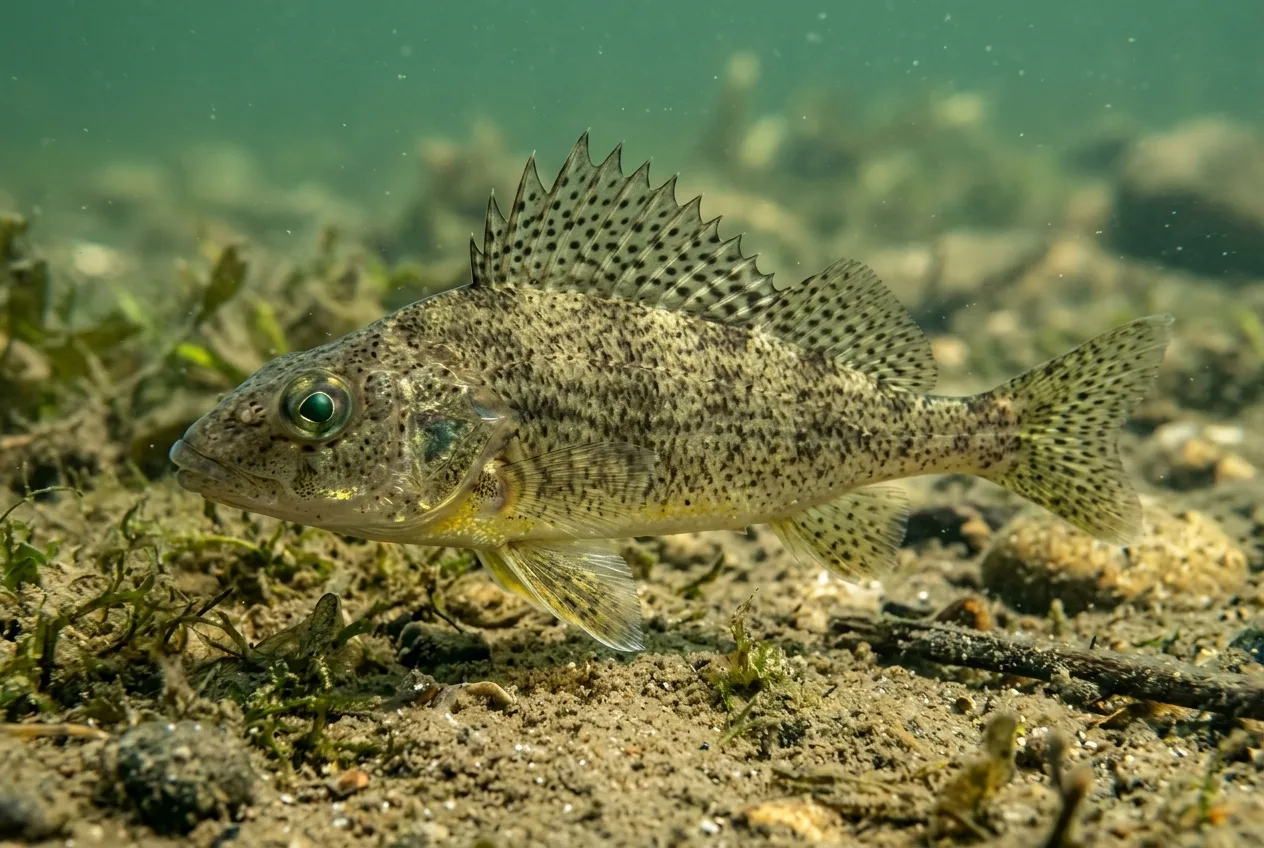
It is related to perch and zander, but stays small and stocky and lives in shoals on the bottom. You recognise it by its continuous dorsal fin, fine black speckles and the long spine on the gill cover. It usually measures 10 to 15 centimetres and hardly ever exceeds about 25.
When
From June to October the chances are good, in the other months a catch is possible. From March to May it hangs its spawn strings on shallow bank spots; whether a closed season (Schonzeit) applies then is set by your federal state (Bundesland). Because it also locates prey in low light, sitting it out on the bottom until dusk is worthwhile.
- JanPossible
- FebPossible
- MarPossible, spawning season
- AprPossible, spawning season
- MayPossible, spawning season
- JunGood
- JulGood
- AugGood
- SepGood
- OctGood
- NovPossible
- DecPossible
Peak seasonGoodPossibleHardly any chanceSpawning season
Spring tactics
Between March and May ruffe spawn in shallow bank water down to about three metres deep, the eggs stick in sticky strings to stones and plants. Whether a closed season (Schonzeit) applies during that time is set by your federal state (Bundesland).
Summer tactics
In summer you catch ruffe most reliably on the bottom. In hot weather things get tight for it, because it tolerates clearly less warmth than the perch; move your fishing to morning and evening then and return fish quickly.
Autumn tactics
Until late autumn a worm on the bottom remains a good bait. A catch report from a harbour in Western Pomerania shows that a big ruffe even took a fat lobworm in November.
Winter tactics
In winter it stays in the depths on the bottom. Catches are possible but rarer; offer the bait directly on the bottom then and search the deepest calm areas.
Is it biting today?
In January: PossibleIn February: PossibleIn March: Spawning time, please spareIn April: Spawning time, please spareIn May: Spawning time, please spareIn June: Off-peak seasonIn July: Off-peak seasonIn August: Off-peak seasonIn September: Off-peak seasonIn October: Off-peak seasonIn November: PossibleIn December: Possible
Today’s catch index needs JavaScript. Season and spawning time are in the catch calendar.
Where it is now
In the lake
In a lake you look for it all year round on the deep bottom, preferably over soft ground with few plants. If perch live there too, the ruffe usually stands even deeper. In spring weed zones are added, because to spawn it moves to shallow spots down to about three metres deep.
How to go about it: In nutrient-rich, rather cloudy lakes you find it more often than in clear ones, where its stocks have declined. Sandy areas, mussel beds and deep zones are good places to sit.
| All year round | deep bottom |
|---|---|
| Spring extra | Weed bed |
In the river
In larger rivers and canals it stays in calm water, for example in deep pools and in groyne scour holes over sand, gravel or soft ground. On the Danube you look at the lengthwise stripes on every small perch, because the protected striped ruffe looks similar and is declining.
How to go about it: Canals, harbours and the mouths of large rivers are typical haunts, and it also tolerates slightly salty brackish water. Place the bait where the current eases and fine sediment settles.
| All year round | pools, groyne scour holes |
|---|
Biting time: mainly in the evening. What that looks like on the water is shown by the picture of the holding spots just below.
Holding spots in the picture
Choose the season and time of day: the picture shows where the species stands then. Spots outlined in red apply only in the chosen season. Tap a fish or a spot in the list to bring it closer. The picture is schematic and AI-generated, every water is different.
Catch chance in springpossibleSpawning season, observe closed seasons
Catch chance in summergood
Catch chance in autumngood
Catch chance in winterpossible
- J
- F
- M
- A
- M
- J
- J
- A
- S
- O
- N
- D
Spawning season
Not a main time With the lateral line system on its head it finds prey even in low light, so it bites on the bottom until dusk.
Not a main time With the lateral line system on its head it finds prey even in low light, so it bites on the bottom until dusk.
Active time With the lateral line system on its head it finds prey even in low light, so it bites on the bottom until dusk.
Not a main time With the lateral line system on its head it finds prey even in low light, so it bites on the bottom until dusk.
In the lake
Water lilies and weed bed
The ruffe is here only in spring.
Deep bottom
The ruffe is here all year round.
The ruffe lives in shoals on the bottom of nutrient-rich lakes and reservoirs, preferably over soft ground with few plants. If it shares a deep lake with the perch, it usually stands further down.
Spring: catch chance according to the catch calendar possible. This is when the spawning season falls, observe closed seasons. From March to May it lays its eggs on shallow bank spots down to about three metres deep, on stones or plants.
Summer: catch chance according to the catch calendar good.
Autumn: catch chance according to the catch calendar good in September and October, possible in November.
Winter: catch chance according to the catch calendar possible.
In the river
Pools, deep spot
The ruffe is here all year round.
Groyne scour hole
The ruffe is here all year round.
In larger rivers and canals it looks for calm areas with soft ground, often in deeper water over sand and gravel. It is especially common in the mouths of large rivers.
Spring: catch chance according to the catch calendar possible. This is when the spawning season falls, observe closed seasons.
Summer: catch chance according to the catch calendar good.
Autumn: catch chance according to the catch calendar good in September and October, possible in November.
Winter: catch chance according to the catch calendar possible.
Size comparison: AI-generated drawing, schematic.
How
It is caught by bottom fishing: a running lead holds the bait where the ruffe feeds. A float works too if you set it so that the bait touches the bottom or hovers just above it. Because it stays so small, hardly anyone targets it deliberately.
Easiest way
To start with, a light bottom rod with thin monofilament line and a worm on a small hook is enough. Put the bait on a sandy spot in a canal, harbour or lake and stay on until dusk.
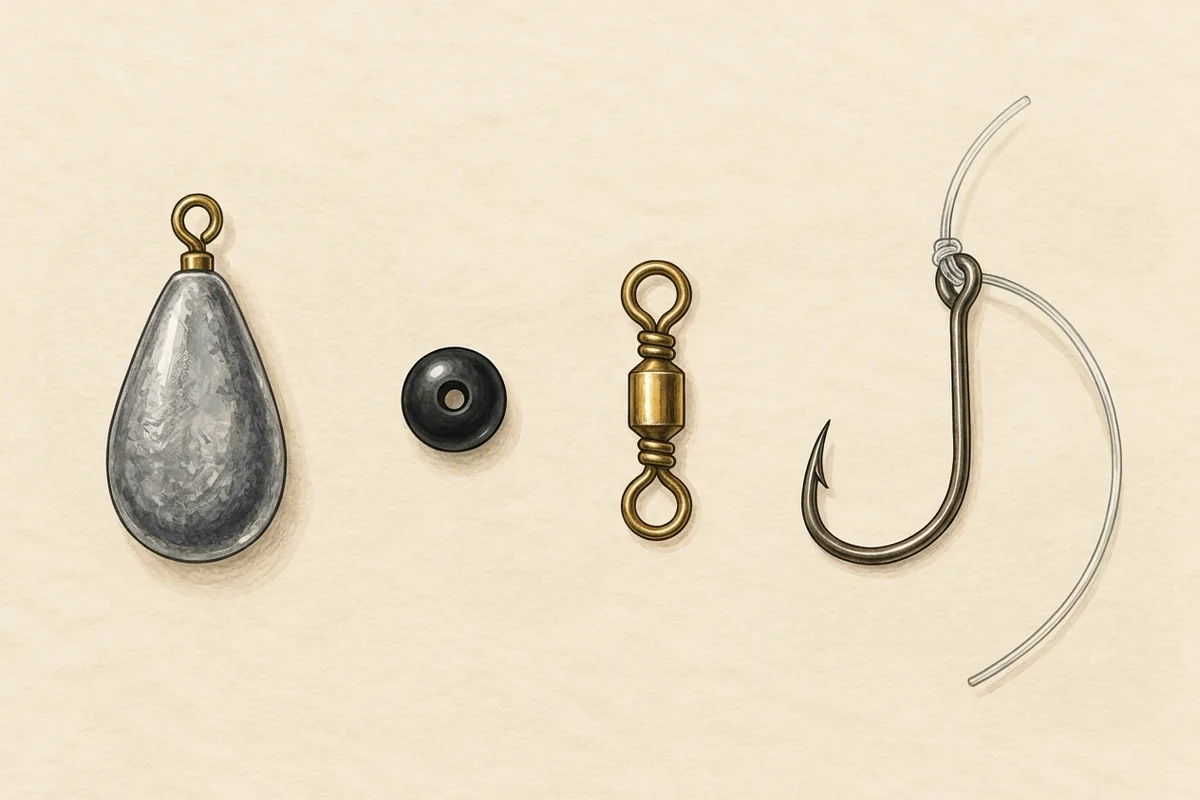
Light static fishing with a running lead
The usual approach, because the ruffe feeds almost only on the bottom and a bait lying there stays exactly where it should.
- Sand and mussel beds
Look for a sandy spot in a river, canal or lake. Mussel beds are also worth a try, as plenty of small creatures live between the shells and ruffe feed on them.
- Stay fine
Spool a small fixed-spool reel with monofilament line of 0,20 to 0,25 millimetres. Choose a running weight only as heavy as it needs to be to stay put.
- Worm or larva
Thread a piece of worm or a few bloodworms onto a small hook. Larger ruffe can even manage a whole worm, almost as long as they are.
- On the bottom
Cast out and let the rig sink all the way. The bait belongs on the bottom, because that is where the shoals roam in search of food.
- Until evening
Don’t give up when the light fades. A reflective layer in the eye and the fine lateral line organ help it find prey even at dusk.
- Take from the front
The fish is very slimy and has sharp spines on the gill cover and fins. So pick it up calmly and unhook it quickly.
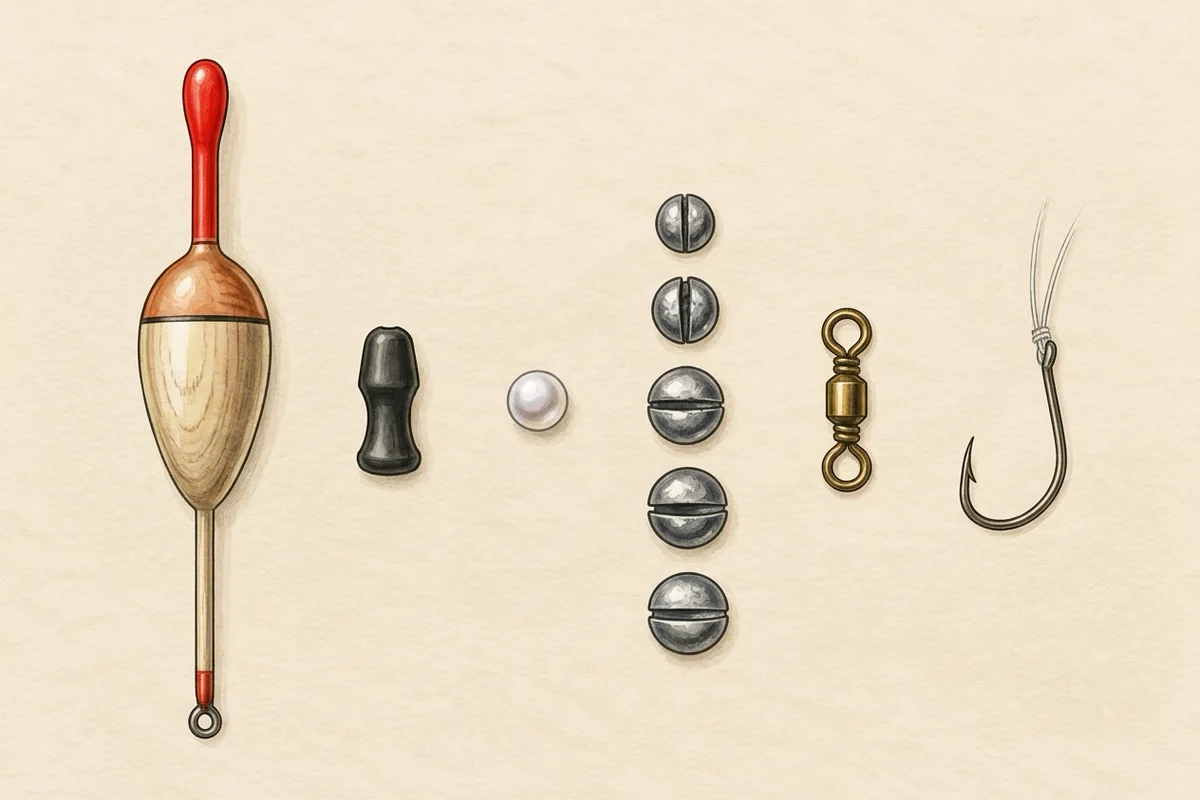
Float with bait on the bottom
An alternative for canals, harbours and quiet banks where you like to see the bite.
- Calm water
Sit at a spot with little current and a sandy or soft bottom. In cloudy, nutrient-rich water your chances are better than in very clear water.
- Measure the depth
Plumb the depth of the water carefully. Set the float so that the bait rests on the bottom or just touches it.
- Light float rod
A light float rod with a small fixed-spool reel and monofilament line of 0,20 to 0,25 millimetres is perfectly enough.
- Small morsel
A piece of worm or bloodworms suit its diet of small animals and larvae on the bottom of the water.
- Watch the float
If the float dips or drifts sideways, you strike. In the evening the wait can pay off, because the ruffe also feeds in low light.
- No landing net
Such a small fish you simply lift out of the water. Mind the spines on the gill cover when unhooking.
What with
A short piece of worm or a few bloodworms suit its diet and its small mouth, and maggots are an option too. Use a small hook with them.
- Wormsall year, especially from summer to late autumn
A worm on the bottom or under the float is considered especially productive for ruffe, and larger fish also take long worms.
- Maggots & larvaeall year, mainly when sitting it out on the bottom
Bloodworms are part of its main diet on the bottom and are small enough for its mouth.
Tackle
A bottom rod with a bite indicator is enough, plus a running weight that suits the bottom and the current, and a small hook. For the float version, balance the float so that the bait stays down.
Light static fishing with a running lead
- Rod
- light bottom rod
- Reel
- small fixed-spool reel
- Line
- monofilament, 0,20–0,25 mm
- Hooks
- small, to suit a piece of worm or a larva
- Weight, float, lead
- running weight, just heavy enough to stay on the bottom
Float with bait on the bottom
- Rod
- light float rod
- Reel
- small fixed-spool reel
- Line
- monofilament, 0,20–0,25 mm
- Hooks
- small, to suit a piece of worm or a larva
Common mistakes
- Bait hangs in mid-water: Ruffe stay close to the bottom almost all the time. Set the float deeper or switch to a leger rig until the bait lies on the bottom.
- Only looking in clear shallows: It likes cloudy, nutrient-rich water and in lakes often sits deeper than the perch. So put the bait in the deeper areas.
- Underestimating the spines: The gill cover carries several sharp spines, and the fins have hard rays too. Handle it calmly and stroke the fin backwards as you do.
- Long fight and holding it in the heat: Warm water stresses the ruffe early on, and the fight tires it further. Bring it in quickly and let it swim away again at once.
- Live fish moved to another water: Never release a ruffe somewhere else. It was introduced to North America, and in the south-west of Lake Superior it at times made up around four out of five fish in bottom trawls.
Rules
For the ruffe our country overview gives no figures for minimum size (Mindestmaß) or closed season (Schonzeit). That does not mean there are no rules: individual countries and water regulations protect the species or set their own limits.
What applies in your country is on the country pages under Fishing waters in Germany.
The regulation and your fishing permit (Erlaubnisschein) are what count. Lake Constance, the Rhine and the coast, for example, have their own rules: Fishing waters in Germany.
After the catch
Playing and landing
On light tackle the ruffe is quickly ashore, so bring it in without a pause, especially in warm water. It is slippery and spiny, so hold it calmly and watch the gill cover and dorsal fin. Fish that go back you return at once; a fish of legal size that you may keep you stun and kill straight away.
Hold the ruffe from the front and stroke the dorsal fin flat against the body, so you won’t prick yourself on the spines or the gill cover spine. Fish that go back you unhook, if possible in the water and with wet hands. A ruffe you may keep you stun and kill immediately; what applies to it is set by state law and your fishing permit (Erlaubnisschein).
Frequently asked questions
Which bait for ruffe?
Worms and bloodworms on the bottom catch best. When specifically looking for larger fish, the worm can happily be longer.
Which line and rod for ruffe fishing?
A light bottom or float rod with a small fixed-spool reel and monofilament line of 0,20 to 0,25 millimetres is enough.
Does the ruffe bite at night?
It can also feed in the dark, because its lateral line and eyes help in low light. Night fishing is banned in some countries and waters, so check your fishing permit (Erlaubnisschein).
Can you eat ruffe?
Yes, but many anglers see it as bycatch because it is small and has many bones. In the kitchen that means a fair amount of work.
Is the ruffe an invasive species?
In central Europe it is native. In North America it reached the Great Lakes in ships‘ ballast water and is spreading there as an introduced species.
Similar species
If you catch ruffe, you can fish for these species with similar tackle:
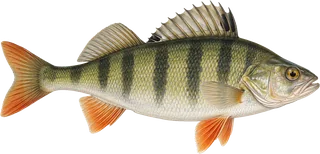 Perch fishingMain season
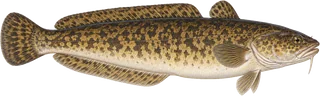 Burbot fishingSecondary season
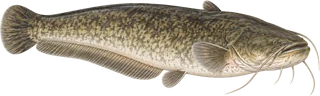 Wels catfish fishingSecondary season
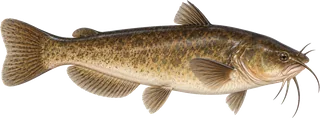 Brown bullhead fishingPossible
Sources
As of October 2026. The practical knowledge comes from 10 sources, summarised in our own words.
See all 10 sources
- Kaulbarsch (Gymnocephalus cernua) – Fischkunde · RUTE & ROLLE (Redaktion)
- Happen für Quappen im Winter · RUTE & ROLLE (Redaktion)
- Wurm fängt! · FISCH & FANG (Redaktion)
- Zielfisch Barsch: Wo schwimmen sie denn? · FISCH & FANG (Redaktion)
- Kaulbarsch im Fokus: Der kleine Vetter von Barsch und Zander · BLINKER (Redaktion, A. Pawlitzki)
- Gymnocephalus cernua, Ruffe (Species Summary) · FishBase (wissenschaftliche Datenbank)
- Ruffe (Gymnocephalus cernua) – Species Profile · U.S. Geological Survey, Nonindigenous Aquatic Species Database
- Ruffe Watch – How to Identify Eurasian Ruffe · University of Minnesota Sea Grant und U.S. Fish and Wildlife Service (Great Lakes Sea Grant Network)
- Was Hitze mit unseren Fischen macht · Deutscher Angelfischerverband (DAFV)
- LFV Fischlexikon: Kaulbarsch · Landesfischereiverband Bayern
Text written with AI support, based on the sources named and these pages: Ruffe (profile), Bottom fishing, Worms, Maggots & larvae, Bottom rod.