
Knowledge – Fish
Silver bream fishing
Silver bream fishing means: fishing the bream swim with fine tackle and targeted groundbaiting, because that is where it usually stands in the shoal. Here is the way there in nine steps, each with a link to the detailed page.
 Choose another fish117 fish with guides
 EelOff-peak season
 EelpoutPossible
 IdePossible
 ArapaimaGood
 GraylingPeak season
 Atlantic salmonSpawning time, please spare
 Brown troutSpawning time, please spare
 Brook troutSpawning time, please spare
 BarbelOff-peak season
 BarramundiSpawning season
 Greater amberjackGood
 Topmouth gudgeonOnly as bycatch
 Blue marlinSpawning season
 BonefishSpawning season
 BonitoGood
 BreamOff-peak season
 Dusky grouperOnly as bycatch
 CobiaPossible
 Spiny dogfishOnly as bycatch
 CodPeak season
 ChubPeak season
 MinnowOnly as bycatch
 European sturgeonOnly as bycatch
 FlounderPeak season
 PerchPeak season
 Largemouth bassGood
 Ballan wrasseOnly as bycatch
 Yellowfin tunaSpawning season
 Giant trevallyGood
 Prussian carpPossible
 BrillPossible
 Gilthead breamSpawning time, please spare
 Golden doradoSpawning season
 Golden mahseerOnly as bycatch
 Dolphinfish (mahi-mahi)Good
 Grass carpPossible
 Great barracudaGood
 GudgeonPossible
- White breamPossible
 DaceOff-peak season
 PikePeak season
 HalibutOff-peak season
 HerringPossible
 GarfishOut of season
 Huchen (Danube salmon)Possible
 Crucian carpOnly as bycatch
 CarpOff-peak season
 RuffeOff-peak season
 VendaceOnly as bycatch
 DabPeak season
 GurnardPossible
 Coley (saithe)Peak season
 Chinook salmonHardly any chance
 King mackerelSpawning season
 LingPeak season
 TuskOff-peak season
 MackerelPossible
 Bighead carpOut of season
 WhitefishPossible
 Conger eelOff-peak season
 Sea troutSpawning time, please spare
 Grey mulletPossible
 Murray codSpawning season
 MuskellungeGood
 Common nasePossible
 Nile perchPossible
 PayaraPossible
 Peacock bassPeak season
 PermitGood
 WeeverOnly as bycatch
 PollackOff-peak season
 BurbotOff-peak season
 AspPossible
 Red snapperSpawning season
 Rainbow troutPeak season
 RoosterfishGood
 RoachPeak season
 RedfishOut of season
 Bluefin tunaOnly as bycatch
 RuddPossible
 Russian sturgeonOnly as bycatch
 HaddockOff-peak season
 SnakeheadPossible
 TenchOff-peak season
 SpirlinOnly as bycatch
 PlaiceOff-peak season
 Greenland halibutOnly as bycatch
 Round gobyOnly as bycatch
 SwordfishGood
 Lake troutSpawning time, please spare
 HakeSpawning time, please spare
 Alpine charSpawning time, please spare
 MonkfishPossible
 SoleOff-peak season
 SailfishGood
 Silver carpOut of season
 SnookPeak season
 PumpkinseedOnly as bycatch
 SpratOnly as bycatch
 Atlantic wolffishSpawning time, please spare
 TurbotPeak season
 SterletOnly as bycatch
 SmeltOnly as bycatch
 Horse mackerelPossible
 TaimenGood
 TarponGood
 TigerfishSpawning season
 BleakPossible
 WahooGood
 Wels catfishOff-peak season
 WhitingPeak season
 Sea bassOff-peak season
 ZanderPeak season
 White-eye breamOnly as bycatch
 Blue breamOnly as bycatch
 Brown bullheadPossible
 VimbaOnly as bycatch
Season in October according to the catch calendar, an estimate and not a guarantee of a catch. The fish pictures are reduced natural-history plates and AI-generated.
Best time
From July to August, mainly at night.
In January: Slim chancesIn February: Slim chancesIn March: PossibleIn April: GoodIn May: Good, spawning seasonIn June: Good, spawning seasonIn July: Peak seasonIn August: Peak seasonIn September: GoodIn October: PossibleIn November: Slim chancesIn December: Slim chances
Good spot
- Lake: weed bedweed bedweed beddeep bottom
- River: quiet bayquiet bayquiet bayquiet bay
Top baits
Starter tackle
- Rod: pole or whip 6–8 m to start with
- Line: monofilament 0,18–0,20 mm, from 0,15 mm for finer rigs
- Hook: 14–16 to start, 12–20 overall, medium- to long-shank with a round bend
- Rod: light feeder or bottom rod with a fine tip
- Line: monofilament 0,15–0,25 mm
- Hook: 10–16, short-shank and heavy-wire
In short
In short: You catch silver bream best from July to August, mainly at night. Good spots in a lake: weed bed; in a river: quiet bay. Proven baits: maggots, pinkies, casters, small dung worms and bloodworm.
Quick to recognise
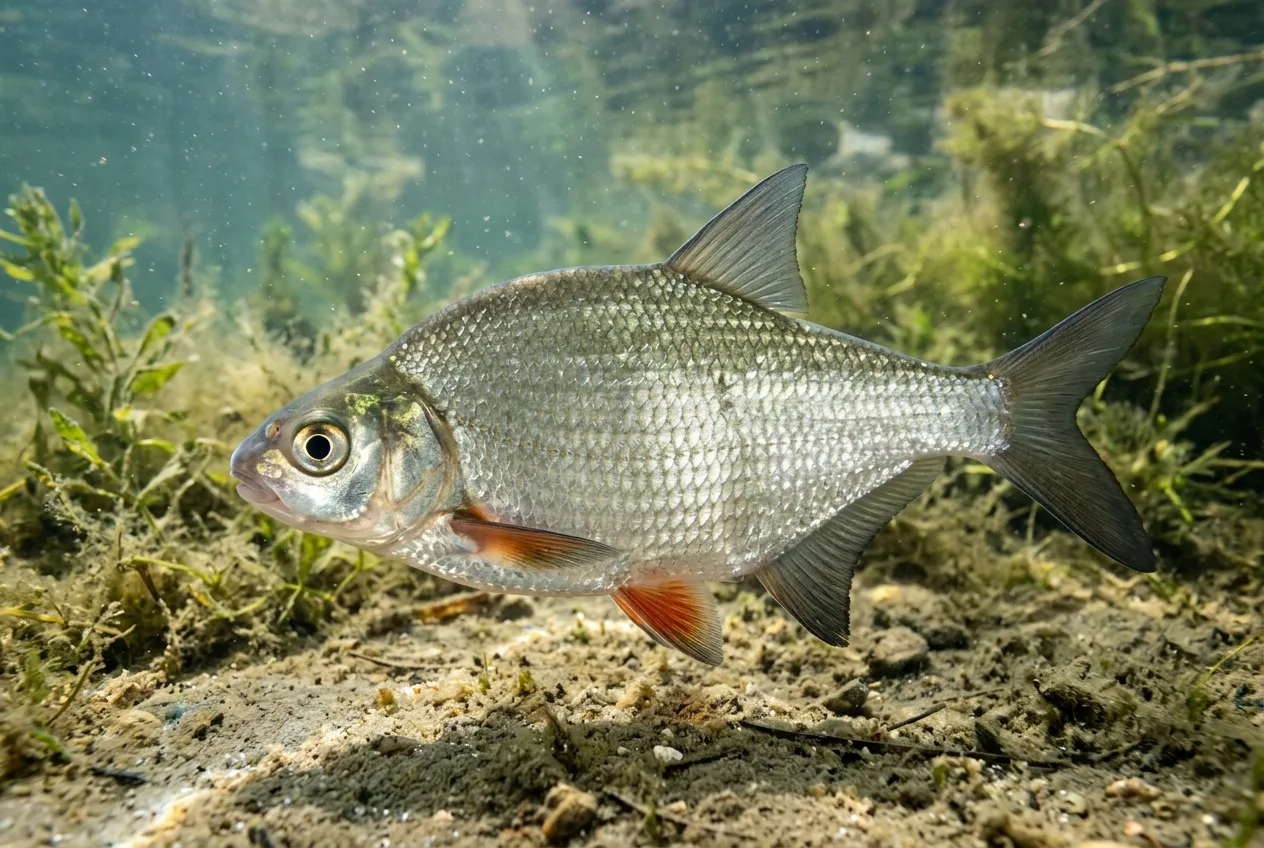
A silvery, high-backed carp-family fish, also called Blicke or Halbbrasse (literally half-bream). You tell it from a young bream by its eye, which is larger than the length of the snout, and by the reddish bases of the pectoral and pelvic fins. Typical sizes are 10 to 25 centimetres, up to 30 are mentioned.
When
Peak season is July and August; April to June and September are also good. Spawning takes place in May and June, according to other sources until July, on shallow, weedy banks; whether a closed season then applies is regulated by your federal state (Bundesland). It is considered mainly nocturnal.
- JanHardly any chance
- FebHardly any chance
- MarPossible
- AprGood
- MayGood, spawning
- JunGood, spawning
- JulPeak season
- AugPeak season
- SepGood
- OctPossible
- NovHardly any chance
- DecHardly any chance
Peak seasonGoodPossibleHardly any chanceSpawning season
Spring tactics
In March and April the shoals slowly become more active and move into shallower areas as the water temperature rises. In May and June they spawn on shallow, weedy banks. Whether the silver bream is then protected is set out in the rules of your federal state; you leave the spawning grounds in peace anyway.
Summer tactics
July and August are the best time. The fish feed a lot, and a swim baited with maggots often quickly attracts several species, silver bream among them.
Autumn tactics
In September silver bream still bite well, in October the bites become rarer. Feed more sparingly then so that the fish do not fill up quickly.
Winter tactics
In cold water the shoals stand in the deepest parts of a lake or in calm stretches of a river and hardly feed. Targeted fishing is rarely worthwhile in these months.
Are they biting today?
In January: Out of seasonIn February: Out of seasonIn March: PossibleIn April: Off-peakIn May: Spawning season, please spareIn June: Spawning season, please spareIn July: Peak seasonIn August: Peak seasonIn September: Off-peakIn October: PossibleIn November: Out of seasonIn December: Out of season
Today’s catch index needs JavaScript. Season and spawning time are in the catch calendar.
From the blog: Freshwater fish in Germany: which species you catch where · Roach or rudd, bream or silver bream: how to tell these silver fish apart reliably
Where it sits now
In the lake
Look for it in small shoals on the bottom, preferably on plant-rich banks of shallow, warm lakes and often together with bream. At spawning time the shoals come into the shallows, for winter rest they move to deeper areas.
How to go about it: In shallow, warm lakes you find silver bream on plant-rich banks and on the bream’s baited swim. Near the bank you take the pole, for spots further out the feeder rod.
| Spring | Weed bed |
|---|---|
| Summer | Weed bed |
| Autumn | Weed bed |
| Winter | deep bottom |
In the river
In a river you find it in stretches with little current, in backwaters, canals and quiet bays, preferably on banks with plants. On the bottom of large sandy rivers it is often numerous, in winter it stands deeper.
How to go about it: In slow-flowing rivers, canals and oxbows silver bream stand in bays and calm stretches. They also like cloudy water, for example in canals with boat traffic, and take there on feeder, match and pole.
| All year round | calm bay |
|---|
Biting time: mostly at night. What this looks like in the water is shown by the picture of the holding spots just below.
Holding spots in the picture
Choose the season and time of day: the picture shows where the species stands then. Spots outlined in red apply only in the chosen season. Tap a fish or a spot in the list to bring it closer. The picture is schematic and AI-generated, every water is different.
Chance of a catch in springgood
Catch chance in summerPeak season
Catch chance in autumnpossible
Catch chance in winterhardly any
- J
- F
- M
- A
- M
- J
- J
- A
- S
- O
- N
- D
Spawning season
No main time FishBase describes the silver bream as mainly nocturnal.
No main time FishBase describes the silver bream as mainly nocturnal.
No main time FishBase describes the silver bream as mainly nocturnal.
Active time FishBase describes the silver bream as mainly nocturnal.
In the lake
Water lilies and weed bed
Silver bream are found here only in spring, summer and autumn.
Deep bottom
Silver bream are found here only in winter.
The silver bream lives in small shoals near the bottom and prefers weedy margins. It is common in shallow, warm lowland lakes.
Spring: according to the fishing calendar, catch chances are possible in March and good in April and May. Spawning starts in May, in shoals on shallow, weedy spots along the bank.
Summer: catch chance according to the catch calendar is good in June and peak season in July and August.
Autumn: catch chance according to the catch calendar good in September, possible in October, hardly any in November.
Winter: according to the fishing calendar, catch chances are slim. For their winter rest, silver bream retreat to deeper parts of the water.
In the river
Calm bay with aquatic plants
Silver bream are present here all year round.
In rivers, silver bream keep to calm, slow stretches, backwaters and canals, preferring weedy banks there. On the bed of large, sandy rivers they are often very numerous.
Spring: according to the fishing calendar, catch chances are possible in March and good in April and May. Spawning starts in May along the banks, on water plants and roots, and also over shallow gravel.
Summer: catch chance according to the catch calendar is good in June and peak season in July and August.
Autumn: catch chance according to the catch calendar good in September, possible in October, hardly any in November.
Winter: according to the fishing calendar, catch chances are slim. For their winter rest, silver bream retreat to deeper parts of the water.
Depth: The silver bream lives close to the bottom and mostly feeds there, but according to the Canal & River Trust it often feeds in mid-water too.
Size comparison: AI-generated drawing, schematic.
How
It usually joins in when you are fishing for bream, so the same approaches work: the feeder on a feeder rod, a bottom weight or a fine float at the edge of the shoal. With the float, the lowest weight rests on the bottom so the bait stays down. When the silver bream lifts it, the float rises or tips flat, and that is when you strike.
Easiest way
The easiest way in is a pole of 6 to 8 m, 0,18 mm monofilament and a size 14 to 16 hook on a finer hooklength. Sit down at a canal, a slow river or a shallow lake where bream live, and feed a few balls of groundbait with maggots. Two maggots or a short piece of worm are enough as bait.
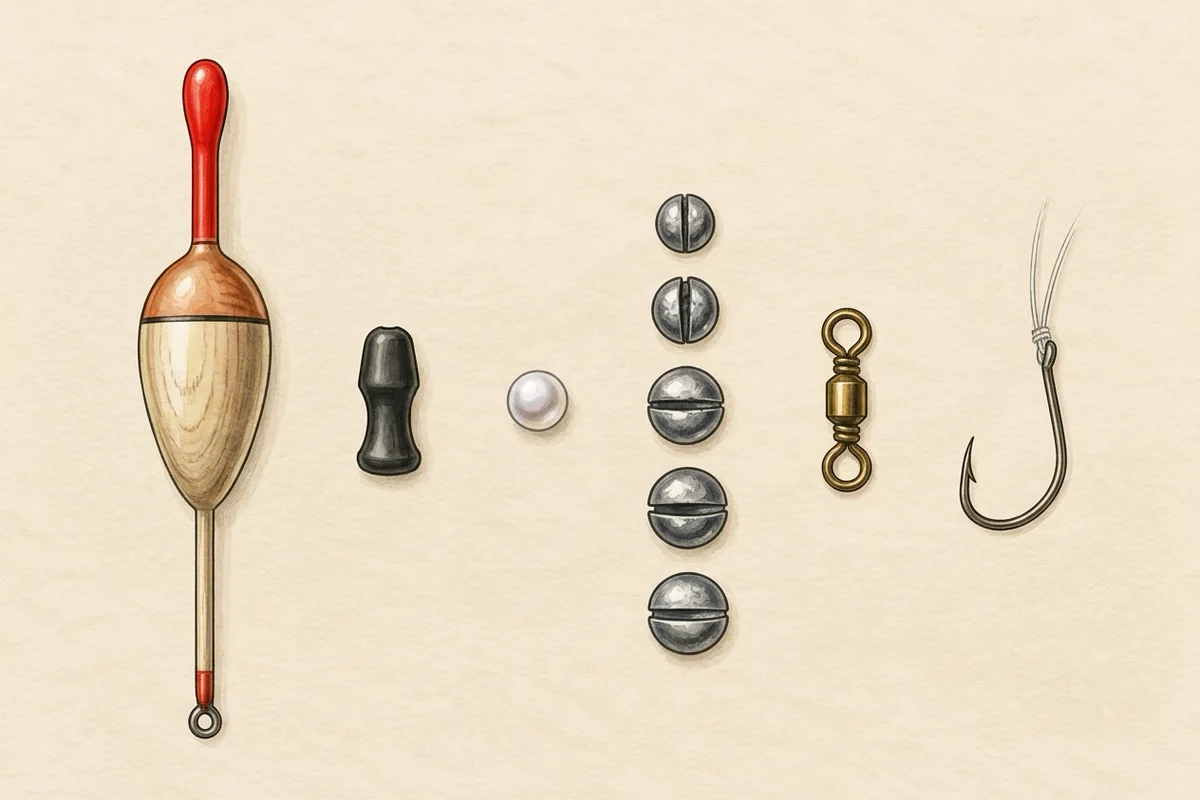
Pole at the baited spot
For silver bream in canals, harbours and near-shore areas of lakes, when the shoal is feeding within reach of the rod.
- Pick a bream spot
Look for spots where bream and roach move through, such as calm stretches of canal or shallow lake margins. Even cloudy water in busy canals hardly bothers the silver bream.
- Feel the bottom
Measure the depth with a plummet and set the float so that the hook just touches the bottom. That way the bait lies where you throw the groundbait.
- Balls with maggots
To start, throw a few balls of groundbait with live maggots onto the same spot. Maggots in the groundbait quickly attract silver bream, while coarse particles such as sweetcorn or pellets tend to keep them away.
- Light float
A fixed float with a capacity of 1 to 4 g is enough in still water and in a gentle current. A split shot a few centimetres above the hook keeps the bait close to the bottom.
- Maggots or a piece of worm
Two maggots, a bloodworm or a piece of worm all work well. Choose a medium- to long-shanked hook with a round bend that gives the bait enough room.
- Strike short
When the tip twitches or starts to move, lift the rod with a short jerk. A fine hooklength will not stand a hard strike.
- Lift with the net
You lift smaller silver bream towards you with the rod and guide bigger ones into a landing net. If you snag the bottom, the fine hooklength breaks and you keep the float.
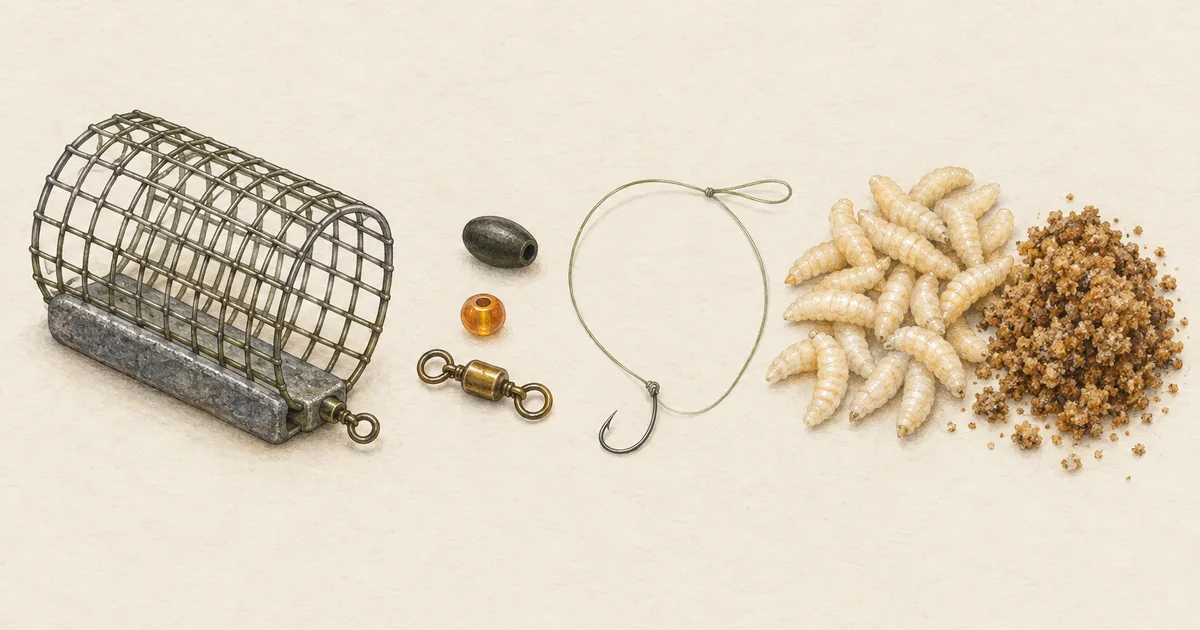
Feeder on the bottom
For silver bream at distance, in deeper water and in rivers, often together with bream and roach at the same baited spot.
- Calm bottom
In rivers, pick stretches with little current, bays or canals, and in lakes shallow, warm areas. Where bream feed, silver bream often stand alongside.
- Keep topping up
Fill the feeder with groundbait and a few maggots and recast at short intervals. In rivers full of fish the shoals clear out the spot quickly, and topping up regularly keeps them in front of you.
- Sturdy hook
When feeder fishing, a lot of force acts on the hook at the strike. So use short-shanked, heavy-wire patterns in sizes 10 to 16 on a finer hooklength.
- One target spot
Memorise a landmark on the far bank and cast to it every time. When the groundbait lies in one spot, the shoal gathers there too.
- Trembling tip
A silver bream bite shows as a tremble or a short pluck of the fine tip. Strike promptly, but gently.
- Bring in calmly
Silver bream fight less hard than big bream. Bring them in steadily and set the drag loose enough to give the hooklength some play.
- Use a landing net
Draw the fish over the rim of the net instead of lifting it on the line over stones or the bank.
What with
Maggots, casters, small worms and grains of sweetcorn all catch well. Because the fish stays small, you use small hooks, and regular groundbaiting keeps the shoal at your spot.
- Maggots & larvaeall year round, as two maggots or a bloodworm
Maggots catch reliably and, in the groundbait, also draw the shoal to the spot.
- Wormsin the warm half of the year, as a short piece
A piece of earthworm or red worm sits firmly on the hook and silver bream take it readily.
- Bait pasteas a change on the pole when small fish nibble the maggots off
A little ball of white bread paste is a simple bait that white fish such as the silver bream rarely turn down.
Tackle
A feeder rod for the feeder, a float rod for the float, a bottom rod for the bottom weight, each finely matched. The pages on the three rods explain classes, tips and casting weight.
Pole at the baited spot
- Rod
- Pole 6–8 m to start with
- Line
- Monofilament 0,18–0,20 mm, from 0,15 mm for finer rigs
- Leader
- always thinner than the main line, about 70 cm long
- Hooks
- 14–16 to start with, 12–20 overall, medium to long shank with a round bend
- Weight, float, lead
- Float with a capacity of 1–4 g, small split shot just above the hook
Feeder on the bottom
- Rod
- light feeder or bottom rod with a fine tip
- Reel
- small fixed-spool reel
- Line
- Monofilament 0,15–0,25 mm
- Leader
- thinner than the main line
- Hooks
- 10–16, short shank and heavy wire
- Weight, float, lead
- small feeder
More on tackle
- Feeder rod: classes, quivertips and set-up
- Float rod: match, Bolognese and pole
- Bottom rod: length, casting weight and bite indicator
- Line calculator
- Fishing line: monofilament, braid or fluorocarbon?
- Spooling a reel properly – without line twist
- Landing net: mesh, size and handle
- Disgorger: unhooking quickly and gently
Common mistakes
- Only coarse particles in the groundbait: Sweetcorn and pellets tend to keep silver bream away. Mix maggots or worms into the groundbait if they are your target.
- Feeding too rarely: Several white fish species clear a spot quickly. Top up at short intervals, otherwise the shoal moves on.
- Fine pole hook on the feeder: Fine-wire hooks easily bend open at the strike with the feeder attached. Use short-shanked, stronger patterns for the feeder.
- Hook too big: Silver bream have small mouths. Stick to sizes 14 to 20 and a bait that only just fills the bend.
- Silver bream mistaken for a young bream: The silver bream feels hardly slimy, whereas the bream is very slimy. Also look for the large eye and the reddish pectoral fins.
Rules
Our country overview has no figures for a minimum size (Mindestmaß) or closed season (Schonzeit) for the silver bream. That does not mean there are no rules: individual countries and water regulations protect the species or set their own limits.
What applies in your country is on the country pages under Fishing waters in Germany.
The regulation and your fishing permit (Erlaubnisschein) are what count. Lake Constance, the Rhine and the coast, for example, have their own rules: Fishing waters in Germany.
After the catch
Playing and landing
Strike briefly and let the rod absorb the runs, as silver bream only fight moderately. You net bigger fish and lift small ones calmly out with the rod. Remove the hook with wet hands or a disgorger, if possible over the water or a damp mat, and put back at once every fish you may not keep.
Handle fish with wet hands, which protects the slime layer. In the kitchen the silver bream is considered of little interest; if you nevertheless take one fish of legal size that you may keep, stun and kill it at once. Put protected or undersized fish gently back into the water.
Frequently asked questions
Which hook size for silver bream?
On the pole, sizes 12 to 20 fit, 14 to 16 to start with. With the feeder you use stronger hooks in sizes 10 to 16.
Which line for silver bream?
A monofilament main line of 0,15 to 0,25 mm is enough for float and bottom fishing. You always choose the hooklength thinner than the main line.
Which bait is best for silver bream?
Maggots and bloodworms bring the most bites. Small pieces of worm, a grain of sweetcorn and bread flake also catch fish.
How do you tell a silver bream from a bream?
The silver bream has a large eye in proportion to its head and reddish pectoral fins with grey tips. It also lacks the thick slime layer that young bream have.
Where do you catch silver bream?
In lakes, canals, ditches, reservoirs, ponds and slow rivers. They usually bite where bream and roach also hold at the baited spot.
Similar species
If you catch silver bream, you can fish for these species with similar tackle:
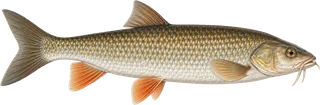 Barbel fishingMinor season
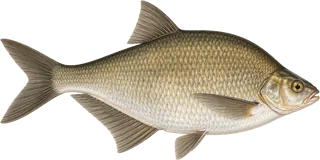 Fishing for breamShoulder season
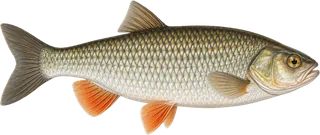 Chub fishingPeak season
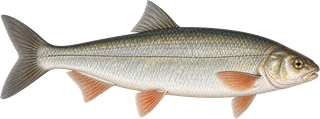 Common nase fishingPossible
Sources
As of October 2026. The practical knowledge comes from 8 sources, summarised in our own words.
View all 8 sources
- Güster (Blicca bjoerkna) – Fischkunde · RUTE & ROLLE (Redaktion)
- Stippangeln: Die Sache mit den Angelhaken · BLINKER (Thomas Pruß)
- Grundkurs Stippfischen: So fängt jeder · RUTE & ROLLE (Georg Baumann)
- Silver bream · Canal & River Trust (Fisheries & Angling Team)
- Alles auf Aland · RUTE & ROLLE (Redaktion)
- Top-Angelreviere: Drei im Norden (Abschnitt Eider) · RUTE & ROLLE (Jesco Peschutter)
- Feedern: So fangt ihr dicke Brassen · RUTE & ROLLE (Redaktion)
- Angeln mit Wurm · BLINKER (Andre Pawlitzki)
Text AI-assisted, based on the sources listed and these pages: Silver bream (profile), Feeder fishing, Float fishing, Maggots & larvae, Feeder rod.