
Knowledge – Fish
Sea trout fishing
Sea trout fishing means: working the coast in spring with spoons or fly, starting in the shallows and finding out beforehand where and when it is protected. Here is the way there in nine steps, each with a link to the detailed page.
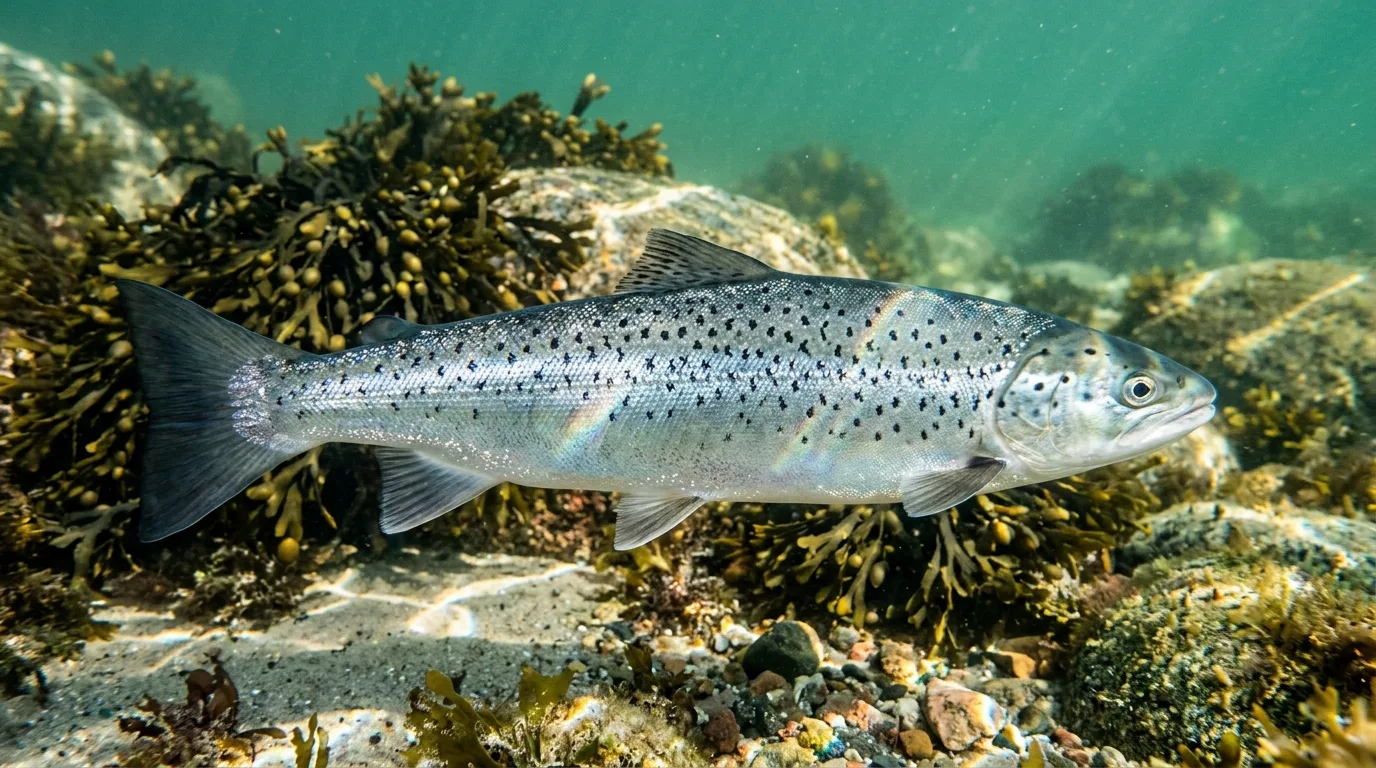
In Baden-Württemberg the sea trout is protected all year under the state fisheries regulation (Landesfischereiverordnung). In inland Lower Saxony fishing for sea trout is prohibited; according to an enforcement note from 2011 only stocked waters are exempt. On the coast, Mecklenburg-Western Pomerania protects it from 15 September to 14 December (minimum size 48 centimetres), Schleswig-Holstein protects all fish in spawning colours from 1 October to 31 December, and Lower Saxony protects it from 1 October to 15 February (as of October 2026). The steps below apply only where the law of your federal state (Bundesland) allows the catch; a protected sea trout you return at once.
 Choose another fish117 fish with guides
 EelOff-peak season
 EelpoutPossible
 IdePossible
 ArapaimaGood
 GraylingPeak season
 Atlantic salmonSpawning time, please spare
 Brown troutSpawning time, please spare
 Brook troutSpawning time, please spare
 BarbelOff-peak season
 BarramundiSpawning season
 Greater amberjackGood
 Topmouth gudgeonOnly as bycatch
 Blue marlinSpawning season
 BonefishSpawning season
 BonitoGood
 BreamOff-peak season
 Dusky grouperOnly as bycatch
 CobiaPossible
 Spiny dogfishOnly as bycatch
 CodPeak season
 ChubPeak season
 MinnowOnly as bycatch
 European sturgeonOnly as bycatch
 FlounderPeak season
 PerchPeak season
 Largemouth bassGood
 Ballan wrasseOnly as bycatch
 Yellowfin tunaSpawning season
 Giant trevallyGood
 Prussian carpPossible
 BrillPossible
 Gilthead breamSpawning time, please spare
 Golden doradoSpawning season
 Golden mahseerOnly as bycatch
 Dolphinfish (mahi-mahi)Good
 Grass carpPossible
 Great barracudaGood
 GudgeonPossible
 White breamPossible
 DaceOff-peak season
 PikePeak season
 HalibutOff-peak season
 HerringPossible
 GarfishOut of season
 Huchen (Danube salmon)Possible
 Crucian carpOnly as bycatch
 CarpOff-peak season
 RuffeOff-peak season
 VendaceOnly as bycatch
 DabPeak season
 GurnardPossible
 Coley (saithe)Peak season
 Chinook salmonHardly any chance
 King mackerelSpawning season
 LingPeak season
 TuskOff-peak season
 MackerelPossible
 Bighead carpOut of season
 WhitefishPossible
 Conger eelOff-peak season
- Sea troutSpawning time, please spare
 Grey mulletPossible
 Murray codSpawning season
 MuskellungeGood
 Common nasePossible
 Nile perchPossible
 PayaraPossible
 Peacock bassPeak season
 PermitGood
 WeeverOnly as bycatch
 PollackOff-peak season
 BurbotOff-peak season
 AspPossible
 Red snapperSpawning season
 Rainbow troutPeak season
 RoosterfishGood
 RoachPeak season
 RedfishOut of season
 Bluefin tunaOnly as bycatch
 RuddPossible
 Russian sturgeonOnly as bycatch
 HaddockOff-peak season
 SnakeheadPossible
 TenchOff-peak season
 SpirlinOnly as bycatch
 PlaiceOff-peak season
 Greenland halibutOnly as bycatch
 Round gobyOnly as bycatch
 SwordfishGood
 Lake troutSpawning time, please spare
 HakeSpawning time, please spare
 Alpine charSpawning time, please spare
 MonkfishPossible
 SoleOff-peak season
 SailfishGood
 Silver carpOut of season
 SnookPeak season
 PumpkinseedOnly as bycatch
 SpratOnly as bycatch
 Atlantic wolffishSpawning time, please spare
 TurbotPeak season
 SterletOnly as bycatch
 SmeltOnly as bycatch
 Horse mackerelPossible
 TaimenGood
 TarponGood
 TigerfishSpawning season
 BleakPossible
 WahooGood
 Wels catfishOff-peak season
 WhitingPeak season
 Sea bassOff-peak season
 ZanderPeak season
 White-eye breamOnly as bycatch
 Blue breamOnly as bycatch
 Brown bullheadPossible
 VimbaOnly as bycatch
Season in October according to the catch calendar, an estimate and not a guarantee of a catch. The fish pictures are reduced natural-history plates and AI-generated.
Best time
From March to April, at any time of day.
In January: Possible, spawning seasonIn February: Possible, spawning seasonIn March: Peak seasonIn April: Peak seasonIn May: GoodIn June: PossibleIn July: PossibleIn August: PossibleIn September: GoodIn October: Possible, spawning seasonIn November: Possible, spawning seasonIn December: Possible, spawning season
Good spot
- Coast: stony mixed ground, channel in front of the sandbank, and wreck, reefstony mixed ground, channel in front of the sandbank, and wreck, reefstony mixed ground, channel in front of the sandbank, and wreck, reefstony mixed ground, channel in front of the sandbank, and wreck, reef
- River: behind stones, undercut banks and plunge poolsbehind stones, undercut banks and plunge poolsbehind stones, undercut banks and plunge poolsbehind stones, undercut banks and plunge pools
Starter tackle
- Rod: 2,70–3,15 m, casting weight 10–40 g, semi-parabolic to parabolic action
- Line: braid 0,12–0,15 mm
- Hook: always sharp; barbless hooks make releasing easier
- Rod: single-handed rod of about 2,70 m, line class 6–8
- Line: floating (WF or shooting head), intermediate in a swell
- Hook: streamer size 4–8, in winter usually size 8
- Rod: spinning rod of about 3 m, casting weight 10–40 g
- Line: braid 0,12–0,15 mm
In short
In short: You catch sea trout best from March to April, at any time of day. Good spots on the coast: stony mixed ground, channel in front of the sandbank, and wreck, reef; in rivers: behind stones, undercut banks and plunge pools. Proven baits: slim coastal spoons, plugs or coastal flies. Protected all year in Baden-Württemberg, in inland Lower Saxony fishable only in stocked waters. On the coast it is protected in Mecklenburg-Western Pomerania from 15 September to 14 December, in Schleswig-Holstein fish in spawning colours are protected from 1 October to 31 December, and on the Lower Saxony coast a closed season (Schonzeit) applies from 1 October to 15 February (as of October 2026).
Quick to recognise
The migratory form of the trout: it grows up in the sea and moves into streams and rivers to spawn. You recognise it by its straight tail fin and thick tail wrist; ascending fish typically measure 50 to 70 centimetres.
When
On the coast March and April are the best months, May and September are also good. From January it can work in the shallows on mild afternoons, and in summer the evening around sunset brings the bites. Spawning takes place from October to February in streams and rivers; during that time it is protected in many places, for varying lengths depending on the state.
- JanPossible, spawning season
- FebPossible, spawning season
- MarPeak season
- AprPeak season
- MayGood
- JunPossible
- JulPossible
- AugPossible
- SepGood
- OctPossible, spawning
- NovPossible, spawning season
- DecPossible, spawning season
Peak seasonGoodPossibleHardly any chanceSpawning season
Spring tactics
Once the water rises above about 4 degrees the fish become livelier, and from about 6 degrees coastal fishing really gets going. Then work the lure briskly and in March and April be on the beach at first light, because the bite window is often short. When ragworm swarm at the end of March or beginning of April, brown and black lures catch.
Summer tactics
In summer you fish mainly at dusk and at night, with dark lures just below the surface and not retrieved too slowly. By day, reefs and points with good current are worthwhile. Night fishing is prohibited in some states and waters, so check your fishing permit (Erlaubnisschein).
Autumn tactics
In autumn the fish need to be provoked: smaller lures in red, copper or gold and varied, even aggressive retrieves. Fish ready to spawn now move into the rivers; whether and where you may then fish for sea trout is regulated by your federal state (Bundesland).
Winter tactics
When the water drops below about 3 degrees the trout become sluggish. Then small lures retrieved slowly and deep with many stops catch, preferably in white or mother-of-pearl, and on the fly small patterns in pink, orange or red. Look for shallow bays and fjords with a dark bottom; around stream mouths protected zones often apply.
Are they biting today?
In January: Spawning season, please spareIn February: Spawning season, please spareIn March: Peak seasonIn April: Peak seasonIn May: Off-peakIn June: PossibleIn July: PossibleIn August: PossibleIn September: Off-peakIn October: Spawning season, please spareIn November: Spawning season, please spareIn December: Spawning season, please spare
Today’s catch index needs JavaScript. Season and spawning time are in the catch calendar.
From the blog: Fishing at locks and weirs: what applies and what the signs mean · Fishing in November: which fish bite now and where I look for them · Pike on the coast of Mecklenburg-Western Pomerania: harvest slot of 60 to 90 centimetres
Where it sits now
On the coast
The sea trout hunts close to the shore, often already in the first gutter, so you fish the shallow water first before wading deeper. Typical is leopard ground, where weedy stones and pale sand alternate, plus bladderwrack, mussel beds, stone reefs and points with current. In winter the fish often gather in slightly freshened bays, in summer they come into the shallows almost only in the dark.
How to go about it: Even seemingly monotonous sandy beaches hold fish: look for long gutters parallel to the shore, dark patches of drifting weed and groynes where the water is slightly deeper. When the water level rises with the wind, the trout move into the shallows; when it falls sharply, they lie in wait at the transitions to deeper water. When wading, keep the way back over deeper gutters in mind.
| All year round | stony mixed ground, channel in front of the sandbank, wreck, reef, sandy bottom |
|---|
In the river
In the river you look for it behind large stones and under undercut banks, also in deep gutters, in plunge pools below weirs or rapids and where streams and tributaries join. The run is mainly in autumn, a few fish arrive earlier in the year, groups often after heavy rain. The longer they stay in fresh water, the harder they are to tempt.
How to go about it: On the river your chances are best when, after heavy rain, the water level drops a little again, clouds cover the sun and a light breeze blows. In long dry spells you are left with almost only dusk and night. Fish in spawning colours often attack the lure only to drive it off, so there are many missed bites then. Whether you may fish for sea trout in the river is set by the federal state (Bundesland) and the water regulations.
| All year round | behind stones, undercut bank, plunge pools |
|---|---|
| Winter extra | Riffle |
Biting time: round the clock, with no fixed main time. What that looks like on the water is shown by the picture of the swims just below.
Waters with rules for sea trout
Holding spots in the picture
Choose the season and time of day: the picture shows where the species stands then. Spots outlined in red apply only in the chosen season. Tap a fish or a spot in the list to bring it closer. The picture is schematic and AI-generated, every water is different.
Catch chance in springPeak season
Catch chances in summerpossible
Catch chance in autumnpossiblespawning, observe closed seasons
Catch chances in winterpossiblespawning season, observe the closed seasons
- J
- F
- M
- A
- M
- J
- J
- A
- S
- O
- N
- D
Spawning season
Active time In spring the sea trout hunts all day, from a water temperature of about 15 °C mainly at dusk and in the dark.
Active time In spring the sea trout hunts all day, from a water temperature of about 15 °C mainly at dusk and in the dark.
Active time In spring the sea trout hunts all day, from a water temperature of about 15 °C mainly at dusk and in the dark.
Active time In spring the sea trout hunts all day, from a water temperature of about 15 °C mainly at dusk and in the dark.
On the coast
gully in front of the sandbank
Sea trout are found here all year round.
Sandy bottom
Sea trout are found here all year round.
Stony mixed ground
Sea trout are found here all year round.
Wreck, reef
Sea trout are found here all year round.
The sea trout hunts close to the coast, often already in the first gutter right at the shore. Typical is leopard ground: dark, weedy stones alternating with pale sand, plus bladderwrack and mussel beds. Stone reefs and points with current are also among its haunts. Plain sandy beaches are worthwhile too: there it hunts in gutters parallel to the shore, at dark patches of weed and at groynes.
Spring: catch chance according to the catch calendar: peak season in March and April, good in May. Between March and May almost all kelts are back in the sea. The fish then feed all day.
Summer: catch chance according to the catch calendar: possible. When the water reaches about 15 °C, the sea trout becomes active at dusk. It enters the shallows in summer almost only in the dark. By day it keeps more to rocks, points and current-swept spots near deep water than to shallow beaches.
Autumn: catch chance according to the catch calendar: good in September, possible in October and November. The spawning season falls in this period, so observe the closed seasons (Schonzeit). In September and October the fish again stand close inshore by day as well.
Winter: catch chance according to the catch calendar: possible. The spawning season falls in this period, so observe the closed seasons (Schonzeit). In winter sea trout avoid very salty water and often gather in slightly freshened bays. On mild days they hunt in the afternoon in shallows that have warmed up over the day.
In the river
Undercut bank, overhanging branches, timber
Sea trout are found here all year round.
Slack water behind rocks
Sea trout are found here all year round.
Gravelly shallow (riffle)
Sea trout are found here only in winter.
Pools, deep spot
Sea trout are found here all year round.
Sea trout that have run up stand behind large stones, at undercut banks, in deep gutters and in plunge pools below weirs or rapids. The mouths of streams and tributaries are also typical spots.
Spring: catch chance according to the catch calendar: peak season in March and April, good in May. At the start of spring some rivers still hold lean kelts on their way to the sea, and in lower reaches and estuaries also bright fish that ran early. In Sweden the river season begins with these fish. By late spring most sea trout are back on the coast. Whether kelts may be fished for is set by the fishing permit (Erlaubnisschein).
Summer: catch chance according to the catch calendar: possible. From mid-June the first fish move into the rivers. Between July and October further groups follow, preferably after heavy rain. In high summer they are active mainly at dusk and at night.
Autumn: catch chance according to the catch calendar: good in September, possible in October and November. The spawning season falls in this period, so observe the closed seasons (Schonzeit). The longer a sea trout is in the river, the harder it is to catch.
Winter: catch chance according to the catch calendar: possible. The spawning season falls in this period, so observe the closed seasons (Schonzeit). Spawning takes place in winter over gravel in flowing water. From January the spent fish drift downstream and already feed again in fresh water. Young “Grönländer” (first-time returners) seek out the lower reaches after a long frost and bite as the thaw sets in. In this period the species is protected in many places.
Depth: On the coast the sea trout usually hunts close inshore, often already in the first gutter.
Size comparison: AI-generated drawing, schematic.
How
Most sea trout are caught by spinning, on the coast and in the river. Fly anglers use a single-handed rod of line class 8 on the coast and a double-handed rod of class 9 on the river. In the river the sea trout also takes a lobworm close to the bottom.
Easiest way
To start, a spinning rod of about 3 metres that casts 10 to 40 grams is enough, plus thin braid with a monofilament shock leader and two or three slim coastal spoons. In March or April pick a beach with stones, weed and sandy patches and cast in a fan, also parallel to the shore.
Spoons and plugs while wading
The standard method on the Baltic coast: you walk the beach and search for hunting fish with fan casts, especially in spring.
- Look for variety
Choose stretches with varied ground of stones, weed and sandy patches, plus groynes and gutters. With an onshore wind and slightly clouded water the fish are often in a feeding mood.
- Add a shock leader
Join the braid to about a metre of monofilament shock leader. It is less visible in the water and cushions the hard tugs of the trout during the fight.
- Cover the half circle
Cast in a half circle around you, now far, now short. Casts parallel to the shore pay off, because the lure then works for a long time in the gutter along which the fish travel.
- Change the pace
Start reeling as soon as the lure hits the water so that it stays above weed and stones. Put in spinning pauses of a few seconds; you usually retrieve spoons faster and plugs slower.
- Tease the followers
Over pale sand you often see followers behind the lure. Then either speed up or stop at once; both force the trout to make a decision.
- Soft drag
Set the drag rather soft and keep the line taut. A rod with a yielding tip absorbs the wild runs just before landing better.
- Unhook in the water
Net the trout without dragging it onto the beach. If it has to go back, unhook it under water and support it with wet hands until it swims away by itself.
Streamer on the coast
On many days it brings more bites than a spoon, especially when the fish are feeding on small crustaceans, shrimps or worms.
- Wade parallel
First fish the shore zone, then wade carefully parallel to the beach, preferably towards the sun. Four casts fanned forward, one in the direction of travel, then a few steps further.
- Adapt the leader
A leader of about 2,70 metres with a tip around 0,25 millimetres suits normal weather. In rough water and with big streamers you go one step stronger.
- Imitate the prey
Match the fly to the prey: in early spring small sand-hopper patterns, with warmer water shrimps, in swarming time ragworm flies, otherwise baitfish streamers.
- Use a line basket
A line basket keeps the retrieved line out of waves and weed. A floating line is usually enough; in heavy swell an intermediate helps.
- Strip briskly
In spring strip the streamer briskly, because the trout is faster than any fly. In ice-cold winter water, by contrast, you retrieve slowly and with small twitches.
- Strike in weed too
In winter the bites often come only as a slight resistance. If it feels like a snag in the weed, strike anyway.
- Give line
Let the trout take line from the reel in its first run. Plenty of backing gives you a reserve if a big fish takes the streamer.
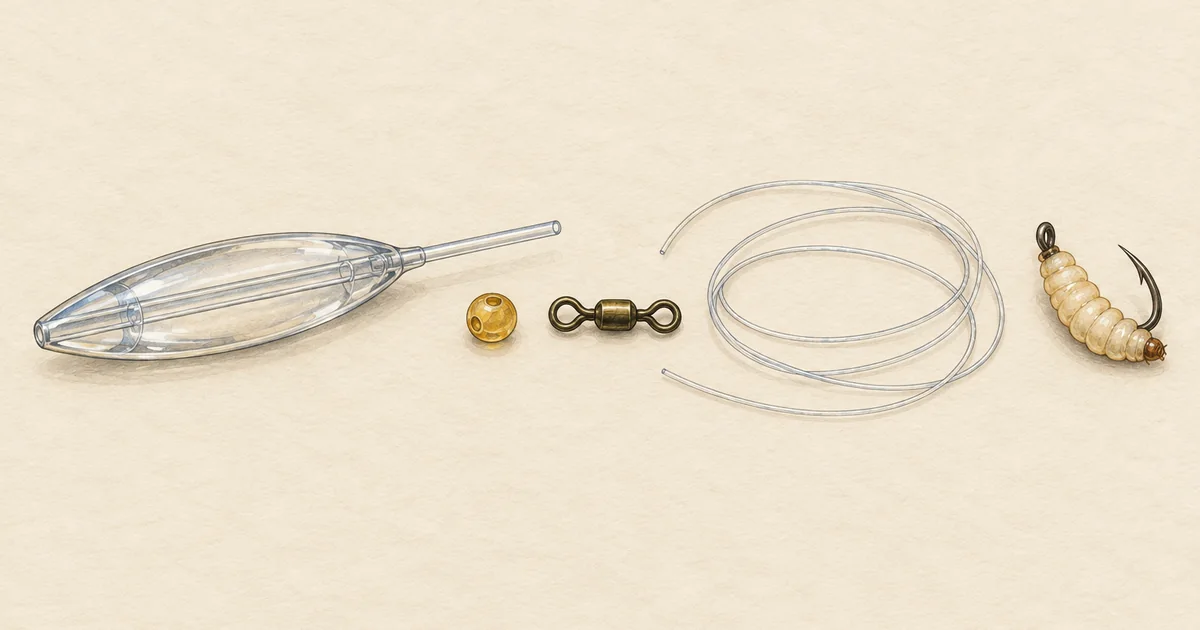
Fly behind the sbirolino
For spinning anglers without a fly rod: this is how you present a light fly with the spinning rod when the trout are after small prey.
- Recognise small prey
The method pays off when large lures bring nothing because the fish are hunting sand hoppers, shrimps or small fish. Watch what is flushed out of the weed while wading.
- Long hooklength
Behind the sbirolino goes a hooklength of 2,50 to 3,50 metres, with the sea trout fly on its end.
- Cast in a fan
Cast as with the spoon in a half circle and occasionally parallel to the shore so that you cover a lot of water.
- Speed and pause
Retrieve the rig with variety: briskly, then a few seconds of stillness while the fly sinks towards the bottom.
- When it speeds up
The trout often grabs at exactly the moment you start reeling again after the pause. Strike then without hesitating.
- Briefly in the air
Net the fish in the water and hold it out, even for a photo, only as briefly as necessary.
What with
On the coast slim spoons and coastal plugs in silver, silver-green or silver-blue that imitate sand eels and small herring; at night in summer completely dark lures, in late autumn and winter orange, yellow or red, especially in cloudy water. In the river large spinners in silver and one-piece plugs that sink catch, towards the end of the season also red or orange spinners. With the fly you offer imitations of prey fish in spring, black patterns at night and attractor flies in late autumn.
- Spoonon the coast, mainly in spring
A slim coastal spoon flies far even into the wind and imitates the sand eels and herring on which the big sea trout feed.
- Streamerin winter and spring, when spoons bring nothing
Small patterns match the sand hoppers, shrimps and worms that the trout fix on completely on some days.
- Spinnerin the river, in summer and autumn
A large spinner works reliably even in current and flashes conspicuously where a slim coastal spoon hardly holds.
Tackle
For the coast a spinning rod of 2,70 to 3,15 metres in length and 10 to 40 grams casting weight suits, plus a fixed-spool reel in size 3000 or 4000 that tolerates salt water. On it you spool braid of 0,12 to 0,15 millimetres in diameter and in front of it about a metre of monofilament shock leader. The fly leader should be at least 0,25 millimetres at the front, better 0,30. Keep the hooks sharp, because many bites come directly after the lure splashes down.
Spoons and plugs while wading
- Rod
- 2,70–3,15 m, casting weight 10–40 g, semi-parabolic to parabolic action
- Reel
- saltwater-proof fixed-spool reel, size 3000–4000, spool filled to the rim
- Line
- braided 0,12–0,15 mm
- Leader
- about 1 m of monofilament around 0,40 mm as shock leader
- Hooks
- always sharp; barbless hooks make releasing easier
- Weight, float, lead
- spoons usually 10–35 g, in autumn rather smaller ones up to 20 g
Streamer on the coast
Fly behind the sbirolino
- Rod
- spinning rod of about 3 m, casting weight 10–40 g
- Reel
- fixed-spool reel size 3000–4000
- Line
- braided 0,12–0,15 mm
- Leader
- 2,50–3,50 m, sea trout fly on the end
More on tackle
Common mistakes
- A full lure box: Constant changing costs fishing time and confidence. Two spoon and two plug models in a few colours are enough; more important is that you know their working speed.
- Casting only straight out to sea: Many trout bite on casts parallel to the beach or even behind you when you stand on a sandbank. Cover the whole half circle.
- Too long in one spot: Sea trout roam. If there is no contact after about 20 casts, move a little further; after a catch you follow the direction in which the group moves on.
- Ignoring sandy beaches: Even bathing beaches have gutters, groynes and patches of weed where big herring-eaters hunt close inshore. Fish them briskly and remember the spots where you had contact.
- Strongly curved lures into a headwind: Such models flutter during the cast and land too early. For long distances straight, streamlined lures are suitable, and the spool should be filled to the rim.
Rules
Each federal state (Bundesland) sets its own closed season (Schonzeit) and minimum size (Mindestmaß). Choose your state; the values come from our state pages.
Baden-Württemberg
Our overview for Baden-Württemberg does not list the sea trout. What applies there is given on the page Fishing in Baden-Württemberg with the spots in that state.
Bavaria
Our overview for Bavaria does not list the sea trout. What applies there is given on the page Fishing in Bavaria with the spots in that state.
Berlin
Our overview for Berlin does not list the sea trout. What applies there is given on the page Fishing in Berlin with the spots in that state.
Brandenburg
Our overview for Brandenburg does not list the sea trout. What applies there is given on the page Fishing in Brandenburg with the spots in that state.
Bremen
- Minimum size
- 50 cm
- Closed season
- 15.10.–15.3.
- Note
- Harvest only if the stock comes from stocking or is supported by it
As of October 2026. All rules, exceptions and sources: Fishing in Bremen.
Hamburg
- Minimum size
- 40 cm
- Closed season
- 15.10.–15.2.
- Catch limit
- 2 per day
- Note
- Harvest window 40–65 cm
As of October 2026. All rules, exceptions and sources: Fishing in Hamburg.
Hesse
Our overview for Hesse does not list the sea trout. What applies there is given on the page Fishing in Hesse with the spots in that state.
Mecklenburg-Western Pomerania
- Minimum size
- 45 cm
- Closed season
- 1.9.–31.3.
- Note
- Coast: 48 cm, closed season 15.9.–14.12. (beyond 4 nautical miles also 1.6.–15.9.), 3 per day
As of October 2026. All rules, exceptions and sources: Fishing in Mecklenburg-Western Pomerania.
Lower Saxony
- Minimum size
- 40 cm
- Closed season
- protected all year round
- Note
- Inland only in stocked waters; coast: closed season 1.10.–15.2.
As of October 2026. All rules, exceptions and sources: Fishing in Lower Saxony.
North Rhine-Westphalia
Our overview for North Rhine-Westphalia does not list the sea trout. What applies there is given on the page Fishing in North Rhine-Westphalia with the spots in that state.
Rhineland-Palatinate
Our overview for Rhineland-Palatinate does not list the sea trout. What applies there is given on the page Fishing in Rhineland-Palatinate with the spots in that state.
Saarland
Our overview for Saarland does not list the sea trout. What applies there is given on the page Fishing in Saarland with the spots in that state.
Saxony
Our overview for Saxony does not list the sea trout. What applies there is given on the page Fishing in Saxony with the spots in that state.
Saxony-Anhalt
Our overview for Saxony-Anhalt does not list the sea trout. What applies there is given on the page Fishing in Saxony-Anhalt with the spots in that state.
Schleswig-Holstein
- Minimum size
- 40 cm
- Closed season
- 1.10.–28.2.
- Note
- Coast: 1.10.–31.12., only fish in spawning colours
As of October 2026. All rules, exceptions and sources: Fishing in Schleswig-Holstein.
Thuringia
Our overview for Thuringia does not list the sea trout. What applies there is given on the page Fishing in Thuringia with the spots in that state.
The regulation and your fishing permit (Erlaubnisschein) are what count. Lake Constance, the Rhine and the coast, for example, have their own rules: Fishing waters in Germany.
After the catch
Playing and landing
Strike at once, because many sea trout grab right after the lure lands. With a soft drag the jumping trout is less likely to throw the hook, but keep the fight short anyway. Protected and undersized fish, but also lean, dark kelts, you unhook with wet hands in the water and support until they swim off by themselves. If you may keep a fish of legal size, it is stunned and killed at once.
If the sea trout jumps during the fight, lower the rod so that it cannot shake out the hook; how to land it safely is explained on the page on landing and unhooking. A sea trout of legal size that you may take you stun and kill at once. Protected fish, undersized fish, or fish too big for a harvest window you unhook with wet hands directly in the water and release.
Frequently asked questions
Which rod for sea trout fishing on the coast?
A spinning rod between 2,70 and 3,15 metres that can cast 10 to 40 grams suits well; with it you fish the usual spoons and plugs. A more parabolic action cushions the jumps just before landing.
Which colour of sea trout spoons?
In clear water silver with blue or green, in summer in the dark black or copper, in autumn red, copper and gold, in winter white or mother-of-pearl. In heavily clouded water bright colours stand out better.
When do sea trout bite best?
On the coast mainly from the end of February to the beginning of April, then often early in the morning. In winter midday and early afternoon are best, when the water at the shore has warmed up.
In what wind should you fish for sea trout?
An onshore wind clouds the water slightly and washes food free, which often makes the fish active. On sandy beaches, however, some specialists prefer an offshore or side wind, because the water stays clear and less weed drifts.
Which line for sea trout fishing?
Take braid 0,12 to 0,15 millimetres thick; it casts far and shows bites clearly. In front of it goes a monofilament shock leader that gives a little during the fight.
Which fly rod for sea trout on the coast?
A single-handed rod of about 2,70 metres in line class 7 to 8 with a floating line is enough on most days. In a high swell an intermediate line helps.
Similar species
If you catch sea trout, you can fish for these species with similar tackle:
 Atlantic salmon fishingSpawning season, please spare
 Brook trout fishingSpawning season, please spare
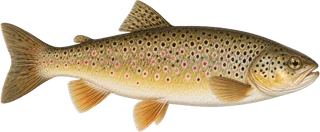 Brown trout fishingSpawning season, please spare
 Fishing for garfishOut of season
Sources
As of October 2026. The practical knowledge comes from 14 sources, summarised in our own words.
See all 14 sources
- Meerforellenblinker: Diese Faktoren entscheiden über den Fangerfolg · BLINKER (R. Korn)
- Meerforelle: Tipps für mehr Erfolg · RUTE & ROLLE (J. Peschutter)
- Watangeln auf Meerforelle · RUTE & ROLLE (Redaktion)
- Meerforelle: Tipps für weite Würfe · RUTE & ROLLE (J. Peschutter)
- Ihr wollt Meerforellen angeln? 10 Tipps für mehr Fangerfolg · BLINKER (J. Radtke)
- Erfolgreich Angeln an der Küste · BLINKER (J. Müller)
- Ostsee: Meerforellenangeln im Winter mit der Fliege · BLINKER (M. Werner)
- Fliegenfischen: Die Beutetiere der Meerforelle · BLINKER (C. Leppin)
- Vernachlässigter Angel-Spot: Meerforellen am Sandstrand fangen · BLINKER (M. Brauch)
- Meerforellen: Wie Tide und Wasserstand den Fang beeinflussen · BLINKER (C. Leppin nach J. Radtke)
- Steckbrief Meerforelle: Wie sie in Meer und Fluss beangelt werden kann · BLINKER (Redaktion)
- Mit der Fliegenrute auf Meerforelle · FISCH & FANG (B. Domeyer)
- Lachsangeln: Schritt für Schritt zum Silber (mit Abschnitt Lachsangeln in Schweden) · BLINKER (R. Korn, M. Wendt)
- Nachhaltig fischen – Tipps für Angler:innen · Umweltbundesamt Österreich (im Auftrag des BMLUK, mit österreichischen Landesfischereiverbänden)
Text AI-assisted, based on the sources named and on these pages: Sea trout (profile), Spinning, Fly fishing, Spoon, Landing and unhooking a fish.