
Knowledge – Fish
Fishing for muskellunge
Fishing for muskellunge means bringing plenty of patience, casting big lures and keeping them moving right to the last metre. Here is the way there in nine steps, each with a link to the detailed page.
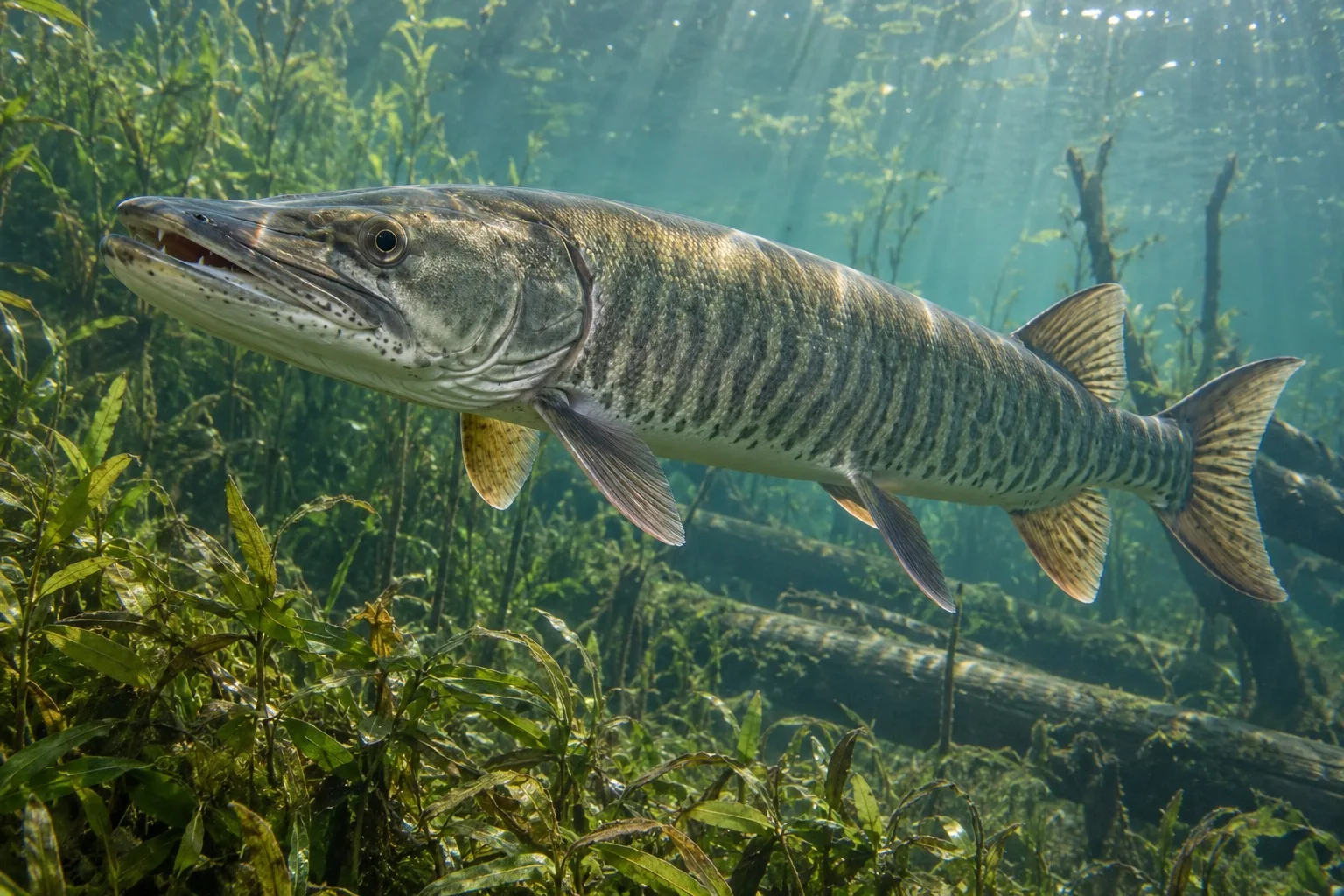
The muskellunge has large fangs in its lower jaw that can easily injure you. Do not put your hand in its mouth, and remove the hook with long pliers. Larger, older fish can be contaminated with PCBs, pesticides and mercury; anyone who wants to eat them should follow the authority’s consumption advice for the water in question.
 Choose another fish117 fish with guides
 EelOff-peak season
 EelpoutPossible
 IdePossible
 ArapaimaGood
 GraylingPeak season
 Atlantic salmonSpawning time, please spare
 Brown troutSpawning time, please spare
 Brook troutSpawning time, please spare
 BarbelOff-peak season
 BarramundiSpawning season
 Greater amberjackGood
 Topmouth gudgeonOnly as bycatch
 Blue marlinSpawning season
 BonefishSpawning season
 BonitoGood
 BreamOff-peak season
 Dusky grouperOnly as bycatch
 CobiaPossible
 Spiny dogfishOnly as bycatch
 CodPeak season
 ChubPeak season
 MinnowOnly as bycatch
 European sturgeonOnly as bycatch
 FlounderPeak season
 PerchPeak season
 Largemouth bassGood
 Ballan wrasseOnly as bycatch
 Yellowfin tunaSpawning season
 Giant trevallyGood
 Prussian carpPossible
 BrillPossible
 Gilthead breamSpawning time, please spare
 Golden doradoSpawning season
 Golden mahseerOnly as bycatch
 Dolphinfish (mahi-mahi)Good
 Grass carpPossible
 Great barracudaGood
 GudgeonPossible
 White breamPossible
 DaceOff-peak season
 PikePeak season
 HalibutOff-peak season
 HerringPossible
 GarfishOut of season
 Huchen (Danube salmon)Possible
 Crucian carpOnly as bycatch
 CarpOff-peak season
 RuffeOff-peak season
 VendaceOnly as bycatch
 DabPeak season
 GurnardPossible
 Coley (saithe)Peak season
 Chinook salmonHardly any chance
 King mackerelSpawning season
 LingPeak season
 TuskOff-peak season
 MackerelPossible
 Bighead carpOut of season
 WhitefishPossible
 Conger eelOff-peak season
 Sea troutSpawning time, please spare
 Grey mulletPossible
 Murray codSpawning season
- MuskellungeGood
 Common nasePossible
 Nile perchPossible
 PayaraPossible
 Peacock bassPeak season
 PermitGood
 WeeverOnly as bycatch
 PollackOff-peak season
 BurbotOff-peak season
 AspPossible
 Red snapperSpawning season
 Rainbow troutPeak season
 RoosterfishGood
 RoachPeak season
 RedfishOut of season
 Bluefin tunaOnly as bycatch
 RuddPossible
 Russian sturgeonOnly as bycatch
 HaddockOff-peak season
 SnakeheadPossible
 TenchOff-peak season
 SpirlinOnly as bycatch
 PlaiceOff-peak season
 Greenland halibutOnly as bycatch
 Round gobyOnly as bycatch
 SwordfishGood
 Lake troutSpawning time, please spare
 HakeSpawning time, please spare
 Alpine charSpawning time, please spare
 MonkfishPossible
 SoleOff-peak season
 SailfishGood
 Silver carpOut of season
 SnookPeak season
 PumpkinseedOnly as bycatch
 SpratOnly as bycatch
 Atlantic wolffishSpawning time, please spare
 TurbotPeak season
 SterletOnly as bycatch
 SmeltOnly as bycatch
 Horse mackerelPossible
 TaimenGood
 TarponGood
 TigerfishSpawning season
 BleakPossible
 WahooGood
 Wels catfishOff-peak season
 WhitingPeak season
 Sea bassOff-peak season
 ZanderPeak season
 White-eye breamOnly as bycatch
 Blue breamOnly as bycatch
 Brown bullheadPossible
 VimbaOnly as bycatch
Season in October according to the catch calendar, an estimate and not a guarantee of a catch. The fish pictures are reduced natural-history plates and AI-generated.
Best time
From June to November.
In January: Hardly any chanceIn February: Hardly any chanceIn March: Hardly any chanceIn April: Hardly any chance, spawning seasonIn May: Possible, spawning seasonIn June: GoodIn July: GoodIn August: GoodIn September: GoodIn October: GoodIn November: GoodIn December: Possible
Good spot
- Lake: weed bed, shelf edge and sunken treeweed bed, shelf edge and sunken treeweed bed, shelf edge and sunken treeweed bed, shelf edge and sunken tree
- River: deep pools, quiet bay and undercut bankdeep pools, quiet bay and undercut bankdeep pools, quiet bay and undercut bankdeep pools, quiet bay and undercut bank
Starter tackle
- Rod: baitcasting rod, medium heavy to heavy, about 1,80–2,75 m (6–9 ft), recommended from about 2,10 m in Wisconsin; lures of about 57 to 450 g
- Line: braid, 50–80 lb (about 23–36 kg), some anglers up to 100 lb (about 45 kg)
- Hooks: trebles on the lure; barbless hooks are easier to remove
- Rod: sturdy baitcasting rod, medium heavy to heavy, from about 2,10 m
- Line: braid, 50–80 lb (about 23–36 kg)
- Hooks: quick-strike rig with hooks in the head section of the bait, not a single swallowed hook
In short
In short: According to the catch calendar, the best time is from June to November. Good spots in a lake: weed bed, shelf edge and sunken tree; in a river: deep pools, quiet bay and undercut bank. Proven lures: big plugs, jerkbaits, bucktail spinners, spoons and soft plastics, and also live baitfish of 25 to 35 cm. Dark markings on a light background and cheeks scaled only on the upper part set it apart from the pike. Wisconsin has its own musky season.
Quick to recognise
The largest member of the pike family, known among anglers as the musky, with dark bars or spots on a light background. With the pike it is the other way round. Fish of about 95 centimetres are usual.
When
In Wisconsin June to November are the best months, with chances still in May and December. In 2026 it is open on inland waters statewide for the first time, from 2 May to 31 December. Spawning in Wisconsin runs from mid-April to the end of May at 10 to 15 degrees.
- JanHardly any chance
- FebHardly any chance
- MarHardly any chance
- AprHardly any chance, spawning season
- MayPossible, spawning season
- JunGood
- JulGood
- AugGood
- SepGood
- OctGood
- NovGood
- DecPossible
Peak seasonGoodPossibleHardly any chanceSpawning season
Season in the destination
In northern Wisconsin muskies spawn from mid-April to the end of May at a water temperature of about 10 to 15 degrees; after spawning you look for them first in the shallows: weedy bays, narrows and the points right next to them. In high summer the water in some waters gets warmer than 25 degrees, and then many more released fish die, so cool mornings and short fights are a must. In autumn the fish feed up on reserves for the winter, and then big diving plugs, soft plastics and the live sucker pay off.
Season and biting time
In January: Hardly any chanceIn February: Hardly any chanceIn March: Hardly any chanceIn April: Spawning seasonIn May: Spawning seasonIn June: GoodIn July: GoodIn August: GoodIn September: GoodIn October: GoodIn November: GoodIn December: Possible
Where it sits now
In the lake
In a lake it holds a fixed territory; typical spots are the edges of sand and stone banks, weed beds and old tree stumps. At the start of the season you find it in shallow, weedy bays and on the points next to them, in summer further down in cooler water and partly in open water by the baitfish.
How to go about it: Along the weed edge, look for inside bends, small points into deep water and weed islands that stand denser than the rest. For trolling, the plug runs about 3 to 18 metres behind the boat at around 6 to 13 km/h along the outer edge; in summer, deep-running models near the thermocline catch fish.
| All year round | weed bed, shelf edge, sunken tree, deep bottom, open water |
|---|
In the river
In a river you look for deep pools with slow current. Small weedy bays and stretches of bank shaded by overhanging trees are also worth fishing.
How to go about it: In rivers many muskies are caught below weirs and small dams. Offer baitfish or soft plastics in eddies and on current edges, where calm and fast water meet.
| All year round | deep pools, quiet bay, undercut bank |
|---|
Holding spots in the picture
Choose a season and time of day: the picture shows where the species sits then. Tap a fish or a spot in the list to bring it closer. The picture is schematic and AI-generated, every water is different.
Catch chances in springhardly anyspawning season, observe the closed seasons (Schonzeit)
Catch chance in summergood
Catch chance in autumngood
Catch chance in winterhardly any
- J
- F
- M
- A
- M
- J
- J
- A
- S
- O
- N
- D
Spawning season
In the lake
Water lilies and weed bed
The muskellunge is found here all year round.
Shelf edge
The muskellunge is found here all year round.
Sunken tree
The muskellunge is found here all year round.
Deep bottom
The muskellunge is found here all year round.
Open water
The muskellunge is found here all year round.
In a lake the muskellunge holds a fixed territory on its own. It lurks at the drop-offs of stone and sand banks, in weed beds and by tree stumps, hunting by sight. After spawning the fish sit in shallow, weedy bays and on the points next to them, deeper later in the year.
Spring: according to the catch calendar, catch chances are hardly any in March and April, possible in May. The spawning season falls in this period, so observe the closed seasons (Schonzeit).
Summer: catch chance according to the catch calendar good.
Autumn: chance of a catch good according to the catch calendar.
Winter: according to the catch calendar, catch chances are possible in December, hardly any in January and February.
In the river
Undercut bank, overhanging branches, timber
The muskellunge is found here all year round.
Pools, deep spot
The muskellunge is found here all year round.
Calm bay with aquatic plants
The muskellunge is found here all year round.
In medium to large rivers it looks for deep pools with slow current. Add small, weedy bays and stretches of bank shaded by overhanging trees.
Spring: according to the catch calendar, catch chances are hardly any in March and April, possible in May. The spawning season falls in this period, so observe the closed seasons (Schonzeit).
Summer: catch chance according to the catch calendar good.
Autumn: chance of a catch good according to the catch calendar.
Winter: according to the catch calendar, catch chances are possible in December, hardly any in January and February.
Depth: In summer it moves out to bigger, cooler depths and sometimes follows shoals of baitfish into open water.
Size comparison: AI-generated drawing, schematic.
How
Mostly you cast big artificial lures from a boat. With natural bait you offer a baitfish, and some anglers cast or troll a live sucker for it.
Easiest way
For the first days a bucktail spinner and a diving plug are a good choice, because both run properly even without much practice. Fish weed edges from a drifting boat with a sturdy baitcasting rod, a multiplier reel and braided line. End every cast with a big figure of eight beside the boat.
Casting big artificial lures
The usual way for musky: from the boat you cover a lot of water and can change lures and pace quickly.
- Keep your distance
Do not drive straight over the spot where you suspect a fish. Stay within casting distance and let the boat drift with the wind or push it quietly with the electric motor, especially in shallow water.
- Add a leader
Between the braid and the lure belongs a leader of steel wire or thick fluorocarbon, otherwise the teeth will cut through the line. Usual lures measure about 13 to 25 centimetres.
- Cast far out
Cast as far as you can, parallel to the weed edge or over a sandbank. Sinking lures such as spinnerbaits need a moment after landing to reach the depth you want.
- Pace for each lure
You retrieve the bucktail briskly and evenly, the jerkbait with short jerks in a zigzag. In warm water you can wind the lures very fast.
- Figure of eight at the boat
Bring the lure in to about 30 to 60 centimetres from the rod tip, dip the tip into the water and draw a wide figure of eight. A sudden change of direction and pace often makes followers grab the lure.
- Strike at once
When a musky grabs, strike hard without hesitating and then keep the line tight at all times. At the boat the bite often comes explosively, so hold the rod firmly in both hands.
- Do not wear it out
Play the fish only as long as it takes to land it safely. A completely exhausted musky recovers badly, especially when it is meant to swim off again.
- Net in the water
Net the musky with a large landing net and leave it lying in the water in the net. Remove the hooks with long pliers; anything that does not come out easily you snip off with strong side cutters.
Live sucker on a quick-strike rig
Above all in autumn: a big baitfish that you let drift from the boat or cast out, always with an immediate strike.
- Edges in autumn
Look for drop-offs, stone and sand banks and weed edges where baitfish gather. The musky often waits there for passing prey.
- Big sucker
In Wisconsin a white sucker of about 25 to 36 centimetres is the usual baitfish. It should swim strongly so that it attracts attention.
- Quick-strike rig
Use a rig whose hooks sit in the front part of the bait and catch the musky in the mouth. A single big hook that the fish has to swallow first kills many fish even after release.
- Let it drift
Let the sucker run alongside the drifting boat or cast it to the edge. Keep the rod within reach so that no bite goes unnoticed.
- Do not wait
If line runs out or the rod bends, make contact at once and strike hard. Anyone who waits until the bait is swallowed risks a deeply lodged hook.
- Bring it in quickly
Keep the line tight and bring the fish in without long pauses, without exhausting it completely.
- Tools at the ready
A big landing net, long pliers and bolt cutters for thick hooks are within reach. Leave the musky in the net in the water while you remove the hooks.
What with
Jerkbait, bucktail spinner and spoon are the classic lures, rather smaller models at the start of the season. Never let the lure stop, because muskies often follow right up to the boat and grab only in the last 30 centimetres or so.
- Spinnerall season, especially over weed and in warm water
The bucktail spinner runs correctly almost by itself and is therefore one of the lures that the authorities name to beginners first.
- Jerkbaitstart of the season and shallow weed beds at 1,8 to 2,4 metres depth
It imitates an injured baitfish and stays shallow over the plants, but takes practice to work properly.
- Baitfishautumn, at edges with baitfish
Suckers are part of the musky’s natural prey; on a quick-strike rig it also catches fish that merely follow artificial lures.
Tackle
The classic choice is a sturdy baitcasting rod with a multiplier reel and, for baitfish, a bottom rod. A big landing net, long pliers, side cutters and gloves are within reach in the boat.
Casting big artificial lures
- Rod
- Baitcasting rod, medium heavy to heavy, about 1,80–2,75 m (6–9 ft), recommended from about 2,10 m in Wisconsin; lures of about 57 to 450 g
- Reel
- sturdy multiplier reel with level wind; fast gear ratio of around 6,4:1 for bucktails, slower around 5,3:1 for jerkbaits
- Line
- braid, 50–80 lb (about 23–36 kg), some anglers up to 100 lb (about 45 kg)
- Leader
- steel wire or heavy fluorocarbon
- Hooks
- trebles on the lure; barbless hooks are easier to remove
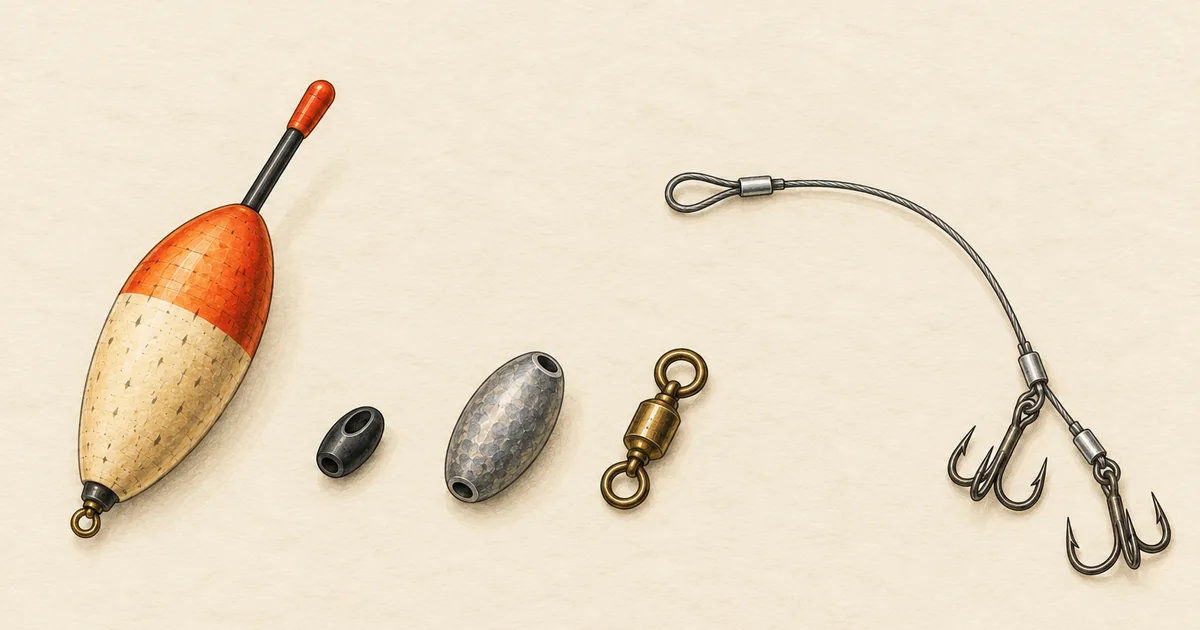
- Weight, float, lead
- lures usually 13–25 cm and 28–85 g; diving plugs up to about 30 cm
Live sucker on a quick-strike rig
- Rod
- sturdy baitcasting rod, medium heavy to heavy, from about 2,10 m
- Reel
- sturdy multiplier reel
- Line
- braid, 50–80 lb (about 23–36 kg)
- Leader
- steel wire
- Hooks
- quick-strike rig with hooks in the head section of the bait, not a single swallowed hook
- Weight, float, lead
- white sucker of about 25–36 cm
More on tackle
- Spinning rod: choose length, casting weight and action
- Bottom rod: length, casting weight and bite indicator
- Line calculator
- Fishing line: monofilament, braid or fluorocarbon?
- Spooling a reel properly – without line twist
- Landing net: mesh, size and handle
- Pliers and forceps: removing a hook deep in the mouth
Common mistakes
- Getting too close with the boat: In shallow water a boat close by scares the fish off. Keep your distance and cast to the suspected spot from afar.
- Letting the baitfish be swallowed: In one trial in Wisconsin, 83 per cent of the muskies that had swallowed a baitfish on a single hook died within a year. Use a quick-strike rig and strike at once.
- Setting off without unhooking tools: A big landing net, long pliers, bolt cutters and gloves belong in the boat before the first cast. Otherwise unhooking takes too long.
- Playing the fish for a long time in high summer: Above 25 degrees water temperature, mortality after release rises markedly, and the longer the fish lies in the net, the more it does. Keep the fight and the time in the net short, or fish early in the morning.
- Holding the fish upright: Lifted by the gill cover or the eyes, the spine and the tissue at the head can be damaged. Support the musky horizontally with one hand under its belly.
Rules
For the muskellunge, the rules of the country where you fish apply, not the German fisheries laws. Each country, and often each water, sets its own licence, closed seasons (Schonzeit), minimum sizes (Mindestmaß) and rules on keeping fish.
What the profile says: Dark markings on a light background and cheeks scaled only on the upper part set it apart from the pike. Wisconsin has its own musky season.
The fisheries authority (Fischereibehörde) of the country you travel to is what counts. Ask about the current rules before the trip and read in the profile how threatened the species is.
After the catch
Playing and landing
Strike at once and hard and keep the line tight, but do not play the musky to complete exhaustion. Leave it in the water in the large landing net, remove the hooks with long pliers and snip off hard-to-reach hooks with the bolt cutters; gloves protect against teeth and hooks. For a photo you lift it only briefly and horizontally, never upright by the gill cover or the eyes. To release it, hold it upright in the water until it swims off under its own power. Most musky anglers release their catch voluntarily; what is allowed is set by the country where you fish.
In Wisconsin most musky anglers release the fish. The authority recommends unhooking the fish beside the boat, with pliers or by snipping off the hook.
Frequently asked questions
Which line for musky fishing?
Braided line with a breaking strain of 50 to 80 pounds; some anglers go up to 100 pounds. It is thin, withstands scratches and hardly stretches; in front of it comes a leader of steel or fluorocarbon.
Which rod for muskellunge?
A sturdy baitcasting rod of about 1,80 to 2,75 metres. Long rods make a wide figure of eight beside the boat easier, short ones are easier to work with a jerkbait.
What is the figure of eight in musky fishing?
At the end of the retrieve you dip the rod tip into the water and draw the lure in a wide figure of eight beside the boat. The change of direction often triggers a bite from following fish, which is why the figure of eight belongs on every cast.
Can you fish for musky in summer?
Yes, but in water above 25 degrees fewer released fish survive: in a pond trial, 30 per cent of the muskies caught died, against around 11 per cent of those not caught. Short fights, short time in the net and cool times of day lower the risk.
How long does it take to catch a musky?
A long time: the authority in Wisconsin reckons that an average angler needs over 50 hours to hook a fish that could be kept. Before that, many fish show themselves only as followers at the boat.
Can you fish for musky with live baitfish?
The country where you fish sets the rules, licence and what you may keep, including for live baitfish. Where it is allowed, you use a quick-strike rig and strike at once so that the hook sits in the mouth.
Similar species
If you catch muskellunge, you can fish for these species with similar tackle:
 Fishing for largemouth bassGood
 Fishing for peacock bassPeak season
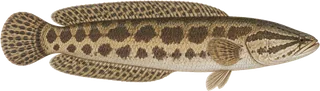 Snakehead fishingPossible
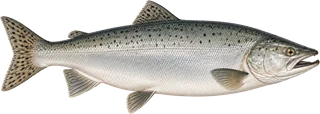 Chinook salmon fishingSlim chances
Sources
Correct as of October 2026. The practical knowledge comes from 7 sources, summarised in our own words.
View all 7 sources
- Muskellunge (Esox masquinongy), Merkblatt PUBL FM-705 · Wisconsin Department of Natural Resources, Bureau of Fisheries Management
- Responsible release (Abschnitt Musky) · Wisconsin Department of Natural Resources
- Northern zone musky season opens (Pressemitteilung 2025) · Wisconsin Department of Natural Resources
- Muskellunge: Tips for Fishing · Missouri Department of Conservation
- Muskie (Iowa Fish Species: What do I need, Tips and Tricks, Where to find them) · Iowa Department of Natural Resources
- Evaluating Muskellunge catch-and-release mortality at elevated summer water temperature (Booth et al. 2023, Transactions of the American Fisheries Society) · U.S. Geological Survey / West Virginia University
- Effects of angling with a single-hook and live bait on muskellunge survival (Margenau 2007, Environmental Biology of Fishes 79) · Springer Nature; Autor Wisconsin Department of Natural Resources
Text produced with AI assistance, based on the sources named and these pages: Muskellunge (profile), Spinning, Jerkbait, Spinner.