
Knowledge – Fish
Fishing for Alpine char
Fishing for Alpine char means: look for it deep over hard ground and let the bait dance up and down in front of it with a delicate touch. Here is the way there in nine steps, each with a link to the detailed page.
 Choose another fish117 fish with guides
 EelOff-peak season
 EelpoutPossible
 IdePossible
 ArapaimaGood
 GraylingPeak season
 Atlantic salmonSpawning time, please spare
 Brown troutSpawning time, please spare
 Brook troutSpawning time, please spare
 BarbelOff-peak season
 BarramundiSpawning season
 Greater amberjackGood
 Topmouth gudgeonOnly as bycatch
 Blue marlinSpawning season
 BonefishSpawning season
 BonitoGood
 BreamOff-peak season
 Dusky grouperOnly as bycatch
 CobiaPossible
 Spiny dogfishOnly as bycatch
 CodPeak season
 ChubPeak season
 MinnowOnly as bycatch
 European sturgeonOnly as bycatch
 FlounderPeak season
 PerchPeak season
 Largemouth bassGood
 Ballan wrasseOnly as bycatch
 Yellowfin tunaSpawning season
 Giant trevallyGood
 Prussian carpPossible
 BrillPossible
 Gilthead breamSpawning time, please spare
 Golden doradoSpawning season
 Golden mahseerOnly as bycatch
 Dolphinfish (mahi-mahi)Good
 Grass carpPossible
 Great barracudaGood
 GudgeonPossible
 White breamPossible
 DaceOff-peak season
 PikePeak season
 HalibutOff-peak season
 HerringPossible
 GarfishOut of season
 Huchen (Danube salmon)Possible
 Crucian carpOnly as bycatch
 CarpOff-peak season
 RuffeOff-peak season
 VendaceOnly as bycatch
 DabPeak season
 GurnardPossible
 Coley (saithe)Peak season
 Chinook salmonHardly any chance
 King mackerelSpawning season
 LingPeak season
 TuskOff-peak season
 MackerelPossible
 Bighead carpOut of season
 WhitefishPossible
 Conger eelOff-peak season
 Sea troutSpawning time, please spare
 Grey mulletPossible
 Murray codSpawning season
 MuskellungeGood
 Common nasePossible
 Nile perchPossible
 PayaraPossible
 Peacock bassPeak season
 PermitGood
 WeeverOnly as bycatch
 PollackOff-peak season
 BurbotOff-peak season
 AspPossible
 Red snapperSpawning season
 Rainbow troutPeak season
 RoosterfishGood
 RoachPeak season
 RedfishOut of season
 Bluefin tunaOnly as bycatch
 RuddPossible
 Russian sturgeonOnly as bycatch
 HaddockOff-peak season
 SnakeheadPossible
 TenchOff-peak season
 SpirlinOnly as bycatch
 PlaiceOff-peak season
 Greenland halibutOnly as bycatch
 Round gobyOnly as bycatch
 SwordfishGood
 Lake troutSpawning time, please spare
 HakeSpawning time, please spare
- Alpine charSpawning time, please spare
 MonkfishPossible
 SoleOff-peak season
 SailfishGood
 Silver carpOut of season
 SnookPeak season
 PumpkinseedOnly as bycatch
 SpratOnly as bycatch
 Atlantic wolffishSpawning time, please spare
 TurbotPeak season
 SterletOnly as bycatch
 SmeltOnly as bycatch
 Horse mackerelPossible
 TaimenGood
 TarponGood
 TigerfishSpawning season
 BleakPossible
 WahooGood
 Wels catfishOff-peak season
 WhitingPeak season
 Sea bassOff-peak season
 ZanderPeak season
 White-eye breamOnly as bycatch
 Blue breamOnly as bycatch
 Brown bullheadPossible
 VimbaOnly as bycatch
Season in October according to the catch calendar, an estimate and not a guarantee of a catch. The fish pictures are reduced natural-history plates and AI-generated.
Best time
From May to June.
In January: Hardly any chanceIn February: Hardly any chanceIn March: GoodIn April: GoodIn May: Peak seasonIn June: Peak seasonIn July: GoodIn August: GoodIn September: GoodIn October: Possible, spawning seasonIn November: Hardly any chance, spawning seasonIn December: Hardly any chance, spawning season
Good spot
- Lake: deep bottom and jettydeep bottom and surfacedeep bottom and drop-off edgedeep bottom
Starter tackle
- Rod: short dropper-rig rod around 1,80 m with a fine tip
- Line: thin, about 0,18–0,22 mm
- Hook: size 14–16, 16 for cautious bites
- Rod: light spinning rod 2,40–2,80 m, casting weight 10–30 g, with a stiff tip
- Line: about 0,18–0,22 mm
- Hook: rig with a spike and small hooks
- Rod: fly rod around 9 feet (about 2,70 m), class 5–6
- Line: floating WF line, sinking line for streamers
- Hook: size 12–16
In short
In short: The best time to catch Alpine char is May to June. Good spots on the lake: deep bottom. Proven baits: a dropper rig with small nymphs, a thumb-length deadbait on a rig, and in summer streamers and dry flies. It used to be listed as Salvelinus alpinus, and that is still how it appears in many regulations. In Bavaria it has a closed season (Schonzeit) from 1 October to 31 December, with a minimum size of 30 centimetres (as of October 2026).
Quick to recognise
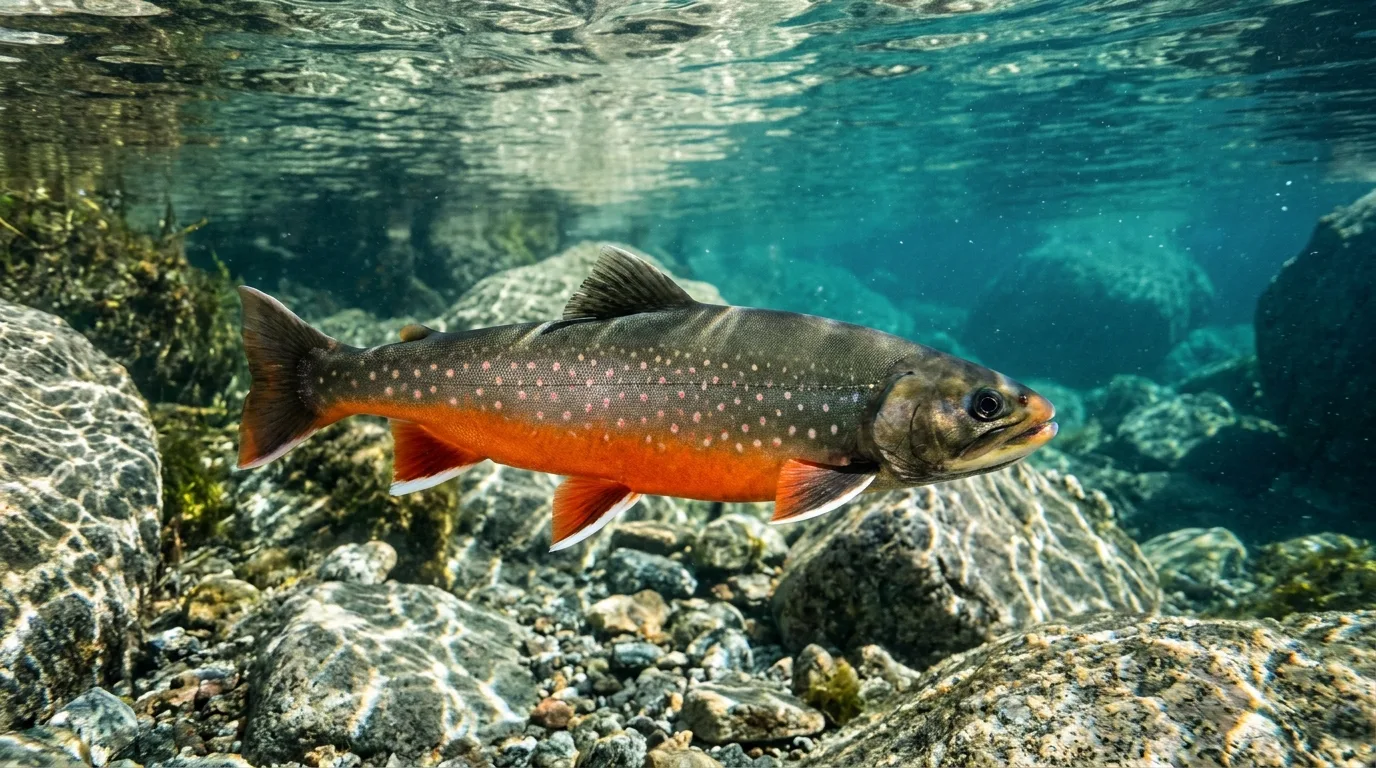
A cold-water fish of deep Alpine lakes, recognisable by the white edges of the paired fins and the anal fin. It usually measures 25 to 40 centimetres, large forms reach about 80 centimetres.
When
The best months are May and June, and the chances are good from March to September, because it starts feeding as soon as the ice is gone. In summer it sometimes even comes to the surface. It spawns from October to December, at other times too depending on the lake and form. Closed seasons (Schonzeiten) differ from region to region.
- JanHardly any chance
- FebHardly any chance
- MarGood
- AprGood
- MayPeak season
- JunPeak season
- JulGood
- AugGood
- SepGood
- OctPossible, spawning
- NovHardly any chance, spawning
- DecHardly any chance, spawning
Peak seasonGoodPossibleHardly any chanceSpawning season
Spring tactics
As soon as the ice is gone the char feed, but after the thaw they still hold deep at first. On some lakes March to May is the best time, and then catches are also possible from the bank. Many mountain lakes only open in May.
Summer tactics
In summer Alpine char sometimes rise into higher layers and close to the shore; this is the time for the fly, especially on warm days. With the dropper rig and deadbait you keep fishing deeper, where the water stays cold.
Autumn tactics
On many Alpine lakes the angling season ends in autumn, on some as early as September, before the shore spawners move to gravel and stream mouths. Leave fish that gather there in peace.
Winter tactics
In winter angling rests on most mountain lakes, and the season there only starts again in spring. What applies at your water is in your fishing permit (Erlaubnisschein).
Is it biting today?
In January: Off seasonIn February: Off seasonIn March: Shoulder seasonIn April: Shoulder seasonIn May: Peak seasonIn June: Peak seasonIn July: Shoulder seasonIn August: Shoulder seasonIn September: Shoulder seasonIn October: Spawning season, please spare themIn November: Spawning season, please spare themIn December: Spawning season, please spare them
Today’s catch index needs JavaScript. Season and spawning time are in the catch calendar.
Where it is now
In the lake
Char usually hold deep, preferably over scree, rock or gravel. Use the echo sounder to look for underwater rises that lie even deeper than typical perch humps. In summer they sometimes hunt insects at the surface.
How to go about it: You catch Alpine char in deep, cold, clear Alpine and mountain lakes, usually over hard ground in the depths and at stream inlets. The rules differ greatly from lake to lake: sometimes only one hook is allowed, sometimes only artificial lures and dead minnows, sometimes no echo sounder. So read the regulations before your first cast.
| All year round | deep bottom |
|---|---|
| Spring extra | Jetty |
| Summer extra | Surface |
| Autumn extra | Shelf edge |
Waters with rules for Alpine char
Holding spots in the picture
Choose the season and time of day: the picture shows where the species stands then. Spots outlined in red apply only in the chosen season. Tap a fish or a spot in the list to bring it closer. The picture is schematic and AI-generated, every water is different.
Chance of a catch in springgood
Catch chance in summergood
Catch chance in autumnpossiblespawning, observe closed seasons
Catch chance in winterhardly any
- J
- F
- M
- A
- M
- J
- J
- A
- S
- O
- N
- D
Spawning season
In the lake
jetty, sheet piling, harbour
Alpine char are found here in spring only.
Shelf edge
Alpine char are found here in autumn only.
Deep bottom
Alpine char are found here all year round.
Just below the surface
Alpine char are found here in summer only.
The Alpine char lives in deep, cold, oxygen-rich lakes and mostly stays in the depths. It prefers hard ground of scree, rock and gravel. Young fish live in shoals; from about 35 centimetres the fish become loners.
Spring: catch chances according to the catch calendar are good in March and April, peak season in May. As soon as the ice melts, the char start to feed. On the Thunersee they usually move close to the shore in May or June and then hold at depths of 10 to 20 metres. On the Schliersee they can also be caught from the bank from March to May, for example by the boat and bathing huts; on other mountain lakes they hold deeper at first after the ice melts.
Summer: catch chances according to the catch calendar are peak season in June, good in July and August. In summer char also come to the surface and hunt insects there.
Autumn: catch chances according to the catch calendar are good in September, possible in October, hardly any in November. This is when spawning takes place, so observe the closed seasons. At spawning time the shore spawners move to gravelly slopes and gravel banks near stream mouths. Other forms spawn deep, over gravel and stone on steep slopes at 30 to 120 metres. The species is then protected in many places.
Winter: catch chances according to the catch calendar are slim. Depending on the lake, the shore spawners‘ spawning season lasts into January.
Depth: The Alpine char usually stays deep, down to about 100 metres in some lakes. For Swiss lakes, 20 to 80 metres are quoted.
Size comparison: AI-generated drawing, schematic.
How
Two approaches have proved their worth: a small deadbait on a rig, lifted and lowered from the wrist, and the dropper rig with several small flies. You fish more quietly with natural baits under a float or on a bottom rig, and in summer at the surface with the fly rod.
Easiest way
The easiest way in is the dropper rig from a rowing boat or a steeply shelving bank. Let the small nymphs sink to just above the hard ground and move them gently up and down. Ask at the lake at what depth the char are holding just now, and check whether the dropper rig is allowed there.
Dropper rig over hard ground
The standard on many Alpine lakes, from a boat and on steep banks, as soon as the season opens.
- Depth first
The right depth is decisive. On some lakes it is around 25 m, often off river mouths. On the same Alpine char usually hold a little deeper than whitefish.
- Feel the bottom
Use the echo sounder or a plumb lead to look for gravel, scree and edges in the depths. Where echo sounders are banned, the lake chart and the experience of locals help.
- A fine dropper rig
The dropper rig carries three to five short, stiffly standing side arms with small flies. If the fish bite shyly, switch to smaller hooks down to size 16.
- Add a maggot
Where natural baits are allowed, put on a maggot or a caddis larva. Read the regulations first: on some mountain lakes only one hook or no natural bait at all is permitted.
- Lift and lower
Let the weight go down to the bottom, slowly lift the rod from the wrist and lower it again. Small pauses are part of it, frantic movements are not.
- Read the tip
The bite often shows only as a vibration or a brief trembling of the rod tip. Then strike at once, but with feel.
- Play it softly
Keep the line tight, set the drag softly and bring the fish up calmly from the depths. A char over 40 cm fights hard on the fine dropper rig.
- Landing net ready
Use a knotless landing net. A fish that has to go back you unhook in the water, ideally with forceps.
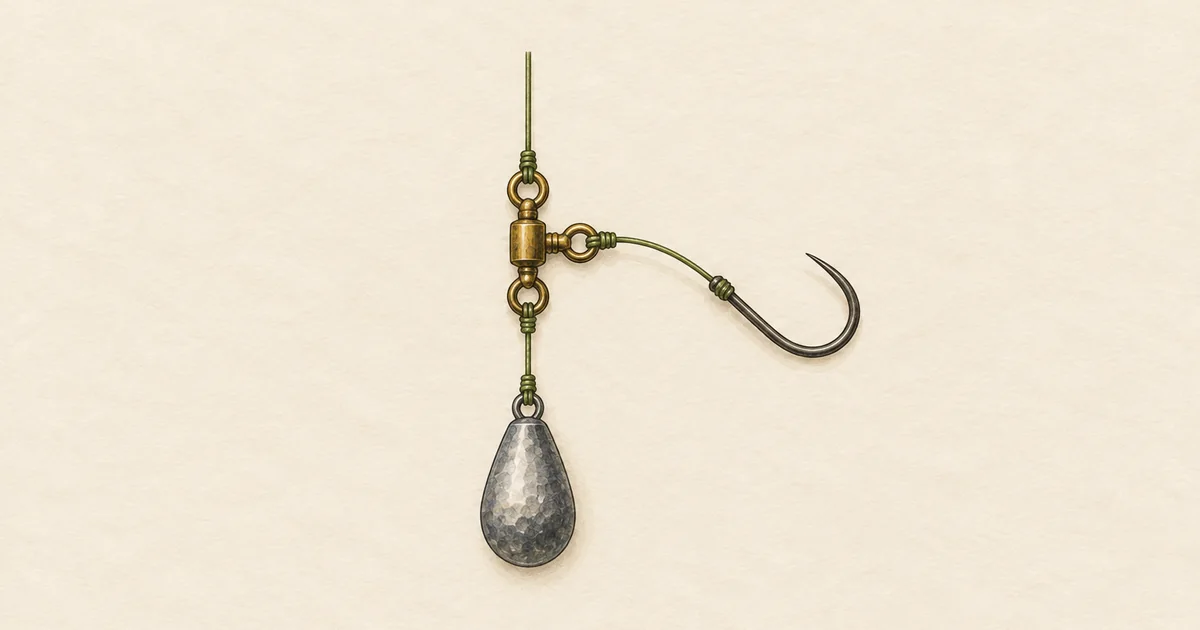
Deadbait on a rig
For larger char that hunt small fish, from a boat in the depths or from the bank in spring.
- Edges and inlets
Good spots are deep channels, stream inlets and underwater edges. On some lakes the bank along the boathouses and jetties is also worth trying in spring.
- Fish on the rig
Put a thumb-length dead bleak or a small perch on a rig with a spike. A lead ahead of it or a small spoon in front makes it look like hunted prey.
- Get it down to depth
From the bank you cast out and let the rig sink. From a boat you lower it vertically, for great depths with a heavy lead ahead or a downrigger, where that is permitted.
- Let it dance
Lift and lower the rod in short pulls so the deadbait dances up and down in front of the char. From a boat, a slow drift in the wind with the odd stroke of the oars is often enough.
- A short tug
Bites on the dancing deadbait are often delicate. Keep constant contact with the bait so you feel every change in the rod, and then strike without hesitating.
- Not under the boat
The longer rod helps you keep the fish at a distance from the boat so it doesn’t bolt underneath. When it runs, let it pull against the softly set drag.
- With the landing net
Use a big enough knotless net and keep the fish in the air for as short a time as possible.
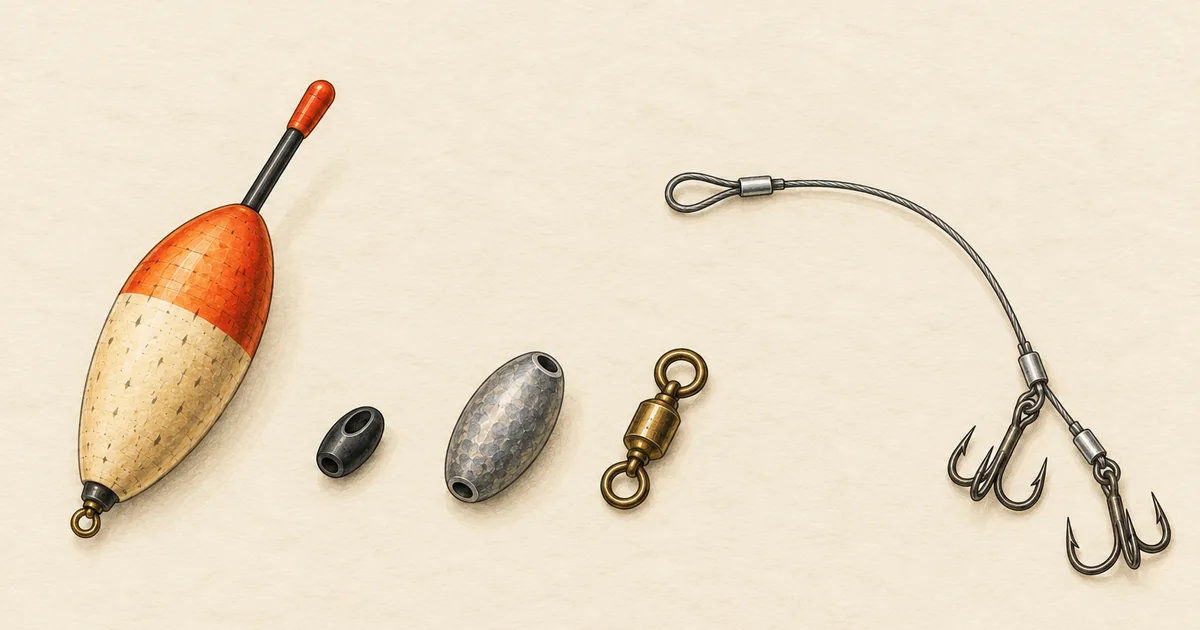
Fly in summer
When in summer Alpine char rise into higher layers and towards the bank and take insects from the surface.
- Look for rings
Watch for rise rings and for transitions from light to dark water, for large stones and weed beds. On clear mountain lakes polarised glasses show you the fish from above.
- Floating line
Fish with a floating line and a tapered leader. In gin-clear water an especially long leader often brings more bites.
- Small and dark
Small stonefly and caddis patterns or a black ant are often enough. If the fish don’t come up, use a dark streamer on a sinking line.
- In front of the fish
Judge which way the fish is heading and put the fly where it will feed next, rather than in the middle of the ring.
- Stay calm
Expect the take at any moment, because if the rising fish catches you off guard you miss the strike. Lift the rod briskly as soon as the fly is taken.
- With the line hand
Take in loose line with your free hand and let the fish run off the reel when it bolts.
What with
On the rig a thumb-length deadbait such as a bleak, for the quiet variant maggots or caddis larvae. In summer silver streamers and dry flies catch at the surface. Live baitfish are banned in many federal states (Bundesländern).
- Nymphthe whole season on the dropper rig in the depths
Small nymphs on several side arms cover a few metres of water column and match the larvae char eat on the bottom.
- Baitfishspring from the bank, otherwise from a boat in the depths
Larger char eat small fish, so a dead bleak or a small perch on the rig specifically catches the better fish.
- Dry flysummer, on warm days with rising fish
When char take insects at the top, a small fly on the surface is the most direct way.
Tackle
For the deadbait a light spinning rod with a stiff tip and thin line, so the water has little to push against. For the dropper rig a short rod of around 1,80 metres is enough, and in summer the fly rod comes into play.
Dropper rig over hard ground
- Rod
- short dropper-rig rod around 1,80 m with a fine tip
- Reel
- small fixed-spool or centrepin reel
- Line
- thin, about 0,18–0,22 mm
- Leader
- dropper rig with three to five side arms
- Hooks
- size 14–16, 16 for cautious bites
- Weight, float, lead
- small end weight, just heavy enough for the depth
Deadbait on a rig
- Rod
- light spinning rod 2,40–2,80 m, casting weight 10–30 g, with a stiff tip
- Reel
- small fixed-spool reel
- Line
- about 0,18–0,22 mm
- Hooks
- rig with a spike and small hooks
- Weight, float, lead
- lead ahead or a small spoon in front; for great depths a heavy lead ahead or a downrigger
More on tackle
- Spinning rod: choose length, casting weight and action
- Bottom rod: length, casting weight and bite indicator
- Fly rod: choose line class, length and action
- Line calculator
- Fishing line: monofilament, braid or fluorocarbon?
- Spooling a reel properly – without line twist
- Wading net: the small landing net for wading
- Disgorger: unhooking quickly and gently
Common mistakes
- Searching at the wrong depth: A few metres too shallow or too deep and it stays quiet. Ask about the current fishing depth and feel your way layer by layer with the echo sounder or the dropper rig.
- Hooks too big for cautious bites: On cold, rainy days char often bite only warily. A dropper rig with smaller hooks, say size 16, then puts more fish in the boat.
- Rod too short for the deadbait: With a short rod you will hardly get a strong char away from the boat. Use 2,40 to 2,80 m for the rig.
- Trolled too fast: Light spoons with maggots behind them only work at low speed. Drift slowly and correct the direction only with the odd stroke of the oars.
- Lake rules not read: On mountain lakes the dropper rig, natural baits, live baitfish or the echo sounder are often restricted. Read the regulations before buying the permit.
Rules
Each federal state (Bundesland) sets its own closed season (Schonzeit) and minimum size (Mindestmaß). Choose your state; the values come from our state pages.
Baden-Württemberg
Our overview for Baden-Württemberg does not list the Alpine char. The page Fishing in Baden-Württemberg shows what applies there, with places in the state.
Bavaria
- Minimum size
- 30 cm
- Closed season
- 1.10.–31.12.
- Note
- Danube catchment only
As of October 2026. All rules, exceptions and sources: Fishing in Bavaria.
Berlin
Our overview for Berlin does not list the Alpine char. The page Fishing in Berlin shows what applies there, with places in the state.
Brandenburg
Our overview for Brandenburg does not list the Alpine char. The page Fishing in Brandenburg shows what applies there, with places in the state.
Bremen
Our overview for Bremen does not list the Alpine char. The page Fishing in Bremen shows what applies there, with places in the state.
Hamburg
Our overview for Hamburg does not list the Alpine char. The page Fishing in Hamburg shows what applies there, with places in the state.
Hesse
Our overview for Hesse does not list the Alpine char. The page Fishing in Hesse shows what applies there, with places in the state.
Mecklenburg-Western Pomerania
Our overview for Mecklenburg-Western Pomerania does not list the Alpine char. The page Fishing in Mecklenburg-Western Pomerania shows what applies there, with places in the state.
Lower Saxony
Our overview for Lower Saxony does not list the Alpine char. The page Fishing in Lower Saxony shows what applies there, with places in the state.
North Rhine-Westphalia
Our overview for North Rhine-Westphalia does not list the Alpine char. The page Fishing in North Rhine-Westphalia shows what applies there, with places in the state.
Rhineland-Palatinate
Our overview for Rhineland-Palatinate does not list the Alpine char. The page Fishing in Rhineland-Palatinate shows what applies there, with places in the state.
Saarland
Our overview for Saarland does not list the Alpine char. The page Fishing in Saarland shows what applies there, with places in the state.
Saxony
Our overview for Saxony does not list the Alpine char. The page Fishing in Saxony shows what applies there, with places in the state.
Saxony-Anhalt
Our overview for Saxony-Anhalt does not list the Alpine char. The page Fishing in Saxony-Anhalt shows what applies there, with places in the state.
Schleswig-Holstein
Our overview for Schleswig-Holstein does not list the Alpine char. The page Fishing in Schleswig-Holstein shows what applies there, with places in the state.
Thuringia
Our overview for Thuringia does not list the Alpine char. The page Fishing in Thuringia shows what applies there, with places in the state.
The regulation and your fishing permit (Erlaubnisschein) are what count. Lake Constance, the Rhine and the coast, for example, have their own rules: Fishing waters in Germany.
After the catch
Playing and landing
Strike at once, but gently, when the rod tip trembles and play the char calmly on a soft drag. Land it with a knotless net and handle it only with wet hands. Protected or undersized fish you unhook in the water with forceps and support until they swim off; a char of legal size that you may keep you stun and kill at once.
The Alpine char is regarded as an excellent table fish with firm, mild flesh. You stun and kill a fish of legal size straight after the catch and chill it. Protected or undersized fish you release with wet hands in the water.
Frequently asked questions
At what depth do Alpine char hold?
Usually deep over hard ground, on some lakes around 25 m, often deeper than whitefish. In summer they sometimes rise and come to the bank.
Which bait is best for Alpine char?
Most often the dropper rig with small nymphs and a thumb-length deadbait on a rig catch. In summer small dry flies and dark streamers join in.
When is the best time for Arctic char fishing?
The Austrian ministry of agriculture names May and June. On some Bavarian lakes March to May already goes very well, from the bank too.
Can you catch Alpine char from the bank?
Yes, mainly on steeply shelving banks, in spring with the dropper rig, a small spinner or a deadbait rig, and in summer with the fly. From a boat, though, you reach the deep spots more easily.
What rod do you need for Alpine char?
For the dropper rig a short rod of around 1,80 m with a fine tip is enough. For the deadbait you take a light spinning rod of 2,40 to 2,80 m with a 10 to 30 g casting weight.
Similar species
If you catch Alpine char, you can fish for these species with similar tackle:
 Fishing for rainbow troutPeak season
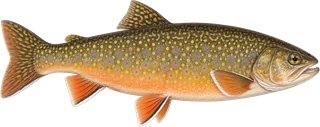 Brook trout fishingSpawning season, please spare
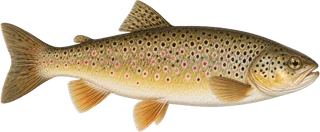 Brown trout fishingSpawning season, please spare
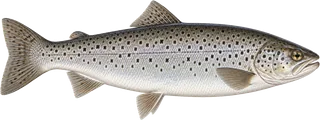 Fishing for lake troutSpawning season, please spare them
Sources
Correct as of October 2026. The practical knowledge comes from 12 sources, summarised in our own words.
View all 12 sources
- Steckbrief Seesaibling: Wie fängt man diesen Fisch? · BLINKER (Redaktion)
- Seesaibling (Traditionelle Lebensmittel) · Bundesministerium für Land- und Forstwirtschaft, Klima- und Umweltschutz, Regionen und Wasserwirtschaft (Österreich)
- Bayern: Der Schliersee · FISCH & FANG (H. Kolm)
- Top-Gewässer: Hallstätter See · FISCH & FANG (M. Fuhrmann)
- Hattrick mit Hegene · FISCH & FANG (B. Taller)
- Die Ödseen (Österreich) · FISCH & FANG (W. Hauer)
- Der Vilsalpsee in Tirol · FISCH & FANG (H. Klier)
- Der Erlaufsee und der Stausee Erlaufklause · FISCH & FANG (W. Hauer)
- Erfreulicher Saisonstart am Walchensee · FISCH & FANG (B. Taller)
- Saisonende am Alpensee · FISCH & FANG (B. Taller)
- Fliegenfischen: So fängst Du mehr am Bergsee · BLINKER (Redaktion)
- Nachhaltig fischen – Tipps für Angler:innen · Umweltbundesamt Österreich (mit österreichischen Landesfischereiverbänden)
AI-assisted text, based on the sources named and these pages: Alpine char (profile), Bottom fishing, Fly fishing, Deadbait.