
Knowledge – Fish
Fishing for bonefish
Fishing for bonefish means: going onto the flats on the rising tide, casting to the fish by sight and setting the bait down gently in front of it. Here is the way there in nine steps, each with a link to the detailed page.
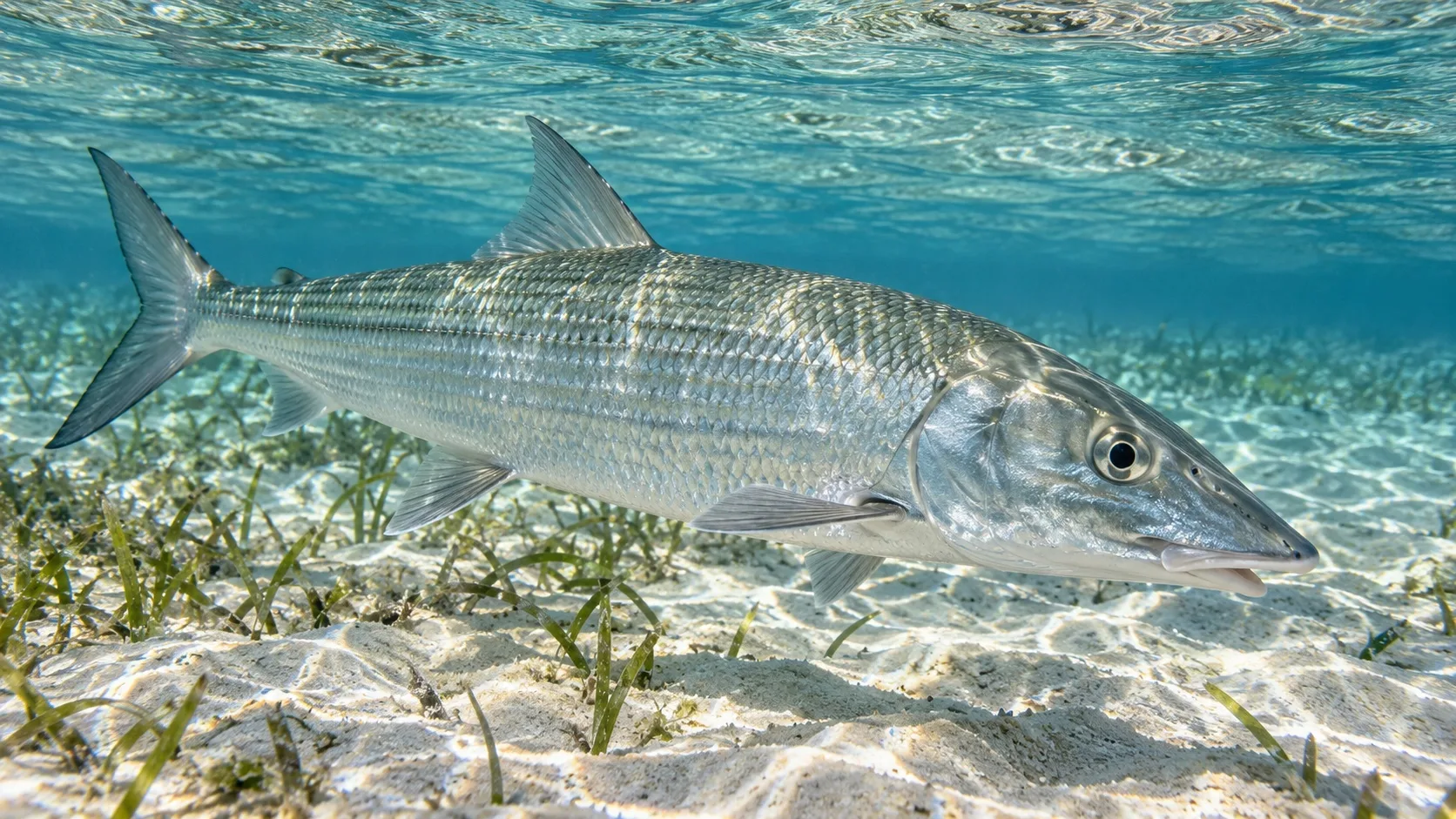
In Florida the bonefish has been catch and release only since 2013, and keeping and selling it are banned. The IUCN classes Albula vulpes as Near Threatened.
 Choose another fish117 fish with guides
 EelOff-peak season
 EelpoutPossible
 IdePossible
 ArapaimaGood
 GraylingPeak season
 Atlantic salmonSpawning time, please spare
 Brown troutSpawning time, please spare
 Brook troutSpawning time, please spare
 BarbelOff-peak season
 BarramundiSpawning season
 Greater amberjackGood
 Topmouth gudgeonOnly as bycatch
 Blue marlinSpawning season
- BonefishSpawning season
 BonitoGood
 BreamOff-peak season
 Dusky grouperOnly as bycatch
 CobiaPossible
 Spiny dogfishOnly as bycatch
 CodPeak season
 ChubPeak season
 MinnowOnly as bycatch
 European sturgeonOnly as bycatch
 FlounderPeak season
 PerchPeak season
 Largemouth bassGood
 Ballan wrasseOnly as bycatch
 Yellowfin tunaSpawning season
 Giant trevallyGood
 Prussian carpPossible
 BrillPossible
 Gilthead breamSpawning time, please spare
 Golden doradoSpawning season
 Golden mahseerOnly as bycatch
 Dolphinfish (mahi-mahi)Good
 Grass carpPossible
 Great barracudaGood
 GudgeonPossible
 White breamPossible
 DaceOff-peak season
 PikePeak season
 HalibutOff-peak season
 HerringPossible
 GarfishOut of season
 Huchen (Danube salmon)Possible
 Crucian carpOnly as bycatch
 CarpOff-peak season
 RuffeOff-peak season
 VendaceOnly as bycatch
 DabPeak season
 GurnardPossible
 Coley (saithe)Peak season
 Chinook salmonHardly any chance
 King mackerelSpawning season
 LingPeak season
 TuskOff-peak season
 MackerelPossible
 Bighead carpOut of season
 WhitefishPossible
 Conger eelOff-peak season
 Sea troutSpawning time, please spare
 Grey mulletPossible
 Murray codSpawning season
 MuskellungeGood
 Common nasePossible
 Nile perchPossible
 PayaraPossible
 Peacock bassPeak season
 PermitGood
 WeeverOnly as bycatch
 PollackOff-peak season
 BurbotOff-peak season
 AspPossible
 Red snapperSpawning season
 Rainbow troutPeak season
 RoosterfishGood
 RoachPeak season
 RedfishOut of season
 Bluefin tunaOnly as bycatch
 RuddPossible
 Russian sturgeonOnly as bycatch
 HaddockOff-peak season
 SnakeheadPossible
 TenchOff-peak season
 SpirlinOnly as bycatch
 PlaiceOff-peak season
 Greenland halibutOnly as bycatch
 Round gobyOnly as bycatch
 SwordfishGood
 Lake troutSpawning time, please spare
 HakeSpawning time, please spare
 Alpine charSpawning time, please spare
 MonkfishPossible
 SoleOff-peak season
 SailfishGood
 Silver carpOut of season
 SnookPeak season
 PumpkinseedOnly as bycatch
 SpratOnly as bycatch
 Atlantic wolffishSpawning time, please spare
 TurbotPeak season
 SterletOnly as bycatch
 SmeltOnly as bycatch
 Horse mackerelPossible
 TaimenGood
 TarponGood
 TigerfishSpawning season
 BleakPossible
 WahooGood
 Wels catfishOff-peak season
 WhitingPeak season
 Sea bassOff-peak season
 ZanderPeak season
 White-eye breamOnly as bycatch
 Blue breamOnly as bycatch
 Brown bullheadPossible
 VimbaOnly as bycatch
Season in October according to the catch calendar, an estimate and not a guarantee of a catch. The fish pictures are reduced natural-history plates and AI-generated.
Best time
From September to June.
In January: Good, spawningIn February: Good, spawningIn March: Good, spawningIn April: Good, spawningIn May: Good, spawningIn June: GoodIn July: PossibleIn August: PossibleIn September: GoodIn October: Good, spawningIn November: Good, spawningIn December: Good, spawning
Good spot
- Coast: seagrass, sandy bottom and trough in front of the sandbarseagrass, sandy bottom and trough in front of the sandbarseagrass, sandy bottom and trough in front of the sandbarseagrass, sandy bottom and trough in front of the sandbar
Top baits
Starter tackle
- Rod: fly rod, class 7–9
- Line: fly line to match the rod class 7–9
- Hook: crab and shrimp patterns, in studies about size 6; barb pressed down
- Rod: medium-heavy spinning rod
- Line: monofilament, about 2,7–4,5 kg breaking strain
- Hook: jig hook; with dead shrimp size around 3/0, better than a circle hook
In short
In short: According to the catch calendar, the best time is September to June. Good spots on the coast: seagrass, sandy bottom and trough in front of the sandbar. Proven baits: shrimp and crab flies, small jigs with a rubber or hair body, and dead shrimp. In Florida it is strictly catch and release, and keeping fish is banned there. Worldwide there are several bonefish species that are almost impossible to tell apart by looks.
Quick to recognise
A slender, silvery fish with a conical snout that reaches far beyond the underslung mouth. Catches of 1,8 to 2,7 kilograms are typical in Florida and the Bahamas, and a fish from about 3,6 kilograms counts as large.
When
On the flats of Florida, the Bahamas and the Caribbean it bites all year, only July and August are weaker, because large fish often stand deeper in summer. To spawn it moves to the edge of the deep water roughly between October and May, especially in the days around new moon and full moon.
- JanGood, spawning
- FebGood, spawning
- MarGood, spawning
- AprGood, spawning
- MayGood, spawning
- JunGood
- JulPossible
- AugPossible
- SepGood
- OctGood, spawning season
- NovGood, spawning
- DecGood, spawning
Peak seasonGoodPossibleHardly any chanceSpawning season
Season in the destination
Around Florida, the Bahamas and the Caribbean bonefish bite in every season. In high summer large fish often stay in deeper water and only return to the flats with cooler water in autumn. The spawning season runs roughly from late autumn to early summer, and then some schools are missing from their flats around new and full moon. In shallow lagoons the water can warm to over 40 degrees in summer, which is more than bonefish can tolerate for long, and then you shorten the fight and the time you hold the fish even further.
Season and biting time
In January: SpawningIn February: SpawningIn March: SpawningIn April: SpawningIn May: SpawningIn June: GoodIn July: PossibleIn August: PossibleIn September: GoodIn October: SpawningIn November: SpawningIn December: Spawning
Where it is now
On the coast
Look for it on the flats, that is, shallow stretches of sand and seagrass, at mangroves and off river mouths. As the water comes in it enters the shallows to feed, and at low tide it waits in the troughs beside them. Watch for tail tips sticking out of the water as it roots about.
How to go about it: Look for flats of sand and seagrass, mangrove edges and the troughs that lead into deeper water beside them. Bonefish often use a spot for only a few days and then move on, so if a known flat is empty, try the next one.
| All year round | seagrass, sandy bottom, trough in front of the sandbar, edge |
|---|
Holding spots in the picture
Choose a season and time of day: the picture shows where the species sits then. Tap a fish or a spot in the list to bring it closer. The picture is schematic and AI-generated, every water is different.
Chance of a catch in springgoodSpawning, observe the closed seasons
Catch chances in summerpossible
Chance of a catch in autumngoodSpawning season, observe the closed seasons
Chance of a catch in wintergoodSpawning, observe the closed seasons
- J
- F
- M
- A
- M
- J
- J
- A
- S
- O
- N
- D
Spawning season
Time of day The tide is what matters: as the water rises the fish enter the shallows to feed, and as it falls they move back into deeper troughs.
On the coast
gully in front of the sandbank
Bonefish (Grätenfisch) are here all year.
Seagrass, gravel and stones in the shallows
Bonefish (Grätenfisch) are here all year.
Sandy bottom
Bonefish (Grätenfisch) are here all year.
Drop-off
Bonefish (Grätenfisch) are here all year.
Bonefish feed on shallow flats of sand and seagrass, at mangroves and off river mouths. As the water falls they stand in the deeper troughs beside the flats. Large fish often stay in deeper water in summer.
Spring: chance of a catch good according to the catch calendar. This is when spawning falls, so observe the closed seasons.
Summer: catch chance according to the catch calendar good in June, possible in July and August.
Autumn: good chance of a catch according to the catch calendar. This is also the spawning period, so observe the closed seasons.
Winter: chance of a catch good according to the catch calendar. This is when spawning falls, so observe the closed seasons.
Depth: To feed, bonefish often go into water less than 30 centimetres deep, and they mostly live between 1 and 15 metres. To spawn they move to the edge of the deep water and dive there down to around 137 metres.
Size comparison: AI-generated drawing, schematic.
How
You fish with a fly rod or light spinning tackle, mostly wading or from a shallow-draught boat. You cast to the fish by sight and approach quietly, because a whole school is quickly scared off.
Easiest way
The easiest start is a medium-heavy spinning rod, line of about 2,7 to 4,5 kilos breaking strain and a small jig of around 7 grams or a dead shrimp. Walk slowly onto a flat on the rising tide and look for fish feeding in the shallows.
Sight fishing with the fly
The classic way on the flats: you stalk, wading or from a shallow boat, and cast deliberately to single fish or small schools.
- Go with the tide
Plan the day by the tide table. On a rising tide the fish move from deeper troughs onto the flats, and on a falling tide they leave the shallows again.
- Barbless fly
Tie on a fly that imitates a crab or shrimp, in studies about hook size 6. Press the barb down, and then you unhook faster and hardly need to touch the fish.
- Stalk quietly
A feeding school spreads out a little, but closes up again at once when in danger and flees. So approach slowly and without a bow wave before you cast.
- Quick, not hasty
Keep the fight short so that the fish is not completely exhausted. But do not drag it in by force either, or it will thrash wildly at the end and injure itself.
- Unhook in the water
Leave the fish in the water and take the hook out with a hook remover, keeping the line taut. If you have to hold it, do so with wet hands under the head and belly.
- Let the fish recover
If the fish tips onto its side, hold it upright and move it slowly forward so that water flows through the gills from the front. Let it go only when it swims upright by itself.
Small jig or shrimp
The easier way in on the flats: with medium-heavy spinning tackle you cast a small jig or a dead shrimp in front of feeding fish.
- Look for feeding fish
Go onto the flat on the rising tide. In very shallow water feeding fish often give themselves away by tail tips above the surface.
- Jig or natural bait
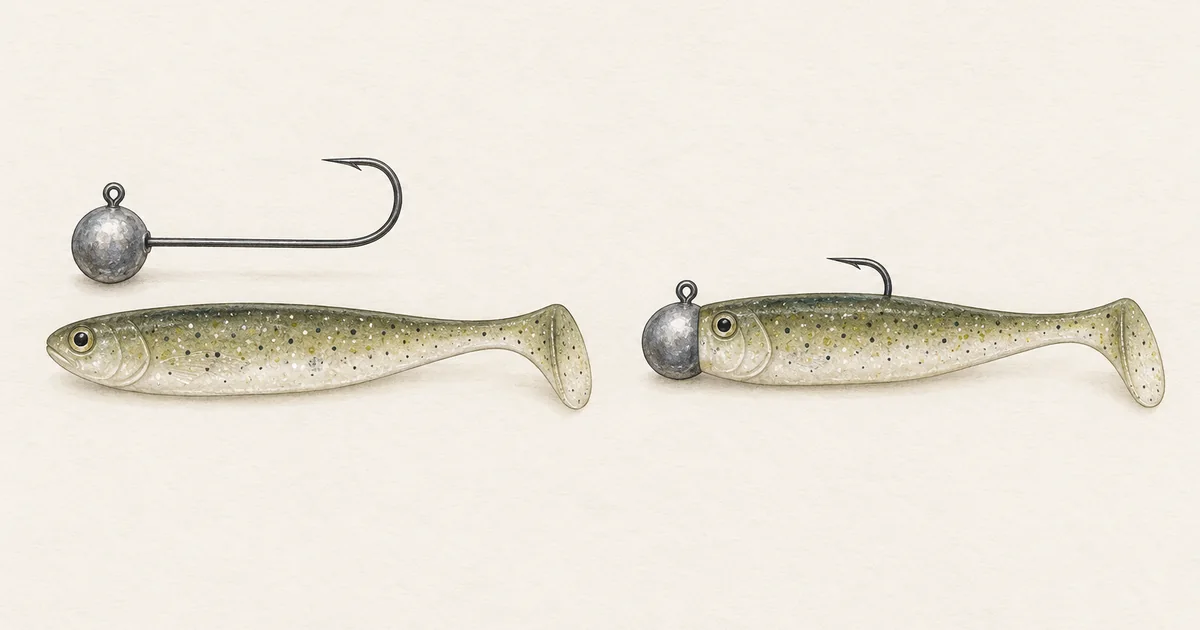
Take a small jig of around 7 grams whose body is made of soft rubber or animal hair. With dead shrimp the research organisation BTT recommends a circle hook without a barb.
- Cast quietly
Cast so that the bait does not land in the middle of the school. A startled school leaves in a body and does not come back so quickly.
- The right tackle
Tackle that is too light drags out the fight and exhausts the fish. Choose the line so that you can land it in a reasonable time.
- Back quickly
Unhook in the water. If the hook sits deep in the throat, cut the line close to the hook instead of pulling it out.
What with
Crabs and shrimp are part of its main diet. Fly anglers use patterns that imitate both, spinning anglers small jigs of around 7 grams or a dead shrimp. Let the bait sink to the bottom a little way in front of the fish and only inch it briefly.
- Crustaceans & musselsall year, especially on the rising tide on the flats
Crabs, shrimp and mussels make up a large part of its diet, so dead shrimp catch just as well as flies that imitate crabs or shrimp.
Tackle
For the fly, a study in the Bahamas names rods of classes 7 to 9, otherwise a light spinning rod is enough. Set the drag finely, because the bonefish is a very fast swimmer.
Sight fishing with the fly
Small jig or shrimp
- Rod
- medium-heavy spinning rod
- Reel
- Fixed-spool reel to match the rod
- Line
- monofilament, about 2,7–4,5 kg breaking strain
- Hooks
- Jig hook; with dead shrimp size around 3/0, better than a circle hook
- Weight, float, lead
- jig about 7 g
More on tackle
Common mistakes
- A long photo break in the air: Decide beforehand which fish will be photographed, and have the camera ready. Lift it only briefly just above the surface of the water, according to BTT no longer than about ten seconds.
- Holding the fish by the mouth with pliers: In a laboratory experiment mechanical lip grippers injured most bonefish as soon as they thrashed, in some cases badly in the lower jaw. It is better to unhook the fish in the water with a hook remover.
- Carrying on fishing in shark territory: In the Bahamas all released bonefish survived in areas with few sharks, while in areas with many sharks more than a third died shortly after release. Change spot when sharks appear.
- Releasing a fish that has lost its balance: A fish that lies on its side is easy prey. Hold it upright, move it slowly forward and shorten the fight with the next fish.
- Treating mangroves as safe cover: In a study, fish near the mangroves were no less likely to be caught by sharks than in open water. What matters is a short hold and a fish that swims away upright.
Rules
For bonefish, the rules of the country where you fish apply, not German fisheries law. Each country, and often each water, sets its own licence, closed seasons, minimum sizes and rules on keeping fish.
What the profile says: In Florida it is strictly catch and release, and keeping fish is banned there. Worldwide there are several bonefish species that are almost impossible to tell apart by looks.
The fisheries authority (Fischereibehörde) of the country you travel to is what counts. Ask about the current rules before the trip and read in the profile how threatened the species is.
After the catch
Playing and landing
Fight the bonefish quickly, but without dragging it in by force, and leave it in the water to unhook. If you handle it at all, do so with wet hands, free of sun cream, under the head and belly, never by the gills and never with a lip gripper. In high water temperatures you shorten the fight and the hold even more. If sharks or barracuda are nearby, do not release it at that spot but further away. The country where you fish sets the rules, licence and rules on keeping fish.
Keep the fight short, leave the fish in the water and unhook it quickly. In a study in the Bahamas, 17 per cent of released bonefish soon fell prey to sharks or barracuda, above all those that had lost their balance. If there are a lot of sharks nearby, release the fish a little further away.
Frequently asked questions
Which fly rod for bonefish?
In studies in the Bahamas the anglers fished fly rods of 7 to 9 weight. With those you can cope with the wind on the flats as well.
Which line for spin fishing for bonefish?
A study in the Bahamas names medium-weight spinning rods with line of about 2,7 to 4,5 kilos breaking strain, so roughly 6 to 10 pounds.
Which flies catch bonefish?
Patterns that imitate crabs or shrimps, matching its food. In a study on Eleuthera the flies were around hook size 6.
How long can a bonefish be out of the water?
As briefly as possible. BTT gives about ten seconds for a photo; according to its data, the chances of survival then drop markedly.
Which hooks for bonefish with natural bait?
With natural bait BTT recommends circle hooks and, as a rule, barbless hooks. If the fish has swallowed deeply, cut the line at the hook.
Similar species
If you catch bonefish, you can fish for these species with similar tackle too:
 Nile perch fishingPossible
 Snook fishingPeak season
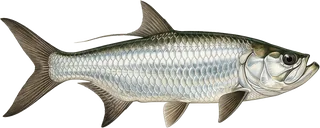 Tarpon fishingGood
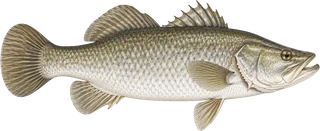 Fishing for barramundiSpawning season
Sources
As of October 2026. The practical knowledge comes from 8 sources, summarised in our own words.
View all 8 sources
- Behavior and mortality of caught-and-released bonefish (Albula spp.) in Bahamian waters with implications for a sustainable recreational fishery (Biological Conservation 118, 2004) · Carleton University, Fish Ecology and Conservation Physiology Lab (S. J. Cooke, D. P. Philipp)
- Post-release mortality of bonefish exposed to different handling practices during catch-and-release angling in Eleuthera, The Bahamas (Fisheries Management and Ecology 14, 2007) · University of Wisconsin–Madison, Goldberg Lab (A. J. Danylchuk u. a., Cape Eleuthera Institute)
- Effects of recreational angling on the post-release behavior and predation of bonefish (Albula vulpes): the role of equilibrium status at the time of release (J. Exp. Mar. Biol. Ecol. 346, 2007) · University of Wisconsin–Madison, Goldberg Lab (S. E. Danylchuk u. a.)
- An evaluation of the injury and short-term survival of bonefish (Albula spp.) as influenced by a mechanical lip-gripping device used by recreational anglers (Fisheries Research, 2008) · Bonefish & Tarpon Trust (Studie A. J. Danylchuk u. a.)
- Thermal biology of bonefish (Albula vulpes) in Bahamian coastal waters and tidal creeks: an integrated laboratory and field study · Bonefish & Tarpon Trust (Studie K. J. Murchie u. a.)
- Catch and Release · Bonefish & Tarpon Trust
- Bonefish Handling · Bonefish & Tarpon Trust
- Albula vulpes – Bonefish (Discover Fishes) · Florida Museum of Natural History, University of Florida
Text written with AI assistance, based on the sources named and these pages: Bonefish (profile), Fly fishing, Spin fishing, Crustaceans & shellfish, Releasing fish.