
Knowledge – Fish
Coley fishing
Coley fishing means: tracking down the shoals over banks and edges, offering the bait at their depth and searching several levels to do so. Here is the route there in nine steps, each with a link to the detailed page.
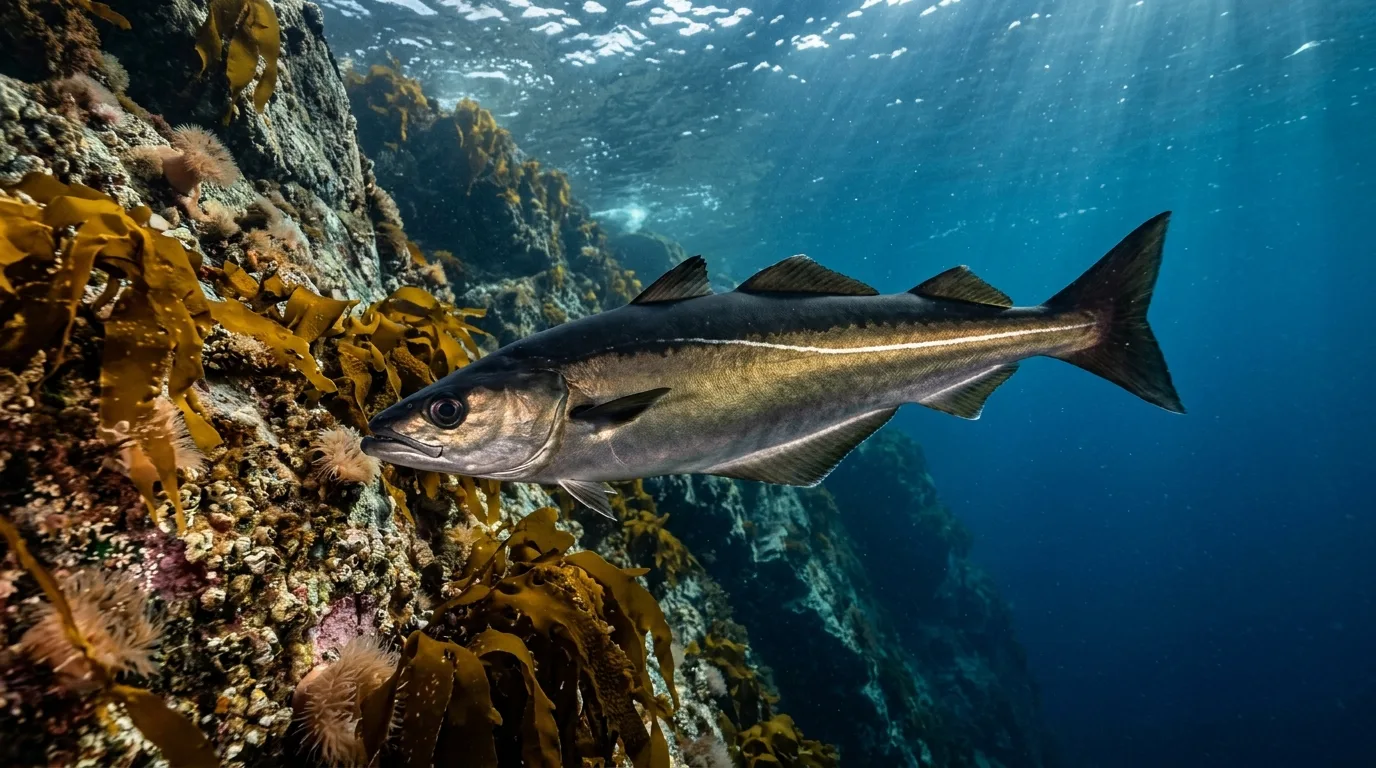
 Choose another fish117 fish with guides
 EelOff-peak season
 EelpoutPossible
 IdePossible
 ArapaimaGood
 GraylingPeak season
 Atlantic salmonSpawning time, please spare
 Brown troutSpawning time, please spare
 Brook troutSpawning time, please spare
 BarbelOff-peak season
 BarramundiSpawning season
 Greater amberjackGood
 Topmouth gudgeonOnly as bycatch
 Blue marlinSpawning season
 BonefishSpawning season
 BonitoGood
 BreamOff-peak season
 Dusky grouperOnly as bycatch
 CobiaPossible
 Spiny dogfishOnly as bycatch
 CodPeak season
 ChubPeak season
 MinnowOnly as bycatch
 European sturgeonOnly as bycatch
 FlounderPeak season
 PerchPeak season
 Largemouth bassGood
 Ballan wrasseOnly as bycatch
 Yellowfin tunaSpawning season
 Giant trevallyGood
 Prussian carpPossible
 BrillPossible
 Gilthead breamSpawning time, please spare
 Golden doradoSpawning season
 Golden mahseerOnly as bycatch
 Dolphinfish (mahi-mahi)Good
 Grass carpPossible
 Great barracudaGood
 GudgeonPossible
 White breamPossible
 DaceOff-peak season
 PikePeak season
 HalibutOff-peak season
 HerringPossible
 GarfishOut of season
 Huchen (Danube salmon)Possible
 Crucian carpOnly as bycatch
 CarpOff-peak season
 RuffeOff-peak season
 VendaceOnly as bycatch
 DabPeak season
 GurnardPossible
- Coley (saithe)Peak season
 Chinook salmonHardly any chance
 King mackerelSpawning season
 LingPeak season
 TuskOff-peak season
 MackerelPossible
 Bighead carpOut of season
 WhitefishPossible
 Conger eelOff-peak season
 Sea troutSpawning time, please spare
 Grey mulletPossible
 Murray codSpawning season
 MuskellungeGood
 Common nasePossible
 Nile perchPossible
 PayaraPossible
 Peacock bassPeak season
 PermitGood
 WeeverOnly as bycatch
 PollackOff-peak season
 BurbotOff-peak season
 AspPossible
 Red snapperSpawning season
 Rainbow troutPeak season
 RoosterfishGood
 RoachPeak season
 RedfishOut of season
 Bluefin tunaOnly as bycatch
 RuddPossible
 Russian sturgeonOnly as bycatch
 HaddockOff-peak season
 SnakeheadPossible
 TenchOff-peak season
 SpirlinOnly as bycatch
 PlaiceOff-peak season
 Greenland halibutOnly as bycatch
 Round gobyOnly as bycatch
 SwordfishGood
 Lake troutSpawning time, please spare
 HakeSpawning time, please spare
 Alpine charSpawning time, please spare
 MonkfishPossible
 SoleOff-peak season
 SailfishGood
 Silver carpOut of season
 SnookPeak season
 PumpkinseedOnly as bycatch
 SpratOnly as bycatch
 Atlantic wolffishSpawning time, please spare
 TurbotPeak season
 SterletOnly as bycatch
 SmeltOnly as bycatch
 Horse mackerelPossible
 TaimenGood
 TarponGood
 TigerfishSpawning season
 BleakPossible
 WahooGood
 Wels catfishOff-peak season
 WhitingPeak season
 Sea bassOff-peak season
 ZanderPeak season
 White-eye breamOnly as bycatch
 Blue breamOnly as bycatch
 Brown bullheadPossible
 VimbaOnly as bycatch
Season in October according to the catch calendar, an estimate and not a guarantee of a catch. The fish pictures are reduced natural-history plates and AI-generated.
Best time
From May to October, in the morning, during the day and in the evening.
In January: Possible, spawningIn February: Possible, spawningIn March: Possible, spawningIn April: Possible, spawningIn May: Main seasonIn June: Main seasonIn July: Main seasonIn August: Main seasonIn September: Main seasonIn October: Main seasonIn November: GoodIn December: Good
Good spot
- Coast: open water, wreck, reef and edgeopen water, wreck, reef and edgeopen water, wreck, reef and edgedeep water
Top baits
Starter tackle
- Rod: 2,40–2,70 m; for light pirks casting weight about 30–100 g, for heavy irons in the main current a pirk rod up to about 300 g
- Line: braid 0,12–0,20 mm; if you want fewer lost fish, take mono 0,28–0,35 mm
- Rod: spinning rod 2,40–3,00 m, casting weight 60–100 g; for light lures about 40 g is enough, in strong tidal currents a sea rod of around 200 g
- Line: braid 0,12–0,16 mm
In short
In short: You catch coley best from May to October, in the morning, during the day and in the evening. Good spots on the coast: open water, wreck, reef and edge. Proven baits: slim pirks with droppers, strips of mackerel or herring on the trolling rig; when fish are hunting at the surface, a streamer.
Quick to recognise
A member of the cod family with a straight, pale lateral line, which usually lacks the barbel on the chin; in the trade it is called Seelachs. Most measure around 60 centimetres, and 120 to 130 centimetres is given as the maximum.
When
You catch adult coley best from May to October, and November and December are still good. Between January and April the shoals stay on their spawning grounds, so deep that you can hardly reach them. Spawning takes place in winter, from January to May depending on the area, and from January to March in the North Sea.
- JanPossible, spawning season
- FebPossible, spawning season
- MarPossible, spawning season
- AprPossible, spawning season
- MayPeak season
- JunPeak season
- JulPeak season
- AugPeak season
- SepPeak season
- OctPeak season
- NovGood
- DecGood
Peak seasonGoodPossibleHardly any chanceSpawning season
Spring tactics
Until April the big fish stand on deep spawning grounds far out. From May the fjords fill with shoals again, and then pirking over plateaus and edges pays off.
Summer tactics
In Norway summer counts as the main season. The shoals hunt herring and sprats in mid-water and often break through at the surface at dusk, and then it also works with a spinning rod from the shore.
Autumn tactics
The season stays good until October, and in some places coley bite as late as December. Search the shoals thoroughly at several depths, because they do not stand at the same height every day.
Winter tactics
In December you can still catch well in some areas. After that the big coley move to spawn at depths you can hardly reach with a rod; mostly smaller fish near the coast remain.
Is it biting today?
In January: Spawning, please go easyIn February: Spawning, please go easyIn March: Spawning, please go easyIn April: Spawning, please go easyIn May: Main seasonIn June: Main seasonIn July: Main seasonIn August: Main seasonIn September: Main seasonIn October: Main seasonIn November: Secondary seasonIn December: Secondary season
Today’s catch index needs JavaScript. Season and spawning time are in the catch calendar.
Where it is now
On the coast
Coley hunt in shoals over reefs, stony banks and edges, usually a good way above the bottom. By day they often stand 10 to 15 metres above it, in the morning and evening higher still, and like to be where current drives the prey fish together, in Norway for instance in the tidal currents between the fjords. Small coley can be found all year round close to the coast, along rocky shores and jetties.
How to go about it: From the boat you search seamounts, plateaus and deep channels with current, where herring and sprats gather. From the shore you fish at rocky points, piers and straumen with deep water in front. An echo sounder and moving the boat now and then save a lot of time.
| Spring | Open water, wreck, reef, edge |
|---|---|
| Summer | Open water, wreck, reef, edge |
| Autumn | Open water, wreck, reef, edge |
| Winter | deep water |
Biting time: in the morning, during the day and in the evening. What that looks like on the water is shown by the picture of the swims just below.
Areas with rules for coley
Holding spots in the picture
Choose the season and time of day: the picture shows where the species stands then. Spots outlined in red apply only in the chosen season. Tap a fish or a spot in the list to bring it closer. The picture is schematic and AI-generated, every water is different.
Catch chance in springpossibleSpawning season, observe closed seasons
Catch chance in summerPeak season
Catch chance in autumnPeak season
Catch chances in winterpossiblespawning season, observe the closed seasons
- J
- F
- M
- A
- M
- J
- J
- A
- S
- O
- N
- D
Spawning season
Active time By day coley often stand 10 to 15 metres above the bottom, in the morning and evening hours higher in mid-water.
Active time By day coley often stand 10 to 15 metres above the bottom, in the morning and evening hours higher in mid-water.
Active time By day coley often stand 10 to 15 metres above the bottom, in the morning and evening hours higher in mid-water.
No peak time By day coley often stand 10 to 15 metres above the bottom, in the morning and evening hours higher in mid-water.
On the coast
Drop-off
Coley are found here only in spring, summer and autumn.
Wreck, reef
Coley are found here only in spring, summer and autumn.
Deep, colder water
Coley are found here only in winter.
Open water, mid-water
Coley are found here only in spring, summer and autumn.
Coley live in shoals, near the bottom or in mid-water, usually a good way above the bottom. They hunt over reefs and stony banks and stand in open water in front of steeply sloping rocks and underwater points, preferably where the current packs the prey together. Young fish live separately from them, close to the coast, along rocky shores and jetties.
Spring: catch chance according to the catch calendar possible in March and April, main season in May. Spawning falls in this period, so observe the closed season (Schonzeit). In spring the coley usually return to coastal waters.
Summer: catch chance according to the catch calendar main season. Adult coley are caught from May to October, in some places until December. For smaller fish high summer counts as a good time.
Autumn: catch chance according to the catch calendar is peak season in September and October, good in November.
Winter: catch chance according to the catch calendar good in December, possible in January and February. Spawning falls in this period, so observe the closed season (Schonzeit). In winter the fish move into deeper water. Spawning takes place in winter, peaking in February.
Depth: Coley occur from the surface down to about 300 metres. In Norway they are often caught at 40 to 100 metres.
Size comparison: AI-generated drawing, schematic.
How
For small coley from the shore or a small boat you cast a light pirk far out, let it sink and retrieve it in jerks. From a boat or charter boat you go after the big coley with a pirk, or offer strips of fish on the natural-bait rig. If the fish are hunting just below the surface, a fly rod with a fast-sinking line and streamer also comes into question.
Easiest way
It is easiest in summer from a boat in a Norwegian fjord. A slim pirk of around 75 g with a rubber worm (Gummimakk) as a dropper on a light pirking rod with thin braid is enough to start with. Head for seamounts and edges with current and let the echo sounder show you at what depth the prey fish are standing.
Speed pirking in open water
From a boat over plateaus, seamounts and edges, when the shoals are hunting herring and sprats in mid-water.
- Locate the shoal
Head for plateaus, seamounts and sloping edges where there is current. If the echo sounder shows a cloud of prey fish, the coley usually stand directly beneath it.
- Slim and light
Take a slim pirk that wobbles little, and choose it as light as drift and current allow. A dropper on a short hooklength sits about one metre above the pirk.
- Reach the depth
Cast into the current and let the pirk sink until the line passes the boat and the bait has reached the height of the shoal. In a deep fjord it is often enough to lower it into mid-water.
- Bring it up quickly
Wind the pirk upwards without a pause, like a fleeing prey fish. A short stop followed by speeding up often triggers the bite. Then you let it sink again.
- The line stands still
Many bites do not come as a tug: the handle suddenly will not turn any more. Coley also often grab on the drop. Then strike short and straight away.
- Run downwards
A big coley shoots vertically into the depths and bends the rod right down to the handle. If the drag is too soft, the hook does not set properly; if it is too hard, it tears out.
- Decide at the boat
Pump the tired fish in with steady strokes. Coley hauled up from great depth often do not survive release, so keep only what you may and want to use.
From rocky shores and in straumen
For rocky points, piers and tidal currents with deep water in front, above all from May to September and at dusk.
- Current and edge
Look for rocky points, headlands and piers with deep water right at your feet, especially where tidal currents drive small fish together. At dusk the fish often hunt just under the surface.
- Leader against rock
Connect the thin braid with a knot to a leader several metres long of fluorocarbon or mono. Without this buffer the line quickly chafes through on stones and mussels.
- Far and deep
Cast a casting pirk of 35 to 50 g far out and give it time to sink. By day the coley in Norway often stand at around 15 m, at dusk clearly higher.
- Check all depths
Retrieve the bait briskly; a soft plastic on a jig head you simply wind in steadily. Vary the sink time from cast to cast until you have found the layer with bites.
- Hard knock
Coley attack at full speed, and the bite comes as a distinct knock in the rod. Keep the line tight and keep reeling.
- Let the drag work
Even medium-sized coley fight tenaciously on a spinning rod. Let the drag give line and lead the fish away from kelp and rocky edges.
- Via the leader
With a strong leader you lift smaller fish off the rock or pier on the line. For bigger ones, find a shallow spot or use a landing net.
What with
For small coley from the shore, slim small pirks of 12 to 30 grams are usual; in Norway from a boat, at 40 to 100 metres of water depth, you can expect pirks of up to 500 grams. One or two droppers above the pirk bring extra bites. A soft plastic on a jig head is also an option, and anyone fishing with natural bait takes strips of mackerel or herring.
- Pilkerfrom the boat all summer, at current spots also from the shore
Retrieved quickly, a slim pirk looks like a fleeing herring, and silvery-blue colours come closest to these prey fish.
- Soft plastic (shad)spinning from the shore and the boat, when a somewhat calmer bait is called for
A slim soft plastic of 10 to 12 cm can be worked a little more slowly than a pirk and still runs lively.
- Cut baiton the natural-bait rig from the boat, when artificial lures bring little
Big coley eat mainly fish, and a fresh strip of mackerel or herring fits this prey pattern exactly.
Tackle
For small coley a light spinning rod with 0,25 line is enough; for big fish from a boat you need a sea rod, and in tidal currents one size stronger. For big coley from a boat you take 0,30 braid or 0,50 mono. Set the drag before the first drop, because after the bite the fish takes plenty of line.
Speed pirking in open water
- Rod
- 2,40–2,70 m; for light pirks casting weight about 30–100 g, for heavy irons in the main current a pirk rod up to about 300 g
- Reel
- Fixed-spool reel size 4000 or small multiplier reel with a high gear ratio
- Line
- Braid 0,12–0,20 mm; if you want fewer lost fish, take mono 0,28–0,35 mm
- Leader
- long mono leader as abrasion protection; dropper on a short hooklength about 1 m above the pirk
- Weight, float, lead
- Pirk 35–120 g, when speed pirking often around 75 g; over plateaus in the main current 350–500 g
From rocky shores and in straumen
- Rod
- Spinning rod 2,40–3,00 m, casting weight 60–100 g; for light lures about 40 g is enough, in strong tidal currents a sea rod of around 200 g
- Reel
- fixed-spool reel size 3000–4000
- Line
- Braid 0,12–0,16 mm
- Leader
- Fluorocarbon or mono 0,50–0,60 mm, 3–5 m long, knotted on without a swivel
- Weight, float, lead
- Casting pirk 35–50 g; soft plastic 10–12 cm on a jig head of 15–50 g; from the shore on current edges a pirk of up to about 150 g
Common mistakes
- Tackle too heavy: Thick lines and half-kilo pirks are unnecessary in many fjords. With a light pirking rod and lures under 100 g you work faster and feel more.
- Pirk worked too slowly: Coley chase fleeing prey. After the drop, wind the pirk briskly upwards without long pauses, instead of inching it along the bottom.
- Lost fish on braid: Without stretch, a hook that is only barely set easily pulls out on the fast runs. A long mono leader or a mono main line cushions that.
- Too long at an empty spot: If the echo sounder shows no prey fish and no gulls are diving into the water, move the boat regularly until you hit a shoal.
- Only small coley on the hook: If undersized fish keep biting, change spot or take bigger baits and hooks, instead of carrying on winding up juveniles.
Rules
Our country overview has no figures on minimum size (Mindestmaß) or closed season (Schonzeit) for coley. That does not mean there are no rules: individual countries and water regulations protect the species or set their own limits.
On the coast the rules of the coastal states apply, partly with their own catch restrictions: North Sea coast, Baltic coast of Schleswig-Holstein and Baltic coast of Mecklenburg-Western Pomerania.
The regulation and your fishing permit (Erlaubnisschein) are what count. Lake Constance, the Rhine and the coast, for example, have their own rules: Fishing waters in Germany.
After the catch
Playing and landing
Strike short as soon as the line stops, and let the drag work on the first dive. After that you bring the coley up with steady pumping strokes. If you may keep it, stun and kill it straight away on board; a coley from great depth often does not survive release, so you only fish there for as much as you want to use.
A fish of legal size that you may keep is stunned and killed immediately, then gutted and chilled. In Norway there are separate rules for sea anglers, and selling the catch is banned there; undersized fish you carefully remove from the hook with hands that you have wetted with seawater beforehand. The dark flesh can be filleted, fried or smoked.
Frequently asked questions
Which pirk weight for coley?
In fjords with moderate current, 35 to 120 g is often enough, and when speed pirking, models of around 75 g are common. Over plateaus in the main current you need 350 to 500 g to hold the depth.
At what depth do coley stand?
It varies a lot. In the Romsdalsfjord anglers lower the pirk only 50 to 100 m in 200 to 250 m of water, because the shoals hunt in mid-water. At dusk they stand higher than by day.
Mono or braid for coley fishing?
Braid shows bites and depth better and is the standard for spinning. Mono of 0,28 to 0,35 mm stretches and absorbs the fast runs, so that fish that are only barely hooked come off less often.
Can you catch coley from the shore?
Yes, above all from May to September at rocky points, piers and tidal currents with deep water in front. At dusk the shoals often hunt just below the surface, and then a casting pirk or soft plastic on a spinning rod is enough.
Which colour catches coley?
Silvery-blue pirks imitate herring and sprats and are the first choice, and black patterns are worth a try. When working fast, the slim shape matters more than the colour.
Which rules apply to coley fishing in Norway?
As a tourist you fish there only with tackle held in the hand, you may not sell the catch, and there is a quantity limit for export. The requirements change, so check the current information from the Fiskeridirektoratet before the trip.
Similar species
If you catch coley, you can also fish for these species with similar tackle:
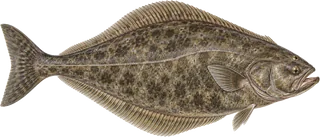 Halibut fishingOff-peak
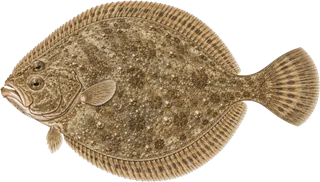 Turbot fishingMain season
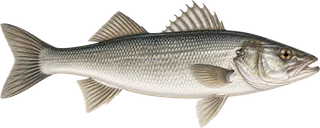 Sea bass fishingShoulder season
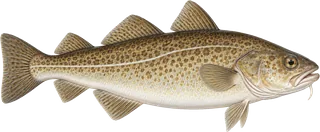 Cod fishingPeak season
Sources
As of October 2026. The practical knowledge comes from 11 sources, summarised in our own words.
See all 11 sources
- Köhler: So fangen Sie die Speedbolzen des Nordens · BLINKER (Thomas Pruß)
- Auf große Köhler im Freiwasser mit leichtem Angelgerät · BLINKER (Ralf Scheipers)
- Norwegen: Angeln im Fjord – Technik, Taktik und Traumreviere · BLINKER (Joshua Zettelmeier u. a.)
- Norwegen mit Spinnrute: Leichte Erfolge · BLINKER (Redaktion)
- Norwegen mit Gummifisch: Weicher Köder, hart am Fisch · BLINKER (Redaktion)
- 10 Köder für den Norden · RUTE & ROLLE (Jesco Peschutter)
- Angeln in Südnorwegen: Hier ist alles möglich · BLINKER (Gregor Bradler)
- Steckbrief Köhler · BLINKER (Redaktion)
- Barotrauma bei Fischen: Wie tief darf ich angeln? · BLINKER (Frank Schlichting)
- Minstemål i fritidsfiske · Fiskeridirektoratet
- Reglar for turistfiske · Fiskeridirektoratet
Text AI-assisted, based on the sources named and these pages: Coley (profile), Pirking, Soft plastic (shad), Stickbait, Sea rod.