
Knowledge – Fish
Brill fishing
To go brill fishing means: wait on sandy ground with a fish bait on the bottom, because this flatfish lies in ambush there for small fish. Here is the way there in nine steps, each with a link to the detailed page.
 Choose another fish117 fish with guides
 EelOff-peak season
 EelpoutPossible
 IdePossible
 ArapaimaGood
 GraylingPeak season
 Atlantic salmonSpawning time, please spare
 Brown troutSpawning time, please spare
 Brook troutSpawning time, please spare
 BarbelOff-peak season
 BarramundiSpawning season
 Greater amberjackGood
 Topmouth gudgeonOnly as bycatch
 Blue marlinSpawning season
 BonefishSpawning season
 BonitoGood
 BreamOff-peak season
 Dusky grouperOnly as bycatch
 CobiaPossible
 Spiny dogfishOnly as bycatch
 CodPeak season
 ChubPeak season
 MinnowOnly as bycatch
 European sturgeonOnly as bycatch
 FlounderPeak season
 PerchPeak season
 Largemouth bassGood
 Ballan wrasseOnly as bycatch
 Yellowfin tunaSpawning season
 Giant trevallyGood
 Prussian carpPossible
- BrillPossible
 Gilthead breamSpawning time, please spare
 Golden doradoSpawning season
 Golden mahseerOnly as bycatch
 Dolphinfish (mahi-mahi)Good
 Grass carpPossible
 Great barracudaGood
 GudgeonPossible
 White breamPossible
 DaceOff-peak season
 PikePeak season
 HalibutOff-peak season
 HerringPossible
 GarfishOut of season
 Huchen (Danube salmon)Possible
 Crucian carpOnly as bycatch
 CarpOff-peak season
 RuffeOff-peak season
 VendaceOnly as bycatch
 DabPeak season
 GurnardPossible
 Coley (saithe)Peak season
 Chinook salmonHardly any chance
 King mackerelSpawning season
 LingPeak season
 TuskOff-peak season
 MackerelPossible
 Bighead carpOut of season
 WhitefishPossible
 Conger eelOff-peak season
 Sea troutSpawning time, please spare
 Grey mulletPossible
 Murray codSpawning season
 MuskellungeGood
 Common nasePossible
 Nile perchPossible
 PayaraPossible
 Peacock bassPeak season
 PermitGood
 WeeverOnly as bycatch
 PollackOff-peak season
 BurbotOff-peak season
 AspPossible
 Red snapperSpawning season
 Rainbow troutPeak season
 RoosterfishGood
 RoachPeak season
 RedfishOut of season
 Bluefin tunaOnly as bycatch
 RuddPossible
 Russian sturgeonOnly as bycatch
 HaddockOff-peak season
 SnakeheadPossible
 TenchOff-peak season
 SpirlinOnly as bycatch
 PlaiceOff-peak season
 Greenland halibutOnly as bycatch
 Round gobyOnly as bycatch
 SwordfishGood
 Lake troutSpawning time, please spare
 HakeSpawning time, please spare
 Alpine charSpawning time, please spare
 MonkfishPossible
 SoleOff-peak season
 SailfishGood
 Silver carpOut of season
 SnookPeak season
 PumpkinseedOnly as bycatch
 SpratOnly as bycatch
 Atlantic wolffishSpawning time, please spare
 TurbotPeak season
 SterletOnly as bycatch
 SmeltOnly as bycatch
 Horse mackerelPossible
 TaimenGood
 TarponGood
 TigerfishSpawning season
 BleakPossible
 WahooGood
 Wels catfishOff-peak season
 WhitingPeak season
 Sea bassOff-peak season
 ZanderPeak season
 White-eye breamOnly as bycatch
 Blue breamOnly as bycatch
 Brown bullheadPossible
 VimbaOnly as bycatch
Season in October according to the catch calendar, an estimate and not a guarantee of a catch. The fish pictures are reduced natural-history plates and AI-generated.
Best time
From May to September.
In January: Slim chancesIn February: Slim chancesIn March: PossibleIn April: PossibleIn May: Good, spawning seasonIn June: Good, spawning seasonIn July: Good, spawning seasonIn August: GoodIn September: GoodIn October: PossibleIn November: PossibleIn December: Slim chances
Good spot
- Coast: sandy ground and stony mixed groundsandy ground, stony mixed ground and surfsandy ground and stony mixed groundsandy ground and stony mixed ground
Top baits
In short
In short: You catch brill best from May to September. Good spots on the coast: sandy ground and stony mixed ground. Proven baits: sand eel and strips of mackerel on the bottom, and as a by-catch soft plastic on a jig head. It resembles the turbot, but has a smooth, scaled eyed side without bony tubercles and a more oval body. In Schleswig-Holstein the minimum size is 30 cm; the Baltic closed season (1.6.–31.7.) is suspended until the end of 2026 (as of October 2026).
Quick to recognise
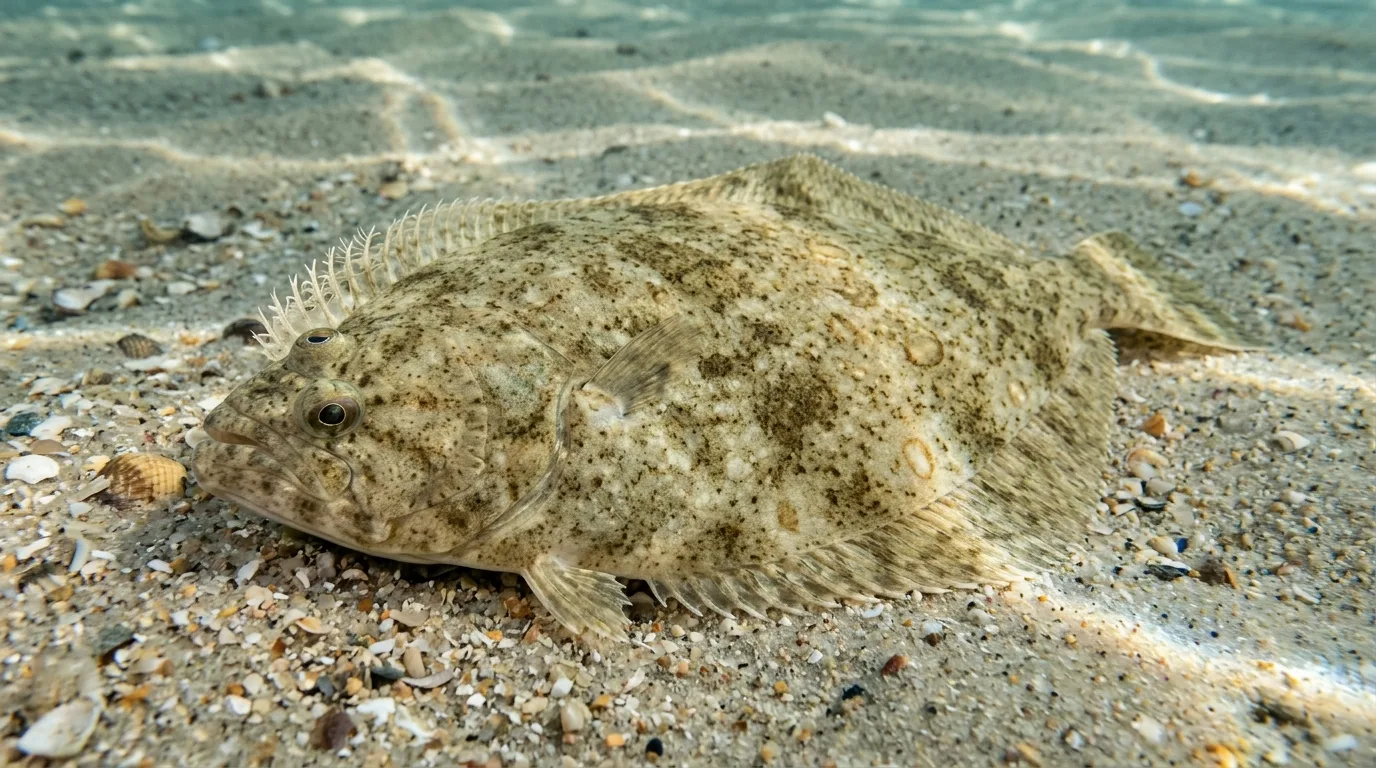
The smaller, slimmer relative of the turbot, also called Kleist on the coast. If you stroke the eyed side it feels smooth, on the turbot lumpy. It usually measures around 30 centimetres, up to 75 are possible.
When
From May to September the chances are good, in March, April, October and November possible, in winter slim. There is no fixed angling season. Spawning falls in the months May to July, when the fish stand 10 to 30 metres deep. In Schleswig-Holstein a minimum size (Mindestmaß) of 30 centimetres applies. The Baltic closed season (Schonzeit) there, from 1 June to 31 July, is suspended by a general order (Allgemeinverfügung) until the end of 2026 (as of October 2026); check before the 2027 season whether it applies again.
- JanHardly any chance
- FebHardly any chance
- MarPossible
- AprPossible
- MayGood, spawning
- JunGood, spawning
- JulGood, spawning
- AugGood
- SepGood
- OctPossible
- NovPossible
- DecHardly any chance
Peak seasonGoodPossibleHardly any chanceSpawning season
Is it biting today?
In January: Off seasonIn February: Off seasonIn March: PossibleIn April: PossibleIn May: Spawning season, please spare themIn June: Spawning season, please spare themIn July: Spawning season, please spare themIn August: Shoulder seasonIn September: Shoulder seasonIn October: PossibleIn November: PossibleIn December: Off season
Today’s catch index needs JavaScript. Season and spawning time are in the catch calendar.
Where it is now
On the coast
Look for sand and mixed ground, in Germany in the North Sea and the western Baltic. Bigger brill wait further out on sandbanks in the current, only the very young stay on the beach. On Irish and Welsh sandy beaches anglers catch it mainly in summer.
| All year round | Sandy ground, stony mixed ground |
|---|---|
| Summer extra | Surf |
Holding spots in the picture
Choose the season and time of day: the picture shows where the species stands then. Spots outlined in red apply only in the chosen season. Tap a fish or a spot in the list to bring it closer. The picture is schematic and AI-generated, every water is different.
Catch chances in springpossible
Chance of a catch in summergoodSpawning, observe the closed seasons
Catch chance in autumnpossible
Catch chance in winterhardly any
- J
- F
- M
- A
- M
- J
- J
- A
- S
- O
- N
- D
Spawning season
On the coast
Surf close to the shore
Brill is here in summer only.
Sandy bottom
Brill is here all year round.
Stony mixed ground
Brill is here all year round.
The brill lies on the bottom on sand or mixed ground and lies in wait there for small fish. Bigger ones keep further out on sandbanks, only very young ones stay close to the beach.
Spring: catch chances according to the catch calendar are possible in March and April, good in May.
Summer: chances according to the catch calendar are good. Spawning falls in this period, so observe closed seasons. On Irish and Welsh sandy beaches it takes a ground bait mainly in summer, but it has become scarcer in Ireland.
Autumn: according to the catch calendar, the chance of a catch is good in September and possible in October and November.
Winter: catch chance according to the catch calendar hardly any.
Depth: In Norwegian waters the brill usually lies at depths between 4 and 80 metres on soft ground.
Size comparison: AI-generated drawing, schematic.
How
You fish with a bottom rig and a fish bait on the bottom. In England boat anglers anchor on sandbanks for this. On German coasts it mostly bites by chance, when fishing for flatfish or when a soft plastic on a jig head for cod runs over the bottom.
What with
A sand eel or a strip of mackerel comes closest to its natural prey. A small whole baitfish suits just as well. Irish guides also name worm, but fish counts as the main bait.
Tackle
For bottom fishing from the shore a bottom rod with a suitable reel is enough; the line calculator shows you how strong the line has to be. For the bait use the natural-bait rig for the sea.
Common mistakes
- Brill mistaken for turbot: Run your hand over the eyed side: smooth means brill, lumpy means turbot. Different rules may apply to the two.
- The strip flies off on the cast: Take mackerel with tough skin, put the hook through the skin and cast softly.
- The hook is buried in the strip: The point must show so that the strike holds.
- The weight is too light: In wind and current it drifts and the rig gets stuck. Use enough weight for the bait to stay put.
Rules
For the brill our country overview has no figures on minimum size (Mindestmaß) or closed season (Schonzeit). That does not mean there are no rules: individual countries and water regulations protect the species or set their own limits.
On the coast the rules of the coastal states apply, partly with their own catch restrictions: North Sea coast, Baltic coast of Schleswig-Holstein and Baltic coast of Mecklenburg-Western Pomerania.
The regulation and your fishing permit (Erlaubnisschein) are what count. Lake Constance, the Rhine and the coast, for example, have their own rules: Fishing waters in Germany.
After the catch
A fish of legal size that you may keep you stun and kill at once. Protected or undersized fish you unhook with wet hands in the water if possible and put back carefully. Minimum sizes and closed seasons are set by your federal state (Bundesland) and the fishing permit (Erlaubnisschein).
Similar species
If you catch brill, you can fish for these species with similar tackle as well:
 Conger fishingShoulder season
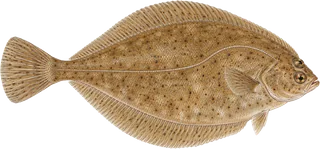 Dab fishingPeak season
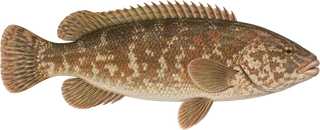 Fishing for ballan wrasseOnly as bycatch
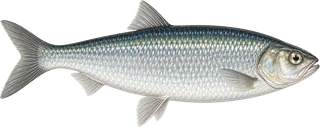 Herring fishingPossible
Text prepared with AI support, summarised from these pages: Brill (profile), Bottom fishing, Fish strips, Natural-bait rig for the sea.