
Knowledge – Fish
Hake fishing
To go hake fishing means: fish from a boat in deep water, near the bottom by day and higher at night, with mackerel or herring as bait. Here is the way there in nine steps, each with a link to the detailed page.
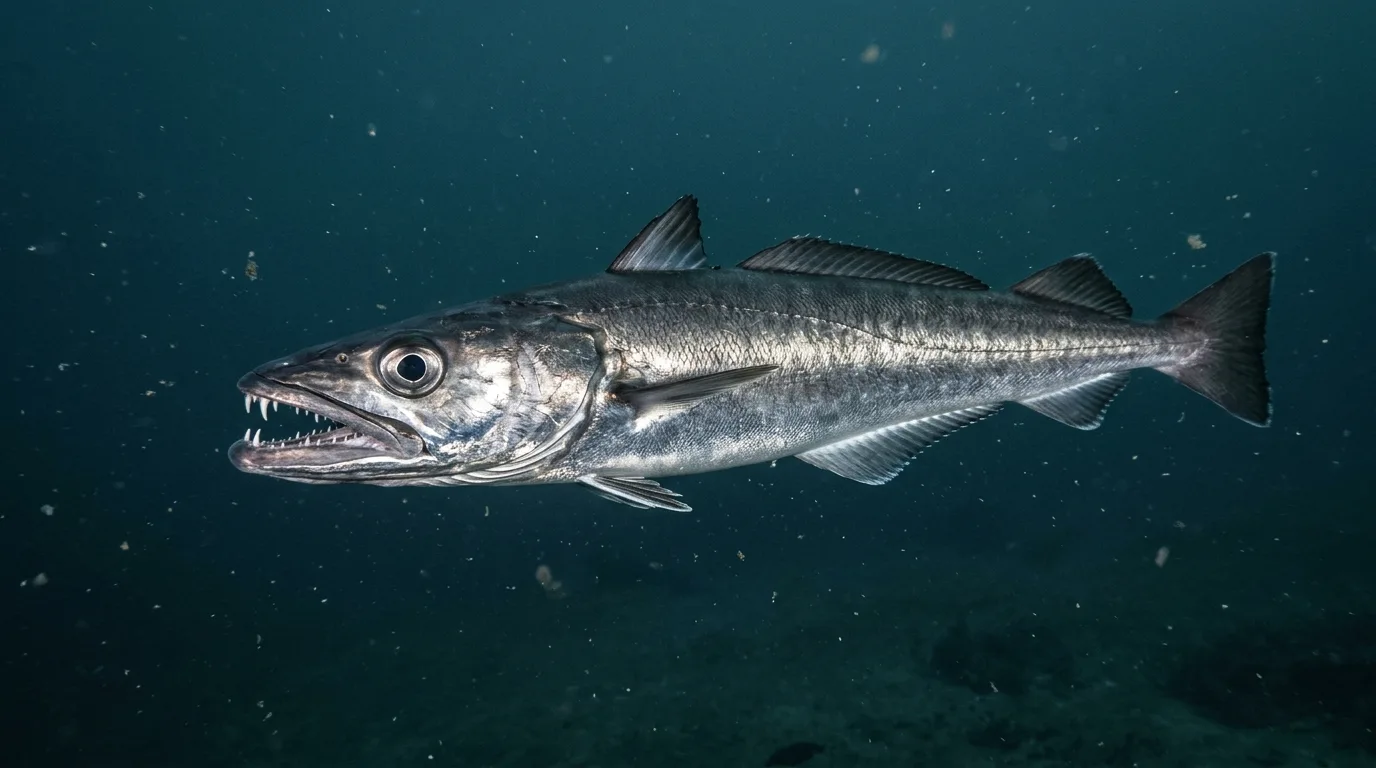
 Choose another fish117 fish with guides
 EelOff-peak season
 EelpoutPossible
 IdePossible
 ArapaimaGood
 GraylingPeak season
 Atlantic salmonSpawning time, please spare
 Brown troutSpawning time, please spare
 Brook troutSpawning time, please spare
 BarbelOff-peak season
 BarramundiSpawning season
 Greater amberjackGood
 Topmouth gudgeonOnly as bycatch
 Blue marlinSpawning season
 BonefishSpawning season
 BonitoGood
 BreamOff-peak season
 Dusky grouperOnly as bycatch
 CobiaPossible
 Spiny dogfishOnly as bycatch
 CodPeak season
 ChubPeak season
 MinnowOnly as bycatch
 European sturgeonOnly as bycatch
 FlounderPeak season
 PerchPeak season
 Largemouth bassGood
 Ballan wrasseOnly as bycatch
 Yellowfin tunaSpawning season
 Giant trevallyGood
 Prussian carpPossible
 BrillPossible
 Gilthead breamSpawning time, please spare
 Golden doradoSpawning season
 Golden mahseerOnly as bycatch
 Dolphinfish (mahi-mahi)Good
 Grass carpPossible
 Great barracudaGood
 GudgeonPossible
 White breamPossible
 DaceOff-peak season
 PikePeak season
 HalibutOff-peak season
 HerringPossible
 GarfishOut of season
 Huchen (Danube salmon)Possible
 Crucian carpOnly as bycatch
 CarpOff-peak season
 RuffeOff-peak season
 VendaceOnly as bycatch
 DabPeak season
 GurnardPossible
 Coley (saithe)Peak season
 Chinook salmonHardly any chance
 King mackerelSpawning season
 LingPeak season
 TuskOff-peak season
 MackerelPossible
 Bighead carpOut of season
 WhitefishPossible
 Conger eelOff-peak season
 Sea troutSpawning time, please spare
 Grey mulletPossible
 Murray codSpawning season
 MuskellungeGood
 Common nasePossible
 Nile perchPossible
 PayaraPossible
 Peacock bassPeak season
 PermitGood
 WeeverOnly as bycatch
 PollackOff-peak season
 BurbotOff-peak season
 AspPossible
 Red snapperSpawning season
 Rainbow troutPeak season
 RoosterfishGood
 RoachPeak season
 RedfishOut of season
 Bluefin tunaOnly as bycatch
 RuddPossible
 Russian sturgeonOnly as bycatch
 HaddockOff-peak season
 SnakeheadPossible
 TenchOff-peak season
 SpirlinOnly as bycatch
 PlaiceOff-peak season
 Greenland halibutOnly as bycatch
 Round gobyOnly as bycatch
 SwordfishGood
 Lake troutSpawning time, please spare
- HakeSpawning time, please spare
 Alpine charSpawning time, please spare
 MonkfishPossible
 SoleOff-peak season
 SailfishGood
 Silver carpOut of season
 SnookPeak season
 PumpkinseedOnly as bycatch
 SpratOnly as bycatch
 Atlantic wolffishSpawning time, please spare
 TurbotPeak season
 SterletOnly as bycatch
 SmeltOnly as bycatch
 Horse mackerelPossible
 TaimenGood
 TarponGood
 TigerfishSpawning season
 BleakPossible
 WahooGood
 Wels catfishOff-peak season
 WhitingPeak season
 Sea bassOff-peak season
 ZanderPeak season
 White-eye breamOnly as bycatch
 Blue breamOnly as bycatch
 Brown bullheadPossible
 VimbaOnly as bycatch
Season in October according to the catch calendar, an estimate and not a guarantee of a catch. The fish pictures are reduced natural-history plates and AI-generated.
Best time
From July to October, mostly at night.
In January: Slim chancesIn February: Slim chancesIn March: Slim chancesIn April: Slim chancesIn May: PossibleIn June: Possible, spawning seasonIn July: Good, spawning seasonIn August: Good, spawning seasonIn September: Good, spawning seasonIn October: Good, spawning seasonIn November: PossibleIn December: Slim chances
Good spot
- Coast: deep water and open waterdeep water and open waterdeep water and open waterdeep water and open water
Starter tackle
- Rod: pirk rod of about 2,40 m with a casting weight of up to about 300 g; shorter rods are unwieldy with long rigs
- Line: braid of 0,18–0,25 mm
- Hook: strong single hooks 4/0–8/0, often around 7/0
- Rod: boat rod of about 2 m, 20–50 lb; for shallower edges a sea rod of 2,10–2,40 m with a casting weight of up to 200 g is enough
- Line: braid with a breaking strain of about 25 kg, around 500 m; at shallower edges at least 0,25 mm
- Hook: single hooks 8/0–10/0 for holding plus a treble 3/0–5/0
In short
In short: You catch hake best from July to October, mostly at night. Good spots on the coast: deep water and open water. Proven baits: strips of mackerel or herring on the natural-bait rig, near the bottom at edges. Very sharp teeth. Export from Norway only for fish caught through a registered fishing business: 15 kg twice a year, from 1.1.2027 10 kg (as of October 2026).
Quick to recognise
A slim predator of the eastern Atlantic with sharp teeth and a black mouth cavity, not related to the pike despite its German name. It usually measures around 45 centimetres, up to 140 are possible.
When
From July to October the chances are good, in May, June and November possible, in winter and early spring slim. For fjord Norway August and September, i.e. late summer, are named as the best weeks. In the North Sea and off western Norway it spawns from June to October, in the Bay of Biscay mainly from January to June.
- JanHardly any chance
- FebHardly any chance
- MarHardly any chance
- AprHardly any chance
- MayPossible
- JunPossible, spawning season
- JulGood, spawning
- AugGood, spawning
- SepGood, spawning season
- OctGood, spawning season
- NovPossible
- DecHardly any chance
Peak seasonGoodPossibleHardly any chanceSpawning season
Spring tactics
Before spawning hake stand deeper and only in small groups. Targeted catches are then rare; more likely one bites while fishing natural bait for ling or tusk.
Summer tactics
From the end of June the fish gather to spawn over soft ground, the bigger females first, then the males. During this time they stay loyal to their spot, and a spot found usually brings several fish.
Autumn tactics
Late summer and early autumn count as the best weeks, in fjord Norway above all from August. In sheltered fjords such as the Romsdalsfjord they sometimes still bite in November.
Winter tactics
After spawning the fish move deeper again and spread out. Targeted trips hardly pay off in winter.
Is it biting today?
In January: Off seasonIn February: Off seasonIn March: Off seasonIn April: Off seasonIn May: PossibleIn June: Spawning season, please spare themIn July: Spawning season, please spare themIn August: Spawning season, please spare themIn September: Spawning season, please spare themIn October: Spawning season, please spare themIn November: PossibleIn December: Off season
Today’s catch index needs JavaScript. Season and spawning time are in the catch calendar.
Where it is now
On the coast
Look for deep water in fjords and on the open sea. By day the hake stays close above the bottom. After dark it rises and hunts in open water. In summer and autumn in western Norway it sometimes moves far into the fjords and stands there on deep plateaus.
How to go about it: Good waters lie in central and western Norway, for example the Trondheimsleia between Hitra, Smøla and the mainland, Romsdalsfjord, Sognefjord, Frøya and Namsenfjord. Not every fjord holds hake, so ask where some were caught lately. An echo sounder often does not show fish lying on the bottom, so stay over a good gully for a while even without a mark.
| All year round | deep water, open water |
|---|
Biting time: mostly at night. What this looks like in the water is shown by the picture of the holding spots just below.
Holding spots in the picture
Choose a season and time of day: the picture shows where the species sits then. Tap a fish or a spot in the list to bring it closer. The picture is schematic and AI-generated, every water is different.
Chance of a catch in springslim
Chance of a catch in summergoodSpawning, observe the closed seasons
Chance of a catch in autumngoodSpawning season, observe the closed seasons
Catch chance in winterhardly any
- J
- F
- M
- A
- M
- J
- J
- A
- S
- O
- N
- D
Spawning season
No main time By day the hake stands near the bottom, at night it hunts in open water up to near the surface.
No main time By day the hake stands near the bottom, at night it hunts in open water up to near the surface.
No main time By day the hake stands near the bottom, at night it hunts in open water up to near the surface.
Active time By day the hake stands near the bottom, at night it hunts in open water up to near the surface.
On the coast
Deep, colder water
Hake is here all year round.
Open water, mid-water
Hake is here all year round.
The hake is a bottom fish of the fjords and the open sea. By day it stays close to the bottom in deep water, at night it leaves the bottom and hunts in open water.
Spring: chances according to the catch calendar are slim in March and April, possible in May.
Summer: chances according to the catch calendar are possible in June, good in July and August. Spawning falls in this period, so observe closed seasons. In summer and autumn the hake sometimes moves far into the fjords and stands there on deep plateaus. Off western Norway and in the North Sea it spawns from June to October.
Autumn: chances according to the catch calendar are good in September and October, possible in November. Spawning falls in this period, so observe closed seasons. Late summer with August and September counts as the good time in fjord Norway; fish are caught well into autumn.
Winter: catch chance according to the catch calendar hardly any.
Depth: The hake usually lives at depths of 70 to 400 metres. In western Norwegian fjords it is caught on plateaus at 70 to 150 metres.
Size comparison: AI-generated drawing, schematic.
How
Most often you catch it on a natural-bait rig that you offer just above the bottom by day. Depending on the water the fish stand between about 40 and well over 100 metres, in deep spots often together with ling and tusk. With medium-heavy pirking and soft-plastic fishing down to about 150 metres‘ depth it can also take.
Easiest way
It is easiest in late summer in a fjord of central or western Norway with a pirk rod of about 2,40 m. Under the pirk go two to three single hooks with small pieces of fresh mackerel, which you let drift just above the bottom. You catch the mackerel for bait yourself beforehand with a light spoon.
Pirk with strips of fish as droppers
From a drifting boat in fjord gullies and at edges, when the hake gather to spawn.
- Gullies and edges
Run along gullies between the shore and an underwater mountain, or steep edges. At spawning time the fish often stand in groups over softer ground with little change in height.
- Three hooks at most
Above the pirk or weight tie two to three single hooks with rubber octopuses to thick monofilament, at most about 40 cm apart. More hooks only tangle.
- Mackerel through the skin
Cut fresh mackerel into pieces of 3 to 5 cm and put the hook through the skin; then the strip holds better. Also garnish the treble of the pirk with fish, leaving the points free.
- Lower to the bottom
Let the rig sink to the bottom, close the reel and wind in a few metres. The weight must be enough to hold the rig just above the bottom despite the drift.
- Drift with the current
Pirking is hardly needed; drift and current move the strips enough. Alternatively you raise the rig in steps to about 10 m above the bottom, wait a few minutes each time and then lower it again.
- First a tug, then a pull
Often at first there is only a light tug or shudder in the rod tip. Wait until the fish pulls steadily and only then strike.
- Always under tension
Hake run short and hard, both down and up. If the line goes slack then, the hook quickly slips out of the hard, bony jaw.
- Big landing net
The surest way to land the fish is with a big, sturdy boat landing net. Keep your fingers out of the mouth; cuts from the teeth easily turn septic.
Whole baitfish for big fish
For deliberately bigger hake at deep edges, with herring or mackerel behind a weight.
- Look for hunting fish
Use the echo sounder to look for steep edges and gullies. Hunting hake often show up there as long lines in the water above the bottom.
- Boom and two hooks
An anti-tangle boom or a trailing weight carries one to two metres of hooklength of about 1 mm monofilament. A big single hook holds the baitfish at the head, a treble in the flank hooks the fish.
- Herring or mackerel
Offer a whole herring or a whole mackerel; for fish over 80 cm that is no problem. Secure fillets or strips with a cable tie so that bait thieves do not strip them off so quickly.
- Change height
Keep the bait just above the bottom at first and work up in steps to about 10 m higher. Towards evening the fish rise and also hunt higher in the water.
- Wait for the shaking to stop
Hake often grab the bait briefly, let go and come back. Whoever strikes too early and too hard misses many fish. Strike when the shaking stops and you feel the weight.
- Zigzag upwards
A hooked hake swims in a zigzag up and down. Keep the rod bent and let the drag work on the runs.
- Check the hooklength
Take the fish with the landing net and check the hooklength afterwards. The many sharp teeth quickly roughen even thick monofilament.
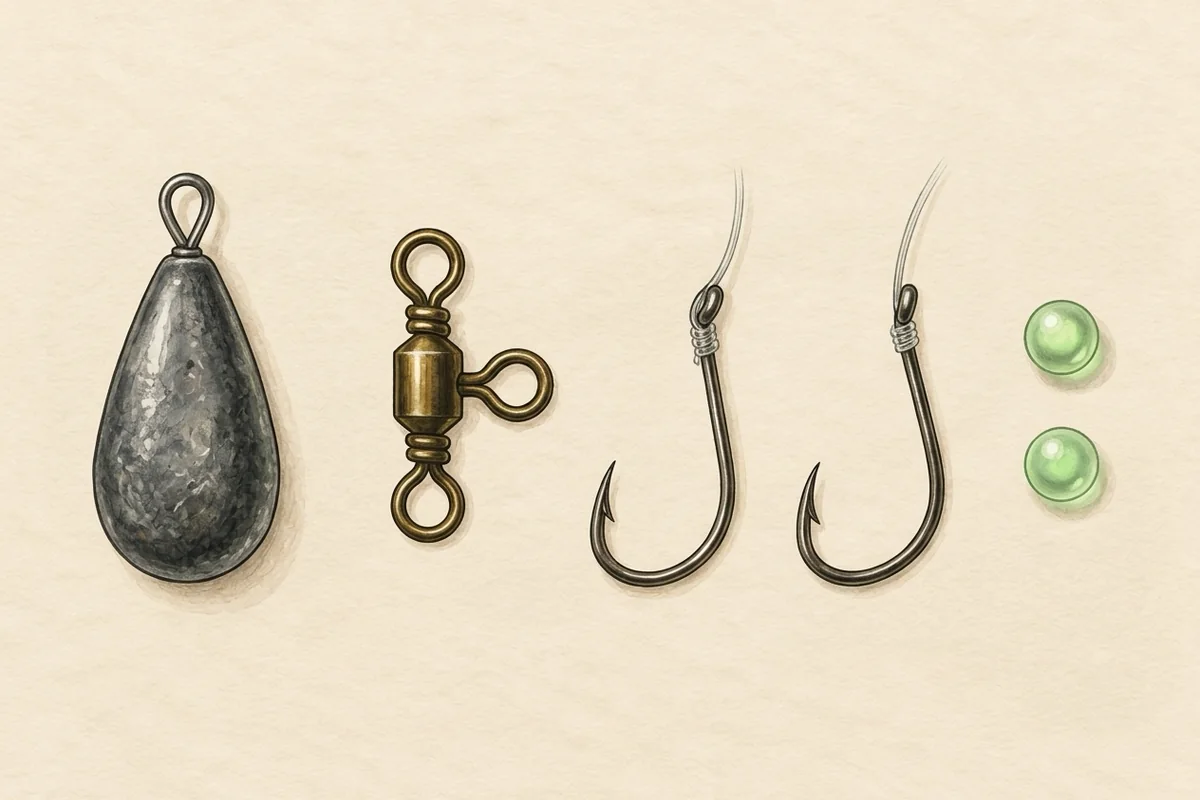
What with
Strips of mackerel or herring are the standard, best fresh and caught on the spot yourself. Anyone looking for bigger fish offers a whole baitfish. Prawns and squid are also on its menu.
- Cut baitthe standard, from early summer into autumn
Oily mackerel draws a strong scent trail through the water and holds better on the hook than herring.
- Baitfishwhen you are deliberately after bigger fish
Hake have a big mouth; a whole herring or mackerel sorts out smaller fish.
- Crustaceans & musselsfor a change, when fish baits do little
Deep-water prawns and Norway lobster are part of the natural diet and are readily taken.
Tackle
For medium natural-bait fishing a lighter boat rod with a medium multiplier reel and braid is enough. How heavy the weight has to be depends on depth and drift; in very deep water you need much stronger tackle.
Pirk with strips of fish as droppers
- Rod
- Pirk rod of about 2,40 m with a casting weight of up to about 300 g; shorter rods are unwieldy with long rigs
- Reel
- saltwater-proof fixed-spool reel with room for 300–350 m of 0,30 mm line and a gear ratio from about 5:1, alternatively a multiplier reel
- Line
- Braid of 0,18–0,25 mm
- Leader
- thick monofilament from about 0,70 mm, better 0,80–1,2 mm, preferably with a protective tube against the teeth
- Hooks
- strong single hooks 4/0–8/0, often around 7/0
- Weight, float, lead
- Pirk or weight of 100–300 g; at depths of 70–130 m a pirk of 300–500 g
Whole baitfish for big fish
- Rod
- Boat rod of about 2 m, 20–50 lb; for shallower edges a sea rod of 2,10–2,40 m with a casting weight of up to 200 g is enough
- Reel
- big multiplier reel, in very deep water also an electric multiplier reel
- Line
- Braid with a breaking strain of about 25 kg, around 500 m; at shallower edges at least 0,25 mm
- Leader
- 1–2 m of monofilament of about 1 mm, optionally with a luminous tube and a rubber octopus
- Hooks
- Single hooks 8/0–10/0 for holding plus a treble 3/0–5/0
- Weight, float, lead
- Weight of 80–300 g, depending on depth and drift
Common mistakes
- Hooklength too thin: The many pointed teeth quickly roughen monofilament. Take 0,70 to 1,2 mm, pull a protective tube over it and change the hooklength after every fish as soon as it turns rough.
- Too many hooks on the rig: Rigs with many droppers tangle in the deep. Two to three single hooks are quite enough.
- Leaving the spot too early: An empty echo sounder does not mean there is no hake, because it rarely shows fish lying on the bottom. Give a good gully several drifts.
- Pirk without garnish: A bare pirk catches hake only moderately. Put a piece of mackerel or herring on the treble and it becomes much more effective.
- Slack line in the fight: When the fish swims up, wind at once. Without tension the hook easily slips out of the hard mouth.
Rules
For the hake our country overview has no figures on minimum size (Mindestmaß) or closed season (Schonzeit). That does not mean there are no rules: individual countries and water regulations protect the species or set their own limits.
On the coast the rules of the coastal states apply, partly with their own catch restrictions: North Sea coast, Baltic coast of Schleswig-Holstein and Baltic coast of Mecklenburg-Western Pomerania.
The regulation and your fishing permit (Erlaubnisschein) are what count. Lake Constance, the Rhine and the coast, for example, have their own rules: Fishing waters in Germany.
After the catch
Playing and landing
Strike only when a steady pull follows the first tug, and keep the line taut from then on. You land the fish with a big landing net and remove the hook with pliers or a disgorger, without reaching into the mouth. A hake of legal size that you may keep you kill at once; from great depth it usually does not survive being put back, so take only as many as you will use.
From great depth the hake does not survive being put back, because the drop in pressure harms it. So take only as much as you can use. A fish of legal size that you may take you stun and kill at once. Larvae in the flesh die when it is frozen or cooked through. In Norway you must observe minimum sizes, and export is limited: you may export fish only if you caught it with a registered fishing business, currently twice a year 15 kilograms each time, from 1 January 2027 only 10 kilograms (as of October 2026).
Frequently asked questions
Where can you fish for hake in Norway?
Mainly in the fjords of central and western Norway; the Trondheimsleia, Romsdalsfjord, Sognefjord, Frøya and Namsenfjord are well known. According to the angling press it is largely absent further north.
What is the best bait for hake?
Herring and mackerel, as strips, fillet or whole fish. Squid, whiting, small coley and deep-water prawns also catch.
At what depth does hake bite?
That varies greatly from water to water: reports name 40 to 70 m, 70 to 130 m and steep edges between 30 and 100 m. Usually offer the bait there 1 to 10 m above the bottom.
What hooklength strength for hake?
Monofilament or fluorocarbon of about 0,70 to 1,2 mm. A piece of rubber tubing ahead of the hook gives extra protection against the teeth.
When is hake season in Norway?
The season begins at the end of June and lasts well into autumn, usually strongest in August and September. In some fjords you can still catch the odd fish in November.
Can you catch hake from a boat on artificial lures?
Yes, especially pirks or jigs whose hooks are garnished with a piece of fish, and combination lures that you work slowly with short pauses. Without any natural bait at all you catch clearly fewer.
Similar species
If you catch hake, you can fish for these species with similar tackle as well:
 Cod fishingPeak season
 Gurnard fishingPossible
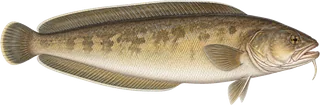 Tusk fishingShoulder season
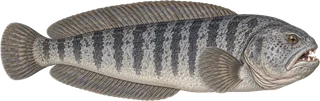 Atlantic wolffish fishingSpawning season, please spare them
Sources
As of October 2026. The practical knowledge comes from 8 sources, summarised in our own words.
View all 8 sources
- Steckbrief Seehecht: Angeln auf den kampfstarken Meeresräuber · BLINKER (Redaktion)
- Meeresangeln: Im Seehecht-Fieber · BLINKER (Thomas Pruß)
- Seehechte: klasse Köder · RUTE & ROLLE (Jesco Peschutter)
- Norwegen: Geheimnisvolle Gestalten aus dem Romsdalsfjord · BLINKER (Mathias Arnham mit Anders Nicander)
- Norwegen: Angeln im Fjord – Technik, Taktik und Traumreviere · BLINKER (Joshua Zettelmeier u. a.)
- Tiefseeangeln: Ab in die Tiefe · RUTE & ROLLE (Jesco Peschutter)
- Lysing · Havforskningsinstituttet
- Barotrauma bei Fischen: Wie tief darf ich angeln? · BLINKER (Frank Schlichting)
Text prepared with AI support, based on the sources given and these pages: Hake (profile), Pirking, Fish strips, Natural-bait rig for the sea.