
Knowledge – Fish
Fishing for giant trevally
Fishing for giant trevally means casting surface lures at reef edges and flats, waiting for the take and keeping the fish away from the reef with strong tackle. Here is the way there in nine steps, each with a link to the detailed page.
 Choose another fish117 fish with guides
 EelOff-peak season
 EelpoutPossible
 IdePossible
 ArapaimaGood
 GraylingPeak season
 Atlantic salmonSpawning time, please spare
 Brown troutSpawning time, please spare
 Brook troutSpawning time, please spare
 BarbelOff-peak season
 BarramundiSpawning season
 Greater amberjackGood
 Topmouth gudgeonOnly as bycatch
 Blue marlinSpawning season
 BonefishSpawning season
 BonitoGood
 BreamOff-peak season
 Dusky grouperOnly as bycatch
 CobiaPossible
 Spiny dogfishOnly as bycatch
 CodPeak season
 ChubPeak season
 MinnowOnly as bycatch
 European sturgeonOnly as bycatch
 FlounderPeak season
 PerchPeak season
 Largemouth bassGood
 Ballan wrasseOnly as bycatch
 Yellowfin tunaSpawning season
- Giant trevallyGood
 Prussian carpPossible
 BrillPossible
 Gilthead breamSpawning time, please spare
 Golden doradoSpawning season
 Golden mahseerOnly as bycatch
 Dolphinfish (mahi-mahi)Good
 Grass carpPossible
 Great barracudaGood
 GudgeonPossible
 White breamPossible
 DaceOff-peak season
 PikePeak season
 HalibutOff-peak season
 HerringPossible
 GarfishOut of season
 Huchen (Danube salmon)Possible
 Crucian carpOnly as bycatch
 CarpOff-peak season
 RuffeOff-peak season
 VendaceOnly as bycatch
 DabPeak season
 GurnardPossible
 Coley (saithe)Peak season
 Chinook salmonHardly any chance
 King mackerelSpawning season
 LingPeak season
 TuskOff-peak season
 MackerelPossible
 Bighead carpOut of season
 WhitefishPossible
 Conger eelOff-peak season
 Sea troutSpawning time, please spare
 Grey mulletPossible
 Murray codSpawning season
 MuskellungeGood
 Common nasePossible
 Nile perchPossible
 PayaraPossible
 Peacock bassPeak season
 PermitGood
 WeeverOnly as bycatch
 PollackOff-peak season
 BurbotOff-peak season
 AspPossible
 Red snapperSpawning season
 Rainbow troutPeak season
 RoosterfishGood
 RoachPeak season
 RedfishOut of season
 Bluefin tunaOnly as bycatch
 RuddPossible
 Russian sturgeonOnly as bycatch
 HaddockOff-peak season
 SnakeheadPossible
 TenchOff-peak season
 SpirlinOnly as bycatch
 PlaiceOff-peak season
 Greenland halibutOnly as bycatch
 Round gobyOnly as bycatch
 SwordfishGood
 Lake troutSpawning time, please spare
 HakeSpawning time, please spare
 Alpine charSpawning time, please spare
 MonkfishPossible
 SoleOff-peak season
 SailfishGood
 Silver carpOut of season
 SnookPeak season
 PumpkinseedOnly as bycatch
 SpratOnly as bycatch
 Atlantic wolffishSpawning time, please spare
 TurbotPeak season
 SterletOnly as bycatch
 SmeltOnly as bycatch
 Horse mackerelPossible
 TaimenGood
 TarponGood
 TigerfishSpawning season
 BleakPossible
 WahooGood
 Wels catfishOff-peak season
 WhitingPeak season
 Sea bassOff-peak season
 ZanderPeak season
 White-eye breamOnly as bycatch
 Blue breamOnly as bycatch
 Brown bullheadPossible
 VimbaOnly as bycatch
Season in October according to the catch calendar, an estimate and not a guarantee of a catch. The fish pictures are reduced natural-history plates and AI-generated.
Best time
All year round, in the morning, in the evening and at night.
In January: GoodIn February: GoodIn March: GoodIn April: GoodIn May: Good, spawning seasonIn June: Good, spawning seasonIn July: Good, spawning seasonIn August: Good, spawning seasonIn September: GoodIn October: GoodIn November: GoodIn December: Good
Good spot
- Coast: wreck, reef, edge and gully in front of the sandbankwreck, reef, edge and gully in front of the sandbankwreck, reef, edge and gully in front of the sandbankwreck, reef, edge and gully in front of the sandbank
Starter tackle
- Rod: heavy spinning rod, 2,13 to 2,44 m
- Line: braid with a breaking strain of 34 to 50 kg
- Hook: single J hook 7/0 or treble 6/0 to 7/0, no more than three hook points in total
In short
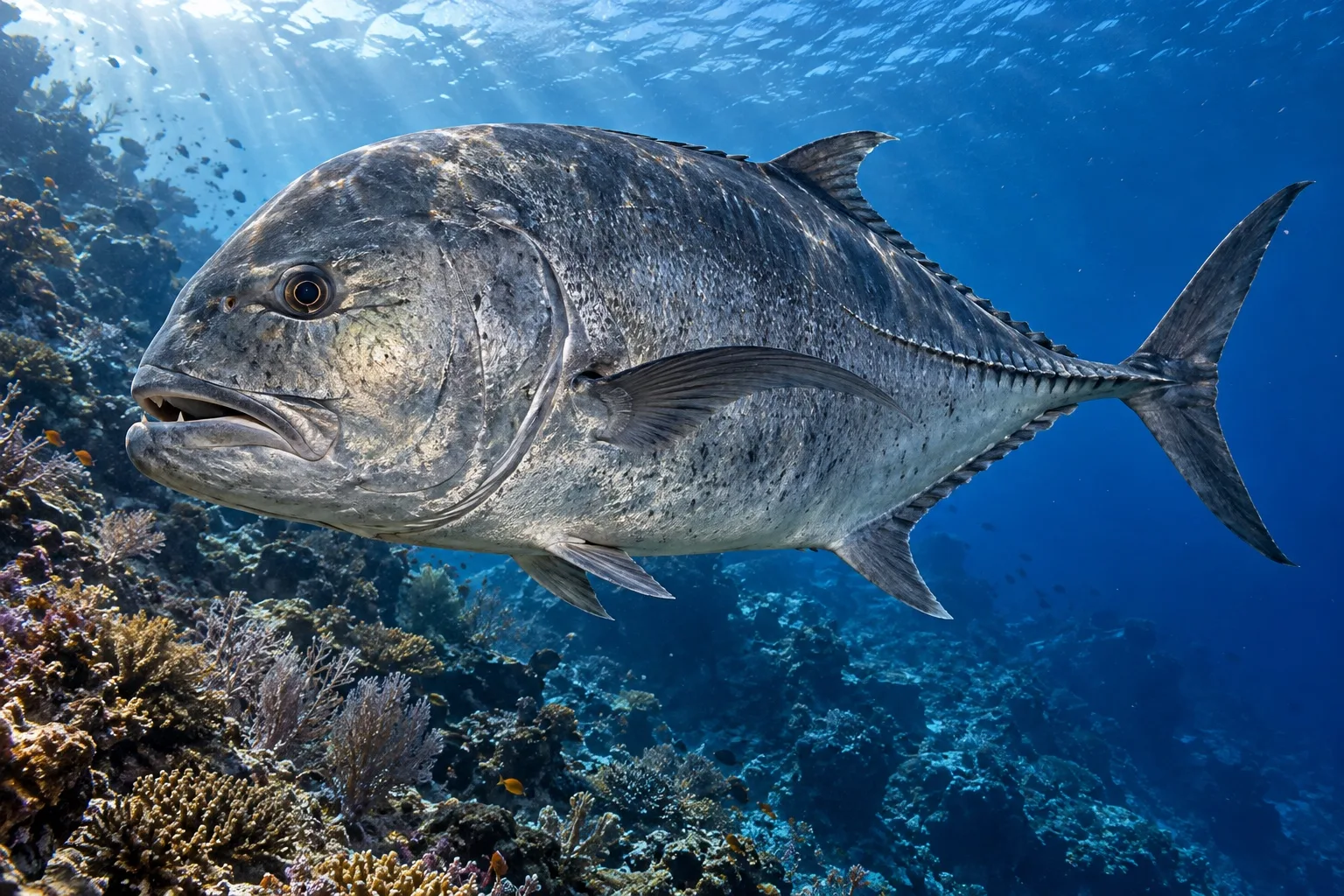
In short: According to the catch calendar the best time is all year round. Good spots on the coast: wreck, reef, edge and gully in front of the sandbank. Proven baits: surface lures on a spinning rod. The largest species of the genus Caranx, recognisable by its steep head profile and strong bony scutes. In Hawaii a minimum size and daily limit apply to ulua.
Quick to recognise
A very large, deep-bodied jack with a steeply sloping head and strong bony scutes on the rear part of the lateral line. Around 100 centimetres is usual; FishBase gives up to 170 centimetres and 80 kilograms.
When
In the tropical Indo-Pacific the GT is on the grounds all year and is caught all year. The best time to travel depends on the region, so ask locally. In Hawaii it spawns mainly from May to August on outer reefs and offshore banks.
- JanGood
- FebGood
- MarGood
- AprGood
- MayGood, spawning
- JunGood, spawning
- JulGood, spawning
- AugGood, spawning
- SepGood
- OctGood
- NovGood
- DecGood
Peak seasonGoodPossibleHardly any chanceSpawning season
Season in the destination
The GT lives all year in its tropical grounds, and the research sources do not name a fixed main season. The anglers in the Kiritimati study fished in February and in June. Spawning was observed in the Philippines in December and January and in June, by day and close to the coast.
Season and biting time
In January: GoodIn February: GoodIn March: GoodIn April: GoodIn May: Spawning seasonIn June: Spawning seasonIn July: Spawning seasonIn August: Spawning seasonIn September: GoodIn October: GoodIn November: GoodIn December: Good
Where it is now
On the coast
Reef edges, reef channels and shallow sand flats close to the coast are his hunting grounds, along with rocky bottom on inner and outer reefs. Well-known flats fisheries are the Seychelles, Kiritimati and French Polynesia.
How to go about it: Adult GT move over sand and rock in clear lagoons and along the reefs towards the open sea, in Hawaii from the shore across the reef flat to the slopes and from the surface to a good 90 metres deep. Juveniles under about 60 centimetres stay in sheltered atolls and estuaries. Older fish move farther out, where they are harder for anglers to reach.
| All year round | wreck, reef, edge, gully in front of the sandbank, sandy bottom, stony mixed bottom |
|---|
Feeding time: in the morning, in the evening and at night. How this looks on the water is shown by the picture of the holding spots right below.
Holding spots in the picture
Choose a season and time of day: the picture shows where the species sits then. Tap a fish or a spot in the list to bring it closer. The picture is schematic and AI-generated, every water is different.
Chance of a catch in springgood
Chance of a catch in summergoodSpawning, observe the closed seasons
Catch chance in autumngood
Catch chance in wintergood
- J
- F
- M
- A
- M
- J
- J
- A
- S
- O
- N
- D
Spawning season
Active time According to FishBase it hunts mainly at night. From southern Africa it is described as a daytime hunter that feeds especially at dusk.
No main time According to FishBase it hunts mainly at night. From southern Africa it is described as a daytime hunter that feeds especially at dusk.
Active time According to FishBase it hunts mainly at night. From southern Africa it is described as a daytime hunter that feeds especially at dusk.
Active time According to FishBase it hunts mainly at night. From southern Africa it is described as a daytime hunter that feeds especially at dusk.
On the coast
gully in front of the sandbank
Giant trevally (GT) is found here all year round.
Sandy bottom
Giant trevally (GT) is found here all year round.
Stony mixed ground
Giant trevally (GT) is found here all year round.
Drop-off
Giant trevally (GT) is found here all year round.
Wreck, reef
Giant trevally (GT) is found here all year round.
The GT patrols reef edges, moves through reef channels and over shallow sand close to the shore. It is also found over rocky bottom on inner and outer reefs. Juveniles stay in small shoals over sandy bottom and come as far as river mouths.
Spring: catch chances according to the catch calendar are good.
Summer: chance of a catch good according to the catch calendar. This is when spawning falls, so observe the closed seasons.
Autumn: chance of a catch good according to the catch calendar.
Winter: good chance of a catch according to the catch calendar.
Size comparison: AI-generated drawing, schematic.
How
It is fished with a spinning rod and surface lures, as in the Kiritimati study. FishBase describes it as mainly a nocturnal hunter; from southern Africa it is described as active by day, with a peak at dusk.
Easiest way
For your first GT a popper on heavy spinning tackle is enough, cast from a drifting boat over the reef flat in front of the drop-off edge. Fit the lure with no more than three hook points; this spares the fish and makes unhooking quicker.
Surface lure from a drifting boat
From a drifting boat you cast big poppers and stickbaits over shallow coral reefs and retrieve them in jerks. This is how all 72 fish in the Kiritimati study were caught.
- Reef flat and drop-off edge
At Kiritimati the anglers fished at depths of 4 to 35 metres over the coral shelf between the shore and the steep drop-off, as well as just outside and inside the lagoon entrance. Adult GT prefer shallow reefs and their drop-offs.
- Big popper or stickbait
The lures in the study weighed 100 to 250 grams. More than half of the fish took poppers, the rest stickbaits.
- No more than three hook points
A single 7/0 J hook or a single treble usually hooked the fish in the mouth. Two trebles, on the other hand, often sat in the body as well. The researchers advise no more than three points, for example two single hooks or one treble.
- Cast from a drifting boat
Let the boat drift and cast the heavy lure far out over the reef. That is exactly how the anglers in the study fished.
- Retrieve erratically
Retrieve the lure erratically and in jerks, with no fixed rhythm. With this restless action the anglers in the study provoked the fish into attacking.
- Stay under three minutes
The fights lasted from a good half minute to almost twenty minutes, and big fish needed longer. From just under three minutes at least one reflex was always lost, so take tackle that lets you finish sooner.
- Tail root with a glove
If you have to bring it into the boat, grip it with a glove by the tail root and support the belly with your other hand. The bony scutes there are sharp. Remove big hooks with pliers; that gives leverage and protects your fingers.
What with
Popper and stickbait. You work the popper with short jerks and pauses, the stickbait with twitches in a zigzag. Fit the lure with only one hook; in the study that reduced body hookups and injuries.
- Popperover shallow reefs and at the drop-off edge, from a drifting boat
In the Kiritimati study the anglers caught 42 of the 72 fish on poppers, making it the most productive lure.
- Stickbaitas a change-over lure when nothing takes the popper
The other 29 fish in the study took stickbaits, several of them longer than a metre.
Tackle
A very strong spinning rod, because after the take the GT heads straight for the reef. Match line and reel to it with the line calculator.
Surface lure from a drifting boat
- Rod
- heavy spinning rod, 2,13 to 2,44 m
- Reel
- large spinning reel with a high line capacity
- Line
- Braid with a breaking strain of 34 to 50 kg
- Hooks
- Single J hook 7/0 or treble 6/0 to 7/0, no more than three hook points in total
- Weight, float, lead
- lure 100 to 250 g
Common mistakes
- Two trebles on the lure: With six points the GT is often hooked in the mouth and the body at the same time. Unhooking becomes difficult, injuries increase and the fish stays out of the water longer. Refit the lure with no more than three points.
- Tackle that is too light: A long fight exhausts the fish; from about three minutes it always lost at least one reflex in the study. Heavy tackle clearly shortens the fight.
- Too long out of the water: From about three and a half minutes out of the water the fish more often lost their balance. Keep photos and admiring short; that time counts too.
- Grabbing the tail with a bare hand: The bony scutes on the tail root are sharp. Wear a glove and support the weight with your other hand under the belly; then the fish will not bang against the side of the boat either.
- Removing big hooks with your fingers: You have no leverage, and if the fish thrashes the hook quickly ends up in your hand. Pliers unhook faster and more safely.
Rules
For giant trevally the rules of the country where you fish apply, not the German fisheries laws. Each country, and often each water, sets its own licence, closed seasons, minimum sizes and rules on keeping fish.
What the profile says: The largest species of the genus Caranx, recognisable by its steep head profile and strong bony scutes. In Hawaii a minimum size and daily limit apply to ulua.
The fisheries authority (Fischereibehörde) of the country you travel to is what counts. Ask about the current rules before the trip and read in the profile how threatened the species is.
After the catch
Playing and landing
Keep the fight under about three minutes and the fish out of the water for as short a time as possible; the researchers give about three and a half minutes as the limit. If you have to bring it aboard, grip the tail root with a glove, support the belly and remove the hooks with pliers. Lures with no more than three hook points make unhooking quicker and cause less injury. After release the GT needs a few minutes before it is fully active again. The country where you fish sets the rules, the licence and what you may keep.
Many flats fisheries allow only catch and release, so ask locally about the rules beforehand. Keep the fight and the time out of the water short, because afterwards the fish in the study more often lost their balance and escape reflex, and remove the hook in the water.
Frequently asked questions
What line do you need for GT?
In the Kiritimati study the anglers fished with braid of 34 to 50 kilograms breaking strain on heavy rods of 2,13 to 2,44 metres.
How heavy are lures for GT?
The poppers and stickbaits in the study weighed 100 to 250 grams. That calls for a strong rod with a suitable casting weight.
Does a GT survive release?
Usually yes. At Kiritimati none of the observed fish died in the first three hours, not even from predators. A good five minutes after release they swam more calmly, then became more active again.
Can you eat GT?
According to FishBase, large specimens can contain ciguatera toxin. When fishing for GT the catch is usually released anyway.
Where do the big GT sit?
Large adults use much bigger territories and a wider range of habitats than young fish. In Hawaii older fish move farther out, where anglers reach them less often.
Similar species
If you catch giant trevally, you can fish for these species with similar tackle:
 Fishing for barramundiSpawning season
 Amberjack fishingGood
 Bonefish fishingSpawning season
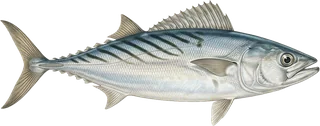 Bonito fishingGood
Sources
Status: October 2026. The practical knowledge comes from 5 sources, summarised in our own words.
View all 5 sources
- Hooking injury, physiological stress, and post-release activity patterns of giant trevally (Caranx ignobilis) captured using spinning gear in a catch-and-release recreational fishery (Environmental Biology of Fishes 109: 45, 2026) · Carleton University, Fish Ecology and Conservation Physiology Lab (Danylchuk u. a., mit UMass Amherst)
- Ontogenetic shifts in home range size of a top predatory reef-associated fish (Caranx ignobilis): implications for conservation (Mar Ecol Prog Ser 664: 165–182, 2021) · Inter-Research; Autoren vom Oceanographic Research Institute und South African Institute for Aquatic Biodiversity (Daly u. a.)
- Ulua (Caranx ignobilis), Artbeschreibung (Seki 1986) · NOAA Fisheries, Southwest Fisheries Science Center
- What can volunteer angler tagging data tell us about the status of the Giant Trevally (ulua aukea) Caranx ignobilis fishery in Hawaii (2017) · U.S. Geological Survey, Cooperative Research Units (Grabowski und Franklin)
- Caranx ignobilis, Giant trevally (Species Summary) · FishBase
Text AI-assisted, based on the sources named and these pages: Giant trevally (profile), Lure fishing, Popper, Stickbait, Releasing fish.