
Knowledge – Fish
Ling fishing
Ling fishing means: fishing from a boat over wrecks, reefs and rocky edges in the depths, with natural bait on the bottom and strong tackle. Here is the route there in nine steps, each with a link to the detailed page.
 Choose another fish117 fish with guides
 EelOff-peak season
 EelpoutPossible
 IdePossible
 ArapaimaGood
 GraylingPeak season
 Atlantic salmonSpawning time, please spare
 Brown troutSpawning time, please spare
 Brook troutSpawning time, please spare
 BarbelOff-peak season
 BarramundiSpawning season
 Greater amberjackGood
 Topmouth gudgeonOnly as bycatch
 Blue marlinSpawning season
 BonefishSpawning season
 BonitoGood
 BreamOff-peak season
 Dusky grouperOnly as bycatch
 CobiaPossible
 Spiny dogfishOnly as bycatch
 CodPeak season
 ChubPeak season
 MinnowOnly as bycatch
 European sturgeonOnly as bycatch
 FlounderPeak season
 PerchPeak season
 Largemouth bassGood
 Ballan wrasseOnly as bycatch
 Yellowfin tunaSpawning season
 Giant trevallyGood
 Prussian carpPossible
 BrillPossible
 Gilthead breamSpawning time, please spare
 Golden doradoSpawning season
 Golden mahseerOnly as bycatch
 Dolphinfish (mahi-mahi)Good
 Grass carpPossible
 Great barracudaGood
 GudgeonPossible
 White breamPossible
 DaceOff-peak season
 PikePeak season
 HalibutOff-peak season
 HerringPossible
 GarfishOut of season
 Huchen (Danube salmon)Possible
 Crucian carpOnly as bycatch
 CarpOff-peak season
 RuffeOff-peak season
 VendaceOnly as bycatch
 DabPeak season
 GurnardPossible
 Coley (saithe)Peak season
 Chinook salmonHardly any chance
 King mackerelSpawning season
- LingPeak season
 TuskOff-peak season
 MackerelPossible
 Bighead carpOut of season
 WhitefishPossible
 Conger eelOff-peak season
 Sea troutSpawning time, please spare
 Grey mulletPossible
 Murray codSpawning season
 MuskellungeGood
 Common nasePossible
 Nile perchPossible
 PayaraPossible
 Peacock bassPeak season
 PermitGood
 WeeverOnly as bycatch
 PollackOff-peak season
 BurbotOff-peak season
 AspPossible
 Red snapperSpawning season
 Rainbow troutPeak season
 RoosterfishGood
 RoachPeak season
 RedfishOut of season
 Bluefin tunaOnly as bycatch
 RuddPossible
 Russian sturgeonOnly as bycatch
 HaddockOff-peak season
 SnakeheadPossible
 TenchOff-peak season
 SpirlinOnly as bycatch
 PlaiceOff-peak season
 Greenland halibutOnly as bycatch
 Round gobyOnly as bycatch
 SwordfishGood
 Lake troutSpawning time, please spare
 HakeSpawning time, please spare
 Alpine charSpawning time, please spare
 MonkfishPossible
 SoleOff-peak season
 SailfishGood
 Silver carpOut of season
 SnookPeak season
 PumpkinseedOnly as bycatch
 SpratOnly as bycatch
 Atlantic wolffishSpawning time, please spare
 TurbotPeak season
 SterletOnly as bycatch
 SmeltOnly as bycatch
 Horse mackerelPossible
 TaimenGood
 TarponGood
 TigerfishSpawning season
 BleakPossible
 WahooGood
 Wels catfishOff-peak season
 WhitingPeak season
 Sea bassOff-peak season
 ZanderPeak season
 White-eye breamOnly as bycatch
 Blue breamOnly as bycatch
 Brown bullheadPossible
 VimbaOnly as bycatch
Season in October according to the catch calendar, an estimate and not a guarantee of a catch. The fish pictures are reduced natural-history plates and AI-generated.
Best time
From September to February, in the morning, during the day and in the evening.
In January: Main seasonIn February: Main seasonIn March: GoodIn April: Good, spawningIn May: Good, spawningIn June: Good, spawningIn July: GoodIn August: GoodIn September: Main seasonIn October: Main seasonIn November: Main seasonIn December: Main season
Good spot
- Coast: wreck, reef, drop-off and stony mixed groundwreck, reef, drop-off and stony mixed groundwreck, reef, drop-off and stony mixed groundwreck, reef, drop-off and stony mixed ground
Top baits
Starter tackle
- Rod: boat rod of around 2,00–2,70 m, 20–50 lbs or casting weight up to about 500 g
- Line: braid 0,25–0,30 mm, about 25 kg breaking strain
- Hook: large, very sharp single hooks, on the side arm 8/0–10/0
- Rod: stiff boat rod 2,40–2,70 m, casting weight up to about 500 g
- Line: braid 0,25–0,30 mm, at least 300 m
- Hook: treble on the pirk, plus single hooks 8/0–10/0 on the side arm
In short
In short: You catch ling best from September to February, in the morning, during the day and in the evening. Good spots on the coast: wreck, reef, edge and stony mixed ground. Proven baits: fillets of mackerel or herring, squid, prawns or sand eel on a paternoster or trolling rig; also a pirk with strips of fish.
Quick to recognise
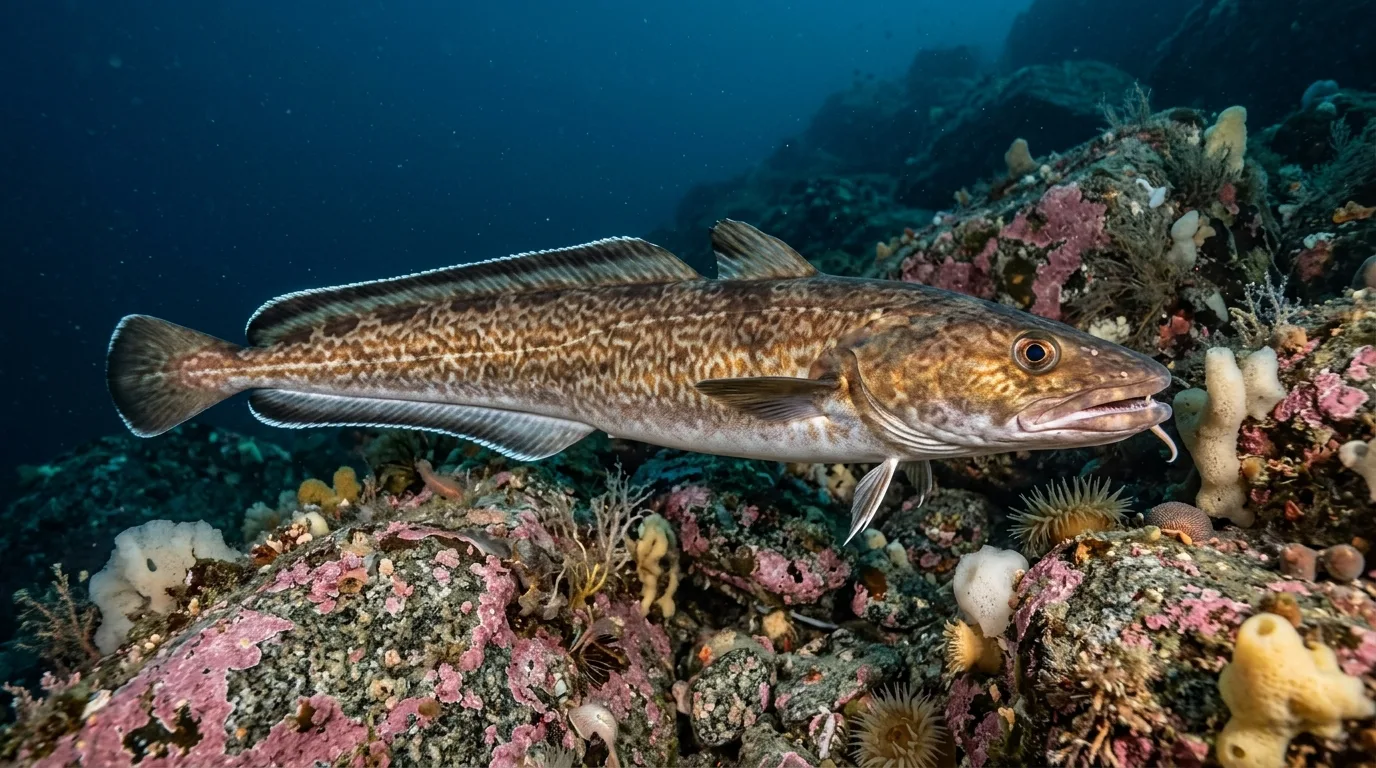
One of the biggest members of the cod family, living on the bottom over rock and on wrecks, usually at 100 to 400 metres. A typical length is around one metre, and only rarely do they reach two.
When
You can fish for ling all year round. The main season is September to February, and the other months count as good; in winter, though, you only get out on calm days. Spawning is between April and June, at a depth of 100 to 300 metres; Swedish sources give March to July.
- JanMain season
- FebMain season
- MarGood
- AprGood, spawning
- MayGood, spawning
- JunGood, spawning
- JulGood
- AugGood
- SepPeak season
- OctPeak season
- NovMain season
- DecMain season
Peak seasonGoodPossibleHardly any chanceSpawning season
Spring tactics
From March the season counts as good. With calmer weather you can get out to the deep outer edges where the ling live more often again.
Summer tactics
In summer, too, ling stay in their hideouts over rock and on wrecks. Plan several drifts over the same edge and adjust the length of line to the depth on each drift.
Autumn tactics
In autumn you catch best in the depths, according to the experience of many anglers in Norway. A rising tide is then considered especially promising.
Winter tactics
From November to February ling bite best. Use every calm weather window and, for wind and drift, take leads of more than a kilo as well.
Is it biting today?
In January: Main seasonIn February: Main seasonIn March: Secondary seasonIn April: Spawning, please go easyIn May: Spawning, please go easyIn June: Spawning, please go easyIn July: Secondary seasonIn August: Secondary seasonIn September: Main seasonIn October: Main seasonIn November: Main seasonIn December: Main season
Today’s catch index needs JavaScript. Season and spawning time are in the catch calendar.
Where it is now
On the coast
Look for hideouts that rise from the bottom: wrecks, reefs, rocks and steep edges, on plateaus right at the rim. It lives on hard ground and sand with big stones and avoids the shallow water of the North Sea. Over wrecks and rocky shoals you can find even big specimens at just 40 metres.
How to go about it: You look for ling from the boat over rocky ground, along steep edges, seamounts, channels and wrecks, in fjords often from 80 to 100 m. Hold the bait one to two metres above the bottom and keep adjusting the length of line to the drift.
| All year round | Wreck, reef, edge, stony mixed ground, deep water |
|---|
Biting time: in the morning, during the day and in the evening. What that looks like on the water is shown by the picture of the swims just below.
Holding spots in the picture
Choose a season and time of day: the picture shows where the species sits then. Tap a fish or a spot in the list to bring it closer. The picture is schematic and AI-generated, every water is different.
Chance of a catch in springgoodSpawning, observe the closed seasons
Catch chance in summergood
Catch chance in autumnPeak season
Catch chance in winterMain season
- J
- F
- M
- A
- M
- J
- J
- A
- S
- O
- N
- D
Spawning season
Active time Tagged ling swam around mainly at dawn and dusk; they found bait by day and did not react to it at night.
Active time Tagged ling swam around mainly at dawn and dusk; they found bait by day and did not react to it at night.
Active time Tagged ling swam around mainly at dawn and dusk; they found bait by day and did not react to it at night.
No peak time Tagged ling swam around mainly at dawn and dusk; they found bait by day and did not react to it at night.
On the coast
Stony mixed ground
Ling are found here all year round.
Drop-off
Ling are found here all year round.
Wreck, reef
Ling are found here all year round.
Deep, colder water
Ling are found here all year round.
Ling stay in hideouts that rise from the bottom: wrecks, reefs, rock formations and steep edges in the depths. They live on hard ground and sandy ground with big stones. On plateaus they usually stand right at the rim of the edge.
Spring: catch chance according to the catch calendar good. Spawning falls in this period, so observe the closed season (Schonzeit). Spawning takes place from April to June at 100 to 300 metres.
Summer: catch chance according to the catch calendar good.
Autumn: catch chance according to the catch calendar main season.
Winter: catch chance according to the catch calendar main season. Ling can be fished for all year round. The angling press names November to February as especially good months.
Depth: Ling are most common at 300 to 400 metres, and occur from 60 to 1000 metres. On wrecks and rocky shoals, big fish sometimes stand at just 40 metres. Young fish live shallower and closer to the coast.
Size comparison: AI-generated drawing, schematic.
How
You fish from the boat or charter boat with natural bait close to the bottom, most simply on a two-armed paternoster with a weight on the end. A running boom rig with a trailing hook on a hooklength of one to one and a half metres catches better. Ling also bite when pirking, and British anglers put strips of fish on large trebles for this.
Easiest way
You are most likely to catch your first ling from a boat in a Norwegian fjord over rocky edges from about 80 to 100 m depth. A fresh mackerel fillet on a simple natural-bait rig with a 300 to 500 g weight, offered one to two metres above the bottom, is enough for that.
Fish fillet just above the bottom
The usual method from a boat or charter boat over rocky ground, steep edges and wrecks at great depth.
- Approach the edge
With a depth chart and echo sounder you look for steep, rocky edges, channels and deep plateaus. In many fjords, spots around 80 to 120 m are productive, and big fish also stand clearly deeper.
- Luminous tube and weight
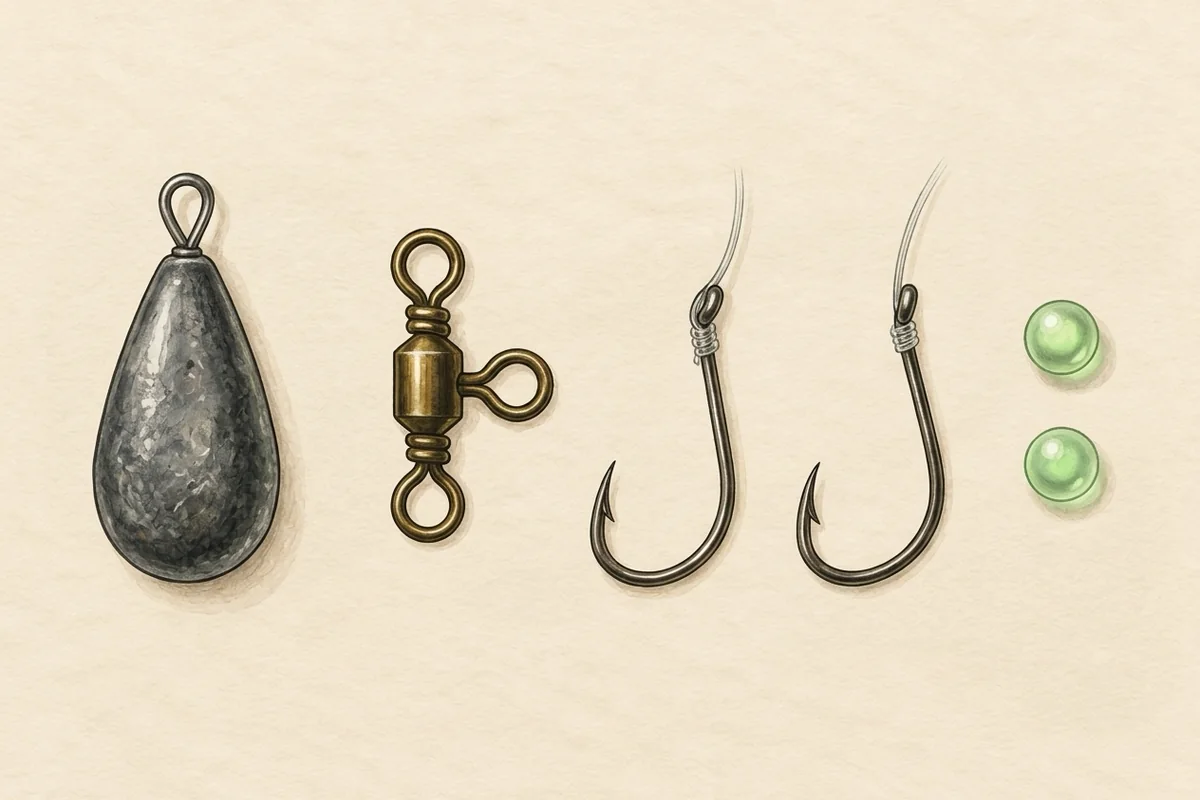
A natural-bait hooklength of thick mono with luminous tube above the hook attracts and protects against the sharp teeth. If you attach two weights with a weak link, you often lose only the lower one when snagged.
- Bait the fillet firmly
Pass a mackerel fillet onto the hook several times. A long overhanging flap looks tempting, but brings more missed bites.
- Lower and lift
Let the rig run to the bottom on free spool and then wind up one to two metres. No pirking movements are needed; the bait should stand still at this height.
- Adjust the depth
If the boat drifts over deeper water, you give line. If the bottom rises, you wind in at once, otherwise the rig gets stuck between the rocks.
- Wait for the plucks
The ling often just plucks at the bait at first, sometimes several times in a row. Only strike when a steady pull bends the rod, but then firmly, because there is a lot of line in between.
- Away from the bottom
Straight after the strike the ling wants to get back into its cover, so keep it off the bottom for the first few metres. After that you bring it up steadily and without haste.
Pirk with baitfish
When the bait needs to get down fast and also attract with scent, on edges and deep seamounts.
- Seamount
Look for deeper seamounts, rocky points and the outer edge where it quickly gets deep. There are many snags there, but that is exactly where the ling stand.
- Pirk as a weight
A heavy pirk of 300 to 500 g takes the bait down, and its appearance hardly matters. On the treble goes a small whole baitfish or, with bigger ones, the head half.
- Fit the side arm
Above the pirk sits a side arm with a large single hook, which you pass through a mackerel head. A short piece of rubber tubing holds the bait in place as a stop.
- To the bottom
Let everything sink to the bottom and wind up one to two metres. Ling do not always stand right on the bottom; one may bite a good ten metres above it too.
- Read the rod tip
The tip first trembles slightly and then pulls clearly downwards. If the hook does not take hold, ease off briefly, because the fish often attacks again.
- Turns on the bottom
On the bottom the ling fights back, turns around its own axis and takes line. In mid-water it makes another run before it surfaces next to the boat.
What with
As bait you use mackerel or herring fillets, as well as squid, prawn or sand eel. The hook is size 4/0 or larger and must be very sharp, because blunt points do not set reliably in the leathery mouth.
- Cut baitall year round on the natural-bait rig
Fresh mackerel is oily and smells strongly, which is why it comes first for ling; strips of herring or coley work as well.
- Pilkeron edges and seamounts, when you want to get down deep quickly
It serves mainly as a weight that carries a baitfish or strip of fish quickly to the bottom.
- Soft plastic (shad)in central and northern Norway when there is little drift
A large soft plastic of 20 cm and more on a head of 200 to 600 g appeals to ling as well as other big bottom fish.
Tackle
You need strong tackle: a sturdy boat rod, a large multiplier reel and braid that carries 20 to 25 kilograms, or thick monofilament line. The weights weigh 200 to over 500 grams depending on depth, current and drift. Set the drag so that you can hold the fish over the first few metres.
Fish fillet just above the bottom
- Rod
- Boat rod around 2,00–2,70 m, 20–50 lbs or casting weight up to about 500 g
- Reel
- large multiplier reel with room for at least 300 m, better 400–500 m of braid
- Line
- Braid 0,25–0,30 mm, about 25 kg breaking strain
- Leader
- Mono around 1,00 mm, over rough rock and for very big fish 1,20 mm, with luminous tube
- Hooks
- large, very sharp single hooks, on the side arm 8/0–10/0
- Weight, float, lead
- Weight 300–500 g, in strong current or wind 600 g to over 1 kg
Pirk with baitfish
- Rod
- stiff boat rod 2,40–2,70 m, casting weight up to about 500 g
- Reel
- robust multiplier reel with large line capacity
- Line
- Braid 0,25–0,30 mm, at least 300 m
- Leader
- Mono around 1,00 mm with luminous tube
- Hooks
- Treble on the pirk, plus single hooks 8/0–10/0 on the side arm
- Weight, float, lead
- Pirk 300–500 g
Common mistakes
- Pirking the bait constantly: Jerks of the rod tend to scare ling off. Let the bait stand still one to two metres above the bottom and simply hold the depth.
- Striking at the first pluck: Ling often take the bait hesitantly. Wait until a steady pull bends the rod, then strike hard.
- Line length not adjusted: If the boat drifts over changing depths, the bait quickly ends up too high or in the rocks. Give line over deep water and wind in over rising ground.
- Hooklength too thin: The sharp teeth and rough ground wear thin line through. Use mono of around 1,00 mm, over very rough rock 1,20 mm, with luminous tube above the hook.
- Strip of fish hangs far over: A long, loose flap brings many missed bites. Pass the fillet onto the hook several times so that it sits compactly on the hook.
Rules
Our country overview has no figures on minimum size (Mindestmaß) or closed season (Schonzeit) for ling. That does not mean there are no rules: individual countries and water regulations protect the species or set their own limits.
On the coast the rules of the coastal states apply, partly with their own catch restrictions: North Sea coast, Baltic coast of Schleswig-Holstein and Baltic coast of Mecklenburg-Western Pomerania.
The regulation and your fishing permit (Erlaubnisschein) are what count. Lake Constance, the Rhine and the coast, for example, have their own rules: Fishing waters in Germany.
After the catch
Playing and landing
Strike firmly as soon as a steady pull bends the rod, and keep the fish off the bottom for the first few metres. After that you bring it up without haste, and because of the sharp teeth you do not put bare fingers into its mouth. A ling from great depth almost always dies after being released; if you may keep the ling, stun and kill it straight away on board.
Play the ling up gently and do not pump, otherwise the swim bladder expands strongly; from great depth it will not survive release anyway. A fish of legal size that you may take is stunned and killed immediately, then gutted and chilled. In Norway there are separate rules for sea anglers, you may only fish with tackle held in the hand, and you may not sell the catch. Protected there all year round is the blue ling, a different species, not the ling.
Frequently asked questions
How deep do you have to fish for ling?
In many fjords good ling stand at 80 to 120 m already, and fishing often starts from 100 m. Big fish also come from 300 m and deeper.
Which bait is best for ling?
Fresh mackerel, because it is oily and smells strongly. Strips of herring or coley and small whole baitfish catch too.
Which line for ling fishing?
Braid of 0,25 to 0,30 mm, with at least 300 m on the reel, better 400 to 500 m. It shows the tentative plucking at great depth and transmits the strike.
How strong must the hooklength be for ling?
About 1,00 mm mono, over rough rock and with very big fish 1,20 mm. A luminous tube above the hook also attracts and protects the line from the teeth.
Can you release a ling?
From great depth mostly not. When it is hauled up, the falling pressure inflates the swim bladder, which not infrequently bulges out of the mouth, and a fish like that dies in the water too. So only fish for them if you want to use the catch.
Which weight for ling fishing in Norway?
Usually 300 to 500 g, depending on depth and drift. In strong current or wind you need 600 g to over a kilo.
Similar species
If you catch ling, you can also fish for these species with similar tackle:
Sources
As of October 2026. The practical knowledge comes from 8 sources, summarised in our own words.
View all 8 sources
- Lengangeln in Norwegen: Ein echter Kick für Meeresangler · BLINKER (Georg Duwe)
- Leng: einfach fangen · RUTE & ROLLE (Jesco Peschutter)
- Steckbrief Leng · BLINKER (Redaktion)
- Angeln in Südnorwegen: Hier ist alles möglich · BLINKER (Gregor Bradler, mit Rainer Korn)
- Norwegen: Angeln im Fjord – Technik, Taktik und Traumreviere · BLINKER (Joshua Zettelmeier u. a.)
- Leng: Die Langen aus der Tiefsee · RUTE & ROLLE (Timo Keibel)
- 10 Köder für den Norden · RUTE & ROLLE (Jesco Peschutter)
- Barotrauma bei Fischen: Wie tief darf ich angeln? · BLINKER (Frank Schlichting)
Text AI-assisted, based on the sources named and these pages: Ling (profile), Pirking, Pirk, Strips of fish.