
Knowledge – Fish
Fishing for tusk
Fishing for tusk means: fishing from a boat over hard ground in deep water, with herring fillet or prawn and heavy tackle. Here is the way there in nine steps, each with a link to the detailed page.
 Choose another fish117 fish with guides
 EelOff-peak season
 EelpoutPossible
 IdePossible
 ArapaimaGood
 GraylingPeak season
 Atlantic salmonSpawning time, please spare
 Brown troutSpawning time, please spare
 Brook troutSpawning time, please spare
 BarbelOff-peak season
 BarramundiSpawning season
 Greater amberjackGood
 Topmouth gudgeonOnly as bycatch
 Blue marlinSpawning season
 BonefishSpawning season
 BonitoGood
 BreamOff-peak season
 Dusky grouperOnly as bycatch
 CobiaPossible
 Spiny dogfishOnly as bycatch
 CodPeak season
 ChubPeak season
 MinnowOnly as bycatch
 European sturgeonOnly as bycatch
 FlounderPeak season
 PerchPeak season
 Largemouth bassGood
 Ballan wrasseOnly as bycatch
 Yellowfin tunaSpawning season
 Giant trevallyGood
 Prussian carpPossible
 BrillPossible
 Gilthead breamSpawning time, please spare
 Golden doradoSpawning season
 Golden mahseerOnly as bycatch
 Dolphinfish (mahi-mahi)Good
 Grass carpPossible
 Great barracudaGood
 GudgeonPossible
 White breamPossible
 DaceOff-peak season
 PikePeak season
 HalibutOff-peak season
 HerringPossible
 GarfishOut of season
 Huchen (Danube salmon)Possible
 Crucian carpOnly as bycatch
 CarpOff-peak season
 RuffeOff-peak season
 VendaceOnly as bycatch
 DabPeak season
 GurnardPossible
 Coley (saithe)Peak season
 Chinook salmonHardly any chance
 King mackerelSpawning season
 LingPeak season
- TuskOff-peak season
 MackerelPossible
 Bighead carpOut of season
 WhitefishPossible
 Conger eelOff-peak season
 Sea troutSpawning time, please spare
 Grey mulletPossible
 Murray codSpawning season
 MuskellungeGood
 Common nasePossible
 Nile perchPossible
 PayaraPossible
 Peacock bassPeak season
 PermitGood
 WeeverOnly as bycatch
 PollackOff-peak season
 BurbotOff-peak season
 AspPossible
 Red snapperSpawning season
 Rainbow troutPeak season
 RoosterfishGood
 RoachPeak season
 RedfishOut of season
 Bluefin tunaOnly as bycatch
 RuddPossible
 Russian sturgeonOnly as bycatch
 HaddockOff-peak season
 SnakeheadPossible
 TenchOff-peak season
 SpirlinOnly as bycatch
 PlaiceOff-peak season
 Greenland halibutOnly as bycatch
 Round gobyOnly as bycatch
 SwordfishGood
 Lake troutSpawning time, please spare
 HakeSpawning time, please spare
 Alpine charSpawning time, please spare
 MonkfishPossible
 SoleOff-peak season
 SailfishGood
 Silver carpOut of season
 SnookPeak season
 PumpkinseedOnly as bycatch
 SpratOnly as bycatch
 Atlantic wolffishSpawning time, please spare
 TurbotPeak season
 SterletOnly as bycatch
 SmeltOnly as bycatch
 Horse mackerelPossible
 TaimenGood
 TarponGood
 TigerfishSpawning season
 BleakPossible
 WahooGood
 Wels catfishOff-peak season
 WhitingPeak season
 Sea bassOff-peak season
 ZanderPeak season
 White-eye breamOnly as bycatch
 Blue breamOnly as bycatch
 Brown bullheadPossible
 VimbaOnly as bycatch
Season in October according to the catch calendar, an estimate and not a guarantee of a catch. The fish pictures are reduced natural-history plates and AI-generated.
Best time
From July to September, at any time of day.
In January: PossibleIn February: PossibleIn March: GoodIn April: Good, spawning seasonIn May: Good, spawning seasonIn June: Good, spawning seasonIn July: Peak seasonIn August: Peak seasonIn September: Peak seasonIn October: GoodIn November: PossibleIn December: Possible
Good spot
- Coast: Wreck, reef, stony mixed ground and drop-offWreck, reef, stony mixed ground and drop-offWreck, reef, stony mixed ground and drop-offWreck, reef, stony mixed ground and drop-off
Top baits
Starter tackle
- Rod: short, strong boat rod up to about 2,10 m, class 20–50 lbs
- Line: braid 0,40–0,50 mm, around 25 kg breaking strain
- Hook: 4/0–8/0, very sharp
- Rod: strong boat rod around 2 m, class 20–50 lbs
- Line: braid around 25 kg breaking strain, about 500 m
- Hook: treble or single hook on the pilker, baited with a strip of fish
In short
In short: You catch tusk best from July to September, at any time of day. Good spots on the coast: wreck, reef, stony mixed ground and drop-off. Proven baits: herring fillet, mackerel strips or a large prawn on a bottom weight; heavy pilkers with fish strips. Deep-water fish: fish brought up from great depth do not survive being returned. Export from Norway only if caught through a registered fishing operator: 15 kg twice a year, from 1.1.2027 10 kg (as of October 2026).
Quick to recognise
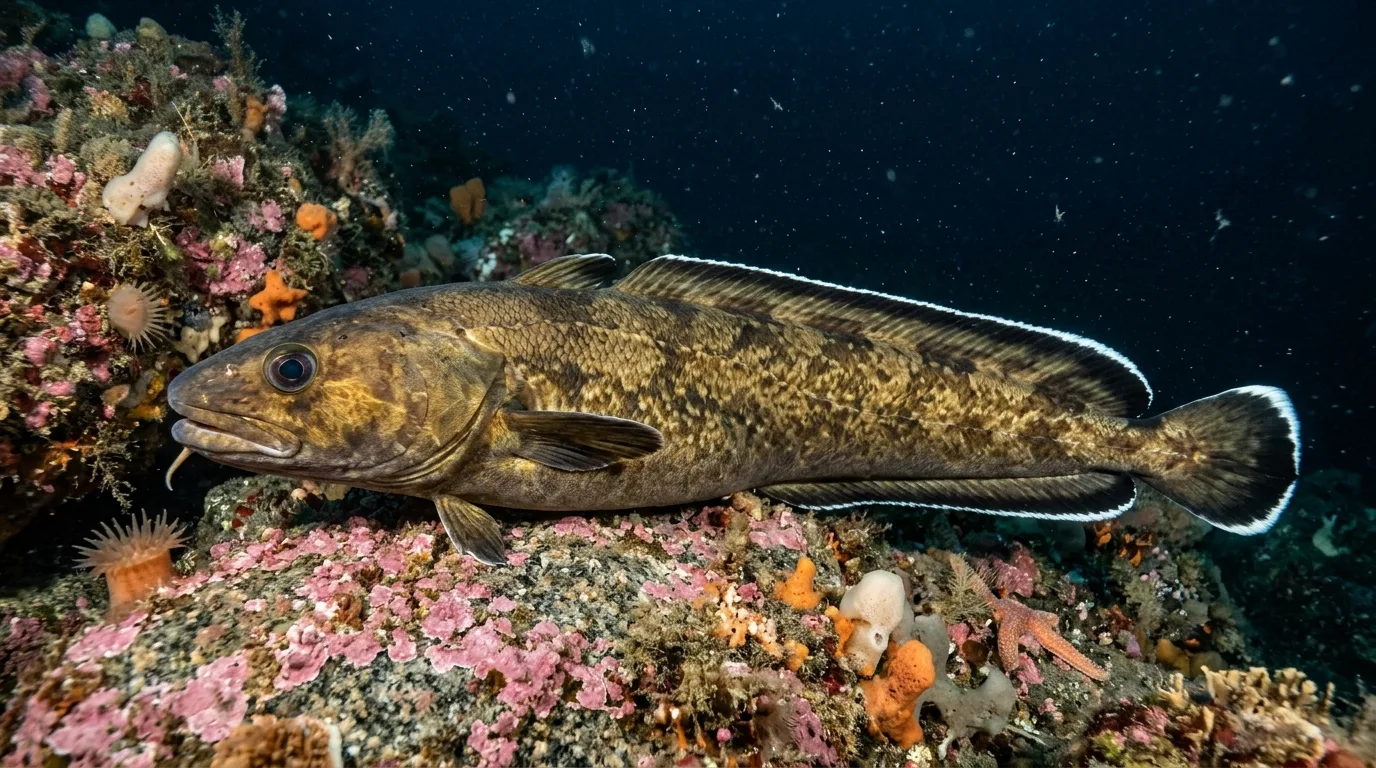
A cod-like bottom fish with one long dorsal fin, dark-edged with a white rim, called Brosme in Norway. Around 50 centimetres is typical; up to about 1,1 metres is possible.
When
Peak season is July to September, March to June and October count as good, and in winter a catch is possible; in fjord Norway it goes all year round if the weather allows you to head out. Between June and August you can reach it in fjord and central Norway at depths of just 30 to 50 metres. Spawning runs from April to June, in the north until August, at depths of 100 to 400 metres.
- JanPossible
- FebPossible
- MarGood
- AprGood, spawning
- MayGood, spawning
- JunGood, spawning
- JulPeak season
- AugPeak season
- SepPeak season
- OctGood
- NovPossible
- DecPossible
Peak seasonGoodPossibleHardly any chanceSpawning season
Spring tactics
From March the prospects improve, and with calmer weather you can reach the deep edges more often again. Experienced natural-bait anglers also catch fish in very early spring.
Summer tactics
Now is easiest, because tusk sit shallower at spawning time. Smaller fish then often bite on the side while you are pilking for cod, but for targeted fishing you still look for hard edges in deep water.
Autumn tactics
In western Norway the best catches of ling and tusk are often reported in autumn. A rising tide is considered a particularly good phase.
Winter tactics
You can fish all year round if the weather allows a trip out. Use calm days and take weights over a kilo in case wind speeds up the drift.
Is it biting today?
In January: PossibleIn February: PossibleIn March: Shoulder seasonIn April: Spawning season, please spare themIn May: Spawning season, please spare themIn June: Spawning season, please spare themIn July: Peak seasonIn August: Peak seasonIn September: Peak seasonIn October: Shoulder seasonIn November: PossibleIn December: Possible
Today’s catch index needs JavaScript. Season and spawning time are in the catch calendar.
Where it is now
On the coast
Look for hard ground: rock, rubble, gravel, edges and slopes; it generally avoids smooth sandy bottom. Good spots are rubble plateaus and underwater mountains at 50 to 200 metres; the larger tusk you only find from 200 to 300 metres, for example where a fjord drops into deep water. From the shore you rarely catch one, except at deep fjords.
How to go about it: From the boat you fish over rock, rubble and gravel, at steep edges, terraces and underwater mountains. In western Norway many spots lie between 100 and 200 m, deeper at fjord mouths. Let the boat drift slowly along the edge and keep the bait on the bottom the whole time.
| All year round | Wreck, reef, stony mixed ground, drop-off, deep water |
|---|
Biting time: round the clock, with no fixed main time. What that looks like on the water is shown by the picture of the swims just below.
Holding spots in the picture
Choose a season and time of day: the picture shows where the species sits then. Tap a fish or a spot in the list to bring it closer. The picture is schematic and AI-generated, every water is different.
Chance of a catch in springgoodSpawning, observe the closed seasons
Catch chance in summerPeak season
Catch chance in autumngood
Catch chance in winterpossible
- J
- F
- M
- A
- M
- J
- J
- A
- S
- O
- N
- D
Spawning season
Active time The tusk’s activity follows no day–night rhythm.
Active time The tusk’s activity follows no day–night rhythm.
Active time The tusk’s activity follows no day–night rhythm.
Active time The tusk’s activity follows no day–night rhythm.
On the coast
Stony mixed ground
Tusk are present here all year round.
Drop-off
Tusk are present here all year round.
Wreck, reef
Tusk are present here all year round.
Deep, colder water
Tusk are present here all year round.
The tusk lives on the bottom over rock, rubble and gravel and on steep slopes. It generally avoids smooth, soft sandy ground. It mostly keeps away from the coast and shallow water and hardly migrates.
Spring: catch chance good according to the catch calendar. Spawning falls in this period, so observe closed seasons (Schonzeit). Spawning takes place from April to June at depths of 100 to 400 metres.
Summer: catch chance according to the catch calendar good in June, peak season in July and August. In the northern areas spawning lasts into August.
Autumn: catch chance according to the catch calendar is peak season in September, good in October and possible in November.
Winter: catch chance according to the catch calendar possible. In fjord Norway the tusk is regarded as catchable all year round.
Depth: In the north-east Atlantic the tusk mostly sits at depths between 150 and 450 metres, and occurs from about 20 to 1000 metres. In the fjords it is caught from about 100 metres, juveniles also quite shallow.
Size comparison: AI-generated drawing, schematic.
How
You fish from the boat with natural bait on the bottom, on a natural-bait rig with a running boom or, more robustly, on a paternoster with two or three side arms. Instead of a lead, a pilker of 500 grams or more also works, with a strip of herring or mackerel on it. Smaller and medium-sized tusk often bite in summer as bycatch when pilking for cod.
Easiest way
You are most likely to catch your first tusk in summer in a Norwegian fjord from a boat. Head for a rubble plateau or a rocky edge and offer a fatty herring fillet on a simple paternoster with a bottom weight right on the bottom. A strong boat rod with a multiplier reel and braid is a must.
Natural bait over rock and rubble
The main method from a boat over hard ground in deep water, in a slow drift along edges and plateaus.
- Choose a hard edge
Use the sea chart and echo sounder to find steep, rocky edges, rubble plateaus and terraces. In western Norway fishing is often done between 100 and 200 m, where ling and hake can turn up as well.
- Keep it simple
Use a running boom with two hooks or a paternoster made of thick monofilament, about 1,5 m long, with two to three short side arms about 50 cm apart. Elaborate rigs quickly tangle on the open sea.
- Large scent bait
Pierce a fatty herring fillet or a mackerel fillet onto the hook several times. Secure a large prawn with a rubber band, otherwise it slips off during the long drop.
- Lower to the bottom
Let the rig sink to the bottom in free spool and close the reel as soon as the weight touches down. In wind and current you tend to need more weight so the line stays as steep as possible.
- Drift from the deep
Let the boat drift from deep into shallower water and tap the weight on the bottom again and again. If the rig snags, lift the rod and wind in a little line.
- Hard tug
A tusk takes decisively; through the braid you feel it clearly even at 200 m depth. Then set a firm strike so the point penetrates the tough mouth.
- The first metres count
Right after the strike the fish shakes its head and wants to get back into the rocks. Pump it quickly off the bottom; in mid-water the resistance usually drops noticeably.
- Landing net ready
Bring a heavy tusk aboard at the surface with a large landing net. For returning, a fish from this depth is usually already too badly damaged.
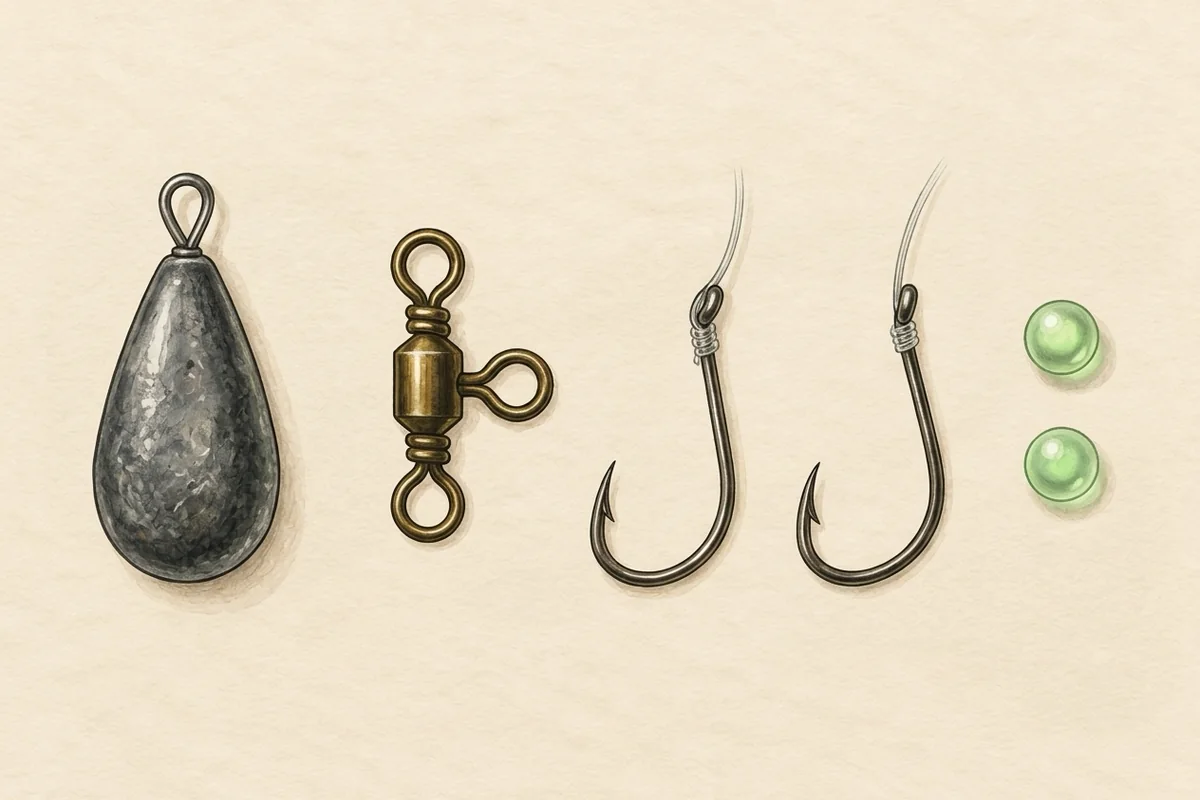
Heavy pilker with a strip of fish
When you are already pilking for cod or ling at edges and shoals and the bait should go down quickly and stay close to the bottom.
- Shoals and skerries
Head for shoals, edges and rubble areas where cod and ling sit. In summer smaller tusk often end up on the pilker as bycatch.
- Pilker plus strip
Take a pilker of about 500 g or more and put a strip of herring or mackerel on the hook. Tusk and ling particularly like this combination of artificial lure and fish.
- Straight down
Let the pilker fall vertically to the bottom and take up the slack line at once. In deep water use models of 750 g or 1 kg.
- Stay near the bottom
Lift the pilker only a little and let it settle again straight away. The tusk feeds on the bottom; a bait jerked far upwards passes it by.
- Clearly felt
The bite comes as a hard thump. Strike firmly, because there is a lot of line between you and the fish.
- Away from the bottom
Pull the fish away from the rock with pressure over the first metres. After that pump it up steadily; the rod belt spares your back.
What with
Large, oily herring fillets and large prawns have proved their worth; a rubber band holds the latter on the hook. Hooks in sizes 4/0 to 8/0 must be very sharp, because the mouth is leathery.
- Cut baitall year round on the natural-bait rig
A large, oily fillet of herring or mackerel gives off a strong scent trail in the dark depths, and tusk there respond more to smell than to colour.
- Crustaceans & musselsas an alternative to fish, especially in a calm drift
Large prawns and crabs are part of its natural diet; frozen ones are sold in Norwegian supermarkets.
- Pilkerat edges and shoals, baited with a strip of fish
From about 500 g the pilker reaches the bottom quickly, and the fish on the hook adds the scent.
Tackle
The boat rod is short and strong, a good two metres long at most, together with a large multiplier reel for at least 400 metres of braid and a rod belt for your back. The bottom weights weigh 500 to 1000 grams. On braid you notice a bite even at 200 metres depth.
Natural bait over rock and rubble
- Rod
- short, strong boat rod up to about 2,10 m, class 20–50 lbs
- Reel
- large multiplier reel for at least 400–500 m of braid, plus a rod belt
- Line
- Braid 0,40–0,50 mm, around 25 kg breaking strain
- Leader
- Monofilament 0,60–0,70 mm, about 1,5 m, as a paternoster or with a running boom
- Hooks
- 4/0–8/0, very sharp
- Weight, float, lead
- Bottom weight 500–1000 g, usually 600–800 g is enough; over 1 kg in wind and current
Heavy pilker with a strip of fish
- Rod
- strong boat rod around 2 m, class 20–50 lbs
- Reel
- large multiplier reel
- Line
- Braid around 25 kg breaking strain, about 500 m
- Hooks
- Treble hook or single hook on the pilker, baited with a strip of fish
- Weight, float, lead
- Pilker from 500 g, 750–1000 g in deep water; large soft plastic (shad) on a jig head of 200–300 g at 15–30 m with little drift, otherwise 500–600 g
Common mistakes
- Over-fussy rig: Long multi-hook rigs with lots of swivels tangle in deep water. A boom with two hooks or a plain paternoster fishes more reliably.
- Whole rig lost in the rocks: Hang two weights one behind the other and make the split ring of the lower one the weak point. In a snag usually only that weight breaks off.
- Hook does not take hold: The mouth is tough. Use strong hooks from 4/0 to 8/0 and check the point after every snag.
- Fish back in the rocks: If you give way in the first few seconds, the tusk wedges itself between the stones. Keep it off the bottom with pressure straight away.
- Bait too small: In deep water a strong scent trail counts. Offer a whole fillet or half a mackerel rather than a small piece.
Rules
Our country overview gives no figures for minimum size (Mindestmaß) or closed season (Schonzeit) for the tusk. That does not mean there are no rules: individual countries and water regulations protect the species or set their own limits.
On the coast the rules of the coastal states apply, partly with their own catch restrictions: North Sea coast, Baltic coast of Schleswig-Holstein and Baltic coast of Mecklenburg-Western Pomerania.
The regulation and your fishing permit (Erlaubnisschein) are what count. Lake Constance, the Rhine and the coast, for example, have their own rules: Fishing waters in Germany.
After the catch
Playing and landing
Set the hook firmly as soon as the hard bite comes, and pump the fish off the bottom with pressure over the first metres. After that bring it up steadily; the rod belt and short rod make the work easier. A tusk from great depth often does not survive being returned, so you stun and kill a fish you may keep straight away on board and stop in good time.
A tusk that you wind up from 50 metres or deeper does not survive being returned, so stop deep-water fishing as soon as your needs are met. A fish of legal size that you may keep, you stun and kill straight away. Mushy fillet after the catch can be down to the parasite Kudoa thyrsites, which according to Norwegian researchers is not dangerous to humans.
Frequently asked questions
At what depth do you catch tusk?
Usually water from about 70 m; the big fish sit from 200 to 300 m. In summer you can reach some tusk shallower too.
What is the best bait for tusk?
Fatty herring fillet, mackerel fillet pierced several times, or large prawns. For big tusk the bait can even be half or a whole mackerel.
What hook size for tusk?
Very sharp hooks in sizes 4/0 to 8/0 are usual; they hold securely in the tough mouth.
How heavy does the weight need to be for tusk fishing?
Usually between 500 and 1000 g; in calm weather 600 to 800 g is often enough. In wind or strong current it can go over a kilo.
Do tusk bite on soft plastics?
Yes, from central to northern Norway it also takes large soft plastics on a heavy jig head. At 15 to 30 m with little drift 200 to 300 g is enough, in deeper water 500 to 600 g.
Can you return a tusk?
Usually not from great depth; the drop in pressure damages it on the way up. So stop deep-water fishing as soon as you have enough fish for yourself.
Similar species
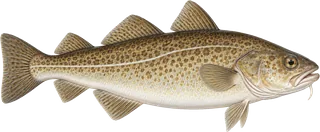
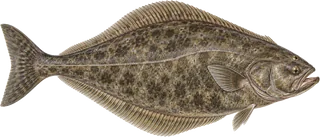
If you catch tusk, you can fish for these species with similar tackle too:
Sources
As of: October 2026. The practical knowledge comes from 9 sources, summarised in our own words.
View all 9 sources
- Steckbrief Lumb – Wie, wo, wann und womit fängt man diesen Fisch? · BLINKER (Redaktion)
- Norwegen: Angeln im Fjord – Technik, Taktik und Traumreviere · BLINKER (Joshua Zettelmeier u. a.)
- Angeln in Südnorwegen: Hier ist alles möglich · BLINKER (Gregor Bradler)
- Tiefseeangeln: Ab in die Tiefe · RUTE & ROLLE (Jesco Peschutter)
- 10 Köder für den Norden · RUTE & ROLLE (Jesco Peschutter)
- Angeln vor den Lofoten: Kapitale Aussichten im hohen Norden · BLINKER (Steve Kaufmann)
- Die 7 besten Naturköder zum Meeresangeln · BLINKER (Redaktion)
- Brosme · Havforskningsinstituttet
- Barotrauma bei Fischen: Wie tief darf ich angeln? · BLINKER (Frank Schlichting)
Text AI-assisted, based on the sources listed and these pages: Tusk (profile), Pilking, Crustaceans & shellfish, Pilker.