
Knowledge – Fish
Sea bass fishing
Fishing for sea bass means fishing in the surf and at rock armour with a spinning or fly rod, quickly by day and slowly at night. Here is the way there in nine steps, each with a link to the detailed page.
In Denmark, depending on the sea area and month, a small daily catch limit with a minimum size applies, and in part of the North Sea only catch and release is allowed there with rod or handline; the current version is given by the Fiskeristyrelsen. For the North Sea, EU law in 2026 says: from 1 February to 31 March catch and release only, otherwise at most three sea bass a day from 42 centimetres (as of October 2026). In Schleswig-Holstein and Lower Saxony you may not target sea bass at all in February and March. The EU sets the values anew every year. In addition, since 2026 EU law requires sea anglers to register and to report some catches by app. For the North Sea, the joint fisheries portal of the federal government and the states lists sea bass provisionally on this list, released fish included; it also states from when and how the obligation takes effect in Germany.
 Choose another fish117 fish with guides
 EelOff-peak season
 EelpoutPossible
 IdePossible
 ArapaimaGood
 GraylingPeak season
 Atlantic salmonSpawning time, please spare
 Brown troutSpawning time, please spare
 Brook troutSpawning time, please spare
 BarbelOff-peak season
 BarramundiSpawning season
 Greater amberjackGood
 Topmouth gudgeonOnly as bycatch
 Blue marlinSpawning season
 BonefishSpawning season
 BonitoGood
 BreamOff-peak season
 Dusky grouperOnly as bycatch
 CobiaPossible
 Spiny dogfishOnly as bycatch
 CodPeak season
 ChubPeak season
 MinnowOnly as bycatch
 European sturgeonOnly as bycatch
 FlounderPeak season
 PerchPeak season
 Largemouth bassGood
 Ballan wrasseOnly as bycatch
 Yellowfin tunaSpawning season
 Giant trevallyGood
 Prussian carpPossible
 BrillPossible
 Gilthead breamSpawning time, please spare
 Golden doradoSpawning season
 Golden mahseerOnly as bycatch
 Dolphinfish (mahi-mahi)Good
 Grass carpPossible
 Great barracudaGood
 GudgeonPossible
 White breamPossible
 DaceOff-peak season
 PikePeak season
 HalibutOff-peak season
 HerringPossible
 GarfishOut of season
 Huchen (Danube salmon)Possible
 Crucian carpOnly as bycatch
 CarpOff-peak season
 RuffeOff-peak season
 VendaceOnly as bycatch
 DabPeak season
 GurnardPossible
 Coley (saithe)Peak season
 Chinook salmonHardly any chance
 King mackerelSpawning season
 LingPeak season
 TuskOff-peak season
 MackerelPossible
 Bighead carpOut of season
 WhitefishPossible
 Conger eelOff-peak season
 Sea troutSpawning time, please spare
 Grey mulletPossible
 Murray codSpawning season
 MuskellungeGood
 Common nasePossible
 Nile perchPossible
 PayaraPossible
 Peacock bassPeak season
 PermitGood
 WeeverOnly as bycatch
 PollackOff-peak season
 BurbotOff-peak season
 AspPossible
 Red snapperSpawning season
 Rainbow troutPeak season
 RoosterfishGood
 RoachPeak season
 RedfishOut of season
 Bluefin tunaOnly as bycatch
 RuddPossible
 Russian sturgeonOnly as bycatch
 HaddockOff-peak season
 SnakeheadPossible
 TenchOff-peak season
 SpirlinOnly as bycatch
 PlaiceOff-peak season
 Greenland halibutOnly as bycatch
 Round gobyOnly as bycatch
 SwordfishGood
 Lake troutSpawning time, please spare
 HakeSpawning time, please spare
 Alpine charSpawning time, please spare
 MonkfishPossible
 SoleOff-peak season
 SailfishGood
 Silver carpOut of season
 SnookPeak season
 PumpkinseedOnly as bycatch
 SpratOnly as bycatch
 Atlantic wolffishSpawning time, please spare
 TurbotPeak season
 SterletOnly as bycatch
 SmeltOnly as bycatch
 Horse mackerelPossible
 TaimenGood
 TarponGood
 TigerfishSpawning season
 BleakPossible
 WahooGood
 Wels catfishOff-peak season
 WhitingPeak season
- Sea bassOff-peak season
 ZanderPeak season
 White-eye breamOnly as bycatch
 Blue breamOnly as bycatch
 Brown bullheadPossible
 VimbaOnly as bycatch
Season in October according to the catch calendar, an estimate and not a guarantee of a catch. The fish pictures are reduced natural-history plates and AI-generated.
Best time
From July to September, at any time of day.
In January: Slim chancesIn February: Slim chancesIn March: Slim chances, spawningIn April: Possible, spawningIn May: Good, spawningIn June: GoodIn July: Peak seasonIn August: Peak seasonIn September: Peak seasonIn October: GoodIn November: PossibleIn December: Slim chances
Good spot
- Coast: surf, rocky mixed ground and sandy bottomsurf, rocky mixed ground and sandy bottomsurf, rocky mixed ground and sandy bottomdeep water
Starter tackle
- Rod: 2,40–2,70 m, fast to extra-fast action, casting weight up to about 50 g
- Line: braid with a breaking strain of around 9 kg
- Hook: soft plastics and slugs with a weedless hook or on an offset hook where weed and rocks lie
- Rod: about 3,60 m, so that you can control drift and rocks better
- Line: braid of about 0,24 mm
- Hook: size 2 to 4
- Rod: class 7/8 for the coast, for heavy crab flies fast rods of class 8 or 9
- Line: floating in shallow water, on the North Sea rather a sinking line of 200–300 grain
- Hook: crab and shrimp patterns, mostly size 2 to 4
In short
In short: The best time to catch sea bass is July to September, at any time of day. Good spots on the coast: surf, rocky mixed ground and sandy bottom. Proven baits: slim crankbaits, stickbaits, soft plastics and twisters; crab and shrimp flies; dead sand eel. On the North Sea it has been increasing for years. EU rule 2026 for the North Sea: 1.2.–31.3. catch and release only, otherwise at most 3 fish a day from 42 cm; in SH and NI no targeted fishing in February and March.
Quick to recognise
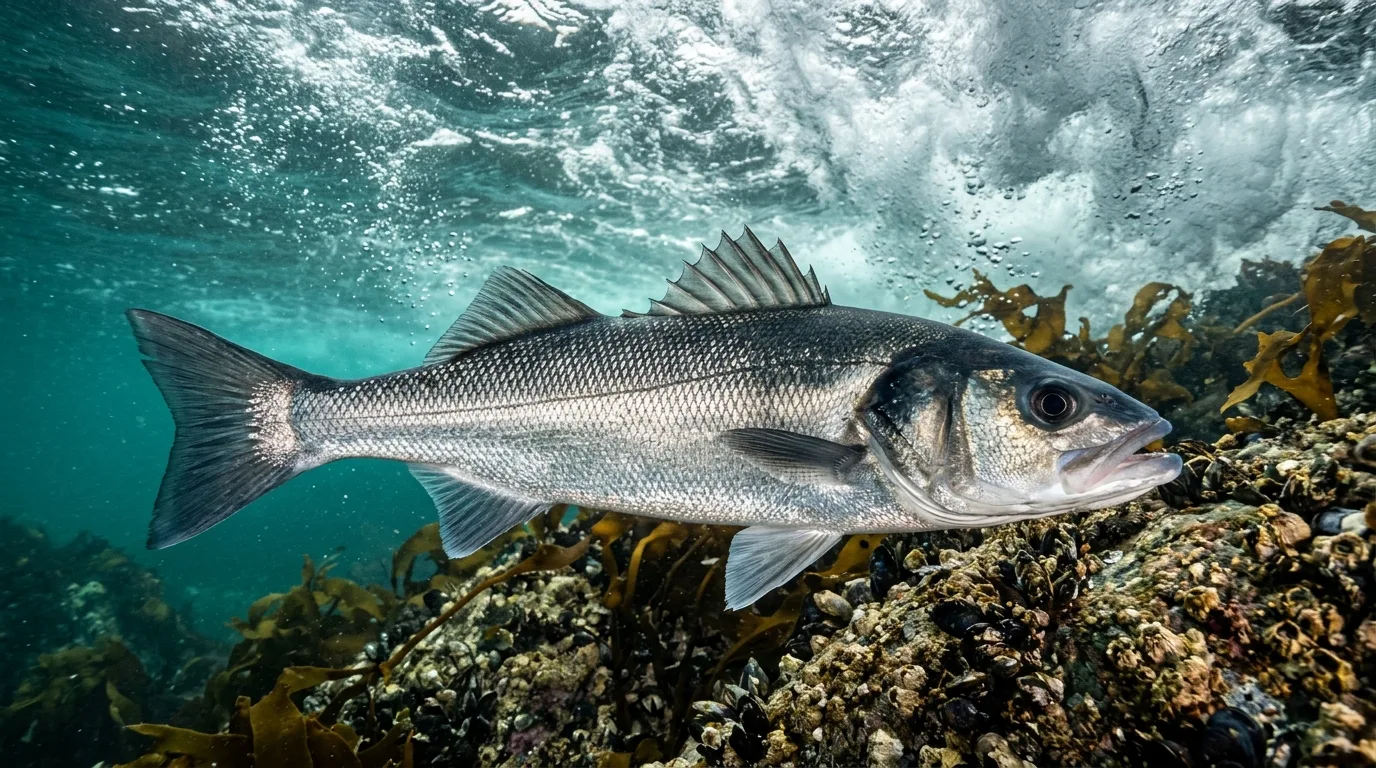
A slender predator of the European coasts, also known as European bass, with two flat spines and a serrated edge on the gill cover. Typical is around 50 centimetres, and up to 103 centimetres and 12 kilograms are quoted.
When
Peak season is July to September, May, June and October are good, and in April and November a catch is possible. It can bite at any time of day; near the shore it usually shows up at dusk, and on hot summer days the night often brings more, when big fish also move close to land. Spawning takes place in spring in several batches, later around the British Isles than further south.
- JanHardly any chance
- FebHardly any chance
- MarSlim chances, spawning
- AprPossible, spawning season
- MayGood, spawning
- JunGood
- JulPeak season
- AugPeak season
- SepPeak season
- OctGood
- NovPossible
- DecHardly any chance
Peak seasonGoodPossibleHardly any chanceSpawning season
Spring tactics
The fish become active only from a water temperature of about 12 degrees, on the North Sea islands from the end of April or later, depending on the year. Until 31 March in 2026, EU law allows catch and release only, and from April you may keep up to three fish of 42 centimetres or more a day (as of October 2026). The rules change every year, so before your first trip check the current version and the requirements of your coastal state.
Summer tactics
Now is high season, and on the islands many lure anglers stand on the groynes. Gulls circling over shoals of small fish show you from the boat where the predators sit below. With a float, dusk is the best time.
Autumn tactics
If the water stays above about 12 degrees, the season runs into November. Rough seas wash worms and crabs loose on beaches, and then bottom fishing with crab in the surf at night is also worthwhile.
Winter tactics
As the sea cools, the shoals disappear into greater depth and are barely reachable from the shore. From 1 February to 31 March EU law allows only catch and release anyway, and in Schleswig-Holstein and Lower Saxony targeted fishing is then banned altogether (as of October 2026).
Is it biting today?
In January: Out of seasonIn February: Out of seasonIn March: Spawning, please spare themIn April: Spawning, please spare themIn May: Spawning, please spare themIn June: Shoulder seasonIn July: Peak seasonIn August: Peak seasonIn September: Peak seasonIn October: Shoulder seasonIn November: PossibleIn December: Out of season
Today’s catch index needs JavaScript. Season and spawning time are in the catch calendar.
From the blog: Catch advice, catch quotas, angling bans: how to read fisheries news correctly
Where it is now
On the coast
Look for the breaking wave on sandy beaches and rock armour in which small fish and shrimps hide, and also sandbanks beside deep channels, the channel in front of the tip of a breakwater, reefs and edges in the weed. In summer it comes into estuaries and inshore water, to groynes, piers and beaches, and from November the shoals move out into deeper water. Off the German North Sea coast it is rare, but its stock is growing noticeably; in the Baltic Sea only the occasional single fish strays in.
How to go about it: On the German North Sea you have realistic chances on the seaward beaches of the islands; in the Wadden Sea between the islands and the mainland it hunts only rarely. Besides breakwaters, reinforced harbour entrances are worth trying. Explore new spots at spring-tide low water without a rod, and you will see edges and mussel beds where soft plastics on a jig head quickly snag.
| Spring | Surf, rocky mixed ground, sandy bottom, channel in front of the sandbank, wreck, reef |
|---|---|
| Summer | Surf, rocky mixed ground, sandy bottom, channel in front of the sandbank, wreck, reef |
| Autumn | Surf, rocky mixed ground, sandy bottom, channel in front of the sandbank, wreck, reef |
| Winter | deep water |
Biting time: round the clock, with no fixed main time. What that looks like on the water is shown by the picture of the swims just below.
Waters with rules for sea bass
Holding spots in the picture
Choose the season and time of day: the picture shows where the species stands then. Spots outlined in red apply only in the chosen season. Tap a fish or a spot in the list to bring it closer. The picture is schematic and AI-generated, every water is different.
Catch chance in springpossibleSpawning season, observe closed seasons
Catch chance in summerPeak season
Catch chance in autumngood
Catch chance in winterhardly any
- J
- F
- M
- A
- M
- J
- J
- A
- S
- O
- N
- D
Spawning season
Active time It is caught round the clock. It comes to the shore mainly at dusk, on hot days the night is often better, and then with bigger fish close to the shore too. On a tidal coast the falling tide until shortly after low water brings the most bites.
Active time It is caught round the clock. It comes to the shore mainly at dusk, on hot days the night is often better, and then with bigger fish close to the shore too. On a tidal coast the falling tide until shortly after low water brings the most bites.
Active time It is caught round the clock. It comes to the shore mainly at dusk, on hot days the night is often better, and then with bigger fish close to the shore too. On a tidal coast the falling tide until shortly after low water brings the most bites.
Active time It is caught round the clock. It comes to the shore mainly at dusk, on hot days the night is often better, and then with bigger fish close to the shore too. On a tidal coast the falling tide until shortly after low water brings the most bites.
On the coast
Surf close to the shore
Sea bass is present here only in spring, summer and autumn.
gully in front of the sandbank
Sea bass is present here only in spring, summer and autumn.
Sandy bottom
Sea bass is present here only in spring, summer and autumn.
Stony mixed ground
Sea bass is present here only in spring, summer and autumn.
Wreck, reef
Sea bass is present here only in spring, summer and autumn.
Deep, colder water
Sea bass is present here only in winter.
Sea bass hunt in the breaking wave on sandy beaches and at rock armour, where small fish and shrimps seek shelter. Good spots are sandbanks next to deeper channels, the channel at the head of a breakwater, reefs and weed edges.
Spring: chance of a catch according to the catch calendar slim in March, possible in April, good in May. Spawning falls in this period, observe closed seasons. The season usually begins at the end of April, once the water warms above twelve degrees.
Summer: chance of a catch according to the catch calendar good in June, peak season in July and August. In summer it moves into inshore waters and river mouths and sits close to groynes, piers and beaches.
Autumn: catch chance according to the catch calendar is peak season in September, good in October and possible in November.
Winter: chance of a catch according to the catch calendar slim. From November the shoals move into deeper water off the coast.
Depth: It lives close to the coast down to about 100 metres, most often in shallow water down to 20 metres.
Size comparison: AI-generated drawing, schematic.
How
You mainly target it with a spinning rod: by day you cover a spot with six or seven casts in a fan and then move on, and when the sun shines on clear water, a fast, aggressive retrieve often brings bites. At night you fish slowly, let soft plastics drift for a long time and bring crankbaits in almost in slow motion. With the fly you catch on crab and shrimp patterns in hook size 2 to 4, and in deeper water on streamers and sand eel patterns on the sinking line.
Easiest way
The easiest start is on a North Sea island with a fast spinning rod of 2,40 to 2,70 m and a slim soft plastic with a weedless hook. Fish it at the breakwater or harbour entrance on the falling tide, ideally in the morning or evening. The EU rules for recreational anglers change every year, so read the current version before your trip.
Crankbait and soft plastic at the groyne
The usual method at breakwaters, rock armour and beaches, in which you walk a lot and adapt speed and bait to the conditions.
- Time the ebb
It often bites best on the falling tide, roughly from two and a half hours before low water to an hour after. The current then washes crabs and small fish out of the rocks.
- A buffer against stones
Knot half a metre to a metre of fluorocarbon of about 0,40 mm to the braid, for example with an Albright knot. Thicker material interferes with the action of slim crankbaits.
- Change spots
If nothing has happened after a few casts, move about 25 m on and try again. That way you cover one to two kilometres of shore in a few hours.
- Use the current
If there is a current, simply wind the crankbait in and speed it up briefly with the rod tip. When the water is still, retrieve faster and with more variety, with twitches from the wrist.
- Bites on the drop
With the soft plastic, many bites come as it sinks back on a tight line. Some fish also strike when you rip it up with two hard jerks.
- Not too tight a drag
A fast run often follows the bite at once. A drag set too hard lets the low-stretch braid snap or the hook pull out.
- Bring a landing net
It is often hard to reach the water from rock armour, so a landing net belongs on the shore. Guide the fish in between the waves rather than dragging it over the rocks.
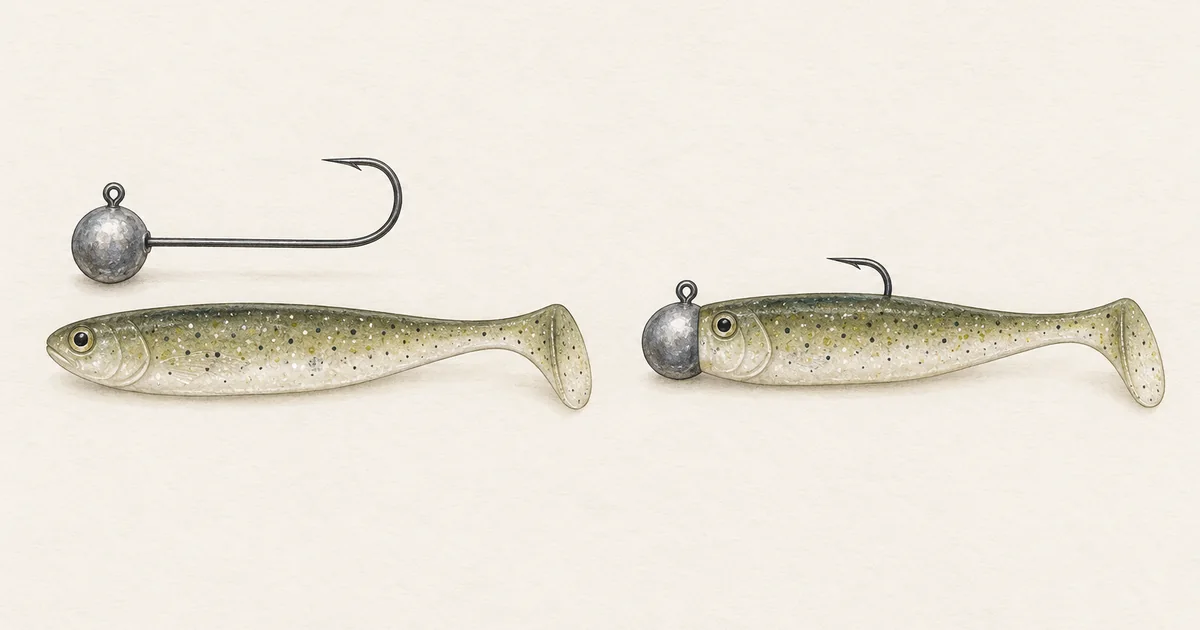
Drifting float at the breakwater
The quiet method for dusk and night, in which you let a natural bait drift along edges with the current.
- Find current seams
Look for spots where current meets calmer water, for example at the head of a breakwater, where an eddy forms later. Hunting fish and circling birds also show you places.
- Split leader
Divide the hooklength with a swivel into two pieces of equal length, the lower one slightly thinner. If the hook snags, only this piece breaks, and you keep the float and weight.
- Scent on the hook
A lugworm, baited directly behind the head, is a usual bait here. A strip of squid sits more firmly and survives more casts, and crab or shrimp also catch.
- Sideways and gently
Cast with a calm sideways swing; 15 m from the shore is often enough. Hold the rod slightly raised and the line almost tight, so that no large bows form.
- A nibble is not a bass
Light plucking mostly comes from small fish, so check the bait then. A sea bass pulls the float under quickly and decisively, and after a few seconds you strike.
- With feel
Tighten the line almost fully before the strike, otherwise you only hit line out of the water. The finely set drag absorbs the first runs.
- Avoid snags
As you retrieve shortly before the shore, speed up and lift the rod so that bait and fish do not get stuck between the blocks at the foot of the breakwater. Then land the fish in the net.
Crab fly and streamer
The route for fly anglers, in shallow water often by sight, in deeper water with a streamer on the sinking line.
- Shallows on the ebb
In France fly anglers fish on the falling tide over rock and sand with bladderwrack. On the North Sea, rock armour such as groynes, channels and mussel beds are the places.
- Fluorocarbon because of mussels
As the tippet take fluorocarbon of 0,24 to 0,27 mm, and 0,30 mm at oyster beds. Sharp shells quickly damage thinner leaders.
- Quiet and fast-sinking
A weighted crab fly should land quietly, sink quickly and lie on the bottom with the hook bend up. If the fish are hunting at the top, small poppers are an option.
- Short casts at sight
When sight fishing you mostly cast less than ten metres. For streamers and shrimp patterns a shooting head helps you cover more area.
- Right in front of the fish’s nose
Place the fly in the path of a moving fish and let it sink to the bottom. Streamers in deeper water you retrieve in short strips.
What with
Spoons, twisters, soft plastics with a weedless hook, slim crankbaits and surface stickbaits catch fish. You work the stickbait with short twitches from the wrist and let it rest for two or three seconds in between; if a fish misses it, you stay in the same rhythm and strike only when you feel resistance. Among natural baits the sand eel comes first, and it works dead on a spinning rig too.
- Soft plastic (shad)throughout the season, fast by day, very slow at night
With a weedless hook it runs over rocks and mussels with few snags and at night stays suspended in the fishes‘ field of view for a long time.
- Stickbaitsummer, when the fish hunt at the surface
Its zigzag path triggers the hunting instinct, and many strikes come in the pause, when it lies still in the water.
- Crustaceans & musselsnight and rough sea, with float and surf rig
Crabs and shrimps are part of its natural prey; a peeled crab on the line is considered especially effective in surf fishing.
Tackle
A spinning rod for crankbaits, stickbaits and soft plastics, and at night light tackle with jig heads of around 7 to 14 grams. For fly fishing in deeper water you need a sinking line; the pages on spinning rods and fly rods help with the choice.
Crankbait and soft plastic at the groyne
- Rod
- 2,40–2,70 m, stiff to fast action, casting weight up to about 50 g
- Reel
- a light, saltwater-proof fixed-spool reel with a smooth-running drag
- Line
- braid with a breaking strength of around 9 kg
- Leader
- 0,5–1 m of fluorocarbon or monofilament of about 0,40 mm
- Hooks
- soft plastics and slugs with a hidden hook or on an offset hook, where weed and stones lie
- Weight, float, lead
- crankbait 12–18 cm and over 20 g; at night light jig heads of about 7–14 g
Drifting float at the breakwater
- Rod
- about 3,60 m, so you can control drift and stones better
- Reel
- a medium fixed-spool reel with a finely adjustable drag
- Line
- braid of about 0,24 mm
- Leader
- two-part, made of fluorocarbon, about 0,40 mm at the top and about 0,35 mm at the bottom, each section a good half metre long
- Hooks
- size 2 to 4
- Weight, float, lead
- a sturdy foam float of about 30 g with an LED light for the night, plus about 20 g casting weight
Crab fly and streamer
- Rod
- class 7/8 for the coast; for heavy crab flies, fast rods of class 8 or 9
- Reel
- a saltwater-resistant fly reel with room for about 100 m of backing
- Line
- floating in shallow water, on the North Sea rather a sinking line of 200–300 grain
- Leader
- a tapered saltwater leader slightly longer than the rod, fluorocarbon tip 0,24–0,30 mm
- Hooks
- crab and shrimp patterns, mostly size 2 to 4
- Weight, float, lead
- weight at the hook eye so the fly sinks quickly
More on tackle
Common mistakes
- Too long at the same groyne: sea bass roam in groups, and a spot can be empty after a few hours. Stay mobile and try the next breakwater too.
- Only on the rising tide: many expect the fish with the flood, but they often bite better on the ebb. Plan your trip with the tide table around low water.
- Rattling crankbait in the swell: crankbaits with loose balls easily lose their rhythm in current and waves. Use models with a fixed weight there.
- Heavy tackle at night: with thick line and a clumsy reel you no longer feel the lure at slow-motion speed. Use light tackle and small heads, otherwise you will keep snagging in the shallows.
- Drag too tight: the first run comes in a flash and can snap even strong line. Before the first cast, set the drag so that it gives line smoothly.
Rules
Each federal state (Bundesland) sets its own closed season (Schonzeit) and minimum size (Mindestmaß). Choose your state; the values come from our state pages.
Baden-Württemberg
Our overview for Baden-Württemberg does not list sea bass. The page Fishing in Baden-Württemberg explains what applies there, with the spots in the state.
Bavaria
Our overview for Bavaria does not list sea bass. The page Fishing in Bavaria explains what applies there, with the spots in the state.
Berlin
Our overview for Berlin does not list sea bass. The page Fishing in Berlin explains what applies there, with the spots in the state.
Brandenburg
Our overview for Brandenburg does not list sea bass. The page Fishing in Brandenburg explains what applies there, with the spots in the state.
Bremen
Our overview for Bremen does not list sea bass. The page Fishing in Bremen explains what applies there, with the spots in the state.
Hamburg
Our overview for Hamburg does not list sea bass. The page Fishing in Hamburg explains what applies there, with the spots in the state.
Hesse
Our overview for Hesse does not list sea bass. The page Fishing in Hesse explains what applies there, with the spots in the state.
Mecklenburg-Western Pomerania
Our overview for Mecklenburg-Western Pomerania does not list sea bass. The page Fishing in Mecklenburg-Western Pomerania explains what applies there, with the spots in the state.
Lower Saxony
- Minimum size
- 42 cm
- Closed season
- 1.2.–31.3. catch and release only
- Catch limit
- 3 per day
- Note
- coast only, EU rule 2026; fisheries office (Fischereiamt): as a rule no fishing in February and March
As of October 2026. All rules, exceptions and sources: Fishing in Lower Saxony.
North Rhine-Westphalia
Our overview for North Rhine-Westphalia does not list sea bass. The page Fishing in North Rhine-Westphalia explains what applies there, with the spots in the state.
Rhineland-Palatinate
Our overview for Rhineland-Palatinate does not list sea bass. The page Fishing in Rhineland-Palatinate explains what applies there, with the spots in the state.
Saarland
Our overview for Saarland does not list sea bass. The page Fishing in Saarland explains what applies there, with the spots in the state.
Saxony
Our overview for Saxony does not list sea bass. The page Fishing in Saxony explains what applies there, with the spots in the state.
Saxony-Anhalt
Our overview for Saxony-Anhalt does not list sea bass. The page Fishing in Saxony-Anhalt explains what applies there, with the spots in the state.
Schleswig-Holstein
- Minimum size
- 42 cm
- Closed season
- 1.2.–31.3. catch and release only
- Catch limit
- 3 per day
- Note
- North Sea, EU rule 2026; state of SH: no targeted fishing in February and March
As of October 2026. All rules, exceptions and sources: Fishing in Schleswig-Holstein.
Thuringia
Our overview for Thuringia does not list sea bass. The page Fishing in Thuringia explains what applies there, with the spots in the state.
The regulation and your fishing permit (Erlaubnisschein) are what count. Lake Constance, the Rhine and the coast, for example, have their own rules: Fishing waters in Germany.
After the catch
Playing and landing
When spinning, a short strike is enough as soon as you feel resistance; with a float, after a few seconds with the line almost taut. Let the first runs go out against a finely set drag and land the fish with a landing net. Grip it by the lower jaw and never by the gill cover; if you may not keep it, unhook it in the water and let it glide back.
Do not grab the fish by the gill cover; its spines and serrated edge cut fingers easily. Hold it by the lower jaw or use a landing net. A fish of legal size that you may take under the current rules is stunned and killed straight away; protected or undersized fish, and fish too large for a harvest slot (Entnahmefenster), go back at once, with wet hands, in the water. Closed seasons (Schonzeiten), minimum sizes (Mindestmaße) and harvest slots are set by the federal states (Bundesländer) and by the fisheries authorities (Fischereibehörden) of neighbouring countries such as Denmark, Norway or Poland, and EU rules apply on top.
Frequently asked questions
Where can you fish for sea bass in Germany?
Mainly on the North Sea islands, at breakwaters, harbour entrances and seaward beaches. Catches stay rare even there; in a diary study by the Thünen-Institut, sea bass made up only a small part of the North Sea catches.
From what water temperature does sea bass bite?
In the North Sea and the Atlantic the fish become active from about 12 degrees, according to specialists‘ experience. In the Mediterranean they move to cooler depths from about 23 degrees.
Which tide is best for sea bass fishing?
Often the falling tide, roughly from two and a half hours before low water until one hour after it. If this time falls in the morning or evening, the chances are best.
Which rod for sea bass?
A stiff spinning rod of 2,40 to 2,70 m with up to 50 g casting weight, plus braid with a breaking strength of around 9 kg. For float fishing a longer rod of about 3,60 m is practical.
May you take sea bass home from the North Sea?
Yes, in 2026 in January and from 1 April to 31 December: at most three fish per day, each at least 42 centimetres. From 1 February to 31 March the EU allows catch and release only. Schleswig-Holstein and Lower Saxony do not allow targeted fishing at all in this period; a fish hooked by accident goes straight back. The EU sets these values anew every year (as of October 2026).
Can you catch sea bass on a float?
Yes, especially at dusk and at night at dikes with current. Usual baits are lugworm, strips of squid, crab or shrimp on a hook of size 2 to 4.
Similar species
If you catch sea bass, you can fish for these species with similar tackle too:
 Fishing for garfishOut of season
 Coley fishingPeak season
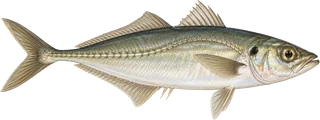 Fishing for scadPossible
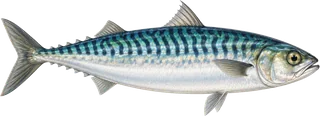 Fishing for mackerelPossible
Sources
Correct as of October 2026. The practical knowledge comes from 12 sources, summarised in our own words.
View all 12 sources
- Wolfsbarschangeln: Top-Techniken mit modernen Fangmethoden · BLINKER (Rob Staigis)
- Angeln auf Wolfsbarsch: Tag gegen Nacht · BLINKER (Robert de Wilt, Joran Bal)
- Zum Wolfsbarsch: Die Nordsee-Piraten · RUTE & ROLLE (Rob Staigis)
- Magische Momente beim Posenangeln auf Wolfsbarsch · BLINKER (Joran Bal, Sander Boer)
- Steckbrief Wolfsbarsch: Wo und wie fängt man diesen Fisch? · BLINKER (Redaktion)
- Wolfsbarsch mit der Fliege · BLINKER (Bastian Wormuth)
- Erfolgreich Angeln an der Küste · BLINKER (Redaktion)
- Freizeitfischerei auf Wolfsbarsch an der Nordsee · FISCH & FANG (Redaktion)
- Eine Charakterisierung der marinen Angelfischerei in Deutschland · Thünen-Institut für Ostseefischerei (Zeitschrift für Fischerei 2023)
- Freizeitfischerei auf Wolfsbarsch 2026 · Ministerium für Landwirtschaft, ländliche Räume, Europa und Verbraucherschutz Schleswig-Holstein
- Informationen zum Wolfsbarsch · Staatliches Fischereiamt Bremerhaven (Land Niedersachsen)
- Verordnung (EU) 2026/249 des Rates (Fangmöglichkeiten 2026), Art. 10 · Rat der Europäischen Union
AI-assisted text, based on the sources listed and these pages: Sea bass (profile), Spinning, Fly fishing, Stickbait, Soft plastic (shad).