
Destinations · the Netherlands
Fishing on the Wadden Sea and the North Sea coast
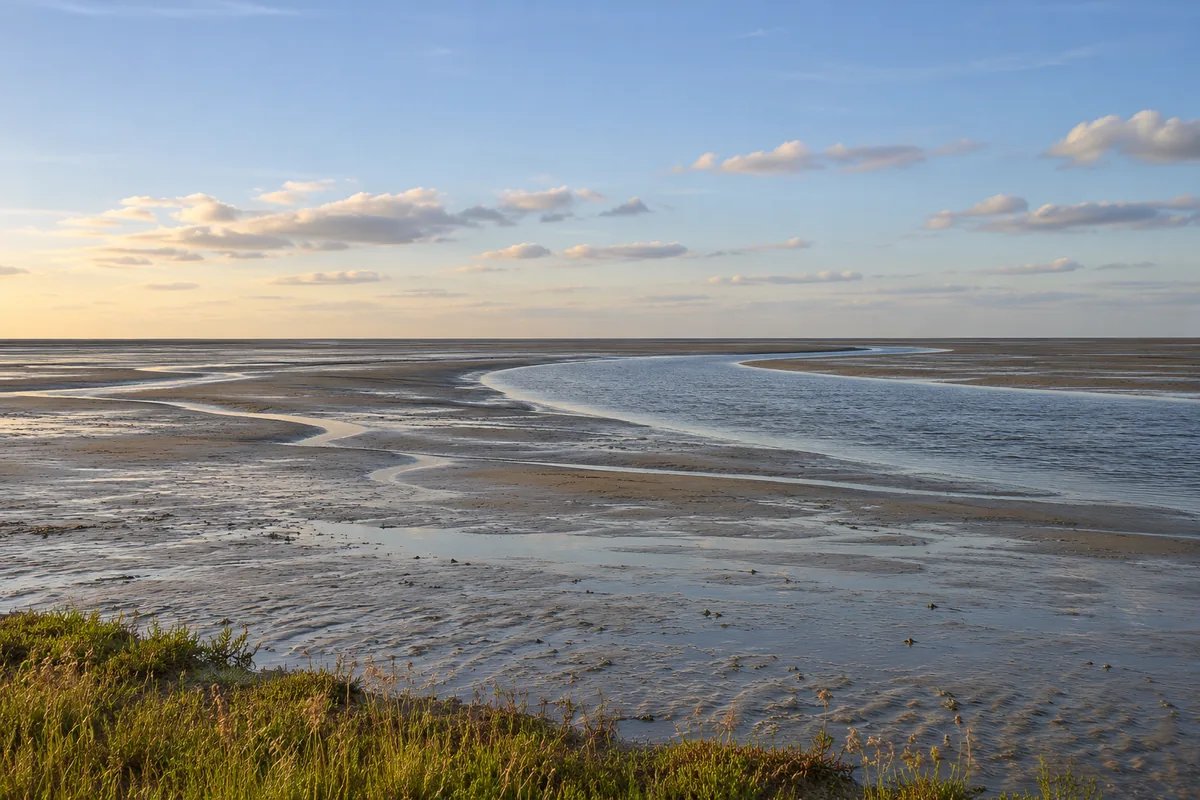
In the Dutch Wadden Sea ebb and flood decide when you can fish: at low tide wide flats (platen) dry out, at high tide the fish move onto them to feed. At sea you do not need a fishing licence (VISpas). But you must know whether you are standing in coastal waters, in the sea area or in the fishing zone.
- Papers
- Coast without permit, from age 14 RecFishing; Lauwersmeer with VISpas
- Season
- all year, sea bass from 1.2. to 31.3. catch and release only
As of October 2026
At a glance
- Papers
- Coast without permit, from age 14 RecFishing; Lauwersmeer with VISpas
- Licence and permit
- Season
- all year, sea bass from 1.2. to 31.3. catch and release only
| Fish | Minimum size | Closed season | Catch limit | Note |
|---|---|---|---|---|
| Flounder | 20 cm | none | – | |
| Sea bass | 42 cm | 1.2.–31.3. catch and release only | 3 per day | Rule for 2026 |
| Cod (Kabeljau) | 35 cm | none | 25 fish or 20 kg | size according to the water list; land whole |
| Eel | – | protected all year round | – | straight back alive, do not keep |
| Sea trout | – | protected all year round | – | |
| Atlantic salmon | – | protected all year round | – |
Coastal waters, sea area and fishing zone: Uitvoeringsregeling visserij, Uitvoeringsregeling zeevisserij and Regulation (EU) 2026/249; size for cod from the federation’s water list. On the Lauwersmeer the VISpas conditions apply. As at: October 2026. What counts are the regulation and your fishing permit (Erlaubnisschein).
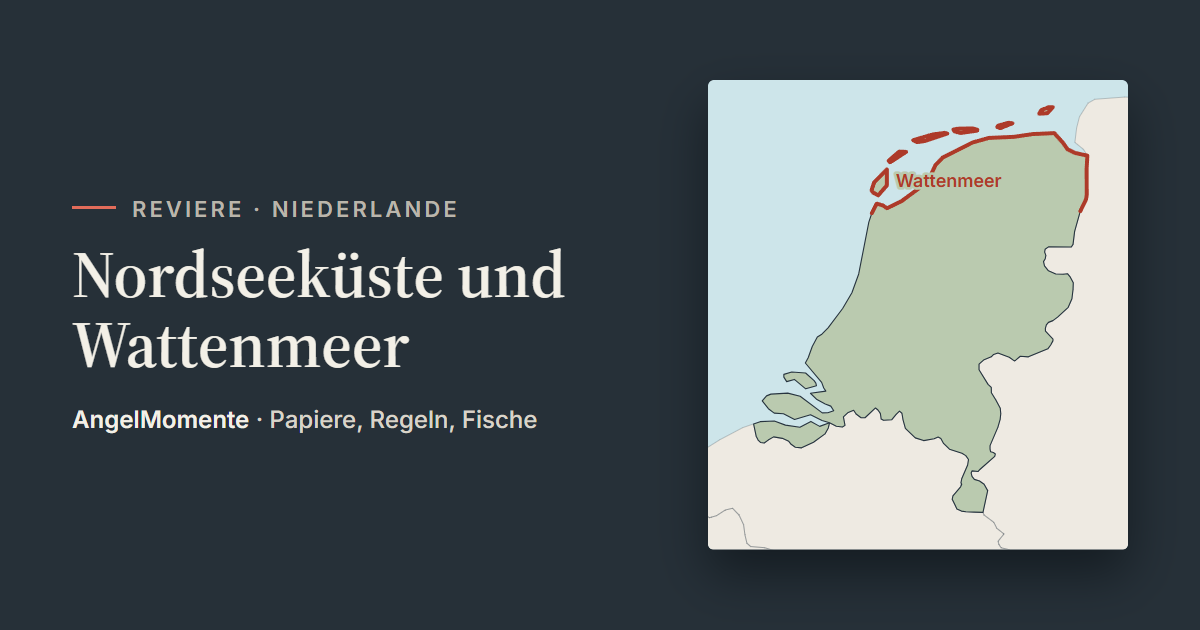
Location and waters Wadden Sea, Dollart, island beaches and IJmuiden
The Dutch part of the Wadden Sea covers around 2400 km², and the difference between low and high tide is a good 2 m (Rijkswaterstaat). Deep channels cut through sand and mud banks that largely dry out at low tide (Natura 2000). In the north-east the Ems flows into the Dollart (Rijkswaterstaat). Schiermonnikoog has been a national park since 1989, the whole island except the village and the polder (Nationalpark Schiermonnikoog).
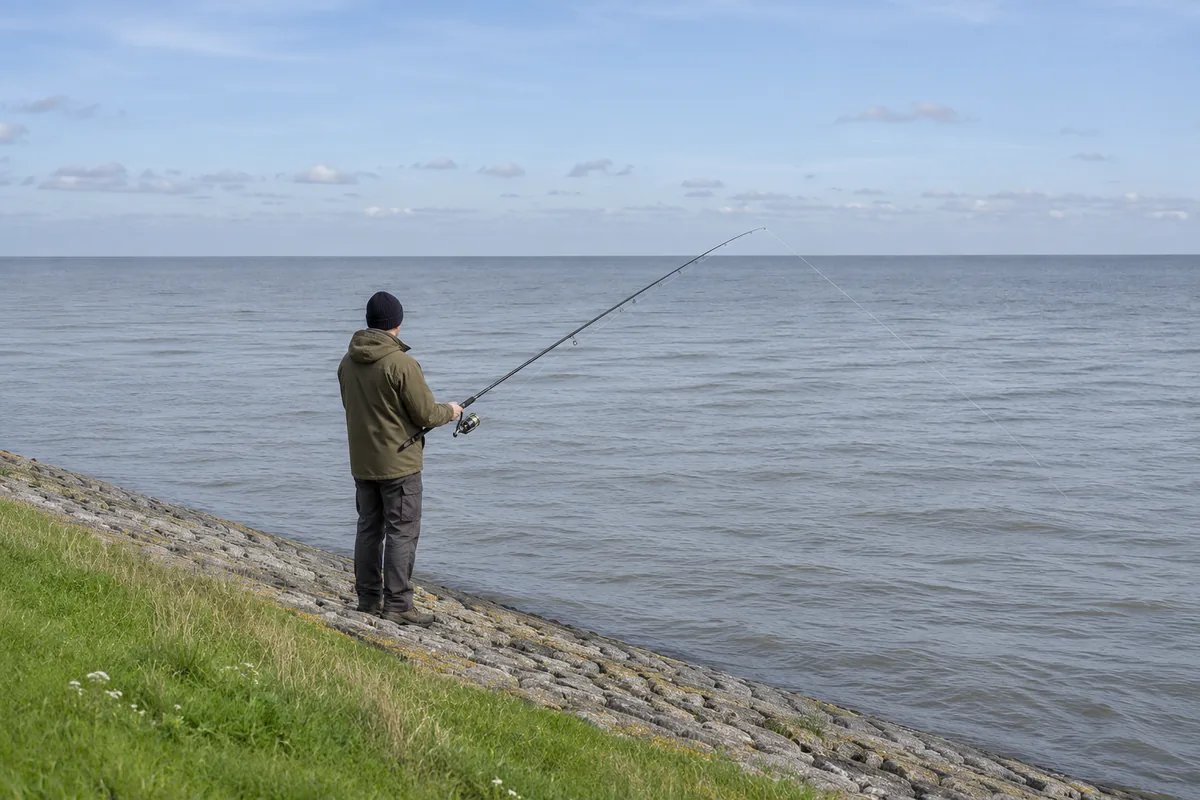
On the North Sea side lie the beaches of the islands and of North Holland. At IJmuiden the North Sea Canal reaches the sea from Amsterdam harbour (Rijkswaterstaat). You fish from the beach, from dykes, piers and harbour heads (Sportvisunie). Beaches and harbours on the North Holland mainland are described in the profile North Holland coast.
Fish and best time Flounder, sea bass and flatfish
The Wadden Sea is a nursery for many North Sea fish. At low water the fish stand in the channels, at high water they feed on the flats. Large rays and sharks have become rare, and flatfish too are declining (Natura 2000).
- Flounder: At a coastal competition of the federation near Den Oever in spring 2026 the catch consisted almost entirely of flounder of good size (Sportvisunie).
- Sea bass: It is a summer visitor here and in winter mostly moves south. For a study with Wageningen Marine Research the federation tags hundreds of sea bass in IJmuiden harbour. If you catch one with a tag, report it (Sportvisunie).
- Sharks and rays: The federation studies them in the North Sea and Wadden Sea. They seem to come to the coast earlier in the year and leave later in autumn (Sportvisunie). Young tope were found around Terschelling and Ameland. The species is classed as critically endangered on the IUCN Red List (Sharkatag). The federation asks you to return them and to report the catch.
The most-used bait is the lugworm. Many anglers dig it themselves on the flats that dry out (Waddenzee.nl). According to the federation you need the VISpas for that. When which species otherwise goes well is shown by the catch calendar.
Papers and permit No permit and no VISpas on the coast
- Coastal waters: These are the Wadden Sea, the Dutch part of the Dollart and Ems and the open harbours on them (Besluit aanwijzing zeegebied en kustwateren). Here you fish without a permit and without a VISpas with two rods at most (Visserijwet, Artikel 7), with three hooks at most on each (RVO).
- Sea area: This includes the harbours of IJmuiden with the approaches to the North Sea Canal, according to the water list including the inner side of the piers. Here too two rods with three hooks each apply (RVO).
- Fishing zone: The North Sea off the beaches of Holland and north of the islands is not coastal water. There the water list sets no limit on rods and hooks (Gezamenlijke Lijst).
- RecFishing: From the age of 14 you register in this app beforehand for all three areas (RVO). What you have to enter is on the country page.
- Behind dyke and lock: Without an open connection the coastal water ends at the nearest water-retaining structure (Besluit, Artikel 3). The IJsselmeer is inland water (RVO), the Lauwersmeer is in the water list. There you need the VISpas, see IJsselmeer.
Special rules Sea bass break, eel ban and protected migratory fish
- Sea bass and cod: Sizes and catch limits are in the box. In February and March 2026 you must not keep any sea bass (Verordnung (EU) 2026/249). You bring both species ashore whole, not filleted and with the head on, also on openly connected inland waters up to 30 km inland (Uitvoeringsregeling zeevisserij, Artikel 140p).
- Eel: It goes straight back alive, and you must not have any with you while fishing (Uitvoeringsregeling visserij, Artikel 23a). Besides salmon and sea trout, houting, twaite shad, allis shad and sea lamprey are protected all year (Artikel 5c).
- Reference area: In the east of the Wadden Sea there is an area where all fishing is banned. Its boundaries are given as coordinates in Bijlage 3 (Uitvoeringsregeling visserij, Artikel 11).
- Closed areas: The Wadden Sea is a Natura 2000 site. To protect seals and birds, parts are closed all year or temporarily. The boundaries are marked with signs or buoys and appear on the nautical charts (Leidraad toegangsbeperking Waddenzee). When which areas are closed to boats is shown by the nautical information pages (Waddenzee.nl).
- Schiermonnikoog: From 15 April to 15 July parts of the Oosterkwelder can only be entered on a guided excursion. The beach east of post 10 may then only be walked right at the water’s edge (national park leaflet).
As at: October 2026. The sea bass rules apply for 2026 only. The EU regulation allows only catch and release in February and March, while RVO calls targeted fishing in that period banned. If you want to be on the safe side, follow the stricter information from the authority.
Safety
- Tides: In 24 hours and 50 minutes there are two high tides, and the times differ from place to place. Wind and weather are not included in the forecast (Rijkswaterstaat).
- Flats: You do not go out onto the flats alone. Because of the risks, walks on the flats take place only with an expert guide (Waddenzee.nl).
- Dykes: On the Afsluitdijk some dyke blocks are forbidden to enter, others only at your own risk (Gezamenlijke Lijst). If the wind picks up, a spot can become dangerous. Choose it according to tides, current and your own safety (Sportvisunie).
- Ships: The Dutch part of the North Sea is among the busiest waterways in the world (Rijkswaterstaat), so watch out for large ships off IJmuiden.
- In a boat: A lifejacket is a must for everyone on board (Rijkswaterstaat). For a fast motor boat on the Wadden Sea, Ems and Dollart you need the Klein Vaarbewijs part 2 boating licence (Rijkswaterstaat). More at Boat and lifejacket, Tides, ebb and flood and Thunderstorms and weather.
Related
- Fishing on the coast and in the surf, Fishing in the harbour and off the mole and Fishing in the Netherlands
- North Holland coast, Zeeland, IJsselmeer, Frisian Lakes and the German North Sea coast
- Flounder, sea bass, cod, eel, sea trout and gurnard in the fish lexicon
- Surf fishing, surf rig and Releasing fish
Sources
- Visserijwet 1963 und Besluit aanwijzing zeegebied en kustwateren 1970
- Uitvoeringsregeling visserij (Fassung vom 11.07.2026), Uitvoeringsregeling zeevisserij (Fassung vom 01.09.2026) und Verordnung (EU) 2026/249
- RVO: Freizeitfischerei in Küstengewässern, Seegebiet und Visserijzone (geprüft 03.08.2026) und Übersicht der Gewässer
- Ministerium für Landwirtschaft, Natur und Lebensmittelqualität: Leidraad toegangsbeperking Waddenzee (2020)
- Rijkswaterstaat: Waddenzee, Eems, Noordzeekanaal, Noordzee, Getij, Voorbereid varen und Snelvaren
- Natura 2000: Waddenzee, Waddenzee.nl: Sportvisserij und Recreatie en toerisme
- Nationaal Park Schiermonnikoog: Karte des Nationalparks und Faltblatt Welkom op Schiermonnikoog
- Sportvisunie: Gezamenlijke Lijst van Nederlandse VISwateren 2026 bis 2028, VISpas, Wo du an der Küste angelst, Wolfsbarsch-Untersuchung und Sharkatag (abgerufen 04.10.2026)
Guide without guarantee, as at October 2026. What counts are the Dutch regulations, the EU catch rules for sea bass, the access rules for the Natura 2000 site, the rules of the national park and the VISpas conditions including the water list as currently in force.