
Destinations · the Netherlands
Fishing on the IJsselmeer and the Randmeren
The IJsselmeer forms, together with the Markermeer and IJmeer, the largest inland water in the Netherlands, a shallow freshwater lake behind the Afsluitdijk. You fish here with the fishing licence (VISpas), but under stricter rules than in the rest of the country: artificial lures only from July, and no night fishing at all.
- Papers
- VISpas with waters list or the VISplanner app
- Season
- all year; artificial lures, dead baitfish and fish strips only from 1.7.
As of October 2026
At a glance
- Papers
- VISpas with waters list or the VISplanner app
- Licence and permit
- Season
- all year; artificial lures, dead baitfish and fish strips only from 1.7.
- Fishing seasons
- no night fishing from 2 hours after sunset to 1 hour before sunrise
| Fish | Minimum size | Closed season | Catch limit | Note |
|---|---|---|---|---|
| Zander | 42 cm | 1.4.–31.5. | 2 from 42 to 70 cm | |
| Perch | 22 cm | 1.4.–31.5. | 3 from 22 to 45 cm | do not keep undersized fish in a keepnet |
| Pike | 45 cm | 1.3.–31.5. | 1 from 45 to 80 cm | |
| Bream | – | none | – | |
| Roach | – | none | – | |
| Eel | – | protected all year round | – | always return with a VISpas; possession banned in the east of the lake |
| Carp | – | protected all year round | – | always return with a VISpas |
Sizes and closed seasons according to the Uitvoeringsregeling visserij, catch limits and bait period according to the VISpas conditions 2026 to 2028 and the list of waters. No more than 15 fish in total, of which 5 over 25 cm. Status: October 2026. The regulation and your fishing permit (Erlaubnisschein) are what count.
Location and waters IJsselmeer, Markermeer and IJmeer
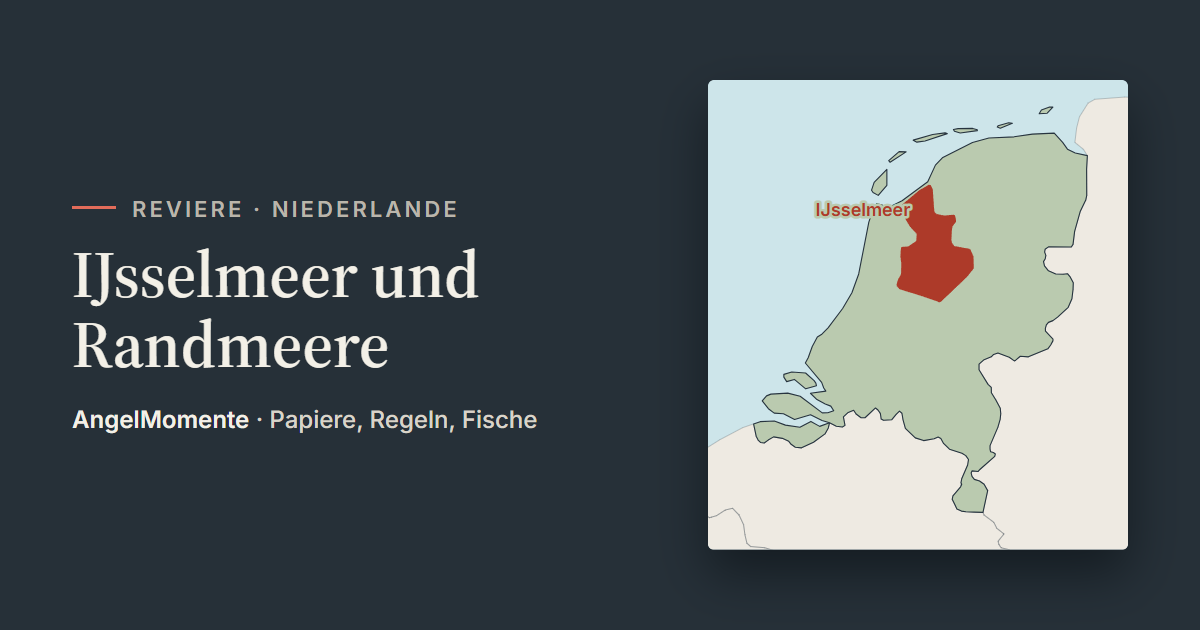
Since 1932 the 32 km Afsluitdijk has separated the IJsselmeer, the former Zuiderzee, from the Wadden Sea. The IJsselmeer measures 1100 km², the Markermeer 700 km². Between them lies the 26 km Houtribdijk from Lelystad to Enkhuizen (Rijkswaterstaat). In fisheries law, the Markermeer, IJmeer and the open harbours on the shore belong to the IJsselmeer. The Gooimeer and Eemmeer do not, with the boundary formed by the bridge near Muiderberg (Reglement voor de binnenvisserij 1985, Artikel 1).
According to the angling federation Sportvisunie, the IJsselmeer is about 4,5 m deep on average, with some channels going over 6 m. The Markermeer is around 3,5 m deep, the IJmeer only around 2,4 m. The bottom alternates between sand, silt and clay (Sportvisunie).
Around Flevoland lie the Randmeren. They include the Veluwemeer, Drontermeer, Eemmeer, Gooimeer, Ketelmeer, Nijkerkernauw, Nuldernauw, Vossemeer and Wolderwijd (Rijkswaterstaat). Different rules apply to them, and they are covered in the profile Randmeren.
Fish and best time Zander, perch, bream, eel and pike
For the IJsselmeer, Markermeer and IJmeer, Sportvisunie names these species:
- Zander and perch: They look for sandy structures. The natural slopes in the IJsselmeer attract both.
- Bream and eel: more over muddy bottom.
- Carp and whitefish: The calmer, silt-rich water of the Markermeer and IJmeer suits them. The federation also names roach and pike.
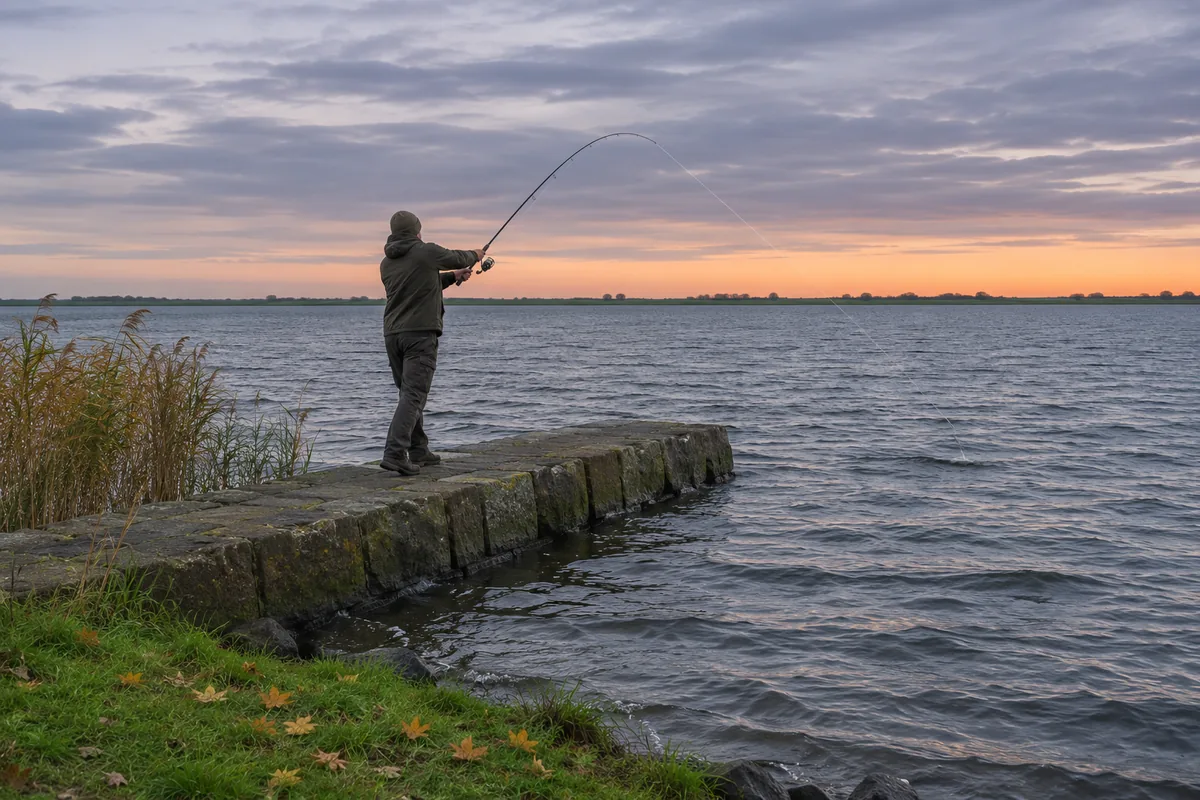
Zander, perch, bream and roach were under pressure from commercial fishing for a long time. In May 2025 the responsible state secretary wrote to parliament that stocks are recovering. Studies by Wageningen Marine Research confirm this. Catches of zander in particular are very good, and more large fish are ending up in the nets (Letter to the Tweede Kamer of 26 May 2025). The catch calendar shows when each species is otherwise worth targeting.
Documents and permit VISpas for over 95 per cent of the water surface
- VISpas: You need it together with the list of waters or the VISplanner app. How to order it is explained under Fishing in the Netherlands.
- Where you may fish: Sportvisunie contributes the IJsselmeer, Markermeer and IJmeer to the list of waters 2026 to 2028. With the VISpas you fish over 95 % of the water surface and along almost 90 % of the good 350 km of shore. At the good 30 marinas, about three quarters of the water is open. The VISplanner shows which part (Sportvisunie).
- Shore: The dykes around the IJsselmeer are freely accessible unless signs say otherwise. On the Frisian coast you fish only in the nature areas that are open. You walk onto the dyke of the Noordoostpolder on foot only, and dogs are banned there (list of waters).
Special rules Bait ban until 30 June, closed season until 31 May
- Bait in spring: The list of waters bans dead baitfish, fish strips and every artificial lure from 16 March to 30 June. Only artificial flies under 2,5 cm are allowed. This also applies in the Oostvaardersdiepen near Almere and Lelystad.
- Closed season: The dates are in the box. On the IJsselmeer they end only on 31 May, and the earlier end on the last Saturday in May does not apply here (Uitvoeringsregeling visserij, Artikel 61).
- Rods: Without a fishing licence you fish with no more than two rods (Reglement voor de binnenvisserij, Artikel 8).
- Keeping fish: On the IJsselmeer the list of waters allows no more than two zander and five perch. The VISpas conditions are stricter for perch: no more than three fish from 22 to 45 cm (Conditions 2026 to 2028). Undersized perch may neither be kept in a keepnet here nor taken as baitfish (Reglement minimummaten en gesloten tijden, Artikel 7).
- Night: From two hours after sunset to one hour before sunrise, fishing on the IJsselmeer is banned (Uitvoeringsregeling visserij, Bijlage 2). The NachtVIStoestemming does not help here.
- Eel: With the VISpas it always goes back. In one area in the east of the IJsselmeer you may not even have eel on you, with the harbour of Urk exempt (Uitvoeringsregeling visserij, Artikel 28b).
Status: October 2026. By law, the bait ban on the IJsselmeer runs from 1 April to 31 May. The list of waters extends it for VISpas holders to 16 March to 30 June. Follow the stricter rule of the list. For perch, the smaller number of fish from the VISpas conditions applies.
Safety
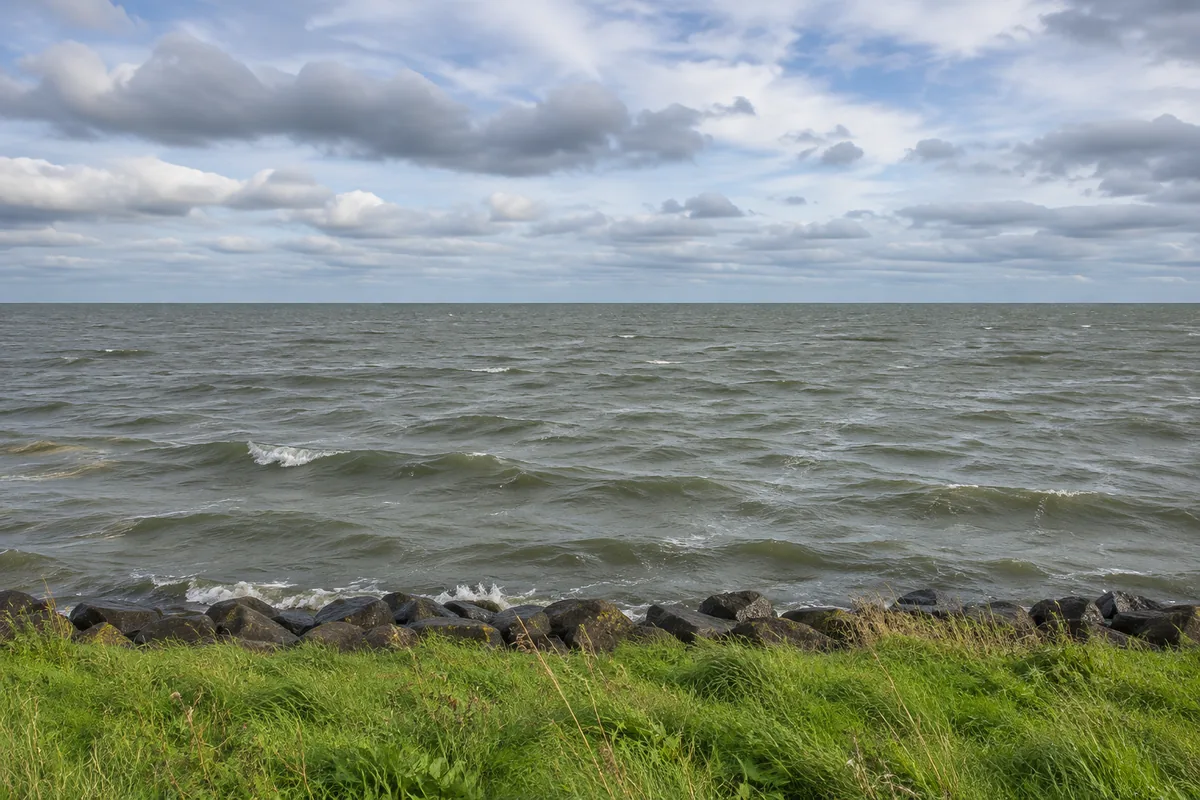
- Waves: On the IJsselmeer and Markermeer, waves can build up very quickly. After an hour they can be fully developed, and even faster in a thunderstorm (Rijkswaterstaat).
- In a boat: For a fast motor boat on the IJsselmeer and Markermeer you need the Klein Vaarbewijs part 2 boating licence. A life jacket for every person on board must be within reach (Rijkswaterstaat: Snelvaren). More under Thunderstorms and weather and Boat and life jacket.
Related
- Fishing on a lake and Fishing in the Netherlands
- Randmeren, Frisian Lakes and North Sea coast and Wadden Sea
- Zander, perch, pike and bream in the fish encyclopedia
- Spinning, feeder fishing and Closed season and minimum size explained
Sources
- Reglement voor de binnenvisserij 1985 und Reglement minimummaten en gesloten tijden 1985
- Uitvoeringsregeling visserij (Fassung vom 11.07.2026): Mindestmaße, Schonzeiten, Artikel 61, Nachtverbot (Bijlage 2), Aal (Bijlage 16)
- Sportvisunie: Gezamenlijke Lijst van Nederlandse VISwateren 2026 bis 2028, Bedingungen des VISpas 2026 bis 2028, VISpas und Vissen op het IJsselmeer, Markermeer en IJmeer (abgerufen 04.10.2026)
- Rijkswaterstaat: IJsselmeer, Markermeer, Veluwemeer und Snelvaren
- Kamerstuk 29 664, Nr. 212: IJsselmeervisserij (26. Mai 2025)
A guide without guarantee, status October 2026. The Dutch fishing regulations, the VISpas conditions with the list of waters and the details in the VISplanner are what count.