
Knowledge – Fish
Sea trout: Identification, coastal fishing, difference from the salmon
The sea trout is the migratory form of the brown trout (Salmo trutta). It grows up at sea, hunts close under the coast and runs up streams and rivers to spawn. In Germany the trout has been on the Red List as endangered since 2023, yet on the coast the sea trout is still one of the most sought-after target fish.
In short: The best time to catch sea trout is March to April, at any time of day. Good spots on the coast: stony mixed ground, the gully in front of the sandbar, and wrecks and reefs; in the river: behind stones, undercut banks and pools. Proven baits: slim coastal spoons, plugs or coastal flies. Fully protected all year in Baden-Württemberg, and in the inland waters of Lower Saxony it may only be fished in stocked waters. On the coast it is protected in Mecklenburg-Western Pomerania from 15 September to 14 December, in Schleswig-Holstein fish in spawning colours are protected from 1 October to 31 December, and on the Lower Saxony coast a closed season (Schonzeit) applies from 1 October to 15 February (as of October 2026). Step by step: Sea trout fishing.
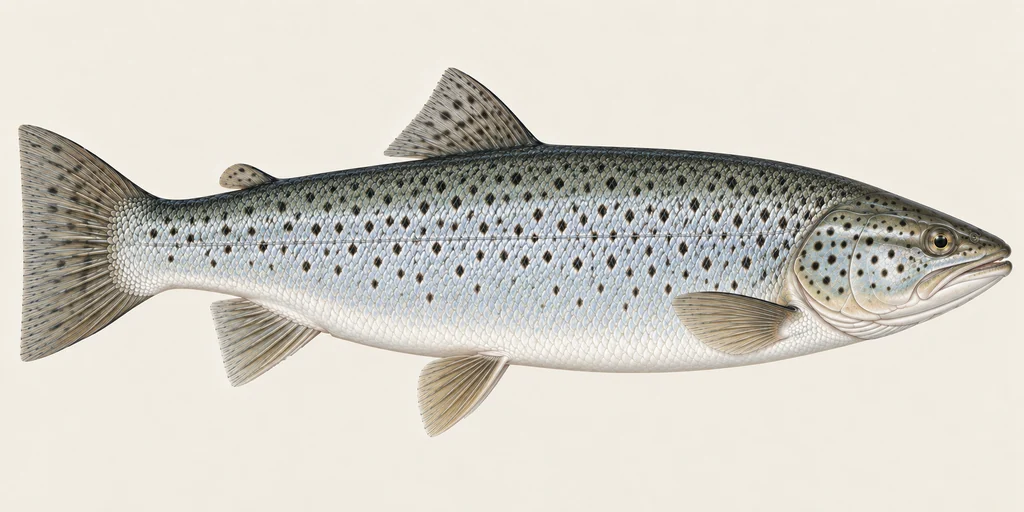
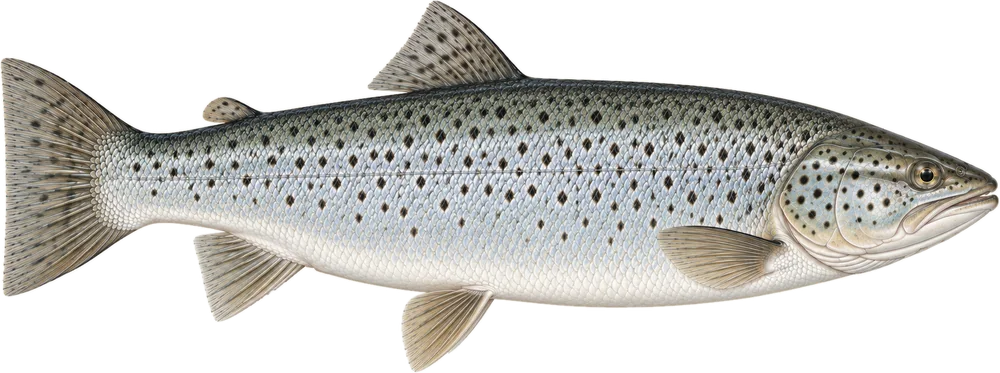
- Silvery flanks with black spots, also below the lateral line
- Thick caudal peduncle and a squarely cut tail fin
- The upper jaw reaches clearly beyond the rear edge of the eye
Catch chances through the year
- Hardly any chance
- Possible
- Good
- Peak season
- Spawning (observe the closed season)
Editorial assessment for waters in Germany, not a measured value and no guarantee. Spawning time is not the same as the legal closed season.
Species profile and sources in the catch calendarAll species compared month by monthThe rules of your federal state
How to recognise it
The sea trout is torpedo-shaped, with a large mouth, a small pointed head and an adipose fin. The mouth reaches back beyond the eye. The tail wrist is thick and round, and the tail fin looks as if cut off. The dark spots cover the whole body, also below the lateral line. Before heading out to sea the young fish exchange their speckled juvenile coat for a silvery one.
According to the fisheries authority (Fischereibehörde) of Lower Saxony, returning sea trout are on average 50 to 70 centimetres long. Danish coastal anglers reported a mean of a good 47 centimetres for fish above the local minimum size (Mindestmaß). For the species Salmo trutta as a whole, that is including brown trout and lake trout, FishBase gives up to 140 centimetres and 50 kilograms.
The sea trout is most often confused with the salmon. On the sea trout the upper jaw reaches clearly beyond the rear edge of the eye, on the salmon only as far as it. Its tail fin is cut off straight, that of the salmon is forked. The tail wrist is thick, on the salmon noticeably slender. The salmon has only a few spots above the lateral line, the sea trout also below it.
Brown trout, sea trout and lake trout are not separate species but different life strategies of Salmo trutta, which interbreed. Whether a young fish becomes a sea trout is decided, among other things, by the carrying capacity of its habitat. The fish only turn silvery at smoltification, and trout that stay in the stream are called brown trout.
Side by side
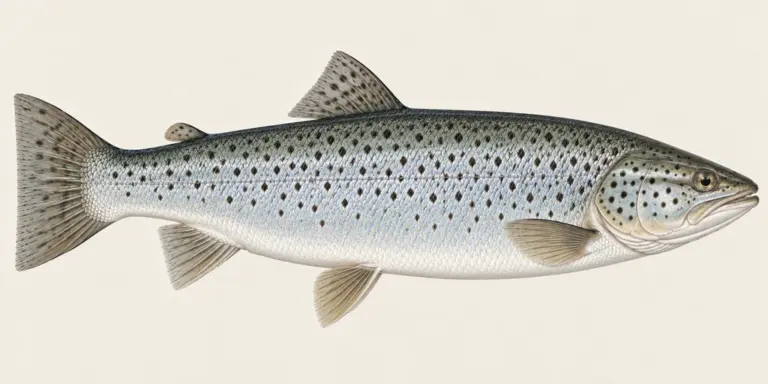
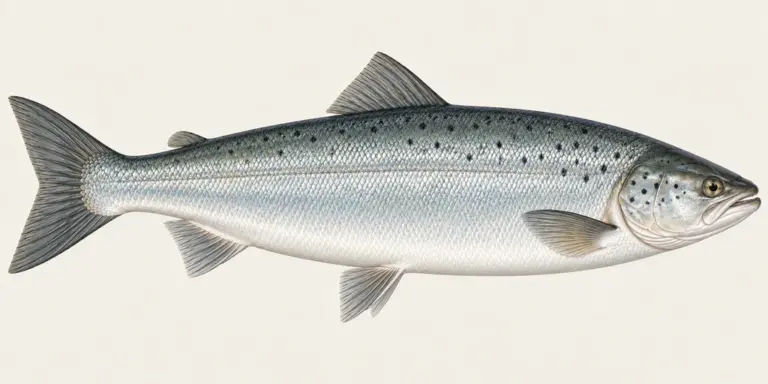
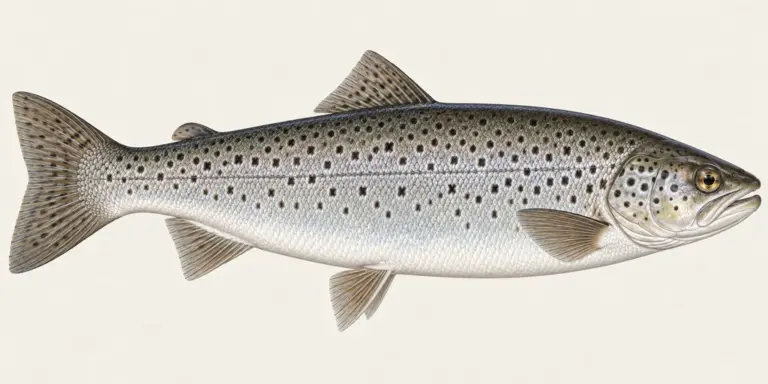
AI-generated illustrations.
Where it lives
Adult sea trout usually stay close under the coast and not far from the mouth of their home river. According to the fisheries authority (Fischereibehörde) of Lower Saxony their migrations at sea are much shorter than those of salmon. The species occurs in the Atlantic and in the North Sea and the Baltic Sea.
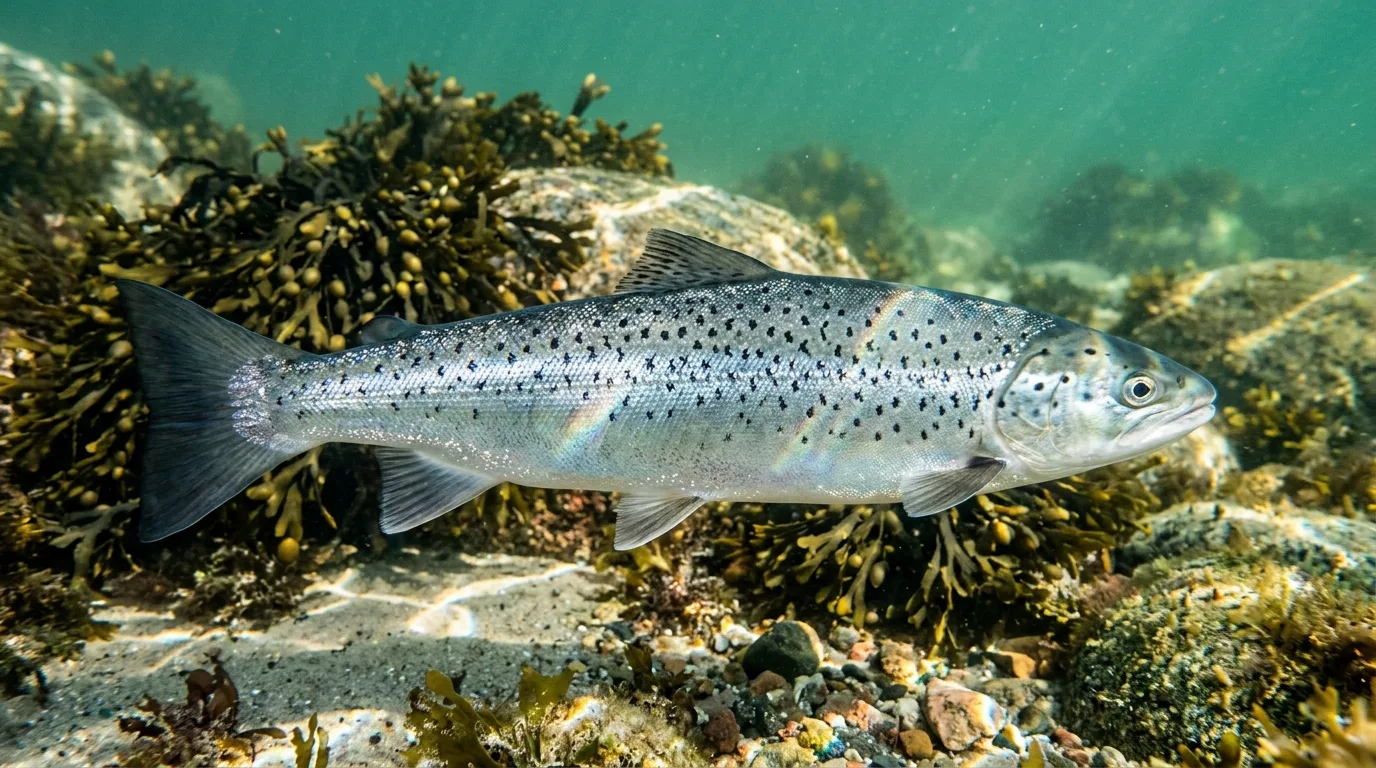
To spawn it also runs up small streams. There it needs loose, well-flushed gravel beds. In Denmark these spawning streams are often only five to seven metres wide and rarely longer than ten kilometres. The young fish stay in fresh water for one to five years.
In winter sea trout that are not yet ready to spawn seek out the lower reaches of the rivers. DTU Aqua explains this by saying that in cold salt water they have difficulty regulating their water balance. Anglers report that the fish then gather in slightly freshened bays. According to the fisheries authority (Fischereibehörde) of Lower Saxony, their spawning waters in Germany lie mainly in small rivers and streams in Mecklenburg-Western Pomerania, Schleswig-Holstein and Lower Saxony. Weirs and cross-channel structures block the way to the spawning grounds for many fish.
Holding spots in the picture
Choose the season and time of day: the picture shows where the species stands then. Spots outlined in red apply only in the chosen season. Tap a fish or a spot in the list to bring it closer. The picture is schematic and AI-generated, every water is different.
Catch chance in springPeak season
Catch chances in summerpossible
Catch chance in autumnpossiblespawning, observe closed seasons
Catch chances in winterpossiblespawning season, observe the closed seasons
- J
- F
- M
- A
- M
- J
- J
- A
- S
- O
- N
- D
Spawning season
Active time In spring the sea trout hunts all day, from a water temperature of about 15 °C mainly at dusk and in the dark.
Active time In spring the sea trout hunts all day, from a water temperature of about 15 °C mainly at dusk and in the dark.
Active time In spring the sea trout hunts all day, from a water temperature of about 15 °C mainly at dusk and in the dark.
Active time In spring the sea trout hunts all day, from a water temperature of about 15 °C mainly at dusk and in the dark.
On the coast
gully in front of the sandbank
Sea trout are found here all year round.
Sandy bottom
Sea trout are found here all year round.
Stony mixed ground
Sea trout are found here all year round.
Wreck, reef
Sea trout are found here all year round.
The sea trout hunts close to the coast, often already in the first gutter right at the shore. Typical is leopard ground: dark, weedy stones alternating with pale sand, plus bladderwrack and mussel beds. Stone reefs and points with current are also among its haunts. Plain sandy beaches are worthwhile too: there it hunts in gutters parallel to the shore, at dark patches of weed and at groynes.
Spring: catch chance according to the catch calendar: peak season in March and April, good in May. Between March and May almost all kelts are back in the sea. The fish then feed all day.
Summer: catch chance according to the catch calendar: possible. When the water reaches about 15 °C, the sea trout becomes active at dusk. It enters the shallows in summer almost only in the dark. By day it keeps more to rocks, points and current-swept spots near deep water than to shallow beaches.
Autumn: catch chance according to the catch calendar: good in September, possible in October and November. The spawning season falls in this period, so observe the closed seasons (Schonzeit). In September and October the fish again stand close inshore by day as well.
Winter: catch chance according to the catch calendar: possible. The spawning season falls in this period, so observe the closed seasons (Schonzeit). In winter sea trout avoid very salty water and often gather in slightly freshened bays. On mild days they hunt in the afternoon in shallows that have warmed up over the day.
In the river
Undercut bank, overhanging branches, timber
Sea trout are found here all year round.
Slack water behind rocks
Sea trout are found here all year round.
Gravelly shallow (riffle)
Sea trout are found here only in winter.
Pools, deep spot
Sea trout are found here all year round.
Sea trout that have run up stand behind large stones, at undercut banks, in deep gutters and in plunge pools below weirs or rapids. The mouths of streams and tributaries are also typical spots.
Spring: catch chance according to the catch calendar: peak season in March and April, good in May. At the start of spring some rivers still hold lean kelts on their way to the sea, and in lower reaches and estuaries also bright fish that ran early. In Sweden the river season begins with these fish. By late spring most sea trout are back on the coast. Whether kelts may be fished for is set by the fishing permit (Erlaubnisschein).
Summer: catch chance according to the catch calendar: possible. From mid-June the first fish move into the rivers. Between July and October further groups follow, preferably after heavy rain. In high summer they are active mainly at dusk and at night.
Autumn: catch chance according to the catch calendar: good in September, possible in October and November. The spawning season falls in this period, so observe the closed seasons (Schonzeit). The longer a sea trout is in the river, the harder it is to catch.
Winter: catch chance according to the catch calendar: possible. The spawning season falls in this period, so observe the closed seasons (Schonzeit). Spawning takes place in winter over gravel in flowing water. From January the spent fish drift downstream and already feed again in fresh water. Young “Grönländer” (first-time returners) seek out the lower reaches after a long frost and bite as the thaw sets in. In this period the species is protected in many places.
Depth: On the coast the sea trout usually hunts close inshore, often already in the first gutter.
Size comparison: AI-generated drawing, schematic.
How it migrates and spawns
According to DTU Aqua estimates, about half of a trout stock migrates downstream in spring as smolts, while the others stay in the stream as brown trout. Smolts are young fish that have turned silvery on their way to the sea. Among them there are clearly more females than males, DTU gives about 75 per cent. After one and a half to four years at sea the fish run up to spawn for the first time.
At sea sea trout feed mainly on crustaceans and fish such as sand eels and herring. They return in large numbers to the stream where they hatched. Individual fish, the strays, spawn in other waters.
The spawning run takes place mainly from September to December, and some groups run up as early as May. According to DTU Aqua spawning takes place from October to February. Unlike the salmon, the sea trout usually survives spawning and returns to the sea, and the next autumn it can run up again.
When it bites
On the coast March and April count as the best months, and the peak lasts into May. By then almost all the kelts, that is spawned-out fish on their way back to the sea, are back on the coast. They feed all day. From January onwards the coast becomes interesting in mild weather, and in the afternoon the fish often hunt in the shallows, which have warmed up a little.
When the water reaches about 15 °C, sea trout become active at dusk. From late June to early September the evening around sunset offers the best chances. In autumn they again stand close inshore by day.
In the river the first fish run up from mid-June according to Blinker, and groups follow between July and October, usually after heavy rain. The longer the fish stay in fresh water, the harder they are to catch. Data from the Danish catch journal show that catch rates for coastal fish over 50 centimetres in 2024 were clearly higher than in 2022.
Today’s catch index needs JavaScript. Season and spawning time are in the catch calendar.
You will find the monthly overview of all species and the water temperature check in the catch calendar.
From the blog: Fishing at locks and weirs: what applies and what the signs mean · Fishing in November: which fish bite now and where I look for them · Pike on the coast of Mecklenburg-Western Pomerania: harvest slot of 60 to 90 centimetres
What to catch it with
Step by step: Sea trout fishing: tips on bait, rigs and tackle – season, spots, baits, tackle and rules on one page.
Most sea trout are caught by spinning. On the coast the specialist press today recommends rods of 2,70 to 3,15 metres with a casting weight of 10 to 40 grams and a salt-resistant fixed-spool reel in size 3000 or 4000. The spool usually gets thin braid of 0,12 to 0,15 millimetres, with a monofilament shock leader in front, which stretches a little in the fight and is less visible in the water. The baits are slim sea trout spoons and coastal plugs in natural colours such as silver, silver-green and silver-blue, which imitate sand eels and small herring. When night fishing in summer, anglers reach for completely dark baits; in late autumn and winter they try orange, yellow and red, especially in cloudy water.
When fly fishing on the coast, anglers use single-handed rods of class 8, on the river double-handed rods of class 9. The leader should be at least 0,25 millimetres thick at the tip, better 0,30. In spring natural imitations of prey fish work, at night black flies, and in late autumn attractor flies.
In the river large silver spinners and one-piece sinking plugs catch fish, and late in the season also spinners in red or orange. A dew worm near the bottom is readily taken, for example on the float rig with a side arm. How to land the fish safely is described under Landing and unhooking a fish.
Do not wade too far: Sea trout often hunt in the first gully close to the shore. Fish the shallow water first before you step in up to your knees or deeper.
Sharp hooks, soft drag: Many bites come directly after the bait lands. A sharp hook gets the strike through. When the fish jumps, you lower the rod so that it cannot shake the hook.
Watch the closed seasons in autumn: In autumn fish ready to spawn stand in the river. The federal states protect the species differently in this period, so check the period and the water before every session.
Suitable lures
Slim coastal spoons, plugs or coastal flies.
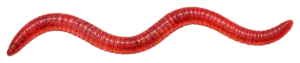
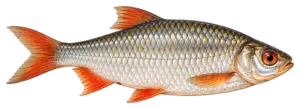
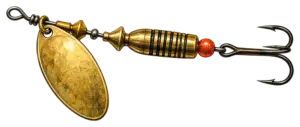
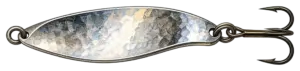
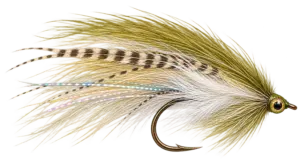
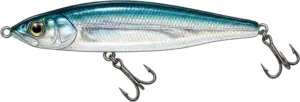
AI-generated illustrations. A click opens the lure’s page.
Rigs for these baits: sbirolino rig, running ledger rig.
What the sea trout has to offer in the kitchen
The colour of the flesh is determined by the food. Sea trout that eat many prawns and other small crustaceans near the coast often have orange flesh. Fish from the open sea live mainly on herring and sprat and are usually paler inside. The flavour is strong. Up to about 60 centimetres a sea trout still fits well whole in the oven, after you have gutted and scaled it. From the fillets you can make cured gravad fish, as with salmon.
As a wild-caught fish the sea trout can carry parasites that also make people ill. Unlike that of pale-fleshed cod-like fish, its dark flesh cannot simply be candled in the laboratory. Thorough cooking reliably kills the larvae. If it is to go on the table raw or cured, it must go into the freezer first; temperatures and times are given under Parasites in fish.
Wild trout and salmon from the Baltic Sea contain comparatively high amounts of dioxins and PCBs. Sweden advises children and women of child-bearing age, including pregnant and breastfeeding women, to eat such fish no more than two to three times a year, and everyone else no more than once a week.
What you need to observe
Closed seasons, minimum sizes and harvest slots are set by the federal states (Bundesländer) and by the fisheries authorities of the neighbouring countries on the coast (Denmark, Norway, Poland). They vary by type of water, stretch of coast and time of year. We only give figures together with the date and source; the fisheries regulation of your federal state and your fishing permit (Erlaubnisschein) are always what is binding. You will find a list of links to the official sources in the catch calendar.
A fish of legal size that you want to keep you stun and kill at once, in line with animal welfare rules. Protected, undersized fish or fish too large under a harvest slot you unhook, if possible still in the water and with wet hands, and release gently. What exactly applies is regulated by state law and your fishing permit (Erlaubnisschein).
The brown trout (Salmo trutta), to which the sea trout belongs, is listed as endangered in the 2023 Red List of freshwater fish of Germany; earlier it counted as not endangered. In Baden-Württemberg the sea trout is protected all year under the state fisheries regulation (Landesfischereiverordnung). According to its 2011 implementation guidance, Lower Saxony generally prohibited fishing for it in inland waters, except stocked waters. On the coast the sea trout is protected in Mecklenburg-Western Pomerania from 15 September to 14 December, and the minimum size (Mindestmaß) there is 48 centimetres (Küstenfischereiverordnung). In Schleswig-Holstein fish in spawning colours are protected from 1 October to 31 December (Landesportal), and on the Lower Saxony coast a closed season (Schonzeit) applies from 1 October to 15 February (as of October 2026).
The EU Baltic Sea regulation for 2026 (Verordnung (EU) 2025/2454) applies to recreational fishing only where it is expressly mentioned. For the sea trout, Article 12 prohibits Union fishing vessels from fishing for it further than four nautical miles from the baselines. The regulation contains no separate catch rule for anglers for the sea trout; stricter national rules remain unaffected. Separate conditions do apply to salmon, see salmon.
What closed season, minimum size and harvest slot mean and where to find them is explained on the page Closed season and minimum size explained.
What state law prescribes for closed season and minimum size for this species is in the box “At a glance” on the state pages for Bremen, Hamburg, Mecklenburg-Western Pomerania, Lower Saxony and Schleswig-Holstein. For the other states our overview does not list this species; there the state fisheries regulation is decisive.
Frequently asked questions (FAQ)
What is a “Grönländer”?
This is what coastal anglers call young sea trout of about 40 to 45 centimetres that are not yet ready to spawn. The fisheries authority of Lower Saxony describes fish under 50 centimetres that stay in the lower river reaches all year. In winter they bite especially well when a thaw sets in.
Are sea trout and brown trout the same species?
Yes. Both belong to Salmo trutta and interbreed. Whether a fish migrates to the sea depends on the water, and on size and food. According to DTU Aqua estimates, about half of a trout population migrates downstream as smolts.
When is the best time on the coast?
March and April count as the best months, and the peak lasts into May. In summer the evening pays off, in September and October the day again.
Sources
The rating of catch chances is an editorial assessment. The facts come from these sources, and the text is worded in our own words. The illustration is an original design by Angel Momente in the style of a natural history plate (AI-generated, see the AI notice).
- FishBase: Salmo trutta (Lebenszyklus, Bestimmungsmerkmale, Nahrung)
- Blinker: Steckbrief Meerforelle (Wanderzyklus, Fangzeiten, Gerät, Köder, Unterschied zum Lachs)
- Rote-Liste-Zentrum: Forelle, Salmo trutta einschließlich Meerforelle (Rote Liste der Süßwasserfische Deutschlands 2023: gefährdet)
- Landesfischereiverordnung Baden-Württemberg (Stand 2022): Arten mit ganzjähriger Schonzeit
- LAVES Niedersachsen: Vollzugshinweise Meerforelle (Lebensweise, Wanderung, Laichhabitat, Gefährdung)
- DTU Aqua, Fiskepleje.dk: Ørred, bækørred, søørred og havørred (Gydning, Smoltifizierung, Rückkehr)
- DTU Aqua, Fiskepleje.dk: Ikke-kønsmodne havørreder søger op i ferskvand om vinteren
- DTU Aqua, Fiskepleje.dk: 2024 var et godt år for 50+ havørreder på kysten (Fangstjournalen)
- DTU Aqua, Fiskepleje.dk: Havørreder er større på Sjælland (Fangstjournalen)
- Europäische Union: Verordnung (EU) 2025/2454, Fangmöglichkeiten Ostsee 2026 (Artikel 2 und 12, Meerforelle)
- Rute & Rolle: Meerforelle, Tipps für weite Würfe (Rute, Rolle, Schnur, 2022)
- Blinker: 10 Tipps für mehr Erfolg beim Meerforellenangeln (Gerät, Schlagschnur, Köderwahl, 2024)
- LALLF Mecklenburg-Vorpommern: Mindestmaße und Schonzeiten (Binnen); Küstenfischereiverordnung, Fassung September 2026
- Blinker: Meerforelle im Gemüsebett, einfaches Ofen-Rezept (Fleischfarbe, Größe für den Ofen)
- Blinker: Graved Lachs aus Lachs, Meerforelle oder Regenbogenforelle
- LAVES Niedersachsen: Parasiten in Fischen und Fischereierzeugnissen, ein Problem?
- LAVES Niedersachsen: Sushi selber machen, so gelingt es sicher
- Livsmedelsverket (Schweden): Konsumenters kännedom om kostråd om fet fisk från Östersjöområdet, Rapport 2024
- Livsmedelsverket (Schweden): Dioxiner och PCB i lax och öring från Östersjön 2014 till 2019, PM 2020
- Wikipedia: Meerforelle (Größe, Lebenszyklus, Verbreitung, Bedrohung, Schutz)
- Blinker: Ostsee, die Silberküste (Leopardengrund, Meerforellenstrände)
- Blinker: Die 10 besten Meerforellen-Stellen in Schleswig-Holstein (Untergrund, Riffe, Rinnen)
- Blinker: Meerforellen, wie Tide und Wasserstand den Fang beeinflussen
- Blinker: Auf Meerforellen im Hochsommer (Plätze nahe tiefem Wasser)
- Blinker: Nächtliche Meerforellen im Sommer (Flachwasser nur im Dunkeln)
- Blinker: Meerforellen am Sandstrand fangen (Rinnen, Tangflecken, Buhnen, 2025)
- Blinker: Lachsangeln, Schritt für Schritt zum Silber (Reviere vor Rügen, Saison, Lauftiefe)
Created with AI support from the sources listed. Figures only appear in the text if a source gives them. Last updated: 1 November 2026. Found a mistake? Write to us. Who is behind this site: About me.
More in the lexicon
- All fish species at a glance
- Catch calendar – month, water temperature and profile for 93 species
- Line calculator – breaking strain after the knot, drag guideline, backing
- Angling methods