
Knowledge · Lures
Coastal plug
Hardbaits · Spinning
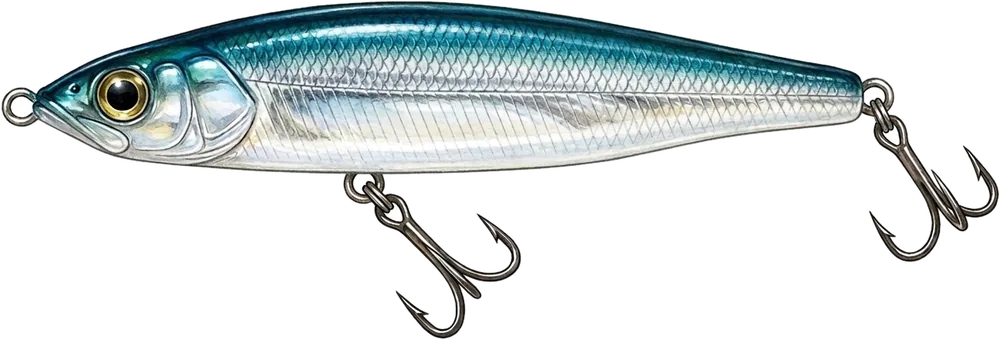
A coastal plug is a slim, weighted plug made of wood or plastic for spinning on the Baltic and in Denmark. It flies far even into the wind, runs shallow over weed and stones and can be worked more slowly than a metal spoon. Its most important target fish is the sea trout.
- Water depth
- Near the surface, in shallow water down to about three metres
- Retrieve
- Reel in briskly, change speed, add pauses
- Fishing method
- Spinning
- Category
- Hardbaits
How a coastal plug works
Coastal plugs mainly imitate the sand eel, an elongated shoaling fish, and also small herring and gobies. Coastal plugs have no diving lip and hardly move by themselves. How deep and how lively the lure runs is therefore decided by your reeling speed and by short pauses.
Under tension a typical coastal plug tilts its nose towards the surface. That way it stays shallow even when reeled in gently and stays in the fish’s view for longer. Coastal anglers therefore usually reel a metal spoon faster and a plug slower.
The body is made of wood or plastic, usually round to oval in cross-section. Inside sit weights, often small balls as well, which improve the cast and rattle in the water. About 10 to 25 grams is usual. Off the cliffs of the Danish island of Møn, models of 25 to 40 grams are the most popular according to Fisch & Fang.
How to work the lure
Reel in briskly, change speed, add pauses
Schematic illustration, AI-generated.
- Cast
- reel briskly, change speed
- Pause: lure tumbles down
- reel in
Anatomy
The points on the picture above explain the most important parts – on hover or tap.
- Eyelet at the tip of the nose: This is where the clip goes. Under tension the lure tilts its nose slightly upwards and runs shallow.
- Head without a diving lip: Unlike a twitchbait it has no lip at the front and hardly moves by itself. You control depth with speed and pauses.
- Slim, weighted body: Long like a sand eel. Weights inside give casting distance and decide how quickly it sinks during the pause. The finish is silver, blue or green.
- Hooks: Mostly treble hooks on split rings. A single hook or a crimped barb makes unhooking easier; what is allowed is set by the water.
Rig in three steps
- 1. Leader to the braidYou tie a length of monofilament or fluorocarbon in front of the thin braided main line, for example with the FG knot. It is less noticeable in the water and stretches a little when the trout thrashes hard in the fight.
- 2. Tie on the clipA small clip at the end of the leader allows quick lure changes and lets the plug move freely. A small swivel in front of it helps when the line twists.
- 3. Hook into the eyeletHook the clip into the eyelet at the tip of the nose, never into a split ring. In shallow water, briefly check how the lure runs.
Drawings: AI-generated, schematic.
When the target fish are in season
Hardly any chancePossibleGoodPeak seasonValues from the catch calendar.
When and where
On the German Baltic coast the sea trout is the target fish anglers name most often; the Thünen Institute assigns it just under a quarter of angling days. Peak season is March and April. In summer, when the water warms up, the fish hunt mainly at dusk and at night, and anglers then offer slow-running coastal plugs in black. In September and October they are close to the shore again, even by day. In cold weather they move deeper into firths and bays.
Fishing is mostly done wading over varied ground, the leopard bottom: stones with bladderwrack, with sand and mussels in between. The typical stretches are only two to three metres deep, and a shallow-running lure is less likely to snag there. An onshore wind with waves and slight cloudiness is considered a good condition because it stirs up food.
From May garfish also take briskly worked coastal plugs. In the Baltic, fishing for cod is banned in 2026 (as of October 2026); a cod caught as bycatch on the German coast goes straight back.
How to choose weight, length and hooks
- Leader to the braid Tie a length of monofilament or fluorocarbon in front of the thin braid, for example with the FG knot. It is less conspicuous and stretches a little during the fight.
- Tie on the snap Tie a small snap to the end of the leader, so you can change quickly and the plug works freely. If the line twists, a small swivel in front of it helps.
- Into the eyelet at the tip of the nose Hook the snap into the eyelet at the tip of the nose, never into a split ring. In shallow water, check briefly how it runs.
A few models are enough to start with, a couple in a natural finish and one or two in attention-grabbing colours. Get to know each lure properly: at what speed it runs best and how long it may sink during the pause.
Elongated plugs up to about 20 centimetres imitate shoals of sand eels particularly well. Later in the year, when the trout are full and choosy, smaller and inconspicuous lures often bring more bites.
Many coastal plugs carry treble hooks on split rings. DTU Aqua, the fisheries institute of the Technical University of Denmark, recommends a single hook instead of several and crimped barbs for gentle fishing. Which hooks are required on your stretch of coast is set by the state and the authority.
How to work it with pauses
Cast in a fan shape, also short and parallel to the shore, and start reeling as soon as it lands. Keep changing speed and rhythm. During a pause you stop the handle for a few seconds, the lure sinks on a tight line and then sets off again.
It is precisely at this moment that followers often strike, because the lure looks like a fleeing sand eel. Big, cautious trout like to follow a lure for a long time. So make your first casts from the beach and fish right up to your feet.
Many bites come just after the splash. A sharp hook then sets securely, and you set the drag rather soft. If the trout jumps, you lower the rod. You carry the wading net within reach on your belt.
How these designs differ
Light, slow-running models can be worked calmly in shallow water. Heavy plugs fly further and reach deeper layers, for example when the fish move further out after a cold snap.
With a through-wire plug you thread the line through the lure, followed by a stopper bead and the hook. After the bite the fish then finds it harder to throw the hook.
Which colour?
Starting points to try, not rules. Depth and speed are usually more important than colour.
Coastal plug or another lure after all?
| Baits and lures | Depth | Retrieve | Take this lure if … |
|---|---|---|---|
| Coastal plug | Near the surface, in shallow water down to about three metres | Reel in briskly, change speed, add pauses | this page |
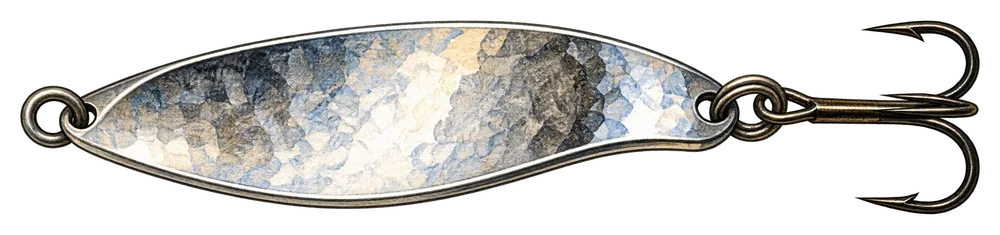 Spoon | All depths, depending on weight | Active: reel in tumbling, vary speed and stops | you want to cast very far into a strong wind, work briskly or fish deeper |
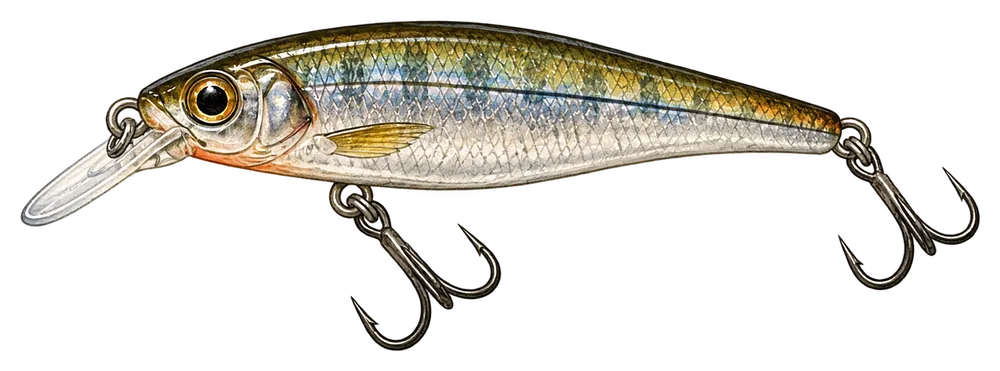 Twitchbait | Near the surface to mid-water | Active: twitch, reel, let it sit | you fish shallow in fresh water with short twitches for perch, zander or pike |
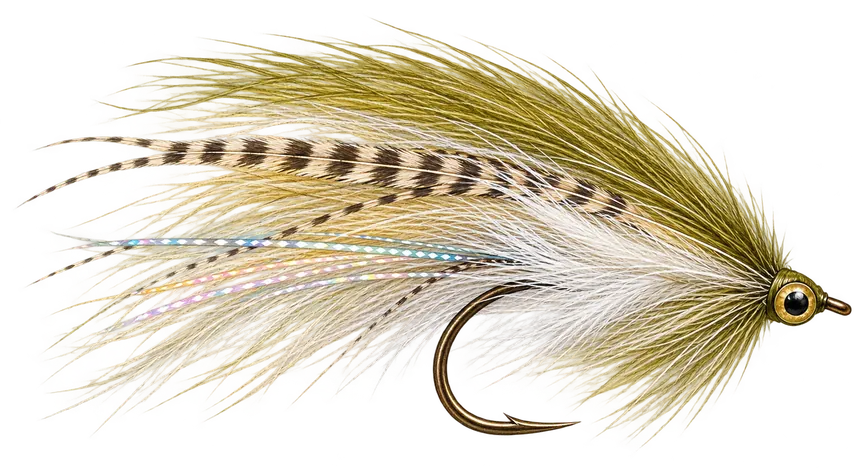 Streamer | Mid-water | Active: stripped by hand, with pauses | the trout are hunting small prey such as shrimp and ignore plugs, for example behind the sbirolino |
What you need
- Spinning rodAbout three metres long, casting weight about 10 to 40 grams. A rather parabolic action cushions the trout’s runs. More
- Braided lineBraid of 0.12 to 0.15 millimetres flies far and shows bites clearly. Over mussel-covered stones you choose the stronger one. More
- FluorocarbonAs a shock leader in front of the braid, so the connection to the lure is less noticeable in the water. More
- Wading net and hook removerA landing net with a knotless or rubberised mesh on the wading belt. With the hook remover, fish you are releasing come free in the water. More
More on the method: Spinning.
At a glance
Editorial assessment, not measured values.
If it does not work
Start reeling immediately after it lands. Most stretches are only two to three metres deep, so the lure belongs up high.
Add pauses and short sprints. The trout often grabs it when the lure shoots off again after the pause.
Make your first casts from the dry beach. Many trout hunt in the first gully and flee from deep wading.
Take a heavier, straight model and fill the spool to the brim. Curved lures flutter in flight.
Set the drag softer and lower the rod when the fish jumps. A freshly sharpened hook holds better.
Stick to a few models whose action you know, and keep the lure in the water. It can only catch there.
Frequently asked questions
What is the difference between a coastal plug and a sea trout spoon?
The sea trout spoon is made of metal and anglers usually work it faster. The coastal plug made of wood or plastic rises towards the surface under tension and can be worked more slowly and shallower.
What weight do I need?
For most days about 10 to 25 grams is enough. For long distances and deep water anglers take heavier models; off Møn 25 to 40 grams are common. In autumn practitioners recommend smaller lures up to 20 grams.
Which colour catches best?
In clear water natural tones such as silver with blue or green, which resemble sand eel and herring. In cloudy water and at dusk bright colours such as red, orange or pink. At night in summer an all-black lure, because it stands out against the lighter sky.
What do I have to watch out for legally on the coast?
Closed seasons, minimum sizes, hook rules and protected zones in front of stream and river mouths are set by the federal state (Bundesland) and the authority. In Schleswig-Holstein you always need a valid fishing licence (Fischereischein), and on some stretches such as the Schlei a fishing permit (Erlaubnisschein) as well. In Denmark an angling licence (Fisketegn) is compulsory.
What do I do with sea trout in spawning dress?
In autumn brown-coloured fish on their way to spawn are also caught on the coast. In the closed season you release them gently. Thin, spent fish returning from spawning also deserve protection, because according to DTU Aqua up to a quarter of the females spawn several times.
Before fishing, the current permits, state rules and water rules apply: bait bans, number of hooks, closed seasons, protected species and catch limits can differ. Many federal states expressly ban live baitfish. Take bait remains and packaging away with you. All details are guide values without guarantee and do not replace legal advice.
Sources
- Blinker: Blinker, Wobbler & Co., die richtige Auswahl zum Meerforellenangeln
- Blinker: Meerforellenblinker, diese Faktoren entscheiden über den Fangerfolg
- Blinker: Steckbrief Meerforelle
- Blinker: Das erste Mal auf Meerforelle, Köder und Taktik
- Blinker: 10 Tipps für mehr Fangerfolg beim Meerforellenangeln
- Rute & Rolle: Meerforelle, welche Köderfarbe?
- Rute & Rolle: Meerforelle, Tipps für weite Würfe
- Rute & Rolle: Watangeln auf Meerforelle
- Rute & Rolle: Herbst-Silber, Angeln auf Meerforellen
- Fisch & Fang: Haltestellen für Meerforellen
- Fisch & Fang: Zielfisch Meerforelle, mit Jerk und Jig auf Meerforelle
- Fisch & Fang: Experten-Rat zum Saisonstart
- Fisch & Fang: Hornhecht-Spaß für jedermann
- DTU Aqua (Fiskepleje.dk): Fredningsbælter beskytter fisk
- DTU Aqua (Fiskepleje.dk): Regler for fiskeri i ferskvand og saltvand
- DTU Aqua (Fiskepleje.dk): Anbefalinger til skånsomt lystfiskeri
- Land Schleswig-Holstein: Angelfischerei
- Thünen-Institut für Ostseefischerei: Eine Charakterisierung der marinen Angelfischerei in Deutschland (Zeitschrift für Fischerei 2023)
The sources explain terms and basic principles. Retrieve, colour choice and values are editorial starting points and depend on water, weather and lure.
More hardbaits
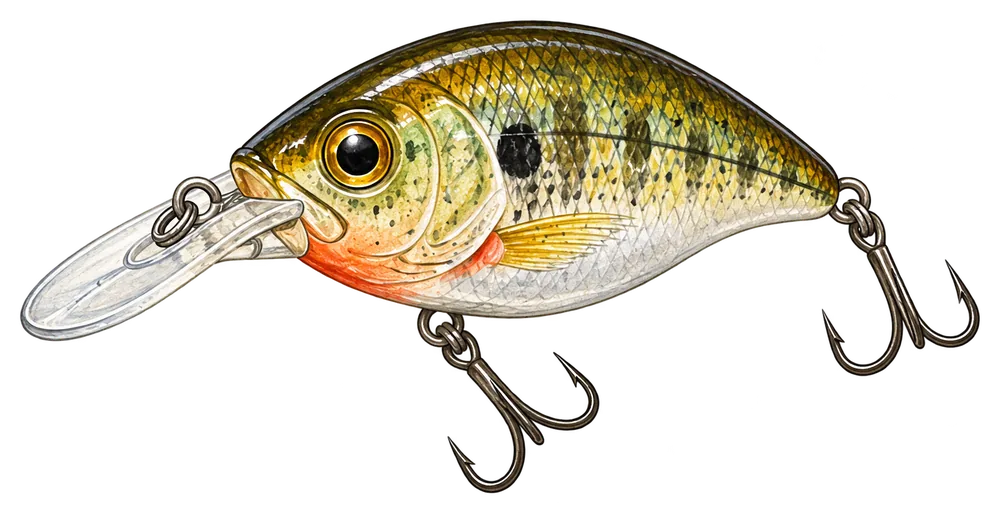 Crankbait
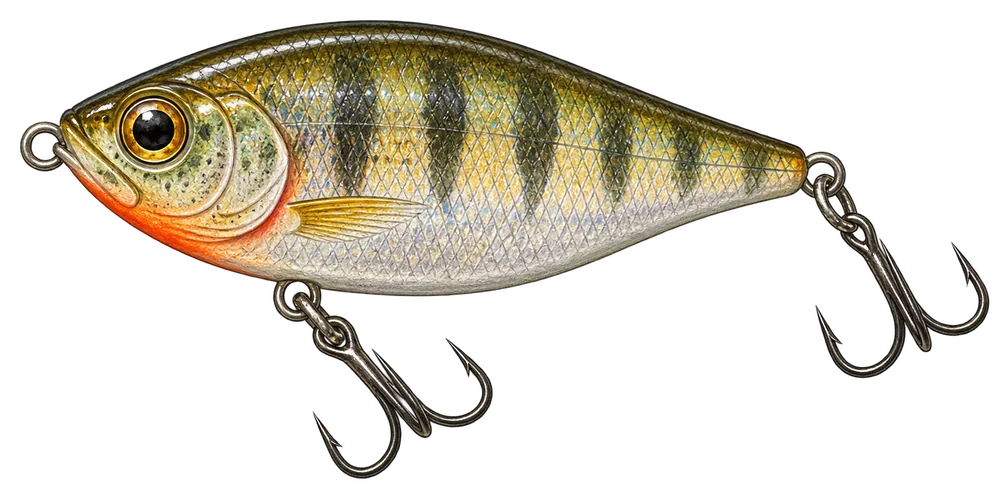 Jerkbait
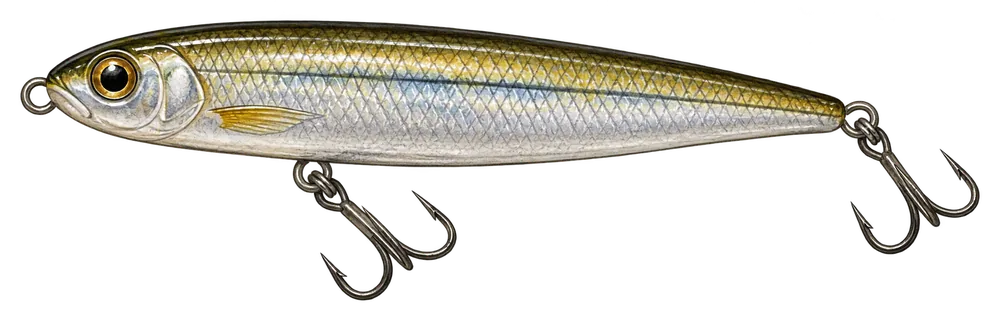 Stickbait
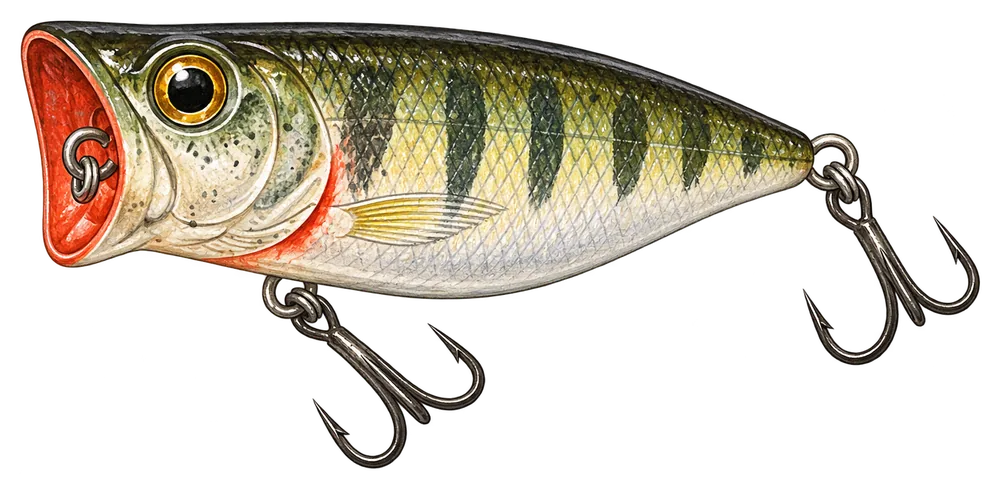 Popper
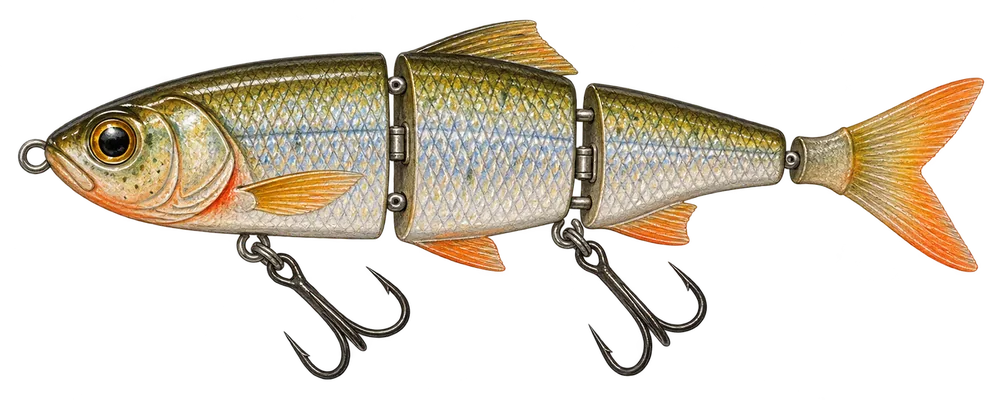 Swimbait
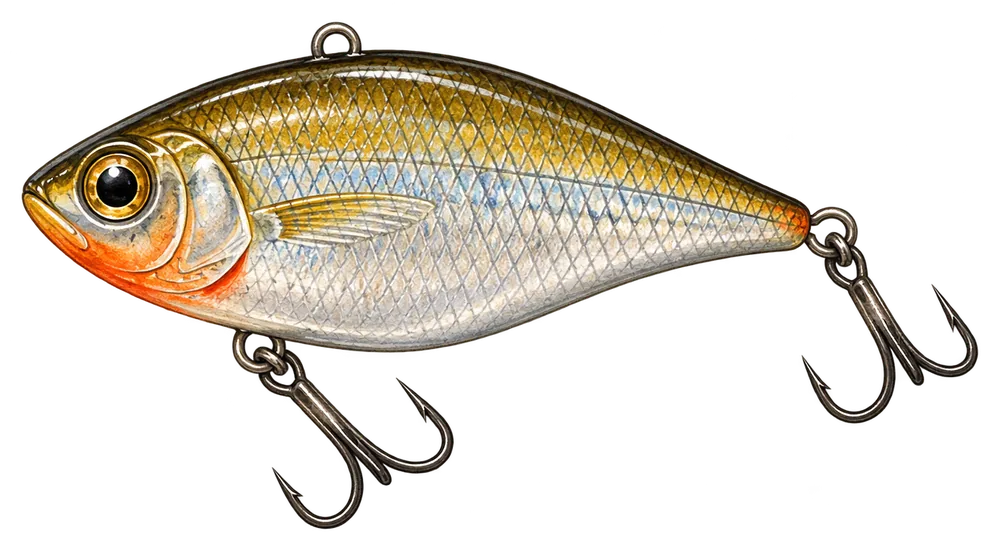 Lipless crankbait
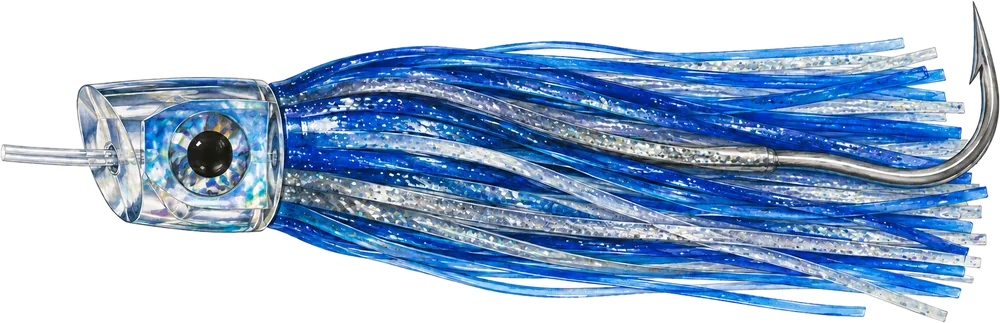 Offshore trolling lure
Created with AI support from the sources listed (AI notice). Last updated: 31 October 2026. Found a mistake? Write to us. Who is behind the site: About me.