
Knowledge · Lures
Hardbaits: plugs & surface lures
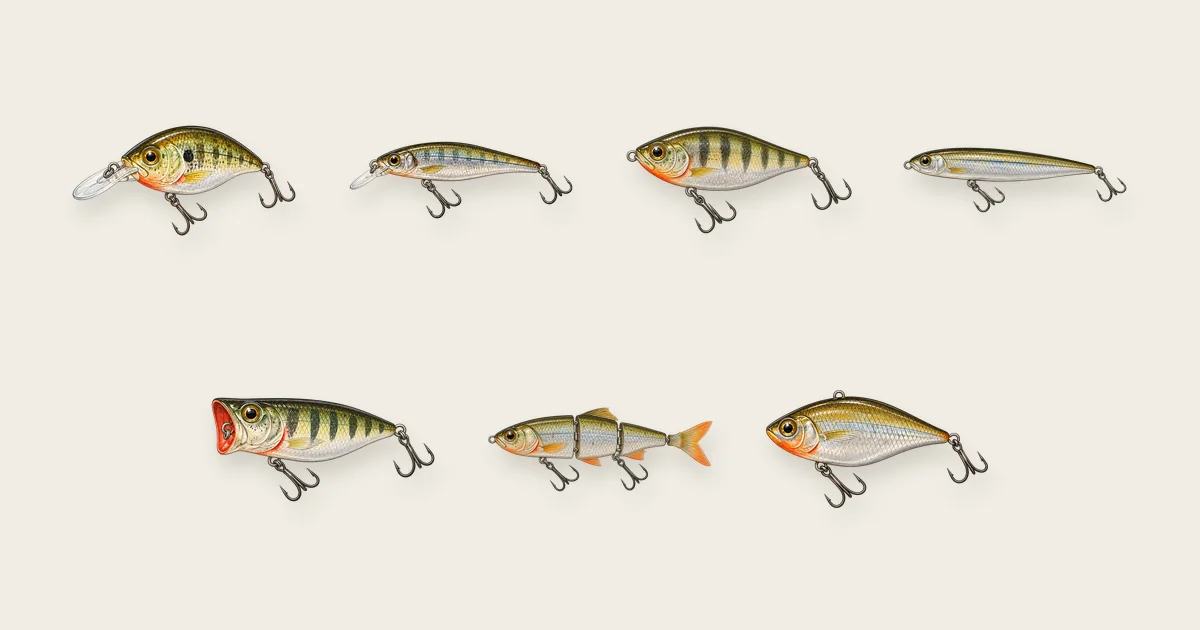
Hardbaits are artificial lures with a rigid body of plastic or wood. Diving depth, buoyancy and build matter more for your choice than flashy decoration. A crankbait works by itself on the retrieve; twitchbaits, jerkbaits and surface lures respond more to deliberate impulses. How steeply the diving lip is set determines a plug’s running depth. Jerkbaits have no lip and only move through rod twitches; most crankbaits float back up during a pause.
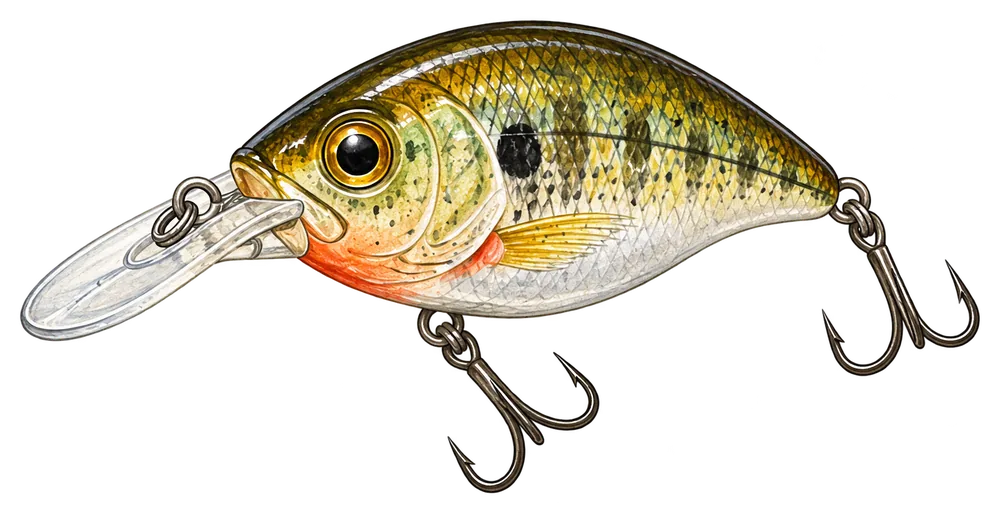 CrankbaitActive: wind steadily, briskly tooNear the surface
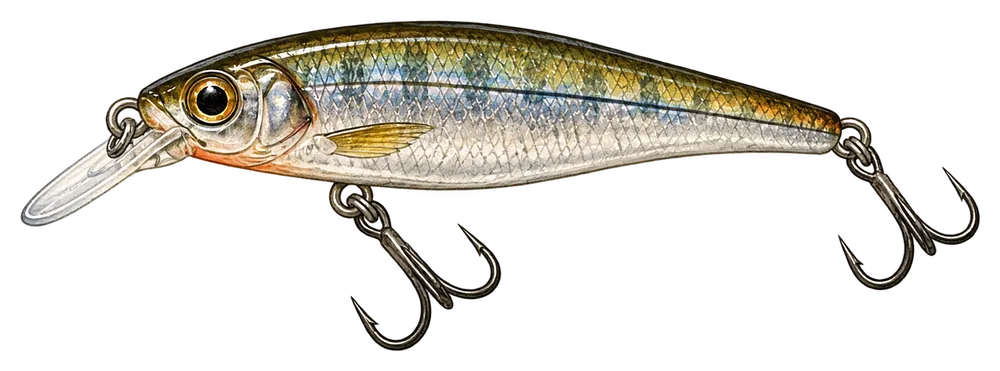 TwitchbaitActive: twitch, wind, let it sitNear the surface
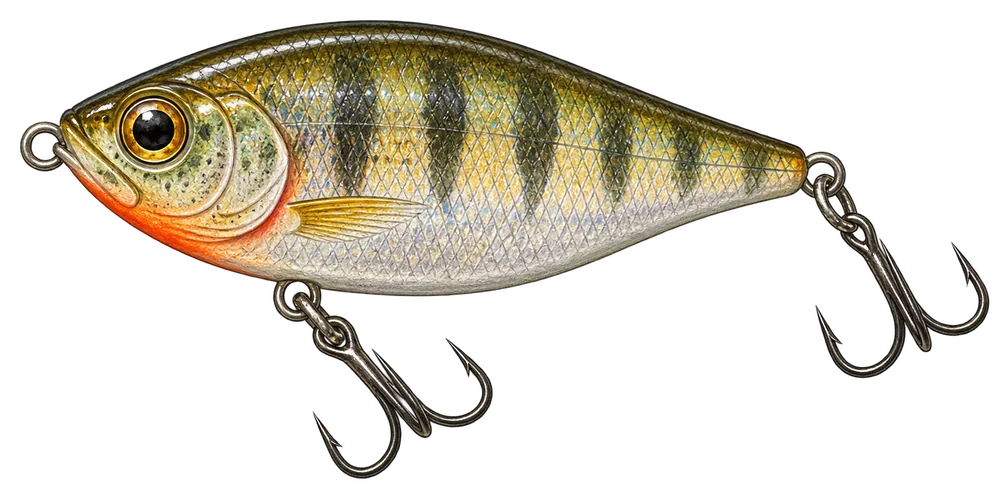 JerkbaitActive: rod strokes, take up line in betweenSurface
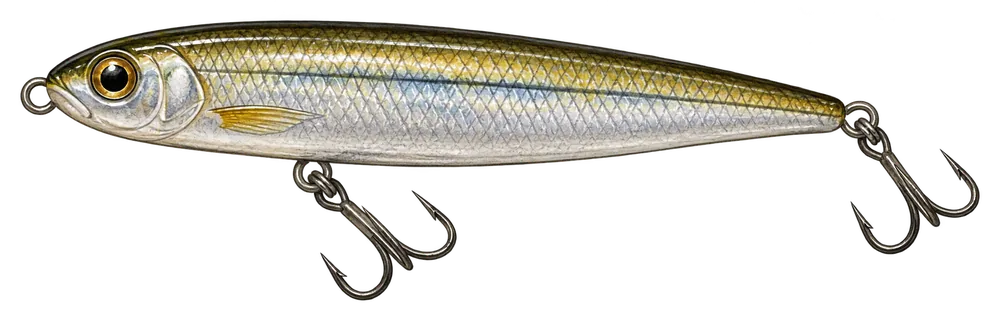 StickbaitActive: short twitches in a zigzag, build in pausesSurface
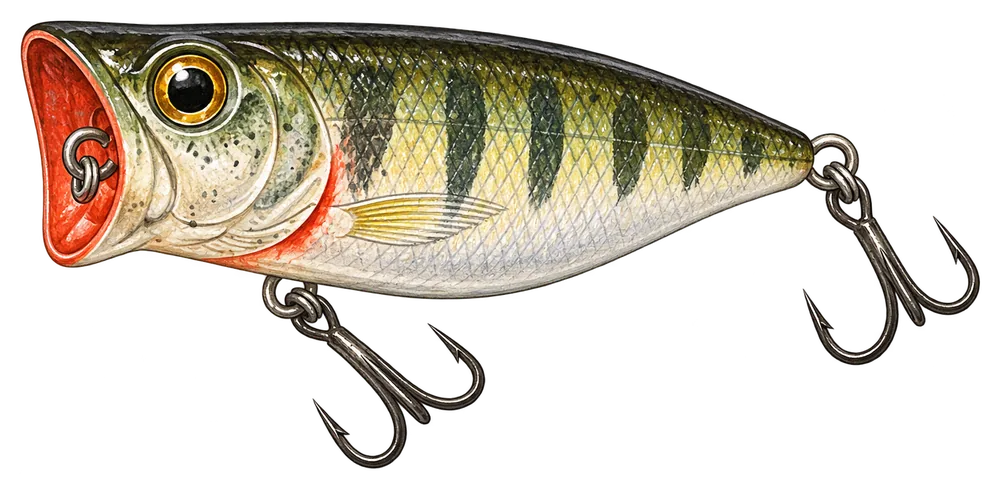 PopperActive: short jerks, then a pauseMid-water
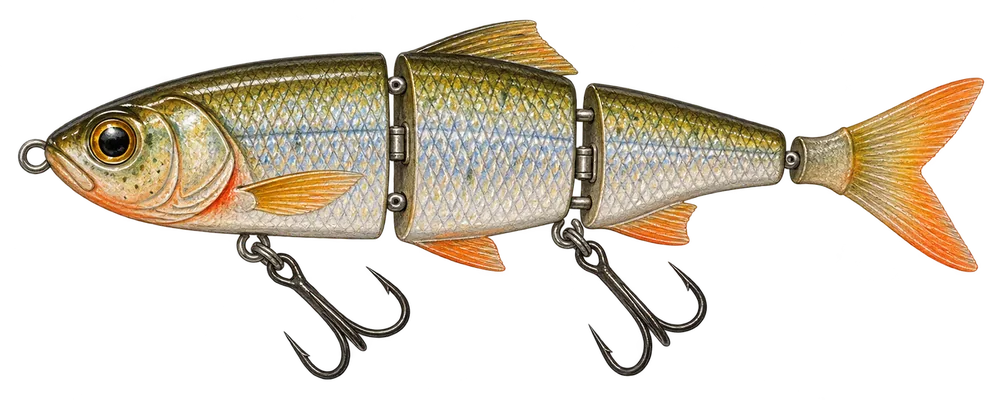 SwimbaitActive: retrieve steadily, with changes of pace and short pausesMid-water
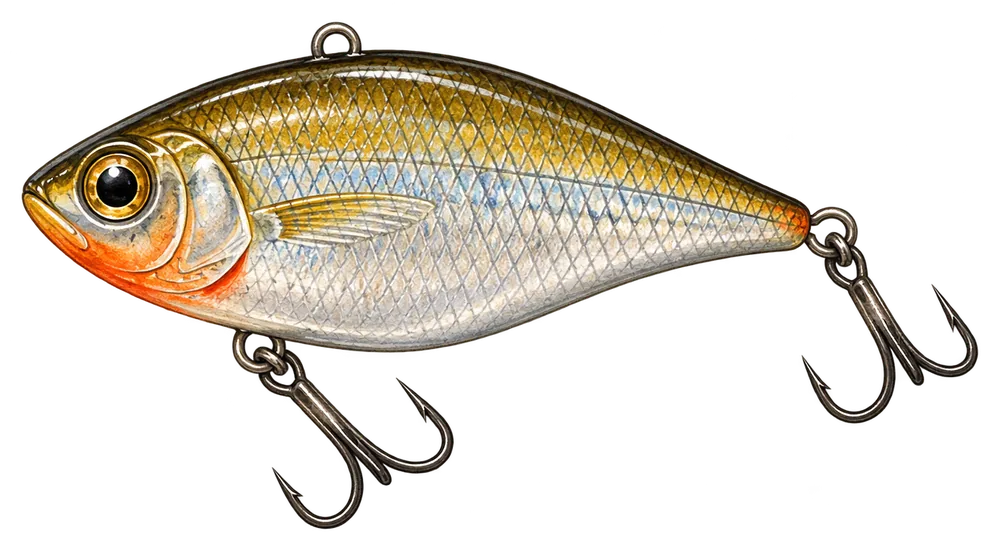 Lipless crankbaitActive: wind, tick or jigNear the surface
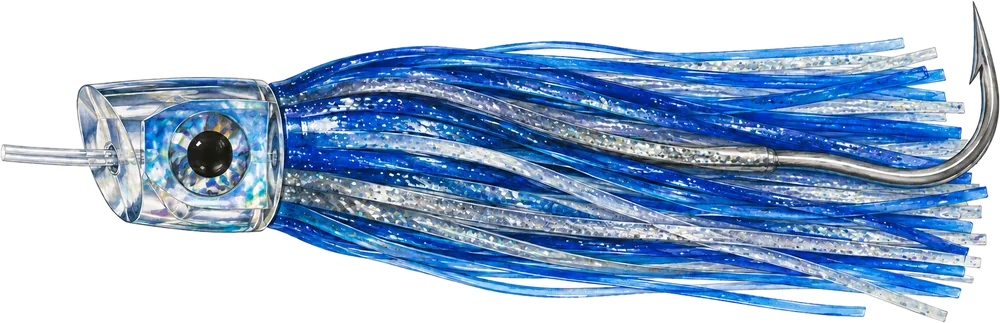 Offshore trolling lureTowed steadily behind the moving boat, roughly 4 to 12 knots depending on the lureNear the surface
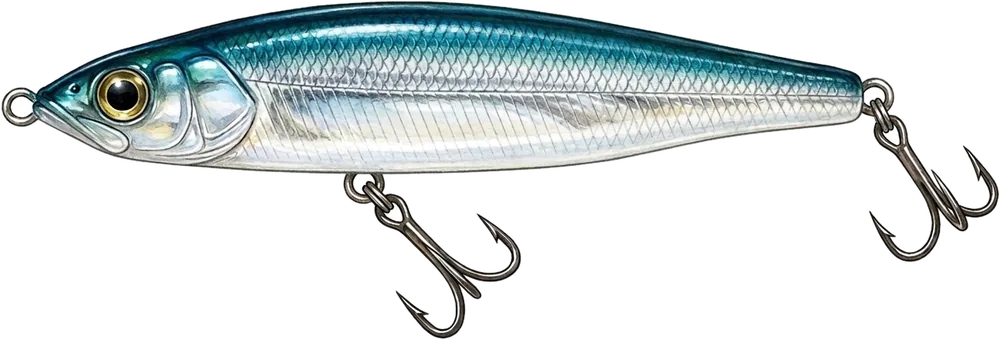 Coastal plugRetrieve briskly, change pace, build in spin stops
AI-generated illustrations. A click opens the lure’s page.
Named in the fish profiles for: pike, zander, wels catfish, chub, ide, asp, huchen, rainbow trout, sea trout, Atlantic salmon, lake trout, horse mackerel, sea bass
A good start
A plug whose stated running depth matches your swim is a good start. Begin with a steady retrieve and short pauses. First check in shallow water whether the lure floats, suspends or sinks; the leader and the clip can change this behaviour.
Tips for the water
| Use | Baits and lures | What to watch for |
|---|---|---|
| Simply searching an area | Crankbait | A suitable running depth, a steady retrieve and short pauses. |
| The fish follows but does not take | Twitchbait | Try a different presentation with controlled impulses and longer pauses. |
| Visible surface feeding | Walker or popper | Practise the retrieve within sight; react only when a fish makes contact. |
| Targeting pike | Swimbait or a suitable jerkbait | Match the weight to your gear and use a bite-proof leader. |
Avoid common mistakes
Attractive decoration does not make up for the wrong running depth. After contact with snags, check hooks, split rings, clips and leader. Use suitable pliers to unhook, and do not stow lures with exposed hooks loose in your luggage.
Before you fish, the current fishing permits (Erlaubnisschein), state rules and the water’s rules apply: bait bans, hook numbers, groundbaiting, closed seasons and catch limits can differ. Do not treat protected animals as freely available bait. Take leftover bait and packaging home with you. All details are guidelines without guarantee and are no substitute for legal advice.
Sources
- Landesfischereiverband Baden-Württemberg, Gerätekunde: Wobbler, Tauchschaufel, Oberflächenwobbler, Jerkbaits und Swimbaits
- LfL Bayern, Fragenkatalog Fischerprüfung: Wobbler, Tauchschaufel und Lauftiefe
- Blinker: Jerkbaits – ohne Tauchschaufel, Glider und Diver, unterschiedliche Begriffe
- Blinker: Crankbaits auf Barsch – Auftrieb, Führung und Rolle der Farbe
The sources explain terms and basic principles. Target-fish assignments and practical tips are editorial recommendations and depend on the water, the food available and the bait model. Water depth and presentation are typical starting points, not fixed rules. Accessed: 2 October 2026.
Created with AI support. Last updated: 25 October 2026.