
Knowledge · Lures
Twitchbait
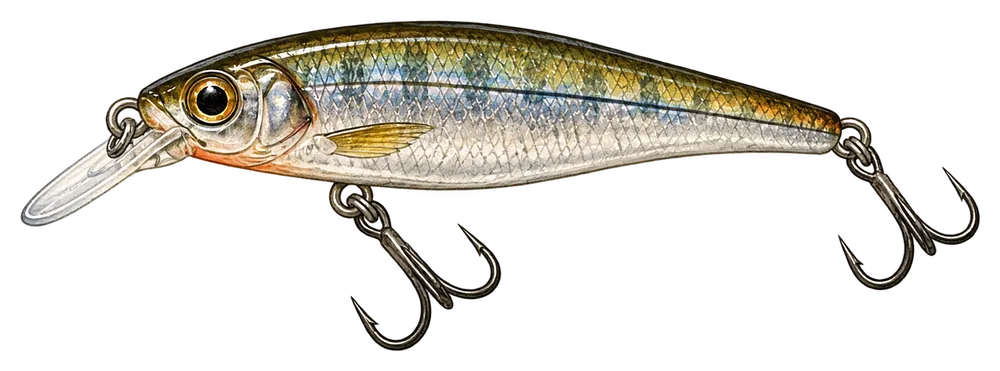
Hardbaits · Spinning
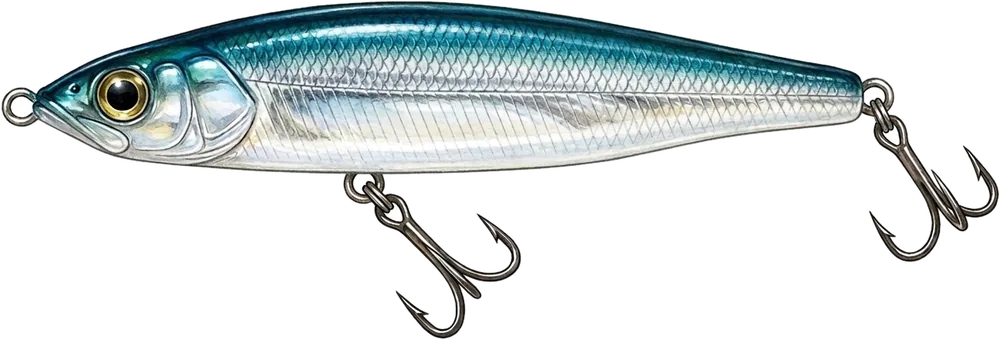
A twitchbait is a slim plug that you work with short flicks of the rod tip. It veers to the side and, if built as a suspender, stays put in the pauses. This is reminiscent of a stricken fish. It is fished mainly for perch, zander and pike.
- Water depth
- Near the surface to mid-water
- Retrieve
- Active: twitch, reel, let it sit
- Fishing method
- Spinning
- Category
- Hardbaits
How a twitchbait works
Anglers call slim plugs twitchbaits when they catch better if you animate them with small strokes of the rod tip rather than just winding them in. The body is long and narrow like a small prey fish, and the diving lip is small, so the lure only dives shallowly. Plugs of this kind imitate a prey fish that wobbles on the retrieve.
Twitching has three phases: winding, twitching and pausing. You flick the rod tip into the line, take it up again with the reel and let the lure hang for a moment. A sharp twitch into slack line sends the lure well off to the side. Short taps into taut line make it veer only slightly with its nose.
Slim suspenders, that is, suspending plugs, are particularly good. They hold their depth during the pauses in the retrieve instead of rising. The bites often come in these rest phases, when the lure seems to stand still. Every model runs differently, so watch a new lure in clear water first and learn its pattern of movement.
How to work the lure
Active: twitch, reel, let it sit
Schematic illustration, AI-generated.
- Cast
- short twitches with the rod tip
- Pauses: the lure hangs or rises
- reel in
Anatomy
The points on the picture above explain the most important parts – on hover or tap.
- Small diving lip: Lets the lure dive only shallowly and veer sideways instead of running stubbornly straight.
- Eyelet: The snap hangs here. Without a swivel the sideways swerves have more freedom.
- Slim body: Long and narrow like a small prey fish. Suspending models hold their depth in the pause.
- Belly treble: Sits where predators usually grab during the pause.
- Tail treble: Hooks fish that follow the lure and snap at it from behind.
Rig in three steps
- 1. Tie on the hooklengthFor perch, mono or fluorocarbon of about 0,20 to 0,30 mm is enough, for zander 0,30 to 0,40 mm. With pike you need steel or titanium; with small lures 3 to 4 kg for perch, 6 to 7 kg for zander.
- 2. Attach the snapA snap without a swivel lets the lure swing freely.
- 3. Into the lure’s eyeletAttach the snap to the front eyelet, never to the split ring of a treble hook.
Drawings: AI-generated, schematic.
When the target fish are in season
Hardly any chancePossibleGoodPeak seasonValues from the catch calendar.
When and where
A twitchbait catches when predators are present and inspect the lure first instead of grabbing blindly. For big perch, practitioners name autumn: the water is cool and rich in oxygen, and the fish are active. Good spots are sheet piling with its recesses, the outflow of a lock, bridge shadows and rock rip-rap where predators look for cover.
For zander, rock rip-rap matters after dark. Then they move from the middle of the canal to the bank, sometimes into very shallow water. Floating or suspending twitchbaits snag less there than sinking ones. Work them calmly and with an even rhythm. Hectic changes make it harder for zander to locate the lure.
In a current you cast downstream and retrieve against it. The pressure on the lip lets the lure work cleanly at a slower retrieve.
How to choose size, depth and colour
- Tie on the leader For perch and zander, monofilament or fluorocarbon is enough. With pike around you need steel or titanium.
- Attach the snap Attach a snap without a swivel to the leader so that the lure swings freely.
- Into the front eyelet The snap goes into the front eyelet, never into the split ring of a treble hook.
For perch from about 25 centimetres, practitioners name plugs from ten centimetres. For zander, slim models between 8 and 14 centimetres with a small lip are usual. Even perch of ten centimetres chase lures as long as themselves, so you need not worry that small perch will ignore a larger lure.
A small selection with running depths of about half a metre to three metres covers most situations. For shallow water with stones, floating or suspending models make sense because they snag less after touching stones and come free more easily.
On colour: take two or three colours of one model and rotate them. In murky water the lure can be more conspicuous; in clear water, subdued tones are worth a try. Rattle balls sometimes trigger the bite and on other days put fish off.
How to twitch, step by step
Cast only as far as you can still see the lure in clear water, and practise the rhythm. A proven pattern: three twitches, one slow turn of the handle and a pause of one to two seconds. Then a few turns of the handle, two twitches and a long pause of three to five seconds. Memorise two or three patterns per lure and switch between them until the fish respond.
The bites come hard and often in the pause. So keep an eye on the line and set the drag precisely but not too tight, or the hook will tear out of the perch’s soft mouth. Because of the sharp, thin trebles, a small landing net belongs in your kit. A disgorger and a wet unhooking mat help with unhooking.
Which colour?
Starting points to try, not rules. Depth and speed are usually more important than colour.
Twitchbait or another lure?
| Baits and lures | Depth | Retrieve | Take this lure if … |
|---|---|---|---|
| Twitchbait | Near the surface to mid-water | Active: twitch, reel, let it sit | this page |
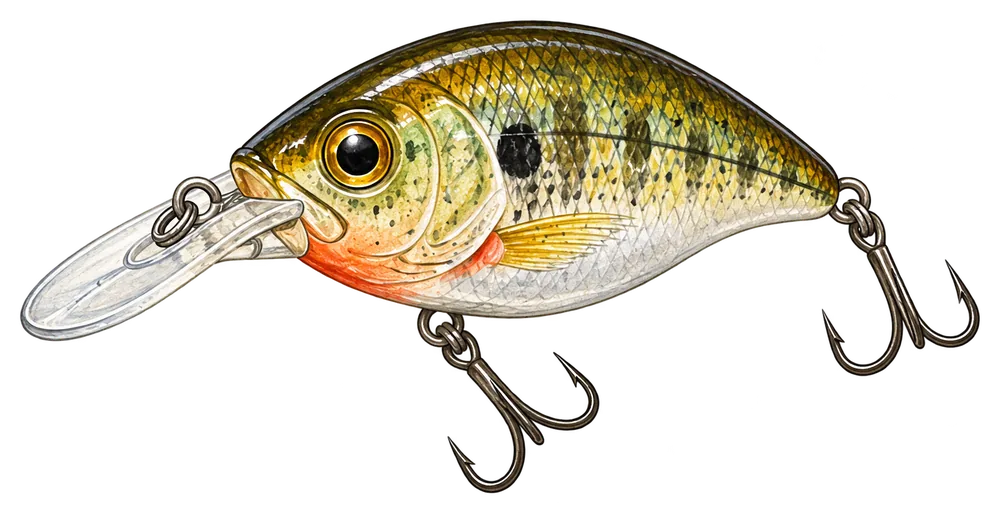 Crankbait | Mid-water, depending on the diving bill | Active: retrieve steadily, even briskly | you want to cover large areas quickly |
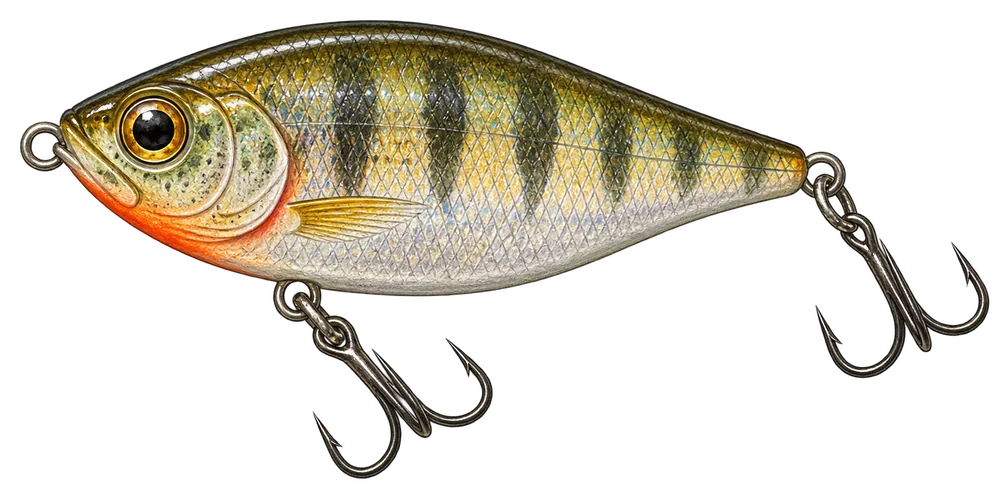 Jerkbait | Near the surface to mid-water | Active: rod strokes, taking up line in between | big pike are the specific target |
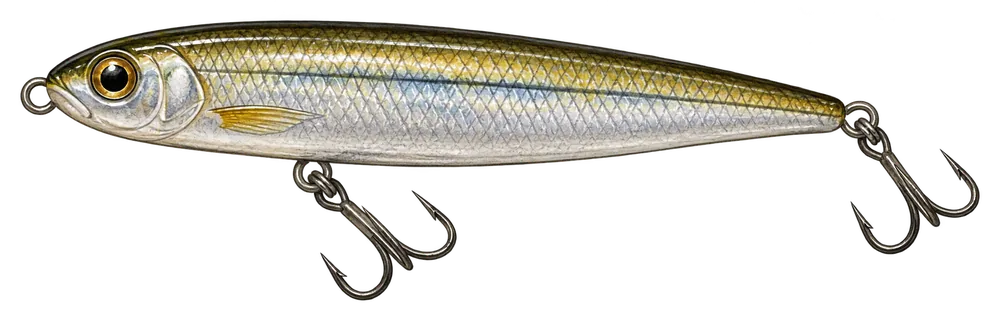 Stickbait | Surface | Active: short twitches in a zigzag, build in pauses | the fish are hunting at the surface |
What you need
- Twitching rodFor perch, practitioners recommend a light spinning rod of 2,10 to 2,55 metres with a soft, parabolic action and a casting weight of around 25 grams. More on this
- LineThin braid of about 0,12 millimetres. Thick lines reduce casting distance and the plug’s action. More on this
- LeaderFluorocarbon or mono for perch and zander; where pike swim, a bite-proof leader of steel or titanium. More on this
- Landing net and disgorgerTwo trebles quickly end up in the net or in your hand: land with a small net, unhook with a long disgorger. More on this
More on the method: spin fishing and ultralight fishing.
At a glance
Editorial assessment, not measured values.
If it does not work
Twitch into slack line. A tap into taut line makes it veer only slightly with its nose.
Keep an eye on the line and strike at every twitch.
Do not set the drag too tight. A perch’s mouth is soft, and a hard drag tears the trebles out.
Switch to a thinner line. Thick lines disturb the lure’s action and the cast.
Work the lure more calmly and evenly. Too many changes of pace make it harder for zander to locate it.
Change the cadence and the length of the pause, try a different colour and focus on rhythm rather than force.
Frequently asked questions
What is the difference between a twitchbait and a jerkbait?
Twitchbaits are slim plugs with a small lip that you work with short twitches of the rod tip. Jerkbaits are solid lures without a lip that move only through rod strokes and barely work at a steady retrieve.
How long should the pause be?
Practitioners let the lure stand for one to five seconds. Short pauses of one to two seconds alternate with longer ones of three to five. Try what the fish respond to that day.
Which plug is suitable for twitching?
Slim, suspending models with a small diving lip are well suited. They hold their depth in the pauses. For zander, 8 to 14 centimetres is usual, for bigger perch ten centimetres and more.
Do I need a steel leader when twitching?
Yes, if pike live in the water. With small lures thin material of about 3 to 4 kilograms is enough for perch and 6 to 7 for zander. For targeted pike fishing, about 9 kilograms is the rule.
May I fish twitchbaits with treble hooks everywhere?
Not everywhere. The number of hooks, treble hooks and barbs are regulated by the state, the water rules (Gewässerordnung) and the fishing permit (Erlaubnisschein). Some waters ban trebles or require pinched-down barbs, so check before you start fishing.
Before fishing, the current permits, state rules and water rules apply: bait bans, number of hooks, closed seasons, protected species and catch limits can differ. Many federal states expressly ban live baitfish. Take bait remains and packaging away with you. All details are guide values without guarantee and do not replace legal advice.
Sources
- Blinker: Twitchen auf Dickbarsch, Barschangeln mit Wobbler
- Blinker: Was kommt vorneweg? Raubfischvorfächer im Vergleich
- Rute & Rolle: Barsch-Special, Teil 1: Hardbaits
- Rute & Rolle: Zanderangeln mit Wobbler
- Bayerische Landesanstalt für Landwirtschaft: Prüfungsfragen zur Fischerprüfung 2023/2024
- Landesfischereiverband Baden-Württemberg: Gerätekunde, Präsentation 2022
- Deutscher Angelfischerverband: Der Flussbarsch, Fisch des Jahres 2023
The sources explain terms and basic principles. Retrieve, colour choice and values are editorial starting points and depend on water, weather and lure.
More hardbaits
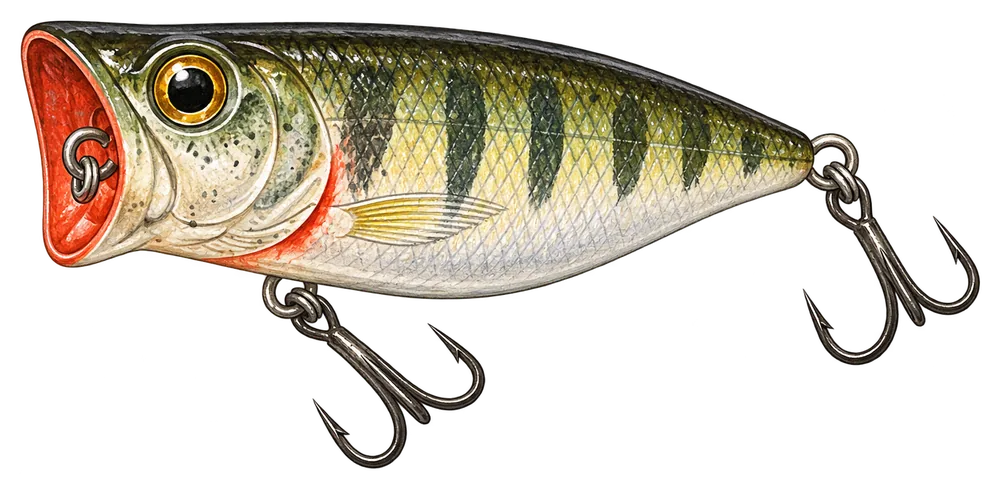 Popper
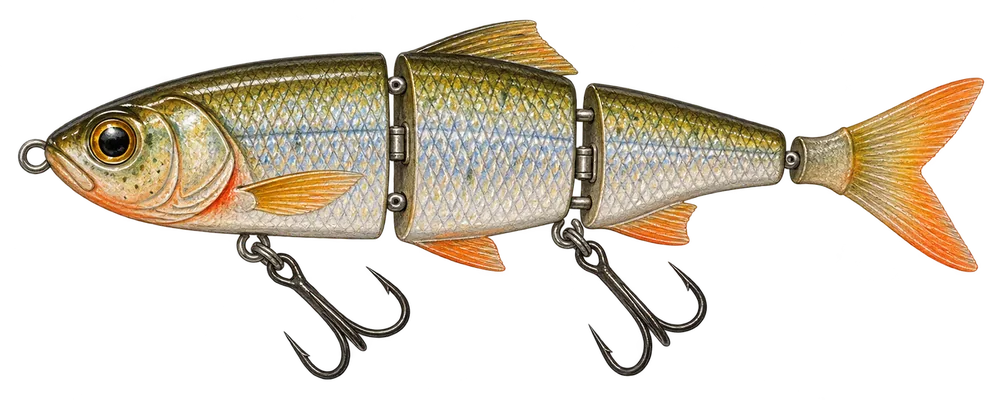 Swimbait
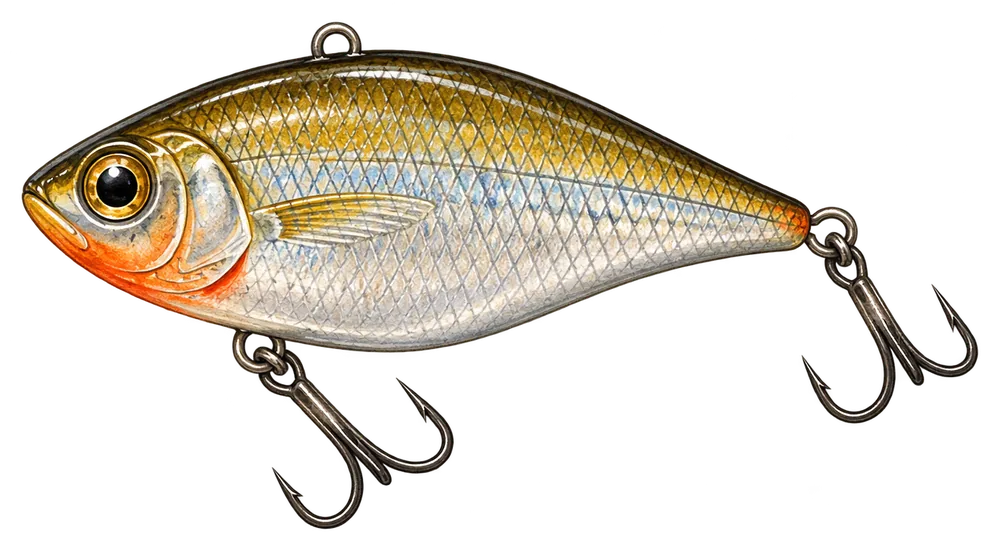 Lipless crankbait
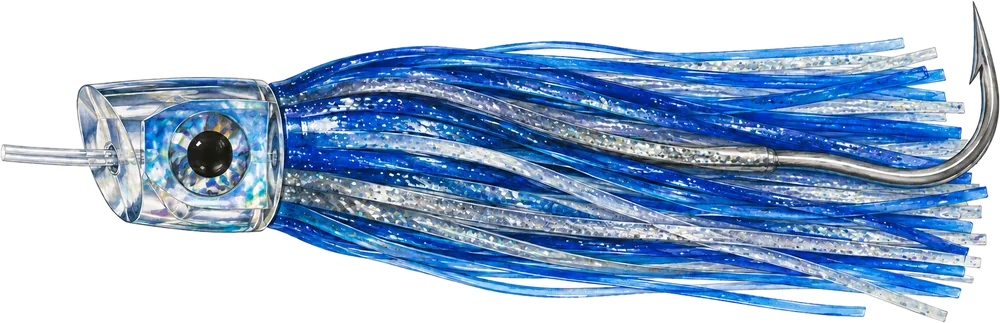 Offshore trolling lures
 Coastal plug
Created with AI support from the sources listed (AI notice). Last updated: 2 November 2026. Found a mistake? Write to us. Who is behind the site: About me.