
Knowledge · Lures
Lipless crankbait
Hardbaits · Spinning
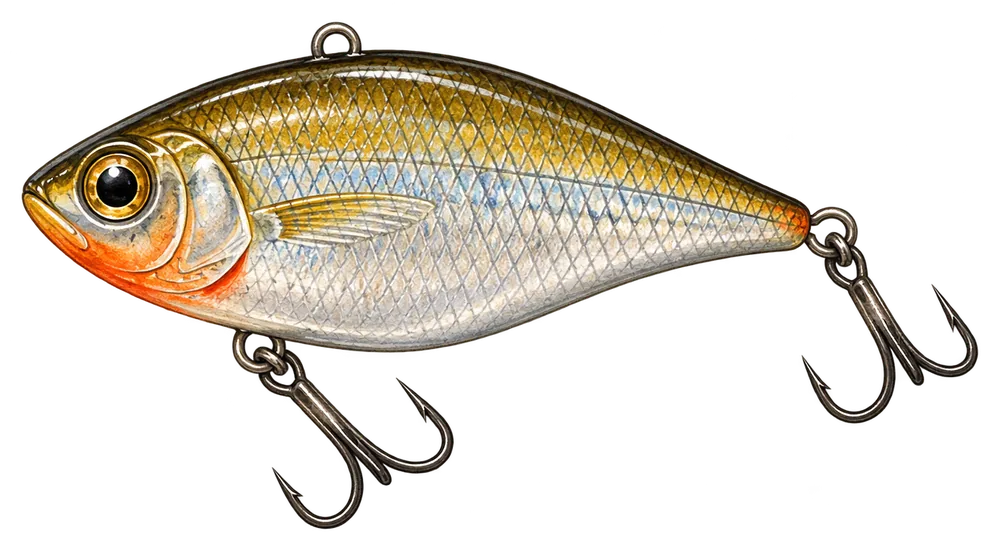
A lipless crankbait is a flat plug without a diving lip, with its eyelet on the back. It flutters strongly on the retrieve, and most models also rattle. Because it sinks and casts a long way, you can search large areas with it at any depth.
- Water depth
- mid-water to bottom
- Retrieve
- Active: retrieve, tick along the bottom or jig
- Fishing method
- Spinning
- Category
- Hardbaits
How a lipless crankbait works
Instead of a lip on the head, the lipless crankbait has a flat body and the eyelet on the back. On the retrieve, the area of the back in front of the eyelet takes over the job of the lip and determines how deep the lure runs. Head shape and back width determine its action. Most models sink, so you can present them through the whole water column, from free fall to bottom contact.
There are two designs. Rattlers make up the large majority: balls clatter inside their body, and fish can perceive the noise from far away. The silent vibration lures stimulate purely through the fluttering of the flat body. Both create pressure waves that fish can pick up through the lateral line organ. This organ registers current and water-pressure stimuli. Silent models run more quietly and look more natural.
The lipless crankbait is a reaction lure. Perch live in shoals, and a professional perch angler describes an instinct: whatever a perch does not grab, its neighbour snatches away. If you work the lure quickly, there is little time to inspect it, and reaction bites follow. In winter opinions differ: one author then searches with fast, aggressively worked rattling lures, another works rattlers and vibration lures very slowly just above the bottom.
On the bottom the lure is a counterpart to the soft plastic shad, but it brings a risk of snags. Anglers therefore convert the belly treble into a twin hook by snipping off the downward-pointing point, and swap the tail treble for a single hook. Check beforehand what the water rules and the fishing permit (Erlaubnisschein) prescribe on hooks and trebles.
How to work the lure
Active: retrieve, tick along the bottom or jig
Schematic illustration, AI-generated.
- Cast
- dives on the retrieve
- keeps running steadily
- Reached the bank
Anatomy
The points on the picture above explain the most important parts – on hover or tap.
- Eyelet on the back: This is where the leader attaches. The back in front of the eyelet acts like a lip on the retrieve.
- Head without a lip: The head has no lip. Its shape and the width of the back determine the action.
- Flat body with rattles: Flutters on the retrieve; in rattlers, balls clatter inside.
- Belly treble: Hooks fish from below, but snags easily on the bottom. Some anglers convert it into a twin hook.
- Tail treble: For bites from behind. Can be swapped for a single hook.
Rig in three steps
- 1. Tie on the hooklengthAt least one metre of fluorocarbon protects against abrasion on mussels and stones. For pike, a stiff steel or titanium trace goes in front.
- 2. Snap or split ringYou can knot the leader directly to the eyelet via a split ring. A sturdy snap makes changing easier.
- 3. Into the back eyeletThe leader or snap belongs in the eyelet on the back, not in the trebles.
Drawings: AI-generated, schematic.
When the target fish are in season
Hardly any chancePossibleGoodPeak seasonValues from the catch calendar.
When and where
In autumn the lipless crankbait catches particularly well, like many reaction lures. In winter it serves as a search lure: you cover a lot of water quickly and so find the perch that stand close together at their winter hold. After that, some anglers switch to slower lures, such as a soft plastic crab, because some fish only nudge the fast lure or ignore it.
Good spots are drop-offs from shallow to deep water, pools in streams and rivers, weed beds, rock armouring, concentrations of baitfish and perch humps. In gravel pits, long casts also reach perch that stand far out and deep. Cast it out and wind it in. It is not meant for vertical fishing under the rod tip.
How to match rod, line and leader
- Tie on the leader Tie on at least one metre of fluorocarbon as protection against abrasion on mussels and stones. For pike, a stiff steel or titanium leader goes in front.
- Sturdy snap A sturdy snap makes changing easier. You can also tie the leader directly to the eyelet via a split ring.
- Into the eyelet on the back Leader or snap goes into the eyelet on the back, not into the treble hooks.
The magazine Blinker gives rod lengths and casting weights depending on the target fish: for perch and trout 1,8 to 2,1 metres up to 40 grams at most, for zander and asp 2,1 to 2,7 metres up to 80 grams, for pike 2,1 to 2,7 metres up to 150 grams, for wels catfish 2,4 to 2,7 metres up to 200 grams. If you wind in, take a slightly softer rod with backbone. For jigging, choose a harder rod that lifts the lure off the bottom quickly. Because the lures are heavy and put a lot of pressure on the reel under water, a baitcaster also suits.
For winding in, monofilament and fluorocarbon are suitable. The stretch helps, because fish often grab a second time if the first bite does not hold. If you jig, you prefer braid, because it gives control and a feel for the bottom. In front of it goes a fluorocarbon leader at least one metre long, which stands up to mussels and stones. For pike, a stiff steel or titanium trace goes in front, because the lure is more likely to wrap itself around flexible material.
Rattlers, vibration lures and heavy models differ
Rattlers are loud and stand out from far away. Vibration lures without a rattle run more quietly, which can help in winter in particular. Heavy, fast-sinking models reach the bottom quickly and can be worked by jigging, so they also suit zander. With colour, visibility counts for more than a natural look, because the lures are usually fished fast.
How to work it step by step
You can wind it in like a crankbait, fast or leisurely, work it with long pulls and let it drop briefly in between, or tick it over the bottom in shallow water. Let it sink after the cast and wind it diagonally through the water column; that way you search all depths. A few short pauses often make perch take the lure on the sink.
If the fish stand on the bottom, you work it with the reel: after each touch of the bottom you lift it with a few turns of the handle and let it fall again. Or you jig it with the rod tip. If you keep lifting it and letting it drop, you snag more often than when it stays steadily just above the bottom.
After a hard reaction bite the hook often sits at the side of the mouth. Open the drag, play the fish calmly, keep it as low as possible and have the landing net ready before it rises. Release it gently with a hook remover and an unhooking mat. In a study on pike, hooks with crankbaits and spinners were less often lodged in the gills or throat than with natural baits, soft plastic shads and spoons.
Which colour?
Starting points to try, not rules. Depth and speed are usually more important than colour.
Lipless crankbait or another lure?
| Baits and lures | Depth | Retrieve | Take this lure if … |
|---|---|---|---|
| Lipless crankbait | mid-water to bottom | Active: retrieve, tick along the bottom or jig | this page |
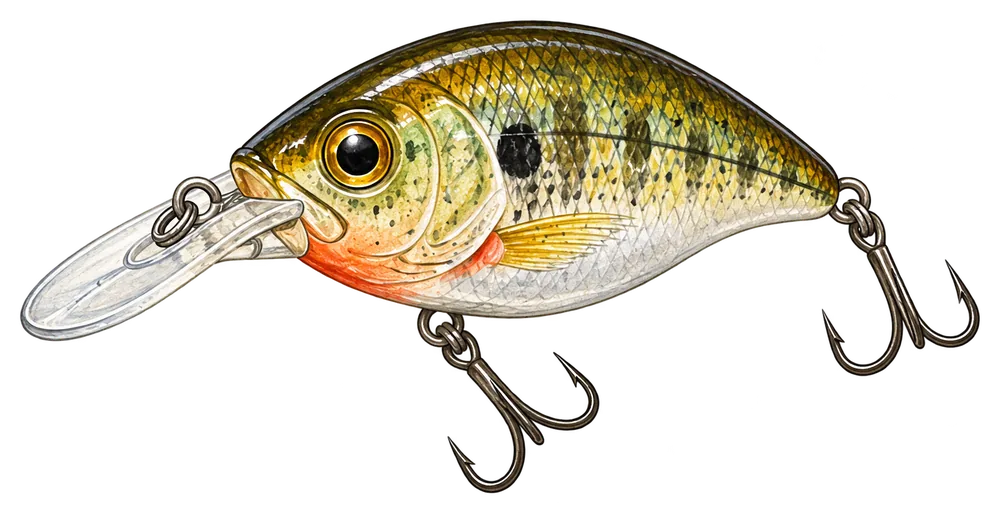 Crankbait | Mid-water, depending on the diving bill | Active: retrieve steadily, even briskly | you want to hold a fixed running depth with a steady retrieve |
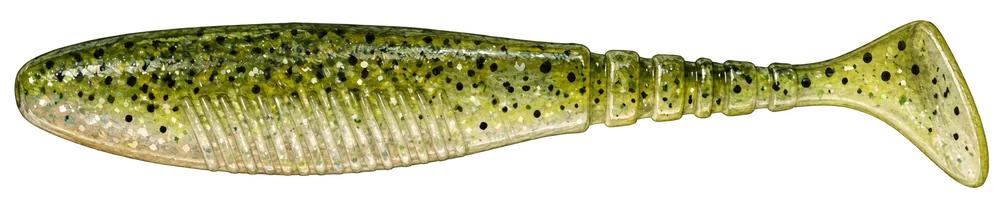 Soft plastic (shad) | Bottom to mid-water | Active: jigging with the rod or lift-and-drop with the reel, bites usually come on the drop | the fish stand on the bottom and you want to offer the lure more calmly and with less risk of snags |
What you need
- Spinning rodFor perch 1,8 to 2,1 metres up to 40 grams, for pike 2,1 to 2,7 metres up to 150 grams. Harder for jigging, softer for winding in. More
- BaitcasterHeavy lures with little air resistance and a lot of pressure under water suit it well; a fixed-spool reel works too. More
- LineMonofilament or fluorocarbon for winding in, braid for jigging. In front of it a fluorocarbon leader of at least one metre. More
- Pike traceStiff steel or titanium that the lure hardly wraps around. More
More on the method: Spinning.
At a glance
Editorial assessment, not measured values.
If it does not work
After touching the bottom, lift off with a few turns of the handle and work it just above the ground. The belly treble can be converted to a double.
Build in short pauses so that the lure sinks. In winter, switch to a slower rig, for example with a soft plastic crab.
Cast far and wind in, because it is built for casting and winding in.
Use a stiff steel or titanium hooklength that the bait is less likely to wrap around.
Open the drag, play the fish calmly, keep it low and have the landing net ready.
Choose a silent version and retrieve very slowly just above the bottom.
Frequently asked questions
Rattler or silent vibration lure?
Rattlers are loud and stand out from afar. Silent vibration lures run more quietly and look more natural, for example in winter, when the fish are sluggish.
How deep does a lipless crankbait run?
It sinks, so you decide the depth yourself: by the waiting time after the cast and by the speed. The back in front of the eyelet keeps it on track.
Is a lipless crankbait a vertical lure?
No. It was developed for casting and winding in. The mistake arose because the first models were used for trolling and vertical fishing.
When does the lipless crankbait catch best?
In autumn, when reaction lures work particularly well. In winter it is suited to searching for perch before you switch to slower lures.
Which rod suits a lipless crankbait?
That depends on the target fish: for perch 1,8 to 2,1 metres up to 40 grams is enough, for pike 2,1 to 2,7 metres up to 150 grams. For jigging, use a harder rod.
Before fishing, the current permits, state rules and water rules apply: bait bans, number of hooks, closed seasons, protected species and catch limits can differ. Many federal states expressly ban live baitfish. Take bait remains and packaging away with you. All details are guide values without guarantee and do not replace legal advice.
Sources
- Blinker: Lipless Crankbaits, rasseln und vibrieren
- Blinker: Barschangeln mit Krebs, in Slow-Motion zum Erfolg
- Blinker: Barschangeln im Winter
- Rute & Rolle: Barsch-Special, Teil 2, Gummi und Blech
- Bayerische Landesanstalt für Landwirtschaft: Prüfungsfragen zur Fischerprüfung 2023/2024
- Carleton University und IGB Berlin: Hooking Mortality in Recreational Angling for Northern Pike
- Deutscher Angelfischerverband: Der Flussbarsch, Fisch des Jahres 2023
The sources explain terms and basic principles. Retrieve, colour choice and values are editorial starting points and depend on water, weather and lure.
More hardbaits
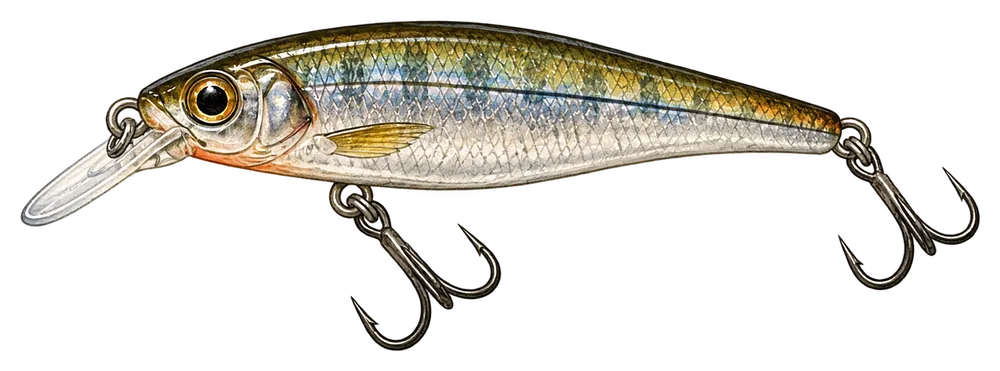 Twitchbait
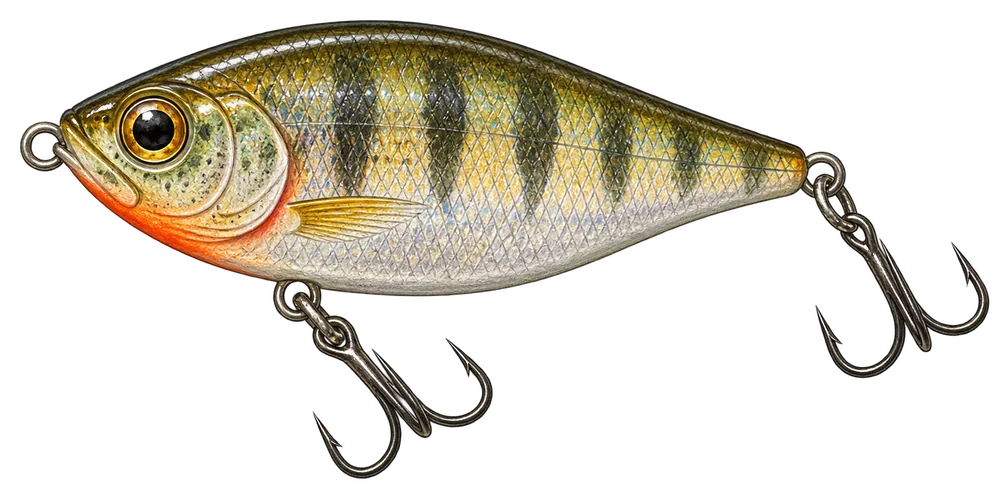 Jerkbait
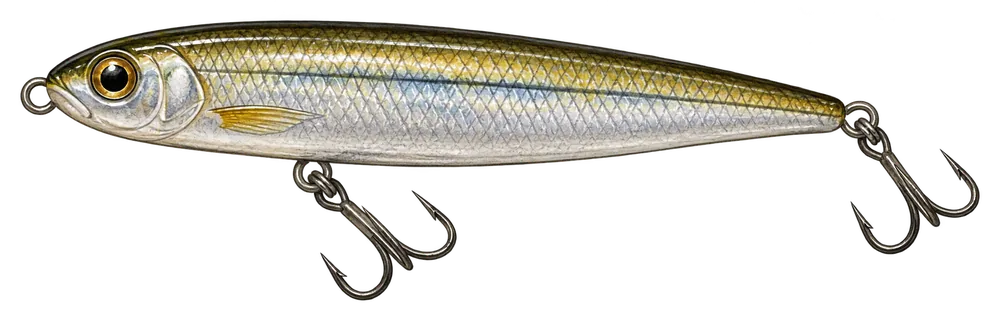 Stickbait
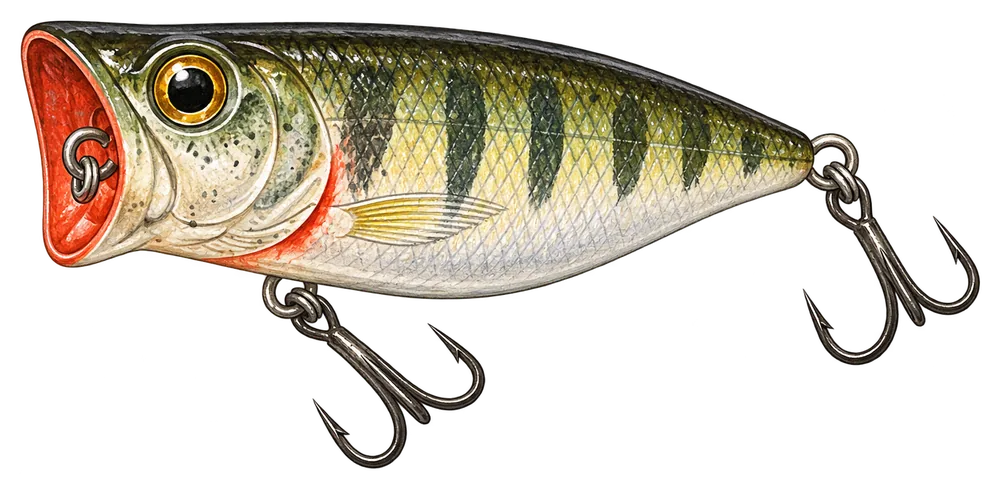 Popper
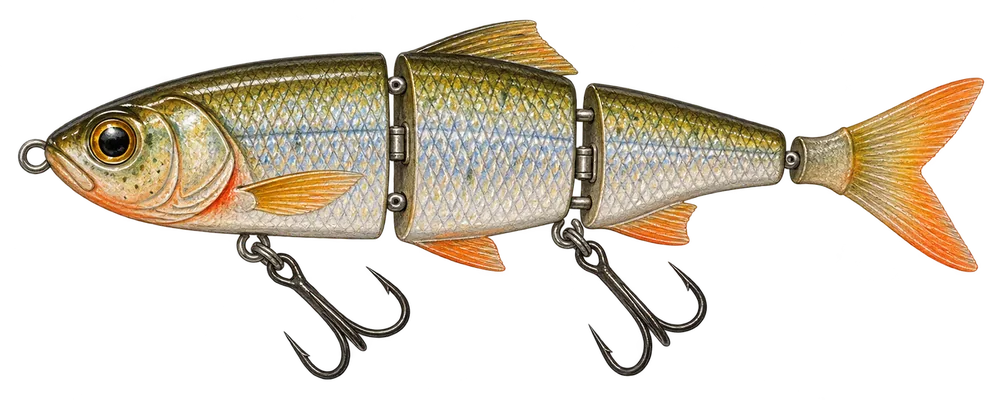 Swimbait
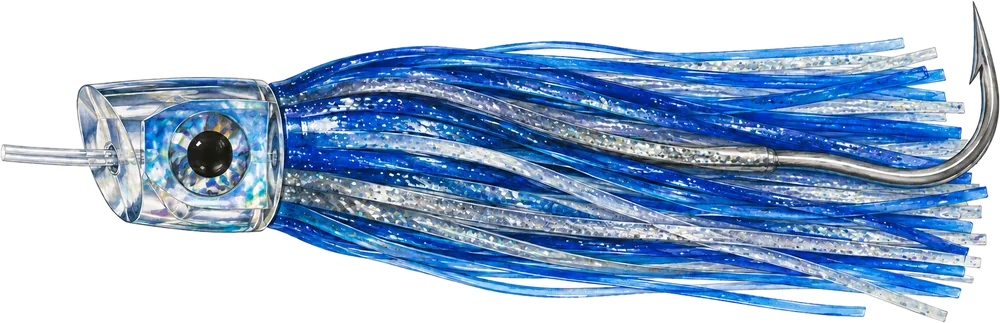 Offshore trolling lure
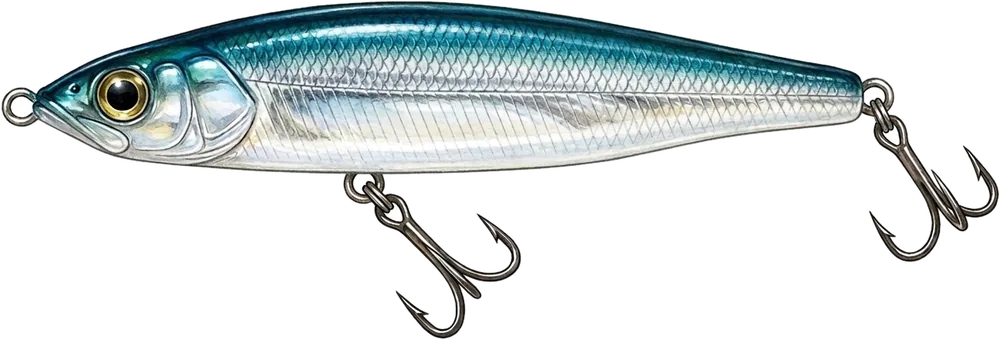 Coastal plug
Created with AI support from the sources listed (AI notice). Last updated: 31 October 2026. Found a mistake? Write to us. Who is behind the site: About me.