
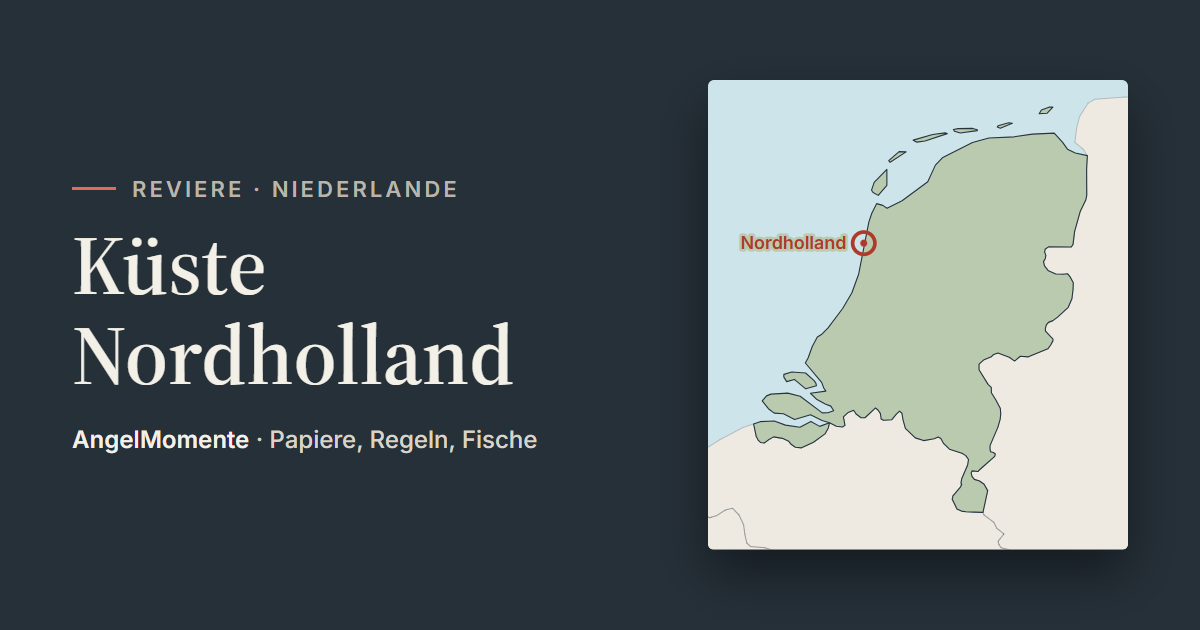
Destinations · the Netherlands
Fishing on the North Holland coast
The North Holland coast between Den Helder and IJmuiden is open North Sea with sandy beaches, dunes and sandbanks off the shore. From the beach and from the harbour moles you can fish without a fishing licence (VISpas). Minimum sizes, the rules for sea bass and registration in an app still apply.
- Papers
- No VISpas needed, from age 14 registration in the RecFishing app
- Season
- all year, sea bass from 1.2. to 31.3. catch and release only
As of October 2026
At a glance
- Papers
- No VISpas needed, from age 14 registration in the RecFishing app
- Licence and permit
- Season
- all year, sea bass from 1.2. to 31.3. catch and release only
- Fishing seasons
- Beach: rods and hooks unlimited; IJmuiden harbour: 2 rods, 3 hooks each
| Fish | Minimum size | Closed season | Catch limit | Note |
|---|---|---|---|---|
| Sea bass | 42 cm | 1.2.–31.3. catch and release only | 3 per day | Rule for 2026; land whole; RVO: no fishing in February and March |
| Mackerel | 30 cm | none | – | Size according to the association |
| Garfish | – | none | – | |
| Flounder | 20 cm | none | – | |
| Plaice | 27 cm | none | – | Size according to the association |
| Sole | 24 cm | none | – | Size according to the association |
| Cod (Kabeljau) | 35 cm | none | 25 fish or 20 kg | Size according to the association; land whole |
| Eel | – | protected all year round | – | straight back alive, do not keep |
Fishing zone and sea area off North Holland: Uitvoeringsregeling visserij, Uitvoeringsregeling zeevisserij and Regulation (EU) 2026/249; sizes for mackerel, plaice, sole and cod as stated by the Sportvisunie. Correct as of October 2026. The regulation and your fishing permit (Erlaubnisschein) are authoritative.
Location and waters Beaches from Bergen, Noorderhaaks and IJmuiden
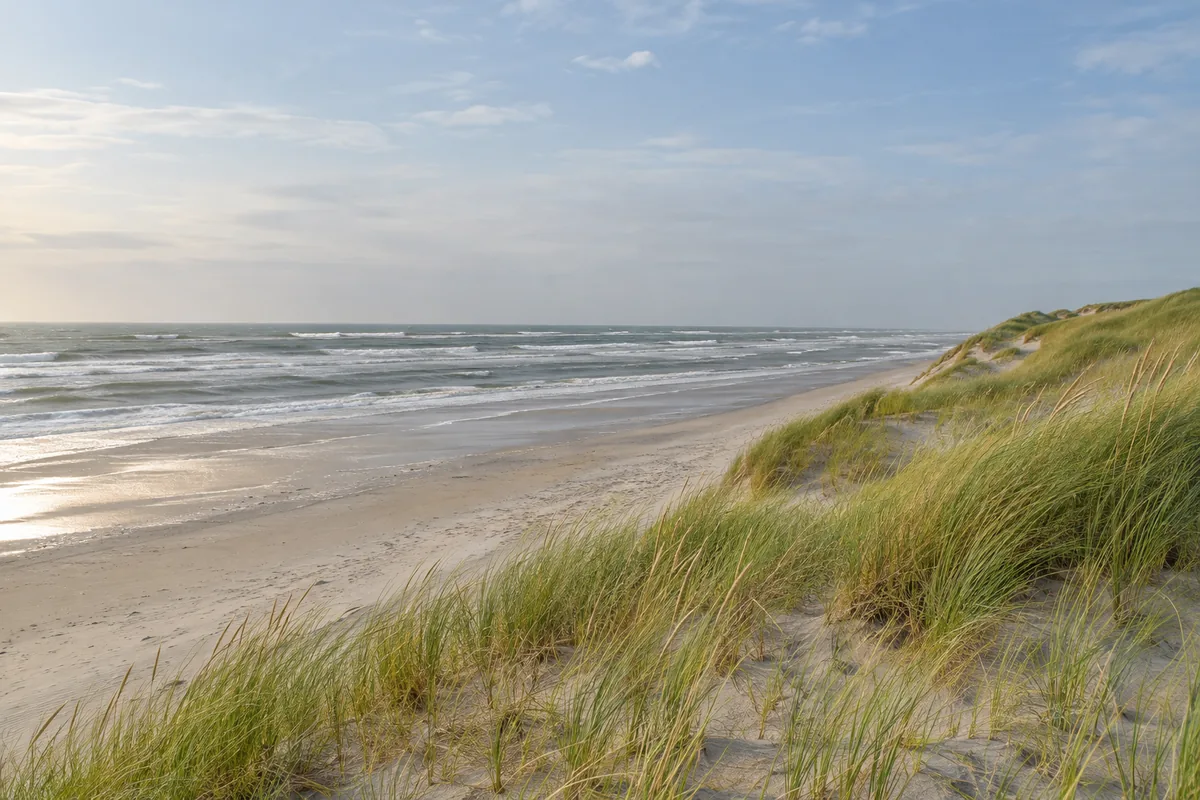
From Bergen northwards the coast belongs to the Noordzeekustzone protected area: the beaches of northern North Holland, the shallow water off them and sandbanks such as Noorderhaaks. This sandy coast is constantly reshaping itself. Ebb and flood currents push the water north along the Dutch coast (Natura 2000).
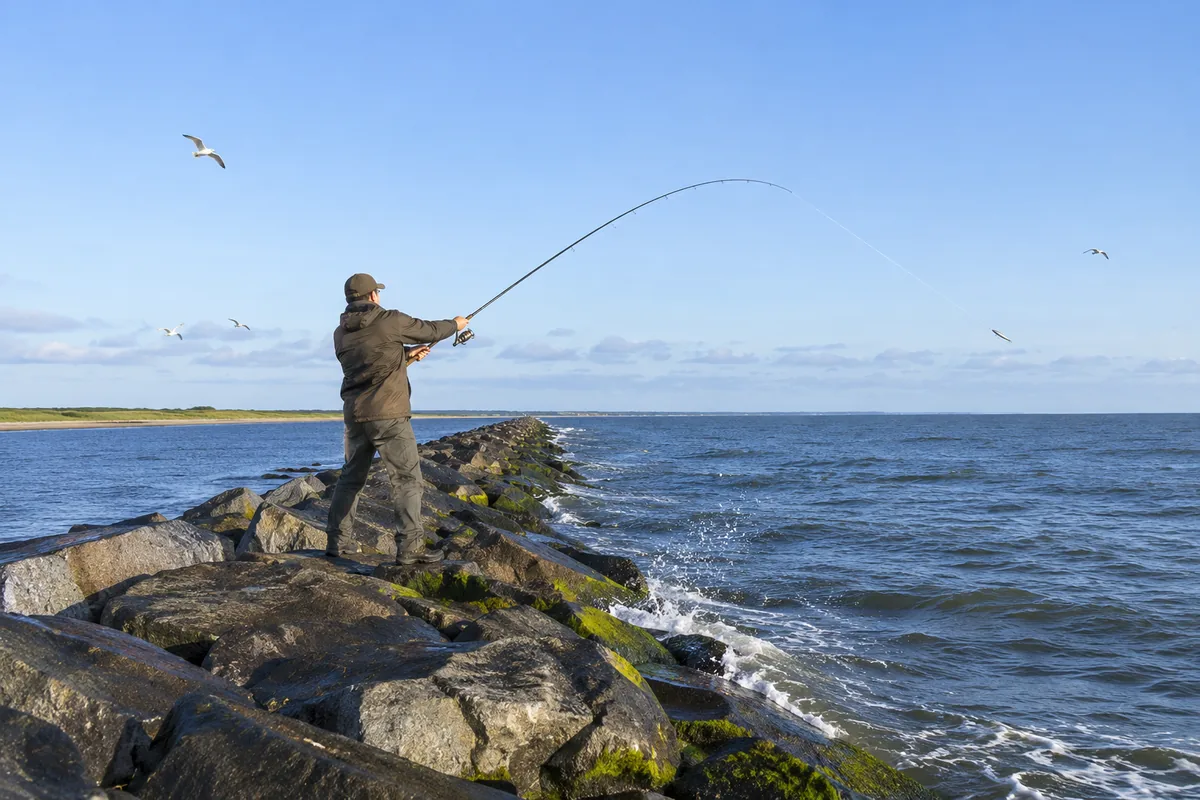
In the south, at IJmuiden, the North Sea Canal, which links the port of Amsterdam with the sea, reaches the coast (Rijkswaterstaat). The Noordpier and the Zuidpier lie at the harbour entrance. Off the beach there are often sandbanks running parallel to the coast. The waves break on the shallow banks, and in the deeper gullies between them, according to the association’s experience, fish are caught more often. Moles and harbour heads that reach far out to sea also produce good catches (Sportvisunie).
Fish and best time Sea bass, mackerel, garfish and flatfish
- Sea bass: found along the whole Dutch coast; adult fish like to stay on hard ground such as stones (Sportvisunie). On the coast you find it from May to mid-October (Sportvisunie).
- Mackerel: appears in shoals in summer. Screaming gulls give away hunting fish.
- Garfish: common along the coast in the summer half-year; in autumn it moves out to open sea (Sportvisunie). For mackerel and garfish the association recommends strips of fish as bait in summer.
- Flatfish: In winter it is mainly flounder and dab that bite, in summer and at night more often sole, now and then also plaice. At an association competition in May 2025 on the beach at Petten, the participants caught mostly flounder and a few sea bass in an onshore wind, just beyond the surf (Sportvisunie).
The catch calendar shows which species do well in which month.
Papers and permit On the beach without a permit, in the harbour two rods
- Beach: Under the Fisheries Act, the sea off the beaches of Holland is not counted as coastal waters (kustwateren) but as the fishing zone (visserijzone). You need no permit there, and the number of rods and hooks is not limited (list of waters).
- IJmuiden harbour: The harbours up to the locks are sea area (zeegebied), including the inner side of the moles. Two rods per person with no more than three hooks each are allowed here (RVO). Beyond the locks inland water begins, where you usually need the VISpas.
- RecFishing app: From age 14 you register before fishing. You log every sea bass and every eel, even if it goes back. You may neither sell nor give away the catch (RVO).
What the VISpas is and where you get it for inland waters is explained on the country page.
Special rules Sea bass 2026, cod and minimum sizes
- Sea bass 2026: In January and from 1 April to 31 December you may keep three fish per day, each of 42 cm or more. From 1 February to 31 March every sea bass goes straight back (Regulation (EU) 2026/249).
- Cod (Kabeljau): at most 25 fish or 20 kg. You land cod and sea bass whole, not filleted and with the head on (Uitvoeringsregeling zeevisserij).
- Minimum sizes: By law the minimum size for flounder is 20 cm. For mackerel, plaice, sole and cod the EU minimum sizes apply, according to the association (Sportvisunie). The values are in the box.
- Protected species: Eel goes straight back alive on the coast and you do not carry any. Salmon and sea trout are protected all year (Uitvoeringsregeling visserij).
Correct as of October 2026. The sea bass rules apply for 2026 only. The RVO authority calls angling for sea bass in February and March banned, while the EU regulation only allows catch and release in that period. If you want to be safe, follow the authority’s stricter information.
Safety
Rip currents in the surf (muien) are dangerous. They are caused by breaking waves, tides and the shape of the bottom, on the beach just as at moles, breakwaters and groynes. They occur most often as the water runs out. The current reaches up to 10 km/h and carries you away from the coast (Reddingsbrigade). So do not wade far out into the surf. At Den Helder the ebb current runs faster than the flood current (Reddingsbrigade), and deep gullies lie close to the coast there (Rijkswaterstaat).
Increasing wind from one direction makes some spots difficult and sometimes dangerous. Choose your spot according to the tide, the current and your own safety (Sportvisunie). High and low water come at a different time at every place (Rijkswaterstaat). The moles at IJmuiden are repaired after storm damage and closed for that. The Noordpier was closed from 21 September to 16 October 2026, to anglers as well (Rijkswaterstaat). Respect the barriers. More under Shore and waders.
Related
- Fishing on the coast and in the surf, Fishing in the harbour and off the mole and Fishing in the Netherlands
- Further north: North Sea coast and Wadden Sea, inland the Frisian lakes
- Sea bass, mackerel, garfish, flounder and gurnard in the fish lexicon
- Surf rig and Releasing fish
Sources
- Besluit aanwijzing zeegebied en kustwateren 1970, Uitvoeringsregeling visserij und Uitvoeringsregeling zeevisserij
- Verordnung (EU) 2026/249 und RVO: Freizeitfischerei in Küstengewässern, Seegebiet und Fischereizone (geprüft 03.08.2026)
- Rijkswaterstaat: Noordzeekanaal, Getij, Arbeiten an Noordpier und Zuidpier 2026 und Küste bei Den Helder
- Natura 2000: Noordzeekustzone
- Reddingsbrigade Nederland: Muien und Getijden
- Sportvisunie: Gezamenlijke Lijst van Nederlandse VISwateren 2026 bis 2028, Mindestmaße Meeresfische, Wo angeln? und Was du fängst (abgerufen 04.10.2026)
Guide without guarantee, correct as of October 2026. The Dutch fisheries regulations, the EU catch rules for sea bass and the notices from Rijkswaterstaat on closures on the coast in their current versions are authoritative.