
Knowledge – Fish
Sole: Features, habitat, best time and baits
The sole (Solea solea) is a slender, right-eyed flatfish and one of the most expensive food fish in Europe. By day it lies buried in the sand and at night it hunts worms, bivalves and crustaceans. On the North Sea coast it can be caught deliberately with worm from piers and from a boat.
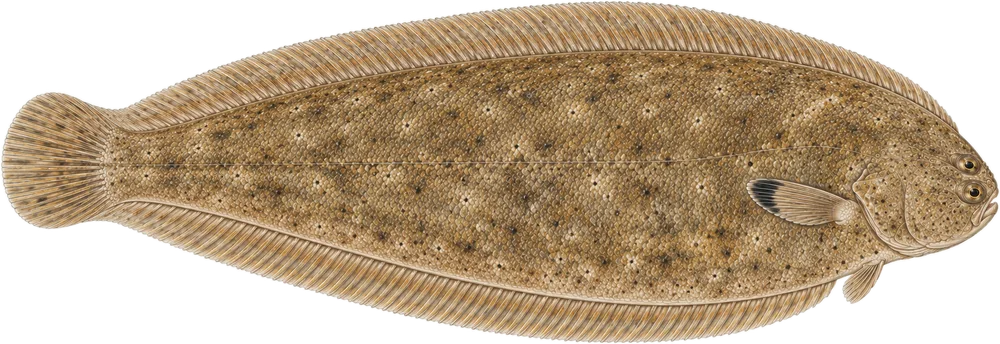
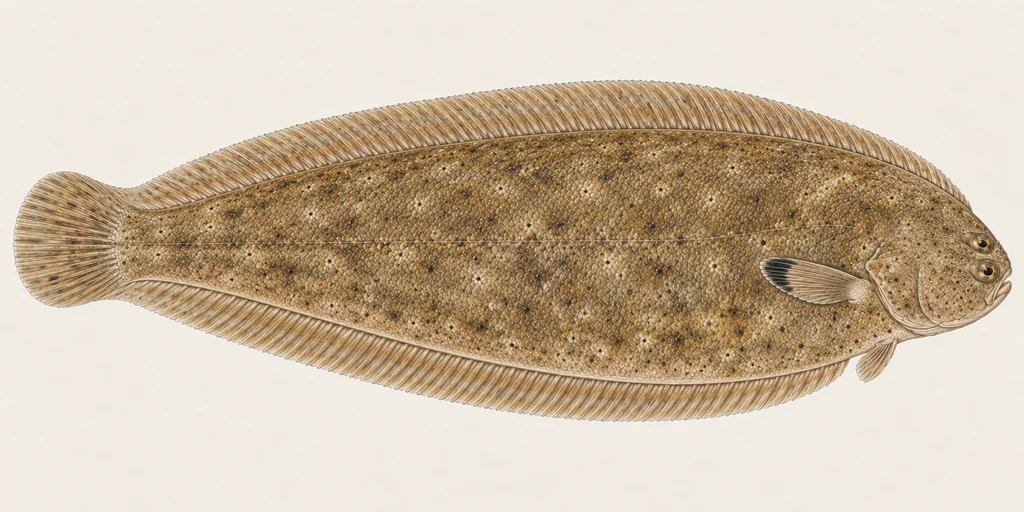
In short: The best time for sole is July to September, especially at night. Good spots on the coast: sandy bottom. Proven baits: lugworm and ragworm, small mussels or shrimp on small, long-shanked hooks. Right-eyed, tongue-shaped flatfish with a dark spot at the end of the pectoral fin. Hunts at night, buried by day. Step by step: Fishing for sole.
- Elongated, oval, tongue-shaped body with a rounded head and a small, curved mouth
- Dark spot at the end of the pectoral fin on the eyed side
- Dorsal and anal fins run round the body as a fringe and are joined to the tail fin by a membrane
Catch chances through the year
- Hardly any chance
- Possible
- Good
- Peak season
- Spawning (observe the closed season)
Editorial assessment for waters in Germany, not a measured value and no guarantee. Spawning time is not the same as the legal closed season.
Species profile and sources in the catch calendarAll species compared month by monthThe rules of your federal state
How to recognise it
The sole is right-eyed like the plaice and most flounders, but looks much more slender. Its body is oval and elongated, tongue-shaped indeed, with the head rounded at the front. The small, curved mouth sits on the underside.
The eyed side is grey- to red-brown with large, blurred dark patches, and the blind side is pale grey to white. On the underside of the head sit small sensory buds with which the sole feels the bottom. A reliable feature is the dark spot at the end of the pectoral fin on the eyed side. The dorsal and anal fins run as a long fringe around the body and are joined to the tail fin by a membrane.
According to the Thünen Institute and FishBase the sole grows to 70 centimetres in length, 3 kilograms in weight and 26 years of age. Blinker gives 60 centimetres as the maximum length, with around 35 centimetres usual. It matures at three to five years and 25 to 30 centimetres.
Plaice, flounder and dab are usually right-eyed as well, but broader in build. Only in the flounder do some of the fish have their eyes on the left. You recognise the sole by its long tongue shape, the round head with a small, curved mouth and the dark spot on the pectoral fin.
The left-eyed turbot and brill are ruled out simply by the side of the eyes.
Side by side
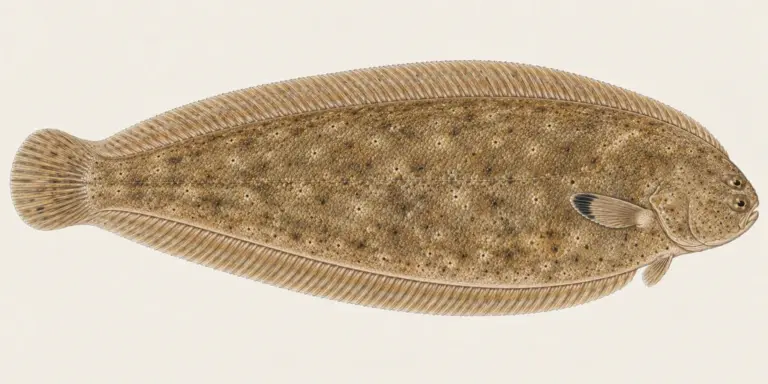
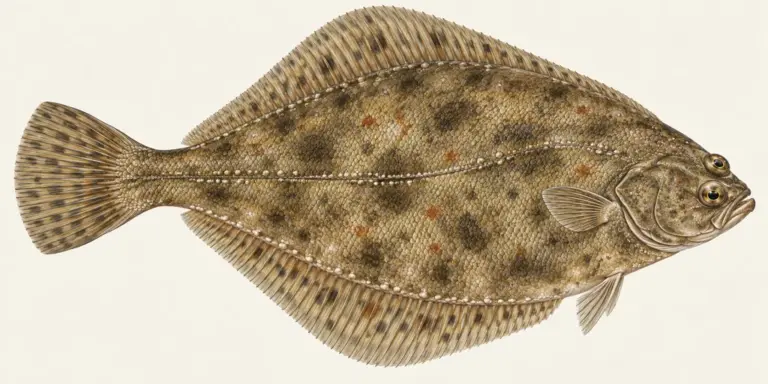
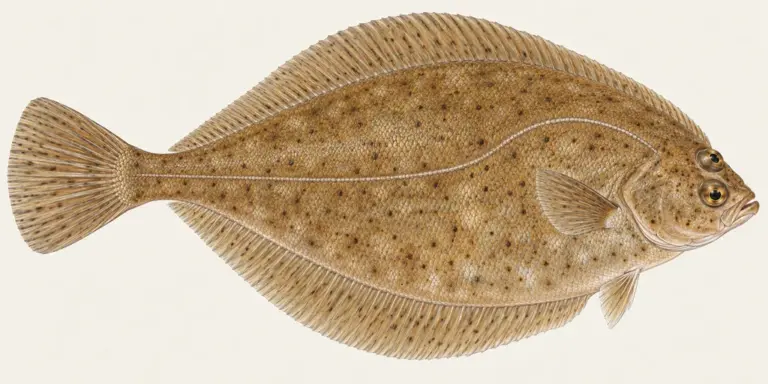
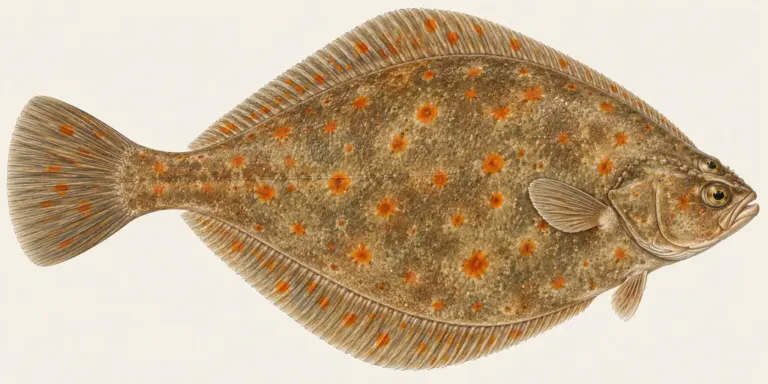
AI-generated illustrations.
Where it lies
The sole lives in the eastern Atlantic from the Trondheimfjord to Senegal, and also in the North Sea and western Baltic, in the Mediterranean and in the south-west of the Black Sea. The North Sea and the British Isles lie at the northern edge of its range. Important fishing grounds are the southern North Sea and the English Channel.
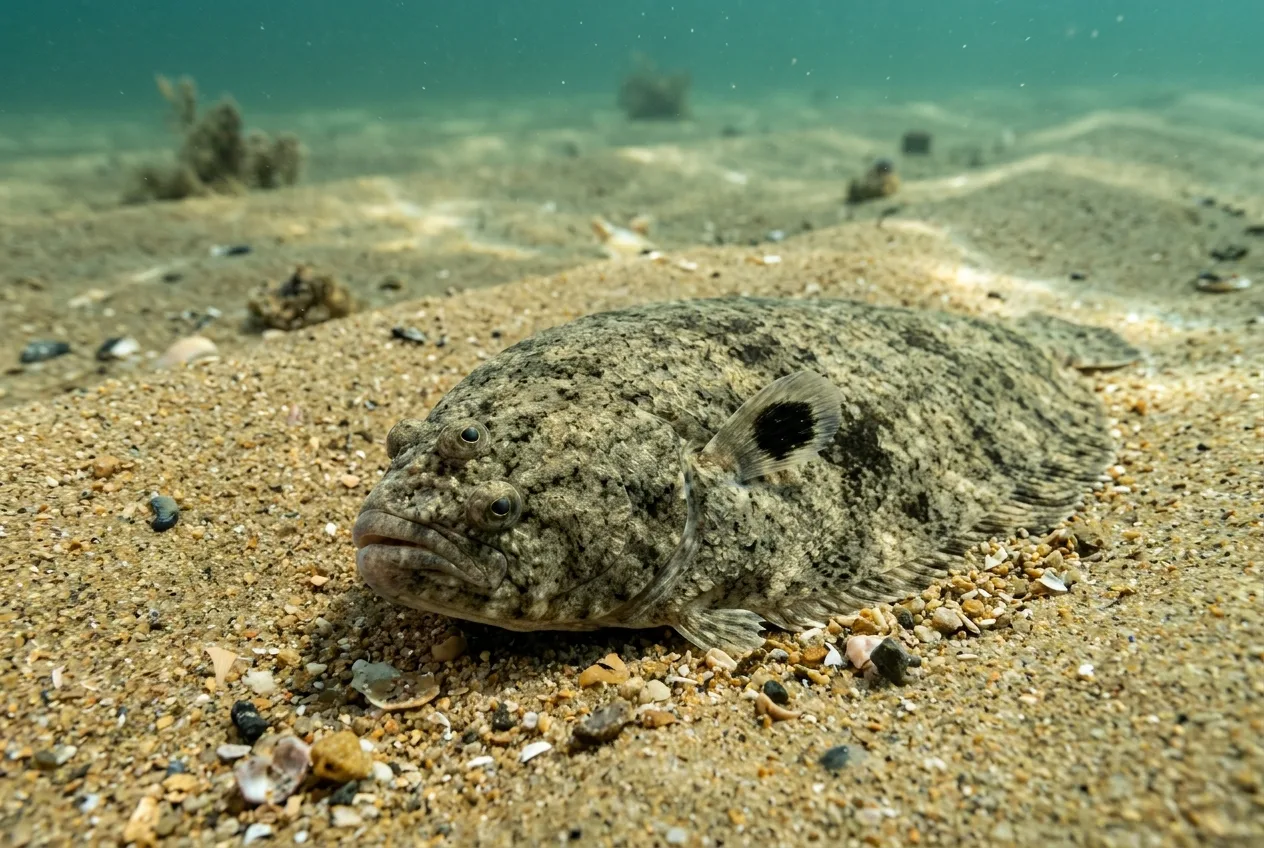
It lies on sandy or muddy ground, in the sea as well as in brackish water, from the coast down to 150 metres, mostly between 10 and 60 metres. Older fish stand deeper. In winter soles withdraw into warmer, deeper water. The Wadden Sea and the river estuaries are the most important nurseries of the North Sea sole, and the young stay there for two to three years.
In the German Baltic it turns up mainly as bycatch, and its occurrence there has increased markedly since the 1990s.
Holding spots in the picture
Choose the season and time of day: the picture shows where the species stands then. Spots outlined in red apply only in the chosen season. Tap a fish or a spot in the list to bring it closer. The picture is schematic and AI-generated, every water is different.
Catch chance in springpossibleSpawning season, observe closed seasons
Catch chance in summerPeak season
Catch chance in autumngood
Catch chance in winterhardly any
- J
- F
- M
- A
- M
- J
- J
- A
- S
- O
- N
- D
Spawning season
Not the main time By day the sole lies buried; it goes hunting at night.
Not the main time By day the sole lies buried; it goes hunting at night.
Not the main time By day the sole lies buried; it goes hunting at night.
Active time By day the sole lies buried; it goes hunting at night.
On the coast
Sandy bottom
Sole are only found here in spring, summer and autumn.
Deep, colder water
Sole are only found here in winter.
The sole lies on sandy or muddy bottom, in the sea as well as in brackish water. By day it buries itself.
Spring: chances according to the catch calendar are slim in March and possible in April and May. This is when spawning takes place, so observe the closed seasons.
Summer: chances according to the catch calendar are good in June and peak season in July and August. In summer the sole stays in shallower water than in winter. Summer and autumn are considered the best time.
Autumn: catch chance according to the catch calendar is peak season in September, good in October and possible in November.
Winter: chances according to the catch calendar are slim. In winter it retreats into warmer, deeper water and is hardly within reach from the shore.
Depth: Sole live from the coast down to about 150 metres, mostly between 10 and 60 metres. Older fish stay deeper.
Size comparison: AI-generated drawing, schematic.
How it feeds and spawns
By day the sole lies buried in sand or mud. At night it goes hunting alone. It feeds mainly on thin-shelled bivalves, bristle worms and small crustaceans, occasionally small fish. It senses its prey with the sensory buds under the head.
To spawn the fish move towards the coast. The start depends on the water temperature: in the Mediterranean they spawn as early as winter, further north from spring. For the North Sea the Norwegian Institute of Marine Research gives February to May, Blinker for the north April or May to June. Each female produces 100.000 to 150.000 eggs. The larvae hatch after about ten days, at first swim upright and become flatfish at 12 to 15 millimetres.
When it bites
According to Blinker, the best time for sole is summer and autumn. In summer it stands shallower than in winter.
In winter they move into deeper water and are barely within reach for shore anglers. Because the sole feeds at night, fishing is worthwhile above all after dark.
Today’s catch index needs JavaScript. Season and spawning time are in the catch calendar.
You will find the monthly overview of all species and the water temperature check in the catch calendar.
What to catch it with
Step by step: Fishing for sole: tips on bait, rig and tackle – season, spots, baits, tackle and rules on one page.
You have good chances on the North Sea coast, also off the Netherlands, in areas with plenty of current. According to Blinker, piers are particularly good spots, and fishing is done from the shore and from a boat.
From the shore, surf tackle with thin braided main line and a shock leader is enough; from a boat it can be stouter. Because of the small mouth you use small, long-shanked hooks. Suitable baits are lugworm and ragworm, small mussels or shrimp. In strong current the bait holds better if you put a piece of ragworm on after the lugworm. More under Animal natural baits.
Fish at night: The sole looks for food at night. Plan the trip so that you are at the water after dark.
Bait small: The mouth is small. A slender worm on a small, long-shanked hook suits it better than a big chunk of bait.
Suitable lures
Lugworm and ragworm, small mussels or shrimp on small, long-shanked hooks.
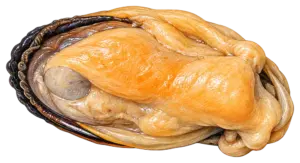
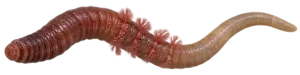
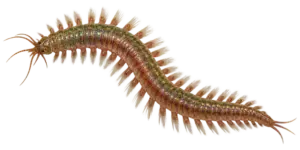
AI-generated illustrations. A click opens the lure’s page.
Rigs for these lures: surf rig.
Small mouth: slender baits, best at night.
How sole tastes and how to prepare it
The sole is regarded as an exceptionally tasty fish. Its white flesh is very firm, savoury with a slightly nutty note, and forgiving in cooking. Usually it goes into the pan whole or is steamed. Beforehand it is gutted; if you want fillets, you will find the sequence of cuts for flatfish in Filleting fish.
It tastes best in late summer and early autumn. At spawning time, when it is easiest to catch, its quality is lowest. Like all sea fish, the sole can carry roundworm larvae, which die on deep freezing and heating. Well cooked, it is therefore safe for healthy people.
What you need to observe
The sole is listed in the 2025 Red List of Marine Fishes of Germany as not threatened, previously on the early-warning list. After a recalculation in 2024 the Thünen Institute rates the North Sea stock as being in the green range.
Closed seasons (Schonzeit), minimum sizes (Mindestmaß) and harvest windows are set by the federal states (Bundesland) and by the fisheries authorities (Fischereibehörde) of the neighbouring coastal countries (Denmark, Norway, Poland). They vary by type of water, stretch of coast and time of year. We only give figures with a date and a source; the fisheries regulation of your federal state and your fishing permit (Erlaubnisschein) are always what counts. In Schleswig-Holstein they are set out in the Küstenfischereiverordnung and time-limited general orders. A list of links to the official sources is in the catch calendar.
A fish of legal size that you want to keep, you stun and kill immediately in line with animal welfare rules. Protected or undersized fish you unhook, if possible, with wet hands in the water and release gently.
What closed season, minimum size and harvest slot mean and where to find them is explained on the page Closed season and minimum size explained.
Frequently asked questions (FAQ)
Can you catch sole with a rod?
Yes, mainly on the North Sea coast. Best at night with lugworm or ragworm on small hooks, preferably at piers with current.
How do I recognise a sole?
By the slender, tongue-like shape, the round head with a small mouth and the dark spot at the end of the pectoral fin on the eyed side.
When is the best time for sole?
In summer and autumn. In winter it stands in deeper water and is barely reachable from the shore.
Sources
The rating of catch chances is an editorial assessment. The facts come from these sources, and the text is worded in our own words. The illustration is an original design by Angel Momente in the style of a natural history plate (AI-generated, see the AI notice).
- Thünen-Institut, Fischbestände online: Seezunge (Biologie, Merkmale, Verbreitung, Höchstwerte)
- Thünen-Institut, Fischbestände online: Nordsee-Seezunge (Bestandszustand)
- FishBase: Solea solea (Größe, Alter, Tiefe, Merkmale, Fortpflanzung)
- Havforskningsinstituttet: Tunge (Seezunge; Laichzeit, Laichgebiet, Größe)
- Blinker: Seezunge, Infos und Angeltipps (Merkmale, Laichzeit, Fangplätze, Köder)
- Rote-Liste-Zentrum: Seezunge (Rote Liste der Meeresfische Deutschlands 2025: ungefährdet)
- Land Schleswig-Holstein: Welche Mindestmaße und Schonzeiten gelten in Schleswig-Holstein?
- Thünen-Institut, Fischbestände online: Flunder
- Lex.dk (Den Store Danske): søtunge
- BZfE: Fisch und Meeresfrüchte, Gesundheit und Umwelt
- LAVES Niedersachsen: Parasiten in Fischen und Fischereierzeugnissen, ein Problem?
Created with AI support from the sources listed. Figures only appear in the text if a source gives them. Last updated: 27 October 2026. Found a mistake? Write to us. Who is behind this site: About me.
More in the lexicon
- All fish species at a glance
- Catch calendar – month, water temperature and profile for 93 species
- Line calculator – breaking strain after the knot, drag guideline, backing
- Angling methods