
Knowledge – Fish
Dab: Features, habitat, best time and baits
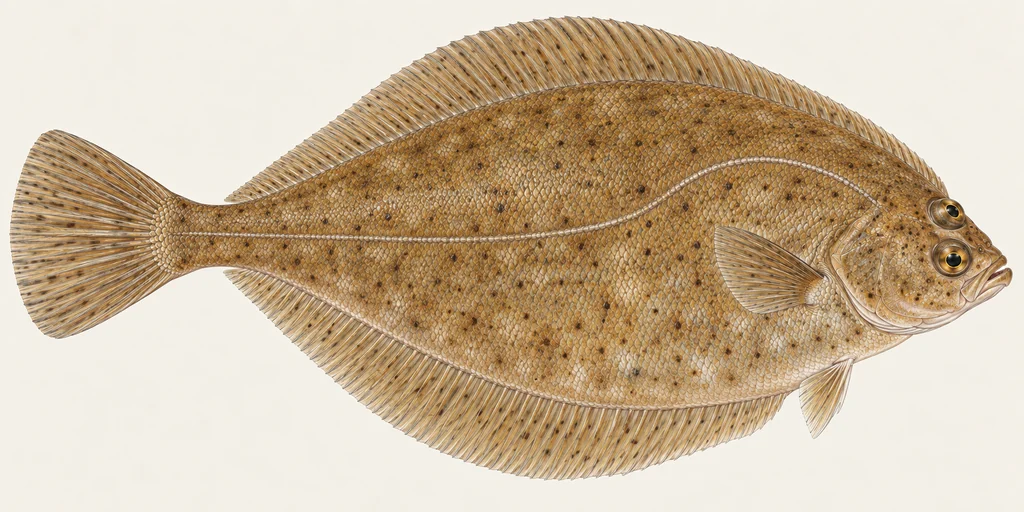
The dab (Limanda limanda), also called Scharbe, is one of the most common flatfish of the North Sea. You recognise it by the lateral line curved in a semicircle above the pectoral fin. It likes salty, deeper water. It is caught from a boat and, especially at night, also from the shore.
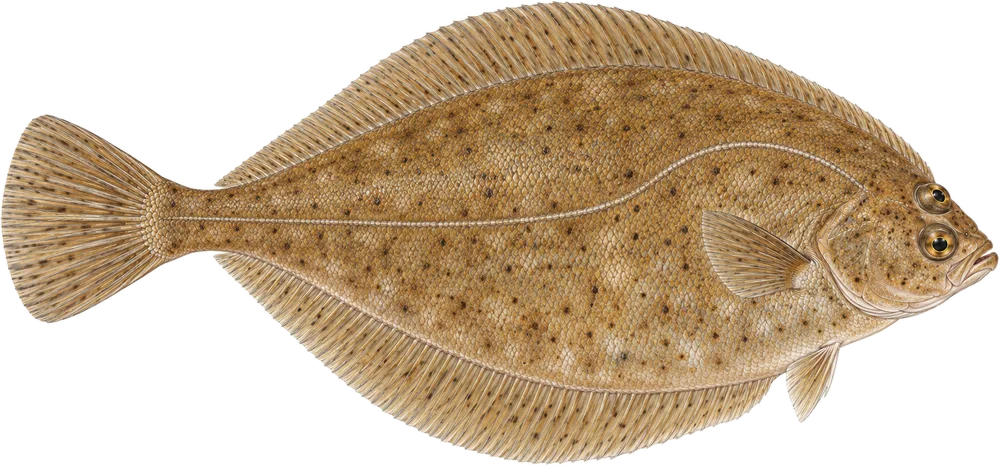
In brief: You catch dab best from September to October, mainly in the evening and at night. Good spots on the coast: sandy bottom and deep water. Proven baits: pieces of lugworm and ragworm, small fish strips and prawns on a paternoster. Recognisable by the lateral line curved in a semicircle above the pectoral fin. In the Baltic off Schleswig-Holstein the minimum size (Mindestmaß) is suspended until 31.12.2026 (as of October 2026). Step by step: Fishing for dab.
- Lateral line with a distinct semicircle over the pectoral fin
- Brownish eyed side without bright red spots, blind side pale to white
- Both eyes on the right side of the body, small mouth
Catch chances through the year
- Hardly any chance
- Possible
- Good
- Peak season
- Spawning (observe the closed season)
Editorial assessment for waters in Germany, not a measured value and no guarantee. Spawning time is not the same as the legal closed season.
Species profile and sources in the catch calendarAll species compared month by monthThe rules of your federal state
How to recognise it
Like the plaice and the flounder, the dab is one of the right-eyed flatfish. Its larvae first swim upright, and at a length of about 14 millimetres the left eye moves to the right side. The upper side is brownish, the blind side pale to white.
The surest feature is the lateral line. Directly behind the head it describes a clear semicircle above the pectoral fin. Then there is the skin: if you stroke from head to tail it feels smooth, against the grain you feel resistance.
Dab stay small. In the Baltic, the fish caught measure about 20 centimetres on average. The Thünen-Institut and FishBase give 40 centimetres, about one kilogram and twelve years as maximum values, the Swedish fisheries authority 13 years. The mouth is not much bigger than that of a large roach.
The dab is most often confused with the plaice, since many coastal anglers call all flatfish Butt. The plaice is smooth in every direction and has bumps on the head, while the dab is smooth in one direction only. The flounder feels like sandpaper along the lateral line. Neither of the other two has the semicircle of the lateral line.
Side by side
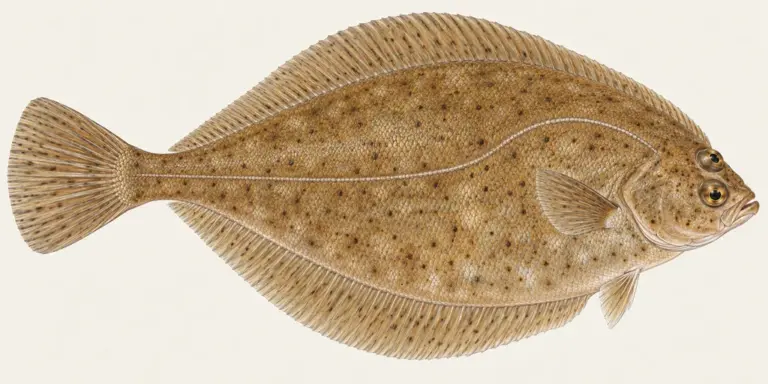
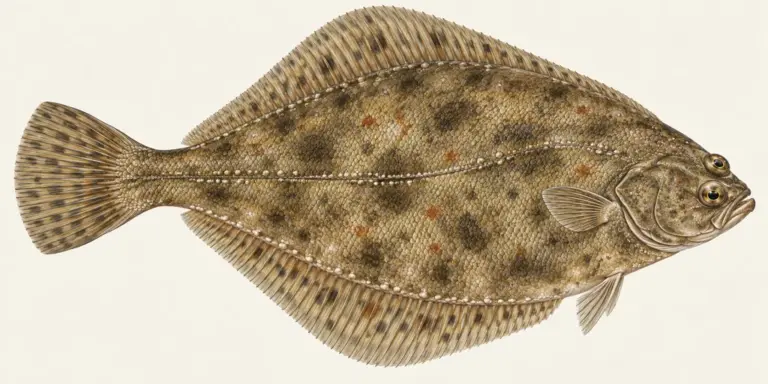
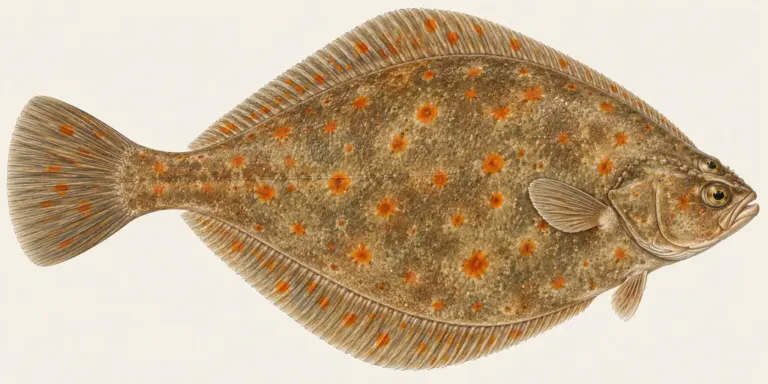
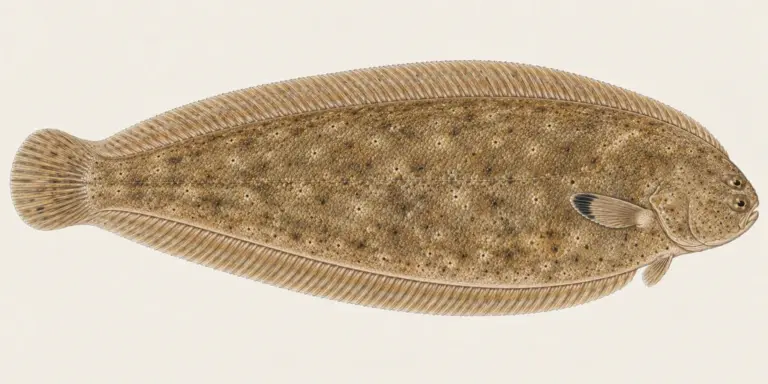
AI-generated illustrations.
Where it lives
You find the dab between the Bay of Biscay, Iceland and Norway, and also in the Barents Sea and the White Sea, and it reaches into the western Baltic. Its centre is the southern North Sea, and you also catch it well in the Kattegat. Young fish stand mainly in the south-eastern North Sea, older ones rather in the central and northern part.
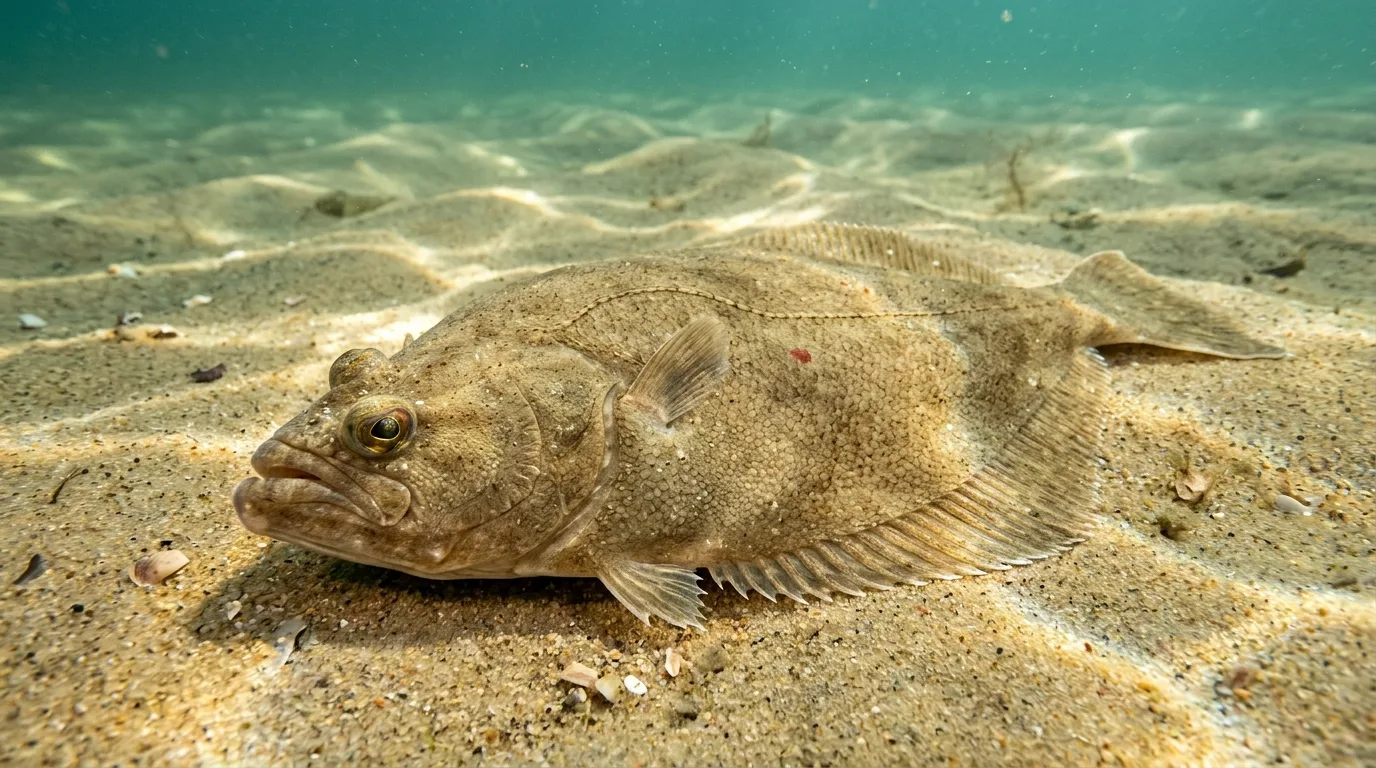
It lies on sand and silt, in two to 200 metres according to the Swedish authority, mostly down to about 100 metres according to FishBase. Anglers find it where there are at least six to eight metres of water. Large specimens stand deeper, for example on sandbanks in 20 to 30 metres or on sand fields around reefs and wrecks. It prefers spots with noticeable current and does not come as close inshore as the flounder.
The dab likes fairly salty water. Near larger freshwater inflows you will fish for it in vain. In the Baltic it lives in the salty west, in the Belts, in the Øresund and in the Kattegat, mostly in deeper, fast-flowing water over sand and silt. The fish usually gather in larger shoals, so you often catch several in one spot.
Holding spots in the picture
Choose a season and time of day: the picture shows where the species sits then. Tap a fish or a spot in the list to bring it closer. The picture is schematic and AI-generated, every water is different.
Catch chance in springpossibleSpawning season, observe closed seasons
Catch chance in summergood
Catch chance in autumnPeak season
Catch chance in wintergood
- J
- F
- M
- A
- M
- J
- J
- A
- S
- O
- N
- D
Spawning season
Not the main time In a calm sea and clear water flatfish usually bite in the evening and at night, in clouded water also by day.
Not the main time In a calm sea and clear water flatfish usually bite in the evening and at night, in clouded water also by day.
Active time In a calm sea and clear water flatfish usually bite in the evening and at night, in clouded water also by day.
Active time In a calm sea and clear water flatfish usually bite in the evening and at night, in clouded water also by day.
On the coast
Sandy bottom
Dab are found here all year round.
Deep, colder water
Dab are found here all year round.
The dab lives on the bottom over sandy, soft ground. In the Baltic Sea it usually keeps to deeper areas with current over sand and silt, mainly in the salty west. It is regarded as a resident fish and only moves back and forth between deeper water and the near-shore zone.
Spring: according to the catch calendar, chances are possible in March and April, good in May. The spawning season falls in this period, so observe the closed seasons. Spawning runs from December to June, with the peak from March to May.
Summer: according to the catch calendar, chances are good. In the Baltic Sea the months from May to November count as the season.
Autumn: according to the catch calendar, main season in September and October, good in November. In autumn and winter dabs hold at piers with a deep channel and strong current, best on the ebb.
Winter: good chance of a catch according to the catch calendar.
Depth: The dab lives from a few metres down to about 100 metres. In the Baltic Sea it usually holds at 6 to 8 metres at least.
Size comparison: AI-generated drawing, schematic.
How it feeds and spawns
Dab eat worms, crustaceans, brittle stars, mussels and snails, occasionally small fish such as gobies and sand eels. The Swedish authority sees them as food competitors of the plaice.
To spawn they seek out deeper water from about 30 metres. The spawning season depends on the sea area: Sweden gives April to August in the Skagerrak and Kattegat and April to June in the Baltic, the angling press January to July depending on the region. Eggs and larvae drift freely in the water. Males mature at two to four years, females at three to five.
Unlike flounder and plaice, dab undertake neither long spawning migrations nor far-ranging feeding migrations.
When it bites
You can catch dab all year round. For the Baltic, a booklet from 2007 gives May to November as the season; on the moles of the North Sea coast, October to April are the best months according to Rute & Rolle. During the spawning season the willingness to bite drops a little. In winter fishing is not always easy: the cold water dampens the appetite, and there are many missed bites.
In cold water you choose smaller pieces of bait. As with other flatfish, in calm seas and clear water the fish usually bite only in the evening and at night, in cloudy water also by day.
Today’s catch index needs JavaScript. Season and spawning time are in the catch calendar.
You will find the monthly overview of all species and the water temperature check in the catch calendar.
What to catch it with
Step by step: Fishing for dab: tips on bait, rig and tackle – season, spots, bait, tackle and rules on one page.
You catch dab from a boat or cutter and from the shore. Per day’s fishing the boat usually brings more, and large fish stand deeper. In a diary study by the Thünen-Institut on the Baltic, however, about two thirds of the dab came from the shore, because at night they often feed near the beach. Good shore spots are large moles, narrows and shores where the water quickly becomes deep.
A paternoster with two to three hooks on short side arms is usual. You tie the weight on as a running weight, as the running ledger rig shows: only that way do you notice the delicate plucks when the fish bite hesitantly. Small attractor beads or a small spoon in front of the hook help on days when the fish are reluctant.
Baits are small pieces of lugworm and ragworm, strips of mackerel, herring, sand eel or squid, and prawns. Hooks somewhat smaller than for plaice fishing are usual, mostly around size 4. In the Thünen study, however, larger hooks up to 2/0 were swallowed deeply less often, without fewer flatfish biting. In cold water, therefore, make the bait pieces smaller rather than the hook.
After the rig has sunk, you wind in a little line so that you are in contact with the rig, and if necessary hold it between two fingers. On a bite you lower the rod and give a little line for a moment so that the dab can take the bait. But do not wait long: a deeply swallowed hook harms the fish, and in the Thünen study dab survived release worst of the three flatfish species. When the pull becomes steady, you wind in. You can play a hooked dab in peace; landing and unhooking is described. At medium depths a light rod and a medium fixed-spool reel are enough.
Look at the lateral line first: The semicircle above the pectoral fin reliably separates the dab from plaice and flounder. Different rules may apply to these species.
Running weight instead of an end weight: Do not knot the weight at the end of the rig, but let it run. That way you also feel hesitant bites.
Adapt the bait to the season: In winter a piece of worm is enough instead of a whole one. You do not make the hook smaller, since larger ones are swallowed deeply less often.
Suitable lures
Pieces of lugworm and ragworm, small fish strips and prawns on a paternoster.
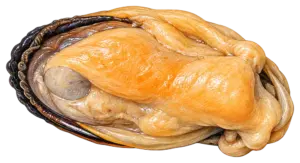
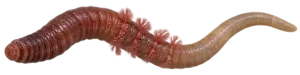
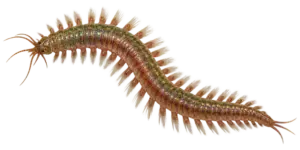
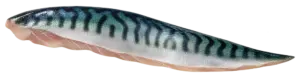
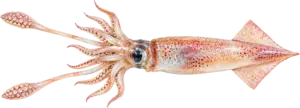
AI-generated illustrations. A click opens the lure’s page.
Rigs for these baits: surf rig, natural bait rig for the sea.
Small mouth: small baits and hooks.
What dab tastes like and what you can do with it
As a food fish the dab is underrated. Its flesh is delicate in flavour and suits many recipes, and the angling press counts it among the best-tasting flatfish. In the shops it counts as bycatch and is cheaper than sole and plaice. It is sold fresh, as fillets, deep-frozen and occasionally smoked.
Unlike flounder and plaice, it does not keep for long, and the quality of the flesh deteriorates quickly. So process or freeze the catch as quickly as possible. How to fillet and smoke is explained in the lexicon, as is storage. Before that, the fish must be stunned and killed.
What you need to observe
Closed seasons, minimum sizes and harvest slots are set by the federal states (Bundesländer) and by the fisheries authorities of the neighbouring countries on the coast (Denmark, Norway, Poland). They vary by type of water, stretch of coast and time of year. We only give figures together with the date and source; the fisheries regulation of your federal state and your fishing permit (Erlaubnisschein) are always what is binding. You will find a list of links to the official sources in the catch calendar.
A fish of legal size that you want to keep you stun and kill at once, in line with animal welfare rules. Protected, undersized fish or fish too large under a harvest slot you unhook, if possible still in the water and with wet hands, and release gently. What exactly applies is regulated by state law and your fishing permit (Erlaubnisschein).
In the Baltic, the catch rules for sea anglers change from year to year. Check the current version for your coastal state before every trip. According to the Thünen-Institut, the dab is regarded as not threatened in Europe and worldwide. In commercial fishing in the North Sea, the bulk of the catch is thrown back; in 2021 it was almost 90 per cent.
What closed season, minimum size and harvest slot mean and where to find them is explained on the page Closed season and minimum size explained.
What state law prescribes for closed season and minimum size for this species is in the “At a glance” box on the state page for Schleswig-Holstein. For the other states our overview does not list this species; there the state fisheries regulation is what counts.
Frequently asked questions (FAQ)
What does a dab feel like?
From head to tail it is smooth, against the grain you feel resistance. Then there is the semicircle of the lateral line above the pectoral fin, which plaice and flounder do not have.
Can I catch dab from the beach?
Yes, especially at night when they feed near the beach, and at large moles, narrows or shores with quickly deepening water. In a Thünen study on the Baltic, about two thirds of the dab came from the shore. Per day’s fishing the boat usually catches more.
How big should hook and bait be?
Usually around size 4, that is, somewhat smaller than for plaice fishing. According to the Thünen-Institut, larger hooks up to 2/0 are swallowed deeply less often, without fewer flatfish biting. The colder the water, the smaller the pieces of bait.
Sources
The rating of catch chances is an editorial assessment. The facts come from these sources, and the text is worded in our own words. The illustration is an original design by Angel Momente in the style of a natural history plate (AI-generated, see the AI notice).
- FishBase: Limanda limanda
- Thünen-Institut, Fischbestände online: Kliesche
- Thünen-Institut, Fischbestände online: Nordsee-Kliesche
- Havs- och vattenmyndigheten: Sandskädda (Laichzeit, Alter, Lebensraum)
- Blinker: Steckbrief Kliesche
- Blinker: Plattfische unterscheiden, Flunder, Kliesche und Scholle
- Blinker: Plattfischangeln, 10 Tipps
- Blinker extra: Die Fische der Ostsee und wie man sie beangelt (Stand 2007)
- Rute & Rolle: Köstliche Klieschen (Molen von Scheveningen, Oktober bis April)
- Thünen-Institut: Working Paper 262, Selektivität und Überlebensraten nach dem Zurücksetzen in der Angelfischerei auf Plattfische (Hakengröße, schneller Anhieb, Uferanteil der Fänge)
- Blinker: Plattfische angeln mit Wurm vom Ufer (Schollen und Klieschen am Strand)
- Wikipedia: Kliesche
Created with AI support from the sources listed. Figures only appear in the text if a source gives them. Last updated: 27 October 2026. Found a mistake? Write to us. Who is behind this site: About me.
More in the lexicon
- All fish species at a glance
- Catch calendar – month, water temperature and profile for 93 species
- Line calculator – breaking strain after the knot, drag guideline, backing
- Angling methods