
Knowledge · Types of water
Fishing from a charter boat and a boat
On a charter boat you stand at the rail with other anglers and the skipper finds the fishing marks; in a small boat you are the skipper yourself. In the Baltic Sea, fishing for cod is banned in 2026, there is only a narrow exception for salmon, and each coastal state handles the fishing licence differently.
At a glance
- Positions
- Bow and stern with free choice of side, drift-in and drift-out sides, amidships in front of high superstructures
- Fish
- Dab, plaice, flounder, herring, garfish, mackerel, whiting, sea trout; Baltic 2026: release cod only, keep salmon only with a clipped adipose fin
- Method
- Pilking with bottom contact, paternoster with natural bait for flatfish
- Papers
- Differs by coastal state, choose below
- Take care
- Hooks in a swell, seasickness on the North Sea, in your own boat distance, fuel and visibility
Charter boat or your own boat
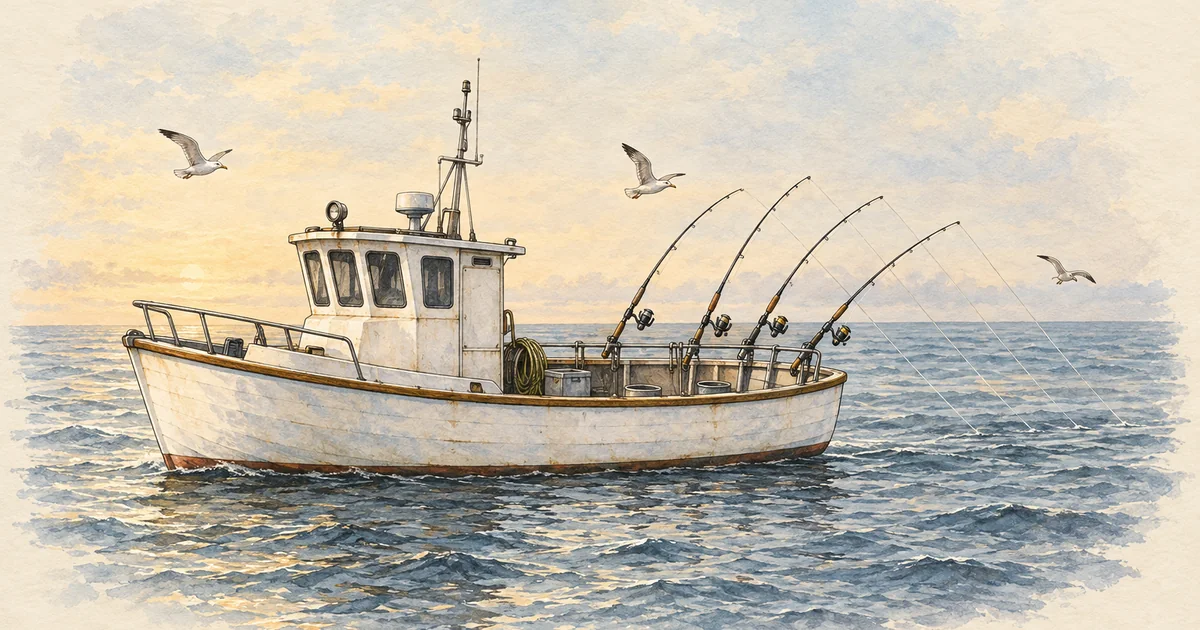
On the Baltic Sea you mostly fish from the shore. About 30 per cent of angling days are spent on boats and about 5 per cent on angling charter boats (Thünen-Institut, survey 2020/21: Lewin, Weltersbach und Strehlow 2023). On a charter boat the crew looks after safety; in your own boat you do (Seenotretter).
How a charter trip goes
The trade magazine Fisch & Fang describes the day on board like this. Tap a number:
- Place at the rail: It is often allocated when you book, otherwise whoever arrives first chooses. The bow and stern are the most sought after.Advantage: At the bow and stern you choose the side yourself.
- Drifting towards the bait: The boat drifts towards your bait. You cast far and fish until the boat is above the bait.
- Drifting away from the bait: The boat drifts away from the bait. You let it sink along the side of the boat and give a little line now and then. If you have to do that too often, you need more weight.
- Stop and signal: At the fishing mark the boat stops and goes into the drift. A horn signal releases fishing. Changing sides: The skipper usually turns the boat through 180 degrees after every stop, so each side fishes in turn with the drift towards and away from the bait. At the bow and stern you can choose the side.
- Amidships in front of high superstructures: If high superstructures are behind you, rods of up to 3,50 metres help with casting (Fisch & Fang). A rail clamp holds the rod securely to the rail.
- Casting direction: Look at which side the boat is drifting over, some over the bow, others over the stern. Fisch & Fang advises always casting in the direction of the drift and agreeing with your neighbours so that the lines do not cross. Rhythm: If your neighbour casts far, you cast short and retrieve faster (Fisch & Fang).
How pilking works is explained under Sea fishing. For flatfish Blinker names paternoster hooklengths with weights of 100 to 250 grams, baited with lugworms or ragworms, mussel meat or strips of fish. The set-up is shown in the natural-bait rig.
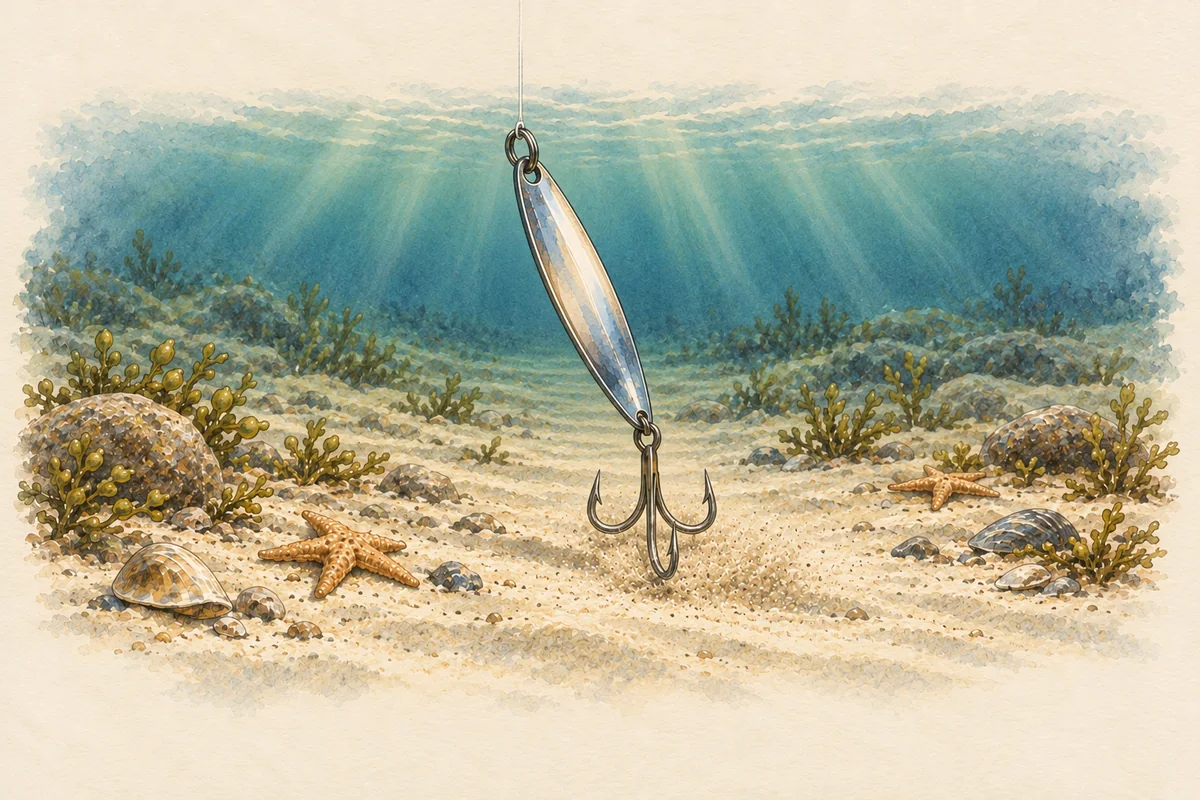
On the North Sea, according to Blinker, the boats usually stay out for 10 to 20 hours, because the trip out alone takes hours. In summer there are inshore trips of four to eight hours for mackerel or flatfish. Dress warmly, in windproof and waterproof clothing.
Anyone prone to seasickness should, according to Blinker, rather give up deep-sea fishing on the North Sea: with westerly winds from force 4 the boat rolls and pitches noticeably. Talk to a doctor or pharmacist about prevention; this text is no substitute for medical advice.
Tackle and equipment on board
On tackle values the magazines do not agree. For fine pilking and jigging in the Baltic Sea, Fisch & Fang describes a rod of at least three metres with a casting weight of 100 to 200 grams and braided line of 0,12 to 0,16 millimetres. If high superstructures are behind you, rods of up to 3,50 metres help with casting. For a pilker fished on its own, Blinker names a rod of 3,00 to 3,50 metres, 60 to 120 grams casting weight and a reel of size 4000 to 5000. Both are guide values. Rod types are explained under sea rod, the lure on the Pilker page.
A rail clamp holds the rod securely to the rail. Fisch & Fang also lists a fish priest, bucket, cloth, in summer a cool box with ice, wellies and rain clothing. For killing see Stunning and killing fish.
Methods and rigs
Pirking
How pilking works is explained under Sea fishing, the lure on the Pilker page.
Flatfish
Blinker names paternoster hooklengths with weights of 100 to 250 grams, baited with lugworms or ragworms, mussel meat or strips of fish. The set-up is shown in the natural-bait rig.
Tackle on board
Rod types are explained under sea rod. A rail clamp holds the rod securely to the rail.
Drawings: AI-generated, schematic.
Which fish end up on board
According to the Thünen study, the Baltic Sea is fished mainly for cod, the flatfish dab, plaice and flounder, herring, garfish, sea trout and salmon. Among the catches it also names mackerel and whiting. The survey dates from 2020/21, so the cod catches in it are no yardstick for today.
Baltic Sea 2026: recreational fishing banned, release every cod straight back into the sea.
The predator lives near the bottom. According to Fisch & Fang, pilking without bottom contact therefore brings nothing.
For flatfish from a charter boat Blinker names paternoster hooklengths with 100 to 250 grams of lead and worms, mussel meat or strips of fish as bait.
A flatfish like the dab, same rig. In summer there are inshore trips for flatfish on the North Sea.
The third flatfish of the Baltic charter boats, also on a paternoster with natural bait.
According to the Thünen study, one of the species fished for from boats and charter boats in the Baltic Sea.
Also a target fish of boat anglers in the Baltic Sea, according to the Thünen study.
In summer there are inshore trips of four to eight hours on the North Sea for mackerel or flatfish (Blinker).
The Thünen study names it among the catches in the Baltic Sea.
Target fish when boat fishing in the Baltic Sea, according to the Thünen study.
Baltic Sea 2026: only one salmon with a clipped adipose fin per day, every salmon with an adipose fin goes back.
When you may keep one is shown by the decision path below.
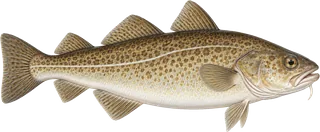
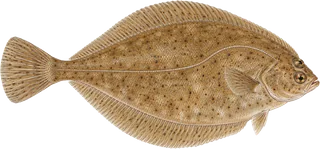
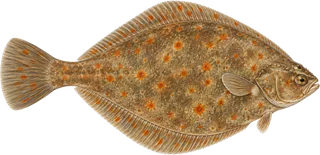
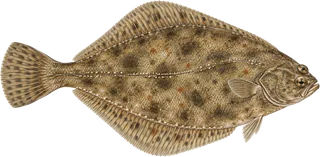
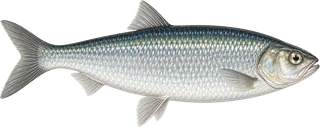

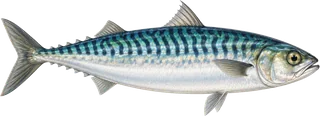
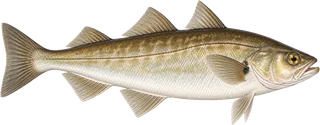
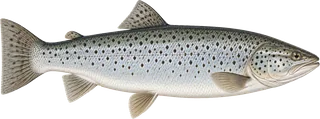
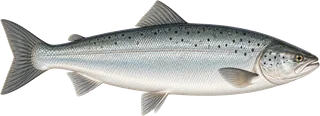
Fish pictures: AI-generated illustrations. A click opens the portrait.
The bands come from the catch calendar and apply to the North Sea and Baltic Sea together. For cod, salmon, eel and sea bass the EU rules in the next section also apply in 2026.
EU rules 2026: cod, salmon, eel and sea bass
The Council of the EU decides the fishing limits for the Baltic Sea anew every year. For 2026 this is governed by Verordnung (EU) 2025/2454:
- Cod: Recreational fishing for cod is banned in subdivisions 22 to 32 (Artikel 10). The German Baltic coast lies in subdivisions 22 and 24. A cod caught by accident must go straight back into the sea.
- Salmon: Angling for salmon is also banned in subdivisions 22 to 31 (Artikel 11). One salmon with a clipped adipose fin per angler per day remains allowed. After that you stop fishing for salmon for the day. Every salmon with an adipose fin goes back. You may keep it only from 60 centimetres and outside the closed season (Schonzeit) of your coastal state: in Mecklenburg-Western Pomerania from 15 September to 14 December, in Schleswig-Holstein for salmon in spawning dress from 1 October to 31 December (LALLF, Merkblatt Schleswig-Holstein).
- Landing: Anyone who keeps a salmon under this exception must land all retained fish of every species whole.
- Eel: Recreational fishing for eel is banned in 2026 in the North Sea and Baltic Sea (Verordnung (EU) 2026/249, Land Schleswig-Holstein). An eel on the hook goes straight back.
- Sea bass in the North Sea: From 1 February to 31 March you may only catch it and release it straight away. In January and from 1 April to 31 December you may keep no more than three sea bass a day, each at least 42 centimetres long (Artikel 10 der Verordnung (EU) 2026/249).
As of: October 2026. The regulation applies from 1 January to 31 December 2026. The Deutscher Angelfischerverband reported on the decision in October 2025. How to release a fish gently is explained under Releasing fish.
Since 10 January 2026 Germany has had to ensure under EU law that sea anglers register and report catches of certain species in the RecFishing app, including released fish. For now these are eel, cod and salmon in the Baltic Sea and sea bass and eel in the North Sea. On guided trips the operator can make the report for you. Whether the duty already applies to you is shown at the Portal Fischerei von Bund und Ländern.
Fishing licence and minimum sizes in each coastal state
The licence and minimum sizes depend on the coastal state in whose waters you fish. Choose yours:
Schleswig-Holstein
A fishing licence (Fischereischein) is compulsory in principle. On commercial angling charter boats the requirement lapses if the operator takes over supervision. That is a discretionary rule, so ask beforehand. You pay the fishing levy (Fischereiabgabe) in every case. If you have no licence, you can apply for the holiday licence (Urlauberfischereischein) for 28 days. You need no further permit in the coastal waters, except in the Schlei, the inner Neustädter Bucht, the inner Lübecker Bucht with the Trave mouth and the Lower Eider from the B5 bridge at Tönning (Merkblatt, Landesregierung, Hinweise zur Angelfischerei).
- Minimum sizes: plaice 27 cm in the North Sea and 25 cm in the Baltic Sea, cod in the North Sea 35 cm, mackerel in the North Sea 30 cm, herring in the North Sea 20 cm (Merkblatt zum Urlauberfischereischein, list not complete).
Mecklenburg-Western Pomerania
You always need the fishing licence (Fischereischein), the fishing permit and proof of payment of the fishing levy (Fischereiabgabe), also on the Baltic Sea as far as German territorial sovereignty reaches. Without an exam, the tourist fishing licence (Touristenfischereischein) is available for up to 28 days (LALLF).
- Minimum sizes: flounder, dab and plaice 25 cm each (LALLF, Mindestmaße und Schonzeiten).
Lower Saxony
In the coastal waters fishing is free (§ 16 Nds. FischG). The implementing provisions (Ausführungsbestimmungen) require a fishing licence (Fischereischein) at sea only from the person in charge of the vessel, not from paying guests on an angling trip. Whether you need one in your own boat is something to clear up beforehand with the Staatliches Fischereiamt Bremerhaven. For the outer and lower Weser you need its fishing permit (Erlaubnisschein), which is only issued with a fishing licence or proof of having passed the exam (Bedingungen des Fischereiamts).
- Minimum sizes (Mindestmaße): plaice and whiting 27 cm each, cod 35 cm, mackerel 30 cm, herring 20 cm (Staatliches Fischereiamt Bremerhaven).
More on the licence can be found under Fishing licence and angling exam.
What counts is the coastal fisheries regulation (Küstenfischereiverordnung) of the state in whose waters you fish. How to measure is explained in Closed season and minimum size.
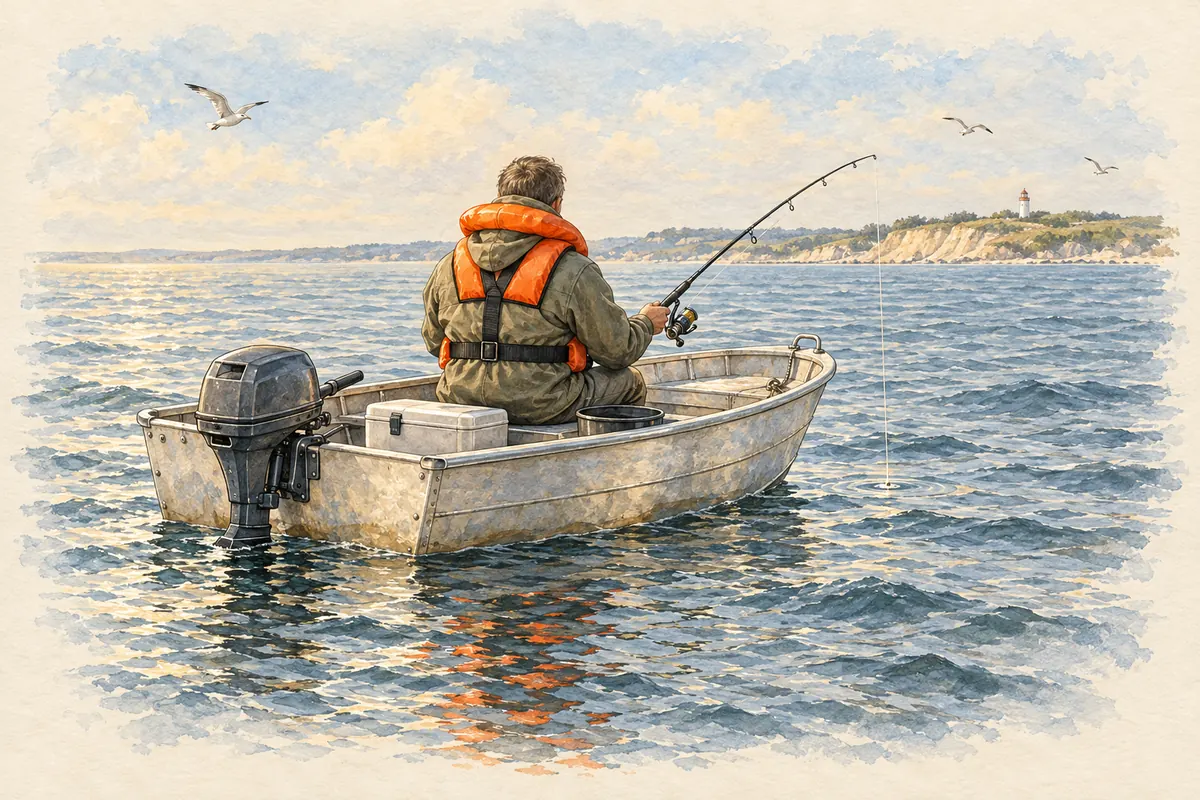
In your own or a hired boat
You may drive a sport boat without a licence (Sportbootführerschein) if the combustion engine delivers at most 11,03 kilowatts (15 hp) and the electric motor at most 7,5 kilowatts (§ 5 Sportbootführerscheinverordnung). Above that, on the sea shipping lanes (Seeschifffahrtsstraßen) you need the sport boat licence for this area (ELWIS).
As minimum equipment, the booklet „Sicherheit auf dem Wasser“ from the Bundesverkehrsministerium, BSH and WSV lists:
- a life jacket for every person on board
- fire-fighting equipment and distress signals for emergencies
- a bilge device, that is a pump, bucket or bailer
- first-aid equipment
According to the booklet, even good swimmers wear the jacket on the water. The Seenotretter (sea rescuers) recommend the 150-newton class for all waters; it keeps you safe even if you pass out. They also advise a compass, GPS and a radio, because mobile reception at sea ends after a few kilometres, bright clothing and a look at the weather and tides before setting out. More on this: Boat and life jacket.
Common mistakes
- Pilker too light: If you constantly have to pay out line to keep the lure down, you are better off, according to Fisch & Fang, picking a heavier one.
- No contact with the bottom: Anyone who jigs wildly while the lure shoots along near the surface gets nowhere, says Fisch & Fang, because cod live on the bottom as predators.
- Drag too tight: Set it so that you can pull line off over the bent rod tip with light effort. A drag that is too tight causes hook pulls, according to Fisch & Fang. How to set it is shown in Setting the reel drag.
- Handling gear in a swell: When baiting up and unhooking in a swell, the barb quickly ends up in a finger, or someone goes overboard (Seenotretter).
- Too far out in your own boat: The Seenotretter name underestimated distances, an empty tank and overestimated skill in poor visibility as reasons for calls for help.
Before you set off
- Papers for your coastal state sorted out, asked the operator what they require
- Dressed warm, windproof and waterproof, hat, gloves, rubber boots
- Rail clip, fish priest, bucket, rag, in summer a cool box with ice
- Pilkers in several weights, heavier ones too for drifting away from the lure
- Drag set, see Setting the reel drag
- Baltic Sea 2026: cod straight back, salmon only with the adipose fin clipped, from 60 cm and outside the closed season (Schonzeit), one per day. Eel in the North Sea and Baltic straight back
- Own boat: life jacket for every person, distress signals, bilge device, first aid, compass, GPS and radio
- Weather and tides checked before setting out, using Weather by the water
Frequently asked questions
Do I need a fishing licence (Fischereischein) for a charter boat trip?
That depends on the state; the details are in the section above on the fishing licence and minimum sizes. Ask the operator before booking what they require.
May I keep a cod in the Baltic Sea in 2026?
No. Recreational fishing for cod is banned in subdivisions 22 to 32, and the German coast lies in 22 and 24. A cod on the hook goes straight back into the sea. For salmon, one fish per day with a clipped adipose fin is still allowed if it measures at least 60 centimetres and was not caught in the closed season.
How long does a charter boat trip take?
On the North Sea usually 10 to 20 hours; in summer there are trips close to the coast lasting four to eight hours. According to Blinker, multi-day trips are also offered.
Where is the best place to stand on board?
Bow and stern are sought after because you choose the side yourself there and can fish either the drift towards or away from the lure. The operator often assigns the spot when you book.
Examples in the areas
These area pages describe waters of this type with their local rules:
Germany: Baltic coast of Schleswig-Holstein, North Sea coast, Rügen and Hiddensee, Usedom, Achterwasser and Peenestrom, Fehmarn, Schlei, Fishing in Schleswig-Holstein, Thuringian Sea, Leipzig New Lakeland
Denmark: Bornholm, North Jutland with Hirtshals and Skagen, East Jutland and Djursland, Lillebælt
Norway: Southern Norway and the Oslofjord, Central Norway with Hitra and Frøya, Northern Norway and the Lofoten Islands, Lofoten and Vesterålen, Senja and Tromsø
Sweden: Stockholm Archipelago, Vänern and Vättern
Poland: Polish Baltic coast, Masuria
The Netherlands: Zeeland and the delta waters, Biesbosch and Hollands Diep, Randmeren
Switzerland: Lake Geneva
Italy: Northern Adriatic, Lago Maggiore, Lake Como and Lake Iseo, Sardinia
Related
- Sea fishing: pilking and surf fishing
- Pilking: drift, pilker weight and teaser
- Sea paternoster and natural bait rig for flatfish
- Boat and life jacket: buoyancy classes and fit
- Tides: low and high water for planning on the North Sea
- Catch calendar with the sea fish
- Thunderstorms and weather, Weather by the water
Sources
- Verordnung (EU) 2025/2454 des Rates vom 1. Dezember 2025, Fangmöglichkeiten in der Ostsee für 2026 (Abdruck bei der Bundesanstalt für Landwirtschaft und Ernährung)
- Land Schleswig-Holstein: Wichtige Fragen und Hinweise zur Angelfischerei und Merkblatt zum Urlauberfischereischein (Stand März 2026)
- LALLF Mecklenburg-Vorpommern: Fischereischein und Angelerlaubnis, Mindestmaße und Schonzeiten
- Niedersächsisches Fischereigesetz, § 16, Ausführungsbestimmungen, Abschnitt V, Staatliches Fischereiamt Bremerhaven
- Sportbootführerscheinverordnung, § 5; ELWIS: Sportbootführerscheine
- BMDV, BSH, WSV: Sicherheit auf dem Wasser (Dezember 2023); Die Seenotretter: Angeln an der Küste und auf See, Sicherheitsausrüstung auf See
- Lewin, Weltersbach, Strehlow (2023): Eine Charakterisierung der marinen Angelfischerei in Deutschland, Zeitschrift für Fischerei 3
- Fisch & Fang: Ein Platz an der Reling (2010); Blinker: Hochseeangeln Nordsee und Ostsee (2019)
- Saisonbänder der Fischkarten: Fangkalender von Angel Momente (redaktionelle Einschätzung mit den dort genannten Quellen)
Text AI-assisted, drawings AI-generated. Sources opened and checked in October 2026; no graphics taken from the sources.
Guide without guarantee. As of 26 October 2026, checked against state law and authority websites. What counts are the EU regulation on fishing opportunities, the coastal fisheries regulation (Küstenfischereiverordnung) of the respective state and the captain’s instructions on board.