
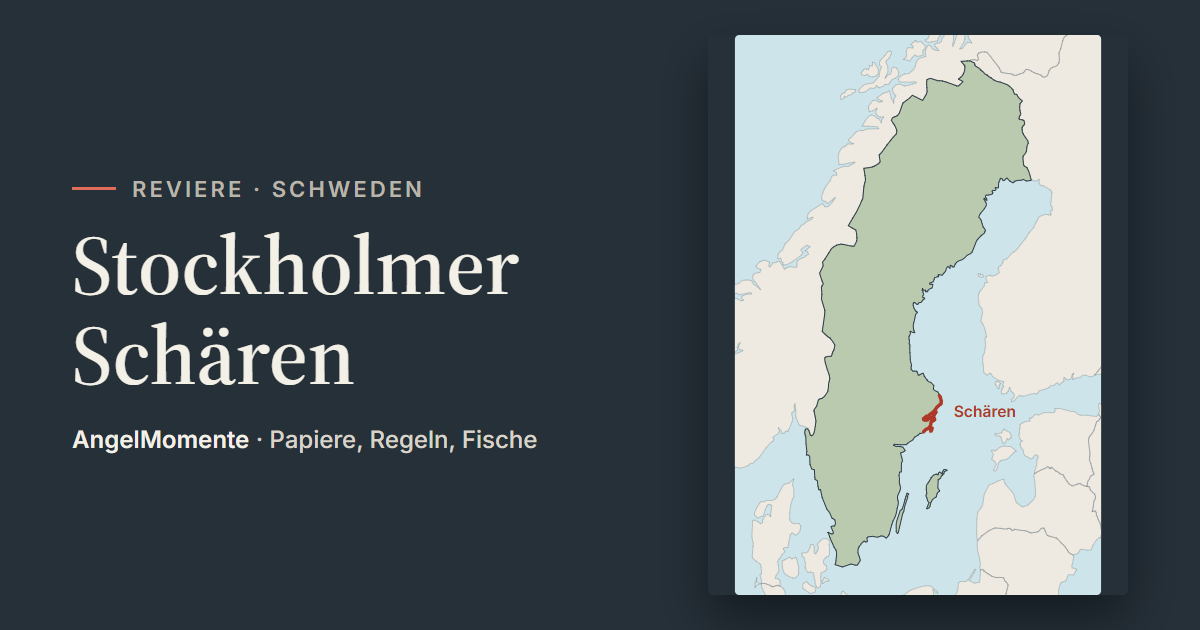
Fishing waters · Sweden
Fishing in the Stockholm archipelago
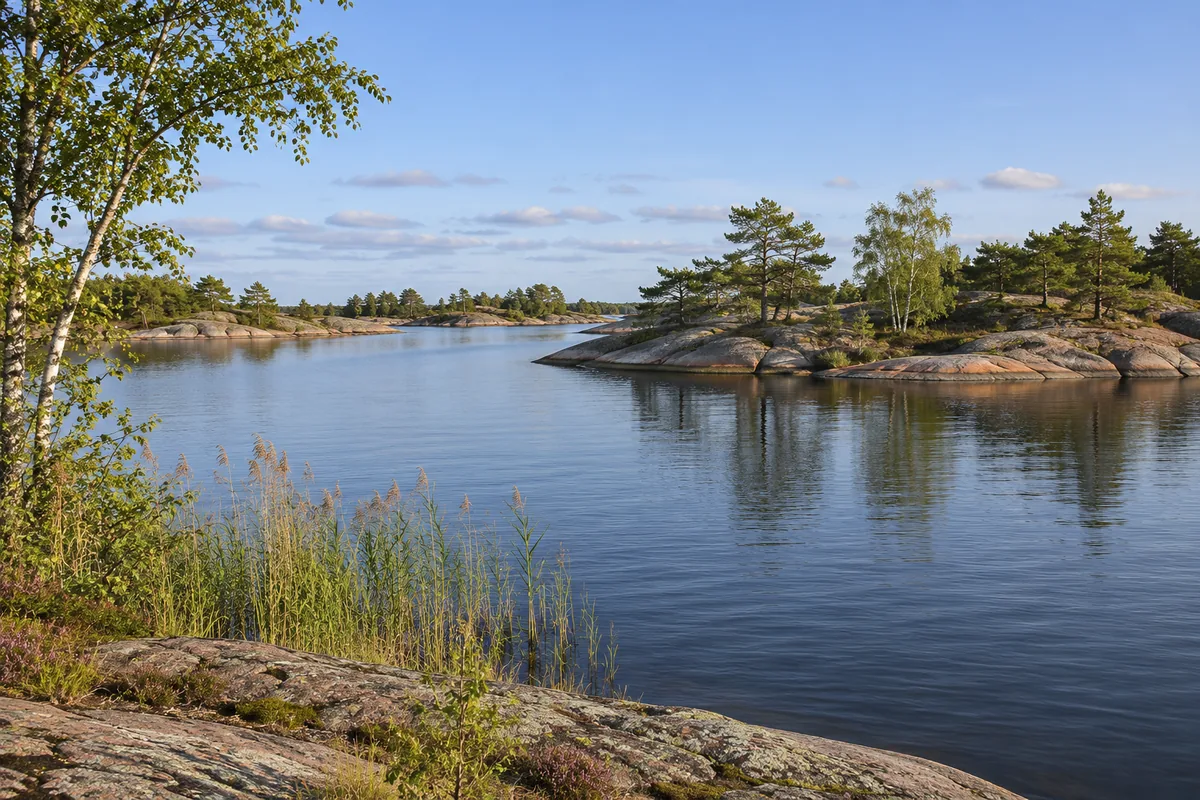
The Stockholm archipelago stretches from the edge of the city far out into the open Baltic. The water is brackish, and pike, perch and zander share it with the sea trout. With hand-held tackle you need no fishing permit on the coast, but you must know the many protected areas in spring.
- Papers
- Coast and Mälaren: no permit; other waters: fiskekort
As of October 2026
At a glance
- Papers
- Coast and Mälaren: no permit; other waters: fiskekort
| Fish | Minimum size | Closed season | Catch limit | Note |
|---|---|---|---|---|
| Pike | 40 cm | none | 3 a day including zander | Maximum size 75 cm; in the protected bays usually 1.4.–15.6. fishing ban |
| Perch | – | none | – | in the protected bays usually 1.4.–15.6. fishing ban |
| Zander | 45 cm | none | 3 a day including pike | Maximum size 60 cm on the coast; Mälaren 45 cm |
| Sea trout | 50 cm | none | 1 with adipose fin per day | off protected river mouths usually 15.9.–31.12. fishing ban |
| Atlantic salmon | 60 cm | none | 1 a day, only with the adipose fin clipped | when trolling, only with the adipose fin clipped all year round |
| Cod | 38 cm | Fishing ban 2026 | – | only unintentional bycatch may be kept |
| Eel | – | protected all year round | – | banned at sea since 2007 |
Values for hand-held tackle on the Baltic coast under FIFS 2004:36 (version of 1 July 2026) and Regulation (EU) 2025/2454 for 2026. On Mälaren FIFS 2004:37 applies, on smaller waters the rules of the rights holder. As of October 2026. What counts are the regulation and your fishing permit (Erlaubnisschein).
Location and waters Outer archipelago, inner archipelago and Mälaren
The archipelago forms the coast of Stockholm County. In the open water of the outer archipelago salinity is mostly around 6 per mille, in small lagoons it varies more (Länsstyrelsen Stockholm, Bericht 2026:04). Under the division used in the fisheries regulation, the archipelago lies in subdivisions 27 and 29 of the Baltic.
In the middle of Stockholm the sea meets Mälaren. The border is formed by the weirs and locks in the city centre and the Slussbron in Södertälje. Above them the freshwater rules apply (FIFS 2004:36, Anlage 2).
Fish and the best time Pike, perch and zander
- Pike: In the Baltic it lives mainly in archipelago areas. It spawns from March to June, on the coast in shallow, weedy bays that warm up quickly in spring (Havs- och vattenmyndigheten).
- Perch: It spawns in shallow water from April to July. Coastal perch often move into fresh water for this (Havs- och vattenmyndigheten).
- Zander: In the Baltic it is widespread in the inner archipelago from Östergötland to Uppland, and also in Mälaren (Havs- och vattenmyndigheten).
- Sea trout: The county administrative board supports measures to improve its conditions in the archipelago. In autumn it runs up the streams to spawn (Länsstyrelsen Stockholm).
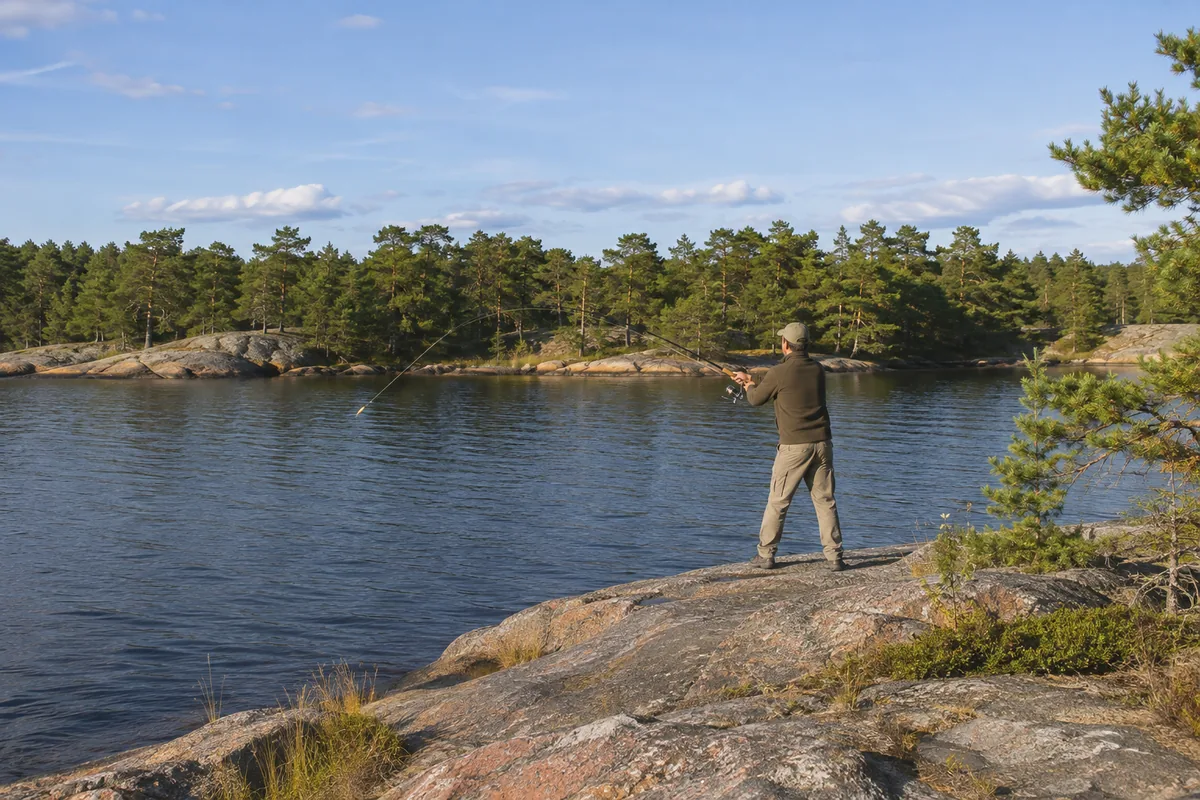
Predatory fish have declined in the archipelago over the years. According to the county administrative board they have largely disappeared from the outer archipelago, where pike lack spawning and nursery grounds. The catch calendar shows when each species is in season. The spawning bays are closed in spring, see below.
Papers and permit Free with hand-held tackle, trolling only in public water
On the coast and on Mälaren you fish with hand-held tackle without a permit, as a guest from abroad under the same rules as Swedes (Länsstyrelsen Stockholm). In private water off the shore your method must not require a boat on the coast of the county (Fiskelag, Anlage). This mainly affects trolling. Where private water begins is explained on the country page Angling holidays in Sweden.
For smaller lakes, rivers and streams you need the fishing permit of the rights holder, the fishing card (fiskekort). The fisheries management areas (fiskevårdsområden) with links to the permit sellers are on fiskekartan.se, the register of the Länsstyrelser. More on the principle under Fishing permit and water map.
Special rules 62 bays with a fishing ban and river mouths in autumn
Because the coastal stocks have declined, there are, according to the county administrative board, 62 bays with a fishing ban (fiskeförbud) in spring, nine of them closed all year round. In addition there are 14 river mouths where fishing is not allowed in autumn during the sea trout spawning run (Länsstyrelsen Stockholm). The protected areas (fredningsområden) are listed in Annex 5 of regulation FIFS 2004:36:
- Spring: In most bays all fishing is banned from 1 April to 15 June. Some areas are closed from as early as 1 January or from 15 September of the previous year, a few all year round.
- Autumn: Off the protected river mouths fishing is usually suspended from 15 September to 31 December, at some from as early as 1 September.
- Where the areas are: The maps of the county administrative board show the spring areas. The map of Svenska fiskeregler shows all areas with their boundaries.
Sizes and daily limits for pike, zander, sea trout and salmon are in the box. In addition:
- Cod: Angling for cod is banned in 2026. Because the archipelago lies in subdivisions 27 and 29, you may keep a cod that bites unintentionally while you are fishing for other species (Verordnung (EU) 2025/2454, Artikel 10).
- Salmon: One fish with the adipose fin clipped per person and day, after that salmon fishing ends for the day (Article 11). When trolling in the Baltic you may keep only salmon with the adipose fin clipped all year round (Lachs-Seite der Behörde).
As of October 2026. The boundaries and number of protected areas change with new versions of the regulation. What counts is FIFS 2004:36 in its current version with its Annex 5, for cod and salmon the EU regulation for 2026.
Related
- Angling on the Bodden and fjords, Angling from charter boats and boats and Angling holidays in Sweden
- More archipelagos on the Swedish Baltic coast: Blekinge archipelago
- Pike, perch, zander and sea trout in the fish lexicon
- Closed season and minimum size explained, Returning fish and Boat and life jacket
Sources
- Länsstyrelsen Stockholm: Fischerei, Karten der Schutzgebiete 2024 und Fischpflege (abgerufen 04.10.2026)
- Länsstyrelsen Stockholm: Restaurering av rovfiskbestånd i Stockholms ytterskärgård, Bericht 2026:04
- FIFS 2004:36: Fischerei in Skagerrak, Kattegat und Ostsee (Fassung 01.07.2026) und Fiskelag (1993:787)
- Havs- och vattenmyndigheten: Regeln für Pike, perch, Zander, Sea trout und Salmon; Artseiten Pike, perch und Zander
- Verordnung (EU) 2025/2454: Fangmöglichkeiten Ostsee 2026
- Svenska fiskeregler (Regeln mit Karte) und fiskekartan.se (Register der Länsstyrelser für Fischereipflegegebiete)
Guide without guarantee, as of October 2026. What counts are the Swedish fisheries rules, in particular FIFS 2004:36 with its protected areas, and the EU regulations as currently in force.