
Knowledge · Types of water
Fishing in the Bodden, Förde and fjord
A Bodden is a shallow lagoon of the Baltic Sea with slightly brackish water. Pike, zander and perch live there alongside herring and flounder. A Förde and a fjord are also sheltered arms of the sea, but built differently, and each country has its own rules.
At a glance
- Spots
- Weed beds, bays and inflows (mind the protected zones), in winter some harbours (winter refuges restricted)
- Fish
- Pike, zander and perch alongside herring, flounder and garfish; sea trout mainly in Schleswig-Holstein
- Water
- On average under 3 to 9 parts per thousand of salt, large parts shallower than two metres
- Papers
- M-V: fishing licence (Fischereischein), fishing permit, fishing levy (Fischereiabgabe). S-H: fishing licence and levy, in the Schlei a fishing permit (Erlaubnisschein)
- Take care
- Wind raises and lowers the level by more than 1.5 m; cod taboo in 2026; in M-V new sizes since 29 September 2026
Bodden, Förde, fjord: how they differ
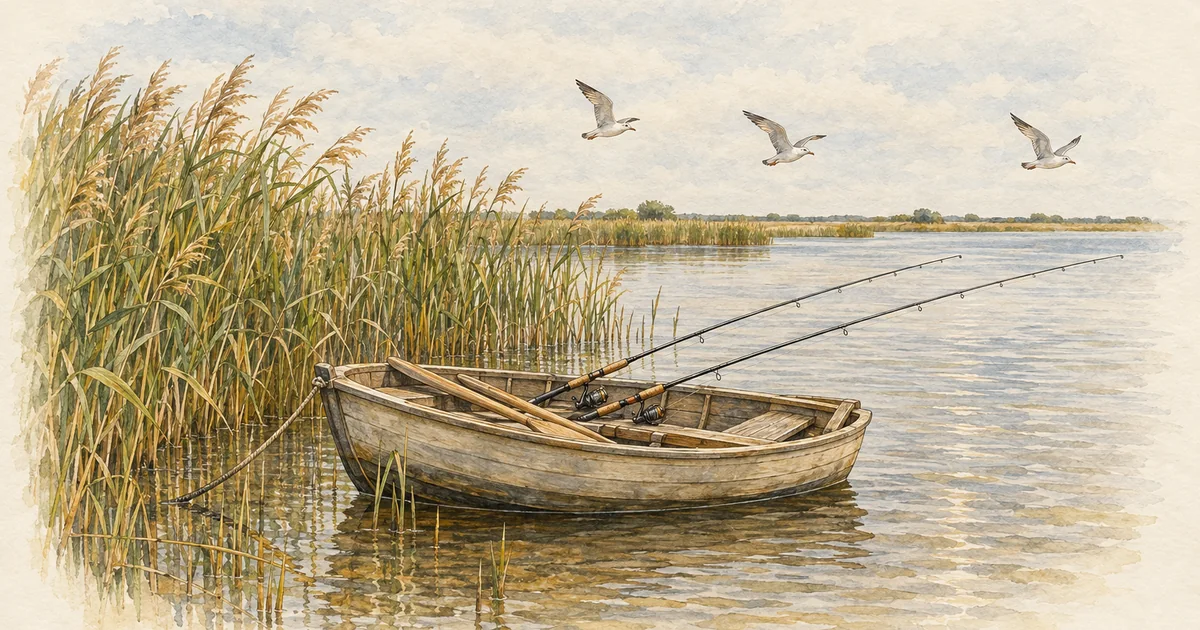
- Bodden (Mecklenburg-Western Pomerania): shallow coastal waters that separate islands or peninsulas from the sea, with less salt and hardly any swell (Nationalparkamt Vorpommern). The salinity averages between under three and nine parts per thousand, and a large part of the area is shallower than two metres (Leibniz-Institut IGB, Projekt Boddenhecht). The Greifswalder Bodden, the largest, is 5.6 m deep on average and 13.5 m at most (Institut für Ostseefischerei, 1999).
- Förde (Schleswig-Holstein): The Förden were carved by the glacier tongues of the Weichselian glaciation (Land Schleswig-Holstein, Fachplan Küstenschutz).
- Fjord (Norway): shaped by a glacier, often with a sill towards the sea and mostly 300 to 500 m deep. Brackish water lies there only in the top 5 to 10 m (Havforskningsinstituttet). The rules are under Fishing in Norway.
Freshwater fish and sea fish side by side
- under 3 to 9 ‰ average salinity of the Bodden
- up to about 10 ‰ brackish-water pike breed successfully
- up to about 15 ‰ of salt is tolerated by pike
- Fjord brackish water lies only in the top 5 to 10 metres (Havforskningsinstituttet)
Pike, zander and perch are freshwater fish that have colonised the Bodden (IGB). Pike tolerate salt up to about 15 parts per thousand.
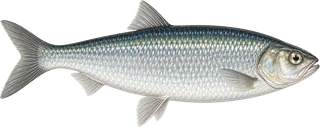
Herring and flounder come in from the sea. The herring of the western Baltic migrates every spring to spawn in the Greifswalder Bodden, its most important spawning ground (Institut für Ostseefischerei). Anglers on the Bodden also target garfish, and on the Baltic coast of Schleswig-Holstein mainly sea trout. The rules for cod in the fjord are on the Norway page.
Freshwater fish that has colonised the Bodden. In Mecklenburg-Western Pomerania a closed season from 1 March to 30 April, minimum size 60 centimetres.
Freshwater fish in the Bodden. In Mecklenburg-Western Pomerania a closed season from 23 April to 22 May.
Freshwater fish in the Bodden. In Mecklenburg-Western Pomerania a minimum size of 20 centimetres, fifteen per fishing day.
Comes every spring to spawn in the Greifswalder Bodden, its most important spawning ground.
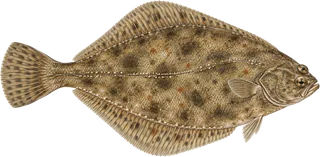
Sea fish of the Bodden, caught bottom fishing with the natural bait rig.
Anglers on the Bodden target it too.
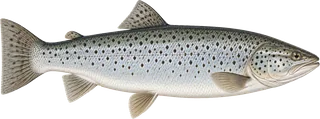
Mainly on the Baltic coast of Schleswig-Holstein. In Mecklenburg-Western Pomerania a closed season from 15 September to 14 December.
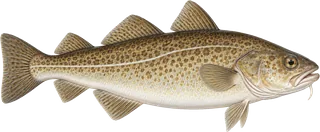
Baltic Sea 2026: prohibited for anglers, including in the Förden. Release every cod straight away.
The rules for the fjord are on the Norway page.
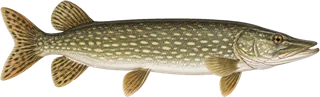
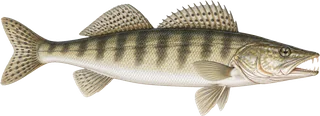
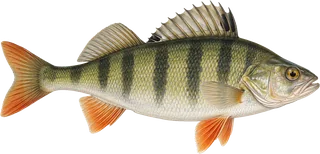

Fish pictures: AI-generated illustrations. A click opens the portrait.
The bands and red dots come from the Catch calendar. Closed seasons are set by the state; those for Mecklenburg-Western Pomerania are below.
Spotting promising places
Tap a number on the map and below it you can read what makes the spot:
- Weed beds: Up to about 40 cm in length, pike are closely tied to aquatic plants as cover. Their stock depends on extensive plant growth (IGB).
- Bays and inflows: To spawn, Bodden pike head for bays and banks, and every inflow qualifies as a spawning site (IGB). That is exactly where protected zones lie.
- Harbours in winter: In some harbours many fish gather in winter, pike included (IGB). Such winter refuges are restricted by general order (LALLF).
- Wind: It regularly raises and lowers the water level by more than 1.5 m (Nationalparkamt). Shallow areas can then dry out.
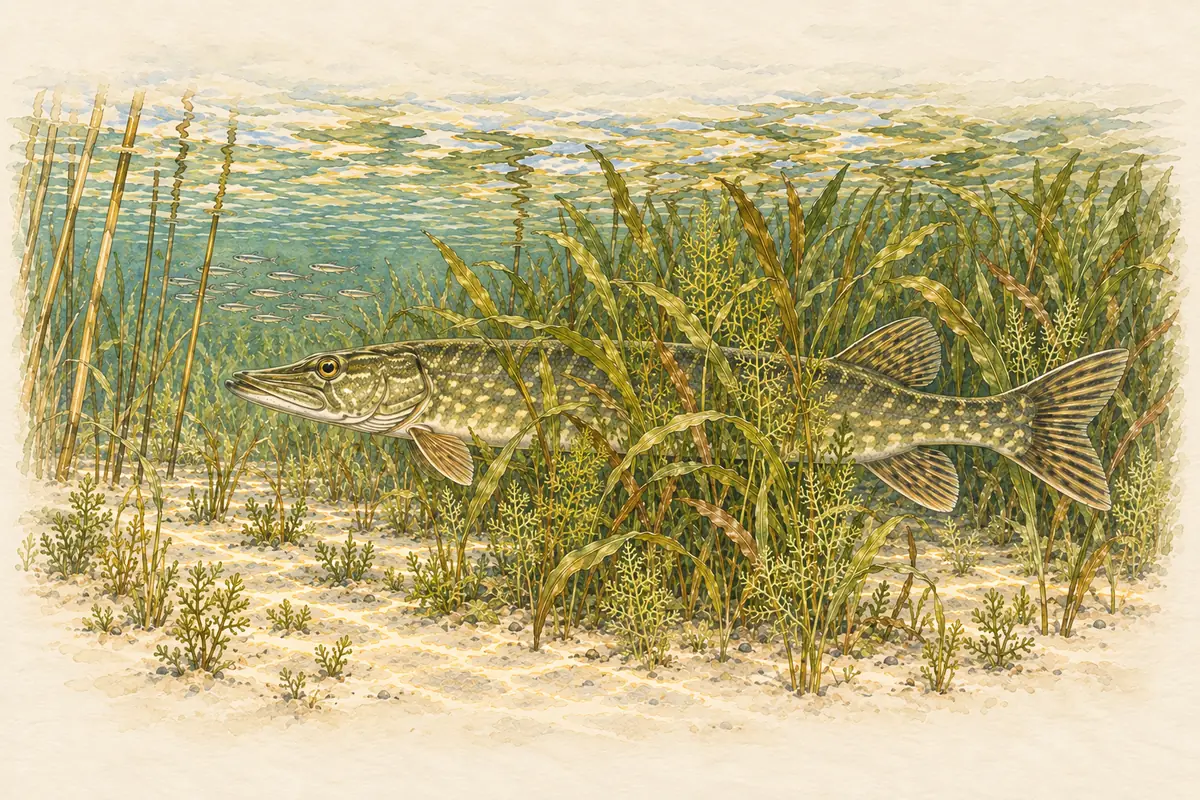
Bodden pike stay put: their core range measures only about 150 hectares (IGB). Where zander and perch stand, you can read in the fish lexicon.
The Bodden pike: growth, catch rate, warmth
The Leibniz-Institut IGB describes the pike as a spring spawner: depending on temperature it spawns between February and May. The females grow clearly longer than the males, and the males rarely exceed 80 cm (IGB).
Catches have become smaller. According to the IGB, the catch rate per angler and day has fallen by about half since 2006, and the share of pike put back rose from 30 to 60 per cent between 2006 and 2014. The institute also names more days with water temperatures above 20 °C, which are a problem for the cool-water-loving pike. In May, pike that had not yet spawned were repeatedly found in the Bodden. So even after the closed season ends on 30 April, a fish ready to spawn can take the bait. How to release it gently is under Releasing a fish.
Methods
Pike, zander and perch
Here spinning is the usual method. For pike you need a pike hooklength and suitable pike lures.
Sea trout
Besides spinning, also fly fishing.
Flounder
Flounder are fished for by bottom fishing with the natural bait rig, in the fjord by sea fishing.
Drawings: AI-generated, schematic.
In the coastal waters of Mecklenburg-Western Pomerania, a maximum of three hand lines per person is allowed, and when fishing for herring a paternoster rig with up to six single hooks.

Papers and rules: Mecklenburg-Western Pomerania and Schleswig-Holstein
The Bodden lie in Mecklenburg-Western Pomerania, the Förden and the Schlei in Schleswig-Holstein. Choose the state:
Mecklenburg-Western Pomerania
Closed seasons
- Pike1 March to 30 April
- Zander23 April to 22 May
- Sea trout15 September to 14 December
Pike by length
- under 60 cm: back into the water
- 60 to 90 cm: may be kept, one pike per fishing day
- over 90 cm: back into the water
- Fishing licence (Fischereischein): compulsory from the age of 14. Without an exam you can get the tourist fishing licence (Touristenfischereischein) for up to 28 days (LALLF). More under Fishing licence.
- Fishing permit for the coastal waters: required in addition. The Bodden count as inner coastal waters (LALLF). Since 2025 guests also pay the state’s fishing levy (Fischereiabgabe).
- Minimum sizes: pike 60 cm, zander 45 cm (40 cm in the Stettin Lagoon, the Peenestrom and the Darßer Boddenkette), perch 20 cm, sea trout 48 cm, flounder 25 cm. Pike over 90 cm go back into the water.
- Closed seasons: pike 1 March to 30 April, zander 23 April to 22 May, sea trout 15 September to 14 December.
- Daily bag per person: one pike, three zander, three sea trout, fifteen perch, for your own use only.
- Protected zones: within 500 m of the mouth of many inflows fishing is suspended from 1 August to 28 February, in some places for longer, in the spawning protection zones from 1 April to 31 May, in the Greifswalder Bodden, the Strelasund and between Hiddensee and Rügen from 1 March.
- Boat: In some parts of the Bodden you must be anchored while fishing, except for drifting with a drift anchor. In the Vorpommersche Boddenlandschaft National Park, fishing is regulated separately.
As of October 2026. Sizes, closed seasons and daily bags come from the Fünften Verordnung zur Änderung der Küstenfischereiverordnung, in force since 29 September 2026. At the beginning of October the LALLF table still gave 50 cm for pike and 45 cm for sea trout. The regulation applies.
Schleswig-Holstein: Förden and Schlei
- The fishing licence (Fischereischein) is always compulsory. Without an exam you can get the holiday fishing licence (Urlauberfischereischein) for 28 days, extendable once a year (Land Schleswig-Holstein, Fragen zur Angelfischerei).
- You pay the state’s fishing levy (Fischereiabgabe) even if you have already paid it in another federal state.
- In the coastal waters fishing is mostly free. You need a fishing permit (Erlaubnisschein) in the whole of the Schlei, in parts of the Bay of Lübeck and in the Eider estuary.
- Minimum sizes and closed seasons are in the state coastal fisheries regulation (Küstenfischereiverordnung des Landes). Temporary general orders come on top.
Cod, salmon and eel in the Baltic Sea in 2026
- Cod: prohibited for anglers in 2026. A cod caught by accident goes straight back; only in the eastern Baltic Sea (subdivisions 27 to 32) may an unintended bycatch be kept (Verordnung (EU) 2025/2454, Artikel 10). This also applies in the Förden, but not on the Schlei and Trave behind the pierheads (Land Schleswig-Holstein).
- Salmon: also prohibited. Exception: one salmon with a clipped adipose fin per person per day. After that, salmon fishing ends for the day (Article 11).
- Eel: In 2026 a fishing ban applies to anglers in marine and coastal waters (LALLF).
These rules apply to 2026 only. What to do with protected fish is under Releasing a fish.
Common mistakes
- Fishing with old minimum sizes: Since 29 September 2026 the minimum size for pike is 60 cm. Older tables give 50 cm.
- Underestimating the river mouth: Within 500 m of many inflows fishing is suspended from 1 August to 28 February. Which mouths are meant is set out in the regulation.
- Keeping the cod: Even in the Förden of Schleswig-Holstein it is taboo for anglers in 2026. A cod caught by accident goes straight back.
- Overlooking the wind: If the level swings by more than 1.5 m, shallow areas quickly turn into mudflats. This affects boats and wading anglers.
- Bagging a pike over 90 cm: It must not be kept when fishing with a hand line.
- Carrying only the fishing licence: In M-V the fishing permit and the fishing levy (Fischereiabgabe) belong with it, and guests have paid it too since 2025.
Safety in the boat
When the wind turns, the water level in the shallow Bodden changes. What belongs in the boat is under Boat and life jacket, the weather under Thunderstorms and weather.
Before you set off
- Fishing licence with you, as a guest the tourist or holiday fishing licence
- Mecklenburg-Western Pomerania: fishing permit for the coastal waters and fishing levy (Fischereiabgabe), also as a guest
- Schleswig-Holstein: the state’s fishing levy (Fischereiabgabe); for the Schlei the fishing permit (Erlaubnisschein)
- New sizes since 29 September 2026 in mind: pike from 60 cm, over 90 cm back
- Protected zones at river mouths and spawning protection zones checked
- Wind checked with Weather at the water
- Life jacket for the boat, see Boat and life jacket
- Cod 2026: release every catch straight away
Frequently asked questions
Do I need more than a fishing licence at the Bodden?
Yes. In the coastal waters of Mecklenburg-Western Pomerania a fishing permit is required in addition, and since 2025 guests also pay the state’s fishing levy (Fischereiabgabe). Without an exam you can get the tourist fishing licence (Touristenfischereischein) for up to 28 days (LALLF).
Can I fish for cod in the Förde?
No. Recreational fishing for cod is prohibited in 2026, also in the Förden, and a cod caught by accident goes straight back. The Schlei and Trave behind the pierheads are not included (Land Schleswig-Holstein).
What applies to pike in the Bodden?
The closed season runs from 1 March to 30 April and the minimum size is 60 cm. You may take one pike per person and fishing day; over 90 cm it stays in the water.
Why does the Bodden suddenly get shallower in wind?
The wind shifts the water, and the level regularly swings by more than 1.5 m (Nationalparkamt Vorpommern). Shallow areas can then dry out. So watch the wind before you go into shallow water.
Examples in the areas
These area pages describe waters of this type with their local rules:
Germany: Baltic coast of Schleswig-Holstein, Baltic coast of Mecklenburg-Western Pomerania, Rügen and Hiddensee, Usedom, Achterwasser and Peenestrom, Fehmarn, Schlei, Fishing in Mecklenburg-Western Pomerania
Denmark: Limfjord, Zealand and Møn, Hvide Sande and Ringkøbing Fjord, East Jutland and Djursland, Als and South Jutland, Gudenå and the Silkeborg lakes, Lolland and Falster
Norway: Southern Norway and the Oslofjord, Western Norway and the fjords, Central Norway with Hitra and Frøya, Northern Norway and Lofoten, Senja and Tromsø
Sweden: West coast of Sweden: Bohuslän and Halland, Stockholm archipelago, Blekinge and the archipelago
Poland: Stettin Lagoon and the lower Oder, Gulf of Gdańsk and the Hel Peninsula, Vistula Lagoon (Zalew Wiślany)
Related
- Closed season and minimum size explained, so that you read the tables correctly
- Releasing a fish for pike over 90 cm and protected species
- Pike hooklength and pike lures for the Bodden pike
- Types of water and Weather, air pressure and wind
- Catch calendar and Weather at the water for planning
- Fishing on the coast and in the surf for the open Baltic Sea
- Fishing from a charter boat and boat for the trip out
- Shore and waders for wade fishing on the coast
Sources
- Fünfte Verordnung zur Änderung der Küstenfischereiverordnung Mecklenburg-Vorpommern vom 11. September 2026 (GVOBl. M-V S. 1083)
- LALLF Mecklenburg-Vorpommern: Fischereischein, Angelerlaubnis, Aktuelles aus der Fischerei
- Land Schleswig-Holstein: Angelfischerei, Fragen und Hinweise, Dorsch 2026
- Verordnung (EU) 2025/2454 des Rates zu den Fangmöglichkeiten in der Ostsee 2026, Artikel 10 und 11
- Leibniz-Institut für Gewässerökologie und Binnenfischerei: Empfehlungen für das künftige Management des Boddenhechts (2023)
- Institut für Ostseefischerei: Fischen und Forschen im Greifswalder Bodden (ForschungsReport 1/1999)
- Nationalparkamt Vorpommern: Die Boddengewässer; Havforskningsinstituttet: Kyst og fjord
- Saisonbänder und Laichpunkte der Fischkarten: Fangkalender von Angel Momente (redaktionelle Einschätzung mit den dort genannten Quellen)
Text AI-assisted, drawing AI-generated. Sources opened and checked in October 2026; no graphics taken from the sources.
Guide without guarantee, as of October 2026. What counts are the state coastal fisheries regulations, EU law for the Baltic Sea and the details on your fishing permit.