
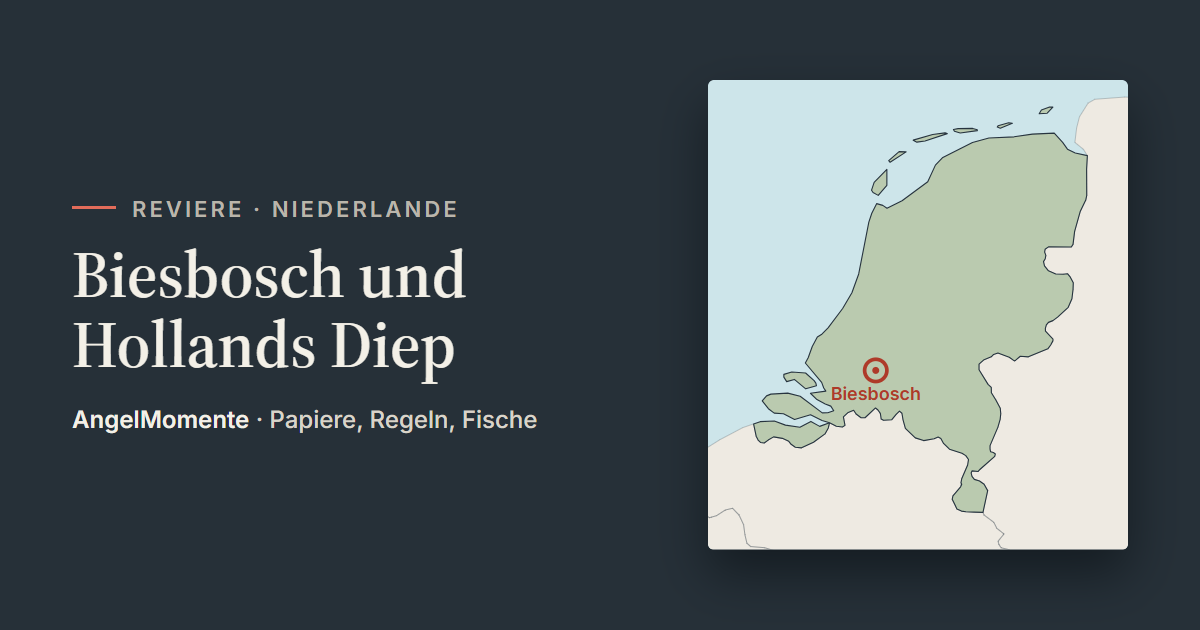
Destinations · the Netherlands
Fishing in the Biesbosch and on the Hollands Diep
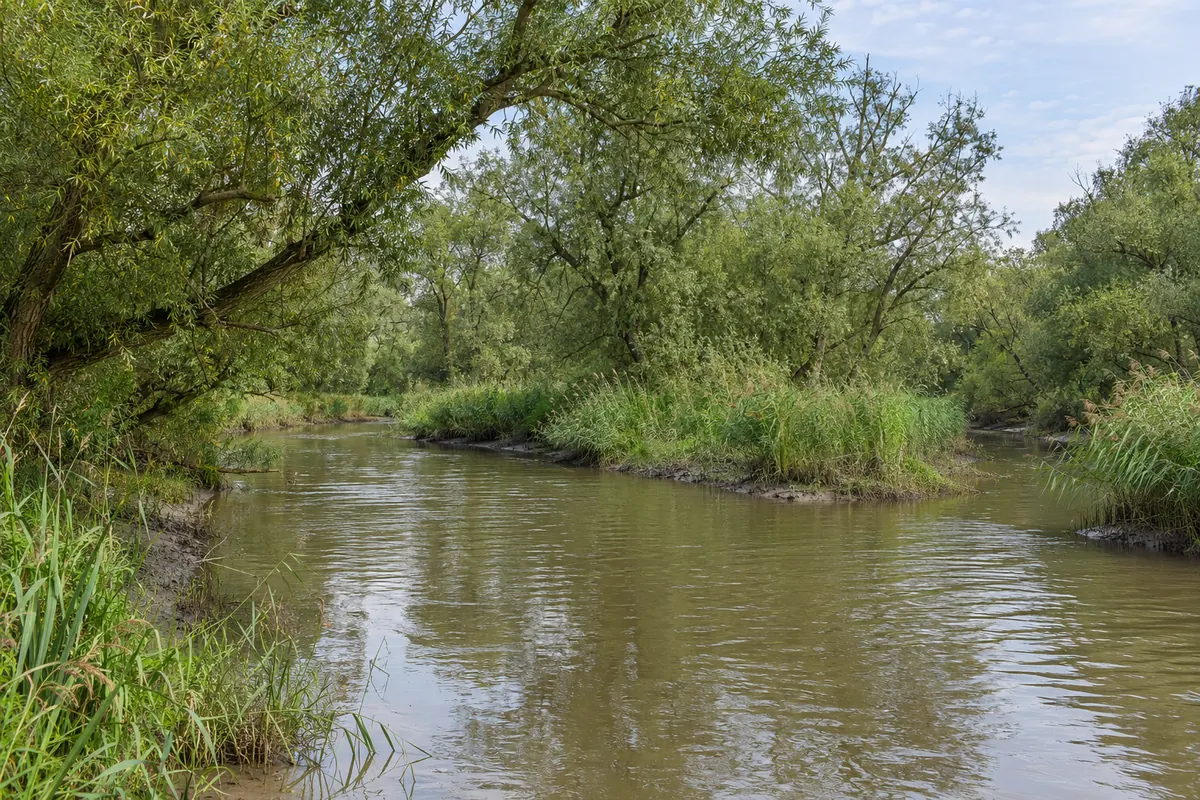
The Biesbosch is a national park of islands, tidal creeks and willow woodland, where the fresh water still rises and falls with the tides. To the west of it the Hollands Diep and Haringvliet open out. Zander, pike, perch, bream and wels catfish live throughout the region. With the fishing licence (VISpas) and the list of waters you can fish in many places, but the national park has quiet and boating rules of its own.
- Papers
- VISpas with list of waters or VISplanner
As of October 2026
At a glance
- Papers
- VISpas with list of waters or VISplanner
| Fish | Minimum size | Closed season | Catch limit | Note |
|---|---|---|---|---|
| Zander | 42 cm | 1.4.–31.5. | 2 per day (42–70 cm) | Closed season ends on the last Saturday in May |
| Pike | 45 cm | 1.3.–31.5. | 1 per day (45–80 cm) | Closed season ends on the last Saturday in May |
| Perch | 22 cm | 1.4.–31.5. | 3 per day (22–45 cm) | Closed season ends on the last Saturday in May; report tagged fish |
| Bream | – | none | – | 15 fish in total at most, of which 5 over 25 cm |
| Tench | 25 cm | none | – | |
| Wels catfish | – | protected all year round | – | |
| Atlantic salmon | – | protected all year round | – | Migratory fish through the Haringvliet sluices |
| Sea trout | – | protected all year round | – | Migratory fish through the Haringvliet sluices |
Minimum sizes and closed seasons under the Uitvoeringsregeling visserij (articles 5b, 5c and 61), catch limits under the VISpas conditions 2026 to 2028. The list of waters and the Natura 2000 rules may be stricter. Correct as of October 2026. The regulation and your fishing permit (Erlaubnisschein) are authoritative.
Location and waters Biesbosch, Nieuwe Merwede, Hollands Diep, Haringvliet
The national park lies on the border between South Holland and North Brabant. It consists of the Sliedrechtse, the Dordtse and the Brabantse Biesbosch, together over 8.000 hectares (Nationaal Park De Biesbosch). In the south the Amer forms the boundary (Rijkswaterstaat). The Nieuwe Merwede, dug between 1861 and 1874, leads from Werkendam to the Hollands Diep and separates the two provinces (Rijkswaterstaat).
The park calls itself the largest freshwater tidal area (zoetwatergetijdengebied) in Western Europe, and the water flows all day. Since the Volkerak and Haringvliet were dammed in 1960 and 1970, however, the tidal range has shrunk from 2 m on average to a few decimetres. Only in the Sliedrechtse Biesbosch is it still around 70 cm (Natura 2000).
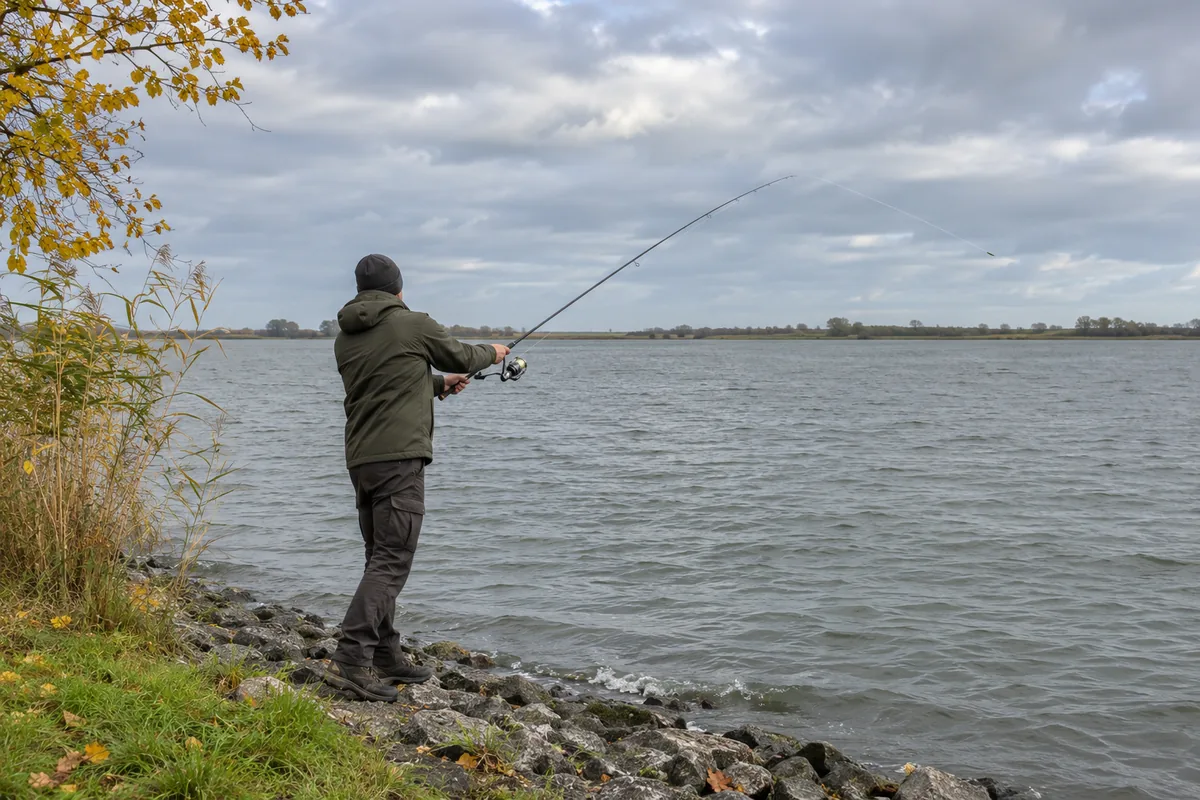
The Hollands Diep (Hollandsch Diep) stretches 21 km from the confluence of the Amer and Nieuwe Merwede to the Haringvlietbrug and is 905 to 2.070 m wide (Rijkswaterstaat). Beyond it lies the Haringvliet, a former arm of the sea between Voorne-Putten, Hoeksche Waard and Goeree-Overflakkee with an area of 110 km². Since 1970 the Haringvlietsluizen have closed it off from the North Sea (Rijkswaterstaat).
Fish and best time Pike, tench, zander, bream and perch
- Pike and tench: The angling association writes that the Biesbosch is known for very big pike (Sportvisunie). Strong tench also take a float bait there (Sportvisunie).
- Zander and bream: In the Haringvliet they now dominate the stock (Natura 2000). A zander fitted with a transmitter swam back and forth 23 times between the Haringvliet and the coastal water off Stellendam (Sportvisunie).
- Perch: Perch of 40 cm and more from the lower delta attract many predator anglers, including from Germany. In the PERCHTRACK project 72 such fish carry a transmitter and a tag at the dorsal fin, and the receivers stand in the Haringvliet and Hollands Diep. If you catch one, you report it and ideally release it alive (Sportvisunie).
- Wels catfish: According to the association it also lives in the Merwede and Amer (Sportvisunie). Every wels goes back; it is protected all year.
The catch calendar shows when each species bites best.
Papers and permit VISpas with list of waters for the Biesbosch and the delta
You need the VISpas and either the list of waters (Lijst van VISwateren) or the VISplanner app. Only together are they your written permit (Sportvisunie). How to order the VISpas is explained under Fishing in the Netherlands.
- Biesbosch: The list of waters 2026 to 2028 includes almost all of the Brabantse Biesbosch, plus parts of the Dordtse Biesbosch and the tidal creeks (killen) of the Sliedrechtse Biesbosch. You do not fish in fenced-off waters that are not accessible. In the Aakvlaai area fishing is allowed from a boat only.
- Amer and Nieuwe Merwede: The Amer is on the list as far as it lies in the municipality of Drimmelen, the Nieuwe Merwede together with the tidal creeks on both banks.
- Hollands Diep: The list names the part in the municipality of Drimmelen. In the Noord Hellegat and in the feeder canal to the Volkeraksluizen you must not fish from a boat. Whether another bank is included, you check in the VISplanner.
- Haringvliet: It is on the list together with the Vuile Gat; the Ventjagersgaatje and the marina in Stellendam are excluded.
Special rules Breeding quiet, winter quiet and times in the national park
- Times in the national park: The Biesbosch is freely accessible from sunrise to sunset, and you keep to paths and designated routes. In the tidal creeks (kreken) you may only travel between sunrise and sunset; this does not apply on the main channels (Nationaal Park).
- Quiet periods: From 1 January to 1 August the breeding quiet applies, and any disturbance at nests is banned. From 1 November to 1 March it is winter quiet, and some tidal creeks and quiet zones are closed to water sports.
- Boat and bank: Under the municipalities‘ joint rules you do not go closer than 1 m to a reed edge and do not moor there. The municipalities can close waters to boats or motorboats and close areas completely (Biesboschverordening, articles 9, 15 and 36). This ordinance does not apply to the Hollands Diep and Nieuwe Merwede.
- Haringvliet and Hollands Diep: Both are Natura 2000 sites. On the Haringvliet the Zuiderdiep, Korendijkse Slikken and Ventjagersplaten are closed, and you fish only in the zones marked by buoys (Rijkswaterstaat). On the Hollands Diep fishing from a boat and from the bank is allowed, except in closed areas (Rijkswaterstaat).
- Eel: On the Amer, Nieuwe Merwede, Hollands Diep and Haringvliet you must not have any eel with you (Uitvoeringsregeling visserij, article 28b and Bijlage 16). With the VISpas you put it straight back everywhere.
- Baits in spring: From 1 April to 31 May dead baitfish, fish strips and artificial lures are banned, flies up to 2,5 cm excepted (Reglement voor de binnenvisserij, article 6). For pike, zander and perch the bait ban and closed season end as early as the last Saturday in May (article 61).
- Haringvlietsluizen: Since 2019 Rijkswaterstaat has regularly opened the sluice gates a crack (kier) at high tide. This lets migratory fish such as eel, salmon and sea trout back into the Haringvliet, and zander and bream that have strayed into the sea find their way back more easily. Salt water may then penetrate as far as Middelharnis and Spui (Rijkswaterstaat). Salmon and sea trout are protected all year, and you put them straight back.
Correct as of October 2026. Signs at the access points and the map in the VISplanner show which tidal creeks are closed at the moment. The Biesboschverordeningen, the Uitvoeringsregeling visserij and the conditions of the list of waters are authoritative.
Safety
- Water level: It changes constantly with ebb and flood. Allow for this when you moor or move along the shore in front of the dyke (Nationaal Park).
- Fast boats: On the Hollands Diep, the Nieuwe Merwede and in marked zones of the Haringvliet, motorboats may go faster than 20 km/h in daytime (Regeling snelle motorboten Rijkswateren 1995, article 1). Allow for them when you anchor.
- Life jacket and emergency number: Take a life jacket for everyone on board (Rijkswaterstaat). In an emergency call 112. More under Boat and life jacket.
Related
- Fishing on a lake, Fishing on a river and Fishing from a cutter and boat
- Fishing in the Netherlands, Rhine, Waal, IJssel and Meuse, IJsselmeer and Frisian lakes
- In the fish lexicon: zander, pike, perch, bream and wels catfish
- Releasing fish and Closed season and minimum size explained
Sources
- Uitvoeringsregeling visserij (Fassung vom 11.07.2026): Artikel 5b, 5c, 28b, 61 und Bijlage 16; Reglement voor de binnenvisserij 1985; Reglement minimummaten en gesloten tijden 1985; Regeling snelle motorboten Rijkswateren 1995
- Nationaal Park De Biesbosch: Over de Biesbosch, Flora und Fauna und Toegankelijkheid und regels; Biesboschverordening Dordrecht (gleichlautend in Drimmelen und Altena)
- Rijkswaterstaat: Hollandsch Diep, Haringvliet, Amer, Nieuwe Merwede, Haringvlietsluizen op een kier und Voorbereid varen
- Natura 2000: Biesbosch und Haringvliet; Rijkswaterstaat Natura 2000: Verhaltensregeln Haringvliet und Hollands Diep
- Sportvisunie: Gezamenlijke Lijst van Nederlandse VISwateren 2026 bis 2028, VISpas-Bedingungen 2026 bis 2028, Lijsten van VISwateren und PERCHTRACK (abgerufen 04.10.2026)
- Rijksoverheid: VISpas
Guide without guarantee, correct as of October 2026. The Dutch fisheries regulations, the municipalities‘ Biesboschverordeningen, the rules of the Natura 2000 sites and the conditions of the VISpas with the list of waters in their current versions are authoritative.