
Knowledge – Fish
Fishing for payara
To fish for payara means: look for clear water and offer a baitfish in mid-water and above, where it usually hunts. Here is the way there in nine steps, each with a link to the detailed page.
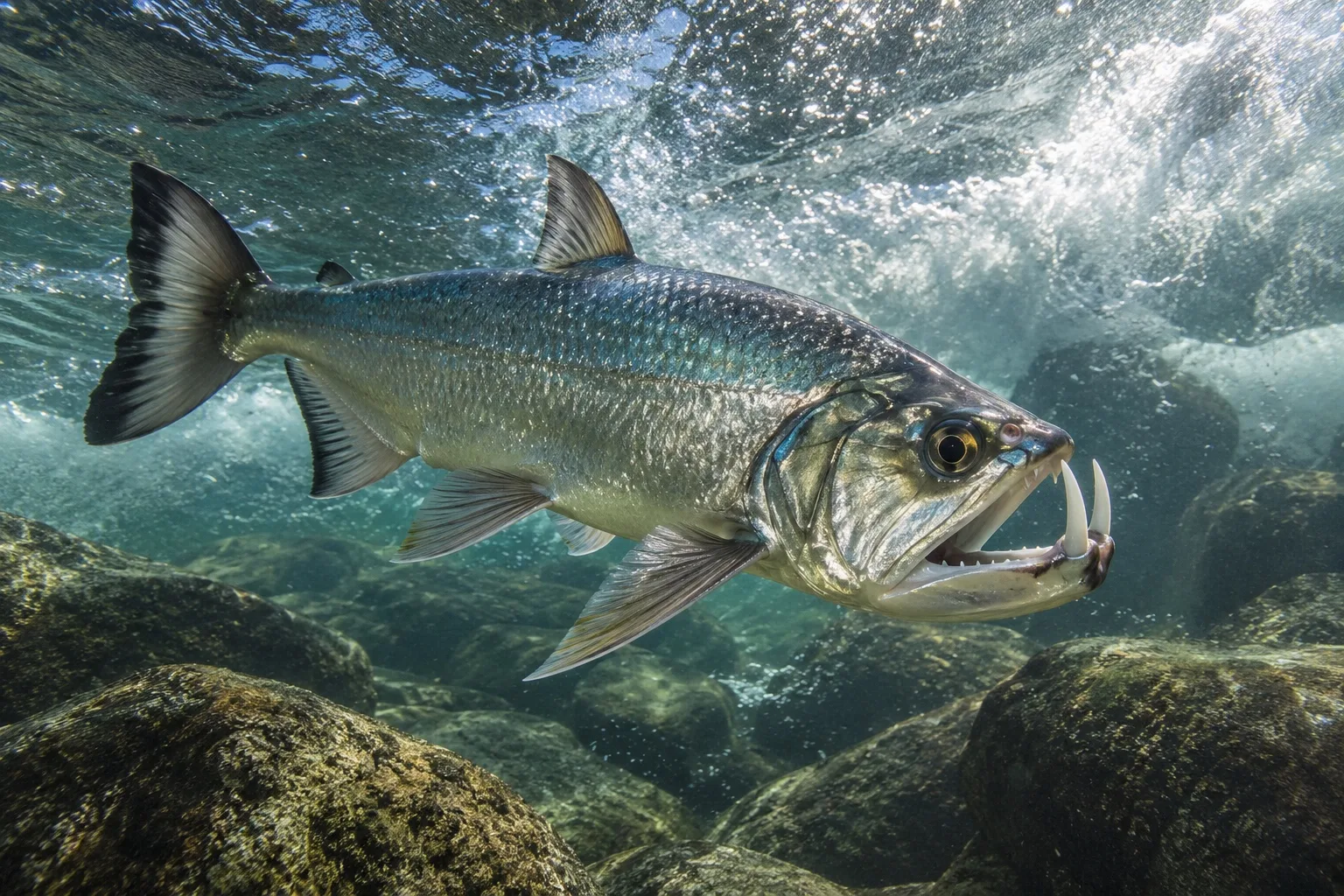
The payara has long, pointed fangs in the lower jaw. Never put your hand in its mouth, remove the hook with long pliers and land it with a large landing net or lip grip.
 Choose another fish117 fish with guides
 EelOff-peak season
 EelpoutPossible
 IdePossible
 ArapaimaGood
 GraylingPeak season
 Atlantic salmonSpawning time, please spare
 Brown troutSpawning time, please spare
 Brook troutSpawning time, please spare
 BarbelOff-peak season
 BarramundiSpawning season
 Greater amberjackGood
 Topmouth gudgeonOnly as bycatch
 Blue marlinSpawning season
 BonefishSpawning season
 BonitoGood
 BreamOff-peak season
 Dusky grouperOnly as bycatch
 CobiaPossible
 Spiny dogfishOnly as bycatch
 CodPeak season
 ChubPeak season
 MinnowOnly as bycatch
 European sturgeonOnly as bycatch
 FlounderPeak season
 PerchPeak season
 Largemouth bassGood
 Ballan wrasseOnly as bycatch
 Yellowfin tunaSpawning season
 Giant trevallyGood
 Prussian carpPossible
 BrillPossible
 Gilthead breamSpawning time, please spare
 Golden doradoSpawning season
 Golden mahseerOnly as bycatch
 Dolphinfish (mahi-mahi)Good
 Grass carpPossible
 Great barracudaGood
 GudgeonPossible
 White breamPossible
 DaceOff-peak season
 PikePeak season
 HalibutOff-peak season
 HerringPossible
 GarfishOut of season
 Huchen (Danube salmon)Possible
 Crucian carpOnly as bycatch
 CarpOff-peak season
 RuffeOff-peak season
 VendaceOnly as bycatch
 DabPeak season
 GurnardPossible
 Coley (saithe)Peak season
 Chinook salmonHardly any chance
 King mackerelSpawning season
 LingPeak season
 TuskOff-peak season
 MackerelPossible
 Bighead carpOut of season
 WhitefishPossible
 Conger eelOff-peak season
 Sea troutSpawning time, please spare
 Grey mulletPossible
 Murray codSpawning season
 MuskellungeGood
 Common nasePossible
 Nile perchPossible
- PayaraPossible
 Peacock bassPeak season
 PermitGood
 WeeverOnly as bycatch
 PollackOff-peak season
 BurbotOff-peak season
 AspPossible
 Red snapperSpawning season
 Rainbow troutPeak season
 RoosterfishGood
 RoachPeak season
 RedfishOut of season
 Bluefin tunaOnly as bycatch
 RuddPossible
 Russian sturgeonOnly as bycatch
 HaddockOff-peak season
 SnakeheadPossible
 TenchOff-peak season
 SpirlinOnly as bycatch
 PlaiceOff-peak season
 Greenland halibutOnly as bycatch
 Round gobyOnly as bycatch
 SwordfishGood
 Lake troutSpawning time, please spare
 HakeSpawning time, please spare
 Alpine charSpawning time, please spare
 MonkfishPossible
 SoleOff-peak season
 SailfishGood
 Silver carpOut of season
 SnookPeak season
 PumpkinseedOnly as bycatch
 SpratOnly as bycatch
 Atlantic wolffishSpawning time, please spare
 TurbotPeak season
 SterletOnly as bycatch
 SmeltOnly as bycatch
 Horse mackerelPossible
 TaimenGood
 TarponGood
 TigerfishSpawning season
 BleakPossible
 WahooGood
 Wels catfishOff-peak season
 WhitingPeak season
 Sea bassOff-peak season
 ZanderPeak season
 White-eye breamOnly as bycatch
 Blue breamOnly as bycatch
 Brown bullheadPossible
 VimbaOnly as bycatch
Season in October according to the catch calendar, an estimate and not a guarantee of a catch. The fish pictures are reduced natural-history plates and AI-generated.
Best time
All year round.
In January: PossibleIn February: PossibleIn March: PossibleIn April: PossibleIn May: PossibleIn June: PossibleIn July: PossibleIn August: PossibleIn September: PossibleIn October: PossibleIn November: PossibleIn December: Possible
Good spot
- Lake: open water and surfaceopen water and surfaceopen water and surfaceopen water and surface
- River: main currentmain currentmain currentmain current
Top baits
In short
In short: According to the catch calendar the best time is all year. Good spots on the lake: open water and surface; on the river: main current. Proven baits: a baitfish that resembles an open-water fish, on a wire trace. Payara is a collective name for the genus Hydrolycus. Hydrolycus scomberoides lives only in the Amazon basin, the payara of the Orinoco is mostly Hydrolycus armatus.
Quick to recognise
An elongated predatory characin from the Amazon basin with a protruding lower jaw and two long canine teeth, hence the name vampire fish. Several species go by that name. FishBase gives contradictory values for size; up to 117 centimetres are listed.
When
There is no fixed seasonal calendar, every month offers chances. There are no reliable details on the spawning season. The water level in the river in question is decisive; ask locally when the water is clear.
- JanPossible
- FebPossible
- MarPossible
- AprPossible
- MayPossible
- JunPossible
- JulPossible
- AugPossible
- SepPossible
- OctPossible
- NovPossible
- DecPossible
Peak seasonGoodPossibleHardly any chanceSpawning season
Season and biting time
In January: PossibleIn February: PossibleIn March: PossibleIn April: PossibleIn May: PossibleIn June: PossibleIn July: PossibleIn August: PossibleIn September: PossibleIn October: PossibleIn November: PossibleIn December: Possible
Where it sits now
In the lake
In lakes of the Amazon basin it hunts in open water, often just below the surface. It is more common in clear water than in murky water.
| All year round | open water, surface |
|---|
In the river
In the river it hunts in free water for characins and other shoaling fish and stays higher in the water than the corvina, which looks for its prey on the bottom. Clear stretches are the better choice.
| All year round | Main current |
|---|
Holding spots in the picture
Choose a season and time of day: the picture shows where the species sits then. Tap a fish or a spot in the list to bring it closer. The picture is schematic and AI-generated, every water is different.
Catch chances in springpossible
Catch chances in summerpossible
Catch chance in autumnpossible
Catch chance in winterpossible
- J
- F
- M
- A
- M
- J
- J
- A
- S
- O
- N
- D
In the lake
Open water
Payara (vampire fish) are found here all year.
Just below the surface
Payara (vampire fish) are found here all year.
In lakes of the Amazon basin the payara hunts in open water and often just below the surface. Because it hunts by sight, it is more common in clear water than in murky water.
Spring: catch chance according to the catch calendar is possible.
Summer: catch chances according to the catch calendar are possible.
Autumn: catch chance according to the catch calendar is possible.
Winter: catch chance according to the catch calendar possible.
In the river
Free current in mid-river
Payara (vampire fish) are found here all year.
In the river the payara stands in free water and catches characins and other shoaling fish there. It stays higher up than the corvina, which feeds on the bottom. Clear stretches are more promising than murky ones.
Spring: catch chance according to the catch calendar is possible.
Summer: catch chances according to the catch calendar are possible.
Autumn: catch chance according to the catch calendar is possible.
Winter: catch chance according to the catch calendar possible.
Depth: With its gaze directed upwards it hunts in the upper layers of water and just below the surface.
Size comparison: AI-generated drawing, schematic.
How
Its upturned mouth and large pectoral fins point to hunting in mid-water and near the surface. FishBase, however, lists the species as living near the bottom, and in the Guri Reservoir in Venezuela its food consisted mainly of catfish. So offer the baitfish at several depths.
What with
A baitfish similar to its prey, that is, an open-water fish; as a proven bait the Florida State University names live piranhas. Whether live baitfish are allowed is determined by the country where you fish. A wire trace belongs in front of the bait, because the fangs are long.
Tackle
A rod for natural bait, a wire trace and a large landing net or lip grip. The pages on the spinning rod and line help with the choice.
Common mistakes
- The baitfish falls off on the cast: Use the baiting needle, a fish that is just hooked holds badly. Cast with a soft swing.
- Bites without hooking up: Try a smaller bait or a piece of fish and leave the hook point free.
- The hook sits deep: Stay close to the rod, strike early and use long pliers for unhooking.
Rules
For the payara, the rules of the country where you fish apply, not the German fisheries laws. Licence, closed seasons, minimum sizes and the taking of fish are set by each country, often by each water separately.
What the profile says: Payara is a collective name for the genus Hydrolycus. Hydrolycus scomberoides lives only in the Amazon basin, the payara of the Orinoco is mostly Hydrolycus armatus.
The fisheries authority (Fischereibehörde) of the country you travel to is what counts. Ask about the current rules before the trip and read in the profile how threatened the species is.
After the catch
Remove the hook with long pliers and keep your hands away from the mouth. How to land the fish gently and release it is shown on the linked fish welfare pages.
Similar species
If you catch payara, you can fish for these species with similar tackle too:
 Fishing for largemouth bassGood
 Fishing for muskellungeGood
 Nile perch fishingPossible
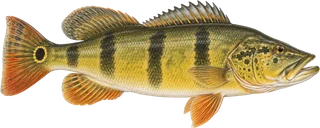 Fishing for peacock bassPeak season
Text written with AI assistance, summarised from these pages: Payara (profile), Spin fishing, Baitfish, Landing a fish and unhooking.