
Knowledge – Fish
Fishing for grayling
Fishing for grayling means watching for rising fish, letting the fly drift exactly onto them and staying gentle in the fight. Here is the way there in nine steps, each with a link to the detailed page.
 Choose another fish117 fish with guides
 EelOff-peak season
 EelpoutPossible
 IdePossible
 ArapaimaGood
- GraylingPeak season
 Atlantic salmonSpawning time, please spare
 Brown troutSpawning time, please spare
 Brook troutSpawning time, please spare
 BarbelOff-peak season
 BarramundiSpawning season
 Greater amberjackGood
 Topmouth gudgeonOnly as bycatch
 Blue marlinSpawning season
 BonefishSpawning season
 BonitoGood
 BreamOff-peak season
 Dusky grouperOnly as bycatch
 CobiaPossible
 Spiny dogfishOnly as bycatch
 CodPeak season
 ChubPeak season
 MinnowOnly as bycatch
 European sturgeonOnly as bycatch
 FlounderPeak season
 PerchPeak season
 Largemouth bassGood
 Ballan wrasseOnly as bycatch
 Yellowfin tunaSpawning season
 Giant trevallyGood
 Prussian carpPossible
 BrillPossible
 Gilthead breamSpawning time, please spare
 Golden doradoSpawning season
 Golden mahseerOnly as bycatch
 Dolphinfish (mahi-mahi)Good
 Grass carpPossible
 Great barracudaGood
 GudgeonPossible
 White breamPossible
 DaceOff-peak season
 PikePeak season
 HalibutOff-peak season
 HerringPossible
 GarfishOut of season
 Huchen (Danube salmon)Possible
 Crucian carpOnly as bycatch
 CarpOff-peak season
 RuffeOff-peak season
 VendaceOnly as bycatch
 DabPeak season
 GurnardPossible
 Coley (saithe)Peak season
 Chinook salmonHardly any chance
 King mackerelSpawning season
 LingPeak season
 TuskOff-peak season
 MackerelPossible
 Bighead carpOut of season
 WhitefishPossible
 Conger eelOff-peak season
 Sea troutSpawning time, please spare
 Grey mulletPossible
 Murray codSpawning season
 MuskellungeGood
 Common nasePossible
 Nile perchPossible
 PayaraPossible
 Peacock bassPeak season
 PermitGood
 WeeverOnly as bycatch
 PollackOff-peak season
 BurbotOff-peak season
 AspPossible
 Red snapperSpawning season
 Rainbow troutPeak season
 RoosterfishGood
 RoachPeak season
 RedfishOut of season
 Bluefin tunaOnly as bycatch
 RuddPossible
 Russian sturgeonOnly as bycatch
 HaddockOff-peak season
 SnakeheadPossible
 TenchOff-peak season
 SpirlinOnly as bycatch
 PlaiceOff-peak season
 Greenland halibutOnly as bycatch
 Round gobyOnly as bycatch
 SwordfishGood
 Lake troutSpawning time, please spare
 HakeSpawning time, please spare
 Alpine charSpawning time, please spare
 MonkfishPossible
 SoleOff-peak season
 SailfishGood
 Silver carpOut of season
 SnookPeak season
 PumpkinseedOnly as bycatch
 SpratOnly as bycatch
 Atlantic wolffishSpawning time, please spare
 TurbotPeak season
 SterletOnly as bycatch
 SmeltOnly as bycatch
 Horse mackerelPossible
 TaimenGood
 TarponGood
 TigerfishSpawning season
 BleakPossible
 WahooGood
 Wels catfishOff-peak season
 WhitingPeak season
 Sea bassOff-peak season
 ZanderPeak season
 White-eye breamOnly as bycatch
 Blue breamOnly as bycatch
 Brown bullheadPossible
 VimbaOnly as bycatch
Season in October according to the catch calendar, an estimate and not a guarantee of a catch. The fish pictures are reduced natural-history plates and AI-generated.
Best time
From July to October, mostly in the evening.
In January: Slim chancesIn February: Slim chancesIn March: Slim chances, spawningIn April: Slim chances, spawningIn May: Possible, spawningIn June: GoodIn July: Peak seasonIn August: Peak seasonIn September: Peak seasonIn October: Peak seasonIn November: GoodIn December: Possible
Good spot
- River: Main current, behind stones and undercut bankMain current, behind stones and undercut bankMain current, behind stones and undercut bankdeep pools
Starter tackle
- Rod: 2,30–2,70 m, class 5–6, for heavy nymphs rather class 5/6
- Line: floating fly line, class 4–6
- Hook: gold-head nymph size 14–16, freshwater shrimp patterns 10–14
- Rod: 2,30–2,70 m, class 4–6; shorter on narrow, overgrown banks
- Line: floating fly line, class 4–5
- Hook: dry flies size 12–18, in autumn with small insects up to 20–22
- Rod: Bolognese rod of about 8 m with a fine tip and a strong backbone
- Line: monofilament around 0,16 mm
- Hook: small nymphs and wet flies, rather small patterns in winter
In short
In short: The best time for grayling is July to October, mostly in the evening. Good spots on the river: main current, behind stones and undercut banks. Proven baits: artificial flies; on a float also maggots, worms or caddis larvae. The grayling also bites in winter, but many federal states (Bundesland) protect it by then: Saxony-Anhalt from 1 December, Bavaria and Saxony from 1 January, Baden-Württemberg and Thuringia from 1 February. The closed season (Schonzeit) runs to the end of April or into May, in Saxony to 15 June (as of October 2026).
Quick to recognise
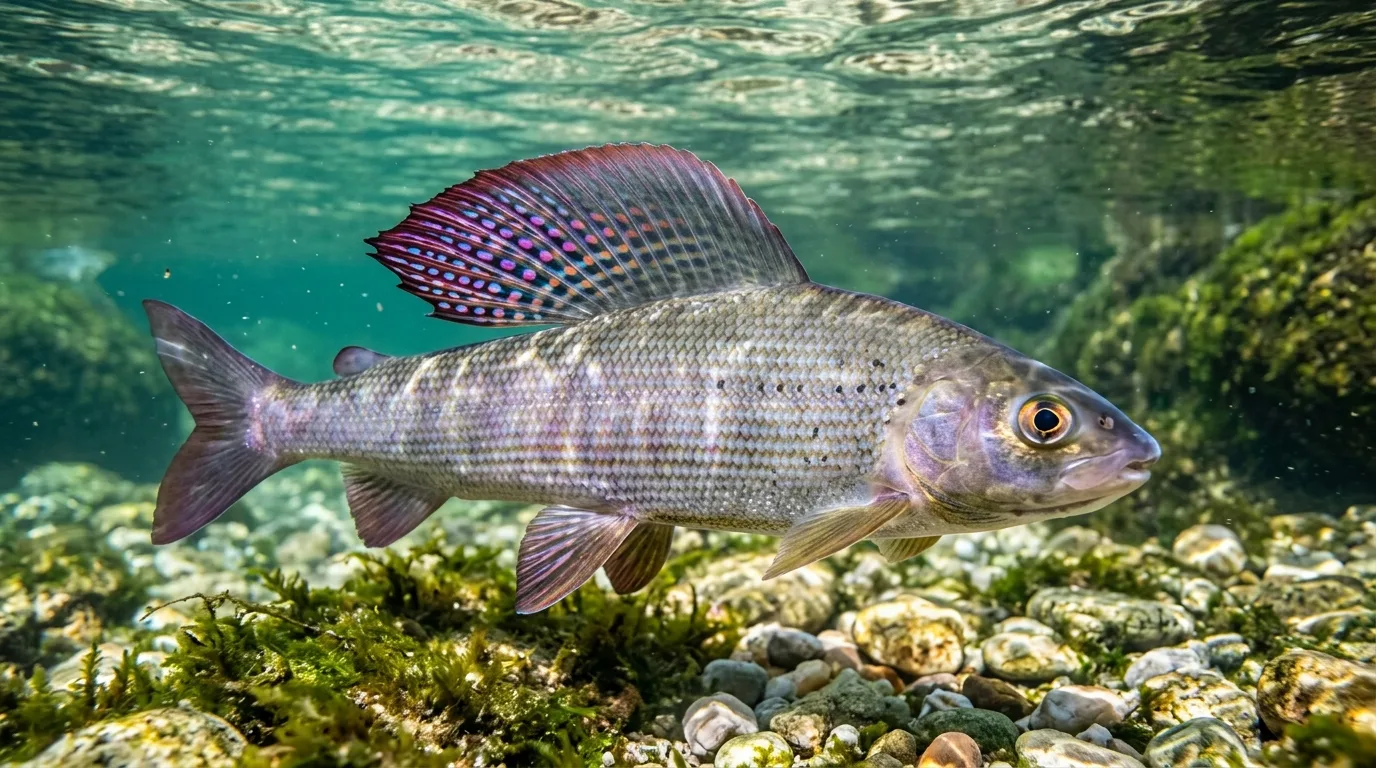
A salmonid with a strikingly high, long dorsal fin, called the grayling’s sail, and the indicator fish of the river zone named after it. Typical lengths are 30 to 50 centimetres, rarely up to 65. In Germany the grayling is classed as severely endangered.
When
The main season runs from July to October, June and November are good. From March to May the grayling spawns on shallow gravel bars. Whether a closed season (Schonzeit) applies then is set by your federal state (Bundesland). On hot days a water thermometer is worth having; if in doubt, take a break.
- JanHardly any chance
- FebHardly any chance
- MarSlim chances, spawning
- AprHardly any chance, spawning season
- MayPossible, spawning season
- JunGood
- JulPeak season
- AugPeak season
- SepPeak season
- OctPeak season
- NovGood
- DecPossible
Peak seasonGoodPossibleHardly any chanceSpawning season
Spring tactics
From March to May grayling spawn over shallow, flowing gravel. Whether they are protected then is set by your federal state (Bundesland). Do not wade over gravel at this time, so that eggs and fry come to no harm. After that, in late spring, freshwater shrimp patterns and gold-head nymphs on very fine tippets catch fish.
Summer tactics
During the day you fish mostly with the nymph; on summer evenings grayling rise to small insects. At dusk a sedge fly worked with small twitches is worth trying. A Swiss cantonal authority calls water above 20 °C already critical for grayling; then you are better off leaving them alone.
Autumn tactics
When water levels fall and the leaves change colour, the best time for the dry fly begins. The food on offer gets finer, so you need small flies and slim, fine nymphs. Even late in the year grayling in some rivers still rise to the dry fly.
Winter tactics
Grayling sit deep and rarely come to the surface, so the nymph on the bottom or a drifting float is the way. In late winter they gather near the spawning grounds, and you should not pressure them there.
Are they biting today?
In January: Out of seasonIn February: Out of seasonIn March: Spawning season, please spare themIn April: Spawning season, please spare themIn May: Spawning season, please spare themIn June: Shoulder seasonIn July: Peak seasonIn August: Peak seasonIn September: Peak seasonIn October: Peak seasonIn November: Shoulder seasonIn December: Possible
Today’s catch index needs JavaScript. Season and spawning time are in the catch calendar.
From the blog: Freshwater fish in Germany: which species you catch where
Where it sits now
In the river
Grayling usually stand in groups in evenly flowing water over gravel or sand, and also in hollows behind big stones and in the shade of overhanging vegetation. In winter they retreat to deep, calmer spots. On summer evenings they rise at dusk to tiny insects.
How to go about it: The grayling is a fish of the current, not of the bank: look for evenly flowing stretches over gravel, channels and deeper pools. Wading anglers disturb it little; sometimes it stands right in front of your feet. After rain and with slight cloudiness, the nymph fished upstream is often better than the dry fly.
| Spring | Main current, behind stones, undercut bank, riffle |
|---|---|
| Summer | Main current, behind stones, undercut bank |
| Autumn | Main current, behind stones, undercut bank |
| Winter | Pools |
Biting time: mainly in the evening. What that looks like on the water is shown by the picture of the holding spots just below.
Waters with rules for grayling
Holding spots in the picture
Choose the season and time of day: the picture shows where the species stands then. Spots outlined in red apply only in the chosen season. Tap a fish or a spot in the list to bring it closer. The picture is schematic and AI-generated, every water is different.
Catch chances in springhardly anyspawning season, observe the closed seasons (Schonzeit)
Catch chance in summerPeak season
Catch chance in autumnPeak season
Catch chance in winterhardly any
- J
- F
- M
- A
- M
- J
- J
- A
- S
- O
- N
- D
Spawning season
Not a prime time On summer evenings the grayling rises at dusk to the tiniest flies.
Not a prime time On summer evenings the grayling rises at dusk to the tiniest flies.
Active time On summer evenings the grayling rises at dusk to the tiniest flies.
Not a prime time On summer evenings the grayling rises at dusk to the tiniest flies.
In the river
Undercut bank, overhanging branches, timber
Grayling are here only in spring, summer and autumn.
Slack water behind rocks
Grayling are here only in spring, summer and autumn.
Gravelly shallow (riffle)
Grayling are here only in spring.
Pools, deep spot
Grayling are here only in winter.
Free current in mid-river
Grayling are here only in spring, summer and autumn.
The grayling likes to stand in small groups in even current over gravel or sand and is regarded as a fish of open water. FishBase also mentions hollows behind big stones and shaded water under overhanging vegetation. Unlike the brown trout, it does not seek cover under stones when in danger.
Spring: chance of a catch according to the catch calendar slim in March and April, possible in May. Spawning falls in this period, so observe closed seasons (Schonzeit). In spring the grayling spawns on shallow, flowing gravel bars and is protected in many places then. Shortly after spawning it takes bigger mouthfuls.
Summer: chance of a catch according to the catch calendar good in June, peak season in July and August. Over the year its prey gets smaller. On summer evenings it takes the tiniest insects from the surface.
Autumn: catch chance according to the catch calendar is peak season in September and October, good in November.
Winter: chance of a catch according to the catch calendar possible in December, slim in January and February. In winter grayling settle in particularly deep spots where the current is slack. They keep feeding and take bigger mouthfuls too.
Depth: Adult grayling prefer deeper, flowing stretches. They rise from the depths to a fly on the surface.
Size comparison: AI-generated drawing, schematic.
How
The fly is the most popular method: the dry fly for rising fish, the nymph close to the bottom. You can also catch them on a drifting float with maggots or worms.
Easiest way
The easiest start is a grey or brown gold-head nymph in size 14 or 16, a sliding strike indicator and, if needed, a small split shot. With that you stalk upstream along a grayling river and let the nymph drift towards the fish in deeper channels over gravel.
Nymph with strike indicator
The reliable way when no grayling are rising, especially in deeper channels, after rain and in the cold season.
- Choose deep channels
Look for channels and pools where grayling stand without rising. The big bottom-holding grayling you catch almost only close to the bed. When the river is slightly cloudy after rain, it is a good time for the nymph.
- Leader and indicator
A leader of around three metres is enough, with a tippet of around 0,16 mm. You put the strike indicator at the join to the fly line and slide it up and down depending on water depth.
- Heavy and inconspicuous
Take a grey or brown gold-head nymph in size 14 to 16. If it does not reach the bottom fast enough, pinch a small split shot onto the leader a little above it.
- Stalk upstream
Approach the spot from below and cast the nymph upstream. It should drift freely towards the fish without the line dragging at it.
- Strike gently
If the indicator hesitates or twitches, you strike, but not hard. Too strong a jerk tears the fine tip or the hook out of the soft mouth.
- Even pull
Keep a steady, rather gentle pressure. In the fight the grayling likes to spin and in doing so slips slightly off the hook.
- Unhook in the water
Guide the fish into the landing net as soon as it calms down and unhook it in the water. A barbless hook is quicker to remove.
Dry fly for rising grayling
For summer evenings and autumn, when grayling feed at the surface and you can see their rings.
- Watch for rings
Look out for evenly flowing stretches over gravel where rings appear at short intervals. Stand still for a few minutes and note exactly where a fish rises.
- Tippet to suit the light
By day a tippet of around 0,14 mm is enough; at dusk and for stronger fish rather 0,18 mm. In autumn, in clear, low water, you go finer.
- Small and brown
Brown patterns and sedge flies in hook size 12 to 18 are proven. If grayling are rising to tiny insects, you need flies as small as size 20 or 22 in autumn.
- Place it precisely
Cast with a high arc so the fly lands without a splash a few centimetres short of the ring. Keep the drift short and your silhouette low, or you will spook the fish.
- Lift calmly
The grayling comes up from the depths and often takes the fly only after drifting along with it briefly. So do not lift the rod too early.
- Spare the shoal
Play the fish away from the spot quickly so the other grayling keep feeding. A long fight in the middle of a shoal can end rising there for the rest of the day.
- Use a wading net
Net the grayling as soon as it shows its side. Fish that have to go back you unhook without lifting them out of the water.
Long rod and drifting float
In early winter on strongly flowing rivers with deep pools, when grayling sit close to the bottom.
- Deep pools in the current
This method comes into its own on rivers with strong current and deep pools. That is where the big bottom-holding grayling also stand in winter.
- Set the depth
Set the float so the bait drifts just above the bottom. Dry flies make no sense here because the fish are down deep.
- Compact float
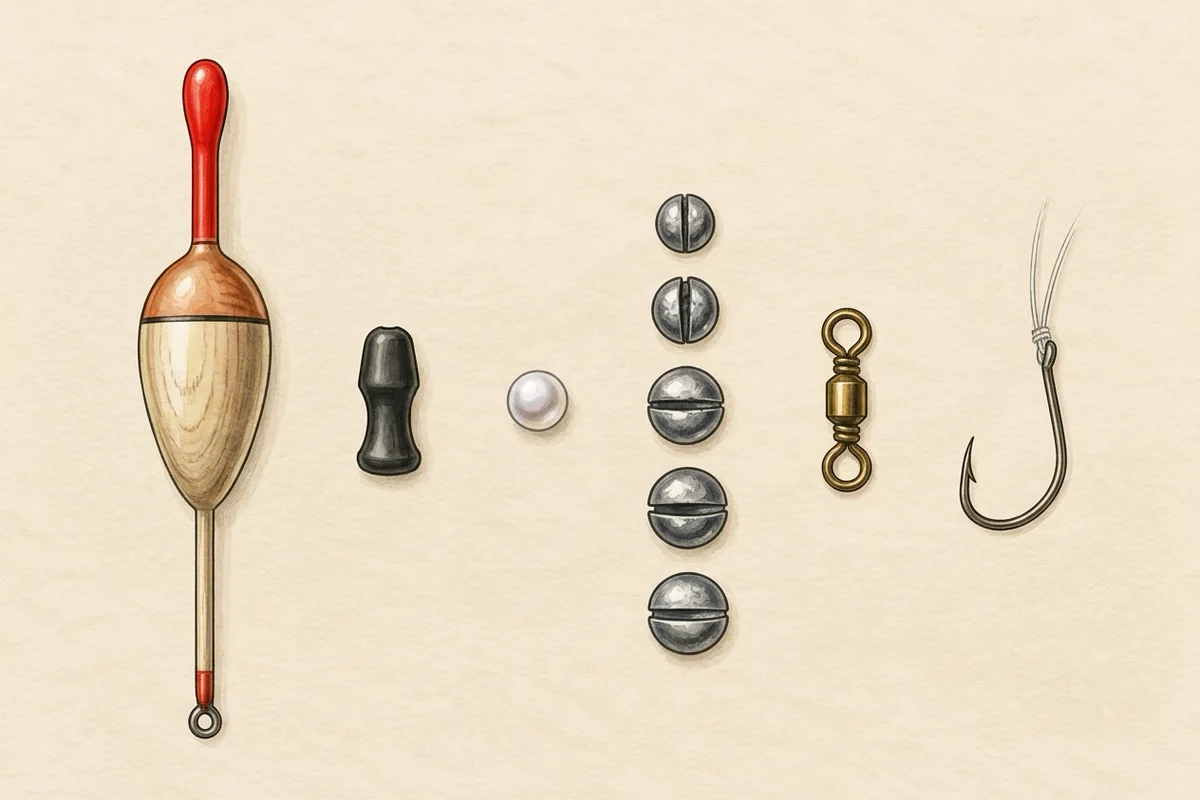
Take a drop- or onion-shaped float with a carrying capacity of 2 to 5 g and join the hooklength with a loop. Over sharp-edged bottom choose the thicker hooklength.
- Nymph or wet fly
Present a compactly weighted nymph right at the bottom or a wet fly working just above it. Which baits and hooks are allowed is set by your fishing permit (Erlaubnisschein).
- Drift without a bow
Let the float run with the current and hold the line so that no bow forms. A bow in the line pulls the bait faster than the water and makes it look suspicious.
- Float dives under
If the float dips briefly or hesitates, lift the rod with a short, soft strike.
- Stay warm
Land the grayling with a landing net and unhook it in the water. In winter lined wading boots are more comfortable than light summer ones.
What with
Dry flies tied with deer hair or CdC feathers stay on top even in the current; on summer evenings and on cold winter days very small patterns are needed. With the nymph it can be one size bigger, and imitations of caddis larvae and gold-head nymphs count as productive. You place every fly with a lead so that it drifts exactly onto the fish.
- Nymphall year round, especially when no fish are rising
Larvae on the bottom are the grayling’s main food, and a heavy nymph reaches the fish where they feed.
- Dry flysummer evenings and autumn in low water
Rising grayling show you their position, and they visibly take a small, precisely placed fly at the surface.
- Wet flywinter and the shoulder seasons, on a float or fly line
It works just above the bottom or under the surface film and reaches fish that do not come up.
Tackle
For the dry fly a simple fly rod of class 4 to 5 with a floating line and a fine leader tip is enough. If you fish with a float, the page on the float rod gives the right length. A wading net is handy on the river.
Nymph with strike indicator
- Rod
- 2,30–2,70 m, class 5–6, for heavy nymphs rather class 5/6
- Reel
- Fly reel matched to the line weight
- Line
- floating fly line of class 4–6
- Leader
- about 3 m, tippet 0,12–0,16 mm; in summer it can be 0,18–0,20 mm thick
- Hooks
- gold-head nymph size 14–16, freshwater shrimp patterns 10–14
- Weight, float, lead
- if needed a small split shot on the leader above the nymph
Dry fly for rising grayling
Long rod and drifting float
- Rod
- Bolognese rod of about 8 m with a fine tip and a strong backbone
- Reel
- small fixed-spool reel
- Line
- Monofilament around 0,16 mm
- Leader
- fluorocarbon 0,12–0,14 mm, the stronger one over sharp bottom
- Hooks
- small nymphs and wet flies, rather small patterns in winter
- Weight, float, lead
- drop- or onion-shaped float with a carrying capacity of 2–5 g
Common mistakes
- Striking too hard: With a fine tip and a soft mouth, a strong jerk pulls the hook out. When nymph fishing strike gently and keep an even pull in the fight.
- The nymph does not get down: If it drifts above the fish, move the strike indicator, use a heavier nymph or pinch a small split shot on in front. The big grayling sit close to the bottom.
- Spooking the shoal: A long drift and a high stance on the bank scare rising fish. Wade in slowly, stay low and lay the fly just short of the ring.
- Fishing on in the heat: Above 20 °C it becomes dangerous for grayling, and every fight then costs them strength. Measure the temperature and find something else to do on such days.
- Wading over gravel bars: Grayling spawn on shallow gravel, and larvae and juveniles live there. Avoid such spots, especially in the spawning season in spring.
Rules
Each federal state (Bundesland) sets its own closed season (Schonzeit) and minimum size (Mindestmaß). Choose your state; the values come from our state pages.
Baden-Württemberg
- Minimum size
- 30 cm
- Closed season
- 1.2.–30.4.
As of October 2026. All rules, exceptions and sources: Fishing in Baden-Württemberg.
Bavaria
- Minimum size
- 35 cm
- Closed season
- 1.1.–30.4.
As of October 2026. All rules, exceptions and sources: Fishing in Bavaria.
Berlin
Our overview for Berlin does not list the grayling. What applies there is covered on the page Fishing in Berlin with the spots in the state.
Brandenburg
Our overview for Brandenburg does not list the grayling. What applies there is covered on the page Fishing in Brandenburg with the spots in the state.
Bremen
Our overview for Bremen does not list the grayling. What applies there is covered on the page Fishing in Bremen with the spots in the state.
Hamburg
Our overview for Hamburg does not list the grayling. What applies there is covered on the page Fishing in Hamburg with the spots in the state.
Hesse
- Minimum size
- 30 cm
- Closed season
- 1.3.–15.5.
- Note
- harvest slot 30–45 cm
As of October 2026. All rules, exceptions and sources: Fishing in Hesse.
Mecklenburg-Western Pomerania
Our overview for Mecklenburg-Western Pomerania does not list the grayling. What applies there is covered on the page Fishing in Mecklenburg-Western Pomerania with the spots in the state.
Lower Saxony
- Minimum size
- 30 cm
- Closed season
- 1.3.–15.5.
As of October 2026. All rules, exceptions and sources: Fishing in Lower Saxony.
North Rhine-Westphalia
- Minimum size
- 30 cm
- Closed season
- 1.3.–30.4.
- Note
- protected all year round in designated stretches
As of October 2026. All rules, exceptions and sources: Fishing in North Rhine-Westphalia.
Rhineland-Palatinate
- Minimum size
- 30 cm
- Closed season
- 15.2.–30.4.
As of October 2026. All rules, exceptions and sources: Fishing in Rhineland-Palatinate.
Saarland
- Minimum size
- 30 cm
- Closed season
- 1.3.–30.4.
As of October 2026. All rules, exceptions and sources: Fishing in Saarland.
Saxony
- Minimum size
- 35 cm
- Closed season
- 1.1.–15.6.
Correct as of October 2026. All rules, exceptions and sources: Fishing in Saxony.
Saxony-Anhalt
- Minimum size
- 30 cm
- Closed season
- 1.12.–15.5.
- Note
- LAV waters: at most 1 grayling or brown trout per day
As of October 2026. All rules, exceptions and sources: Fishing in Saxony-Anhalt.
Schleswig-Holstein
Our overview for Schleswig-Holstein does not list the grayling. What applies there is covered on the page Fishing in Schleswig-Holstein with the spots in the state.
Thuringia
- Minimum size
- 35 cm
- Closed season
- 1.2.–31.5.
As of October 2026. All rules, exceptions and sources: Fishing in Thuringia.
The regulation and your fishing permit (Erlaubnisschein) are what count. Lake Constance, the Rhine and the coast, for example, have their own rules: Fishing waters in Germany.
After the catch
Playing and landing
Strike gently and keep the pull even, because the grayling spins and the hook tears out easily when you jerk. Land it with a landing net, unhook it with wet hands in the water and support it until it swims off by itself. A legal-size grayling you may take is stunned and killed at once; protected or undersized ones go back gently.
Because the hook tears out more easily with a grayling than with a trout, a landing net helps with landing. Protected or undersized fish you unhook with wet hands directly in the water. A legal-size grayling you may take is stunned and killed at once.
Frequently asked questions
Which flies for grayling?
Dry flies and sedge flies in size 12 to 18, in autumn also tiny patterns down to 22. If no fish are rising, a grey or brown gold-head nymph in size 14 to 16 catches.
What leader strength for grayling?
A tippet between 0,12 and 0,18 mm suits the dry fly, by day rather 0,14 and at dusk 0,18. When nymph fishing in summer it can also be 0,18 to 0,20 mm.
When do grayling bite best?
Over the year autumn with low water levels is the strongest time, in summer above all the evening. In winter you catch them on the bottom, usually with no rising fish.
Which fly rod for grayling?
A rod of 2,30 to 2,70 m in class 4 to 6 with a floating line is enough. For heavy nymphs class 5 or 6 is more comfortable, and a shorter rod on overgrown banks.
May you fish for grayling and take them home?
That is set by state law and the water rules; many grayling waters have their own requirements. Because the species is severely endangered, many clubs voluntarily give up taking fish and put their grayling back.
Can you catch grayling on a float?
Yes, on strongly flowing rivers, with long rods, a light float and a nymph or wet fly just above the bottom. Whether natural baits or only artificial lures are allowed is stated in the fishing permit (Erlaubnisschein).
Similar species
Anyone who catches grayling can use similar tackle to fish for these species too:
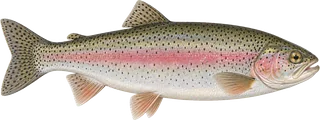 Fishing for rainbow troutPeak season
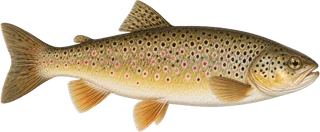 Brown trout fishingSpawning season, please spare
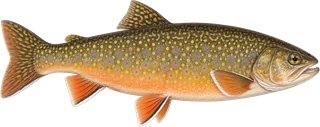 Brook trout fishingSpawning season, please spare
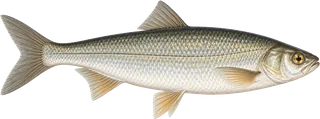 Dace fishingShoulder season
Sources
Correct as of October 2026. The practical knowledge comes from 12 sources, summarised in our own words.
View all 12 sources
- Äsche mit der Nymphe fangen · BLINKER (Redaktion)
- Steckbrief Äsche · BLINKER (Redaktion)
- Angeln auf Äsche: Auf Äschen mit Pose und Nymphe · BLINKER (Redaktion, Methode nach M. Mariani)
- Fliegenfischen im Herbst: Kleine Fliegen, große Fänge · BLINKER (C. Leppin)
- Jig-Nymphe: Kleiner Köder für wählerische Fische · BLINKER (H. Bayler)
- Köcherfliege – die beste Trockenfliege im Sommer · BLINKER (M. Werner)
- Die Fränkische Saale · FISCH & FANG (K. Dietl)
- Die Nagold · FISCH & FANG (Beitrag der Kurverwaltung Bad Liebenzell)
- Eine Chance für die Äsche · FISCH & FANG (Meldung des Landessportfischerverbands Niedersachsen)
- Die Kyll bei Bewingen · FISCH & FANG
- Fischerei- und Betretungsverbot wegen Trockenheit und Hitze · Kanton Solothurn, Staatskanzlei (Volkswirtschaftsdepartement)
- Nachhaltig fischen – Tipps für Angler:innen · Umweltbundesamt Österreich (mit österreichischen Landesfischereiverbänden)
Text written with AI support, based on the sources listed and these pages: Grayling (profile), Fly fishing, Float fishing, Dry fly.