
Knowledge – Fish
Fishing for smelt
You should not fish for smelt on purpose these days: its stock has declined markedly. Here you can read how to recognise it, where it lives and what to do if it bites anyway.
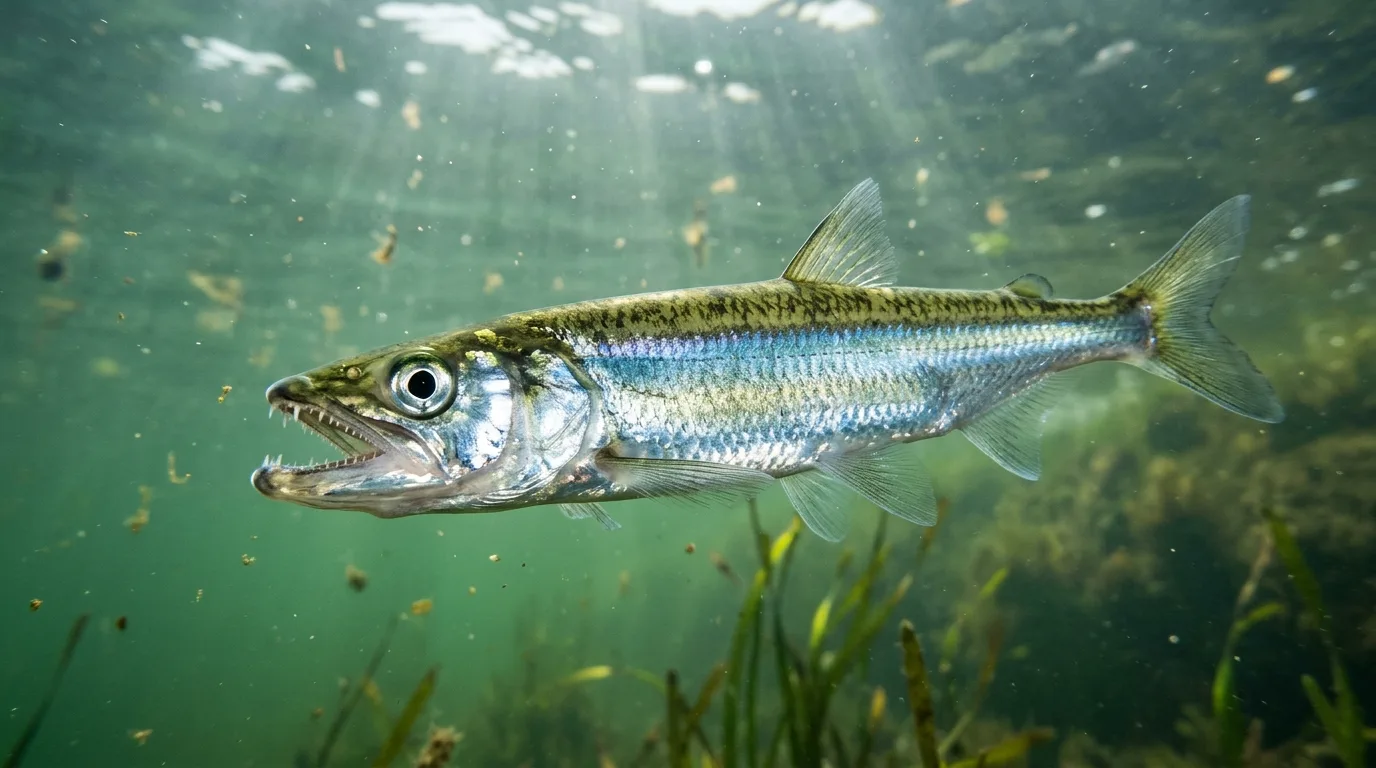
According to the 2023 Red List, the smelt is critically endangered in Germany. For anglers it is therefore not a target fish, all the more so as its spawning stock is small.
Quick to recognise
A slender, silvery shoal fish with a pointed head, a large mouth and strong teeth. Fresh, it smells of cucumber. In the Elbe it is usually 15 to 18 centimetres long.
Why it is not a target fish
Since about 2013 the stock in the Elbe has been declining markedly again. The strength of a year class fluctuates greatly; after a low in 2024, the Hamburg smelt study reported a clear increase again for 2025. Rising temperatures, lack of oxygen and changes in the water put stress on eggs and larvae, and the spawning stock consists almost entirely of two age groups. Where smelt fishing is allowed, the rules of the state and the water apply.
Where it lives
On the coast
It lives in shoals in open water in the North Sea and Baltic Sea and hardly ever leaves the coast. For most of the year the migratory smelt stay in estuaries such as the tidal Elbe.
| All year round | Open water |
|---|
In the river
In late winter the shoals migrate upriver from the estuaries, for example into the lower Elbe, and spawn over sand and gravel on banks with a strong current. The most important spawning ground in the Elbe lies above Hamburg.
| All year round | edge of the current, riffle |
|---|
Holding spots in the picture
Choose a season and time of day: the picture shows where the species sits then. Tap a fish or a spot in the list to bring it closer. The picture is schematic and AI-generated, every water is different.
On the coast
Open water, mid-water
The smelt is found here all year round.
The smelt is a shoal fish of open water in the North Sea and Baltic Sea that only rarely strays far from the coast. The migratory form spends most of the year in river mouths, for example in the tidal Elbe.
Spring: The spawning season falls in this period; observe the closed seasons (Schonzeiten).
Winter: In the cold season the shoals gather in the estuaries before they migrate upriver.
In the river
Gravelly shallow (riffle)
The smelt is found here all year round.
Current seam
The smelt is found here all year round.
The smelt runs into the lower reaches of large rivers to spawn. The eggs stick to sand and gravel, preferably on stretches of bank with a strong current. In the Elbe the most important spawning ground lies above Hamburg.
Spring: This is when spawning takes place, so observe the closed seasons. Depending on the water temperature, smelt spawn until April or May over sandy and gravelly bottom, after which the larvae drift back into the estuary.
Winter: From February the shoals move upriver, in the Elbe as soon as the water reaches about 6 °C.
Depth: It swims in mid-water, usually at depths of 2 to 25 metres and seldom far from the bank.
Size comparison: AI-generated drawing, schematic.
Do not confuse
Young herring and sprat also glitter silver and pass through the estuaries in shoals. You recognise the smelt by its large, toothed mouth, by the dorsal fin, which starts only behind the pelvic fins, and by the smell of cucumber.
If it bites anyway
Remove the hook quickly and gently, ideally in the water, and handle the fish only with wet hands. Put it straight back. During the spawning migration in late winter the stock is especially vulnerable.
Rules
In our overview of the states there are no figures for the minimum size or closed season of the smelt. That does not mean you may catch or keep it: protection is governed by state fisheries law and nature conservation law.
What applies in your country is on the country pages under Fishing waters in Germany.
The regulation and your fishing permit (Erlaubnisschein) are what count. Lake Constance, the Rhine and the coast, for example, have their own rules: Fishing waters in Germany.
Text AI-assisted, summarised from these pages: Smelt (profile), Releasing a fish.