
Knowledge – Fish
Smelt: Features, spawning migration and stock
The smelt (Osmerus eperlanus) is a slender, silvery shoaling fish of coasts and estuaries that migrates in late winter to the lower reaches of large rivers such as the Elbe to spawn. When freshly caught, it smells of cucumber. In the German Red List of 2023 it is classed as endangered.
In short: Endangered according to the 2023 Red List, the stock in the tidal Elbe has fallen sharply. Recognisable by its cucumber smell and strong teeth. What to do with bycatch: smelt as bycatch.
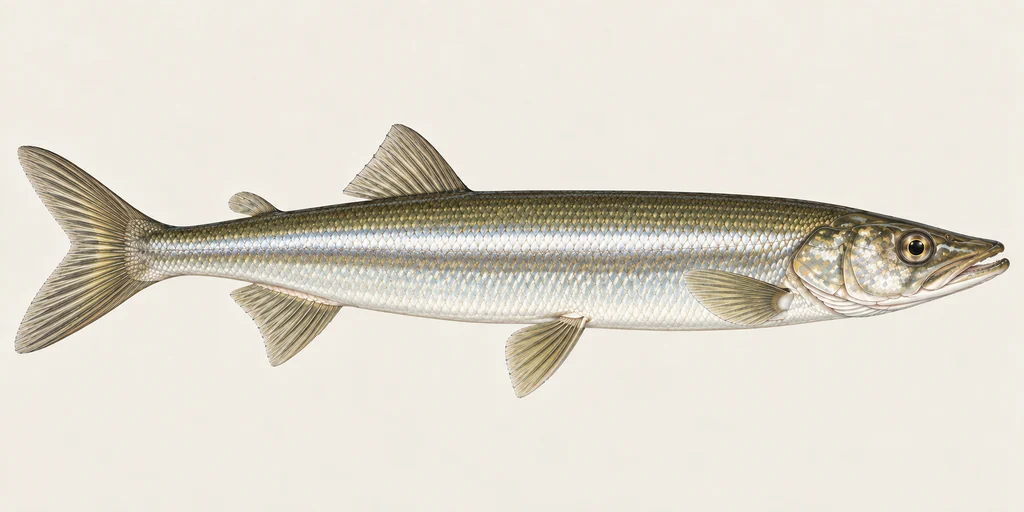
- Large mouth: the upper jaw reaches the rear edge of the eye, the lower jaw protrudes slightly
- Rückenflosse beginnt erst hinter dem Ansatz der Bauchflossen
- Silver lengthwise band on the flank below the pale olive-green back
Catch chances through the year
- Hardly any chance
- Possible
- Good
- Peak season
- Spawning (observe the closed season)
Editorial assessment for waters in Germany, not a measured value and no guarantee. Spawning time is not the same as the legal closed season.
Species profile and sources in the catch calendarAll species compared month by monthThe rules of your federal state
How to recognise it
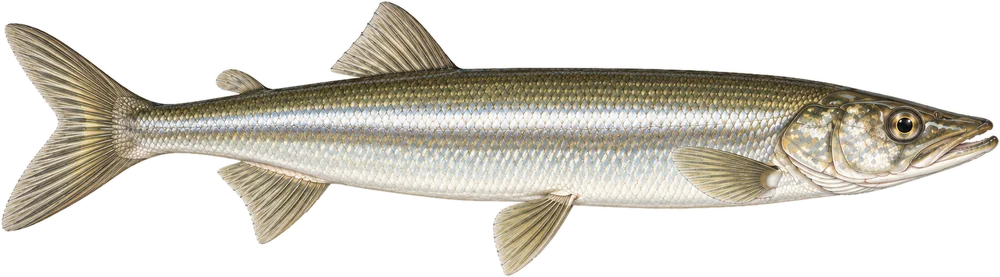
The smelt is long and slender, with the head and snout tapering to a point. The mouth is large for such a small fish: the upper jaw reaches below the rear edge of the eye, and the lower jaw projects slightly. The mouth holds strong teeth, even on the tongue, and those in the lower jaw are larger than the ones above.
The back is pale olive green, there is a silver band along the flank, and the belly is creamy white. The dorsal fin begins only behind the base of the pelvic fins. The lateral line is developed only at the head end. The smell is unmistakable: fresh smelt smell of cucumber.
In the Elbe, smelt usually grow to 15 to 18 centimetres, at most about 30 centimetres, and live up to six years. FishBase gives a common length of 16,5 centimetres, a maximum weight of 178 grams and a maximum age of ten years.
Young herring and sprats are also silvery and swim in shoals in the estuaries. So look for the features of the smelt: a large mouth with strong teeth, a dorsal fin that begins only behind the pelvic fins, and the cucumber smell.
Side by side
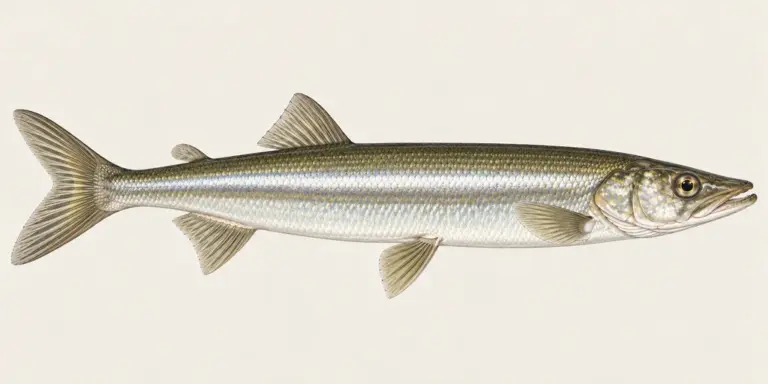
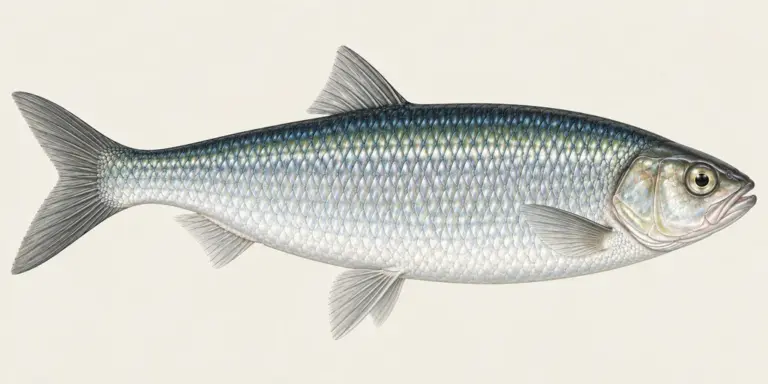
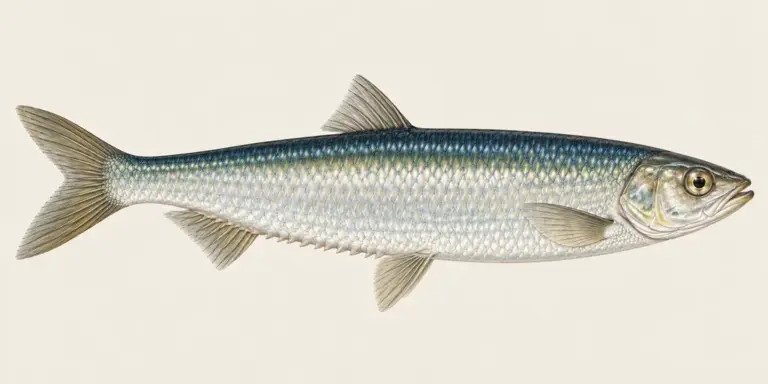
AI-generated illustrations.
Where it lives
The smelt lives on the coasts of the North Atlantic, from the White Sea via the Baltic Sea and the southern North Sea to the Gironde in France. It is an open-water fish that rarely strays far from the coast. The migratory form spends most of its life in river estuaries. There are also stocks that live permanently in lakes near the North Sea and Baltic coasts.
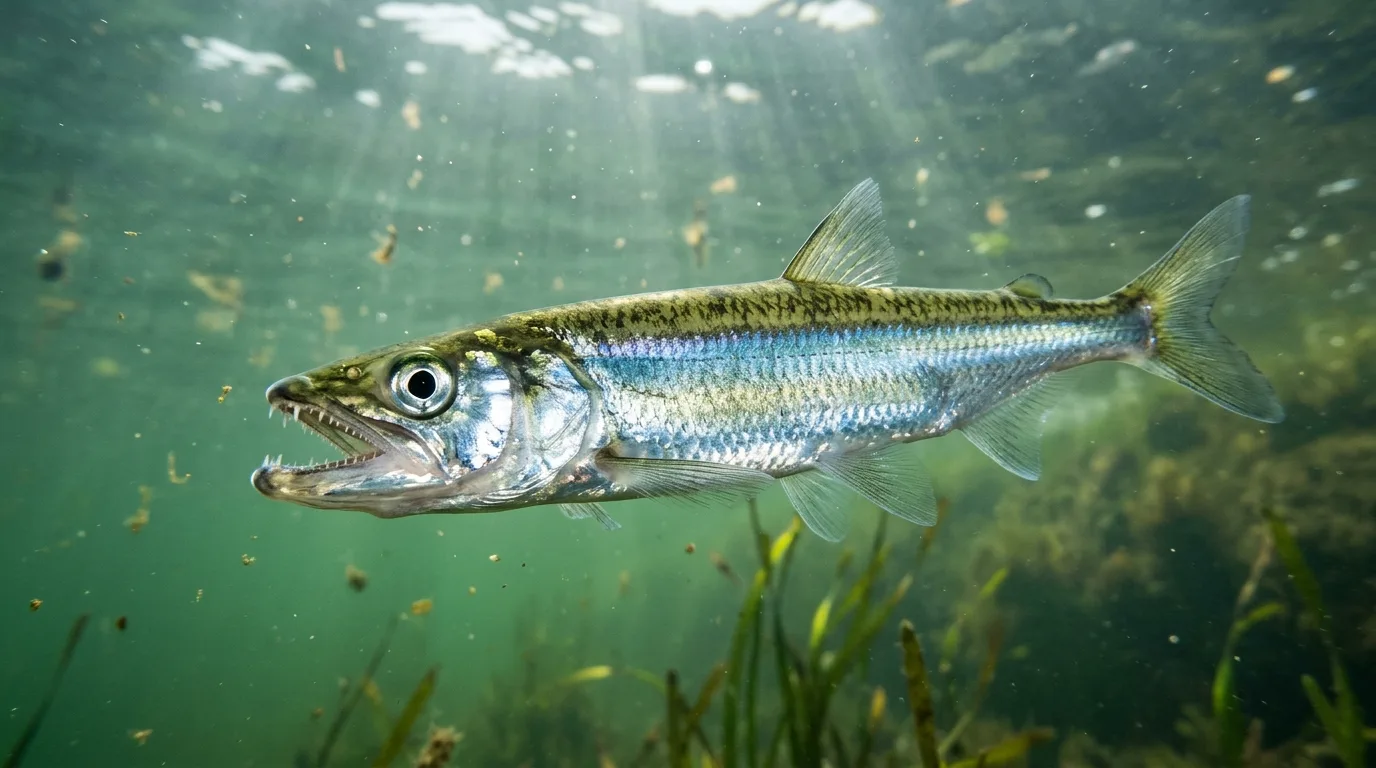
In Germany, the very large stocks on the coasts and in the estuaries shape the picture. In the tidal Elbe the smelt is considered a keystone species. It feeds mainly on planktonic crustaceans and is itself food for zander, cormorants and seabirds. The common terns at the mouth of the Elbe time their breeding season to the smelt migrations.
Holding spots in the picture
Choose a season and time of day: the picture shows where the species sits then. Tap a fish or a spot in the list to bring it closer. The picture is schematic and AI-generated, every water is different.
On the coast
Open water, mid-water
The smelt is found here all year round.
The smelt is a shoal fish of open water in the North Sea and Baltic Sea that only rarely strays far from the coast. The migratory form spends most of the year in river mouths, for example in the tidal Elbe.
Spring: The spawning season falls in this period; observe the closed seasons (Schonzeiten).
Winter: In the cold season the shoals gather in the estuaries before they migrate upriver.
In the river
Gravelly shallow (riffle)
The smelt is found here all year round.
Current seam
The smelt is found here all year round.
The smelt runs into the lower reaches of large rivers to spawn. The eggs stick to sand and gravel, preferably on stretches of bank with a strong current. In the Elbe the most important spawning ground lies above Hamburg.
Spring: This is when spawning takes place, so observe the closed seasons. Depending on the water temperature, smelt spawn until April or May over sandy and gravelly bottom, after which the larvae drift back into the estuary.
Winter: From February the shoals move upriver, in the Elbe as soon as the water reaches about 6 °C.
Depth: It swims in mid-water, usually at depths of 2 to 25 metres and seldom far from the bank.
Size comparison: AI-generated drawing, schematic.
How it migrates and spawns
In winter the smelt gather in the estuaries and then move upstream. In the tidal Elbe they migrate in February and March, as soon as the water is warmer than about 6 °C. Spawning takes place over sandy and gravelly ground, preferably along banks with a strong current. A female lays 8.000 to 50.000 small, yellow eggs that stick to the bottom. After three to five weeks the larvae hatch and drift back into the estuary. Many adults die after spawning.
In brackish water, smelt reach sexual maturity at three to four years old at 15 to 18 centimetres, in lakes as early as one to two years. According to the Hamburg smelt study (Hamburger Stintstudie), the Elbe’s spawning stock consists almost entirely of two age groups and is therefore prone to collapses.
In the past the smelt was abundant in the Elbe. With the pollution of the river the stock collapsed and recovered when the water quality improved from the 1990s. Since about 2013 it has been declining sharply again. The Hamburger Umweltbehörde names rising temperatures, oxygen deficiency and changes in the water as burdens on eggs and larvae. In the port of Hamburg especially many eggs die, very probably because of sediment settling.
When the smelt arrive
The spawning time depends on the water temperature and, according to FishBase, runs from February to May. In the Elbe, the Hamburg smelt study (Hamburger Stintstudie) most recently observed spawning from mid-February to mid-March, up to four to five weeks earlier than around 1960. The main spawning area lies upstream of Hamburg.
How strong a year class turns out also depends on the water level: plenty of upstream water in spring helps the young fish. After a low point in 2024, the study recorded a massive increase in 2025. The smelt spend the rest of the year in the estuary and on the coast.
You will find the monthly overview of all species and the water temperature check in the catch calendar.
Smelt and anglers
As bycatch: Fishing for smelt? – why the species is not a target fish and what to do with bycatch.
In the Elbe, smelt are traditionally caught by professional fishers with the hamen, a large bag net, during the spawning migration. For anglers it is not a target fish today: the species is endangered and the spawning stock is small.
Where smelt fishing is allowed, the rules of the respective state and water apply. If a smelt takes your hook while you are fishing for other species, release it quickly and gently and put it straight back.
Recognise it by smell: A slender, silvery fish with teeth in its mouth that smells of fresh cucumber is a smelt.
Respect the spawning season: In late winter the smelt move in dense shoals to the spawning grounds. That is exactly when the stock is most vulnerable.
Suitable lures
We deliberately show no baits for this species.
Endangered (Red List 2023): do not target it, follow the rules of your federal state (Bundesland), release bycatch gently.
Protection and rules
The smelt is listed as endangered in the German Red List of 2023; in 2009 it was still on the early-warning list. Experts from Lower Saxony and Schleswig-Holstein assume a sharp decline, and many small stocks in northern German inland lakes are also falling. Worldwide, the IUCN classes the species as not threatened. The Hamburger Umweltbehörde relies on shallow-water zones, more natural banks and better water quality.
You do not keep a smelt that you catch by chance, but gently release it straight away, because the species is endangered. Closed seasons (Schonzeit), minimum sizes (Mindestmaße) and catch limits are set by the federal states (Bundesländer). The fisheries regulation (Fischereiverordnung) of your federal state and your fishing permit (Erlaubnisschein) are always binding. You will find a list of links to the official sources in the catch calendar.
What closed season, minimum size and harvest slot mean and where to find them is explained on the page Closed season and minimum size explained.
Frequently asked questions (FAQ)
Why does the smelt smell of cucumber?
The cucumber smell is a well-known feature of fresh smelt and helps with identification. FishBase expressly notes it.
When do the smelt move up the Elbe?
In February and March, as soon as the water is warmer than about 6 °C. The Hamburg smelt study (Hamburger Stintstudie) most recently observed spawning from mid-February to mid-March.
Is the smelt endangered?
Yes. The German Red List of 2023 lists it as endangered. The stock in the tidal Elbe has fallen sharply.
Sources
The rating of catch chances is an editorial assessment. The facts come from these sources, and the text is worded in our own words. The illustration is an original design by Angel Momente in the style of a natural history plate (AI-generated, see the AI notice).
- FishBase: Osmerus eperlanus (Größe, Alter, Merkmale, Lebensraum, Laichzeit, Eizahl, Nahrung, Geruch)
- Rote-Liste-Zentrum: Stint (Rote Liste der Süßwasserfische Deutschlands 2023: stark gefährdet)
- Stiftung Lebensraum Elbe (Hamburg): Zum Rückgang des Stintbestands in der Tideelbe
- Freie und Hansestadt Hamburg, BUKEA: Pressemitteilung Stint in der Tideelbe unter Druck (Juli 2026)
- Freie und Hansestadt Hamburg, BUKEA: Abschlussbericht Stintstudie 2021–2025 (Laichzeit, Laichgebiete, Altersaufbau)
Created with AI support from the sources listed. Figures only appear in the text if a source gives them. Last updated: 27 October 2026. Found a mistake? Write to us. Who is behind this site: About me.
More in the lexicon
- All fish species at a glance
- Catch calendar – month, water temperature and profile for 93 species
- Line calculator – breaking strain after the knot, drag guideline, backing
- Angling methods