
Knowledge – Fish
Bream fishing
Bream fishing means bringing a shoal to the spot with plenty of feed and offering the bait on the bottom, where the fish roots through the bed. Here is the way there in nine steps, each with a link to the detailed page.
 Choose another fish117 fish with guides
 EelOff-peak season
 EelpoutPossible
 IdePossible
 ArapaimaGood
 GraylingPeak season
 Atlantic salmonSpawning time, please spare
 Brown troutSpawning time, please spare
 Brook troutSpawning time, please spare
 BarbelOff-peak season
 BarramundiSpawning season
 Greater amberjackGood
 Topmouth gudgeonOnly as bycatch
 Blue marlinSpawning season
 BonefishSpawning season
 BonitoGood
- BreamOff-peak season
 Dusky grouperOnly as bycatch
 CobiaPossible
 Spiny dogfishOnly as bycatch
 CodPeak season
 ChubPeak season
 MinnowOnly as bycatch
 European sturgeonOnly as bycatch
 FlounderPeak season
 PerchPeak season
 Largemouth bassGood
 Ballan wrasseOnly as bycatch
 Yellowfin tunaSpawning season
 Giant trevallyGood
 Prussian carpPossible
 BrillPossible
 Gilthead breamSpawning time, please spare
 Golden doradoSpawning season
 Golden mahseerOnly as bycatch
 Dolphinfish (mahi-mahi)Good
 Grass carpPossible
 Great barracudaGood
 GudgeonPossible
 White breamPossible
 DaceOff-peak season
 PikePeak season
 HalibutOff-peak season
 HerringPossible
 GarfishOut of season
 Huchen (Danube salmon)Possible
 Crucian carpOnly as bycatch
 CarpOff-peak season
 RuffeOff-peak season
 VendaceOnly as bycatch
 DabPeak season
 GurnardPossible
 Coley (saithe)Peak season
 Chinook salmonHardly any chance
 King mackerelSpawning season
 LingPeak season
 TuskOff-peak season
 MackerelPossible
 Bighead carpOut of season
 WhitefishPossible
 Conger eelOff-peak season
 Sea troutSpawning time, please spare
 Grey mulletPossible
 Murray codSpawning season
 MuskellungeGood
 Common nasePossible
 Nile perchPossible
 PayaraPossible
 Peacock bassPeak season
 PermitGood
 WeeverOnly as bycatch
 PollackOff-peak season
 BurbotOff-peak season
 AspPossible
 Red snapperSpawning season
 Rainbow troutPeak season
 RoosterfishGood
 RoachPeak season
 RedfishOut of season
 Bluefin tunaOnly as bycatch
 RuddPossible
 Russian sturgeonOnly as bycatch
 HaddockOff-peak season
 SnakeheadPossible
 TenchOff-peak season
 SpirlinOnly as bycatch
 PlaiceOff-peak season
 Greenland halibutOnly as bycatch
 Round gobyOnly as bycatch
 SwordfishGood
 Lake troutSpawning time, please spare
 HakeSpawning time, please spare
 Alpine charSpawning time, please spare
 MonkfishPossible
 SoleOff-peak season
 SailfishGood
 Silver carpOut of season
 SnookPeak season
 PumpkinseedOnly as bycatch
 SpratOnly as bycatch
 Atlantic wolffishSpawning time, please spare
 TurbotPeak season
 SterletOnly as bycatch
 SmeltOnly as bycatch
 Horse mackerelPossible
 TaimenGood
 TarponGood
 TigerfishSpawning season
 BleakPossible
 WahooGood
 Wels catfishOff-peak season
 WhitingPeak season
 Sea bassOff-peak season
 ZanderPeak season
 White-eye breamOnly as bycatch
 Blue breamOnly as bycatch
 Brown bullheadPossible
 VimbaOnly as bycatch
Season in October according to the catch calendar, an estimate and not a guarantee of a catch. The fish pictures are reduced natural-history plates and AI-generated.
Best time
From August to September, in the morning, in the evening and at night.
In January: PossibleIn February: PossibleIn March: PossibleIn April: PossibleIn May: Good, spawning seasonIn June: Good, spawning seasonIn July: GoodIn August: Peak seasonIn September: Peak seasonIn October: GoodIn November: PossibleIn December: Possible
Good spot
- Lake: drop-off, deep water and weed bedsdrop-off and deep waterdrop-off and deep waterdeep water
- River: quiet bay and groyne poolquiet bay and groyne poolquiet bay and groyne poolquiet bay and groyne pool
Starter tackle
- Rod: 3,60–3,90 m, medium action, 80–100 g casting weight, with interchangeable tips
- Line: monofilament 0,22–0,25 mm; in still water also braid 0,10–0,12 mm with about 10 m of 0,30 mm shock leader
- Hook: 14–16 for two maggots, 10–12 for sweetcorn or red worm
- Rod: pole 10–13 m with elastic 1,8–2,3 mm; to start with, a whip of 6–8 m is enough
- Line: monofilament 0,14–0,16 mm
- Hook: 14–18, with strong wire that does not open out during the fight
- Rod: 3,30–3,60 m, light carp rod with 1,75 lb test curve, up to 2,5 lb for long distances
- Line: monofilament 0,25 mm; for long distances braid with about 5 m of 0,20–0,25 mm shock leader
- Hook: 8–12, medium-gauge wire
In short
In short: You will catch bream best from August to September, in the morning, in the evening and at night. Good spots on a lake: drop-off and deep water; on a river: quiet bay and groyne pool. Tried and tested baits: worms, maggots, casters and sweetcorn; for big bream also small boilies.
Quick to recognise
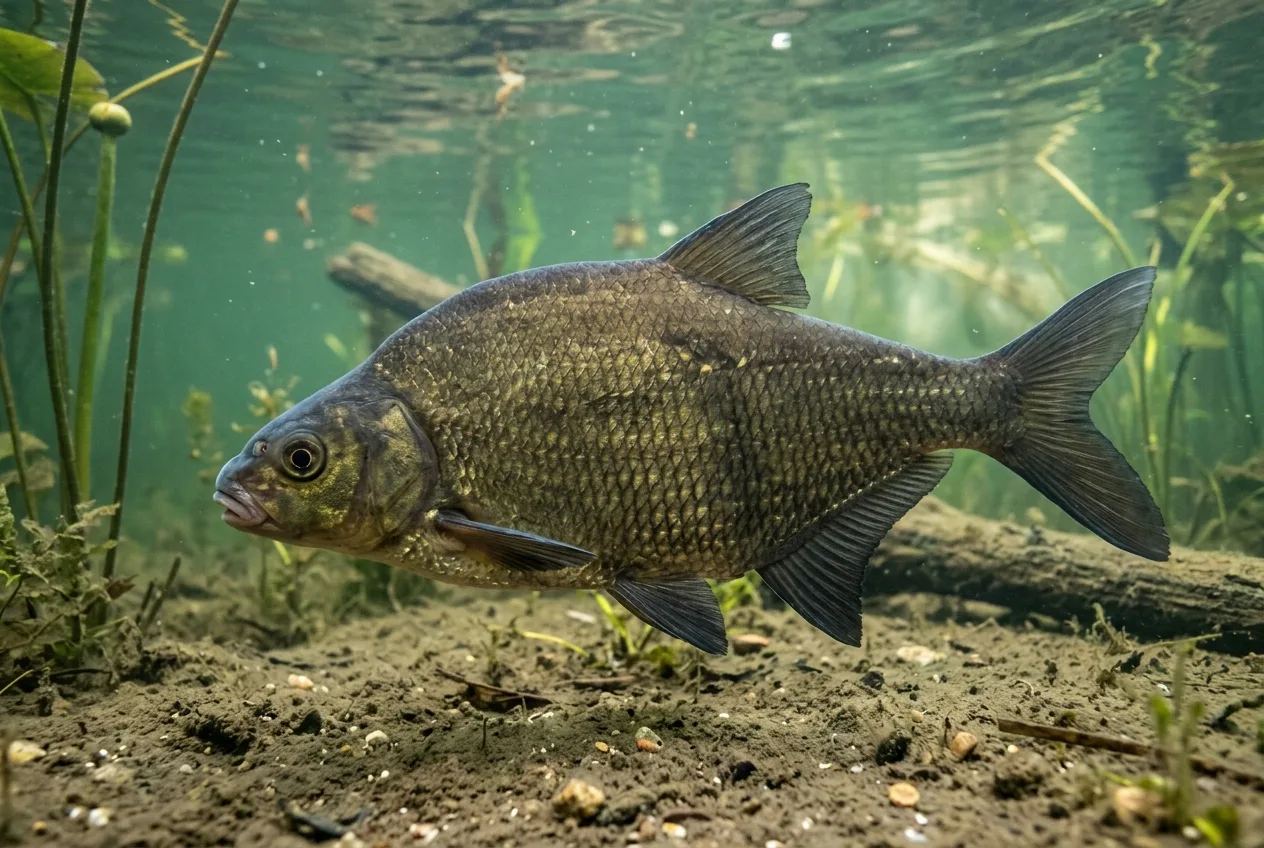
A shoaling bottom-dweller, also called Brachse or Blei in German, that searches the soft bottom with its protrusible mouth. It usually measures 30 to 50 centimetres, rarely more than 60.
When
Peak season is August and September; you also catch well from May to July and in October. Spawning is in May and June, in July as well if the water is cold. Whether a closed season (Schonzeit) applies then is set by your federal state (Bundesland). Most happens early in the morning, in the evening and in the first hours of the night.
- JanPossible
- FebPossible
- MarPossible
- AprPossible
- MayGood, spawning
- JunGood, spawning
- JulGood
- AugPeak season
- SepPeak season
- OctGood
- NovPossible
- DecPossible
Peak seasonGoodPossibleHardly any chanceSpawning season
Spring tactics
Before and after spawning, even big bream stand shallow, often in the warmest part of the lake with reed or weed. At night they then feed on edges and sandbanks nearby. During the spawning itself they hardly bite for a short time in many waters. Whether a closed season (Schonzeit) applies in these weeks is set by your federal state (Bundesland).
Summer tactics
Bream avoid bright sun, so fish in the early morning, in the evening and in the first hours of the night. Feed coarsely and sweetly, for example with sweetcorn or peas, so that small fish do not clear the feed straight away. On lakes the shoal often stands at the bank the wind blows onto.
Autumn tactics
August and September are the strongest months. Instead of sweet flavours, savoury notes such as fish or liver often catch better now. As the water cools, you look for the edges leading to the deeper areas.
Winter tactics
Bites are rare and come late, often only after 20 to 40 minutes at the spot. When they do, it is on rivers in quiet, deep groyne fields and at sandbanks with a very small feeder, light dark groundbait and a clearly visible bait. In cloudy high water the fish stand shallower than usual.
Are they biting today?
In January: PossibleIn February: PossibleIn March: PossibleIn April: PossibleIn May: Spawning season, please spare themIn June: Spawning season, please spare themIn July: Off-peakIn August: Peak seasonIn September: Peak seasonIn October: Off-peakIn November: PossibleIn December: Possible
Today’s catch index needs JavaScript. Season and spawning time are in the catch calendar.
From the blog: Freshwater fish in Germany: which species you catch where · Roach or rudd, bream or silver bream: how to tell these silver fish apart reliably · Where fish hold in winter: winter holding areas in rivers, canals and lakes
Where it sits now
In the lake
Big bream travel in shoals far out over soft bottom, at the drop-off, at sloping points and, in reservoirs, along the old riverbed. In the evening they come closer to the bank; in winter they gather in deep, sheltered spots.
How to go about it: Big bream feed along fixed routes that you first have to find on large lakes, for example at islands, plateaus and points above the deep. On weedy lakes you put the bait on open patches; in the weed the shoal hardly finds it. Far out, a marker float helps to place the feed exactly.
| All year round | deep bottom |
|---|---|
| Spring extra | shelf edge, weed bed |
| Summer extra | Shelf edge |
| Autumn extra | Shelf edge |
In the river
Bream usually avoid strong current, but in high summer they often seek out fast-flowing spots at midday. Look for them in quiet bays, groyne fields, canals and harbours, in winter especially in deep groyne pools.
How to go about it: Pick the spot in quiet groyne fields, at sandbanks in slack water or at edges that slope gently towards mid-river. Shallow, fast-flowing stretches rarely produce anything. In winter, in weak current, a small feeder is enough; in summer you often need considerably more weight.
| All year round | quiet bay, groyne pocket |
|---|
Feeding time: in the morning, in the evening and at night. How this looks on the water is shown by the picture of the holding spots right below.
Waters with rules for bream
Holding spots in the picture
Choose the season and time of day: the picture shows where the species stands then. Spots outlined in red apply only in the chosen season. Tap a fish or a spot in the list to bring it closer. The picture is schematic and AI-generated, every water is different.
Catch chances in springpossible
Catch chance in summergood
Catch chance in autumngood
Catch chance in winterpossible
- J
- F
- M
- A
- M
- J
- J
- A
- S
- O
- N
- D
Spawning season
Active time Good times for catching are early morning, evening and the first hours of the night.
Not prime time Good times for catching are early morning, evening and the first hours of the night.
Active time Good times for catching are early morning, evening and the first hours of the night.
Active time Good times for catching are early morning, evening and the first hours of the night.
In the lake
Water lilies and weed bed
Bream are found here only in spring.
Shelf edge
Bream are found here only in spring, summer and autumn.
Deep bottom
Bream are found here all year round.
Bream live in shoals on the bottom. Big ones often travel through the water far from the bank. You find them at the drop-off, at the breaks of points and, in reservoirs, in the old riverbed.
Spring: chances of a catch according to the catch calendar are possible in March and April, good in May. To spawn, even the big bream of lakes move close to the bank. The eggs are laid at shallow, plant-rich spots along the shore.
Summer: chances of a catch according to the catch calendar are good in June and July, with peak season in August. In lakes and reservoirs bream usually stand farther from the bank by day. Only towards evening do they come close to the shore.
Autumn: catch chance according to the catch calendar is peak season in September, good in October and possible in November.
Winter: chances of a catch according to the catch calendar are possible. Bream spend the winter in large shoals at deeper, sheltered spots.
In the river
Groyne scour hole
Bream are found here all year round.
Calm bay with aquatic plants
Bream are found here all year round.
In rivers bream avoid strong current and prefer to stand in still bays and groyne fields. You often find them in slow-flowing lower reaches, in canals and river harbours.
Spring: catch chances according to the catch calendar are possible in March and April, good in May.
Summer: chances of a catch according to the catch calendar are good in June and July, with peak season in August. In the hot season bream often seek out strongly flowing areas, especially around midday. Towards evening and in the dark they move to calmer areas such as deep groyne pools.
Autumn: catch chance according to the catch calendar is peak season in September, good in October and possible in November.
Winter: chances of a catch according to the catch calendar are possible. Bream spend the winter in large shoals at deeper, sheltered spots.
Depth: Big bream in lakes stay in deep water. They usually come into the shallows only at night or to spawn.
Size comparison: AI-generated drawing, schematic.
How
On the bottom you fish with a feeder on the feeder rod or with a bottom weight, the rod tip shows you the bite. With a whip or float it works just as well: when the bream lifts the weight off the bottom, the float rises up and lies flat; that is the typical lift bite.
Easiest way
To start with, you take a medium-heavy feeder rod, 0,22 to 0,25 monofilament and a simple wire feeder with a side weight. On a river find a quiet groyne field, on a lake an edge over soft bottom, and offer two maggots on a size 14 or 16 hook. At first cast the feeder to the same spot at short intervals so that feed collects there.
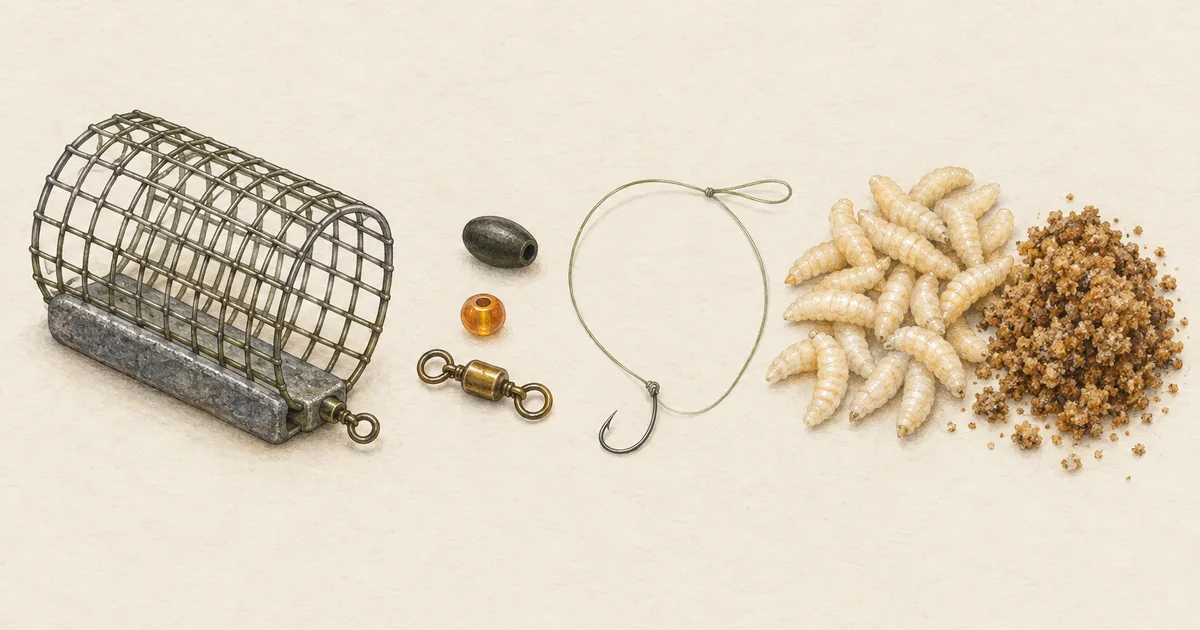
Feeder on the feeder rod
The most versatile way for bream, on rivers and lakes alike, once the shoal stands farther out or you want to feed deliberately.
- Choose calm water
On rivers you look for groyne fields, sandbanks in slack water and deep, calm stretches. On lakes they are edges leading to the deeper zones where food collects.
- Feel the bottom
Drag the rig over the bottom a few times before feeding. If leaves, branches or flotsam get caught, find a cleaner spot.
- Coarse and plentiful
Rather take coarse groundbait with a few maggots or worms so that the shoal stays longer. In summer the feeder can go out every three minutes; in winter four full feeders to start are enough, then about one every quarter of an hour.
- Loop with hooklength
A loop of about 30 cm in which the feeder runs works well, with a hooklength of about 80 cm below it. That way the bream can suck in the bait without feeling the weight of the feeder straight away.
- Always the same spot
Aim at a target on the opposite bank and clip the line once the distance is right. A mark made with a marker pen above the reel helps to find the distance again after cutting off.
- Watch the tip
The rod lies on two rests, you watch only the fine tip. In cold water bream pluck very hesitantly, so strike at the first clear movement.
- Away from the feeding spot
Most bream pull briefly towards the bottom and then give in. Lead the fish calmly out of the feeding area so that the rest of the shoal does not become restless.
- Long landing net
A landing net with a long handle and an arm of at least 50 cm makes landing from groynes and stone embankments much easier.
Pole over the feeding spot
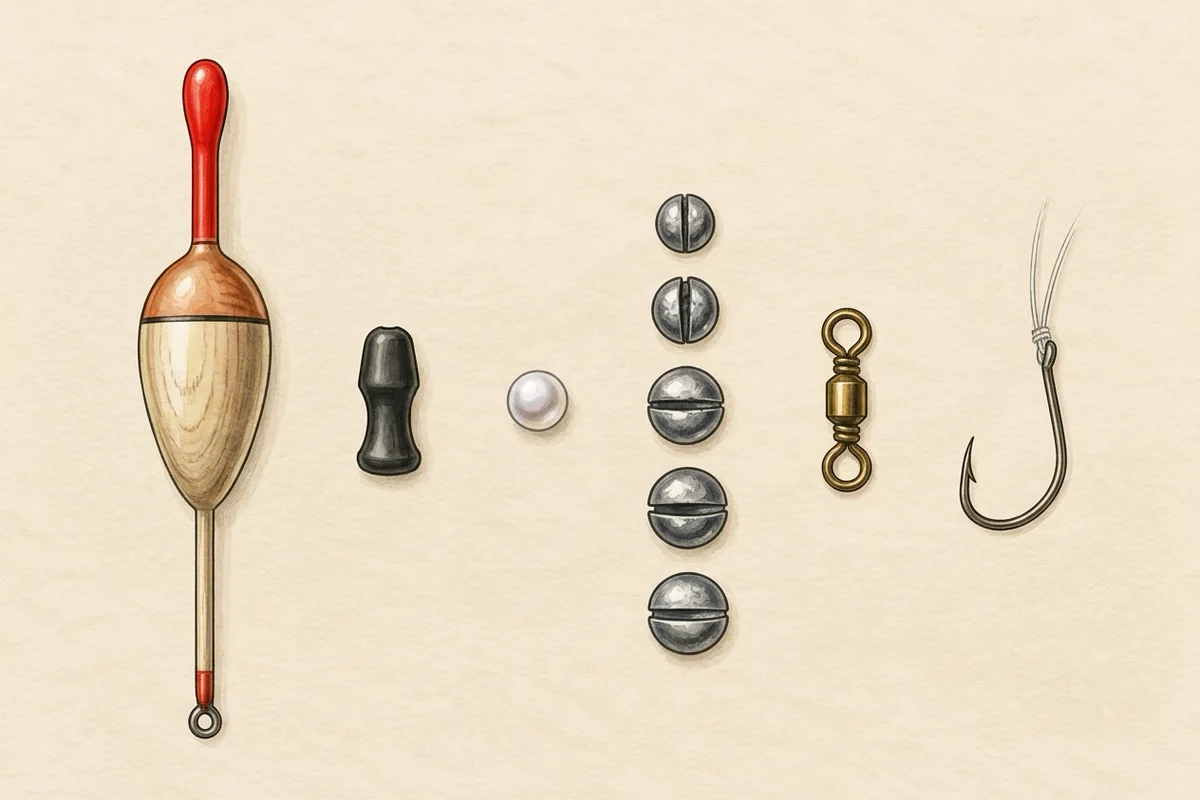
The most accurate method when the shoal feeds within rod reach and you want to steer the bait centimetre by centimetre.
- Channel or hollow
In still water you fish over soft bottom, best in a depression or channel. In rivers the spot lies farther out over even sand or gravel.
- Let the bait lie
Set the float so that about 10 cm of the hooklength with the bait lies on the bottom. On uneven gravel the weight may hover just above it.
- Balls to start
To start, throw a few firm balls the size of oranges exactly onto the spot. Then you add small amounts with the feed cup on the rod tip.
- Short line
No more than 50 cm of line stays between the float and the rod tip, which makes the rig wind-stable and the strike quick. One to three small weights sit above the hooklength as bite indicators.
- Lift the bait
If nothing comes, lift the rig by up to 10 cm and let it sink back slowly. The bream often bites shortly afterwards, when the bait lies still again.
- Float rises
If the antenna rises or lies down, the fish has lifted the bottom weight. Do not wait until it goes under, strike promptly.
- Let the elastic work
The elastic in the pole absorbs the jolts. Draw the bream away from the spot gently and ship the pole back to land it.
- Large net head
Use a landing net head of at least 50, better 55 cm on a long handle.
Night session for big bream
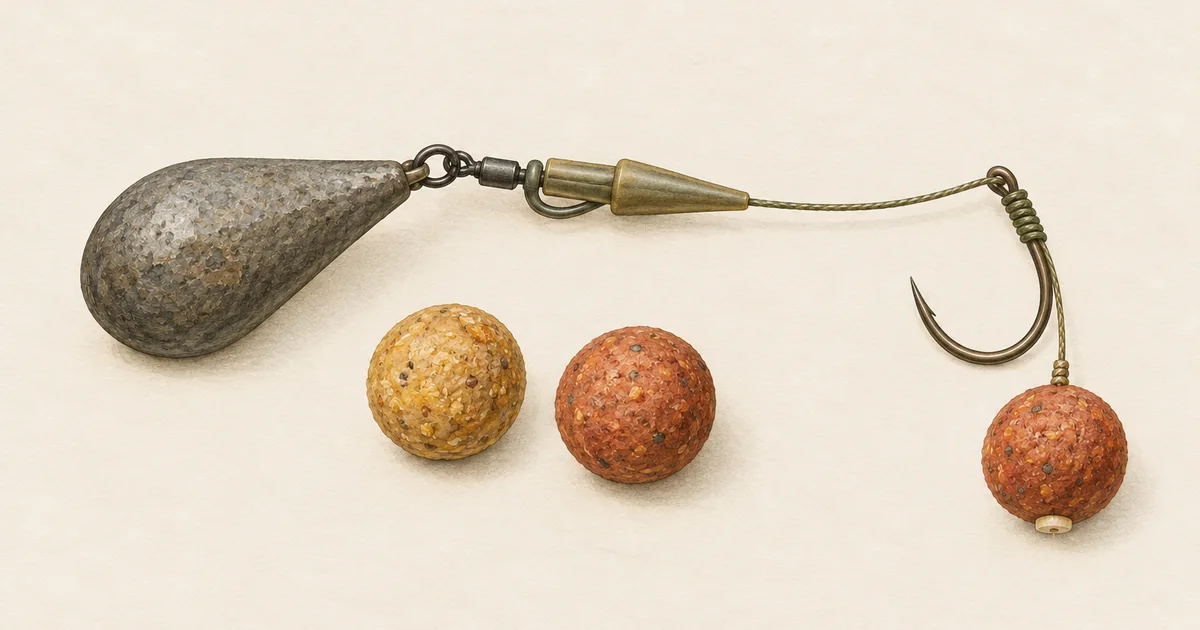
For targeting big bream at dusk and at night, when roach and small bream are too quick to the bait by day.
- Edges and bars
On lakes, gravel bars, plateaus and points that fall away into the deep are good places. On rivers, broad, calmly flowing stretches with soft bottom and areas above weirs are worth it; you avoid putrid silt.
- Once, and generously
Put the feed in during the afternoon in one go, with powder groundbait, small pellets and sweetcorn. On rivers it helps to start feeding three to five days earlier, because the big fish roam widely.
- Bait on the hair
Offer pellets of 10 to 15 mm, small boilies or a bunch of maggots on the hair. A heavy method feeder or a fixed lead makes the fish hook itself.
- At dusk
Put the rods out only when it gets dusky. Then big bream often roll at the surface over the spot and feed on the bottom shortly afterwards.
- Just pick up the rod
When the bite indicator reports a fish, it is usually already hooked. Pick up the rod, switch off the free spool and keep contact.
- Pump calmly
At long distance the fight is mostly pumping work. Big bream turn broadside in the current; give way then and win back the line evenly.
- Light and net
Keep a head torch and a big landing net within reach before the first bite comes. Lay the fish on a wet mat for unhooking.
What with
The maggot is the standard, often in a bunch, plus caster, dung worms and sweetcorn. The feed decides a lot: plentiful, with a sweet smell and a few maggots or small worms mixed in.
- Maggots & larvaeall year round, in winter also two maggots with two floating artificial maggots
Maggots catch reliably on the feeder and the pole and attract the whole shoal in the feed.
- Wormscold water and on the pole, often combined with a maggot
Small red worms and dung worms give off a lot of scent and also tempt sluggish fish.
- Sweetcorn & particlessummer and autumn, after heavy feeding
Among the particles fed in, a large grain of sweetcorn stands out and is not too small for big bream.
Tackle
A medium-heavy feeder rod with a quiver tip on rivers or a swing tip in still water, plus, depending on the spot, a whip or bottom rod. Lines between 0,14 and 0,20 millimetre are enough.
Feeder on the feeder rod
- Rod
- 3,60–3,90 m, medium action, 80–100 g casting weight, with interchangeable tips
- Reel
- Fixed-spool reel holding at least 150 m of 0,25 monofilament
- Line
- Monofilament 0,22–0,25 mm; in still water also braid 0,10–0,12 mm with about 10 m of 0,30 mm shock leader
- Leader
- about 80 cm, 0,16–0,18 mm; for big fish and around obstacles 0,20–0,25 mm
- Hooks
- 14–16 for two maggots, 10–12 for sweetcorn or red worm
- Weight, float, lead
- wire feeder with lead slide, very small feeders in winter; in weak current a feeder of about 30 g is often enough
Pole over the feeding spot
- Rod
- Pole 10–13 m with elastic 1,8–2,3 mm; to start with, a whip of 6–8 m is enough
- Line
- Monofilament 0,14–0,16 mm
- Leader
- 25–30 cm, about 0,02 mm thinner than the main line
- Hooks
- 14–18, with strong wire that does not open out during the fight
- Weight, float, lead
- as light as possible in calm lakes, from about 0,2 g; on rivers drop-shaped floats of 4–10 g
Night session for big bream
- Rod
- 3,30–3,60 m, light carp rod with 1,75 lb test curve, up to 2,5 lb for long distances
- Reel
- medium-sized freespool reel
- Line
- Monofilament 0,25 mm; for long distances braid with about 5 m of 0,20–0,25 mm shock leader
- Leader
- short, 0,25–0,30 mm; on the method feeder under 10 cm for 10 mm baits, about 15 cm for larger ones
- Hooks
- 8–12, medium-gauge wire
- Weight, float, lead
- method feeder or fixed lead from 60 g; on rivers heavy enough to stay put and hook the fish, often 80–100 g
More on tackle
- Feeder rod: classes, quivertips and set-up
- Pole: no reel, fine and direct
- Bottom rod: length, casting weight and bite indicator
- Line calculator
- Fishing line: monofilament, braid or fluorocarbon?
- Spooling a reel properly – without line twist
- Landing net: mesh, size and handle
- Disgorger: unhooking quickly and gently
Common mistakes
- Too little feed for a shoal: Bream travel in large groups; a few grains will not hold them. Put in a solid amount at the start, several kilos on lakes with big fish.
- The hooklength is too thin: Under 0,20 mm big bream easily break off on obstacles. For them use 0,22 to 0,25 mm and more if carp are also present.
- Too much feed in winter: In cold water bream eat little and fill up quickly. A small feeder and long pauses between casts keep them hungry.
- The bait lies in the weed: On dense weed bream hardly find the bait. Look for the open patches in between or weed-free edges.
- The fight takes place on the spot: A thrashing fish in the middle of the feed unsettles the shoal. Draw it to the side straight after the strike.
Rules
Each federal state (Bundesland) sets its own closed season (Schonzeit) and minimum size (Mindestmaß). Choose your state; the values come from our state pages.
Baden-Württemberg
Our overview for Baden-Württemberg does not list the bream. What applies there is on the page Fishing in Baden-Württemberg, with the state’s spots.
Bavaria
Our overview for Bavaria does not list the bream. What applies there is on the page Fishing in Bavaria, with the state’s spots.
Berlin
- Minimum size
- –
- Closed season
- none
Correct as of October 2026. All rules, exceptions and sources: Fishing in Berlin.
Brandenburg
- Minimum size
- –
- Closed season
- none
As of October 2026. All rules, exceptions and sources: Fishing in Brandenburg.
Bremen
Our overview for Bremen does not list the bream. What applies there is on the page Fishing in Bremen, with the state’s spots.
Hamburg
Our overview for Hamburg does not list the bream. What applies there is on the page Fishing in Hamburg, with the state’s spots.
Hesse
Our overview for Hesse does not list the bream. What applies there is on the page Fishing in Hesse, with the state’s spots.
Mecklenburg-Western Pomerania
Our overview for Mecklenburg-Western Pomerania does not list the bream. What applies there is on the page Fishing in Mecklenburg-Western Pomerania, with the state’s spots.
Lower Saxony
Our overview for Lower Saxony does not list the bream. What applies there is on the page Fishing in Lower Saxony, with the state’s spots.
North Rhine-Westphalia
Our overview for North Rhine-Westphalia does not list the bream. What applies there is on the page Fishing in North Rhine-Westphalia, with the state’s spots.
Rhineland-Palatinate
Our overview for Rhineland-Palatinate does not list the bream. What applies there is on the page Fishing in Rhineland-Palatinate, with the state’s spots.
Saarland
Our overview for Saarland does not list the bream. What applies there is on the page Fishing in Saarland, with the state’s spots.
Saxony
- Minimum size
- –
- Closed season
- none
Correct as of October 2026. All rules, exceptions and sources: Fishing in Saxony.
Saxony-Anhalt
Our overview for Saxony-Anhalt does not list the bream. What applies there is on the page Fishing in Saxony-Anhalt, with the state’s spots.
Schleswig-Holstein
Our overview for Schleswig-Holstein does not list the bream. What applies there is on the page Fishing in Schleswig-Holstein, with the state’s spots.
Thuringia
Our overview for Thuringia does not list the bream. What applies there is on the page Fishing in Thuringia, with the state’s spots.
The regulation and your fishing permit (Erlaubnisschein) are what count. Lake Constance, the Rhine and the coast, for example, have their own rules: Fishing waters in Germany.
After the catch
Playing and landing
Strike promptly on a bite; most bream pull briefly towards the bottom and give up quickly, only big ones turn broadside to the current. Lead the fish away from the feeding spot into a large landing net with a soft, rubberised mesh. Handle it only with wet hands, unhook it in the water if possible or on a wet mat, and return at once any fish you may not keep.
Protected or undersized bream you return carefully with wet hands. If you take one, you stun and kill it first. The flesh is considered bony and soft and is steamed, fried, grilled or baked.
Frequently asked questions
Which hook size for bream?
For two maggots size 14 to 16 fits, for sweetcorn or red worm 10 to 12. On a night session with a pellet or small boilie on the hair you take 8 to 12.
When do bream bite best?
At dawn, in the evening and into the early night. Big bream feed mainly in the dark, but in the middle of the night there is often a pause.
Which line for feeder fishing for bream?
As main line 0,22 to 0,25 mm monofilament, in still water also thin braid with a shock leader. The hooklength is 0,16 to 0,18 mm, 0,20 mm and more for big fish.
What groundbait do bream like?
In summer sweet feed with sugar or molasses, in spring and autumn rather savoury notes such as fish or liver. It should be coarse and contain live maggots or small worms.
How long beforehand should you prebait for bream?
For normal sessions you feed straight at the start. For big bream on rivers it is worth starting three to five days earlier so that the shoal gets to know the spot. Feeding in advance is not allowed everywhere: in Berlin (§ 18 Abs. 4 LFischO) and in Natura 2000 areas of Saxony-Anhalt (§ 11 Abs. 2 Nr. 5 N2000-LVO), baiting before the fishing day is ruled out, and many water rules limit it; more on this in the glossary under groundbaiting.
Can you catch bream in winter?
Yes, but bites are rare and very cautious. It most often works on rivers in quiet, deep spots with very little feed and a lot of patience.
Similar species
Anyone who catches bream can fish for these species with similar tackle too:
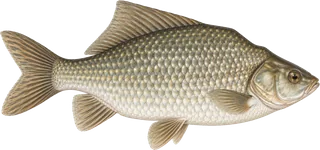 Prussian carp fishingPossible
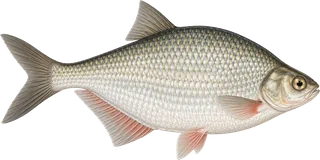 Fishing for silver breamPossible
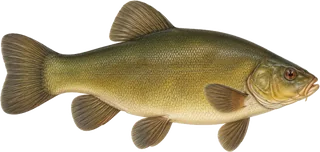 Fishing for tenchShoulder season
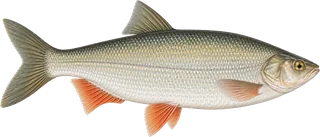 Ide fishingPossible
Sources
As at October 2026. The practical knowledge comes from 13 sources, summarised in our own words.
View all 13 sources
- Brassen angeln: Alle Grundlagen und die 4 besten Methoden · BLINKER (Redaktion)
- 10 Tipps für große Brassen: Gewohnheiten ausnutzen · BLINKER (André Pawlitzki)
- Angeln auf Brassen: Die richtige Feeder-Taktik für den Winter · BLINKER (Redaktion, mit Michael Schlögl)
- Feedern auf Skimmer: Brassen zur kalten Jahreszeit · BLINKER (Johannes Müller)
- Steckbrief Brassen: Wo findet und wie fängt man ihn? · BLINKER (Redaktion)
- Brassen fangen im Sommer: Wenig Sonne, viel Brassen · BLINKER (Redaktion)
- Die richtige Pose zum Stippen im Fluss · BLINKER (Redaktion)
- Zielfisch Brassen: Goldrausch am Fluss · FISCH & FANG (Robin Illner)
- Zielfisch Brassen: Auf Distanz · FISCH & FANG (Peter A. Christensen)
- Fische landen: Wie nutze ich Kescher, Lip-Grip und Co.? · BLINKER (Redaktion)
- LFV Fischlexikon: Fische bayerischer Gewässer (Brachse) · Landesfischereiverband Bayern
- Berliner Landesfischereiordnung (LFischO), § 18 Abs. 4 · Land Berlin (Landesrecht Berlin)
- Begleitdokument Angelfischerei zur N2000-LVO LSA (§ 11 Abs. 2 Nr. 5) · Landesverwaltungsamt Sachsen-Anhalt (Natura-2000-Portal)
Text AI-assisted, based on the sources named and these pages: Bream (profile), Feeder fishing, Maggots & larvae, Feeder rod.