
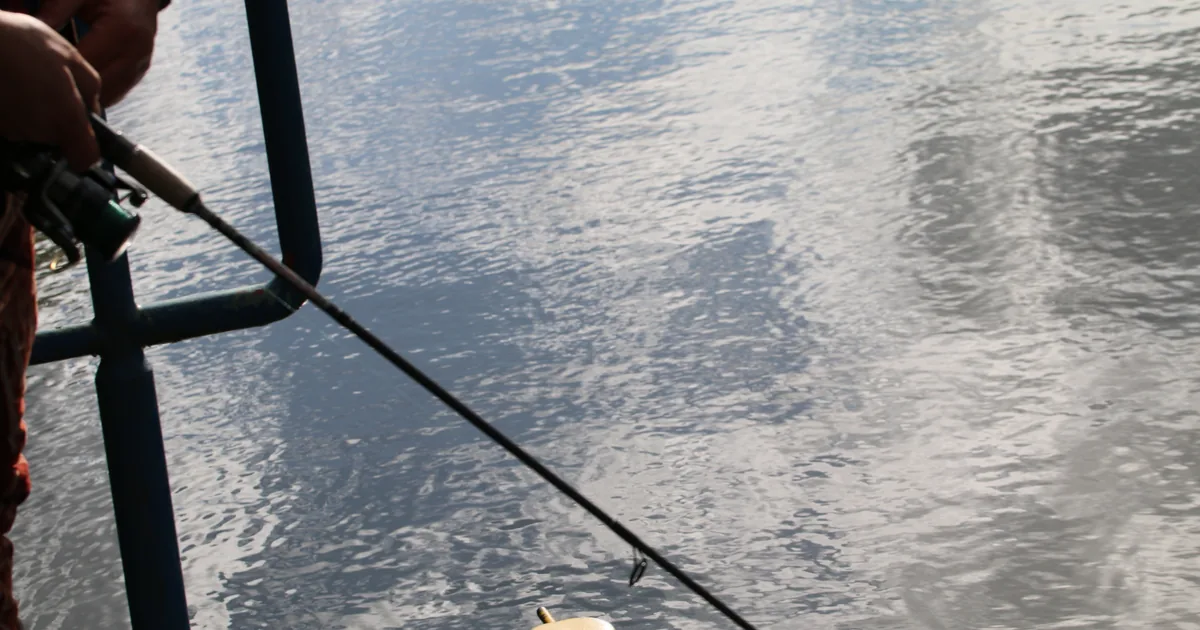
At a glance
- River
- Harbours, harbour entrances, groyne fields and bays away from the main current
- Canal
- quiet harbour basins, turning basins only with the right fishing permit (Erlaubnisschein)
- Lake
- the deepest spots within casting range, perch a little higher than zander
- Retrieve
- slowly on the bottom, for non-predatory fish fine and with little feed
- Protection
- winter holding areas are often protected zones (Schonbezirk), read the order and your permit first
Why fish gather in winter
In cold water, fish sharply reduce their activity and their feeding. A report by the Leibniz-Institut für Gewässerökologie und Binnenfischerei (IGB) describes this too. Prey fish and predators therefore move to a few quiet spots and stay there, because in the cold they hardly roam any more. For me this has an advantage: a winter spot I have found once often stays good for weeks.
How far silver fish travel for this was studied by researchers in Sweden using tagged fish. From a shallow lake, around 40 per cent of the roach and 55 per cent of the silver bream migrated into the inflowing streams in winter, whereas less than 2 per cent of the predators, pike and perch, did so. A second study by the same group explains this as a trade-off: silver fish can hardly grow in winter anyway, so they move to where fewer predators hunt. In spring they return.
That is why I look for the silver fish first. But a spot full of roach is not automatically a spot for predators; in the Swedish lake, after all, pike and perch stayed behind. On the river, on the other hand, zander in winter like to hold where the silver fish also find calm water.
On the river: get out of the main current
On the river in winter, current matters more than depth. The flowing water is constantly mixed and is almost equally cold everywhere. So I look for places where there is hardly any current: harbour entrances, pronounced bays and long groynes that calm the groyne field behind them.
On large, navigable rivers, roach use the harbours as a resting place for the cold season. Zander then hold in the harbours, at their entrances and in deep groyne fields. At a harbour entrance I first cast into the swirling current that forms at the mouth and let the bait drift from the main current into the calm shadow of the entrance. Towards evening my casts move further into the quiet part of the entrance.
I also look at stream mouths, because some silver fish move there to overwinter. These very spots can be protected: the Bavarian implementing guidelines (Vollzugshinweise) for the Fisheries Act name stream mouths as an example of fish protection zones (Fischschonbezirke). Whether my permit covers the harbour and the backwater at all, I check beforehand, see Fishing on the river.
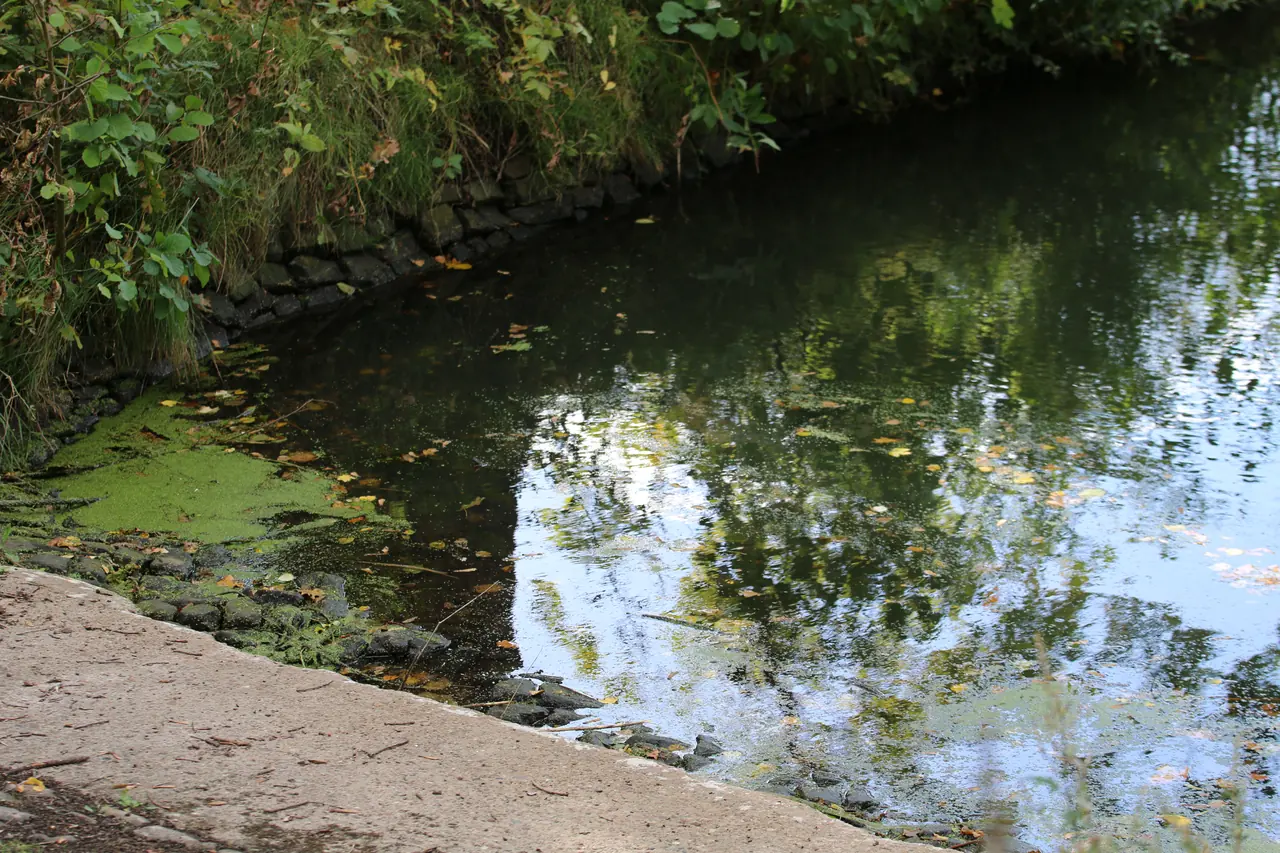
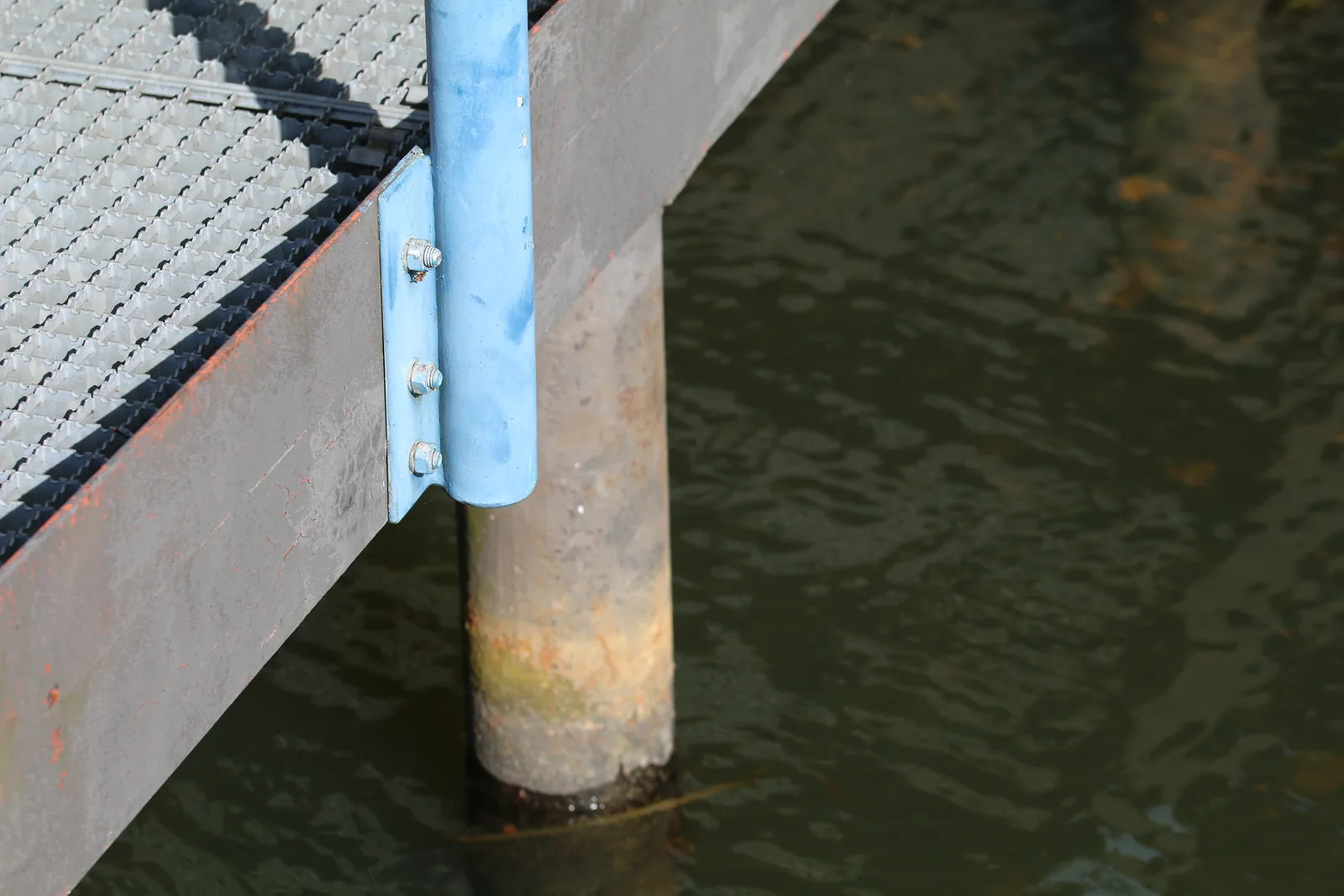
I only fish a warm-water outlet if the fishing permit covers the bank there. Zander like to seek out such places in winter. It is not the same everywhere, though: radio-tagged bream in the English river Severn did not move into the warmer water during cold spells.
From my own experience
- When ice starts to form along the edges of the river, I go to deep outside bends and stream inlets. There the water stays open longer than in the still zones, which freeze first.
- On the river I deliberately look for the corners where a backwater or a lake is connected, and there I mainly cast at the deeper sections.
On the canal: into the harbour basin
In a shipping canal, roach avoid the current created by locks and ships during the cold season and gather in the still harbour basins. There I fish the pole with a shortened line. At most one and a half metres of line remain between pole tip and float, and a take-apart pole 8 to 10 metres long gets the bait out to distance.
Before the first groundbait goes in, I plumb a larger area. The bottom of a harbour basin is usually flat, and even a hollow of 10 to 20 centimetres can attract the roach, because food collects there. How I measure the depth is explained under Plummet. I only fish turning basins if my fishing permit covers them; why that cannot be taken for granted is explained in Fishing on the canal.
In the lake, depth is what counts
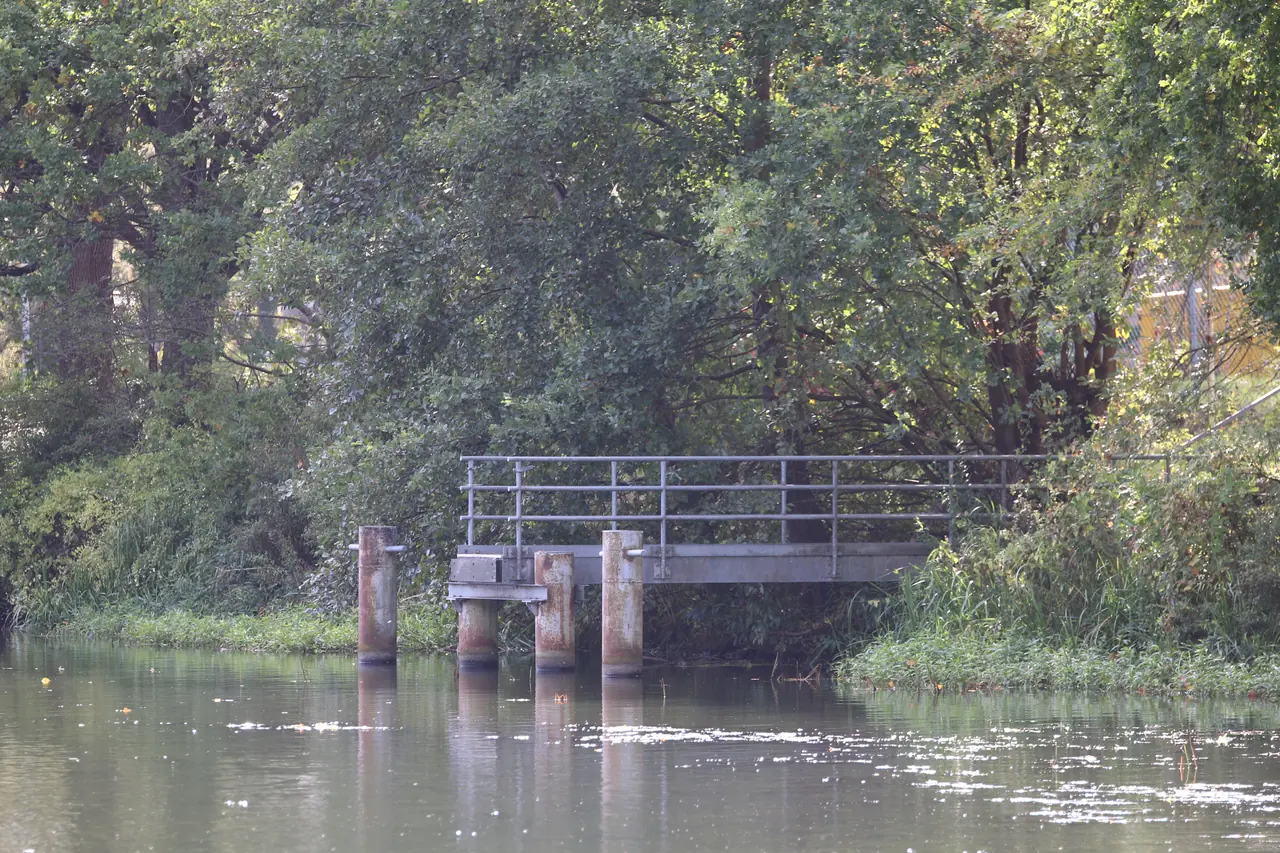
In the lake things work differently. Fresh water is densest at about 4 °C. In winter, colder water therefore lies on top of slightly warmer water; experts call this inverse stratification, and in hard frost a layer of ice closes over it. That is how the Chair of Hydrobiology at TU Dresden describes it; the course over the year is shown in The year at the water.
So I look for the deepest holes within casting range, and the colder it gets, the deeper. Zander and perch then usually hold close to the bottom, the perch one level higher. As a rule of thumb I look for the perch two to three metres above the zander. Pike also hold near the bottom, but somewhat shallower. When I am after pike in a weedy lake, I still work the shallow margin as long as there are plants there, because they hold a little warmth and offer food to the prey fish.
Slow, close to the bottom and, depending on the species, fine
For roach in the harbour I use fine tackle: 0,12 millimetre main line, 0,10 millimetre hooklength, a slim float carrying 0,5 to 1,5 grams. At first the bait hangs a few centimetres above the bottom. If the bites don’t come, I let part of the hooklength lie on the bottom. At the start I put in a few small balls of groundbait, after that only small portions of hemp or maggots around the float. The feed should attract, not fill the fish up, and some states limit the amount, Berlin for example to 500 grams a day.
For zander and perch in winter, I only work the soft plastic (shad) with the reel, no longer with the rod. With a light jig head I lift it off the bottom with a single turn of the handle and let it sink back. With a crankbait I make long pauses. Small is not always better, though: on the river, large soft plastics of around 16 to 22 centimetres often bring more bites in winter; in the lake I go for lures of around 10 centimetres, especially when there are a lot of perch about.
In the catch calendar, pike and zander are at “Peak season” in December, roach at “Good”, perch and bream at “Possible”. In January zander drops back to “Possible”.
Protecting winter holding areas: read first, then cast
A winter holding area is sensitive because a lot of fish hold close together there. The federal states can protect such places. In Bavaria, the district administrative authority (Kreisverwaltungsbehörde) may declare stretches of water that are particularly suitable as winter holding areas to be protected zones (Schonbezirke) by regulation, and restrict or ban fishing there for certain periods. According to the implementing guidelines, suitable areas are above all those with deeper water and a bottom that gives the fish peace. What exactly applies is set out in the relevant regulation.
In Mecklenburg-Western Pomerania, the Landesamt für Landwirtschaft, Lebensmittelsicherheit und Fischerei (LALLF) regulates several winter holding areas with general orders (Allgemeinverfügungen). In Hafen Wolgast and on the lower Uecker, angling from 1 November to 31 March is only allowed between 10 am and 6 pm, with a hand-held rod and a single hook, with catch limits for pike, zander and perch and a catch record for every fishing day. As of: October 2026, version of 2 July 2024. A harbour that is partly closed completely in winter is covered in Fishing in harbours and from piers.
So before fishing any winter spot I read the fishing permit and the water rules and look out for signs. Each federal state (Bundesland) sets its own closed seasons (Schonzeiten), see Closed season and minimum size explained.
When the water freezes over, I only fish from solid ground on the bank. The DLRG warns that ice near inflows and outflows can change within a few metres and can bear much less weight there than on the rest of the surface. Yet stream mouths are among the places I cast at in winter. Guide values for ice thickness are given under Walking on ice, fishing through a hole in the ice under Ice fishing. This note does not replace safety instruction.
Frequently asked questions
Where do fish hold in a river in winter?
Away from the main current: in harbours and at their entrances, in groyne fields and bays. Depth matters less in a river than in a lake, because the current mixes the water.
Do fish move at all in winter?
Yes, although how much varies with species and water. Radio-tagged bream in the Severn stayed active all winter, even in the coldest spells, and covered a median distance of 106 kilometres. Even so, many fish stay at the winter spot itself for weeks.
Am I allowed to fish in a harbour in winter?
That depends on the water. Some winter holding areas are protected, with a ban or fixed fishing hours, for example in Hafen Wolgast. What counts are the fishing permit (Erlaubnisschein), the water rules, the harbour regulations and the signs on site.
Related
- Roach: features, habitat and spawning time, profiled
- Roach fishing: from the baited swim to the fine float in nine steps
- Zander: way of life and holding spots, profiled
- Zander fishing: spots, times and lures in order
- Bream: the shoaling fish that overwinters in large numbers
- Bream fishing: baited swim, rig and bait
- Fishing spots in autumn: where I cast first in October and November
- Perch in autumn: how the shoals move into deep water
Sources
- Leibniz-Institut für Gewässerökologie und Binnenfischerei für die LAWA: Temperaturempfindlichkeiten der Fischgemeinschaften, Abschlussbericht 2021 (Aktivität und Fressen im Winter)
- Universität Lund, Skov u. a.: Inter- and size-specific patterns of fish seasonal migration between a shallow lake and its streams (Ecology of Freshwater Fish 2008) (Winterwanderung von Rotauge und Güster, Räuber bleiben)
- Brönmark u. a.: Seasonal Migration Determined by a Trade-Off between Predator Avoidance and Growth (PLoS ONE 2008) (Grund der Winterwanderung)
- Bournemouth University, Tarkan u. a.: The winter movements of two fish species in a temperate lowland river (Hydrobiologia 2025) (Brassen im Winter aktiv, warme Einleitungen)
- TU Dresden, Professur für Hydrobiologie: Faktenblatt Talsperren, Thermische Schichtung (4 °C und umgekehrte Schichtung im Winter)
- Bayerisches Fischereigesetz, Art. 59: Schonbezirke und Vollzugshinweise Nr. 28: Schonbezirke (Winterlager als Schonbezirk, Bachmündungen)
- LALLF Mecklenburg-Vorpommern: Allgemeinverfügung Hafen Wolgast und Allgemeinverfügung untere Uecker, jeweils konsolidierte Fassung mit Änderung vom 2. Juli 2024 (Regeln im Winterlager)
- DLRG Landesverband Hamburg: Eisregeln (Eis an Ein- und Ausflüssen)
- Blinker: Rotaugen im Hafen (Winterplätze in Kanal und Fluss, feines Gerät, Loten, Futter)
- Blinker: Raubfische im Winter (Sammelplätze, Fluss und See, Tiefen, Führung, Ködergröße)
- Blinker: Zanderangeln im Winter, 10 Tipps (Zanderplätze im Fluss, Warmwassereinläufe)
- Fisch & Fang: Zielfisch Zander, Zander-Spots im Fluss (Drehströmung an der Hafeneinfahrt)
Text AI-assisted, drawing AI-generated, photos: Iwan Belokurov. Sources opened and checked in October 2026; no graphic was taken from the sources.
All figures are guide values without guarantee. Where fish overwinter varies with each water and each winter. Whether you may fish at a winter holding area is governed by state law.