
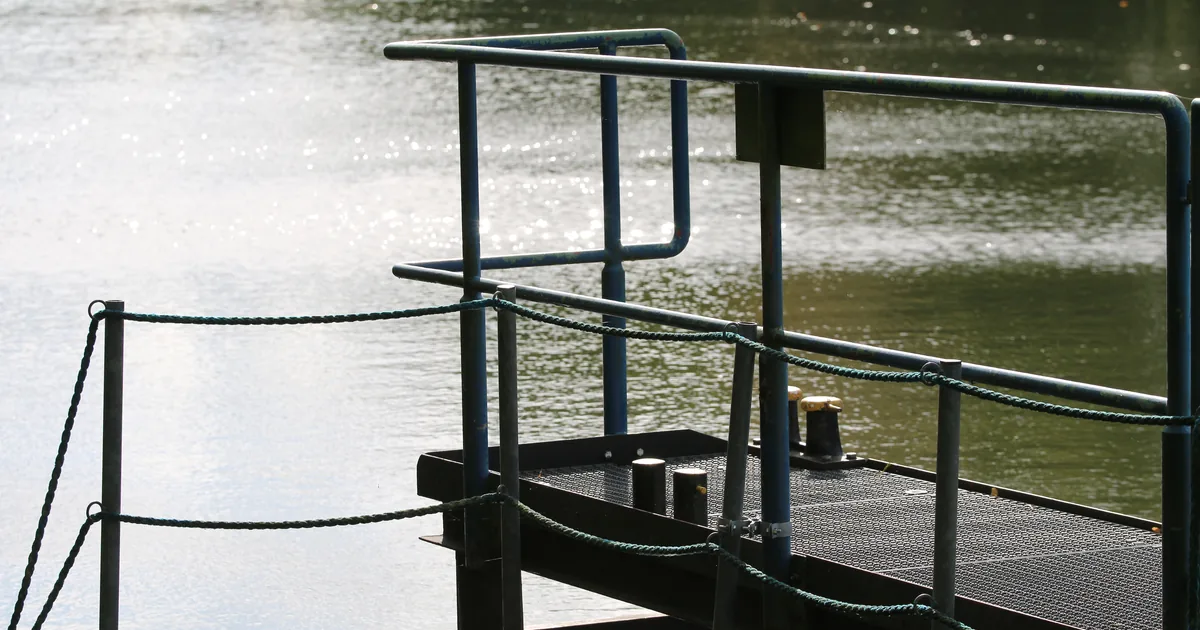
Why autumn pays off for perch
In the catch calendar European perch is rated Peak season in September and October, Good in November and only Possible in December. That fits what fisheries scientists have found: in summer and autumn anglers usually need less time to the first perch than in spring. The explanation: the water is still warm, the fish burn a lot of energy, and food gets scarcer from week to week. In one of the studies, more and more of the perch caught had an empty stomach as autumn went on.
Then there is the next generation. In autumn perch develop roe and milt, and above all the females feed heavily for it. At the same time the year’s fry have grown to about five to eight centimetres, exactly the length I usually choose for perch lures. For the big perch it can be more, more on that below.
What happens in the lake when the water cools
In summer a deep lake is divided into layers. In nutrient-rich lakes the deep water is much poorer in oxygen than the shore and the surface in summer and into early autumn, and most fish keep away from it. When the lake cools, the wind turns it over right to the bottom, and oxygen and nutrients are redistributed.
A study on Lake Constance shows how far perch can travel afterwards. In autumn the fish there left the shore zone and moved into deeper water to overwinter. In January they sat between 42 and 69 metres, for about half a year they lived in water below six degrees, and only at the beginning of May did they come back to the shore. On a gravel pit or pond the depths are completely different, but the direction is the same.
With the colder water the picture changes. Until the end of September the shoals often still sit close to the shore, at jetties, under trees that have fallen into the water and at water-lily beds. When temperatures fall sharply, they break up and sit clearly deeper. Typical then are fewer small perch, more often one big one and fewer bites overall. After the first autumn storms, silverfish, smelt and whitefish gather in big shoals, and the perch stay near them.
It is not entirely uniform. In a study on gravel-pit lakes that the German Anglers‘ Association (DAFV) presents in its leaflet on perch, the fish in autumn stayed mainly at dead wood and reeds during the day and spread evenly along the shore at night. So I still cast at wood and reed edges in October before going deep. Fig. 1 shows the typical case in a deep lake, not every water.
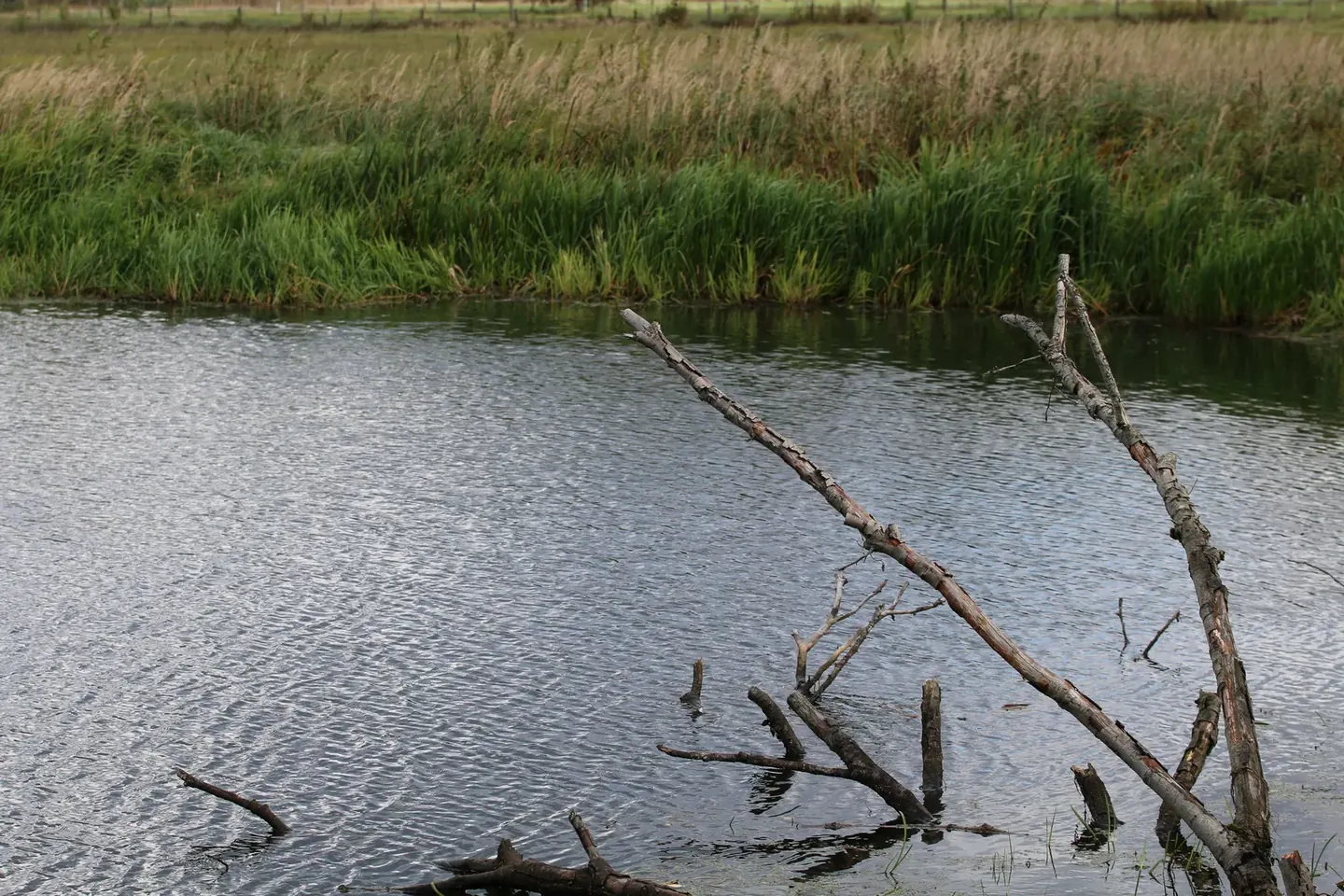
Where I look first on a lake
On a lake, perch humps and drop-offs are my first addresses. A perch hump is a rise standing up from the bottom; at the drop-off the shallow bank shelf breaks away into the deep. In autumn the perch often still sit on top of the plateau of a hump. In late autumn they pull back, and then I look at the foot of the slope, where it merges into the deep bottom.
Even so, I do not overdo the depth. Big perch often sit shallower than the small ones and travel in groups of a few fish, separate from the youngsters.
In October I search two kinds of spots above all: the edges along the water-lily beds and sunken stumps and dead wood in deeper water, around six metres.
I keep to one limit: perch that I want to release I do not bring up from more than ten metres. The pressure change during the fight hurts them even more than zander, and from greater depth they hardly survive it. The DAFV leaflet points this out as well.
Perch in rivers and canals
In rivers the perch move in autumn with the silverfish to calmer, deeper places. Which these are, from the mouth of a side arm to the harbour, is in Fishing spots in autumn. Pike and zander often hunt there too, which is why at this time I use a steel hooklength even when fishing for perch.
Canals between two waters get interesting in May, October and November, because perch then move right through them. From November I find them at the very bottom, in channels and small holes lying a little deeper than the bottom around them.
Lures and presentation as the water cools
In autumn presentation is what matters most to me: a little deeper and a little slower with every week. That is how it shifts for me, as a rule of thumb: depending on the water and the weather, everything comes a few weeks earlier or later.
- In September the shoal still sits close to the shore at wood, jetties and water lilies. I work the plug with changes of pace.
- In October it sits deeper, on a hump often on the plateau. Then I use deeper-running plugs or a drop-shot over the bottom.
- In November I look for it at the foot of the hump, in channels and in harbours. I fish slowly, with long sinking pauses.
For searching I like to use a crankbait, a fat-bodied plug whose lip sets the running depth. At the start of autumn I speed it up again and again on the retrieve. In late autumn I begin with models rated to run 2,5 to 3,5 metres deep, and go deeper the colder it gets. Once I have found the shoal, I switch to the drop-shot rig and draw it slowly along the bottom.
From my own experience
- In autumn I also fish soft plastics of ten centimetres. Even small pike and small perch attack this size without hesitation, but above all it attracts the big perch.
- If natural colours only get timid nudges, I put on the same model in a clearly brighter, flashier colour.
- I fish a spinning rod with a casting weight of up to 14 grams and an 8-gram Cheburashka weight, a weight with a wire eye on which the hook with the soft plastic hangs free. That gives the lure a lively action, and I also feel cautious bites.
- When the water cools in October, the bites often do not come hard. Some feel only like contact with mussels or a slight resistance. So I strike, concentrating, at every unusual resistance.
When the water is near freezing, I fish the Carolina rig with a soft-plastic worm or pintail, a soft plastic without a paddle tail. I inch it along briefly and then let it sink for about ten seconds. Most bites come in this phase. Worked too fast, the lure brings little in cold water.
From autumn I also reach for bigger lures, such as fat lobworms, twisters and rattling plugs. In early autumn I still offer the worm under a float shallow in the evening, preferably close to jetties, even if the water there is several metres deep. When it gets colder, I plumb the depth and let the worm run just above the bottom.
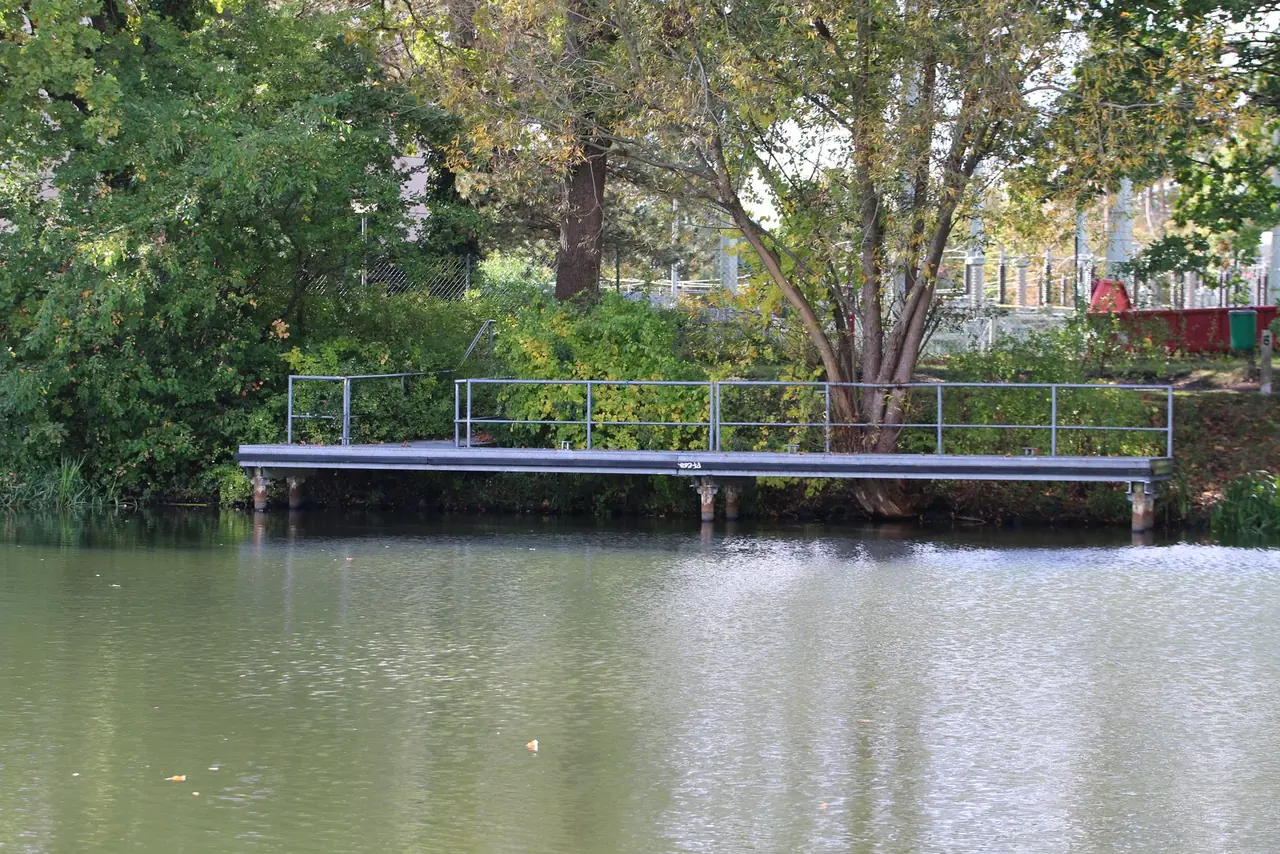
Time of day and weather
Perch hunt by sight and are much more on the move in daytime than at night. So I fish in daylight and firmly plan early morning and dusk. In late autumn it is less clear-cut: at the drop-off the midday hours often bring me more then, whereas the big perch often only become active in the evening in the cold season.
In wind I choose the shore side by the waves and switch if nothing bites there.
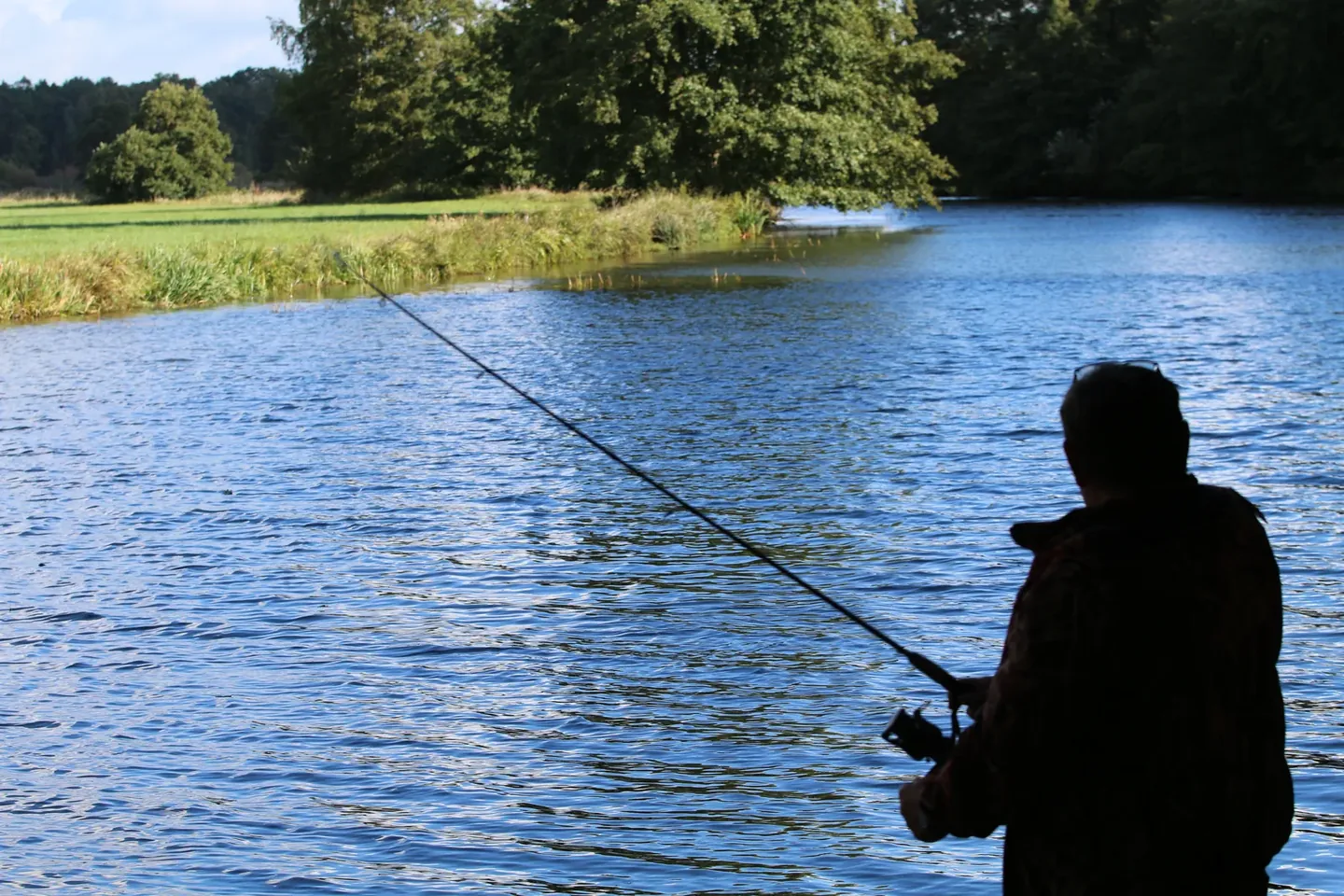
Minimum size and closed season
Before I take a perch, I check the rules. Whether and from what length you may keep it is regulated by your federal state (Bundesland), and the conditions in your fishing permit (Erlaubnisschein) come on top. Minimum sizes (Mindestmaß), closed seasons (Schonzeit) and rules on live baitfish differ from state to state.
Frequently asked questions
When does the autumn season for perch begin?
In the catch calendar perch is rated Peak season in September and October, Good in November. When the shoals move into deep water, however, is decided by the water: until the end of September they often still sit close to the shore.
How deep do perch sit in October and November?
That depends on the water. In Lake Constance they sat between 42 and 69 metres in January; in smaller waters I look for the deepest channels and holes within casting range. Fish you want to release are best not brought up from more than ten metres.
Do I have to fish more slowly in autumn?
In late autumn, yes. In cold water I let the lure sink for a long time, whereas at the start of autumn I still retrieve plugs with changes of pace.
Related
- European perch: features, way of life and spawning, profiled
- Fishing for perch: the whole season step by step
- Perch lures: which lures suit which season
- Water temperature and oxygen: why the lake turns over in autumn
- Releasing a fish: returning it gently, even from deep water
- Fishing on the canal: canals, channels and harbours
- Fishing spots in autumn: windward shore, side arms, jetties and harbours
- More bites from the bank: what to adjust, from swim to hook
Sources
- Deutscher Angelfischerverband: Der Flussbarsch, Fisch des Jahres (Broschüre) (Fangraten und Mageninhalt im Herbst, Totholz und Schilf, Tageslicht, zehn Meter)
- Universität Konstanz, Eckmann und Imbrock: Distribution and diel vertical migration of Eurasian perch during winter (Barsche im Bodensee im Herbst und Winter)
- Landesanglerverband Brandenburg: Beeinflusst das Wetter den Fangerfolg? (Sauerstoff in der Tiefe bis in den Frühherbst)
- Spektrum, Lexikon der Biologie: See (Zirkulation im Herbst)
- Blinker: Barschangeln im Herbst, drei fängige Methoden (Standplätze im Herbstverlauf, Köderführung)
- Blinker: Flussbarsch, der Familienräuber im Überblick (Rogenbildung, Größe der Jungfische)
- Fisch & Fang: Stachelritter-Spots (Fluss im Herbst, Futterfischschwärme, Mittagszeit, Wind, Ködergröße)
- Fisch & Fang: Zielfisch Barsch, wo schwimmen sie denn (Barschberg, Häfen, Kanäle, Rinnen)
- Fisch & Fang: 10 Tipps für Monster-Barsche (große Barsche flacher und in kleinen Trupps, Abend)
- Fisch & Fang: Verdien dir deine Streifen (Wurm an der Pose im Herbst)
Text AI-assisted, drawing AI-generated, photos: Iwan Belokurov. Sources opened and checked in October 2026; no graphic was taken from the sources.
All information is a guide only and given without guarantee. Holding spots, depths and biting times vary with the water and the year; minimum sizes and closed seasons are set by state law.