
Knowledge – Fish
Fishing for Atlantic salmon
Fishing for Atlantic salmon means: at sea, finding from a boat the depth where the fish are hunting just now, or in a river knowing the resting places of the salmon on their way upstream. Here is the way there in nine steps, each with a link to the detailed page.
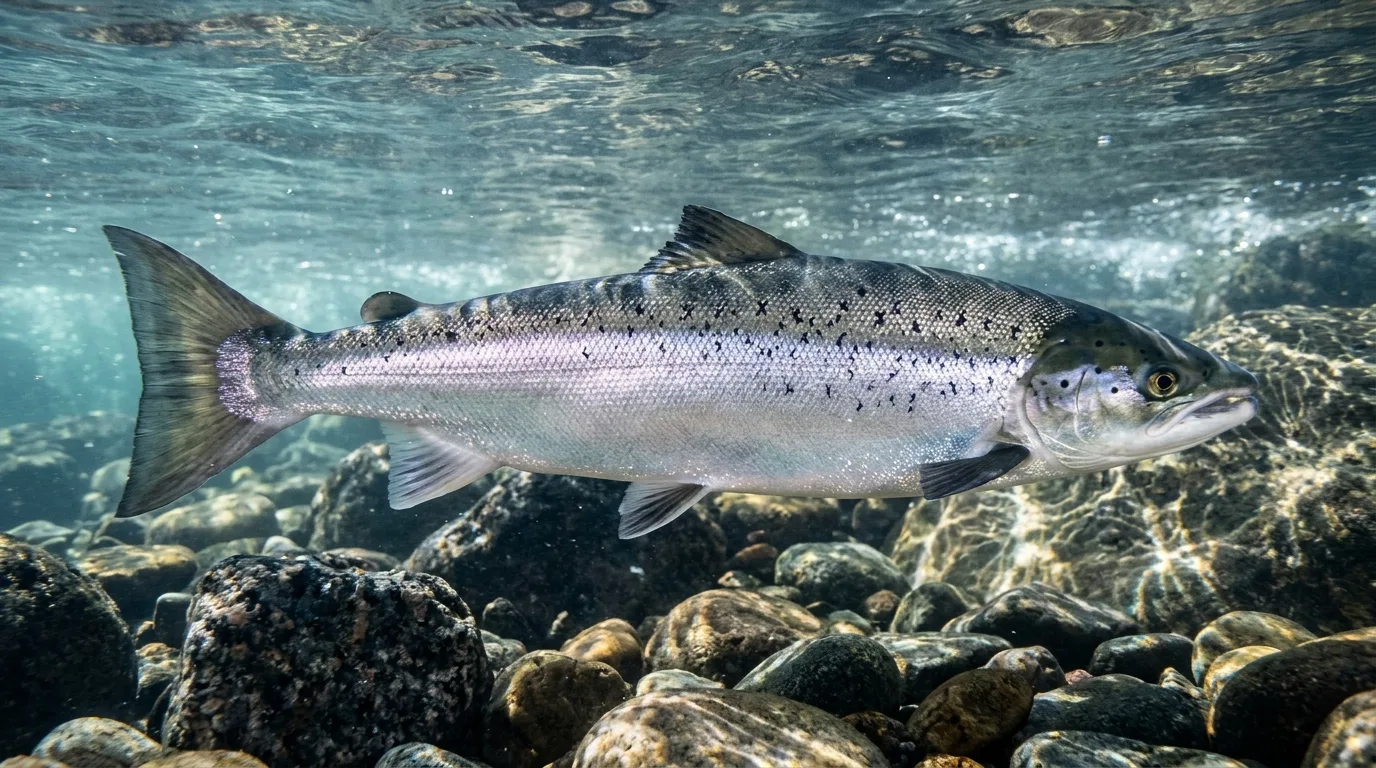
Legal position and release (as of October 2026): The salmon is threatened with extinction in Germany. In inland waters it is protected all year in many places, for example in Baden-Württemberg, Hesse, North Rhine-Westphalia, Rhineland-Palatinate, Saarland and Hamburg, where you must not target it. In the Baltic Sea (subdivisions 22 to 31) fishing for salmon is in principle banned in 2026 under Verordnung (EU) 2025/2454. You may keep only a salmon with a clipped adipose fin, and then you are finished for the day; every other salmon goes back at once. Special rules apply to the north of the Baltic, and stricter rules of the federal states remain in force. If you have to return a salmon, play it briefly, keep it in the water and remove the hook there. The steps below describe fishing only where it is permitted, for example on salmon rivers in Norway, Sweden or Ireland. Links to the authorities are in the catch calendar.
 Choose another fish117 fish with guides
 EelOff-peak season
 EelpoutPossible
 IdePossible
 ArapaimaGood
 GraylingPeak season
- Atlantic salmonSpawning time, please spare
 Brown troutSpawning time, please spare
 Brook troutSpawning time, please spare
 BarbelOff-peak season
 BarramundiSpawning season
 Greater amberjackGood
 Topmouth gudgeonOnly as bycatch
 Blue marlinSpawning season
 BonefishSpawning season
 BonitoGood
 BreamOff-peak season
 Dusky grouperOnly as bycatch
 CobiaPossible
 Spiny dogfishOnly as bycatch
 CodPeak season
 ChubPeak season
 MinnowOnly as bycatch
 European sturgeonOnly as bycatch
 FlounderPeak season
 PerchPeak season
 Largemouth bassGood
 Ballan wrasseOnly as bycatch
 Yellowfin tunaSpawning season
 Giant trevallyGood
 Prussian carpPossible
 BrillPossible
 Gilthead breamSpawning time, please spare
 Golden doradoSpawning season
 Golden mahseerOnly as bycatch
 Dolphinfish (mahi-mahi)Good
 Grass carpPossible
 Great barracudaGood
 GudgeonPossible
 White breamPossible
 DaceOff-peak season
 PikePeak season
 HalibutOff-peak season
 HerringPossible
 GarfishOut of season
 Huchen (Danube salmon)Possible
 Crucian carpOnly as bycatch
 CarpOff-peak season
 RuffeOff-peak season
 VendaceOnly as bycatch
 DabPeak season
 GurnardPossible
 Coley (saithe)Peak season
 Chinook salmonHardly any chance
 King mackerelSpawning season
 LingPeak season
 TuskOff-peak season
 MackerelPossible
 Bighead carpOut of season
 WhitefishPossible
 Conger eelOff-peak season
 Sea troutSpawning time, please spare
 Grey mulletPossible
 Murray codSpawning season
 MuskellungeGood
 Common nasePossible
 Nile perchPossible
 PayaraPossible
 Peacock bassPeak season
 PermitGood
 WeeverOnly as bycatch
 PollackOff-peak season
 BurbotOff-peak season
 AspPossible
 Red snapperSpawning season
 Rainbow troutPeak season
 RoosterfishGood
 RoachPeak season
 RedfishOut of season
 Bluefin tunaOnly as bycatch
 RuddPossible
 Russian sturgeonOnly as bycatch
 HaddockOff-peak season
 SnakeheadPossible
 TenchOff-peak season
 SpirlinOnly as bycatch
 PlaiceOff-peak season
 Greenland halibutOnly as bycatch
 Round gobyOnly as bycatch
 SwordfishGood
 Lake troutSpawning time, please spare
 HakeSpawning time, please spare
 Alpine charSpawning time, please spare
 MonkfishPossible
 SoleOff-peak season
 SailfishGood
 Silver carpOut of season
 SnookPeak season
 PumpkinseedOnly as bycatch
 SpratOnly as bycatch
 Atlantic wolffishSpawning time, please spare
 TurbotPeak season
 SterletOnly as bycatch
 SmeltOnly as bycatch
 Horse mackerelPossible
 TaimenGood
 TarponGood
 TigerfishSpawning season
 BleakPossible
 WahooGood
 Wels catfishOff-peak season
 WhitingPeak season
 Sea bassOff-peak season
 ZanderPeak season
 White-eye breamOnly as bycatch
 Blue breamOnly as bycatch
 Brown bullheadPossible
 VimbaOnly as bycatch
Season in October according to the catch calendar, an estimate and not a guarantee of a catch. The fish pictures are reduced natural-history plates and AI-generated.
Best time
From February to May, in the morning, during the day and at night.
In January: PossibleIn February: GoodIn March: GoodIn April: GoodIn May: GoodIn June: PossibleIn July: PossibleIn August: PossibleIn September: PossibleIn October: Hardly any chance, spawning seasonIn November: Hardly any chance, spawning seasonIn December: Possible, spawning season
Good spot
- Coast: just below the surface and deep waterjust below the surface and deep waterjust below the surface and deep waterjust below the surface and deep water
- River: poolspoolspools and rifflespools and riffles
Starter tackle
- Rod: single-handed or switch rod 2,70–3,65 m, class 7/8; on big rivers a double-handed rod of about 14 ft (around 4,30 m), class 9/10
- Line: floating line or running line with polyleaders from intermediate to fast sinking
- Hook: double hook around size 6, in Ireland 8 to 14 depending on the water; a hook without a barb or with a pinched-down barb makes releasing easier
- Rod: 2,70–3,35 m, casting weight 10–80 g depending on the river, usually 40–80 g
- Line: monofilament 0,35–0,50 mm
- Hook: single hook, where permitted without a barb or with a pinched-down barb
- Rod: boat rods 2,10–2,70 m; shorter ones with more glass fibre for downriggers, longer, stiffer ones for planer boards
- Line: clear monofilament 0,45 mm
- Hook: good-quality trebles or sharp single hooks
In short
In short: the best time to catch Atlantic salmon is from February to May, in the morning, during the day and at night. Good spots on the coast: just below the surface and deep water; on the river: pools. Proven baits: spoons, spinners and plugs for trolling and spinning, salmon flies and tube flies on the river. Threatened with extinction in Germany and protected all year round in many inland waters. The ratings apply to trolling in the Baltic Sea; off Rügen the season runs from mid-December to early June.
Quick to recognise
A migratory fish that grows up at sea and travels far upriver to spawn, as far as the gravelly upper reaches. Most fish measure 50 to 100 centimetres, and the males reach about 150 centimetres. In Germany it is threatened with extinction.
When
The best chances are from February to May; in summer and early autumn a catch is possible. On the river the season depends on the run, which is strongest in autumn. Salmon spawn from October to December.
- JanPossible
- FebGood
- MarGood
- AprGood
- MayGood
- JunPossible
- JulPossible
- AugPossible
- SepPossible
- OctHardly any chance, spawning
- NovHardly any chance, spawning
- DecPossible, spawning season
Peak seasonGoodPossibleHardly any chanceSpawning season
Spring tactics
In the Baltic Sea spring is trolling time; what you may catch and keep there is set anew by the EU every year. In Ireland the big spring salmon run from January to June; in cold, high water you fish larger flies, around size 8.
Summer tactics
Many salmon rivers in Scandinavia open in June, and in Ireland the smaller grilse predominate from mid-June. As the temperature rises, flies and spinning lures get smaller, and in warm low water the early morning hours are the most promising. Above about 18 degrees water temperature a released salmon suffers much more.
Autumn tactics
Many salmon run in autumn, but most river seasons in Scandinavia and Ireland end in late summer or early autumn. Leave spawning-ready fish in their spawning colours alone.
Winter tactics
In the rivers the salmon are spawning now and are protected. When trolling in the Baltic, salmon are said to be weather-sensitive: long, stable weather patterns with plenty of light and moderate wind bring the best days, strong pressure changes few.
Is it biting today?
In January: PossibleIn February: Off-peak seasonIn March: Off-peak seasonIn April: Off-peak seasonIn May: Off-peak seasonIn June: PossibleIn July: PossibleIn August: PossibleIn September: PossibleIn October: Spawning season, please spare the fishIn November: Spawning season, please spare the fishIn December: Spawning season, please spare the fish
Today’s catch index needs JavaScript. Season and spawning time are in the catch calendar.
From the blog: Fishing at locks and weirs: what applies and what the signs mean · Catch advice, catch quotas, angling bans: how to read fisheries news correctly · Baltic Sea catch quotas 2027: what the agreement means for anglers
Where it is now
On the coast
At sea the salmon stays in open water, often not far below the surface. The fishing grounds off Rügen lie far from the coast, where the water is deep, and the fish stand sometimes just below the surface, sometimes deeper than 20 metres. This changes from one day to the next.
How to go about it: On the open Baltic you find salmon where the bait fish are, along current and weed edges and over structures on the bottom. Where the rest of the trolling fleet cruises, the fish are usually not far away. The fishing grounds lie far out, so only a seagoing boat with a deep V-hull and safety equipment belongs there.
| All year round | just below the surface, deep water |
|---|
In the river
Running salmon spend the day in deep pools, scour holes and channels or in the shelter of obstacles, and usually move on at night. When the water rises they travel upriver, at a low level they wait further downstream. Spawning takes place on the gravel bars above a riffle.
How to go about it: On salmon rivers the fish change places quickly with the water level and the supply from the sea; with the tide in the fjord new salmon can turn up. Disinfect your waders, landing net and gear before fishing another river; in Norway this is compulsory at official stations.
| All year round | Pools |
|---|---|
| Autumn extra | Riffle |
| Winter extra | Riffle |
Bite time: in the morning, during the day and at night. What this looks like at the water is shown by the picture of the fishing spots just below.
Waters with rules for the Atlantic salmon
Holding spots in the picture
Choose the season and time of day: the picture shows where the species stands then. Spots outlined in red apply only in the chosen season. Tap a fish or a spot in the list to bring it closer. The picture is schematic and AI-generated, every water is different.
Chance of a catch in springgood
Catch chances in summerpossible
Catch chance in autumnhardly anySpawning, observe the closed seasons (Schonzeit)
Catch chance in winterpossible
- J
- F
- M
- A
- M
- J
- J
- A
- S
- O
- N
- D
Spawning season
Active time In the river, running salmon usually rest by day in deep pools or behind obstacles and tend to move on at night. For fishing, a report from southern Norway names sunrise; in high water and darkness larger tube flies catch. At sea, salmon feed mainly by day, and bright, stable weather patterns are considered favourable for trolling.
Active time In the river, running salmon usually rest by day in deep pools or behind obstacles and tend to move on at night. For fishing, a report from southern Norway names sunrise; in high water and darkness larger tube flies catch. At sea, salmon feed mainly by day, and bright, stable weather patterns are considered favourable for trolling.
No main time In the river, running salmon usually rest by day in deep pools or behind obstacles and tend to move on at night. For fishing, a report from southern Norway names sunrise; in high water and darkness larger tube flies catch. At sea, salmon feed mainly by day, and bright, stable weather patterns are considered favourable for trolling.
Active time In the river, running salmon usually rest by day in deep pools or behind obstacles and tend to move on at night. For fishing, a report from southern Norway names sunrise; in high water and darkness larger tube flies catch. At sea, salmon feed mainly by day, and bright, stable weather patterns are considered favourable for trolling.
On the coast
Deep, colder water
Atlantic salmon are found here all year round.
Just below the surface
Atlantic salmon are found here all year round.
At sea the salmon lives in open water and often near the surface. Off Rügen the fishing grounds lie over deep water, 10 to 15 kilometres from the coast. The fishing depth changes from day to day: sometimes just below the surface, sometimes at more than 20 metres.
Spring: catch chances according to the fishing calendar good. Until mid-May the sea area off the north coast of Rügen is considered promising.
Summer: catch chances according to the catch calendar are possible.
Autumn: catch chances according to the fishing calendar possible in September, hardly any in October and November. This is spawning time, so observe the closed seasons (Schonzeit).
Winter: catch chances according to the fishing calendar possible in December and January, good in February. From mid-December salmon are found off the north coast of Rügen. Herring are their main prey there.
In the river
Gravelly shallow (riffle)
Atlantic salmon are found here only in autumn and winter.
Pools, deep spot
Atlantic salmon are found here all year round.
Running salmon rest in the deep parts of the river, in pools, scour holes and current channels. In high water they move further upstream, at low water they stay in the lower stretches. Once the migration begins, the salmon stops feeding.
Spring: catch chances according to the fishing calendar good. In April and May the young salmon migrate down to the sea.
Summer: catch chances according to the fishing calendar possible. The spawning run begins in May and continues into November.
Autumn: catch chances according to the fishing calendar possible in September, hardly any in October and November. This is spawning time, so observe the closed seasons (Schonzeit). Most salmon run from September to November. They spawn on gravel bars covered by flowing water, preferably at the transition from a calmer glide to a riffle.
Winter: catch chances according to the fishing calendar possible in December and January, good in February. Spawning lasts into December. After that most of the parent fish die, and a small proportion return to the sea. In inland waters the salmon is protected in many places.
Depth: FishBase gives mostly 10 to 23 metres for the sea. When trolling off Rügen the baits run at depths between 3 and 25 metres or just below the surface.
Size comparison: AI-generated drawing, schematic.
How
In the Baltic you troll from a boat: several rods pull the baits behind the boat at different depths, deep via downriggers, shallow via planer boards. On the river you fish with a spinning rod or a fly rod.
Easiest way
In Germany there is no salmon stock you can target in a river; the usual way in is a day ticket on a salmon river in Norway, Sweden or Ireland. Take a sturdy spinning rod, monofilament from 0,35 millimetres and a few spoons or spinners, and when you buy the ticket ask to be shown which spots are holding fish at the moment.
Fly on a salmon river
The classic method on the salmon rivers of Scandinavia and Ireland, where salmon fishing is allowed; in Germany it is protected all year round in many inland waters.
- Ask about current pools
When you buy the ticket, ask which pools are holding fish at the moment and how the run is going. Early in the season the first salmon often still stand in the lower stretches.
- Choose a polyleader
A polyleader goes on the floating line: intermediate at a normal water level, fast sinking in high water. The monofilament leader should not be thinner than 0,35 millimetres.
- Fly matched to the water
The shallower and warmer the water, the smaller the fly, for example a double hook in size 6. In high or cold water and at dusk, use tube flies of 6 to 8 centimetres, early in the year preferably in yellow, orange or red.
- Across the current
Cast diagonally downstream across the current and let the fly sink briefly. Then, on a tight line, it swings round in an arc towards your bank.
- Cover the pool
Cover the pool cast by cast instead of staying in one spot for long. In warm, low water a small black fly, stripped briskly, can make the difference.
- Pull first, then lift
Often you feel a light tug and then a steady pull, or the fly stops in the middle of the current. Then lift the rod to set the hook.
- Long runs
A fresh-run salmon can run upriver and downriver and almost empty the reel. Keep the rod high and follow the fish if the bank safely allows it.
- Unhook in the water
Land the fish with a large, knotless landing net and leave the salmon in the water when unhooking. When the water temperature rises above about 18 degrees, released salmon die much more often.
Spoons and spinners in the river
In high, powerful water often the most promising method, allowed only on stretches whose rules permit spinning lures.
- Use high water
The spinning rod comes into its own in high, strong water, when a fly can hardly get down to depth.
- Swivel and single hook
Put a sturdy snap swivel in front of the lure to stop line twist. Where permitted, fit the lure with a single hook so that a salmon that has to go back can be released quickly.
- Upstream too
Besides the classic cast straight across the river, a cast upstream with a brisk retrieve also catches, especially when grilse are running.
- Size by temperature
When the water warms up, use smaller lures and retrieve them faster. In the cold, high water of spring larger spoons keep the advantage.
- Play it quickly
Play the fish firmly, without jerking. The longer the fight lasts, the lower the survival chance of a salmon that has to be released.
- Unhook without touching
Remove the hook with pliers, if possible without touching the fish, and keep it submerged until it swims off by itself.
Trolling from a boat in the Baltic Sea
This is how salmon are fished in the Baltic Sea; in 2026 the EU sets narrow limits for it, and at most you may keep marked fish without an adipose fin, so read the current rules beforehand.
- Find the bait fish
Salmon follow the herring shoals. Work the current and weed edges and structures such as wrecks or stone fields on your chart plotter; the bait fish gather there.
- Stagger the depths
Spread the lures shallow, between one and five metres, and in the lower third of the water column. Mid-water there are usually hardly any bites when trolling.
- Clean lure action
Spoons, plugs or flies must run cleanly at 2 to 6 kilometres per hour. Badly running lures are followed but rarely taken.
- Make turns
Make small turns in steps of about 10 degrees: the inside lures slow briefly, the outside ones speed up. Also change the speed on different courses.
- Clear the way
When the reel screams, keep going slowly and hold the fish centrally behind the stern. Bring in the other lures and the downrigger weights so that nothing tangles.
- Pump only when it follows
Let the salmon run as long as it wants to flee, and gain line by pumping when it is only following. Expect another long run close to the boat.
- Net from below
Pick up the landing net only when the tired salmon swims alongside the hull, and guide it under the fish from below.
What with
For the spinning rod on the river spoons and spinners, for the fly rod streamers and tube flies. For trolling, lures of around 15 centimetres are usual; if the salmon are feeding on small prey, smaller ones of around 11 centimetres are often the better choice, because large lures are then often missed.
- StreamerRiver, fly rod, spring to late summer
Tube flies and streamers can be matched precisely in size and colour to the water level and temperature.
- SpoonRiver in high water and when trolling
A spoon can be cast far even in heavy water and presented deep, and it runs behind the boat at any depth you want.
- SpinnerRiver, especially in slightly clouded water
The rotating blade flashes and sends out pressure waves that a salmon senses even in poor visibility.
Tackle
On the river a spinning rod of about 2,70 metres that casts 40 to 80 grams. For fly fishing a single-handed rod in class 7 to 8 is usually enough; for big rivers take a double-handed rod. For trolling in the Baltic the page on the sea rod will help.
Fly on a salmon river
- Rod
- single-handed or switch rod 2,70–3,65 m, class 7/8; on big rivers a double-handed rod of about 14 ft (around 4,30 m), class 9/10
- Reel
- Fly reel matched to the line class, with backing
- Line
- floating line or running line with polyleaders from intermediate to fast sinking
- Leader
- Monofilament or fluorocarbon from 0,35 mm
- Hooks
- Double hook around size 6, in Ireland 8 to 14 depending on the water; a hook without a barb or with a pinched-down barb makes releasing easier
- Weight, float, lead
- Tube flies 6–8 cm in high water and low light
Spoons and spinners in the river
- Rod
- 2,70–3,35 m, casting weight 10–80 g depending on the river, usually 40–80 g
- Reel
- Fixed-spool reel size 4000 with a strong drag
- Line
- Monofilament 0,35–0,50 mm
- Leader
- sturdy snap swivel in front of the lure
- Hooks
- Single hook, where permitted without a barb or with a pinched-down barb
Trolling from a boat in the Baltic Sea
- Rod
- boat rods 2,10–2,70 m; shorter ones with more glass fibre for downriggers, longer, stiffer ones for planer boards
- Reel
- Multiplier reel or large fixed-spool reel with a smooth drag, capacity of at least 350 m of 0,45 monofilament
- Line
- clear monofilament 0,45 mm
- Leader
- strong swivel against line twist
- Hooks
- good-quality trebles or sharp single hooks
- Weight, float, lead
- Downrigger weight or planer board depending on the running depth
More on tackle
- Sea rod: surf rod, pilk rod and boat rod
- Spinning rod: choose length, casting weight and action
- Fly rod: choose line class, length and action
- Line calculator
- Fishing line: monofilament, braid or fluorocarbon?
- Spooling a reel properly – without line twist
- Wading net: the small landing net for wading
- Disgorger: unhooking quickly and gently
Common mistakes
- Gear not disinfected: In Norway you must disinfect rods, reels, waders and landing net at an official station after entering the country and every time you change water. This keeps parasites such as Gyrodactylus from being spread.
- Fly too big in warm water: In low, warm water large patterns often go unnoticed. Then drop down to small double hooks or micro tubes.
- Tackle too weak: A fresh salmon straightens weak hooks and breaks thin tippets. Do not fish a hooklength thinner than 0,35 millimetres and use only strong hooks.
- Fishing on in the heat: In very warm water released salmon die much more often. If you have to release every fish, fish early in the morning on such days or leave the rod alone.
- Lifting the salmon out of the water: Every minute in the air and every touch harms the skin and slime layer. Remove the hook in the water and lift the fish out only very briefly, even for a photo.
Rules
Each federal state (Bundesland) sets its own closed season (Schonzeit) and minimum size (Mindestmaß). Choose your state; the values come from our state pages.
Baden-Württemberg
- Minimum size
- –
- Closed season
- protected all year round
- Note
- likewise sea trout
As of October 2026. All rules, exceptions and sources: Fishing in Baden-Württemberg.
Bavaria
Our overview for Bavaria does not list the Atlantic salmon. The page Fishing in Bavaria explains what applies there, with spots across the state.
Berlin
Our overview for Berlin does not list the Atlantic salmon. The page Fishing in Berlin explains what applies there, with spots across the state.
Brandenburg
Our overview for Brandenburg does not list the Atlantic salmon. The page Fishing in Brandenburg explains what applies there, with spots across the state.
Bremen
Our overview for Bremen does not list the Atlantic salmon. The page Fishing in Bremen explains what applies there, with spots across the state.
Hamburg
- Minimum size
- –
- Closed season
- protected all year round
- Note
- must not be targeted
As of October 2026. All rules, exceptions and sources: Fishing in Hamburg.
Hesse
- Minimum size
- –
- Closed season
- protected all year round
- Note
- fishing ban, no keeping
As of October 2026. All rules, exceptions and sources: Fishing in Hesse.
Mecklenburg-Western Pomerania
- Minimum size
- 60 cm
- Closed season
- 1.9.–31.3.
- Note
- Coast: closed season (Schonzeit) 15.9.–14.12. (beyond 4 nautical miles also 1.6.–15.9.); Baltic Sea 2026 only 1 salmon with a clipped adipose fin per day
As of October 2026. All rules, exceptions and sources: Fishing in Mecklenburg-Western Pomerania.
Lower Saxony
Our overview for Lower Saxony does not list the Atlantic salmon. The page Fishing in Lower Saxony explains what applies there, with spots across the state.
North Rhine-Westphalia
- Minimum size
- –
- Closed season
- protected all year round
- Note
- Report the catch within 7 days
As of October 2026. All rules, exceptions and sources: Fishing in North Rhine-Westphalia.
Rhineland-Palatinate
- Minimum size
- –
- Closed season
- protected all year round
As of October 2026. All rules, exceptions and sources: Fishing in Rhineland-Palatinate.
Saarland
- Minimum size
- –
- Closed season
- protected all year round
As of October 2026. All rules, exceptions and sources: Fishing in Saarland.
Saxony
Our overview for Saxony does not list the Atlantic salmon. The page Fishing in Saxony explains what applies there, with spots across the state.
Saxony-Anhalt
Our overview for Saxony-Anhalt does not list the Atlantic salmon. The page Fishing in Saxony-Anhalt explains what applies there, with spots across the state.
Schleswig-Holstein
Our overview for Schleswig-Holstein does not list the Atlantic salmon. The page Fishing in Schleswig-Holstein explains what applies there, with spots across the state.
Thuringia
Our overview for Thuringia does not list the Atlantic salmon. The page Fishing in Thuringia explains what applies there, with spots across the state.
The regulation and your fishing permit (Erlaubnisschein) are what count. Lake Constance, the Rhine and the coast, for example, have their own rules: Fishing waters in Germany.
After the catch
Playing and landing
Set the hook by lifting the rod as soon as the fly stops or you feel a pull. Play the salmon firmly and briefly, because long fights, a lot of time in the air and hands on the skin reduce its chance of survival. Where you have to release it, unhook it in the water; a salmon that you may keep under the local rules you stun and kill immediately.
Have the landing net ready before the salmon comes in, because just before that it often makes one more long run. In the Baltic you may keep only salmon with the adipose fin clipped, and after the first one that is it for the day; any other you release promptly in the water with wet hands. A fish you may take you stun and kill immediately.
Frequently asked questions
Where can you fish for salmon in Germany?
Practically only in the Baltic Sea, and even there, under the EU rules for 2026, only very restricted to marked salmon without an adipose fin. In inland waters the salmon is protected all year round in many places, so most anglers travel to rivers in Scandinavia or Ireland.
Which fly rod for salmon?
A single-handed or switch rod of class 7/8, between 2,70 and a good 3,60 metres, is usually enough. On big rivers double-handed rods of class 9/10 around 14 feet are usual.
Which line for salmon fishing with a spinning rod?
Monofilament from 0,35 to 0,50 millimetres on a size 4000 fixed-spool reel. The line should not be thinner than 0,35 millimetres.
Which salmon fly in low water?
The shallower and warmer the water, the smaller the fly; double hooks in size 6, in Ireland also 12 to 14, are then usual. Patterns with black wings are considered reliable in southern Norway.
How do you release a salmon properly?
Play the fish quickly, leave it in the water and remove the hook with pliers without handling it. Keep it submerged until it swims off by itself, and in very warm water give up fishing altogether.
Similar species
If you catch Atlantic salmon, you can fish for these species too with similar tackle:
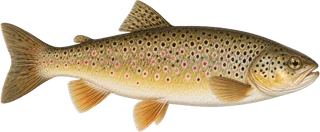 Brown trout fishingSpawning season, please spare
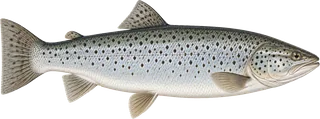 Sea trout fishingSpawning season, please spare
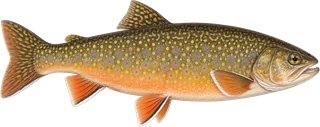 Brook trout fishingSpawning season, please spare
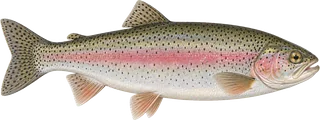 Fishing for rainbow troutPeak season
Sources
As of October 2026. The practical knowledge comes from 10 sources, summarised in our own words.
See all 10 sources
- Atlantischer Lachs (Steckbrief) · BLINKER (J. Zettelmeier)
- Fliegenfischen in Südnorwegen: Von Lachs bis Lippfisch · BLINKER (M. Werner)
- Lachsfischen am Årøyelva in Norwegen: Die Legende lebt · BLINKER / FliegenFischen (R. Ovesen)
- Lachsangeln: Schritt für Schritt zum Silber · BLINKER (R. Korn, M. Wendt)
- Lachsangeln in Norwegen 2026: Das sind die neuen Regeln · BLINKER (M. Werner)
- Salmon Angling in Ireland · Inland Fisheries Ireland (staatliche Fischereibehörde Irlands)
- Genudsætning af laks – Hot is not godt · Fiskepleje.dk / DTU Aqua (F. Sivebæk)
- Ny rapport samler viden om fisks trivsel og overlevelse efter genudsætning i forbindelse med lystfiskeri · Fiskepleje.dk / DTU Aqua
- Catch and Release · Fisheries Management Scotland (Dachverband der schottischen Fischereibezirke)
- Nachhaltig fischen – Tipps für Angler:innen · Umweltbundesamt Österreich (im Auftrag des BMLUK, mit österreichischen Landesfischereiverbänden)
Text written with AI support, based on the sources named and these pages: Atlantic salmon (profile), Sea fishing, Spinning, Fly fishing, Releasing fish.