
Knowledge · Lures
Wet fly
Flies & feathers · Fly fishing
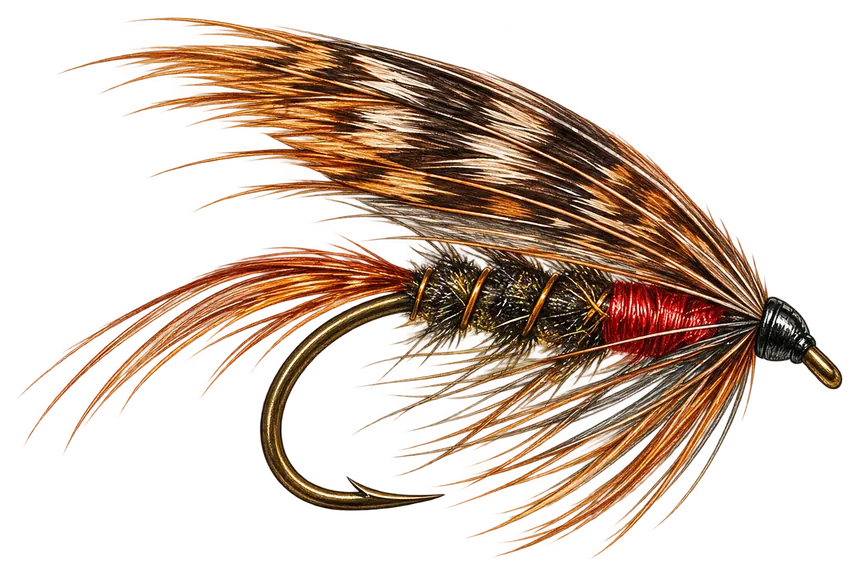
The wet fly does not float but sinks just below the surface and represents a dead insect or one rising to hatch. Wings and hackles lie back, and soft fibres give it movement.
- Water depth
- From the surface film to just below it
- Retrieve
- Drifts with the current, just under the surface film
- Fishing method
- Fly fishing
- Category
- Flies & feathers
How it works
Wet flies are artificial flies that do not float. They work under the surface film and represent an insect rising to hatch or drifting along dead. The Fischereiverein Löningen sums it up in its tackle guide as a dead insect fished in the water. The examination catalogue of the federal state (Bundesland) of Saxony-Anhalt simply states that wet flies sink in the water.
Unlike the dry fly, wings and hackles lie back rather than standing upright. This makes the pattern lie smoothly in the water. On a mountain lake, black wet flies with soft hackles work well; they sink slightly into the surface and almost always find takers. A few patterns in hook sizes 12 to 16 are usually enough there; the higher the number, the smaller the hook.
The fly does not have to be fished singly. An additional fly above the end fly is called a dropper (Springer), as the examination catalogue puts it. Whether several flies on the leader are allowed is governed by the water rules for the stretch in question. The fishing permit (Erlaubnisschein) tells you which hooks are permitted.
How to work the lure
Drifts with the current, just under the surface film
Schematic illustration, AI-generated.
- present
- drifts with wind or current
- keep the line taut
- cast again
Anatomy
The points on the picture above explain the most important parts – on hover or tap.
- Tail: Extends the body and gives the pattern its length.
- Wings: Point backwards. On wet flies, wings and hackles lie back, on dry flies they stand upright.
- Ribbed body: The wire wrap divides the body into segments, as seen on a real insect.
- Soft hackle: Soft fibres that lie close in the water. On a mountain lake, black wet flies with soft hackles almost always catch.
- Head: Finished off with tying thread, with the eye for the knot in front of it.
Rig in three steps
- 1. Leader tapering towards the tipFor the mountain lake, 80 to 100 centimetres in length at 0.14 to 0.18 millimetres in thickness is typical.
- 2. Micro eye at the end of the lineA small eye at the thin end of the fly line keeps the leader long when you change flies often.
- 3. Fly to the eyeThe fly is tied on directly, without a swivel. Degrease it beforehand so that it sinks.
Drawings: AI-generated, schematic.
When the target fish are in season
Hardly any chancePossibleGoodPeak seasonValues from the catch calendar.
When and where
The wet fly comes into play when fish are feeding but not rising. The magazine Blinker lists it for brown trout alongside small streamers and nymphs as an option when the fish are not at the surface and have to be searched for. According to the Landesfischereiverband Bayern, the diet of the brown trout consists in youth of insect larvae, freshwater shrimps and other small animals, later mainly of terrestrial insects and small fish. Grayling eat insect larvae, small crustaceans and terrestrial insects.
The wet fly has its place on lakes too. On mountain lakes you often see rise rings, and dry flies and black wet flies with soft hackles almost always catch there. Feeding phases are short but intense. Anyone who packs up after hours sometimes sees the surface covered in rings shortly afterwards.
On most brown trout waters, natural baits are banned. Which hooks, how many flies and which methods apply is set out in the water rules and the fishing permit.
How to choose size, leader and line class
- Tapered leader The leader gets thinner towards the tip. For the mountain lake, lengths of 80 to 100 centimetres are usual.
- Micro eye at the end of the line A small eye sits at the thin end of the fly line. It makes the leader last through frequent fly changes.
- Fly to the eye Tie the fly directly to the eye, without a swivel. Degrease it first so that it sinks.
Match the size to the insects currently drifting on the water. A small selection is often enough; black has proved its worth on mountain lakes.
For the mountain lake, Blinker recommends a 9-foot fly rod, about 2.7 metres, in line class 5 to 6 with a floating line and a thickened front taper. The leader is 80 to 100 centimetres long and 0.14 to 0.18 millimetres thick. A micro eye sits at the thin end of the fly line so that the leader does not get shorter and thicker each time you change flies.
For beginners, the same article advises against weighted nymphs and streamers, because they are trickier to cast and carry a risk of injury. The unweighted wet fly is one option instead.
How to get the fly under the surface
A wet fly should sink. That does not always work straight away: feather material has natural oils, and there is also wax from the dubbing and release agent from the leader material. All of this creates buoyancy. Special sinkants degrease. Without them, there is a trick: pull the unused leader through a folded blade of grass and wet the fly with a little saliva. A little washing-up liquid in a small waterproof container also degreases fly and leader.
Anyone who ties their own wet flies often reaches for feathers. Species protection law applies here. Section 44(2) no. 1 of the Bundesnaturschutzgesetz prohibits possessing and processing specially protected animals. Under section 7, this also includes parts of such animals if they are easily recognisable as such. European bird species are specially protected, all native ones according to the Bundesamt für Naturschutz. The state authorities (Landesbehörden) are responsible for possession and trade; if in doubt, ask them which feather you may have.
Which colour?
Starting points to try, not rules. Depth and speed are usually more important than colour.
A wet fly, or another bait?
| Baits and lures | Depth | Retrieve | Take this lure if … |
|---|---|---|---|
| Wet fly | From the surface film to just below it | Drifts with the current, just under the surface film | this page |
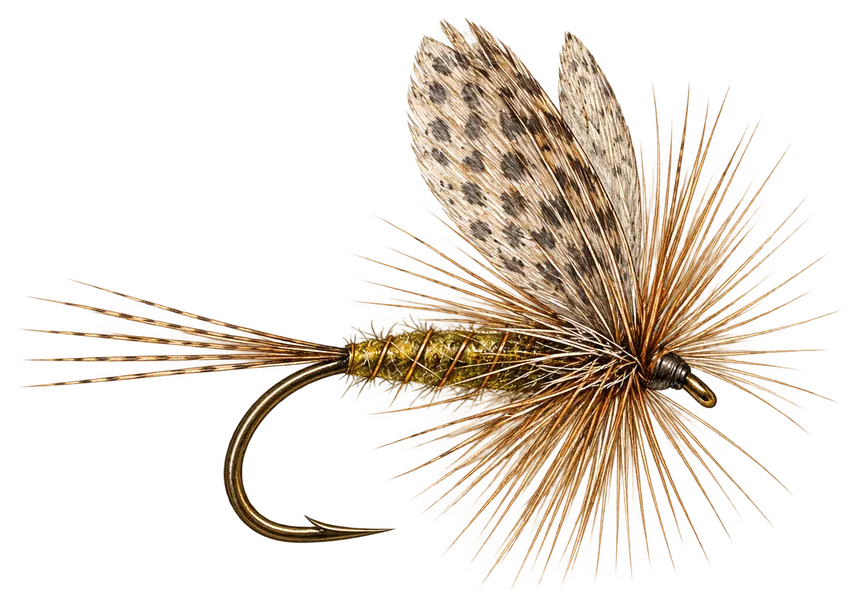 Dry fly | Surface | Drifts with the current, with no pull on the fly | fish are visibly rising at the surface |
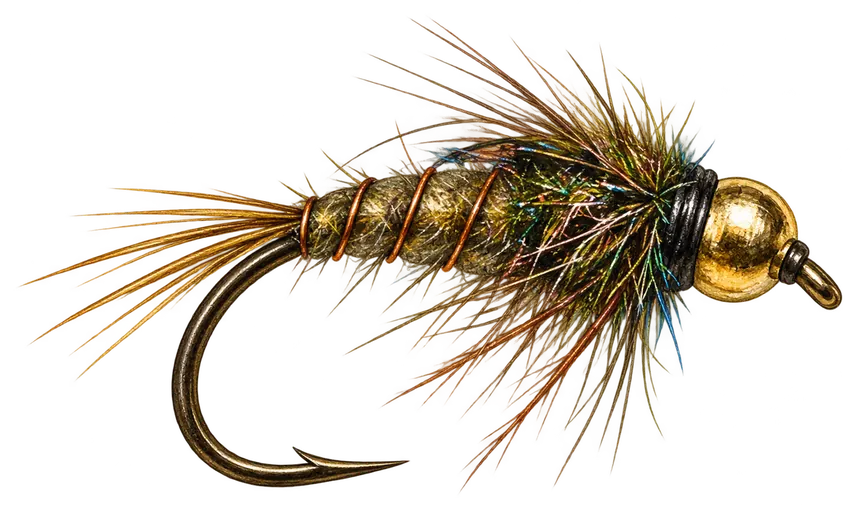 Nymph | Bottom to mid-water | Drifting in the current, as free as possible near the bottom | the fish are holding deep near the bottom |
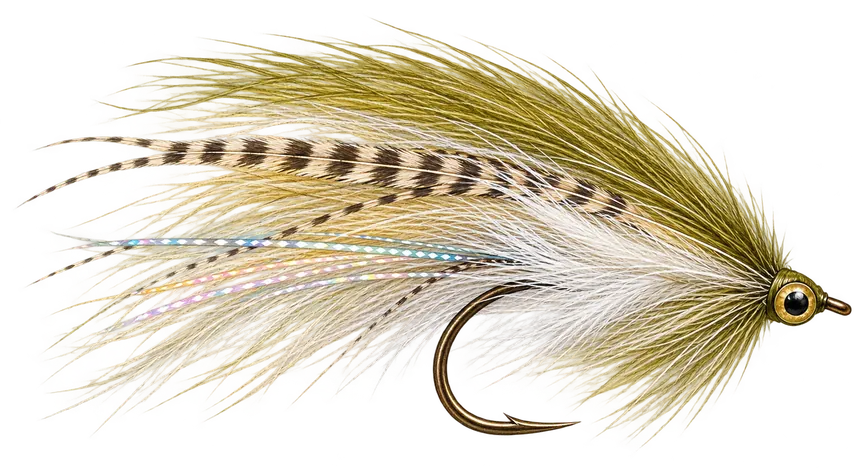 Streamer | Mid-water | Active: stripped by hand, with pauses | you want to tempt larger predators with a fish imitation |
What you need
- Fly rodRods carry a line class instead of a casting weight. A medium class is enough for light flies. More on this
- Fly lineThe line supplies the casting weight. A floating line is enough; the fly sinks on its own just under the surface film. More on this
- LeaderIt tapers towards the tip and keeps the fly at a distance from the thick line. More on this
- Tying your own fliesTools and accessories, plus the note on species protection for feathers. More on this
More about the method: fly fishing.
At a glance
Editorial assessment, not measured values.
If it does not work
Degrease the fly and leader. A folded blade of grass with a little saliva or a drop of washing-up liquid is enough; otherwise feathers and wax give buoyancy.
Tie a micro eye onto the thin end of the fly line. The leader of 80 to 100 centimetres hangs from it, and you can also use it longer.
Switch to a dry fly. The wet fly pays off when insects are about but the fish are not at the surface.
Frequently asked questions
What is the difference between a wet fly and a dry fly?
The dry fly floats and imitates an insect on the surface. The wet fly sinks and represents a dead or rising insect. Also, its wings and hackles lie back, whereas on the dry fly they stand upright.
How do I fish a wet fly?
Three options are named: present it upstream, let it drift gently downstream with the water, or pull it back against the current. Which one catches on the day depends on the water. Try it out at the water, ideally with an experienced fly angler.
Which size and which leader should I choose for the wet fly?
For the mountain lake, Blinker gives hook sizes 12 to 16 and a leader 80 to 100 centimetres long and 0.14 to 0.18 millimetres thick. Other waters call for other values, but the leader always tapers towards the tip.
Why does my wet fly not sink?
Feathers carry natural oil, and there is also wax from the dubbing and release agent from the leader. Degrease the fly with a sinkant, washing-up liquid or a blade of grass with saliva, and it usually sinks.
May I use feathers of wild birds for wet flies?
Only if species protection law allows it. All native bird species are specially protected, and possessing and processing their parts is in principle prohibited. Which exception applies to your feather is something the nature conservation authority of your federal state (Bundesland) can clarify.
Before fishing, the current permits, state rules and water rules apply: bait bans, number of hooks, closed seasons, protected species and catch limits can differ. Many federal states expressly ban live baitfish. Take bait remains and packaging away with you. All details are guide values without guarantee and do not replace legal advice.
Sources
- Blinker: Fliegenfischen, so fängst du mehr am Bergsee
- Blinker: Schwimmpräparate für Trockenfliegen, Tipps und Tricks
- Blinker: Steckbrief Bachforelle
- Blinker: Ist die Nassfliege wirklich eine gute Starthilfe ins Fliegenfischen
- Land Sachsen-Anhalt: Fragenkatalog zur Fischerprüfung
- Fischereiverein Löningen: Gerätekunde
- Landesfischereiverband Bayern: Fischlexikon
- Bundesministerium der Justiz: Bundesnaturschutzgesetz § 44
- Bundesministerium der Justiz: Bundesnaturschutzgesetz § 7
- Bundesamt für Naturschutz: Artenschutz in der Vogelschutzrichtlinie
- Bundesamt für Naturschutz: Zuständigkeiten im Artenschutzvollzug
The sources explain terms and basic principles. Retrieve, colour choice and values are editorial starting points and depend on water, weather and lure.
More flies & feathers
 Huchen braid
 Sea paternoster
Created with AI support from the sources listed (AI notice). Last updated: 2 November 2026. Found a mistake? Write to us. Who is behind the site: About me.