
Knowledge – Fish
Tusk / Brosme: Features, depth, fishing season and rigs
The tusk (Brosme brosme), called Brosme in Norway, is a cod-like bottom fish of the North Atlantic. It lives over rock and rubble, usually at depths of 150 to 450 metres. It has nothing to do with the lumpsucker, which is called lumpfish in English; its English name is tusk.
In short: You catch tusk best from July to September, at any time of day. Good spots on the coast: wreck, reef, stony mixed ground and edge. Proven baits: herring fillet, strips of mackerel or a large prawn on a bottom weight; heavy jigs with fish strips. Deep-water fish: fish brought up from great depth do not survive release. Export from Norway only for fish caught through a registered fishing business: 15 kg twice a year, from 1.1.2027 10 kg (as of October 2026). Step by step: Fishing for tusk.
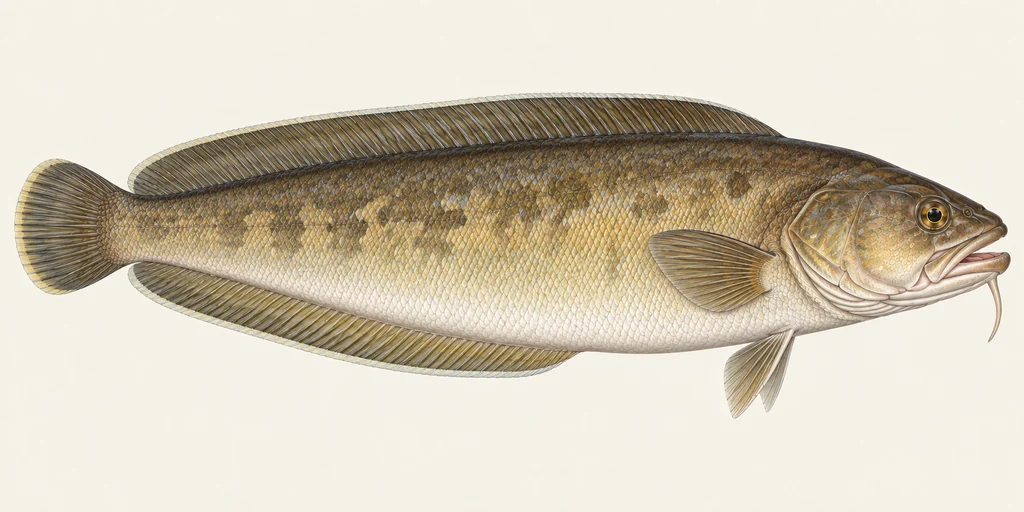
- Only a single, very long dorsal fin running to the base of the tail
- Black edge with a white rim on the dorsal, anal and tail fins
- A single strong barbel on the lower jaw
Catch chances through the year
- Hardly any chance
- Possible
- Good
- Peak season
- Spawning (observe the closed season)
Editorial assessment for waters in Germany, not a measured value and no guarantee. Spawning time is not the same as the legal closed season.
Species profile and sources in the catch calendarAll species compared month by monthThe rules of your federal state
How to recognise it
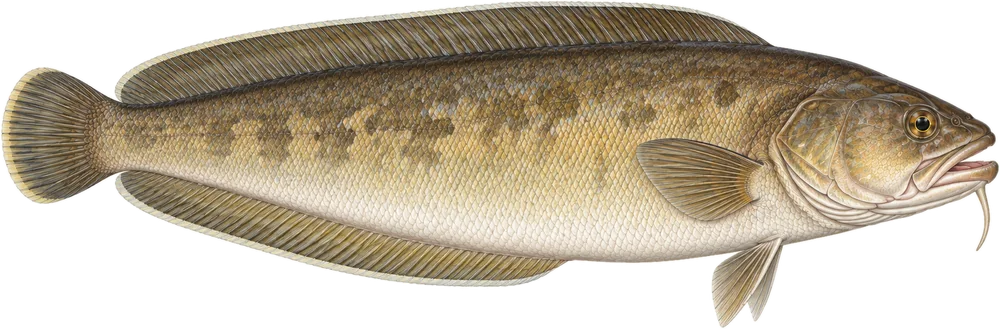
The tusk has an elongated build. Its most striking feature is a single, continuous dorsal fin with 93 to 103 soft rays. On the chin sits a single barbel, about as long as the diameter of the eye.
The colouring is variable, from dark reddish-brown or greenish-brown on the back to yellowish tones, and the fish gets lighter towards the belly. The surest sign is the fins: the dorsal, anal and tail fins carry a dark border with a white edge. Young tusk can have six yellow cross bands on their sides.
Usually about 50 centimetres according to FishBase, with 120 centimetres and 30 kilograms given as the maximum. Norwegian researchers give around 1,1 metres and 15 kilograms. The tusk matures at eight to ten years and can live to over 20.
You are most likely to confuse the tusk with the ling. In the ling the dorsal fin is divided, while the tusk has one long, continuous fin. In the ling the chin barbel is also longer than the diameter of the eye, in the tusk about as long.
The name is misleading too. In English texts of the Norwegian fisheries authority, lumpfish appears among the seasonally protected species. That means the lumpsucker (Cyclopterus lumpus), not the tusk. The English name of the tusk is tusk.
Side by side
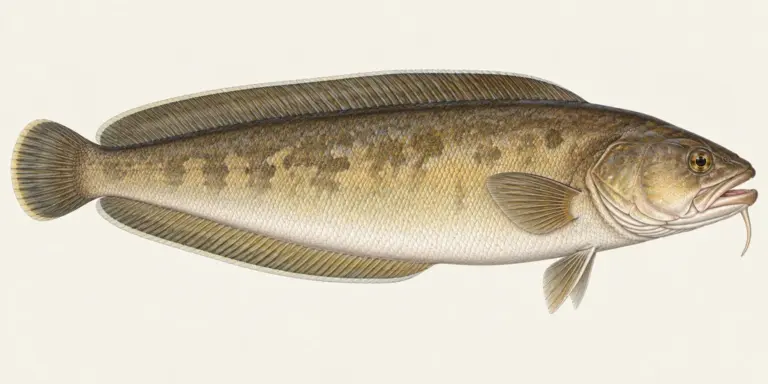
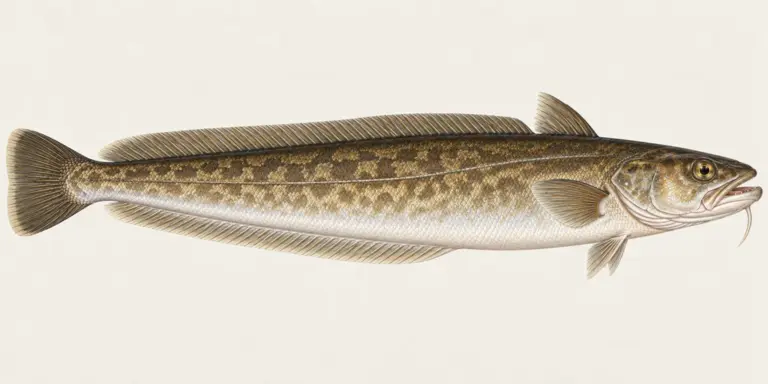
AI-generated illustrations.
Where it holds
The tusk occurs from Ireland to Iceland and Greenland, in the northern North Sea, in Skagerrak and Kattegat, along the Norwegian coast to the western Barents Sea and as far as Spitsbergen. It also lives in the north-west Atlantic.
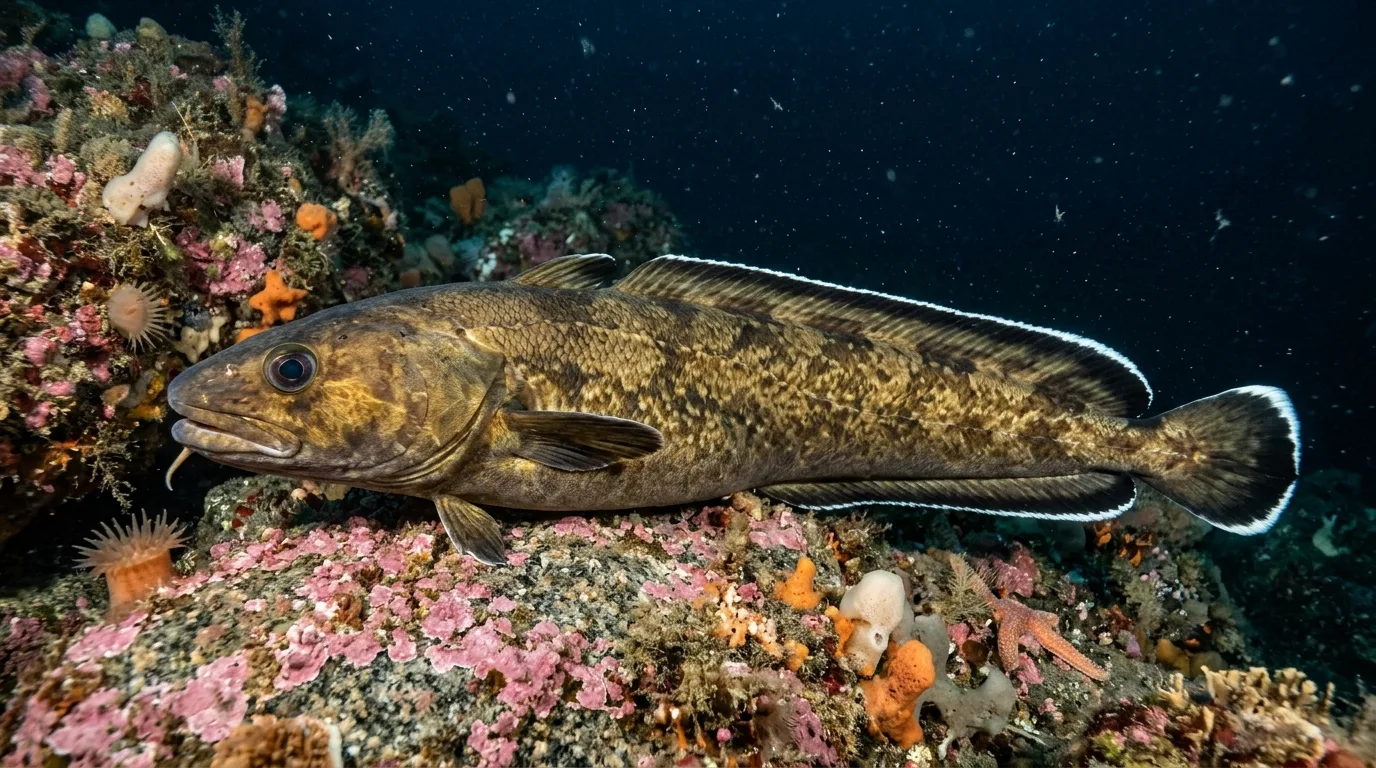
It stands close to the bottom over rock, rubble and gravel. In the north-east Atlantic its centre of gravity lies, according to FishBase, between 150 and 450 metres at a water temperature of zero to ten degrees; Norwegian researchers give 100 to 1000 metres on the continental shelf and slope. Adults stand deep, young fish can occur in shallower water. It lives alone or in small groups.
If you want to catch tusk, look for hard ground. As top spots, the angling press names plateaus of rubble and underwater mountains between 50 and 200 metres. Bigger fish stand from 200 to 300 metres, roughly where a fjord runs out into deep water. Right at the shore it is rarely caught, except in deep fjords. Normally it stands only from about 70 metres, and only in summer at spawning time does it come into shallower water.
Holding spots in the picture
Choose a season and time of day: the picture shows where the species sits then. Tap a fish or a spot in the list to bring it closer. The picture is schematic and AI-generated, every water is different.
Chance of a catch in springgoodSpawning, observe the closed seasons
Catch chance in summerPeak season
Catch chance in autumngood
Catch chance in winterpossible
- J
- F
- M
- A
- M
- J
- J
- A
- S
- O
- N
- D
Spawning season
Active time The tusk’s activity follows no day–night rhythm.
Active time The tusk’s activity follows no day–night rhythm.
Active time The tusk’s activity follows no day–night rhythm.
Active time The tusk’s activity follows no day–night rhythm.
On the coast
Stony mixed ground
Tusk are present here all year round.
Drop-off
Tusk are present here all year round.
Wreck, reef
Tusk are present here all year round.
Deep, colder water
Tusk are present here all year round.
The tusk lives on the bottom over rock, rubble and gravel and on steep slopes. It generally avoids smooth, soft sandy ground. It mostly keeps away from the coast and shallow water and hardly migrates.
Spring: catch chance good according to the catch calendar. Spawning falls in this period, so observe closed seasons (Schonzeit). Spawning takes place from April to June at depths of 100 to 400 metres.
Summer: catch chance according to the catch calendar good in June, peak season in July and August. In the northern areas spawning lasts into August.
Autumn: catch chance according to the catch calendar is peak season in September, good in October and possible in November.
Winter: catch chance according to the catch calendar possible. In fjord Norway the tusk is regarded as catchable all year round.
Depth: In the north-east Atlantic the tusk mostly sits at depths between 150 and 450 metres, and occurs from about 20 to 1000 metres. In the fjords it is caught from about 100 metres, juveniles also quite shallow.
Size comparison: AI-generated drawing, schematic.
How it hunts and spawns
The tusk eats fish, especially bottom fish such as flatfish and gurnards, along with crustaceans, molluscs and starfish. Norwegian researchers also name larger crabs and prawns. It stands alone or in small groups.
Spawning takes place between April and June at depths of 100 to 400 metres, in the north until August. Spawning grounds lie off southern and central Norway as well as at the Faroe Islands and around Iceland. FishBase gives spawning depths of 40 to 400 metres, mostly 100 to 200, and the most important spawning grounds between Scotland and Iceland at 200 to 500 metres. It only matures at eight to ten years.
When it bites
In fjord Norway the tusk is regarded as catchable all year round, as long as the weather allows you out. According to Blinker, fishing is easiest in summer, because at spawning time the fish come closer to the shore and, in fjord and central Norway, can be reached from June to August at only 30 to 50 metres. That fits the calendar with the peak season from July to September.
What matters is less the month than the spot: hard ground, edges and slopes at sufficient depth. Small and medium tusk also bite in summer in bays only 30 to 40 metres deep, often as bycatch when jigging for cod.
Today’s catch index needs JavaScript. Season and spawning time are in the catch calendar.
You will find the monthly overview of all species and the water temperature check in the catch calendar.
What you catch it with
Step by step: Fishing for tusk: tips on bait, rig and tackle – season, spots, bait, tackle and rules on one page.
Fishing for tusk is often hard work. You need a short, strong boat rod of no more than a good two metres, a large multiplier reel with at least 400 metres of braided line and a support belt for your back. Add heavy bottom weights of 500 to 1000 grams or a jig of 500 grams and more, additionally baited with a strip of herring or mackerel.
A large, fatty herring fillet and a large prawn count as bait. The prawn easily falls off the hook; a rubber ring holds it in place. More under Crustaceans and shellfish.
The rig stays simple: you fish with two hooks in sizes 4/0 to 8/0 on the natural-bait rig with a running boom. The weight is at least 500 grams, more with great depth and drift. Even sturdier is a paternoster, a hooklength of a good one and a half metres with two or three side arms at 50-centimetre intervals and the weight in a snap below, see Side-arm rig. The hooks must be very sharp, the mouth is leathery.
The tusk grabs hold and is hardly sensitive. On the braided mainline you feel the bite even at 200 metres of depth. Over the first few metres it fights hard, shakes its head from side to side and wants to go to the bottom. In mid-water the fight usually becomes sluggish, because the fish has trouble equalising pressure.
Look for hard ground: The tusk stands over rock, rubble and along edges, not over smooth sand. The echo sounder shows you edges and plateaus, see Echo sounder.
Plan what you keep beforehand: From 50 metres of depth and more, no fish cranked up survives release (see Releasing fish). Stop deep-water fishing once your needs are covered.
Choose suitable tackle: A short rod, a large multiplier reel, braid and a support belt save strength. The depth calls for strong tackle.
Suitable lures
Herring fillet, strips of mackerel or a large prawn on a bottom weight; heavy jigs with fish strips.
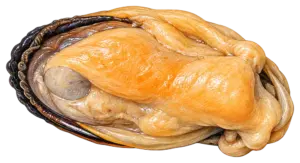
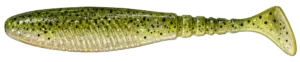

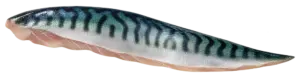
AI-generated illustrations. A click opens the lure’s page.
Rigs for these baits: surf rig, natural bait rig for the sea.
Fish brought up from great depth do not survive release.
What to do with your catch
The flesh of the tusk is firm and white and, properly prepared, counts as delicate. FishBase lists it as a fish sold fresh, as frozen fillets, or dried and salted, and names steaming, frying, grilling, boiling and baking as ways to cook it. How to handle it is covered under Stunning and killing fish and Filleting fish.
If the fillet turns mushy after the catch, the parasite Kudoa thyrsites may be behind it. Norwegian researchers found it in a Brosme from Trøndelag, for the first time in a Norwegian cod-like fish. Its enzymes break down fish flesh 24 to 36 hours after death. According to the institute, it is not dangerous to humans. This does not replace medical advice; general notes are under Parasites in fish.
What you need to observe
Closed seasons, minimum sizes and harvest slots are set by the federal states (Bundesländer) and by the fisheries authorities of the neighbouring countries on the coast (Denmark, Norway, Poland). They vary by type of water, stretch of coast and time of year. We only give figures together with the date and source; the fisheries regulation of your federal state and your fishing permit (Erlaubnisschein) are always what is binding. You will find a list of links to the official sources in the catch calendar.
A fish of legal size that you want to keep you stun and kill at once, in line with animal welfare rules. Protected, undersized fish or fish too large under a harvest slot you unhook, if possible still in the water and with wet hands, and release gently. What exactly applies is regulated by state law and your fishing permit (Erlaubnisschein).
In Norway, minimum sizes apply to sea anglers, and you may only fish with hand-held tackle. Selling the catch is prohibited. Undersized fish are released as gently as possible: wet your hands with sea water beforehand and remove the hook carefully. The rules change; the Fiskeridirektoratet provides binding information. Lumpfish in the authority’s list means the lumpsucker, not the tusk.
On the stock: according to the ICES advice for 2026 and 2027, the stock in the Norwegian Sea and the Barents Sea has developed positively, but negatively in the North Sea, Skagerrak and western waters, where catches per unit of effort have been falling since 2019. Landings in the North Atlantic have fallen since 2010. FishBase rates vulnerability to fishing as high. The IUCN has not assessed the species.
What closed season, minimum size and harvest slot mean and where to find them is explained on the page Closed season and minimum size explained.
Frequently asked questions (FAQ)
Is the tusk the same as the lumpfish?
No. Lumpfish is the English name of the lumpsucker (Cyclopterus lumpus). In English the tusk is called tusk.
How do I tell tusk and ling apart?
The tusk has only one long, continuous dorsal fin, while in the ling it is divided. The tusk also has a dark fin border with a white edge.
At what depth do I catch tusk?
In the north-east Atlantic mostly between 150 and 450 metres over rock and rubble. In summer smaller fish also occur in bays 30 to 50 metres deep.
Sources
The rating of catch chances is an editorial assessment. The facts come from these sources, and the text is worded in our own words. The illustration is an original design by Angel Momente in the style of a natural history plate (AI-generated, see the AI notice).
- FishBase: Brosme brosme
- Havforskningsinstituttet: Brosme (Lumb)
- Blinker: Norwegen, Angeln im Fjord (Saison, Naturköderangeln)
- Fiskeridirektoratet: Sea angling in Norway, regulations (geschonte Arten, Ausfuhrquote)
- Blinker: Steckbrief Lumb (Standplätze, Gerät, Köder)
- Blinker: Barotrauma bei Fischen
- Fiskeridirektoratet: Minimum sizes for salt water species (untermaßige Fische, Messung)
- Havforskningsinstituttet: Nye kvoteråd for brosme og lange (ICES-Rat für 2026 und 2027)
- Havforskningsinstituttet: Lette etter kveis i brosme, snublet over parasitt som gir gele-filet
- Havforskningsinstituttet (englisch): Tusk, Brosme brosme
- Havforskningsinstituttet (englisch): Lumpfish, Cyclopterus lumpus
- Wikipedia: Lumb
- Animal Diversity Web (University of Michigan): Brosme brosme
Created with AI support from the sources listed. Figures only appear in the text if a source gives them. Last updated: 27 October 2026. Found a mistake? Write to us. Who is behind this site: About me.
More in the lexicon
- All fish species at a glance
- Catch calendar – month, water temperature and profile for 93 species
- Line calculator – breaking strain after the knot, drag guideline, backing
- Angling methods