
Knowledge – Fish
Hake: Features, habitat, best time and baits
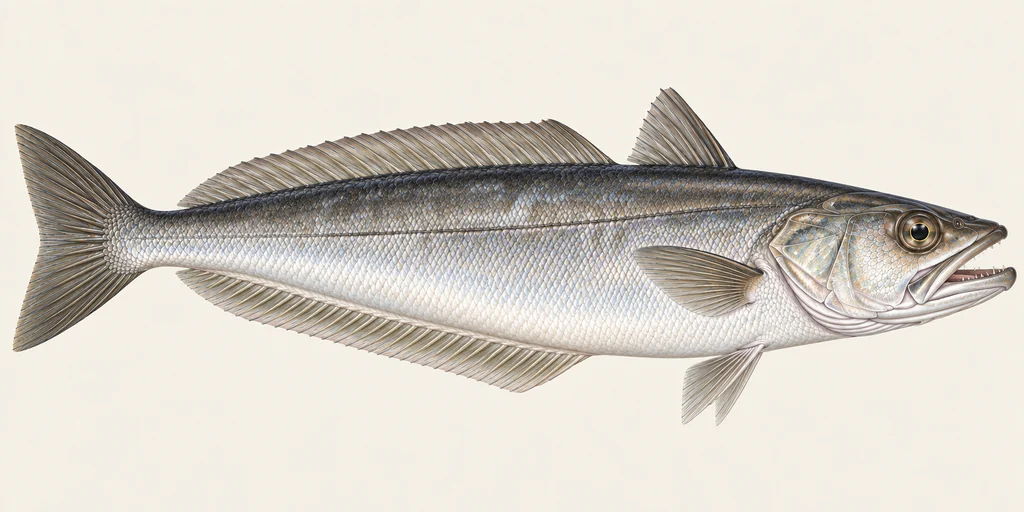
The hake (Merluccius merluccius), also called European hake, is a slender predator of the eastern Atlantic with very sharp teeth. By day it stays near the bottom, at night it hunts in open water. It is not related to the pike. In western Norway it moves far into the fjords in summer and autumn.
In short: You catch hake best from July to October, especially at night. Good spots on the coast: deep water and open water. Proven baits: strips of mackerel or herring on the natural-bait rig, close to the bottom along edges. Very sharp teeth. Export from Norway only for fish caught through a registered fishing business: 15 kg twice a year, from 1.1.2027 10 kg (as of October 2026). Step by step: Fishing for hake.
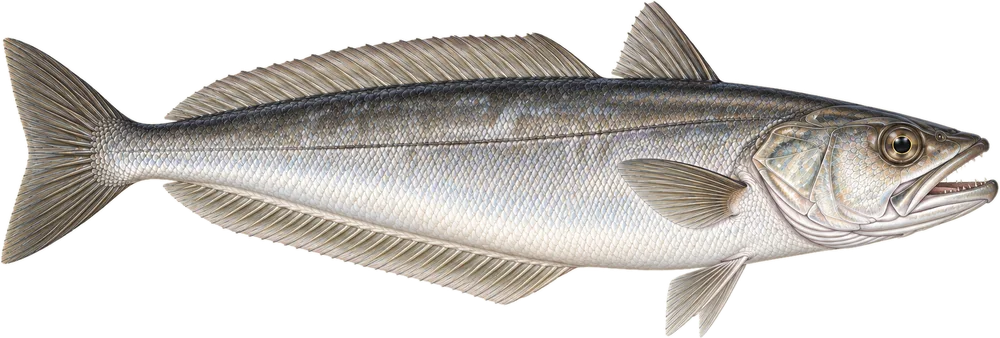
- Large mouth with long, pointed teeth and a black mouth cavity, no barbel
- Short first dorsal fin, long second dorsal fin and long anal fin
- Dark grey back, silvery flanks, pale belly
Catch chances through the year
- Hardly any chance
- Possible
- Good
- Peak season
- Spawning (observe the closed season)
Editorial assessment for waters in Germany, not a measured value and no guarantee. Spawning time is not the same as the legal closed season.
Species profile and sources in the catch calendarAll species compared month by monthThe rules of your federal state
How to recognise it
The hake has a slender, silvery, elongated body, like fish of open water. The black mouth and gill cavity and the black tongue stand out. The large mouth carries very sharp teeth.
The first dorsal fin is short, the second dorsal fin and the anal fin are long. The hake has no chin barbel, which other cod-like fish carry. In Norway it is called Lysing, also Svartkjeft.
Usually about 45 centimetres according to FishBase. The maximum values are 140 centimetres and 15 kilograms. On age the sources differ: FishBase gives up to 20 years, the Norwegian Institute of Marine Research 12 years. The institute points out that tagging experiments show much faster growth than previously assumed. Males mature from about 40 centimetres, females from about 50 centimetres.
The hake belongs to the cod-like fishes (Gadiformes) and is not related to the pike. It shares the order with cod and haddock, but has only two dorsal fins, not three, and no chin barbel. The black mouth cavity sets it apart as well.
The name is confusing when you shop: under the trade name hake, several species from all over the world are sold, including North Pacific, African and South American hakes. The European hake is the only one you catch in the North Sea and in Norway.
Side by side
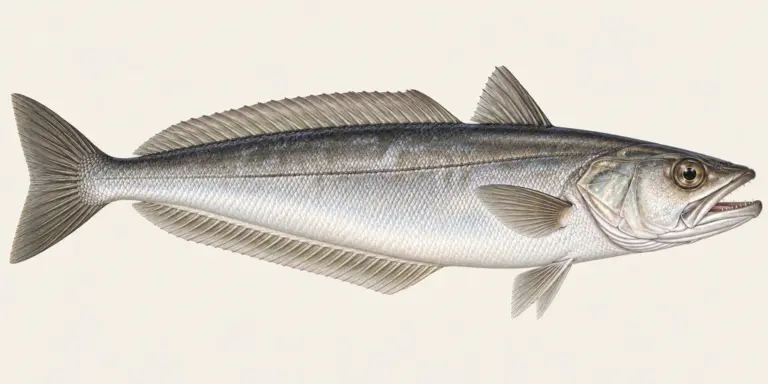
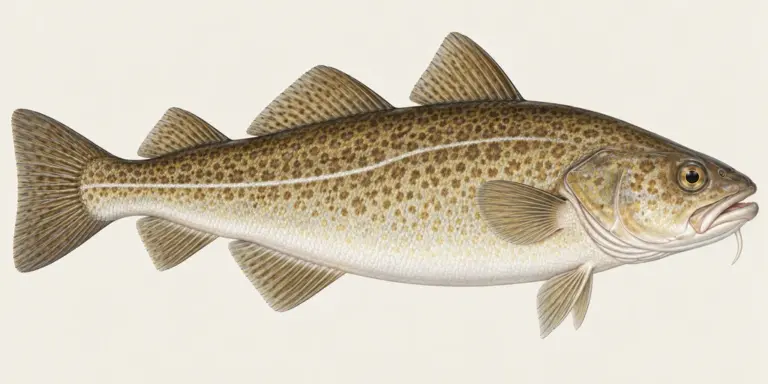
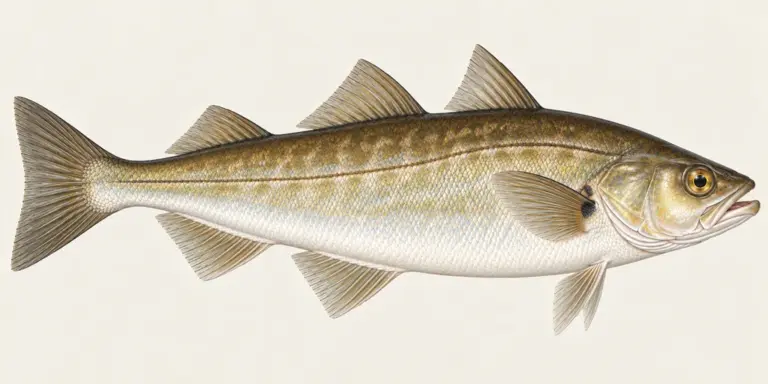
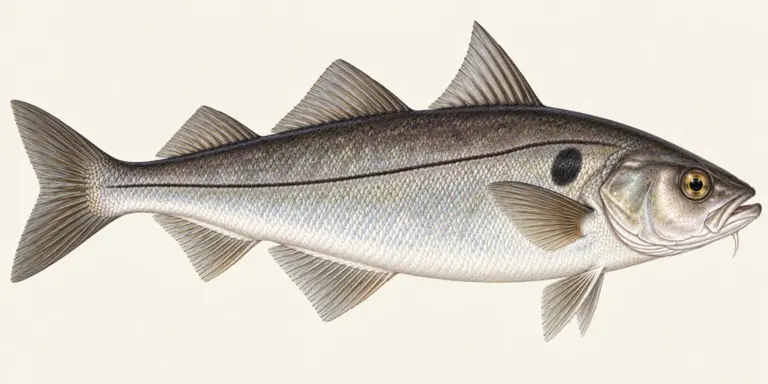
AI-generated illustrations.
Where it holds
The European hake lives in the eastern Atlantic from Norway and Iceland to Mauritania, as well as in the Mediterranean and the North Sea. The Norwegian Institute of Marine Research describes it as a bottom fish at depths of 30 to 600 metres, in fjords and on the open sea. FishBase gives 18 to 1075 metres and mostly 70 to 400 metres.
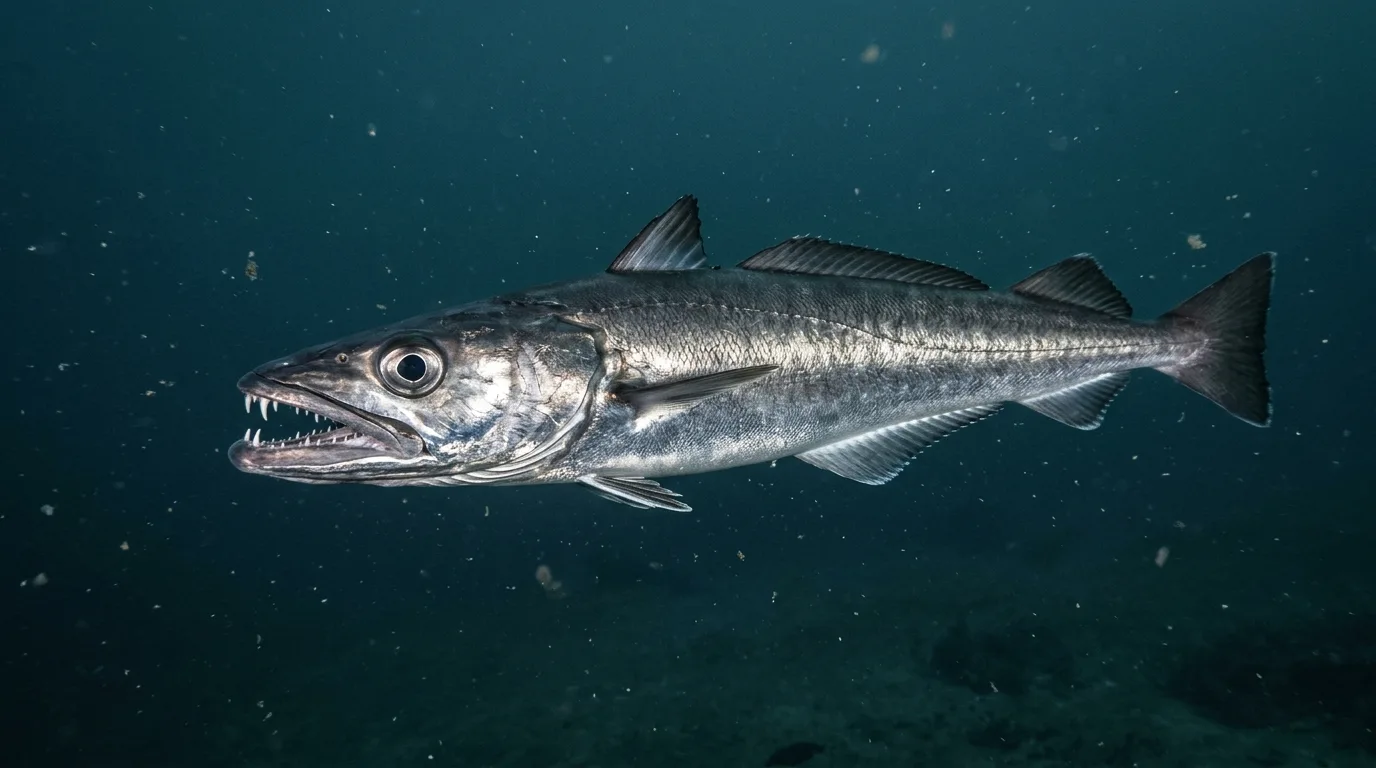
In western Norway it moves, in places far, into the fjords in summer and autumn. In the northern and central North Sea, density increased between 2005 and 2015, especially in summer and autumn. According to the marine research institute, this is because large, sexually mature fish migrate there, among other reasons to spawn.
Holding spots in the picture
Choose a season and time of day: the picture shows where the species sits then. Tap a fish or a spot in the list to bring it closer. The picture is schematic and AI-generated, every water is different.
Chance of a catch in springslim
Chance of a catch in summergoodSpawning, observe the closed seasons
Chance of a catch in autumngoodSpawning season, observe the closed seasons
Catch chance in winterhardly any
- J
- F
- M
- A
- M
- J
- J
- A
- S
- O
- N
- D
Spawning season
No main time By day the hake stands near the bottom, at night it hunts in open water up to near the surface.
No main time By day the hake stands near the bottom, at night it hunts in open water up to near the surface.
No main time By day the hake stands near the bottom, at night it hunts in open water up to near the surface.
Active time By day the hake stands near the bottom, at night it hunts in open water up to near the surface.
On the coast
Deep, colder water
Hake is here all year round.
Open water, mid-water
Hake is here all year round.
The hake is a bottom fish of the fjords and the open sea. By day it stays close to the bottom in deep water, at night it leaves the bottom and hunts in open water.
Spring: chances according to the catch calendar are slim in March and April, possible in May.
Summer: chances according to the catch calendar are possible in June, good in July and August. Spawning falls in this period, so observe closed seasons. In summer and autumn the hake sometimes moves far into the fjords and stands there on deep plateaus. Off western Norway and in the North Sea it spawns from June to October.
Autumn: chances according to the catch calendar are good in September and October, possible in November. Spawning falls in this period, so observe closed seasons. Late summer with August and September counts as the good time in fjord Norway; fish are caught well into autumn.
Winter: catch chance according to the catch calendar hardly any.
Depth: The hake usually lives at depths of 70 to 400 metres. In western Norwegian fjords it is caught on plateaus at 70 to 150 metres.
Size comparison: AI-generated drawing, schematic.
How it hunts and spawns
By day the hake stays close to the bottom. At night it leaves the bottom and hunts in all layers of water up to the surface. For your rig that means: by day you reach it near the bottom, at night also higher in the water.
Adult fish hunt mainly coley, mackerel, Norway pout, herring and blue whiting, along with prawns, krill and squid. Stomach examinations also show cannibalism, depending on area and fish size. Young hake eat crustaceans.
The spawning time depends on the area. In the Bay of Biscay and off the north coast of Spain, spawning takes place mainly from January to June, in the North Sea and off Møre og Romsdal from June to October. According to the Thünen Institute, a female can lay around 7 million eggs.
When it bites
As the best time in fjord Norway, Blinker names late summer, August and September. Other passages in the article say that in fjord Norway you can expect hake throughout the whole season.
Late summer coincides with spawning in the North Sea region and off western Norway. The catch calendar therefore lists the hake as good in these months, not as peak season. Keep fish in moderation.
Today’s catch index needs JavaScript. Season and spawning time are in the catch calendar.
You will find the monthly overview of all species and the water temperature check in the catch calendar.
What you catch it with
Step by step: Fishing for hake: tips on bait, rig and tackle – season, spots, bait, tackle and rules on one page.
The hake responds best to natural-bait rigs. Offer strips of mackerel or herring close to the bottom. The fishing depth depends on the venue: Blinker reports catches at 40 to 70 metres, Rute & Rolle usually gives 70 to 130 metres. There it often bites together with ling and tusk. The principle is shown by the natural-bait rig, the baits by the page on cut bait. If you are after the bigger hake, use whole baitfish; mackerel and herring are considered the best.
For medium natural-bait fishing, Blinker names a boat rod of 8 to 15 lbs at 2,20 to 2,40 metres, a medium multiplier reel with braid rated at 20 kilograms, weights of 80 to 300 grams and hake or haddock hooklengths. If you fish deeper, you reach for 20 to 50 lbs and weights up to 1000 grams. It is best to catch the baits yourself on site. More on the sea rod and braided line.
Even with medium-heavy jigging and soft-plastic fishing down to about 150 metres, the hake is one of the possible catches. Jig and jigging are the way in.
The teeth are extremely sharp. Remove the hook with a forceps or a disgorger and keep your fingers out of the mouth. Fish from greater depth do not survive release, because the drop in pressure damages them. Only plan for what you can use.
Keep a disgorger ready: Put the forceps within reach before the first fish comes aboard. Do not mess with the mouth and teeth; fishing gloves protect your hand further.
Offer it near the bottom and by time of day: By day hake stand close to the bottom, at night they hunt up to the surface. By day offer the bait just above the bottom. At night the fish also stands higher in the water.
Fresh strips: It is best to catch mackerel or herring yourself on site. Fresh strips are the best choice for natural baits.
Suitable lures
Strips of mackerel or herring on the natural-bait rig, close to the bottom along edges.
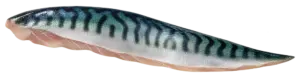
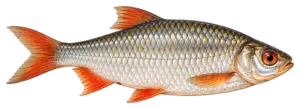
AI-generated illustrations. A click opens the lure’s page.
Rigs for these baits: surf rig, natural bait rig for the sea.
Very sharp teeth: remove the hook with forceps.
What hake tastes like and what to bear in mind when you use it
The hake has white, firm flesh and is a sought-after table fish, especially in Europe. According to the Norwegian Institute of Marine Research, the biggest market is in Spain, ahead of Portugal, France and Italy. In the shops it is available fresh, as fillets, frozen, smoked, dried and salted. FishBase names steaming, frying and baking as ways to cook it. How to prepare it is shown by Gutting fish and Filleting fish.
As a cod-like fish, the hake can carry roundworm larvae in its flesh. According to the Lower Saxony food institute LAVES, the larvae are killed by freezing or heat, and fish that is cooked through is safe. More under Parasites in fish. This does not replace medical advice.
What you need to observe
Closed seasons, minimum sizes and harvest slots are set by the federal states (Bundesländer) and by the fisheries authorities of the neighbouring countries on the coast (Denmark, Norway, Poland). They vary by type of water, stretch of coast and time of year. We only give figures together with the date and source; the fisheries regulation of your federal state and your fishing permit (Erlaubnisschein) are always what is binding. You will find a list of links to the official sources in the catch calendar.
A fish of legal size that you want to keep you stun and kill at once, in line with animal welfare rules. Protected, undersized fish or fish too large under a harvest slot you unhook, if possible still in the water and with wet hands, and release gently. What exactly applies is regulated by state law and your fishing permit (Erlaubnisschein).
For visiting anglers in Norway, minimum sizes and an export quota apply: you may only take fish out of the country if you caught it through a registered fishing business, currently up to 15 kilograms twice a year, from 1 January 2027 up to 10 kilograms (as of October 2026). The authority that counts is the Fiskeridirektoratet.
According to the Thünen Institute, the European hake is considered not threatened in Europe and worldwide (IUCN, category LC).
What closed season, minimum size and harvest slot mean and where to find them is explained on the page Closed season and minimum size explained.
Frequently asked questions (FAQ)
Is the hake related to the pike?
No. It belongs to the cod-like fishes and shares only the name and the sharp teeth with the pike.
When is the best time for hake in Norway?
Blinker names late summer as the best time, especially August and September. In summer and autumn it comes far into the fjords.
How do I tell a hake from a cod?
The hake has only two dorsal fins, no barbel and a black mouth cavity. The cod has three dorsal fins and a chin barbel.
Sources
The rating of catch chances is an editorial assessment. The facts come from these sources, and the text is worded in our own words. The illustration is an original design by Angel Momente in the style of a natural history plate (AI-generated, see the AI notice).
- Wikipedia: Hechtdorsch (Europäischer Seehecht)
- Havforskningsinstituttet: Lysing (Seehecht)
- FishBase: Merluccius merluccius
- Thünen-Institut, Fischbestände online: Seehecht
- Blinker: Norwegen, Angeln im Fjord (Saison, Naturköderangeln)
- Blinker: Angeln in Norwegen (Zielfische, Tiefen, Reisezeit)
- Norin et al. 2019, PeerJ: Thermal biology of Atlantic cod and haddock (CTmax)
- Fiskeridirektoratet: Sea angling in Norway, regulations (geschonte Arten, Ausfuhrquote)
- Blinker: Barotrauma bei Fischen
- LAVES Niedersachsen: Parasiten in Fischen und Fischereierzeugnissen
- Rute & Rolle: Seehechte, klasse Köder (Köderfisch, Fetzen, Pilker mit Fisch)
- Blinker: Steckbrief Seehecht, Angeln auf den kampfstarken Meeresräuber (Fänge in 40 bis 70 Metern)
Created with AI support from the sources listed. Figures only appear in the text if a source gives them. Last updated: 27 October 2026. Found a mistake? Write to us. Who is behind this site: About me.
More in the lexicon
- All fish species at a glance
- Catch calendar – month, water temperature and profile for 93 species
- Line calculator – breaking strain after the knot, drag guideline, backing
- Angling methods